
This Texas Wildflower Blooms Hardest Right When The Rest Of The Yard Gives Up
Follow us on Google
Walk outside on a hot Texas afternoon in late summer and most of your yard looks like it has waved a white flag.
The lawn is crispy, the petunias gave up weeks ago, and even the toughest perennials are just hanging on.
But tucked against a fence or spilling over a dry rock bed, one native shrub is covered in orange-red blooms like it has not gotten the memo about the heat.
Flame acanthus is that plant, and if you have been searching for something that keeps performing when conditions get brutal, it deserves a serious look.
Meet The Summer-to-Fall Flame Acanthus
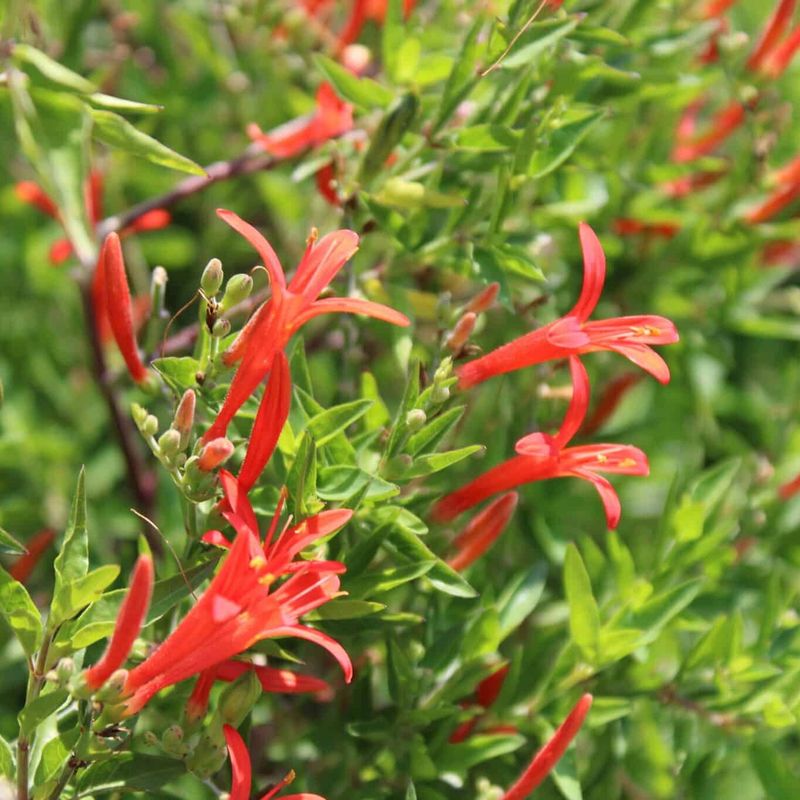
Flame acanthus, known botanically as Anisacanthus quadrifidus var. wrightii, is a native flowering shrub that earns its keep during the part of the Texas calendar when most ornamentals have checked out.
You may also hear it called hummingbird bush, which gives you a pretty good picture of what shows up when it blooms.
The flowers are narrow, tubular, and a deep orange-red that reads like a lit match against a bleached summer sky.
This is not a small annual wildflower you scatter from a seed packet in spring and forget about.
The City of Austin plant guide describes it as reaching 3 to 5 feet tall with a spread of 3 to 4 feet, a bloom period running summer into fall, and very low water needs once established.
That is a shrub-sized commitment, and it rewards you accordingly.
The bloom period stretches from summer into fall, which means you can still have color in the yard well past the point when spring bloomers are long gone.
Texas A&M AgriLife Extension materials describe it as very drought tolerant and capable of flowering through hot summer conditions, which is exactly what makes it worth talking about when triple-digit afternoons are the norm.
Hummingbirds and butterflies can visit the flowers when local habitat and food sources support it, making the plant useful beyond just filling a dry bed with color.
As Texas SmartScape notes, its water demand is genuinely very low for an established plant, which matters a lot when water restrictions hit and the rest of the landscape is struggling to survive.
What The Heat Can—and Cannot—Tell You
Here is where it gets a little tricky.
The headline on this piece says flame acanthus blooms hardest right when the rest of the yard gives up, and that framing is meant to capture something real.
But it is worth being straight about what the evidence actually shows, because the honest version is still impressive enough to make the plant worth planting.
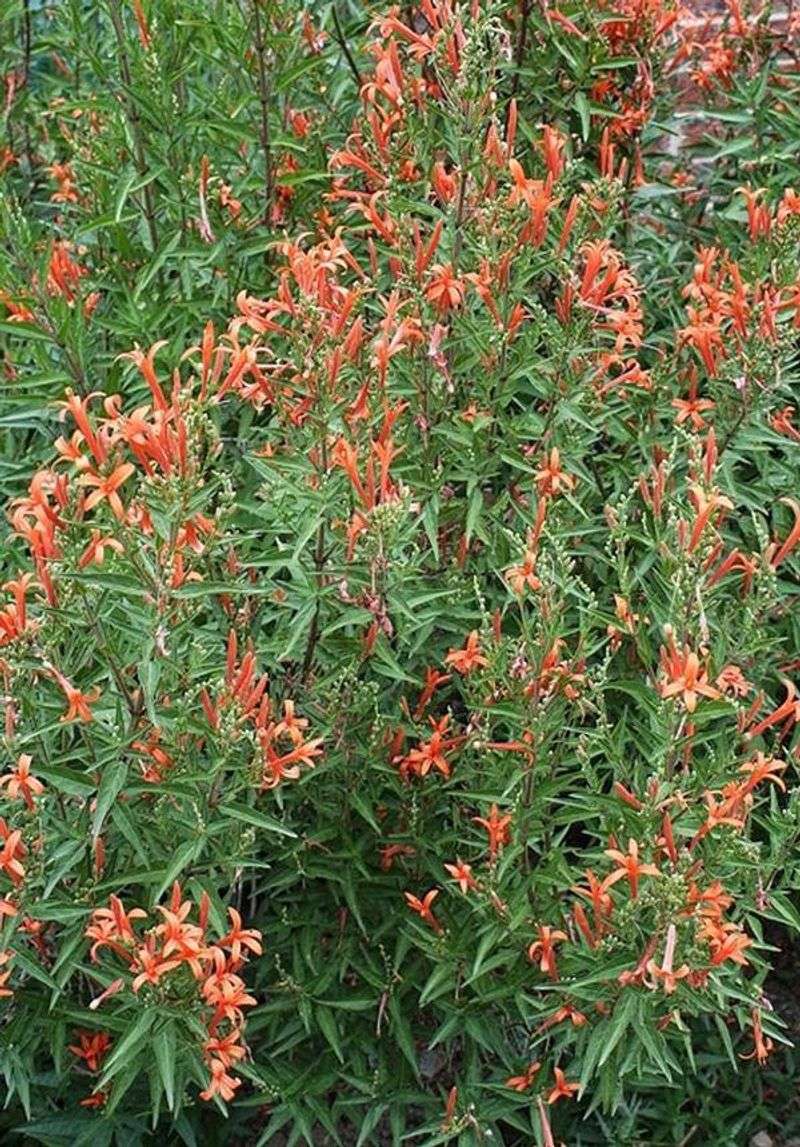
What the research supports is that flame acanthus can keep flowering through hot summer conditions and into fall, including during the kind of heat that stops most ornamentals cold.
Texas A&M AgriLife Extension describes it as very drought tolerant and suited to hot summer bloom.
What has not been measured is whether triple-digit temperatures actually push the plant to produce more flowers, or whether August is its single peak month above all others.
Think of “treats heat like fuel” as a vivid way to say the plant does not quit when temperatures climb, not a botanical guarantee.
The broader picture is useful context too.
Texas A&M Forest Service notes that late August reveals a different group of flowering plants than early June, which is exactly the seasonal shift that makes flame acanthus stand out.
Other native and adapted plants also bloom in summer and fall, so flame acanthus is not the only game in town.
But many common yard plants, including most annuals and cool-season perennials, do scorch, pause, or go dormant during a prolonged Central Texas heat stretch.
The practical takeaway is simple: flame acanthus is a reliable warm-season performer that keeps going when conditions get hard.
That is not a small thing in a Texas summer.
Plan For A Shrub, Not A Small Wildflower
Many gardeners picture something knee-high and wispy when they hear the word wildflower.
Flame acanthus will surprise you.
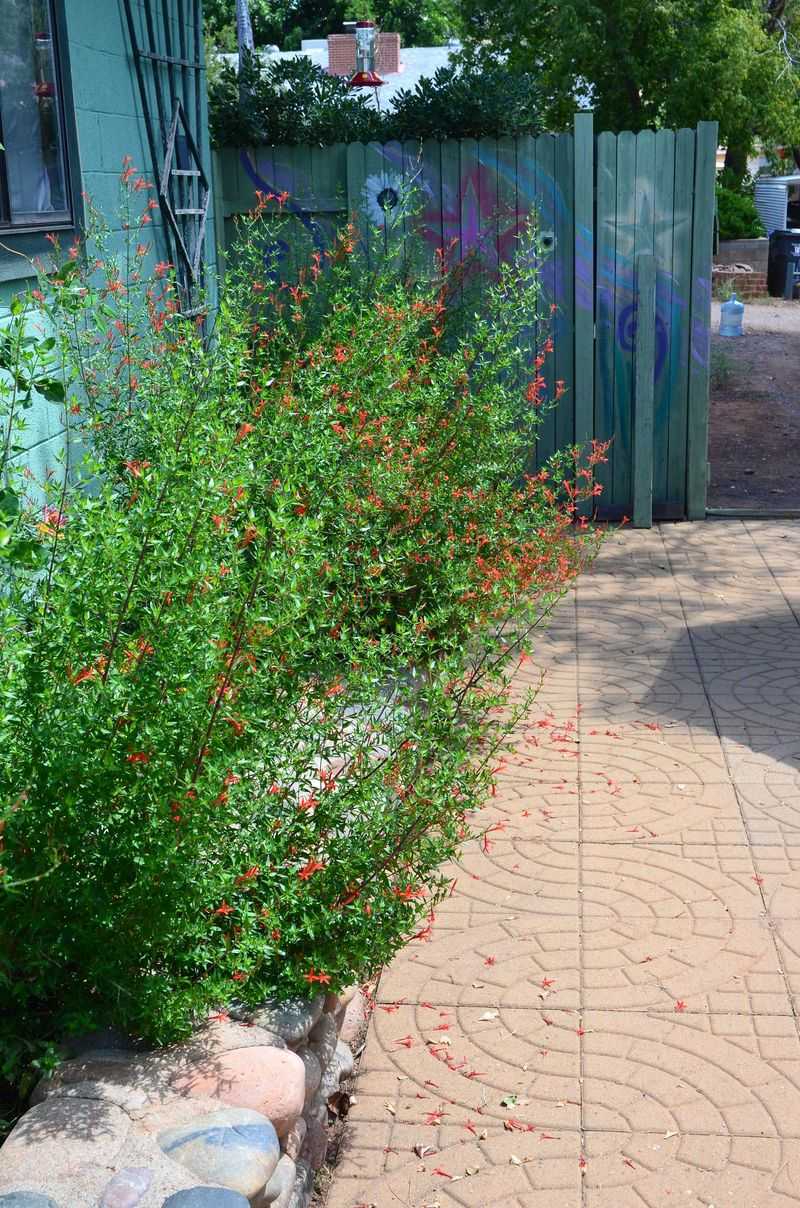
Give it a few seasons and a good spot, and you are looking at a plant that can reach 5 feet tall and spread 3 to 4 feet wide, according to the City of Austin plant guide.
That is closer to a small shrub than a garden annual, and your spacing decisions should reflect that from day one.
A starting point of about 3 to 4 feet between plants gives each one room to reach its mature spread without crowding.
That said, follow the nursery tag and think about the look you want.
A tighter informal hedge can work well, while a pollinator border might benefit from a little more breathing room between specimens.
Texas A&M AgriLife Extension identifies the plant’s tendency to spread easily, so build in some margin if you are planting near a sidewalk or a tightly managed bed.
Spreading and reseeding can actually be a feature in the right spot.
An informal dry garden or a naturalistic slope benefits from a plant that fills in over time without much help.
Near a small raised bed or a formal entry planting, that same energy becomes extra work, and you will want to pull seedlings before they establish.
One more thing to set expectations on: frost can brown or remove the leaves entirely.
The Native Plant Society of Texas confirms that flame acanthus is deciduous, meaning it does not carry evergreen structure through winter.
If you need year-round screening or a plant that looks tidy in January, this one will disappoint.
But if you want summer-to-fall color with minimal water, it delivers on that promise reliably.
Help New Plants Build Their Roots
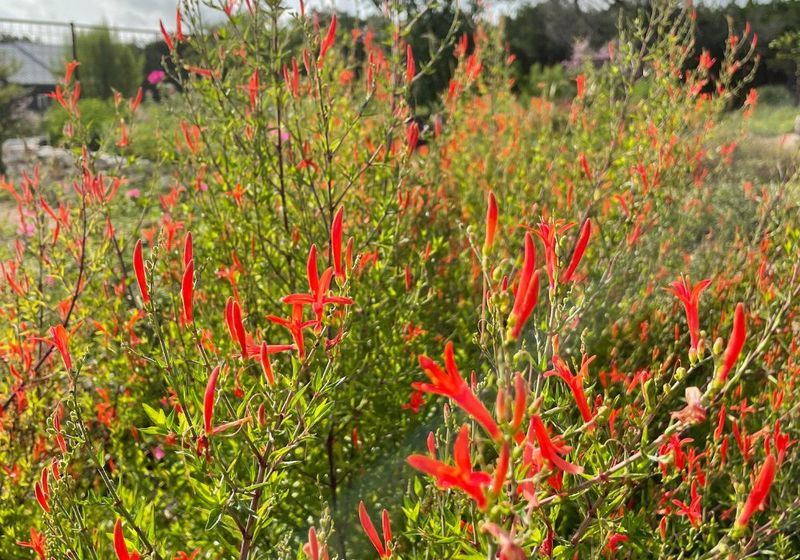
Drought tolerance is something flame acanthus earns over time, not something it arrives with.
A freshly planted shrub has a limited root system that cannot pull moisture from a wide area yet, and asking it to survive triple-digit afternoons without consistent water during those first weeks is asking too much.
Water it thoroughly right after planting, and keep checking in on it rather than setting a fixed schedule.
Texas SmartScape’s perennial care guidance recommends checking whether the top 4 to 5 inches of soil are dry before watering established perennials.
For a new plant, you will likely find that soil drying out faster than you expect, especially in reflected heat near a south-facing wall or on a slope with shallow caliche.
Water early in the morning so the moisture reaches the root zone before afternoon heat pulls it away, and water deeply enough to wet the root zone rather than just dampening the soil surface.
Soil type, rainfall, local water restrictions, and sun exposure all shape how often you need to water, which is why a universal schedule does not work.
A new flame acanthus in sandy East Texas soil will dry out faster than one planted in North Texas blackland clay.
Pay attention to what the plant tells you rather than following a fixed number of days between waterings.
Mulch helps.
Apply 1 to 2 inches of organic mulch around the planting bed and keep it pulled a few inches away from the stems to avoid rot.
Texas SmartScape’s flame acanthus profile and related guidance both support mulching as a way to reduce evaporation and moderate soil temperature.
But mulch slows moisture loss, it does not replace water during a dry establishment stretch.
Think of consistent early watering as the investment that builds the root system, and that root system as the reason the plant can handle low water later.
Site conditions, soil quality, rainfall, and drought severity all play a role in how drought-tolerant the mature plant actually becomes.
Choose Light, Drainage, And Region Carefully
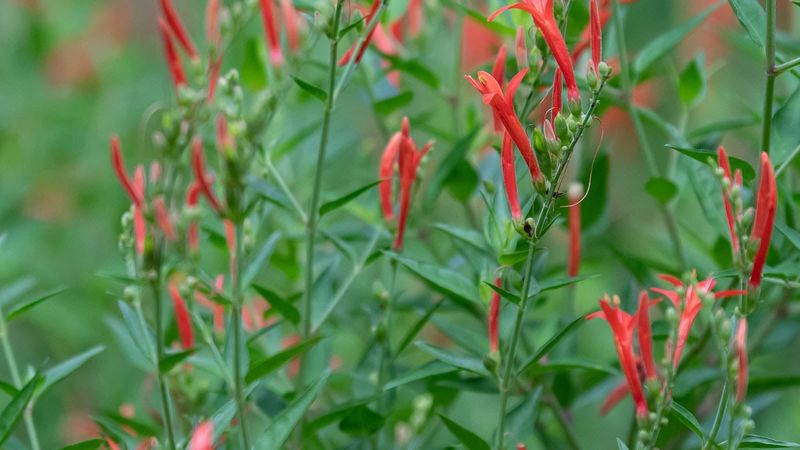
Full sun is where flame acanthus does its best flowering work.
The plant can handle partial shade, but if you plant it under a live oak canopy and wonder why the blooms are sparse, the light is likely the answer.
When maximum summer color is the goal, pick the sunniest spot in the bed, ideally one that gets at least 6 hours of direct sun on a typical summer day.
Drainage matters just as much as light.
Texas SmartScape’s general perennial site guidance suggests that a planting site is suitable for perennials that tolerate heavier soil if water drains within roughly 6 hours after a rain.
That figure is a broad site-assessment guideline for perennials, not a species-specific cutoff for flame acanthus.
The broader principle holds: standing water around the root zone is a problem.
Flame acanthus is actually listed as one of the perennials that can accept heavier soil, which is useful news for gardeners dealing with blackland clay in the Dallas-Fort Worth area or around San Antonio.
The plant’s strongest native connection is to South and West Texas and the Edwards Plateau, which includes the Hill Country.
The Native Plant Society of Texas places its native distribution in the Chihuahuan Desert region, the Southern Texas Plains, and the Edwards Plateau.
In North Texas or East Texas, it is a garden-adapted choice rather than a plant from the local wild landscape, and winter cold becomes a more relevant factor the farther north you go.
A hard freeze in the Panhandle hits differently than one in Laredo.
Good uses include hot, dry beds, rock gardens, low informal hedges, and pollinator-friendly borders.
Texas SmartScape lists it as appropriate for those settings, and that matches what many Hill Country and South Texas gardeners have found in practice.
Match the plant to your actual site conditions rather than assuming it will thrive anywhere in the state.
Prune After Frost, Not Before It
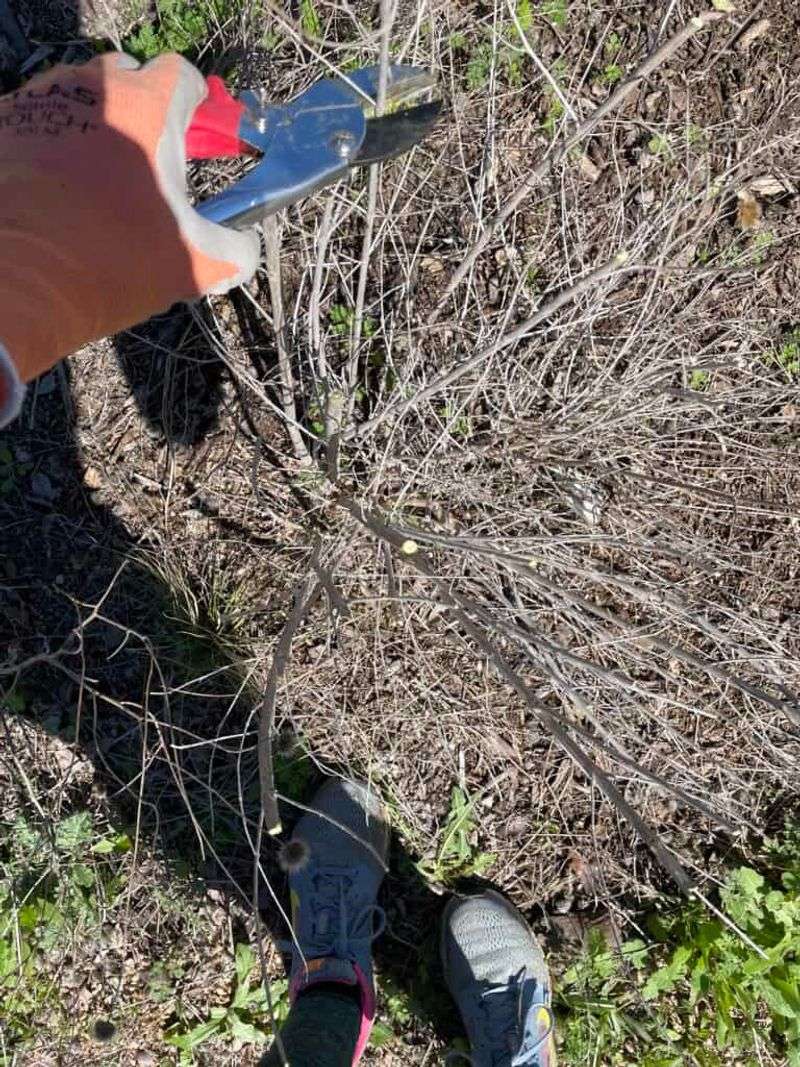
When frost hits and the foliage on your flame acanthus turns brown and papery, it can look like the plant is finished for good.
Most of the time, it is not.
The shrub is deciduous, and what looks like plant death is often just dormancy.
Browning after a freeze is normal behavior, not a signal to grab the pruning shears immediately.
Pruning too early in fall or right after the first light frost carries a real risk.
Cutting the plant back can stimulate new growth, and that tender new growth is vulnerable to the next freeze that comes through.
The City of Austin recommends waiting until frost has browned the plant and then cutting it back by about one-third to one-half before spring growth begins.
That timing lets the plant finish its dormancy cycle without encouraging fragile new shoots during cold weather.
The practical window for that pruning is late winter, after the hard freeze risk has passed but before you start seeing new buds pushing out at the base.
In Central Texas that might mean February.
In the Hill Country or North Texas, you might wait until early March to be safe.
Watch the plant rather than the calendar.
Spreading and reseeding deserve attention at the same time.
Texas A&M AgriLife Extension notes that flame acanthus spreads easily, so late winter is a good moment to pull unwanted seedlings before they root deeply.
Near a sidewalk or a small bed, a few minutes of seedling removal in late winter saves a much bigger job in summer.
Let the ones you want stay, remove the ones you do not, and the plant stays manageable without becoming a chore.
Skip The Bloom-Boosting Shortcuts
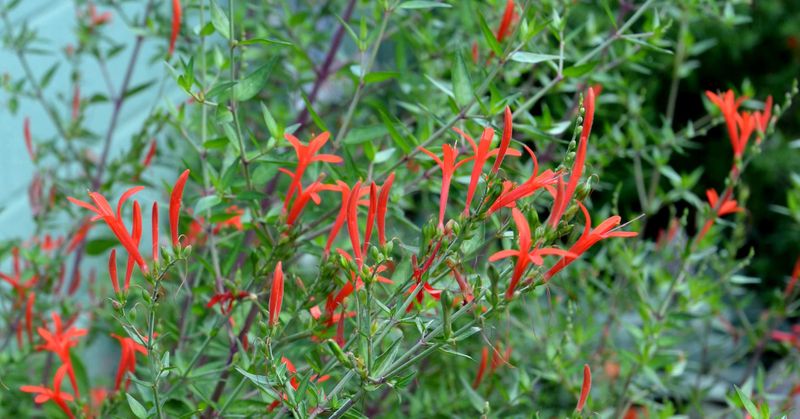
Reaching for a bag of high-nitrogen fertilizer to push more flowers is a move that tends to backfire with flame acanthus.
Texas SmartScape warns that over-fertilizing many perennials produces excessive foliage at the expense of blooms.
You end up with a bigger, leafier plant and fewer of the orange-red flowers you actually wanted.
If the soil is genuinely poor, a light compost amendment at planting time is a better starting point than routine heavy feeding.
The real bloom support comes from the layered approach covered in earlier sections: full sun, good drainage, consistent establishment watering, and 1 to 2 inches of organic mulch kept away from the stems.
Get those right and the plant does not need shortcuts.
Texas SmartScape’s plant profile describes very low water demand for an established specimen, which means your main job after the first season is mostly staying out of the way.
The wildlife benefit is real but comes with honest caveats.
Orange-red tubular flowers are genuinely attractive to hummingbirds, and the City of Austin plant guide includes it as a hummingbird and butterfly plant.
Whether you actually see those visitors depends on local habitat, what else is flowering nearby, and whether hummingbirds are moving through your part of Texas that season.
It is one layer of a pollinator-friendly yard, not a guaranteed wildlife magnet.
Flame acanthus is a resilient seasonal shrub that rewards patience and honest placement more than it rewards fussing.
Give it the right spot, water it through its first summer, and then mostly let it work.
Some years it will surprise you with how long it keeps going after the rest of the yard has gone quiet.