
This Purple Flower Creeping Into North Carolina Lawns Is Actually One Of The Best Native Volunteers
Follow us on Google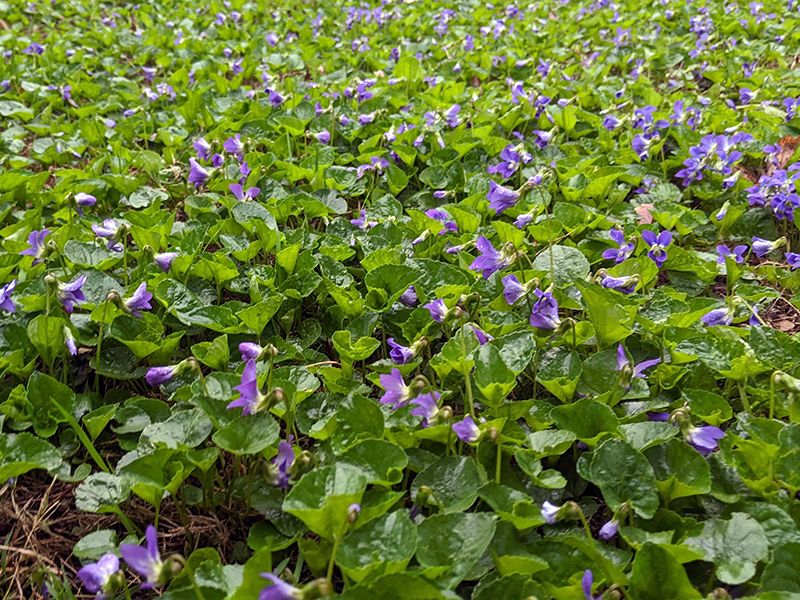
You look down at your lawn one March morning and spot a cluster of small purple flowers you definitely did not plant.
Most North Carolina homeowners assume the worst and reach for the spray bottle.
Before you do, take a closer look, because that little purple volunteer is most likely common blue violet, Viola sororia, a native perennial that has been quietly growing in yards across the state long before anyone was mowing them.
Getting to know it first will help you decide whether to welcome it, contain it, or send it packing.
The Purple Lawn Flower Is Probably Common Blue Violet
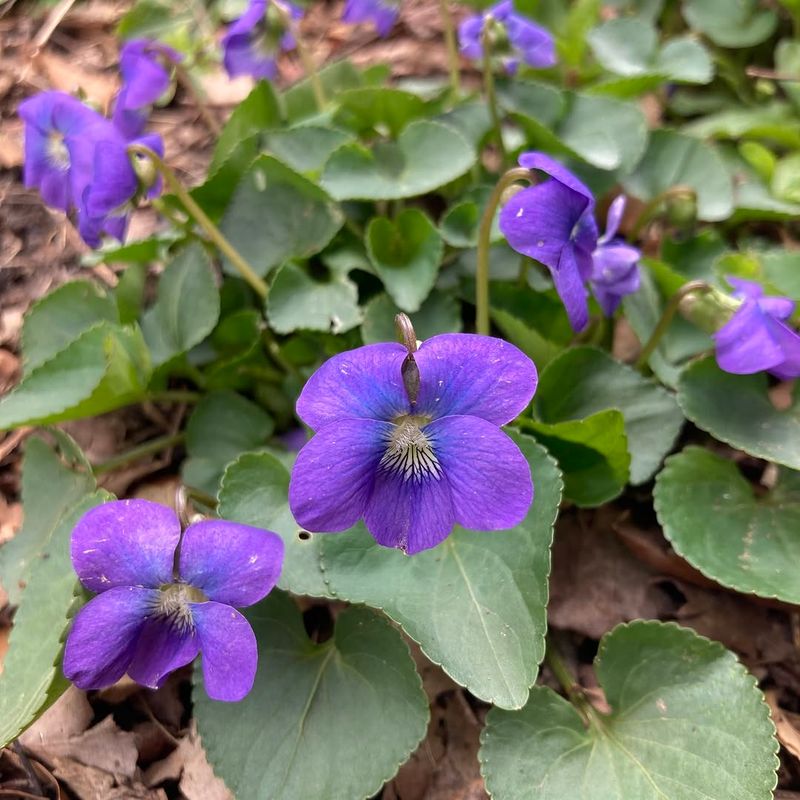
Spotting a purple flower in your lawn is exciting, but flower color alone cannot tell you which plant you are looking at.
The strongest candidate for a low-growing purple lawn volunteer in North Carolina is common blue violet, Viola sororia, and the way to confirm that hunch is to look at the whole plant together, not just the bloom.
Pull back the grass a little and check for a few things at once.
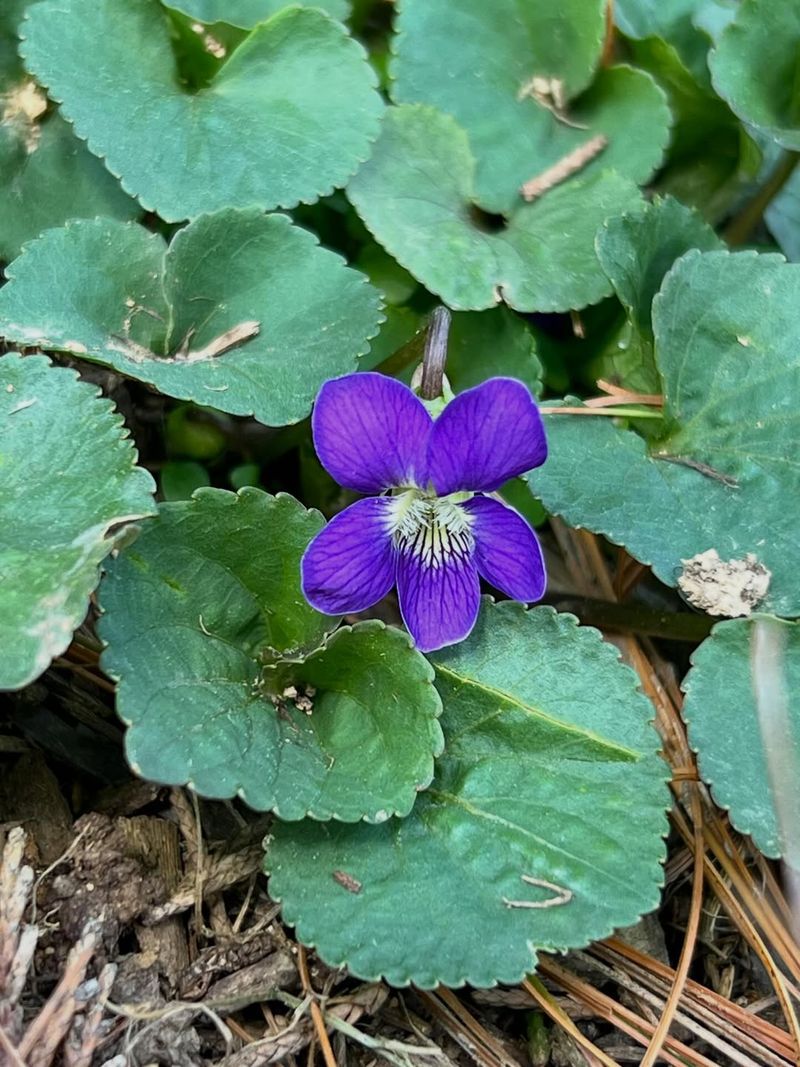
According to NC State Extension’s profile of common blue violet, the plant grows in a low clumping habit with basal leaves that are heart-shaped, broad, and edged with rounded or scalloped teeth.
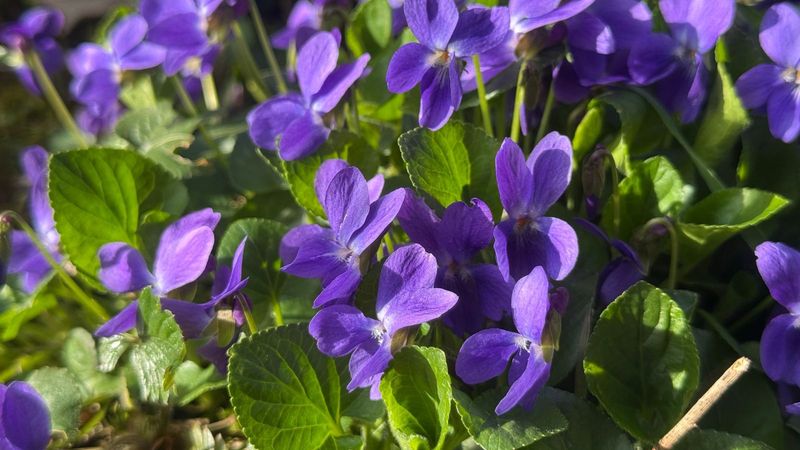
The five-petaled flowers are typically blue-purple, lavender, or occasionally white, and they appear singly on slender stems from roughly February through May.
Mature plants generally reach about 6 to 10 inches tall and wide.
Flowers are about 2 centimeters across, small enough to disappear in a thick lawn until you kneel down and look.
Here is where it gets tricky.
North Carolina supports several native violet species, and some of them look quite similar.
Creamy violet, Viola striata, and downy yellow violet, Viola pubescens, grow in woodland edges across the state.
Canada violet, Viola canadensis, also turns up in shadier spots.
None of those species can be ruled out from a purple flower photograph alone.
So treat this as a likely identification, not a confirmed one.
Check the heart-shaped leaves, the clumping growth, the solitary five-petaled flowers, and the spring timing together before you decide what to do with the patch.
A confident ID gives you a much better starting point for whatever comes next.
A Native Perennial With A Statewide Footprint
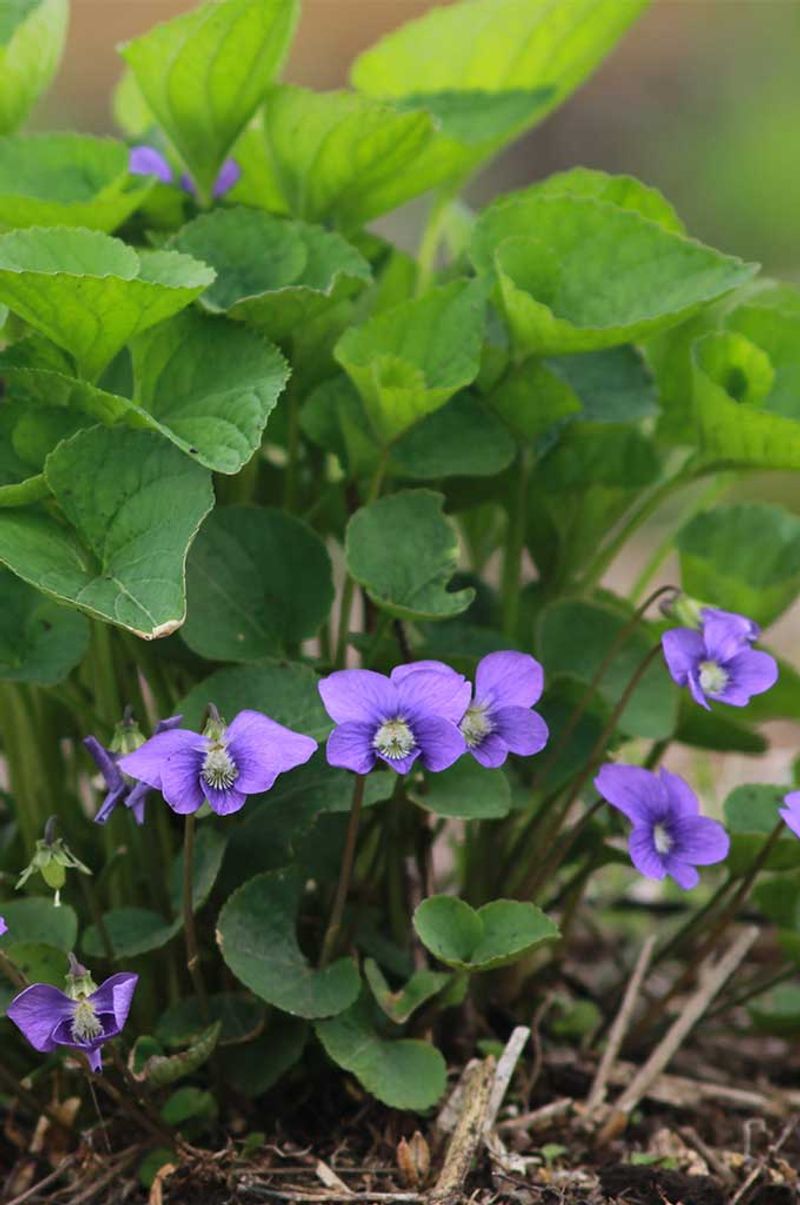
Common blue violet did not wander into your yard from somewhere exotic.
NC State lists it as a native perennial found across all three of North Carolina’s major regions: the Coastal Plain, the Piedmont, and the Mountains.
That means whether you are gardening in sandy New Hanover County soil, pushing through Piedmont red clay in Wake County, or managing a sloped yard in the western highlands, this plant belongs to the same broad landscape you do.
NC State’s plant profile puts the flowering window from February through May and the fruiting period from April through June.
Mature plants stay relatively compact, reaching roughly 6 to 10 inches tall and wide.
That modest size is part of why many homeowners do not notice a patch until it is already a colony.
Native status is worth understanding clearly, though. “Native” tells you where a plant originated and what ecological relationships it developed here over thousands of years.
It does not place the plant above every other lawn option, and it does not mean the plant will stay politely in one corner.
A native perennial can still spread, compete with other plants, and become more than you bargained for in a fertile, moist yard.
Think of native status as a meaningful piece of context, not a permission slip.
Common blue violet earned its place in North Carolina’s ecology long before lawns existed.
Whether it earns a place in your particular lawn is a separate question, and one worth thinking through with the site in front of you.
Read The Site Before Blaming The Flower
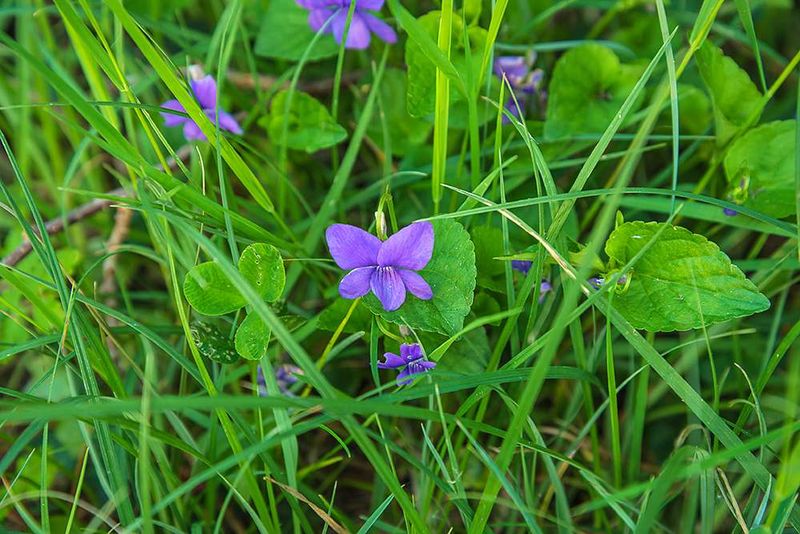
Many Piedmont homeowners notice violet patches right where the grass has been thinning for years, under a big oak or along a fence line that never gets full afternoon sun.
The instinct is to blame the violet for the bare spot.
More often, the violet moved into a spot the grass had already given up on.
Common blue violet genuinely prefers moist, rich soil with dappled shade.
It also tolerates clay, wet soil, variable light, and even the chemical compounds released by black walnut trees, which knock out many other plants.
Those tolerances explain why it turns up in exactly the spots where turf struggles.
Meanwhile, NC State’s guidance on shade lawn management notes that turf generally performs poorly when an area receives less than 50 percent open sunlight or fewer than 4 hours of direct sun per day.
Before you decide the violet is the problem, spend a few minutes reading the site.
Check how many hours of direct sun that patch actually gets.
Feel the soil after a rain and see how long it stays soggy.
Think about foot traffic, root competition from nearby trees, and whether the grass species you planted was ever really suited to those conditions.
NC State’s common blue violet profile confirms the plant thrives in exactly those low-light, moisture-retaining situations.
A site that cannot support dense turf may need a different solution entirely, whether that is a shade-tolerant groundcover, a mulched bed, or a deliberate decision to let a native plant do the job the grass cannot.
The violet did not cause the problem.
It just noticed the opening first.
Its Wildlife Value Is Real—And Limited
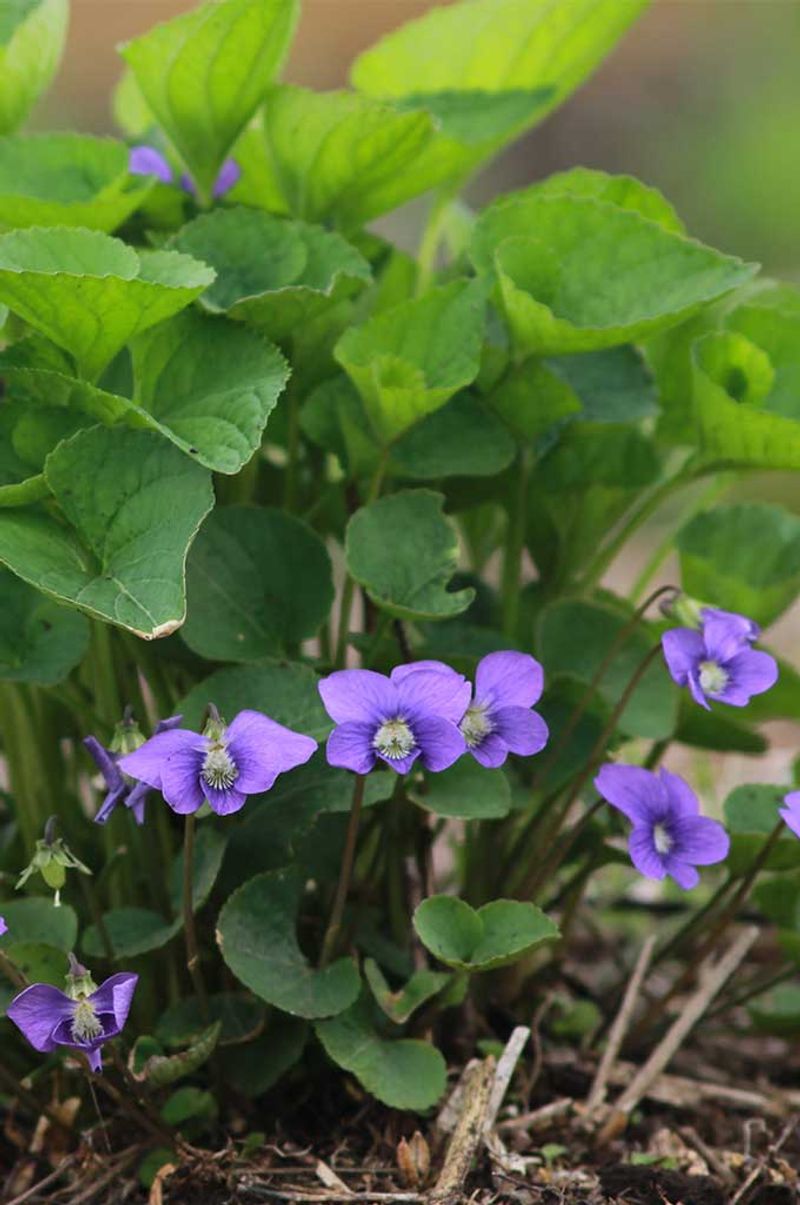
Spring comes early for common blue violet.
By February, those small purple flowers are already open, and that timing matters because early-season nectar is genuinely scarce.
Bees and butterflies that emerge before most garden plants bloom will find the violet ready and waiting.
NC State identifies common blue violet as a host plant for fritillary butterfly larvae, including species like the great spangled fritillary that many North Carolina homeowners spot in summer.
The female lays eggs near violet plants in late summer, and the larvae overwinter before feeding on violet leaves in spring.
Without the plant, that part of the life cycle breaks.
Penn State Extension’s native violet resource also notes that the genus Viola supports specialized ground-nesting Andrena bees, which depend on violet pollen during a narrow spring window.
Birds and small mammals round out the picture.
The seeds produced by violet capsules are eaten by mourning doves, wild turkeys, and small rodents, adding one more link in the yard’s food web.
University of Minnesota Extension’s wild violet page also confirms the plant’s value as an early pollinator resource.
What the evidence does not show is any connection between growing violets and a reduction in ticks, mosquitoes, Japanese beetles, stink bugs, or other household pests.
Those are separate problems that need separate management.
A violet patch in your lawn supports part of the food web and gives pollinators a reliable early stop.
That is genuinely useful, but it is not a pest control strategy, and treating it as one would set unrealistic expectations.
Native Can Still Spread Beyond Its Assignment
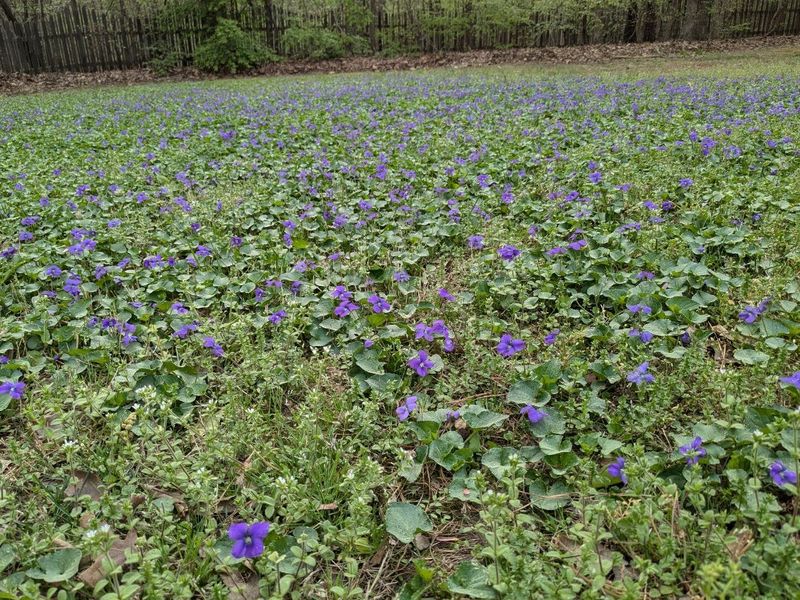
Here is the part that surprises people who assumed “native” meant “well-behaved.” Common blue violet spreads through two separate mechanisms, and together they explain how a few plants in a shady corner become a sprawling colony without anyone noticing until spring.
Underground, the plant grows branching rhizomes that gradually expand the colony’s footprint.
Above ground, it produces the familiar spring flowers that bees and butterflies visit.
But NC State’s profile also notes that common blue violet forms closed, self-fertilizing flowers during summer.
Those flowers never open, never need a pollinator, and still produce fertile seed capsules.
A plant that can seed itself without opening a single bloom has a significant head start on spreading, and most homeowners never see it happening.
University of Minnesota Extension confirms that established violet colonies can be difficult to suppress in turf, partly because the rhizomes persist underground even when the visible plant is removed or mowed down.
Penn State Extension echoes that point, noting the plant can compete aggressively with grass in fertile, moist locations.
The practical rule is not “native, so fine” or “spreading, so remove it.” The better question is where the plant is growing, how fast it is expanding, and whether that location actually needs a uniform turf surface.
A violet colony in a shady, low-traffic margin is doing something useful.
The same colony creeping across the lawn toward the swing set is a different conversation.
Judge the plant by its location and what the yard actually needs there.
Keep The Patches That Match Your Yard
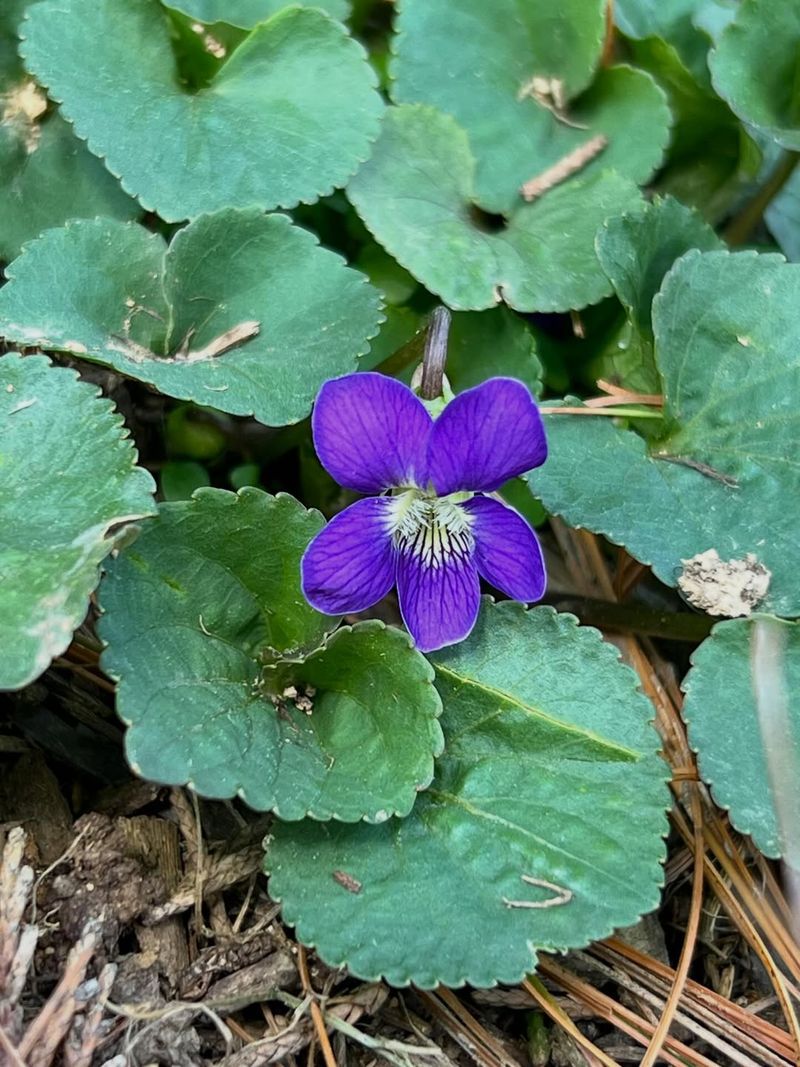
Deciding to keep a violet patch is not the same as giving up on the lawn.
It is a deliberate landscaping choice, and for the right spots, it is a smart one.
The key is matching the plant to locations where its habits are an asset rather than a conflict.
Shady lawn margins, the ground beneath open-canopy trees, strips beside paths, and transitional edges between lawn and woodland beds are exactly the spots where common blue violet earns its keep.
NC State lists common blue violet as suitable for lawns, groundcover plantings, and woodland garden edges, and that range reflects where the plant performs well without creating management headaches.
Keeping it in those zones while maintaining grass in high-traffic areas gives you the best of both: a living, habitat-friendly margin and a functional turf surface where your family actually needs one.
Mowing is your main tool for managing what you keep.
Regular mowing keeps the plants low and limits visible spread by reducing flowering and seed set.
NC State’s shade lawn guidance is a useful companion here, because understanding which areas can realistically support turf helps you decide where violet coexistence actually makes sense.
One honest caveat: mowing does not remove rhizomes.
The underground system stays intact, and the plant will continue to persist and slowly expand even under a regular mowing schedule.
Keeping violets means accepting some ongoing spread in the zones where you allow them.
For many North Carolina yards, especially in the Piedmont and Coastal Plain where shady, moist corners are common, that trade-off is genuinely worth making.
Choose Containment, Another Groundcover, Or Targeted Removal
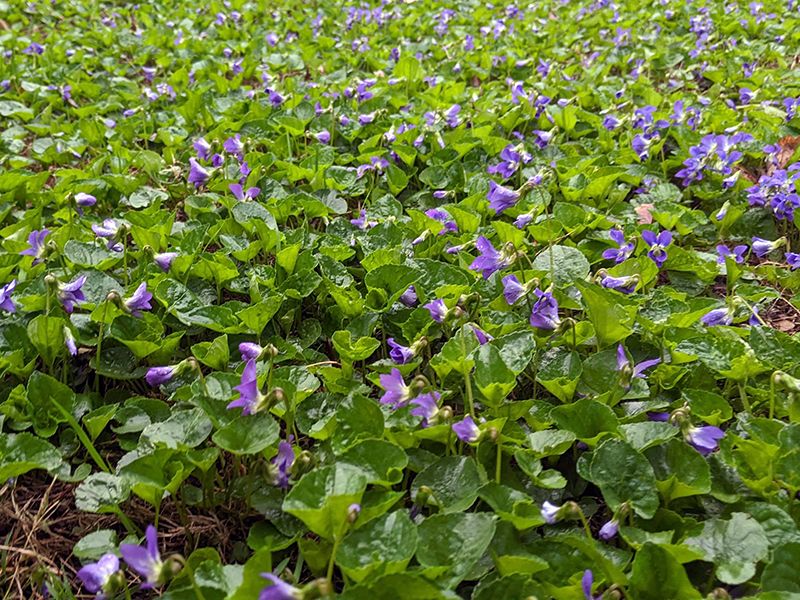
When a violet patch has spread somewhere it genuinely does not belong, removal is a reasonable choice.
Just go in with realistic expectations, because this plant has a well-developed underground system and will not give up easily.
For a small patch, the most reliable starting point is digging during moist soil conditions, when the ground gives a little and roots pull more cleanly.
Remove the entire root system, including the branching rhizomes, as completely as you can.
Fragments left behind can and will regrow, so a single session rarely finishes the job.
Plan to revisit the area over the next few weeks and pull any new growth before it establishes.
Larger infestations call for a broader strategy.
NC State’s integrated pest management guidance frames a healthy, dense lawn as the best long-term defense against weed pressure.
Appropriate mowing height, consistent irrigation, suitable fertilization, and choosing a grass variety matched to the site’s light and drainage can reduce the open space violets need to expand.
But turf improvement will not overcome deep shade, chronically wet soil, or other conditions that fundamentally favor the violet over the grass.
In those cases, a different groundcover or a mulched bed may be a more honest answer than another round of lawn renovation.
University of Minnesota Extension and Penn State Extension both report that postemergence herbicides containing triclopyr can provide useful control in turf, but repeat treatments are often necessary because the waxy leaf surface limits absorption and rhizomes can regenerate.
Preemergence herbicides generally do not control established wild violet.
For specific products, rates, timing, and turf-tolerance information, check the current label and NC State TurfFiles for guidance that matches your grass type and site conditions.
Product legality, re-entry periods, and pollinator restrictions vary and must be confirmed before any application.
Control Carefully And Treat Eating As A Separate Question
Chemical control and casual foraging both deserve more caution than they usually get when the conversation turns to lawn violets.
Handling either one carelessly can cause real problems, so it is worth slowing down on both.
On the herbicide side, timing matters as much as product choice.
Do not spray flowering violets while bees or other pollinators are actively visiting.
Those early spring blooms are a meaningful food source, and University of Minnesota Extension’s pollinator and pesticide guidance is clear that reducing pollinator exposure means avoiding applications when flowers are open and insects are present.
Use spot treatment rather than broadcast spraying whenever the infestation allows it, prevent drift onto surrounding garden plants and shrubs, and follow the current pesticide label from start to finish.
NC State’s integrated pest management framework reinforces treating only the areas that actually need treatment, not the whole lawn as a precaution.
Now for the foraging question.
NC State does list young common blue violet leaves and flowers as edible, and that is accurate for a positively identified plant from a clean site.
The important qualifiers are positive identification, and a harvest area free of herbicides, synthetic fertilizers, pet waste, roadside runoff, and other contaminants.
A purple flower in a lawn that has been treated, fertilized, or used by pets is not a safe harvest site.
University of Minnesota Extension warns that violet leaves can be confused with toxic lesser celandine by inexperienced foragers.
The flowers are easier to identify confidently than the leaves, but even flower-only harvesting requires a clean site.
Do not encourage children to sample unidentified lawn plants based on a photograph or a purple bloom alone.
Give The Violet The Right Job
Every violet patch in a North Carolina yard is asking the same quiet question: does this spot actually need a turf surface, or is something else a better fit?
Answering that question honestly is the whole framework.
Keep common blue violet where a lightly used, shady, or transitional area would otherwise be a bare-soil problem.
A patch beneath an oak, along a fence line that never sees afternoon sun, or at the edge of a woodland bed is doing legitimate work: holding soil, feeding early pollinators, hosting fritillary larvae, and giving birds a seed source in spring.
NC State confirms the plant’s value in exactly those landscape roles.
Contain or replace it where the yard needs uniform turf, clear sight lines around steps and walkways, or a surface that can handle heavy foot traffic without becoming a muddy tangle.
NC State’s shade lawn guidance can help you decide whether a grass variety suited to lower light is a realistic option or whether a different groundcover makes more sense for the site.
Remove it when the spread is genuinely competing with plants or surfaces you need, and do that removal with the realistic expectation that rhizomes require thorough digging and that integrated management usually means more than one round of effort.
Common blue violet is not proven pest control, not a guaranteed solution for difficult shade, and not automatically the best native lawn plant for every yard in the state.
What it can be, in the right corner of the right yard, is a useful native volunteer that handles a hard spot gracefully.
Match it to the site and your goals, and it will probably surprise you with how little it needs in return.