
One Colorful Bloomer Keeps Showing Up In Gardens Because It Handles Heat Better Than People Think
Follow us on Google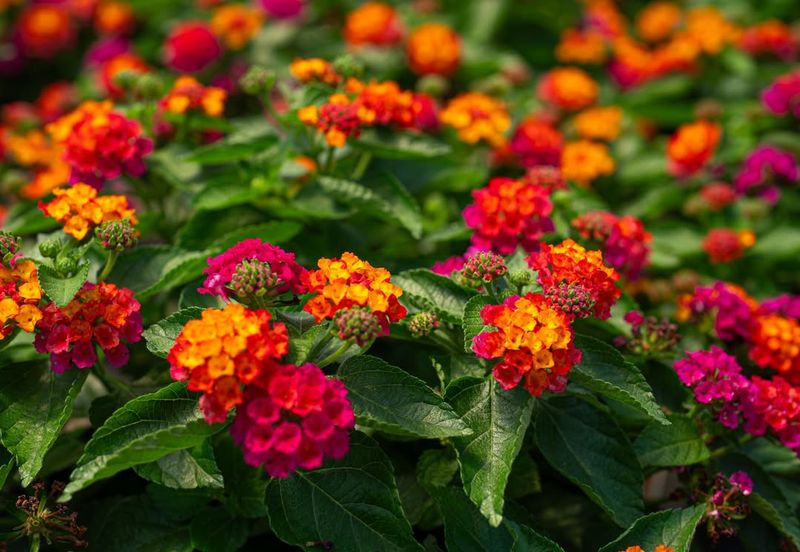
Walk past almost any sunny front bed in July and you will spot it, clusters of tiny flowers shifting from yellow to orange to pink on a single stem, still putting out color while everything nearby looks exhausted.
That plant is likely lantana, and it keeps earning its spot in hot, sunny gardens for good reason.
Properly established lantana can keep producing color through the hottest stretch of summer, including stretches when some cool-season or moisture-dependent flowers have already quit.
Getting that performance does take the right site, the right cultivar, and a little planning upfront.
Lantana Is the Likely Summer Bloomer
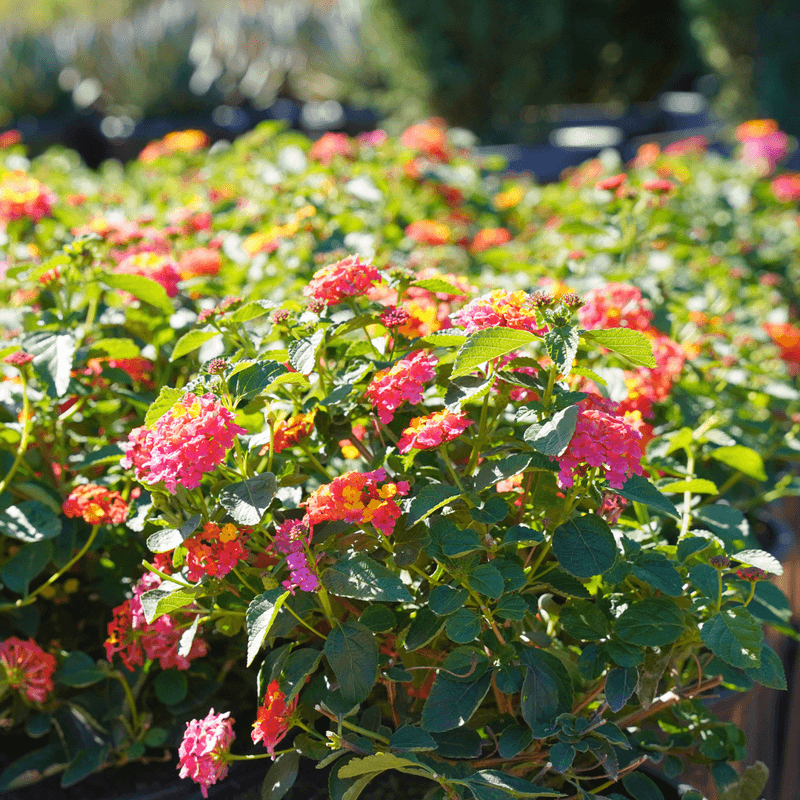
Pull up a photo of that tireless summer plant and the picture almost always comes back the same: tight, dome-shaped clusters of flowers that shift through two or three colors at once, sitting on top of dense, slightly rough foliage that smells faintly herbal when brushed.
That is lantana, and the common name covers a surprisingly wide family.
You are looking at several related species, hybrids, and cultivated selections in the verbena family, not a single uniform plant.
Nursery tags may use different botanical names depending on the type, so do not assume every plant on the shelf is the same thing.
Common landscape lantana is often sold under the name Lantana camara, while the native Texas lantana is commonly identified as Lantana urticoides, native within parts of Texas, Arizona, and New Mexico.
Many cultivars sold in garden centers are hybrids, and those hybrids can differ substantially in mature size, cold hardiness, seed fertility, and regional behavior.
University of Florida IFAS research on lantana species notes that cultivars may vary considerably, which is exactly why the plant tag matters more than the flower color on the display bench.
The corrected promise is narrower than the headline implies, and that narrower promise is actually more useful.
Properly established lantana in a hot, sunny location with good drainage can continue producing color through summer conditions that cause some cool-season or moisture-dependent flowers to decline.
University of Minnesota Extension and University of Illinois Extension both describe it as a strong summer performer, while being clear that climate, site, and cultivar all shape the outcome.
Choose Sun and Drainage Before You Choose Color
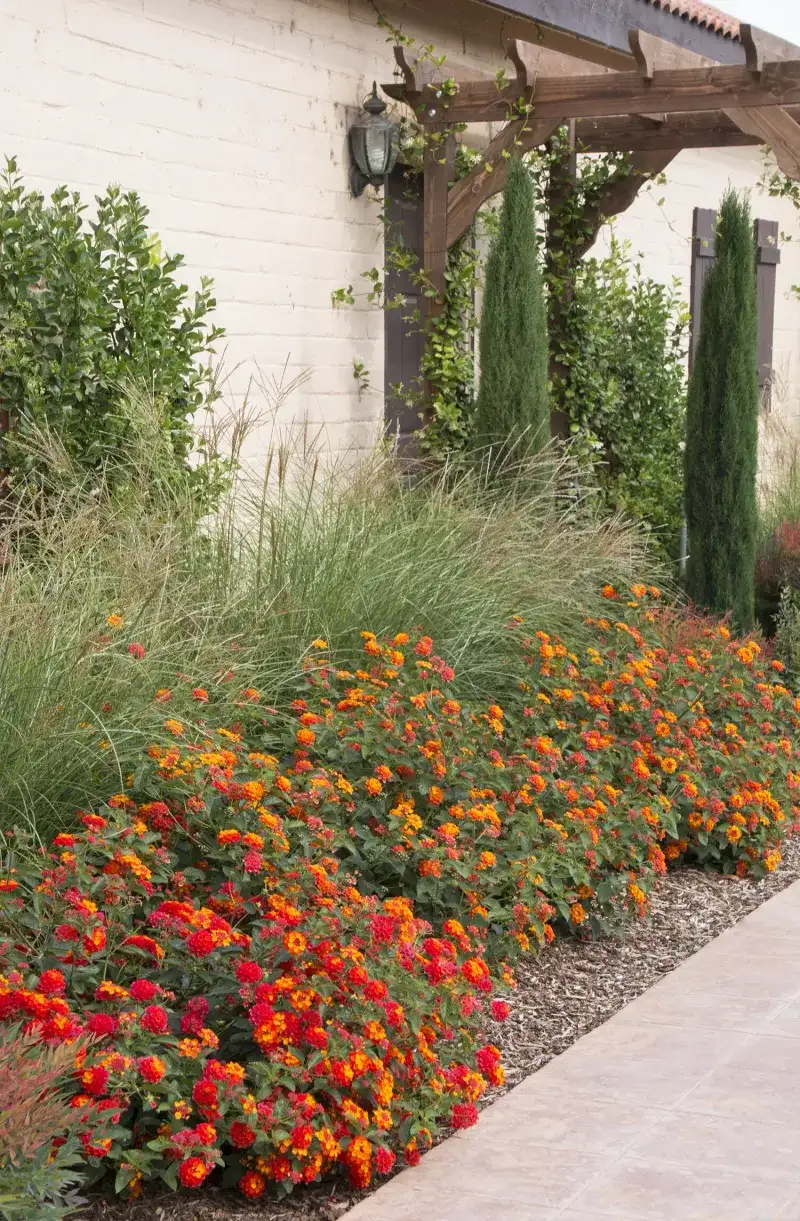
Before you fall for a flower color at the garden center, walk your yard and count the hours of direct sun hitting the spot where you plan to plant.
Lantana is a full-sun plant.
A practical baseline is at least 6 hours of direct light per day, and about 8 hours is where flowering tends to be strongest.
Drop below that threshold and you will likely get more leaf than flower, no matter how well you water or fertilize.
Soil drainage is the other half of the equation, and it matters just as much as sunlight.
Clemson Extension’s lantana factsheet emphasizes well-drained soil as a core requirement, because soggy roots can reduce performance and invite root problems even on a heat-tolerant plant.
If your bed holds water after rain, amend the soil or build it up slightly before planting.
Containers must have drainage holes at the bottom, full stop.
A hot, sunny spot with good drainage is exactly what lantana wants.
But not every hot location qualifies.
Compacted soil beside a driveway, a low corner that collects runoff, or a narrow strip between masonry walls that reflects intense heat without any air movement can stress the plant in ways that reduce rather than support flowering.
UC ANR guidance on lantana points to well-drained, open sites as the reliable setting.
And UC IPM is straightforward that shade is not a reliable placement for strong flowering.
Pick the sunniest, best-draining spot you have, then choose your color.
Water the Roots While the Plant Establishes
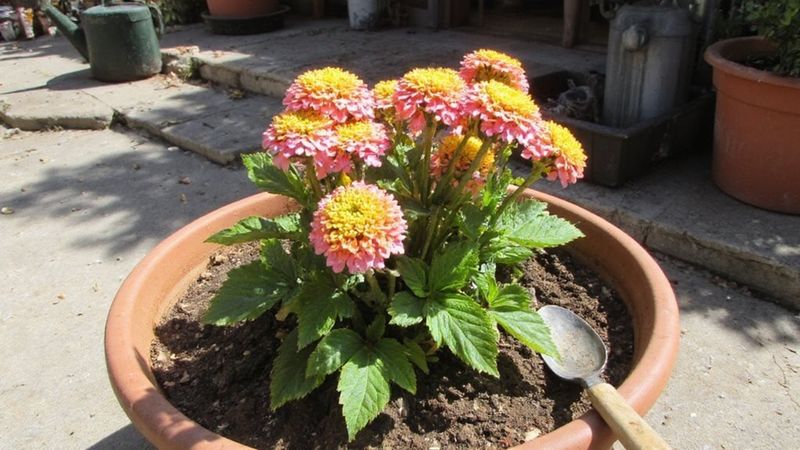
Here is a misconception worth clearing up right away: lantana is drought tolerant after establishment, but that is not the same as needing no water.
A newly transplanted lantana is still spreading its roots into unfamiliar soil, and during that period it needs consistent moisture at the root zone to get going.
Skipping water during the first few weeks because the plant has a reputation for toughness is one of the fastest ways to stall it.
Texas A&M AgriLife Extension recommends deep weekly watering during summer heat for Texas lantana once plants are established, while University of Minnesota Extension advises watering when the top 1 to 2 inches of soil feel dry.
Neither source suggests a set-it-and-forget schedule.
Container plants need even more attention because pots dry out faster than beds, sometimes requiring a daily check during a heat wave.
How you water also matters.
Wet foliage and poor air movement are a reliable recipe for mildew and other disease problems.
Water at the soil line rather than overhead, especially in humid climates.
UC IPM’s lantana pest management guidance notes that overwatering and poor drainage can contribute to root and crown problems.
Overwatering can also reduce flowering, because a plant that is sitting in too much moisture tends to put energy into surviving rather than blooming.
Think of deep, infrequent watering as the rhythm you are working toward once the plant is settled in, not the routine you start with on day one.
Match the Cultivar to the Space
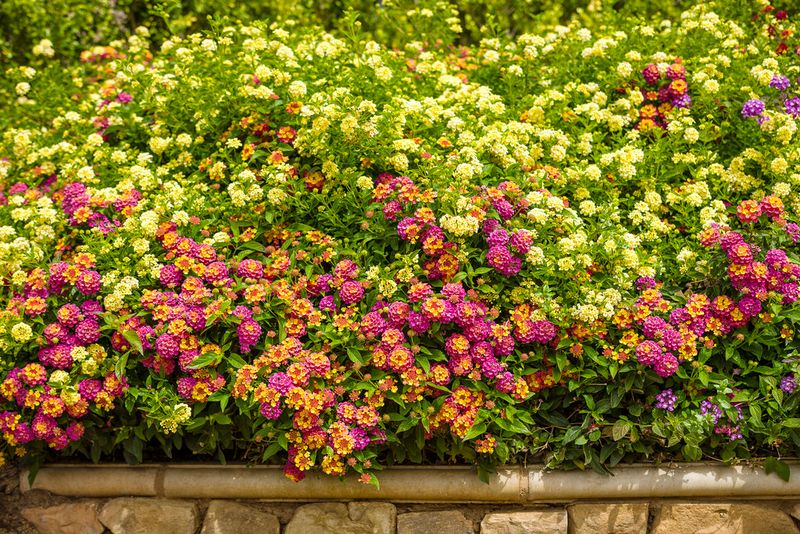
Flower color is the first thing most people notice at the nursery, but growth habit is the detail that determines whether the plant fits the spot five months from now.
Lantana cultivars range from compact bedding types that stay tidy in a 12-inch footprint to larger mounding forms that commonly need 15 to 24 inches of spacing, and trailing selections that can spread 4 feet or more across a slope or container edge.
Mississippi State University Extension describes the range of lantana habits and reinforces that the plant tag is the most reliable guide for final spacing.
Compact forms work well in mixed containers and front-of-border spots where you want color without a lot of management.
Mounding types fill a sunny mid-border gap or anchor a large container, but they need room to breathe so air can move through the foliage.
Trailing forms are genuinely useful for spilling over retaining walls or softening the edge of a raised bed, though their spread means they can overtake smaller neighbors if left unchecked.
Beyond size, cultivars can differ in seed fertility, cold tolerance, and how they behave in your specific region.
Clemson Extension notes that some cultivars are better suited to warmer climates where they may return after winter, while others are reliably treated as annuals in cooler areas.
UF/IFAS research reinforces that cultivar differences are significant enough to affect regional recommendations.
Read the tag, match the habit to the space, and you will save yourself a pruning battle or a crowded walkway later in the season.
Plan for Winter and Feed With Restraint
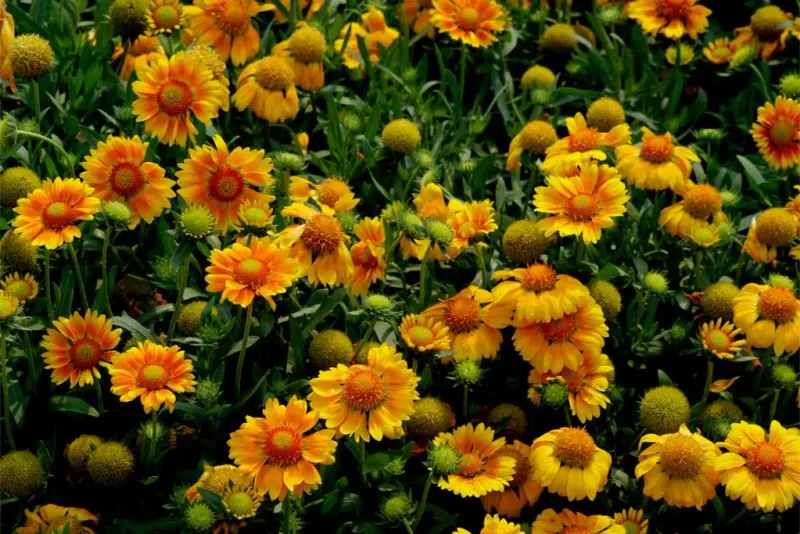
Winter behavior is where lantana surprises the most people, and the surprise cuts both ways.
In northern states, lantana is generally grown as a warm-season annual because freezing temperatures near 28 degrees Fahrenheit can kill the plant outright.
University of Minnesota Extension recommends waiting until soil temperatures exceed 60 degrees Fahrenheit before planting outdoors.
That means a Minneapolis gardener and a San Antonio gardener are essentially growing different experiences with the same plant.
In warmer regions, some cultivars may return after winter, but that is cultivar- and site-dependent rather than a reliable rule for every warm-climate garden.
Clemson Extension advises planting after frost danger has passed and acknowledges that some southern selections can behave as perennials.
Where the plant does return, Texas A&M AgriLife Extension recommends cutting Texas lantana back to about 8 inches in early spring to encourage fresh, compact growth.
In colder regions, wait until you can clearly see which stems survived before cutting anything.
Feeding follows a similar logic of restraint.
Lantana in the ground generally does not need heavy fertilization.
Too much nitrogen pushes leafy growth at the expense of flowers, which is the opposite of what you want.
University of Arkansas Cooperative Extension echoes this caution.
Container plants may need periodic feeding because repeated watering leaches nutrients from the mix, but follow the product label for rate and frequency rather than guessing.
And deadheading, which is removing spent flower clusters to encourage reblooming, depends on the cultivar.
Sterile or self-cleaning types need less of it.
The word
Add Wildlife Value Without Overselling It
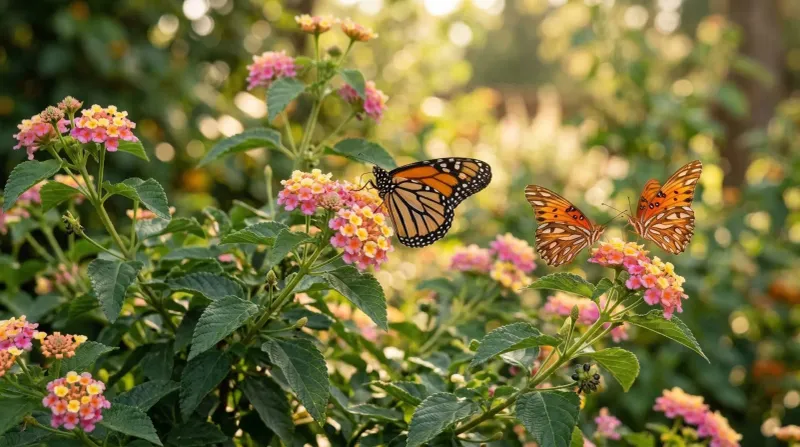
Lantana genuinely earns its place in a yard that wants to see more butterflies on a summer afternoon.
The flowers produce nectar that attracts butterflies, moths, hummingbirds, and other visitors, and Florida horticultural research on pollinator plant visitation found that lantana ranked among the more frequently visited ornamentals by butterflies and moths compared with several other plants tested in the study.
That is useful evidence for placing it in a sunny border where you want to see wing activity.
The honest limit of that evidence is also worth naming.
Lantana provides nectar, which is one layer of what wildlife needs, not the whole picture.
A yard that genuinely supports pollinators also needs host plants where caterpillars can feed and complete their life cycle, nesting habitat such as bare soil patches or hollow stems, a water source, and a range of flowering species that bloom at different times through the season.
University of Minnesota Extension and Clemson Extension both note the wildlife attraction while stopping well short of calling lantana a complete habitat solution.
A nonnative ornamental, which most landscape lantanas are, does not supply the same ecological depth as regionally native plants.
The most practical framing is that lantana can be one useful, nectar-producing layer in a broader planting that includes locally appropriate species.
Think of it as a reliable feeding station on a sunny wall, not the whole garden ecosystem.
Check Invasiveness and Household Safety Before Planting
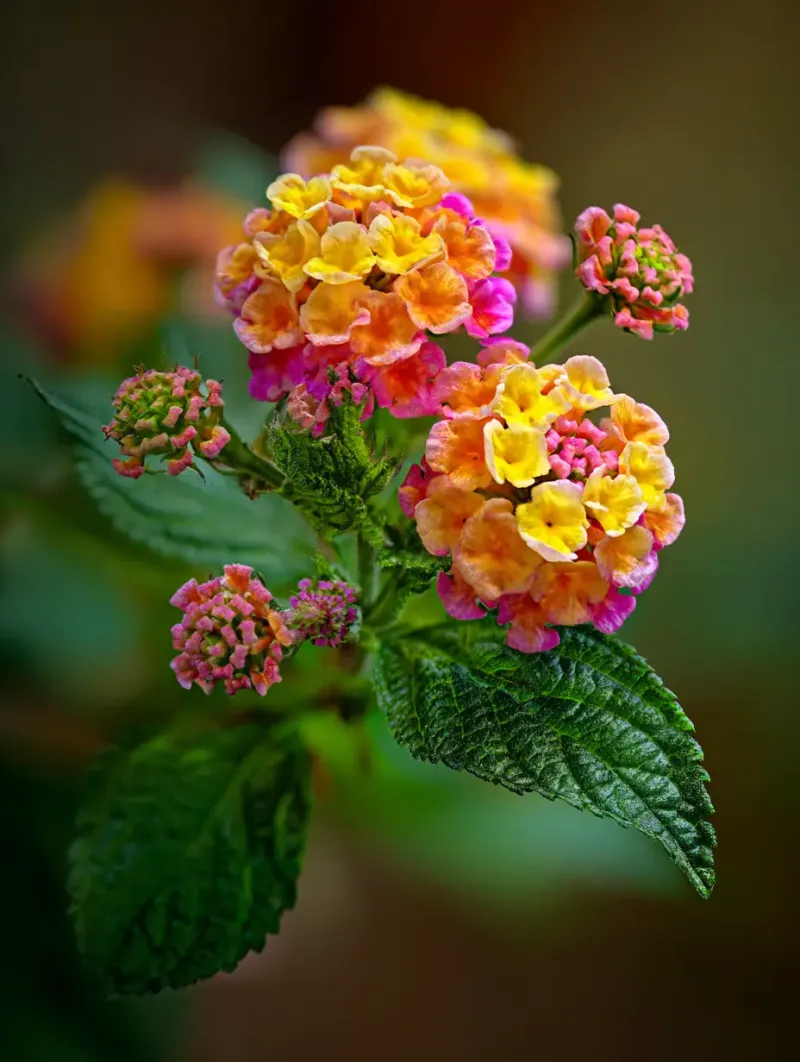
Two questions should shape your buying decision before the plant ever leaves the nursery.
The first is whether lantana is considered invasive where you live.
Common lantana, sometimes identified as Lantana strigocamara, is listed as invasive in parts of Florida and is considered a problem in other warm regions where it can spread by seed and displace native vegetation.
UF/IFAS gardening solutions recommends avoiding the common invasive type in Florida and choosing vetted alternatives instead.
The Invasive Plant Atlas of the United States tracks its documented spread across multiple warm states.
Some sterile cultivars are marketed as safer alternatives because they do not produce viable seed, but the word “sterile” on a tag should be verified by cultivar name against reputable local guidance rather than accepted at face value.
UF/IFAS research on trailing lantana varieties evaluated female fertility across cultivars and found variation, which is why cultivar-level verification matters.
The UF/IFAS plant directory entry for Lantana camara provides specific guidance for Florida gardeners.
Check your state or county invasive-plant list before buying, especially in the South and Southwest.
The second question is household safety.
The ASPCA lists Lantana camara as toxic to dogs, cats, and horses, with leaves and unripe berries posing particular concern if chewed or ingested.
UC ANR toxicity guidance reinforces the need for caution around grazing animals.
For households with children, a 2010 study in Pediatrics reviewing 641 pediatric lantana ingestions found that most cases involved no or minimal symptoms, but the authors were clear this does not make the plant safe or edible.
If ingestion is suspected, contact Poison Control or a medical professional promptly.
The practical household step is straightforward: plant lantana where pets and small children cannot easily reach it, and discourage chewing.
Use Lantana as a Fit-for-Place Choice
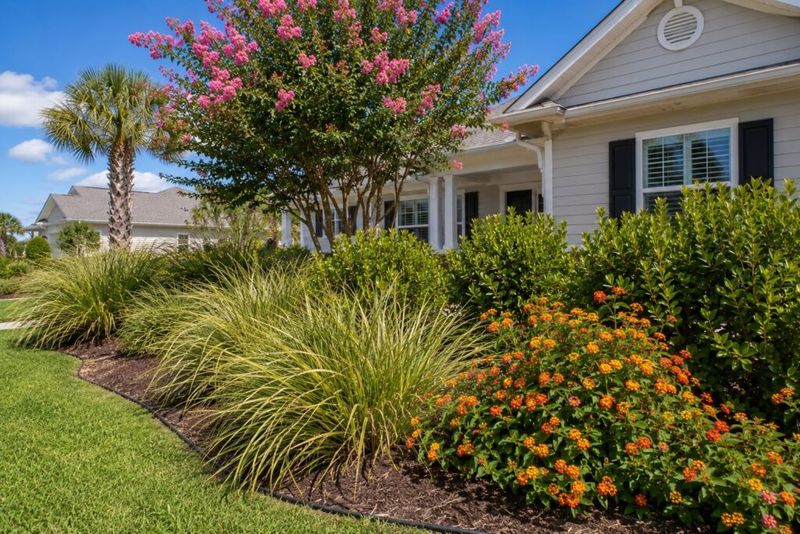
Before you put lantana in the cart, run through a short checklist that takes about five minutes.
Confirm the cultivar name and read the botanical label so you know what you are actually buying.
Measure how many hours of direct sun hit your target spot on a summer day, aiming for at least 6 and ideally closer to 8.
Check whether the soil drains well after a rain, or whether the area holds water.
Plan how you will water the root zone consistently for the first several weeks while the plant establishes.
Then think forward to fall and winter.
Find out whether your region gets killing frosts and how your chosen cultivar typically responds.
Check your state or county invasive-plant list, especially if you garden in a warm region where lantana can spread by seed.
Consider who else uses the yard, because UF/IFAS lantana guidance and University of Minnesota Extension both note that the plant’s appeal and its risks depend heavily on location and household context.
Lantana can provide dependable summer color in suitable hot, sunny beds and containers, and that is a genuinely useful thing in a yard that needs reliable warm-season interest.
But its success depends on matching the plant to the place.
Pair it with locally appropriate plants, add a water source, and include some native species for habitat depth.
UF/IFAS cultivar fertility research is a reminder that the right cultivar in the right place is the whole game.
A plant that fits its site well tends to ask less of you and give back more all season long.