
This Plant Looks Soft And Friendly, But It Wins Garden Space By Solving A Real Problem
Follow us on Google
Run your fingers across a lamb’s ear leaf and it feels like soft flannel, almost too nice to be a working garden plant. But that fuzzy texture is exactly why deer often walk right past it, and why gardeners dealing with browsed borders keep reaching for it.
Lamb’s ear, Stachys byzantina, earns its spot in sunny, dry beds by quietly solving two common headaches at once: deer pressure and low-water planting. It is not a miracle fix, but in the right spot, it pulls its weight.
Lamb’s Ear Is The Soft Deer-Resistant Plant
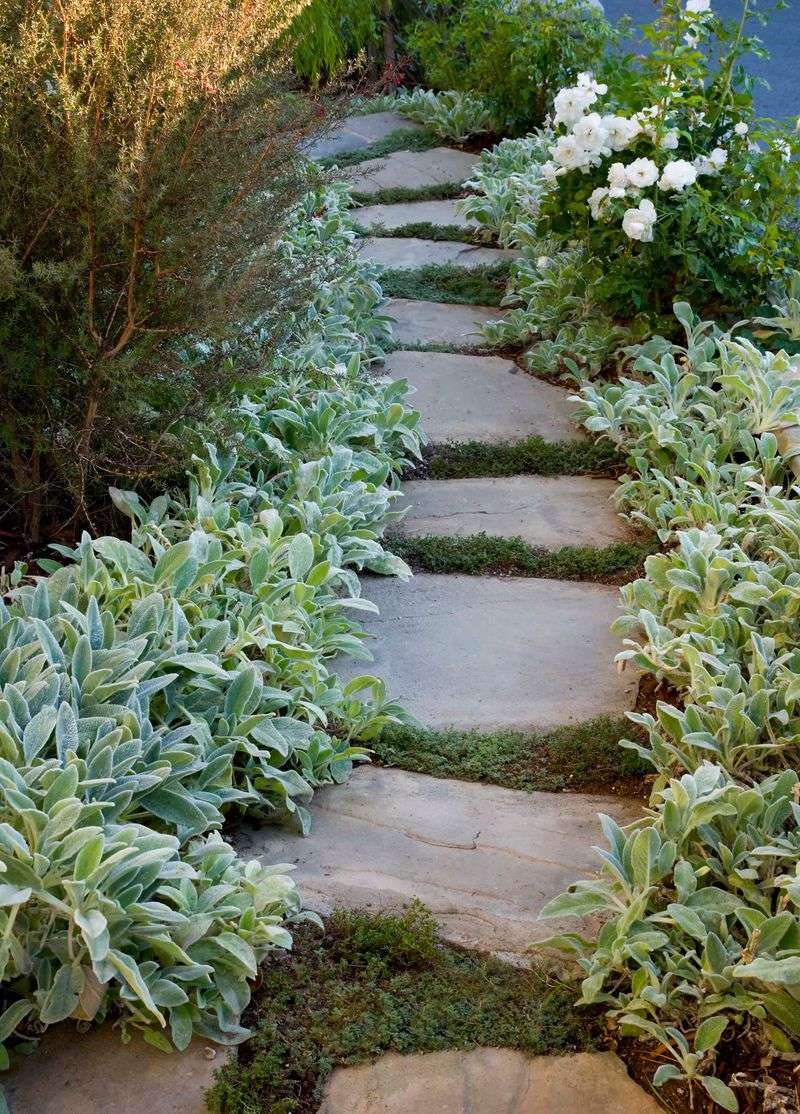
Feel the leaves once and you understand the name immediately. Lamb’s ear, Stachys byzantina, grows thick, felt-like silver foliage that stops people mid-stride on a garden path.
That texture is not just decorative, it is the main reason this plant earns space in yards where deer browse everything else flat.
According to the North Carolina Extension Gardener Plant Toolbox, lamb’s ear is a perennial in the mint family, native to rocky areas of Turkey, the Caucasus, and Iran, not to the United States. Mature plants typically reach about 8 to 18 inches tall and spread roughly 12 inches to 3 feet wide, depending on cultivar and growing conditions.
It forms a low, spreading mat of silver-gray leaves that softens a border edge without demanding much from the soil.
Think of it as a planting layer, not a complete solution. Lamb’s ear works best as the front edge of a sunny, well-drained border where deer pressure is a recurring problem and supplemental watering is something you want to reduce over time.
It will not fix every deer issue in your yard, but it gives you a reliable, lower-browse, lower-water option right where foot traffic and animal paths tend to meet.
Its spreading habit and soft appearance make it approachable for beginners, but experienced gardeners value it for what it actually does: hold a dry, sunny edge with minimal fuss while looking good doing it.
Why Deer Often Pass On The Fuzzy Leaves

Most deer browse by feel as much as smell. When they push their nose into a plant and the texture feels rough, woolly, or just plain unpleasant, they often move on to something softer and easier to eat.
That is the practical reason fuzzy-leaved plants tend to hold up better in yards with regular deer traffic.
The University of Minnesota Extension specifically lists lamb’s ear among fuzzy-leaved plants that may discourage deer because of their unpleasant texture. The key word is “may.” Deer-resistant is not the same as deer-proof, and the University of Maryland Extension is clear that no landscape plant is completely safe when deer are hungry, stressed by drought, or crowded into a neighborhood with limited food.
The woolly coating on each leaf comes from tiny structures called trichomes, which are hair-like outgrowths on the leaf surface. Research on the ecophysiology of leaf trichomes shows these structures can influence light reflection and the movement of air near the leaf surface, which may affect how the plant manages heat and water.
That general plant biology does not translate into a guaranteed water-savings number for your garden, so do not plan your irrigation schedule around it.
Use this plant where deer damage to the plant itself is the repeating problem. Place it along the front of a border, beside a walkway, or in a dry sunny bed.
That is where its less-preferred status actually pays off for you.
A Sunny Dry Border Is Its Best Job
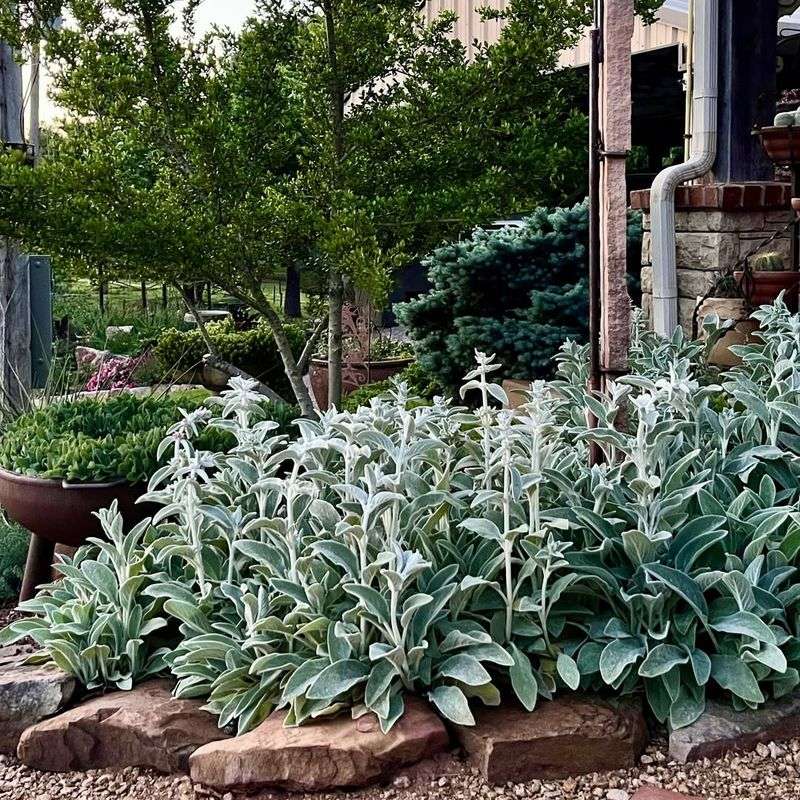
Matching a plant to the right spot sounds obvious, but it is where most gardeners lose the battle before it starts. Lamb’s ear is genuinely well-suited to sunny, dry conditions that would stress or kill a lot of other perennials, and that is worth understanding before you dig a hole.
The plant performs best in full sun to partial shade. Full sun means approximately 6 or more hours of direct light per day.
A dry, sunny border, a raised bed, a slope, a walkway edge, or even a container can all work well. What does not work is a damp lawn substitute or a shaded bed with poor drainage, because those conditions push the plant toward rot rather than growth.
For a groundcover effect, the North Carolina Extension Gardener Plant Toolbox and University of Illinois Extension both suggest spacing plants about 12 to 18 inches apart, with some cultivars like ‘Helen von Stein’ doing well at 12 to 15 inches. Give them room and they will fill in, forming a silver carpet that softens hard edges and adds something you can actually reach out and touch.
That tactile quality makes lamb’s ear a natural fit for sensory gardens, children’s garden areas, and paths where people slow down and interact with plants. That use is about texture, not taste.
Do not let the plant’s sensory appeal be confused with any suggestion that it is safe to chew or eat.
Think of it as the plant that does the boring, reliable work at the front of the bed while taller plants take the spotlight behind it.
Good Drainage Decides Whether It Thrives

Many gardeners plant lamb’s ear and then water it like a hosta. That is usually where the trouble starts.
This plant comes from rocky, dry hillsides in Turkey and the Caucasus, and it carries that preference into your yard whether you respect it or not.
Persistent wetness, soggy soil, and poor air movement around the leaves can contribute to leaf problems, crown rot, and root rot. Texas Tech University Plant Resources notes that wet foliage and poor drainage increase the risk of these problems significantly.
When you water, direct it at the soil and avoid repeatedly wetting the leaves. Give the plants space so air can move around them freely.
Newly planted clumps need regular watering during establishment, roughly the first growing season, to help roots settle in. Once established, mature plants need much less supplemental irrigation.
That shift from regular watering to occasional watering is the real payoff, but it takes patience to get there.
In hot, humid, or rainy regions, the North Carolina Extension specifically recommends a slope or raised bed to reduce root-rot risk. If your yard sits flat and stays damp after rain, a raised bed built up 6 to 8 inches with well-amended, fast-draining soil can make the difference between a plant that thrives and one that quietly collapses by midsummer.
USDA hardiness zones, roughly 4 through 9 for most cultivars, describe winter cold tolerance, not summer humidity, rainfall, or drainage. Two gardens in the same zone can have completely different results with this plant based on those local conditions alone.
Deer Resistance Still Needs A Backup Plan
Planting lamb’s ear along your border does not put a force field around your roses. That is the most common misunderstanding about deer-resistant plants, and it is worth clearing up before you reorganize your whole yard around this one idea.
Lamb’s ear may be less preferred by deer under normal conditions, but as the University of Maryland Extension explains, no landscape plant is completely safe from deer. Feeding pressure, drought, season, deer density, and the availability of other food can all change browsing behavior.
A deer that is hungry enough in late winter will eat plants it ignored all summer.
For newly planted clumps, temporary mesh or an appropriate repellent spray can help get the plants established when local deer pressure is high. Repellents need reapplication after rain and as new growth emerges, so factor that into your plan.
The University of Minnesota Extension recommends combining plant selection with other deterrents rather than relying on plant choice alone.
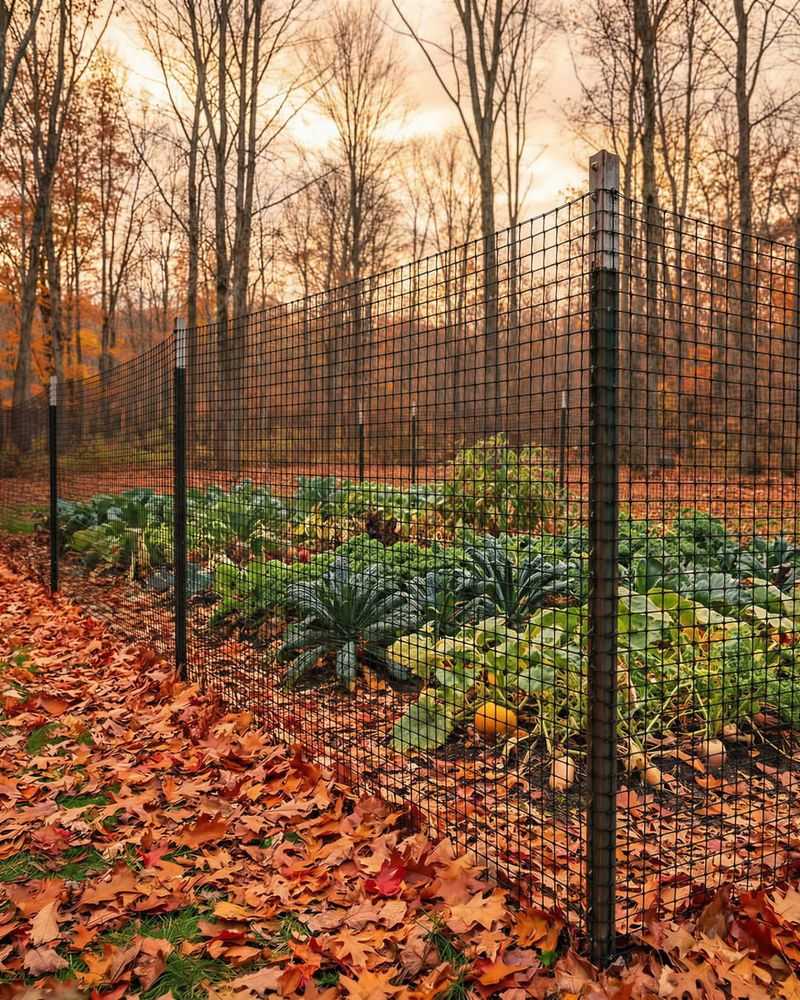
For serious, repeated deer damage across a yard, fencing is the more dependable option. UC Marin Master Gardeners and other extension sources note that deer fencing commonly needs to reach about 6 to 8 feet, depending on conditions and how pressured the local deer population is.
Startled or hungry deer can clear shorter barriers.
And as UConn Extension’s deer management guidance makes clear, planting lamb’s ear beside roses, hostas, vegetables, or young trees does not create a protective barrier for those plants. It may reduce browsing on itself, but the yard around it stays just as accessible to deer as before.
Control The Spread Before It Takes Over
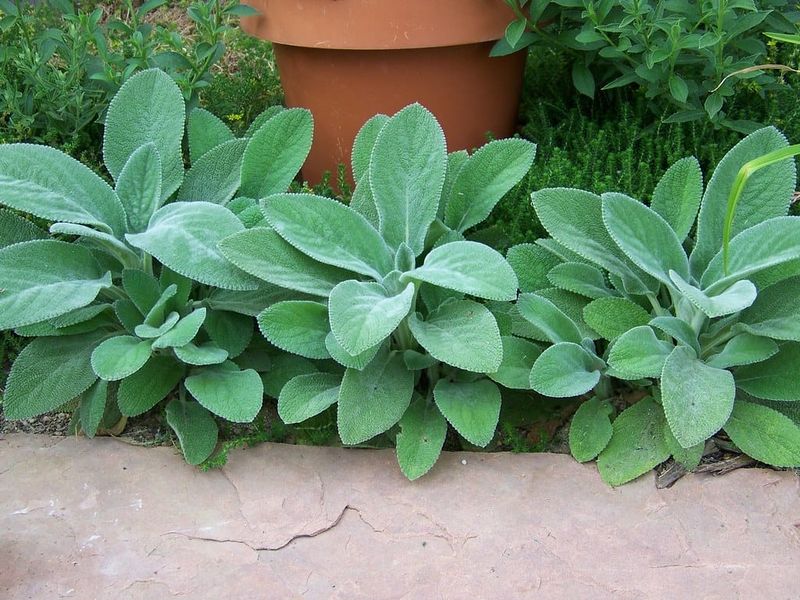
Lamb’s ear is not a set-it-and-forget-it plant. Left alone in good conditions, it can spread further than most gardeners expect, and that spreading habit is worth managing from the start rather than after the fact.
Creeping stems root at nodes as they travel outward, and the plant can move into nearby turf or adjacent beds over time. Iowa State University Extension lists lamb’s ear among aggressive landscape plants that can spread into turf and other garden areas, though stray plants can be removed by hand or digging.
Calling it invasive everywhere in the United States would be too broad. Other extension sources describe it as spreading but manageable, and regional assessments vary.
The honest framing is that it can spread aggressively in favorable conditions, so watch the edges of the bed.
Remove flower stalks when your goal is a compact silver foliage carpet. The flower spikes are small and many gardeners find them less attractive than the leaves.
Texas Tech University Plant Resources notes that removing them helps maintain a tidier habit and keeps the plant’s energy in the foliage rather than seed production.
Divide crowded plants in spring or early fall, roughly every 2 to 4 years, when vigor starts to decline or the center of the clump dies out. Clemson Cooperative Extension’s guidance on dividing perennials recommends replanting divisions at the same depth they originally grew.
Division keeps the plant healthy and gives you free starts for other spots in the yard.
Cultivar choice affects how much of this work you will do. University of Illinois Extension notes differences among popular cultivars, and University of Wisconsin-Madison Horticulture covers ‘Big Ears’ specifically. ‘Helen von Stein’ and ‘Cotton Boll’ also differ in flowering frequency, mature size, and spread rate, so choosing the right cultivar for your space can reduce maintenance noticeably.
Use It As One Layer Of A Realistic Garden Plan
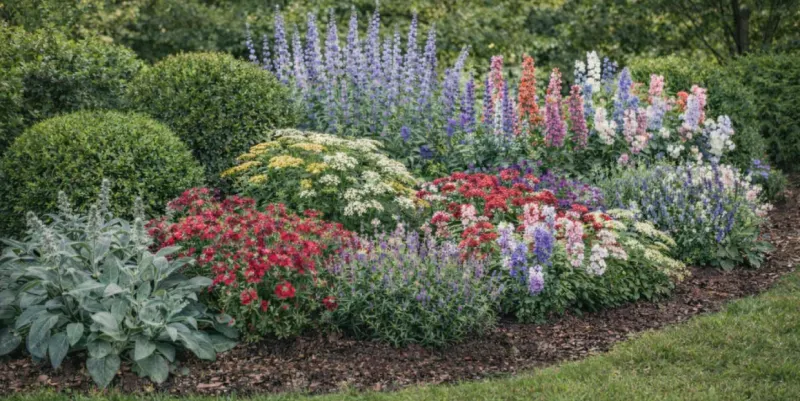
Lamb’s ear fits best as one component of a thoughtful, layered planting plan, not as a stand-alone answer to deer, drought, or bare soil. Framing it that way keeps expectations honest and the garden looking good through the seasons.
In sunny, well-drained sites where deer pressure is moderate and water use is a real concern, the North Carolina Extension Gardener Plant Toolbox confirms it performs reliably as a border plant, dry-bed groundcover, or walkway edging. That is its sweet spot.
Pushing it into wet, shaded, or perpetually soggy ground is asking it to fail.
In areas with severe deer pressure, combine plant selection with temporary mesh, repellent rotation, or proper fencing rather than betting the whole yard on plant choice alone. The UC Marin Master Gardeners deer-resistant plant guidance and University of Maryland Extension both emphasize that layered strategies outperform single solutions.
If your site is humid, low-lying, or prone to standing water after rain, a better-adapted plant will serve you far more reliably than forcing lamb’s ear into unsuitable conditions. And as Iowa State Extension notes, its spreading habit deserves attention before it moves beyond the bed you intended for it.
Lamb’s ear is not native to the United States. If supporting local wildlife and pollinators is a priority for your yard, consult regionally appropriate native-plant guidance for your area, because native plants selected for your specific region may offer stronger habitat value for local insects and birds.
Lamb’s ear earns its spot through function and texture, a quiet, practical plant that asks very little and delivers exactly what it promises.