
A Small Wildflower Patch Brings Back More Bees Than Most Backyards Expect
Follow us on Google
Tucked into a corner of a typical suburban yard, a patch of native flowers can quietly become one of the busiest spots on the block. Research suggests that a well-designed bed may support more kinds of bees than you’d expect from such a small space, though the science is more specific than the buzz around pollinator gardening usually lets on.
What a modest patch can genuinely do for your yard is worth understanding before you buy a single seed packet.
What One Patch Can—and Cannot—Do
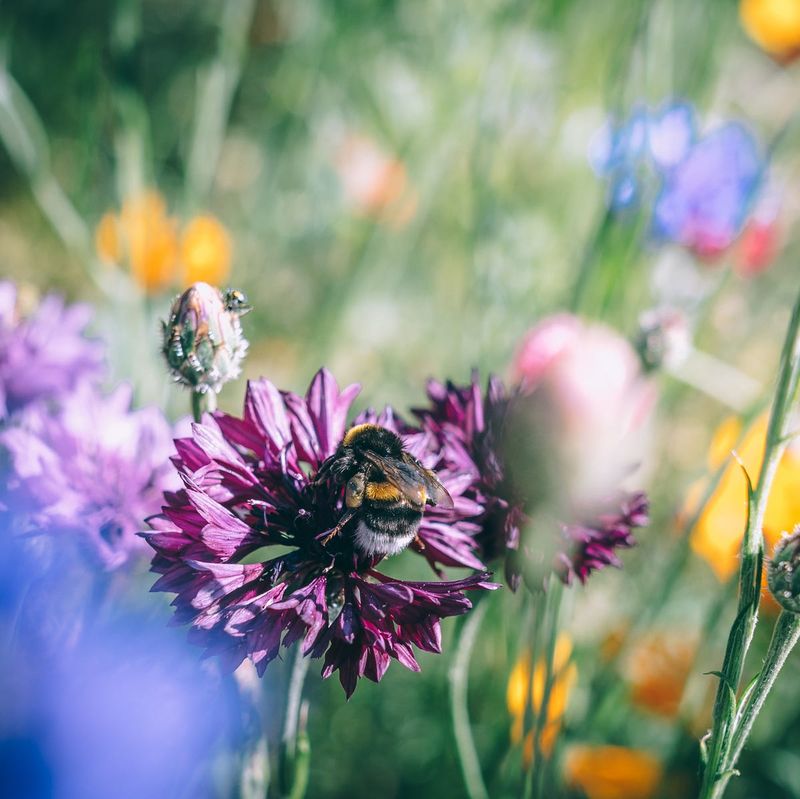
Spend a warm July afternoon near a concentrated patch of native flowers and you may notice something surprising: bees of three or four different sizes working the same small bed within minutes of each other. That kind of visible diversity is exactly what the research points toward, though the story behind it is more careful than most gardening headlines suggest.
A 2018 experiment on small urban flower patches found that adding concentrated plantings increased species density among small bees, meaning more kinds of small bees showed up in those spots. Total bee abundance, the raw count of individual bees, did not consistently rise.
So the patch may attract a wider cast of visitors without necessarily drawing a larger crowd every day.
Separate backyard research linked greater bee richness and abundance with several garden characteristics together: more flowers, taller vegetation, woody cover, fewer lawn areas, and the presence of native plants. That study found associations between these features and bee measures, not a guarantee that installing one bed causes a fixed increase.
The United States is home to roughly 4,000 known native bee species, ranging from tiny sweat bees smaller than a watermelon seed to chunky bumble bees and carpenter bees. The familiar European honey bee is not native to North America at all.
A single flower bed can potentially serve several of these species at once, because their nesting habits, body sizes, and flower preferences differ enough that one well-stocked patch offers something to many of them.
What a small patch can honestly do is provide food and habitat resources, and it may make bee activity noticeably easier to observe. What it cannot do is restore a lost bee population or guarantee a specific number of visits.
Concentrate Flowers Into A Useful Foraging Site
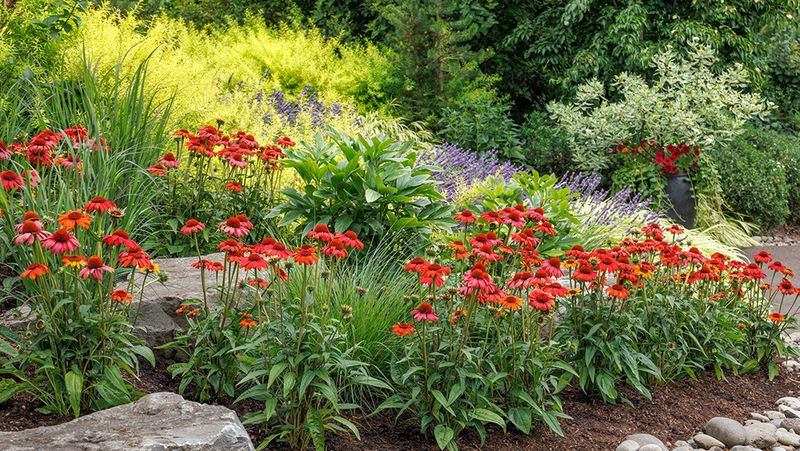
Scattered single flowers dotted through a lawn ask a bee to work like a delivery driver with stops miles apart. A concentrated bed is more like a farmers market: everything worth visiting is in one place, and the trip pays off.
USDA’s Pollinator Gardens Design Guide recommends grouping several plants of the same species into clumps rather than mixing every variety together in a scattered pattern. It describes clumps covering roughly 1 square meter, about 10.8 square feet, as a practical design benchmark where space allows.
That size gives a foraging bee enough blossoms in one spot to feed efficiently without burning energy crossing open ground.
Flower shape and height matter as much as species count. Short, open-faced flowers like black-eyed Susan (Rudbeckia hirta) suit short-tongued bees.
Tubular flowers like bee balm (Monarda fistulosa) reward longer-tongued visitors. Mixing both forms in one bed widens the range of bees that can use it.
Penn State Extension recommends buying at least 3 plants of a species when using nursery-grown perennials, then placing them together as a group. That approach creates the visual mass and floral density that makes a clump useful to foragers.
Before buying any of the species named here, check with your local Cooperative Extension office or a regional native plant nursery. Penn State’s wild bee guidance notes that plant suitability shifts with climate, soil type, and local invasive-plant concerns, so a flower that thrives in one county may struggle or spread aggressively in the next.
Grouping is a design advantage, not a promise that bees will arrive on schedule, but it removes one of the most common reasons they do not.
Choose Regional Plants With Overlapping Bloom Times
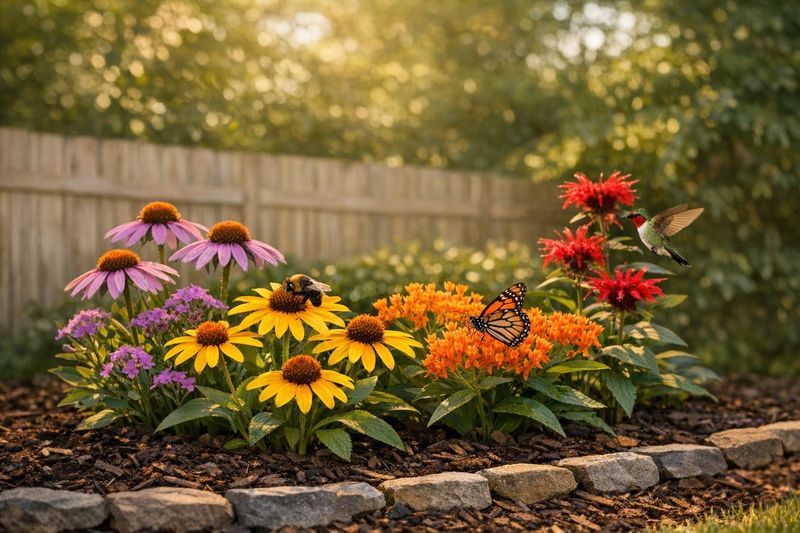
One of the fastest ways to limit a pollinator garden is to plant everything that blooms in July. By August the show is over, and bees active in September have nothing to find.
Different bee species fly at different times of year. Some bumble bee queens emerge as early as late February in warmer states, while others do not appear until May or June.
Covering spring through fall with overlapping bloom periods means the patch stays useful across the active season rather than spiking once and going quiet.
The starting point is a plant list built for your specific region. Pollinator Partnership’s ecoregional planting guides are organized by US ecoregion and account for local climate, soil, and moisture conditions.
Their zip-code plant selection tool narrows the list further. The Xerces Society’s regional plant lists offer another reliable starting point organized by state.
A plant native to the Southeast, such as coral honeysuckle (Lonicera sempervirens), may be entirely wrong for a high-desert yard in New Mexico or a clay-heavy lot in the upper Midwest. Regional lists account for those differences; a single national seed mix usually does not.
A multiyear study of wildflower seed mixes across US agricultural regions found that no tested mix consistently produced the full diversity of species listed on the packet.
Annuals like phacelia or annual sunflower can fill gaps in the first season while perennials establish. But perennials, once rooted, provide more durable habitat year after year.
USDA’s seasonal continuity guidance consistently emphasizes that a mix of species covering spring, summer, and fall bloom periods serves more bee species than any single-season planting, however dense it is.
Add Nesting And Overwintering Space
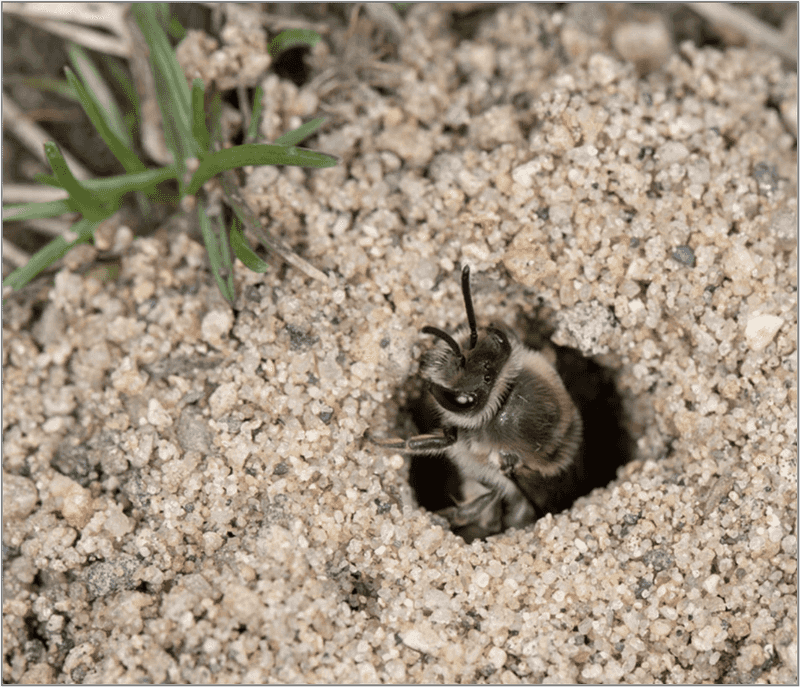
Flowers are the invitation, but a bee that cannot nest nearby may not stay long enough to matter. Food and shelter belong in the same patch if the goal is a genuinely functional habitat rather than just a pretty garden border.
About 70% of native bee species nest in the ground, according to USDA Agricultural Research Service guidance on nesting native bees. They need bare or sparsely vegetated soil to dig into.
Thick landscape fabric, several inches of wood-chip mulch, dense turf right up to the bed edge, and frequent tilling can block or destroy those sites.
Leaving a patch of bare or lightly covered ground near the flower bed, even a strip 1 to 2 feet wide, gives ground-nesting species somewhere to work. Xerces Society’s guidance on bare ground for bees explains that south-facing slopes and areas with loose, well-drained soil are especially attractive to ground nesters.
The remaining 30% or so of native bee species nest in hollow or pithy stems, wood cavities, brush piles, or leaf litter. USDA’s design guide recommends combining diverse flowers with standing stems, logs, and natural debris rather than tidying everything away at season’s end.
Artificial bee hotels can help some cavity-nesting species, but they are optional rather than essential. ARS research on bee nesting structures notes that poorly maintained nesting blocks can accumulate mold, parasites, and disease.
If you install one, clean or replace the tubes each year and site it where it gets morning sun and afternoon shade. The most reliable nesting support is the natural material already available in a well-kept but not over-tidied yard.
Install The Bed For Your Region And Species
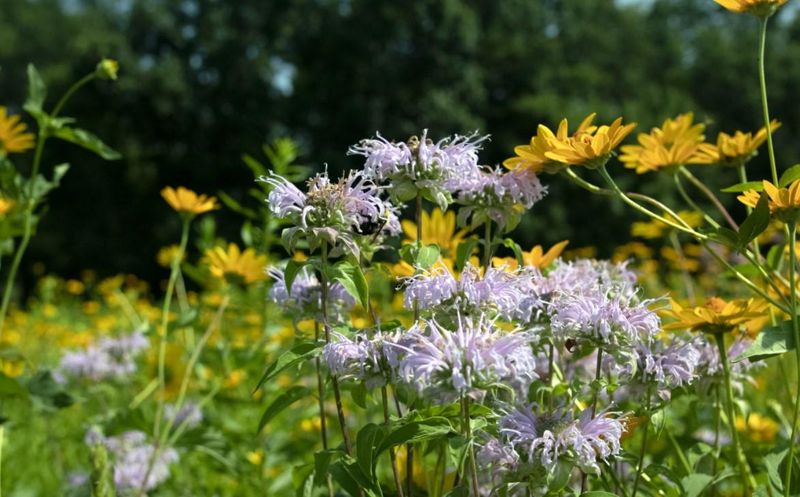
Getting a wildflower patch established is the part most gardening articles gloss over, and it is where many first attempts quietly fail. Timing and site preparation matter more than the seed packet photo suggests.
Start by clearing the area. USDA’s pollinator garden guide lists sod removal, smothering with cardboard, tilling, and carefully considered herbicide use as possible preparation methods.
Which one fits depends on your soil, the existing vegetation, and how quickly you need the bed ready. Skipping this step usually means spending the next two seasons fighting grass that never left.
Planting dates depend entirely on species and region. A prairie coneflower (Ratibida columnifera) sown in Kansas in fall behaves very differently from the same seed started indoors in Minnesota in February.
Illinois Extension describes indoor cold-moist stratification periods of roughly 5 to 6 weeks for some prairie seeds, while fall sowing outdoors lets winter weather do that work naturally. Do not apply that timeframe to every wildflower species, because requirements vary widely.
Seed depth also varies. Utah State’s seeding guidance gives 1/4 to 1/2 inch as a suitable depth for some warm-season species, but fine seeds like those of mountain mint (Pycnanthemum virginianum) need light and should barely be pressed into the surface.
Always follow the seed packet or your local restoration guide for the specific species you are planting.
If you are using nursery-grown perennials rather than seed, buy at least 3 plants of each species and group them in a clump. Penn State Extension recommends this approach for stronger visual grouping and more efficient foraging.
Water new transplants regularly during the first 4 to 6 weeks after planting, adjusting for rainfall and your soil’s drainage. University of Minnesota Extension notes that site-appropriate natives may eventually need less irrigation than poorly matched ornamentals, but establishment still requires attention.
Maintain Habitat Without Neglecting The Garden
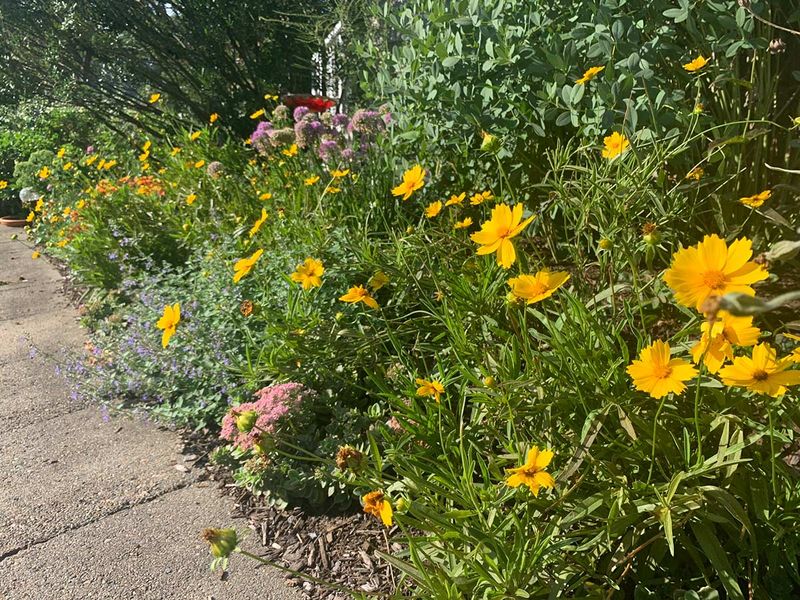
A wildflower patch is not a set-it-and-forget-it project, at least not in the first couple of seasons. Weeds move fast into freshly prepared soil, and a new planting needs some attention before it can hold its own.
During the first year, plan to hand-pull or hoe weeds every 2 to 3 weeks. Once perennials are established and filling in, that work drops off considerably.
Some species spread by rhizome or self-seed freely, so check the mature behavior of each plant before you put it in a small bed. Aggressive spreaders that work beautifully in a large meadow can crowd out everything else in a 10-square-foot patch.
Come fall, resist the urge to cut everything to the ground. Penn State Extension’s guidance on native herbs for pollinators recommends leaving hollow or pithy stems through winter and cutting selected stems to about 12 to 24 inches rather than removing them entirely.
Small bees and other insects use those cavities for overwintering. Penn State’s fall garden care advice frames selective cleanup as better than either extreme of total clearance or complete neglect.
Pesticide use is the most consequential maintenance decision you will make. Avoid routine applications near the patch.
Remove problem insects by hand where that is practical, and tolerate moderate leaf damage as a normal part of a functioning habitat. EPA guidance on pollinator protection makes clear that products approved for organic production can still harm bees, and that applying a pesticide after dusk does not eliminate the risk.
If treatment is unavoidable, read and follow the label exactly, check for flowering weeds in and around the area, and choose products with the shortest residual activity available for the situation.
Minnesota Extension’s native plant guidance is a useful reminder that well-matched natives may eventually need less fertilizer and water than ornamentals suited to a different climate, but the word “eventually” is doing real work there. Give the bed two full growing seasons before you judge its maintenance demands.
Place Pollinator Habitat Around Household Traffic
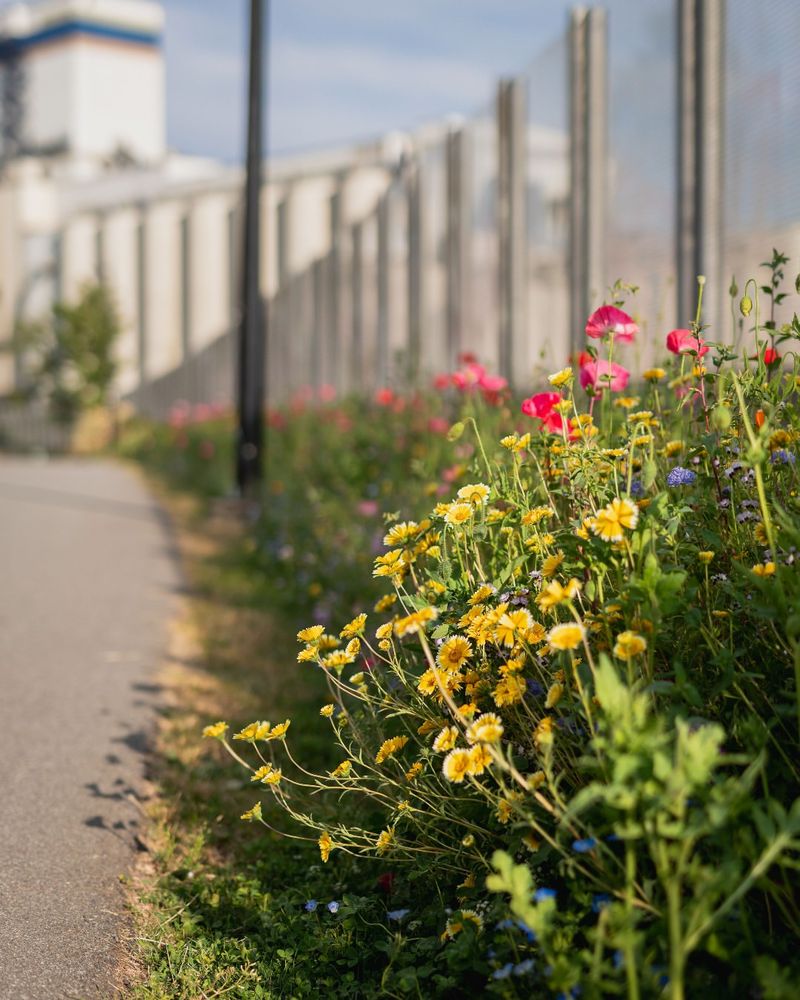
Where you put the patch matters almost as much as what you plant in it. A bed of tall goldenrod and dense asters is excellent habitat, and it is also a spot where yellowjackets may nest in the soil beneath and where ticks can wait at shoulder height on stems.
Most native bees are solitary and genuinely nonaggressive. A sweat bee landing on your arm is looking for salt, not a fight.
But yellowjackets and hornets defend their nests actively, and severe sting allergies are real. Xerces Society’s home pollinator gardening FAQ recommends placing taller pollinator vegetation away from areas where people recreate, walk frequently, or gather for meals.
A side yard, a back fence line, or a section of the property that sees light foot traffic is a better fit than the strip next to the picnic table.
Do not treat the patch as a tick-reduction strategy. Taller vegetation can actually increase tick contact in some settings, because ticks climb stems and leaf edges to find a host.
Keep the bed separated from play areas, main garden paths, and spots where children and pets spend time on the ground.
Teach everyone in the household not to slap at or grab visiting insects. Most stings happen when a bee is trapped or startled, not during normal foraging.
Surrounding habitat also shapes which bees reach your yard at all. The backyard bee study assessed landscape conditions within 500 meters, 1 kilometer, and 2 kilometers around gardens, showing that neighborhood context influences local bee communities.
A patch in a block with several other pollinator gardens may support a wider range of species than an identical patch surrounded entirely by pavement and lawn. One bed helps, but it works as part of a broader picture, and research on urban garden landscapes confirms that local and surrounding habitat features together determine which bees are present.
Judge Success By Habitat And Diversity
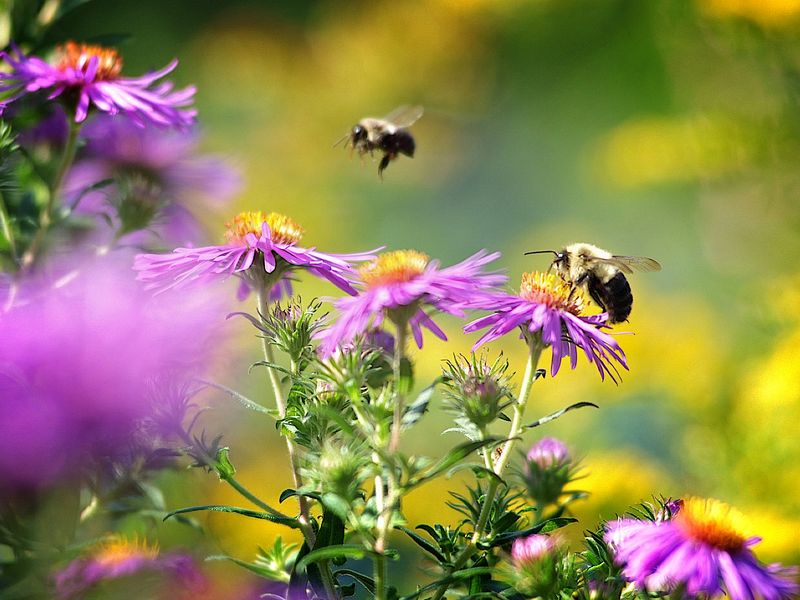
After the first full season, the temptation is to count bees and compare the number to some expected result. That framing will disappoint you, because the research does not offer a reliable benchmark for a single backyard bed.
A more useful measure is watching for variety. Bees of different sizes, shapes, and colors visiting across successive bloom periods suggest the patch is providing resources to more than one species.
A tiny metallic sweat bee on the asters in September, a bumble bee working the bee balm in July, and a small mining bee on the spring phlox in April are all evidence that the bed is functioning, even if you cannot count them precisely.
The small-patch study that measured species density found that effect among small urban bees in a specific experimental setting. Your observations at home are not a controlled study, so treat them as practical evidence rather than proof of a population change.
The goal is habitat quality, not a scoreboard.
The patch works best as one layer of a larger approach. Reduced lawn area, additional woody cover, a second bed near a fence, and neighbors doing similar things in their yards all contribute to the habitat network that backyard research found matters beyond any single garden.
The next concrete step is simple: pull up a regional plant list, mark out a manageable bed, choose three or more species with staggered bloom times, group compatible plants in clumps of at least 3, and leave a strip of bare soil and some standing stems for the bees that never needed a flower to feel at home. USDA’s design guide can help you put those pieces together for your region.
A yard that feeds and shelters bees is doing something real, even when you cannot see every bee that benefits from it.