
This North Carolina Native Shrub Creates A Softer Fence Line And Gives Ticks Fewer Places To Hide
Follow us on Google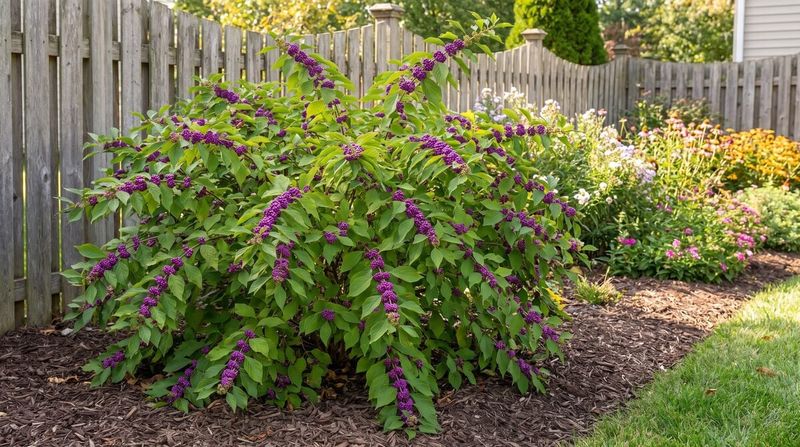
You drag a patio chair into the afternoon shade, and the fence line behind you looks like every invasive vine and tangled weed in the Piedmont decided to hold a convention.
That edge is not just an eyesore.
In North Carolina, a damp, brushy border can also create the kind of ground-level cover that makes tick encounters more likely.
American beautyberry, a native shrub with arching branches and clusters of bright purple berries, can soften that fence line while a few practical maintenance habits help reduce the conditions ticks need most.
American Beautyberry Softens a North Carolina Fence Line
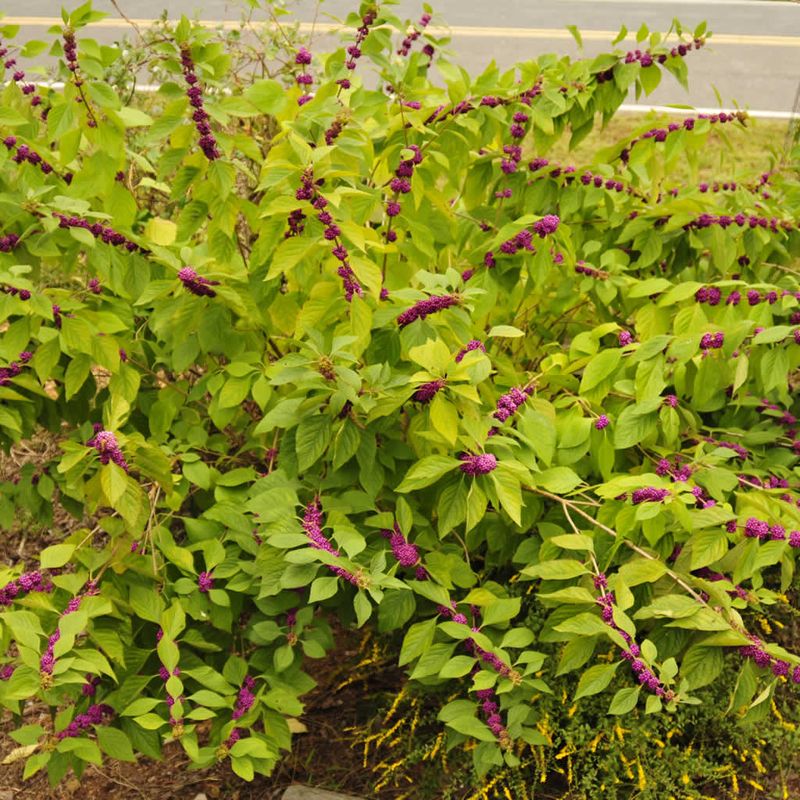
American beautyberry, Callicarpa americana, grows across all three of North Carolina’s main regions.
You will find it in the mountains, through the Piedmont red clay, and down into the sandy Coastal Plain.
NC State Extension’s plant profile lists a mature size of roughly 3 to 8 feet tall and 3 to 6 feet wide, with an open, arching habit that looks nothing like a clipped boxwood hedge.
That form is actually the point.
The branches sweep outward and downward in loose layers, and from August through October the berries appear in tight clusters along every stem.
They are a vivid, almost unreal shade of purple, and they tend to stop people mid-stride.
Birds notice them too, which we will come back to later.
Along a fence line, beautyberry fills the space between a bare board fence and the rest of the yard without reading as a wall.
It softens the edge and gives the border a relaxed, natural look that clipped shrubs rarely manage.
NC State’s wildlife-friendly shrub guide highlights it as a plant that genuinely earns its space in a North Carolina yard.
One thing to say plainly before going further: this article is about tick-aware landscape maintenance, not about beautyberry as a tick-control plant.
The shrub does not repel ticks from a yard, and the sections ahead will show what actually moves the needle on tick exposure at the fence line.
Beautyberry Does Not Repel Ticks in a Yard

Here is where it gets tricky.
Beautyberry’s open, arching structure makes the planting easier to see into and easier to maintain than a dense, thorny thicket.
That is a real advantage.
But easier to inspect is not the same as tick-resistant, and those two things are worth keeping separate.
Beautyberry leaves do contain compounds that showed repellent activity in laboratory testing.
A USDA Agricultural Research Service study found that callicarpenal and intermedeol, compounds isolated from beautyberry foliage, showed activity against blacklegged and lone star ticks in controlled conditions.
The published Carroll et al. research involved leaf extracts and isolated compounds, not a living shrub growing in a backyard.
That distinction matters a lot.
A shrub growing along your fence is not releasing a measured dose of repellent into the surrounding air.
It is not creating a protective zone around your patio.
Telling readers to crush beautyberry leaves and rub them on their skin is also not a safe substitute for a registered repellent, since no consumer safety evaluation, standardized dose, or reliable duration has been established for that use.
A CDC review of residential tick-management evidence is candid that evidence for plant selection alone reducing host-seeking ticks on residential properties is limited.
The defensible benefit at the fence line comes from the surrounding design and maintenance, not from the shrub acting as an outdoor repellent.
The Ground Layer Influences Tick Exposure

Walk up to any fence line in muggy July and crouch down.
What you see at ground level tells you more about tick risk than what you see at eye level.
CDC guidance on where ticks live is consistent: ticks favor cool, humid, shaded spots with leaf litter, brush, dense groundcover, and reliable animal traffic.
A beautyberry planted into a packed border of tall grass, sprawling vines, and damp debris does not cancel out those conditions.
It sits above them.
The shrub’s branches are open and visible, but if the soil beneath is covered in a mat of wet leaves and the neighboring fence is draped in vines, the ground layer is still doing what ticks need it to do.
University of Maine Cooperative Extension’s landscape management guidance reinforces that the floor of the border, not the plant above it, is where tick-friendly conditions either exist or do not.
The practical move is to keep the lawn-facing side of the border visible and maintained.
Remove brush piles, pull vines off the fence, and do not let leaf litter build up into a damp mat within 3 feet of where people walk, sit, or play.
CDC tick prevention recommendations include clearing tall grass and brush and keeping patios and play equipment away from brushy or wooded edges.
Ground-layer management influences exposure opportunities, but it does not determine them entirely or eliminate risk.
Tick species, nearby wooded areas, deer routes, and what animals cross the yard all factor in.
The maintained border is one layer of a broader approach, not a complete solution on its own.
Use a Three-Foot Buffer Beside Brushy Edges
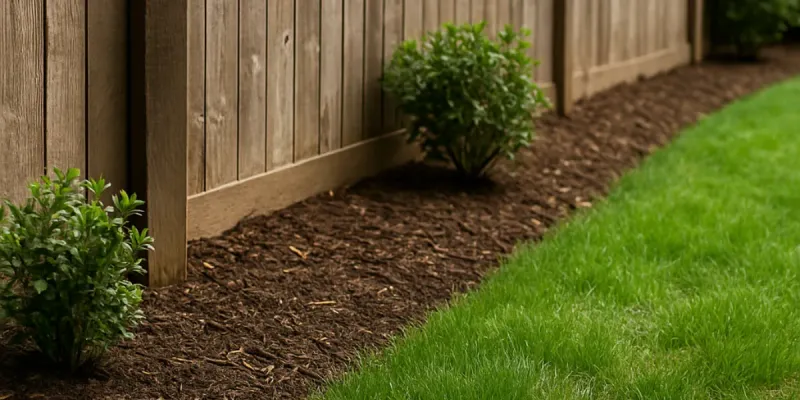
If there is one concrete action that comes up consistently in tick-reduction guidance, it is a maintained strip of wood chips or gravel between the lawn and any wooded or brushy edge.
CDC guidance on preventing Lyme disease recommends a strip approximately 3 feet wide as a way to create a visible boundary and may discourage tick movement into recreational areas.
That strip works best when it actually stays dry, visible, and clear of debris.
The CDC and Connecticut Agricultural Experiment Station Tick Management Handbook is honest about the limits: results vary by property, shade, woodland density, and starting tick numbers.
A wood-chip strip under a heavily shaded fence line will collect leaves and become less dry over time, which reduces its usefulness.
Gravel holds up better under dense shade than wood chips do, and it does not break down the same way.
Either material needs seasonal attention.
Rake out accumulated leaves in fall, check that the strip has not been colonized by encroaching groundcover, and keep it at least 3 feet wide rather than letting the lawn gradually narrow it.
The strip is not a permanent fix and it is not a guarantee.
Think of it as a maintained boundary that makes the transition between the recreational yard and the wilder edge more visible and somewhat less hospitable to tick movement.
That is a real, practical thing to do, and it works best as part of the broader fence-line design, not as a standalone measure.
Space and Prune Beautyberry for Visibility

Nursery containers are misleading.
A beautyberry in a 3-gallon pot looks manageable, but plan for a mature spread of roughly 3 to 6 feet wide and up to 8 feet tall.
NC State’s plant profile lists those mature dimensions for most cultivars in well-drained clay, loam, or sandy soil, in full sun or partial shade.
Give each shrub enough room so it does not press against the fence, crowd a walking path, or overhang a patio edge.
When plants are packed too close together, the ground between them stays shadier and damper, which is exactly the opposite of what you want at the fence-line floor.
Spacing by mature width rather than current container size saves a lot of crowding problems later.
Pruning in late winter or early spring is the right window.
NC State Extension’s general pruning guidance explains that beautyberry flowers and fruits on new growth, so the shrub can be cut back heavily, even to about 1 foot from the ground, without losing the plant.
The French mulberry profile confirms that heavy pruning can reduce or delay that season’s berry display, so if you want a full berry show in September, keep cuts moderate rather than severe.
The practical value of pruning here is access, visibility, and sunlight reaching the ground beneath the shrub.
Those are real improvements to the fence-line environment.
Whether they meaningfully change tick exposure depends on the entire maintained landscape around the shrub, not on the pruning cut alone.
Remove Leaf Litter Without Scalping the Lawn

Beautyberry is deciduous, which means it drops its leaves every fall.
That is completely normal, and the plant does not need you to leave a damp mat of old foliage piled against the fence as some kind of ecological gesture.
The berries feed the birds.
The leaf debris on the lawn-facing side is something else entirely, and it should go.
CDC Lyme disease prevention guidance specifically lists removing leaf litter as a landscape step that can reduce tick-friendly conditions.
Rake the accumulated leaves off the maintained side of the border in fall, trim any nearby shrub branches or vines that are blocking sunlight from reaching the ground, and keep the wood-chip or gravel boundary clear of debris so it stays dry and visible.
On the lawn side, mow at the height that is right for your specific turfgrass, not shorter.
Scalping the lawn does not improve safety and can stress the grass badly.
NC State Extension’s lawn care guidance lists mowing heights that vary by species: centipedegrass at 1 to 2 inches, St. Augustinegrass at 2.5 to 4 inches, tall fescue at 2.5 to 3.5 inches.
Follow the recommended height for whatever you are actually growing.
The maintenance routine here is straightforward: clear the debris, keep sunlight reaching the ground, maintain the buffer strip, and mow correctly.
Each of those steps contributes to a fence-line environment that is less hospitable to tick-friendly conditions.
None of them alone is a complete answer, but done consistently, they add up to a genuinely better border.
Place Wildlife Habitat Away From Main Traffic Areas
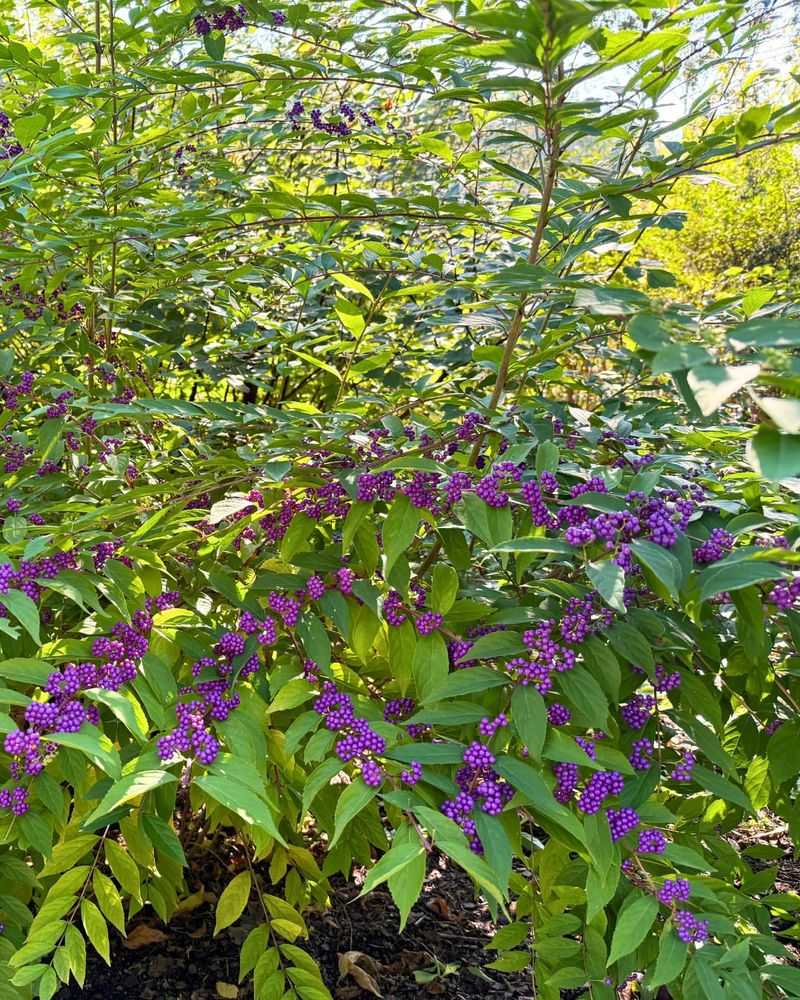
Beautyberry berries are genuinely useful to wildlife.
Mockingbirds, brown thrashers, and other songbirds eat them, and small mammals will take them from the ground after they drop.
NC State Extension’s native plant landscaping guide supports native shrubs like beautyberry for exactly this kind of habitat value.
And here is the tension worth naming honestly: the same animals that make a native yard feel alive can also transport ticks.
Deer, rodents, raccoons, and even family pets can carry ticks into the yard from a wooded edge or drainage area.
A CDC review of residential tick-management barriers notes that animal hosts are a significant factor in tick presence on residential properties, and that landscape changes alone cannot fully compensate for heavy host traffic through a yard.
The practical answer is zoning.
Place the denser habitat, the thicker plantings, the brush piles meant for wrens and toads, toward the outer edge and away from the patio, play equipment, and main walking routes.
Keep the frequently used spaces open, visible, and separated from the wilder edge by that maintained buffer strip.
North Carolina has three medically important tick species that homeowners should know.
NC State’s tick identification guide covers the lone star tick, blacklegged tick, and American dog tick, each with different habits and disease associations.
North Carolina tick-borne illness surveillance data tracks ehrlichiosis, spotted fever illnesses, and Lyme disease across the state.
A fence line beside a wooded area or a deer travel corridor may remain higher risk even after landscaping changes, and knowing which ticks are active in your area helps you respond appropriately.
Keep Personal Tick Protection in the Routine

Every landscape improvement at the fence line reduces exposure opportunities, but none of them eliminates ticks from a North Carolina property.
That is not a failure of the design.
It is just how tick management actually works, and personal protection remains part of the picture no matter how well the yard is maintained.
CDC tick prevention guidance is clear on the steps that matter after any time outdoors: check people, clothing, gear, and pets when you come inside, shower within two hours, remove any attached ticks promptly using fine-tipped tweezers, and use EPA-registered repellents according to the label directions.
EPA guidance on tick repellents lists registered active ingredients and explains how to apply them safely and effectively.
Keep patios and play equipment positioned away from brushy or wooded edges when placement is an option.
That 3-foot separation between the recreational yard and the wilder border is worth maintaining in the furniture layout too, not just in the landscape design.
CDC Lyme disease prevention resources reinforce that the combination of landscape management and personal precautions together is more protective than either one alone.
American beautyberry earns its place at the fence line through its form, its native status, its fall berry display, and the birds it reliably brings in.
Any reduction in tick exposure opportunities comes from the complete, maintained design around it.
A yard that is thoughtfully planted, seasonally maintained, and paired with consistent personal habits is genuinely a safer and more enjoyable place to spend a North Carolina evening.