
The Container Plant North Carolina Gardeners Keep Falling Back In Love With Every Summer
Follow us on Google
Some plants just earn their place on the porch year after year, and common lantana, Lantana camara, is one of them.
North Carolina summers are long, hot, and humid, and most flowering annuals tap out by August, but lantana keeps going from midsummer all the way to the first frost.
If you have been looking for something that can handle a baking south-facing porch without giving up the color show, this is the plant worth a second look.
Why Lantana Fits the Summer Container Brief
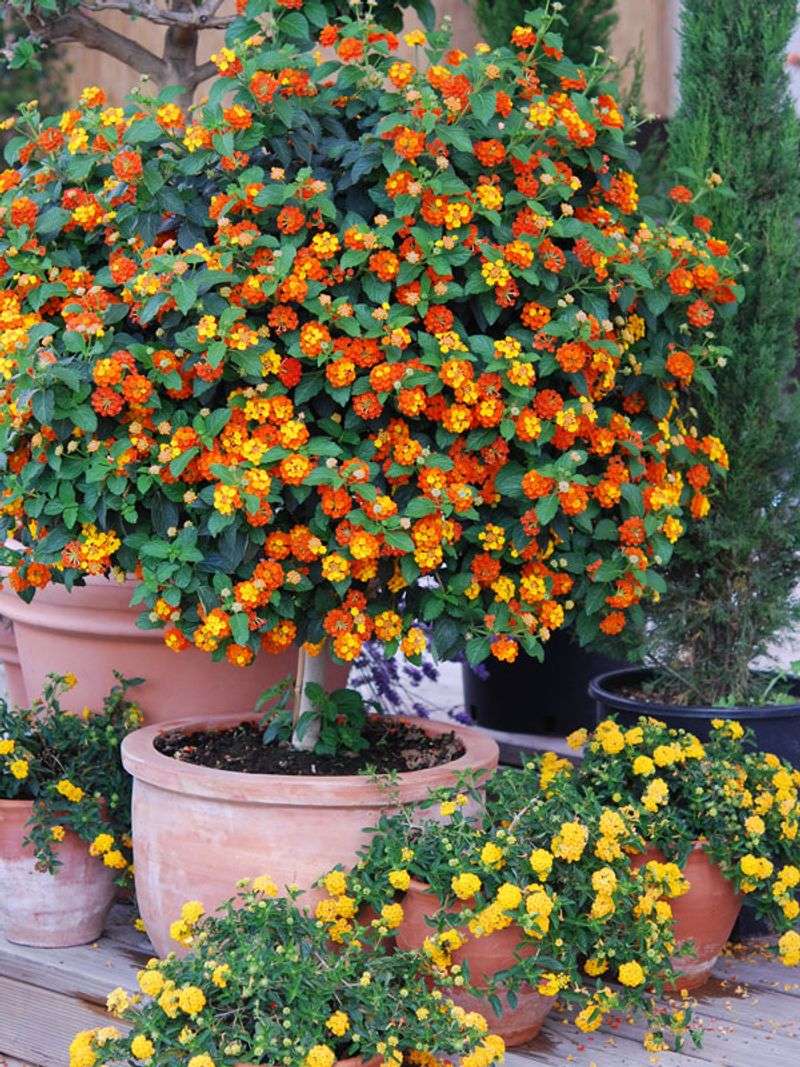
Common lantana, Lantana camara, is the strongest evidence-backed candidate for the plant this headline has in mind, though that identification is an editorial inference, not a fact confirmed by any external source or statewide survey.
What the plant record does confirm is that lantana genuinely fits the promise of all-summer porch color.
NC State Extension’s plant profile describes it as heat tolerant, drought tolerant after establishment, suitable for containers and hanging baskets, and capable of flowering from midsummer until the first frost.
That is a long run for a container plant.
Most flowering annuals on a hot North Carolina porch start looking tired by mid-July.
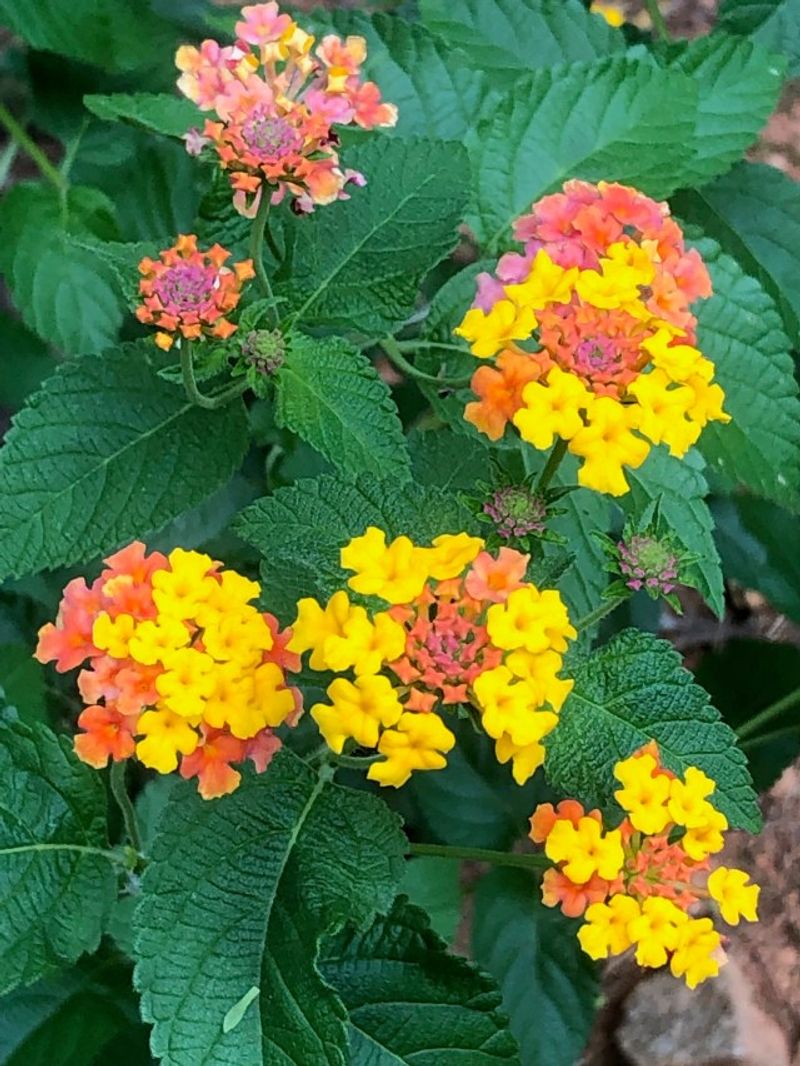
Lantana keeps producing its small, clustered blooms in shades of yellow, orange, pink, red, and purple, sometimes all on the same plant at once, right through the heat that makes other plants sulk.
The comeback language in the headline is best read as a description of rediscovery rather than a claim about what North Carolina gardeners are measurably doing statewide.
No reliable survey confirms a broad regional trend.
What is real is that lantana is a dependable plant that many gardeners set aside and then reach for again when summer heat reminds them what actually works.
Butterflies, hummingbirds, and other pollinators are genuinely drawn to the flowers, which adds life to a porch that might otherwise feel static.
Lantana prefers full sun and well-drained soil, which makes it a practical match for the bright, exposed spots where other plants struggle.
That said, heat tolerance and drought tolerance are not the same as no-care performance.
Watering, drainage, winter limits, and safety around pets and children all matter, and those topics deserve honest attention before you bring one home.
North Carolina’s Climate Explains the Appeal
North Carolina summers are not subtle.
Afternoons in the Piedmont regularly push past 90 degrees Fahrenheit, the humidity sits heavy from June through September, and brief but intense thunderstorms roll through several times a week.
NOAA’s North Carolina climate summary documents the state’s warm, humid warm-season conditions and the broad variation that runs from the mountains in the west to the coast in the east.
That variation matters for container gardeners.
Mountain gardeners in zones 6a to 7a deal with cooler nights and a shorter warm season.
Piedmont gardeners in zones 7b to 8a face that classic combination of red clay soil, brutal afternoon heat, and occasional surprise cold snaps in late spring.
Coastal gardeners in zones 8a to 8b get milder winters but also more humidity, more salt air, and the added reality of hurricane season running June through November.
Across all three regions, the warm season is long enough that a plant flowering from midsummer to first frost can genuinely carry a porch for months.
NC State’s lantana profile confirms that documented flowering window, which lines up well with North Carolina’s growing calendar.
A plant that starts blooming in July and keeps going until October or November covers the exact stretch when many gardeners feel their containers start to fail.
Presenting that match as a practical interpretation rather than a measured scientific finding is the honest approach.
The climate conditions are real, lantana’s flowering window is documented, and the combination makes logical sense for a hot porch.
Whether your porch faces south in Raleigh or sits on a shaded mountain ridge near Asheville, the regional context shapes what lantana can actually do for you.
Drought Tolerance Does Not Cancel Watering
Here is where many gardeners get tripped up.
Lantana handles drought better than most flowering annuals, and that reputation is well earned for plants growing in the ground.
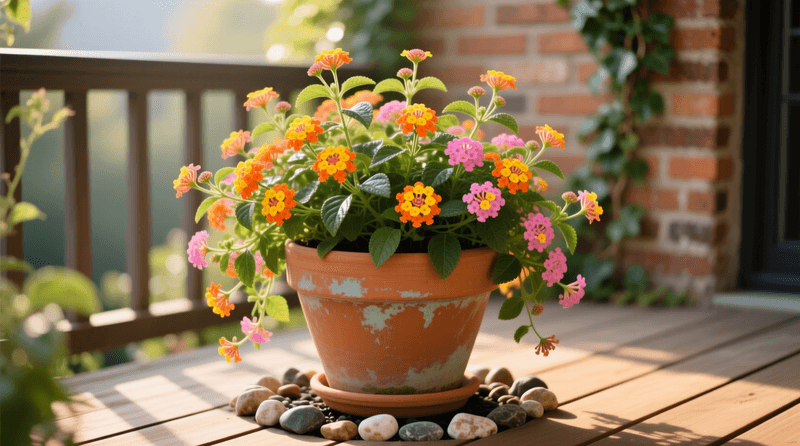
A container is a completely different situation, and treating pot-grown lantana like it can fend for itself through a hot North Carolina week is a reliable way to lose the plant.
NC State Extension’s container gardening handbook explains that containers dry faster and become warmer than in-ground soil, with mature outdoor pots commonly needing water at least once daily during summer heat.
Small pots, dark plastic containers, terra-cotta, hanging baskets, and anything sitting in full sun on a south- or west-facing porch are the highest-risk situations.
Those containers can go from adequately moist to bone dry in a matter of hours on a 95-degree afternoon with a light breeze.
The right approach is to check the potting mix before you reach for the hose, not just water on a schedule.
Push a finger an inch into the mix.
If it feels dry at that depth, water thoroughly, slowly, until you see water running freely from the drainage holes at the bottom.
That tells you the entire root zone got wet, not just the surface.
Skipping that step and letting the mix dry out completely is genuinely damaging.
Stressed feeder roots struggle to recover quickly, and one of the first signs of that stress is flower drop.
You may also see wilting that does not bounce back fully, even after watering.
During hot or windy stretches, check twice a day if your pot is small or exposed.
This is not a flaw in the plant, it is just the reality of growing anything in a container through a North Carolina summer.
Build the Pot Around Heat and Drainage
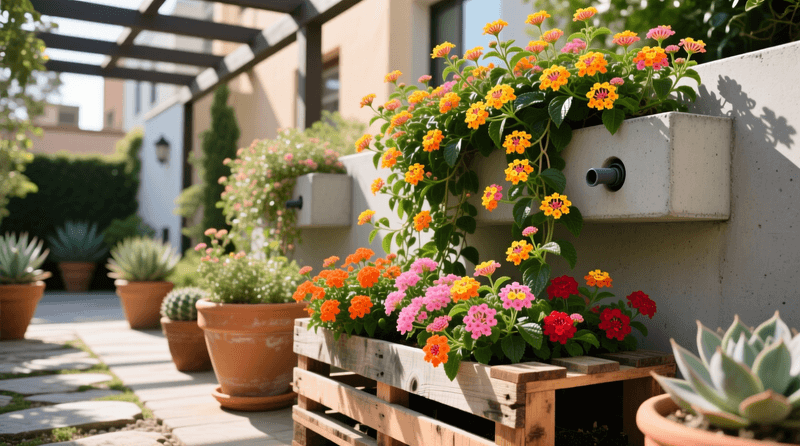
Getting the container setup right before you plant saves a lot of trouble later.
Start with drainage holes, and make sure they are actually open and unobstructed.
Without them, water pools at the bottom of the pot and roots suffocate, no matter how well everything else is managed.
Skip the common shortcut of putting a layer of gravel in the bottom before adding soil.
NC State Extension’s container handbook specifically advises against this practice because the gravel layer can actually leave the potting mix above it saturated, creating the waterlogged conditions you were trying to avoid.
Use a commercial potting mix instead of garden soil from the yard.
Potting mix is formulated to drain well and resist the compaction that turns heavy garden soil into a dense, root-choking block inside a pot.
Container size matters more than many gardeners expect.
A larger pot holds more soil volume, which means it dries more slowly and buffers the root zone against extreme temperature swings.
That said, dark-colored containers sitting in full sun on a hot porch can heat the root zone significantly, which adds stress even when moisture levels look fine.
A light-colored or insulated pot in the same spot will run cooler at the roots.
Place the pot where the plant receives full sun and has reasonable air movement around it.
Lantana genuinely needs that light to perform well.
For fertilizer, follow the product label and the condition of your potting mix.
NC State’s general container guidance suggests reapplying controlled-release fertilizer after about 8 to 10 weeks, or using liquid fertilizer at half strength weekly or full strength every 2 weeks, but treat those as starting points to adjust based on how your plant looks, not as a fixed schedule specific to lantana.
Match the Cultivar to the Space and Winter
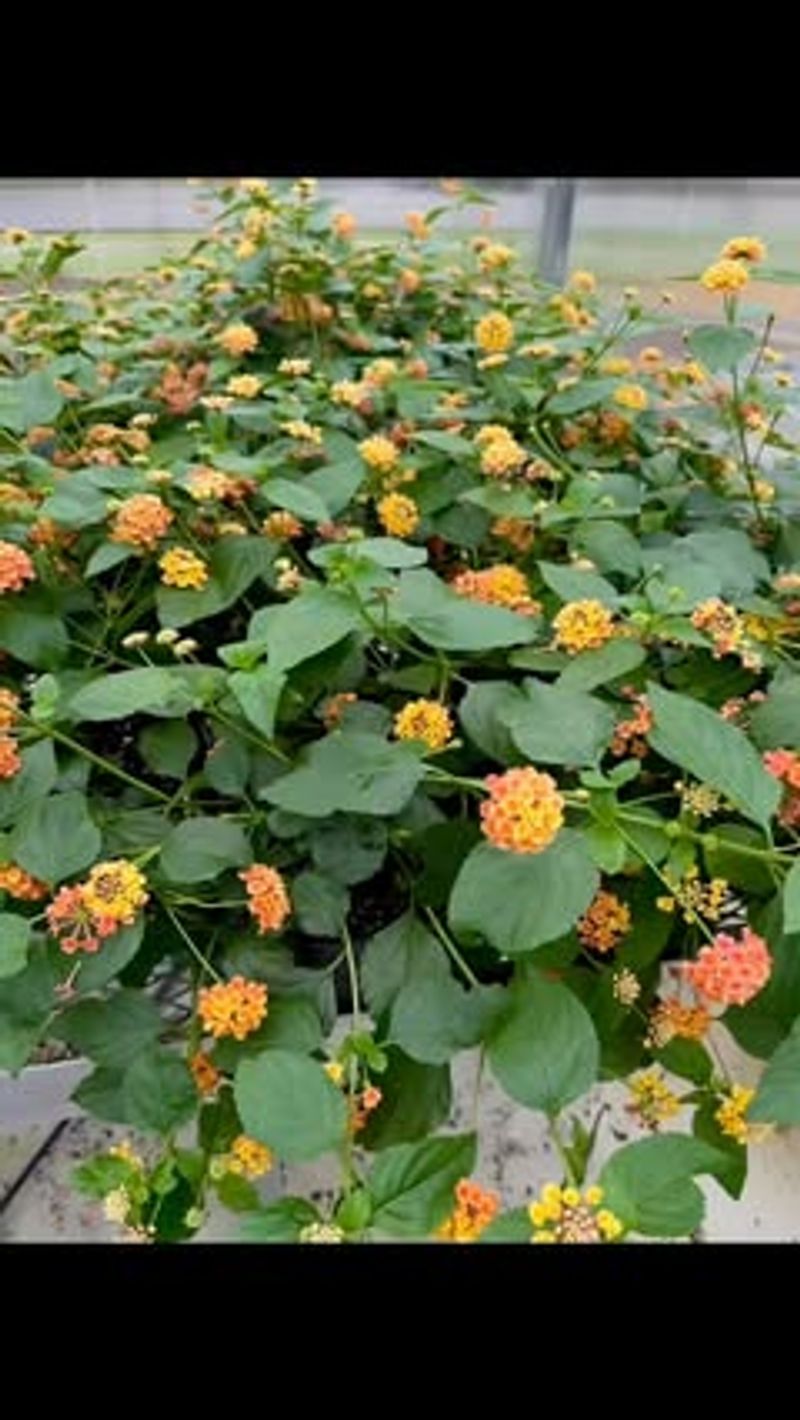
Walking into a garden center and grabbing the first lantana you see can work out fine, but knowing a little about cultivar size and cold hardiness helps you avoid a plant that either swallows your pot by August or dies back harder than you expected come November.
Size is the first thing to check.
NC State’s lantana profile lists ‘New Gold’ as capable of spreading up to 6 feet and ‘Radiation’ as capable of reaching 4 to 6 feet tall and wide.
Those are impressive plants in the right landscape setting, but they will quickly overwhelm a standard porch pot unless you are committed to regular pruning or have a very large container.
For most porches and hanging baskets, dwarf or trailing forms are genuinely more practical and easier to manage through the season.
Winter expectations depend heavily on where you garden in North Carolina.
Coastal gardeners have the best odds of lantana returning as a perennial because mild winters give roots a chance to survive.
Piedmont gardeners can improve their odds by choosing named cold-hardy cultivars. ‘Miss Huff,’ ‘Ham and Eggs,’ and ‘Chapel Hill Yellow’ are all described by NC State as frost-hardy in the Piedmont, and both ‘Miss Huff’ and ‘Ham and Eggs’ are listed as cold hardy to USDA Zone 7b.
Mountain gardeners and anyone growing ordinary nursery lantana without a named cultivar should plan to treat the plant as seasonal and replace it each year.
One clarification worth making: USDA hardiness zones tell you about average minimum winter temperatures, not about summer heat, container conditions, watering needs, or how a plant handles your specific porch microclimate.
A Zone 7b rating for ‘Miss Huff’ means it has a reasonable chance of surviving a Zone 7b winter.
It says nothing about how often you need to water it in July.
Set a Clear Boundary for Pets, Children, and Wildlife
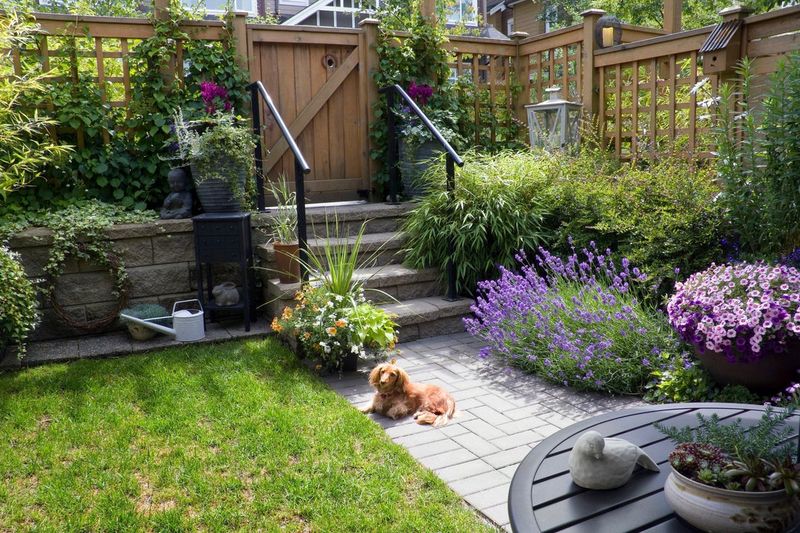
Lantana earns its place on a hot porch, but it comes with limits that matter if you have dogs, cats, horses, or young children spending time in the same space.
The ASPCA lists Lantana camara as toxic to dogs, cats, and horses, with reported signs including vomiting, diarrhea, labored breathing, weakness, and serious liver effects.
Liver damage is more commonly documented in livestock, but the risk is real enough that placement matters for any household with animals that chew on plants.
NC State’s plant profile adds that lantana carries medium-severity poison characteristics and that leaves and unripe green berries can cause skin irritation.
Those small, dark berries that form after flowering are the part most likely to catch a child’s attention.
The practical steps are straightforward: place pots where curious animals and young children cannot easily reach them, pick up and discard any fallen berries promptly, and choose sterile or low-seed cultivars when you can find them at the nursery.
On the wildlife side, lantana’s pollinator value is real.
Butterflies, hummingbirds, and other nectar-seeking insects do visit the flowers, and that activity on a summer porch is genuinely enjoyable to watch.
But lantana is not a native North Carolina plant.
The state flora account identifies it as native to the West Indies, Mexico, and tropical America, and notes that it has escaped cultivation only very locally in North Carolina, rarely straying beyond gardens and yard plantings.
That means lantana can add nectar to your porch, but it does not replace native habitat plants.
Milkweed, Joe Pye weed, and goldenrod do work for specialist insects and monarch caterpillars that lantana simply cannot support.
A Cooperative Extension article on sterile lantana cultivars recommends choosing low-seed or sterile forms and keeping plants in containers as a cautious practice, especially as climate conditions shift over time.
Keep the Plant Compact Through the Season
By late July or early August, lantana can start to look a little wild.
Stems stretch out, the center of the plant opens up, and the tidy mound you set on the porch in May starts resembling something that has been making its own decisions.
That is normal, and it is fixable without much fuss.
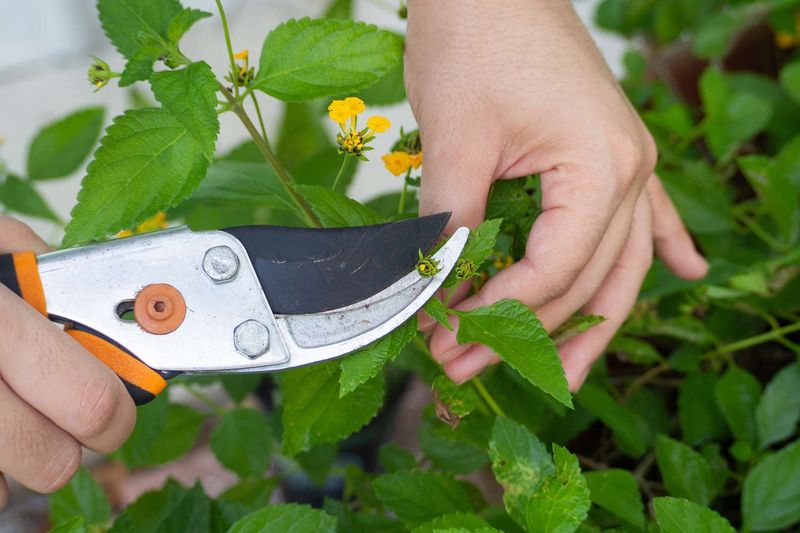
NC State Extension’s container handbook recommends sharp, sanitized pruners and cuts made just above a node, which is the small bump or joint where a leaf meets the stem.
Light shaping of leggy stems encourages the plant to fill back in rather than continue reaching outward.
NC State’s lantana profile supports pruning to restore a compact shape or reduce overgrowth, though it is honest that pruning does not guarantee the plant will rebloom on any particular schedule.
The daily rhythm through summer heat is simple: check the moisture, water deeply when the top inch of the mix feels dry, and give the plant a quick look for leggy growth or spent flower clusters.
None of that takes more than a few minutes, and the result is a plant that keeps earning its spot on the porch rather than fading into the background.
When fall arrives, frost damage or full replacement is a normal outcome in colder parts of North Carolina, and there is no reason to feel like you did something wrong.
Coastal gardeners and those growing named cold-hardy cultivars can try overwintering with some mulch protection, but treating it as a seasonal plant is a perfectly reasonable choice.
Lantana is one dependable option for a hot container, not the only one, and the yard wildlife that needs the most from you is still out there waiting for native plants in the beds and borders beyond the porch.