
The North Carolina Native Fruit Trees Almost Nobody Plants, But Families End Up Loving
Follow us on Google
Most North Carolina yards have room for at least one fruit-producing tree, but the usual picks, peaches, apples, and figs, get all the attention while a handful of genuinely useful natives sit overlooked at the edge of the conversation.
Pawpaw, American persimmon, red mulberry, mayhaw, and American chinquapin can all grow in North Carolina soil, feed your family, and pull in wildlife that makes a yard feel alive.
None of them is perfect, and the right choice depends heavily on your site, your region, and the kind of harvest mess you can actually live with.
Get that match right, though, and you may end up with a backyard tree that becomes one of the best decisions you ever made for your yard.
Pawpaw Makes the Strongest First Impression
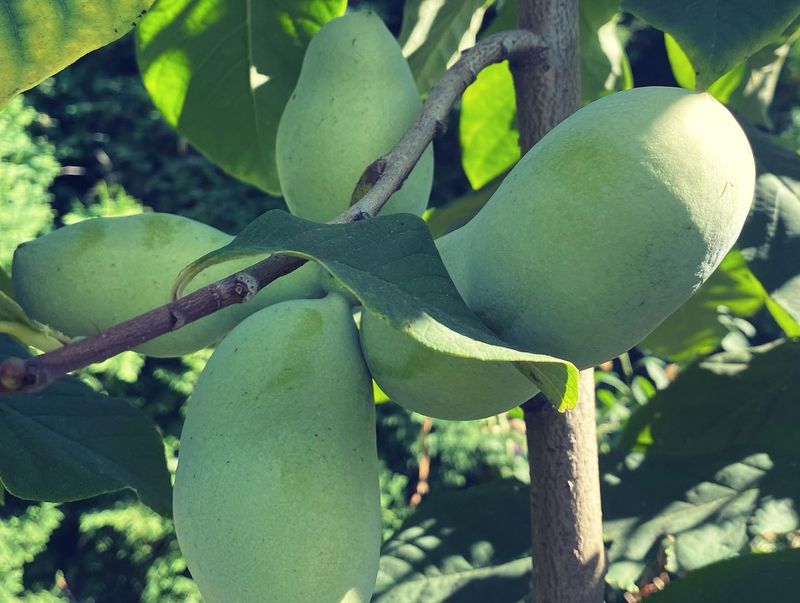
Somewhere around late August or early September, a pawpaw (Asimina triloba) drops a fruit that stops people cold.
The flavor lands somewhere between banana, mango, and vanilla custard, and it comes from a tree that is genuinely native to North Carolina, not a tropical import, not a grocery-store experiment.
NC State Extension’s plant profile describes pawpaw as a small to medium understory tree, typically reaching 15 to 30 feet tall and wide, that tolerates partial shade and grows naturally along stream banks and forest edges across the state.
Here is where it gets tricky.
Pawpaw flowers are self-incompatible, meaning one tree almost certainly will not give you fruit.
You need at least two genetically different trees planted within range of each other, and Penn State Extension’s guide on native pawpaw recommends exactly that for reliable pollination.
Grafted trees can begin fruiting in roughly 2 to 3 years, while seedling trees may take up to 10 years to produce anything worth tasting.
Pollination itself is handled mainly by flies and beetles rather than honeybees, so a yard that feels a little wild around the base of the tree actually helps.
Full sun generally improves fruiting, even though pawpaw tolerates shade.
Place it in well-drained, moisture-retentive soil and avoid low frost pockets where cold air settles.
When fruit does ripen, it softens slightly and may last only a few days before it goes past its peak, so check the trees often in early fall.
Eat only the flesh: the skin and seeds should not be consumed, and handling the plant can cause skin irritation in some people.
Pawpaw also serves as the sole host plant for zebra swallowtail butterfly larvae, which gives it a habitat value that goes well beyond the fruit.
Think of it as a rewarding family-discovery tree rather than a guaranteed annual crop, and it rarely disappoints on those terms.
American Persimmon Offers Toughness and Fall Fruit
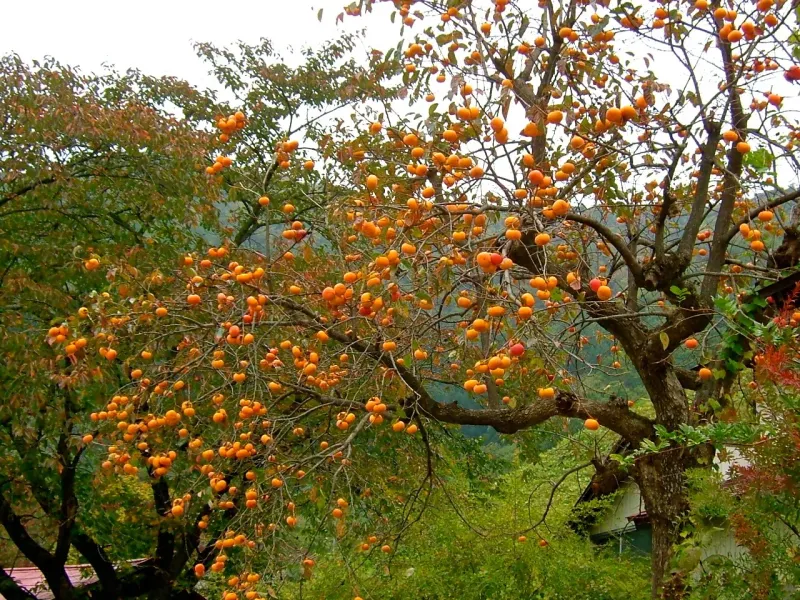
If pawpaw is the surprise guest at the table, American persimmon (Diospyros virginiana) is the neighbor who has quietly been there all along.
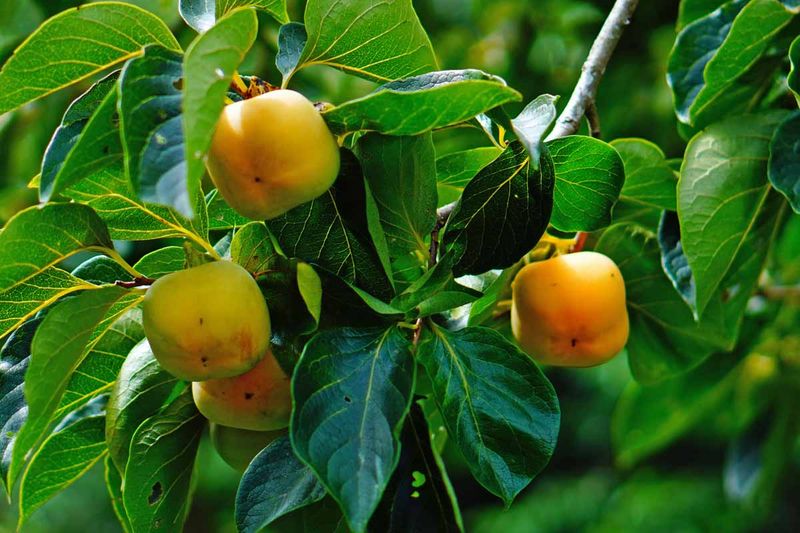
It grows in the Piedmont, the Coastal Plain, and the mountains, tolerates red clay, sandy soil, heat, drought, and even tough urban conditions, and produces sweet orange fruit each fall when the rest of the yard is winding down.
NC State’s persimmon profile describes it as a relatively low-maintenance native tree, which sets it apart from the more demanding fruit trees most people consider first.
The catch that trips up most first-time growers is ripeness.
An orange persimmon is not necessarily a ready persimmon.
Fruit that has not softened substantially can be intensely astringent, the kind of puckering experience that puts people off the tree entirely.
Wait until the fruit yields noticeably to gentle pressure, then harvest promptly.
Color alone is not your signal.
Size is the other thing to plan for honestly.
American persimmon commonly reaches 30 to 80 feet tall and 20 to 35 feet wide at maturity, which makes it a poor fit for a narrow side yard or any spot beneath utility lines.
Give it real room and a site where it can grow on its own terms.
Wild trees are commonly either male or female, not both, so a seedling from an unknown source may never produce fruit at all.
The practical move is to buy a nursery tree identified as a productive female or a named cultivar with documented fruiting behavior, then ask the nursery whether a pollinizer tree is needed for the variety you choose.
That one conversation at the nursery can save years of waiting on a tree that was never going to fruit for you.
Red Mulberry Pays Off Away From Hardscape
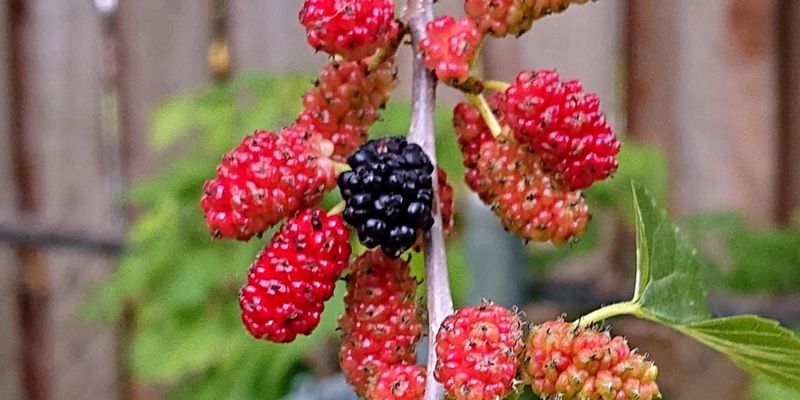
Red mulberry (Morus rubra) is genuinely easy to grow, and that is both its best quality and the reason placement matters so much.
Native throughout North Carolina, it tolerates dry and poor soil, handles cold well across all regions of the state, and produces blackberry-like fruit in summer that birds, foxes, and children tend to find before you do.
NC State’s red mulberry profile notes that it can reach about 30 feet tall, which means it needs a real spot in the yard, not a corner beside the driveway.
Here is the principal drawback, stated plainly: ripe mulberries stain.
Fallen fruit on a concrete patio, a sidewalk, a wooden deck, or a car roof leaves marks that do not come out easily.
Plant red mulberry with generous clearance from any hard surface you care about, and accept that the ground beneath it will look dark and busy during the harvest window.
For households that want reliable fruit from a single tree, the NC State Extension Gardener Handbook specifically advises choosing a self-pollinating cultivar.
Wild mulberries may or may not fruit dependably from one tree, so a named cultivar removes that uncertainty.
One safety note that is worth stating clearly: unripe red mulberry fruit and the milky sap from cut stems are toxic.
Eat only fully ripe, dark-colored fruit, and wash it before eating.
The ripe fruit itself is harmless and genuinely good, but the line between unripe and ripe matters here more than it does with most backyard fruit.
Mayhaw Fits Wet, Naturalized Edges
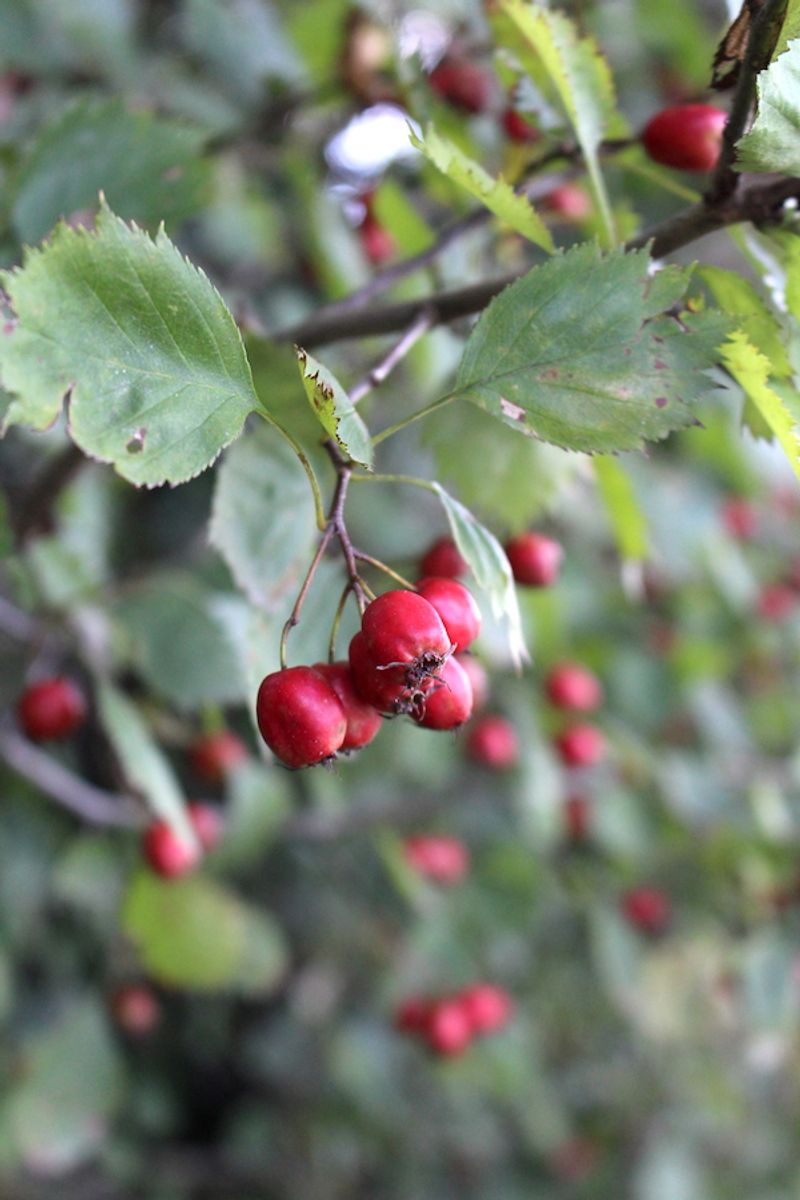
Most North Carolina yards do not have a spot for mayhaw (Crataegus aestivalis), and that is not a criticism of the plant.
Mayhaw is a hawthorn that evolved for wet places: shallow ponds, seasonally flooded woods, drainage edges, and the kind of low corner that stays soggy after a heavy rain.
If your yard has one of those spots, especially in the Coastal Plain, mayhaw turns a problem area into a productive one.
NC State’s mayhaw profile confirms its tolerance of wet soils and occasional flooding, along with its spring flowers and red fruit that ripens from June into July.
The fruit is small, tart, and not typically eaten fresh off the branch.
Where mayhaw earns its place is in the kitchen: jelly, pies, preserves, and dried fruit are the traditional uses, and families who make mayhaw jelly tend to treat it as a genuine seasonal ritual rather than an afterthought.
The practical warnings are real, though.
Mayhaw can grow as a large shrub or small tree and may reach 30 to 40 feet tall with a crown spread of 35 to 40 feet, so it takes up serious space.
It also carries long, straight thorns that make it genuinely hazardous near a play area, a busy walkway, or anywhere children routinely reach into branches without looking.
Place it along a pond edge, a naturalized drainage corridor, or a back-property border where its size and thorns are assets rather than problems.
Think of it as a wildlife plant that also happens to give you something worth preserving each summer, not as a tidied-up orchard tree.
American Chinquapin Turns Nuts Into a Hands-On Harvest
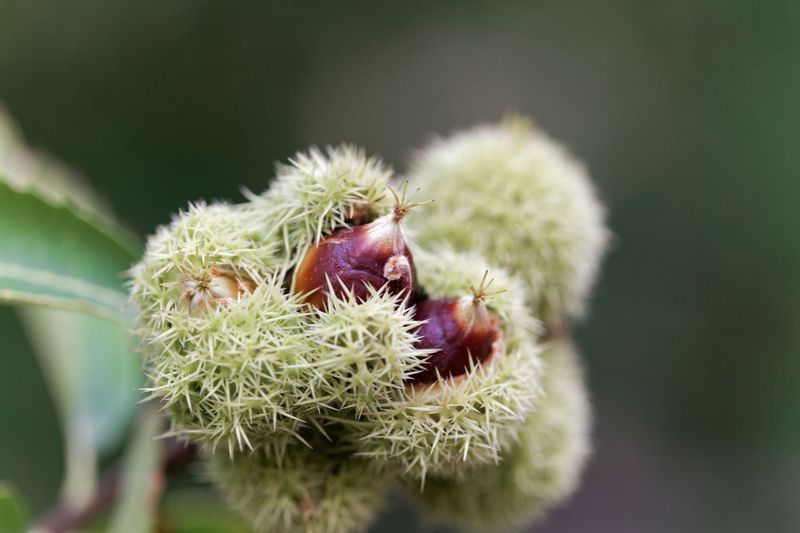
American chinquapin (Castanea pumila) does not behave like most of the trees in this article.
Depending on the site and the individual plant, it can grow as a small tree reaching 15 to 30 feet, a multi-stemmed shrub, or a spreading thicket along a naturalized edge.
It ranges from the North Carolina coast all the way into the mountains, prefers full sun to partial shade, and does best in well-drained, acidic to neutral soil.
NC State’s chinquapin profile describes the nuts as sweet and edible, which they genuinely are, but it also notes that the plant is not grown commercially, partly because harvesting is awkward.
The awkward part is the burr.
Each nut sits inside a spiny husk that makes picking feel more like a puzzle than a pleasure unless you come prepared.
Thick gloves and a little patience turn the harvest into a hands-on fall activity that kids who are old enough to handle it actually find satisfying.
Without gloves, it is just painful.
Chinquapin does not demand much once it is established in the right spot.
It is not related to the American chestnut in a way that makes it vulnerable to chestnut blight in the same catastrophic manner, and it has a quiet toughness that suits dry, sandy, or rocky sites where other fruit trees struggle.
Position it at the back of a property, along a naturalized edge, or in a spot where its thicket habit can spread without crowding out anything you care about.
Treat it as a patient investment in a distinctive fall harvest rather than a quick-payoff snack tree, and it will fit comfortably into a North Carolina yard that has room for a little wildness.
Match the Plant to the North Carolina Yard
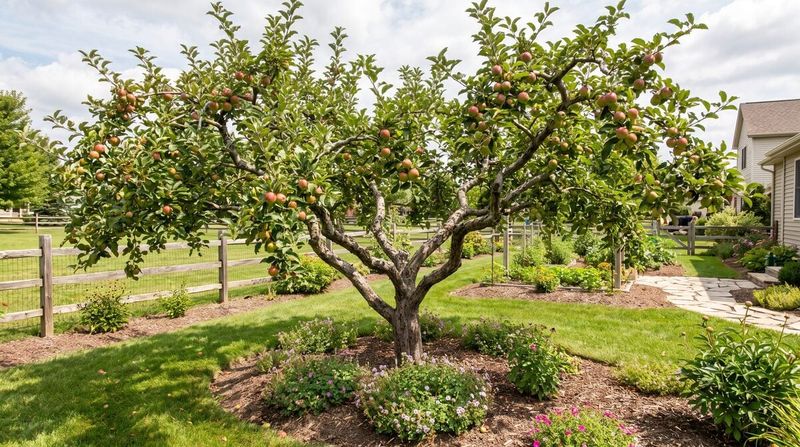
Choosing among these five plants gets a lot easier once you stop thinking about which one is best and start thinking about which one fits your actual yard.
The NC State Extension Gardener Handbook recommends at least 6 hours of direct sunlight during the growing season for fruit trees, warns that standing water around the root zone for 2 to 3 days can kill a tree, and advises testing soil before adding any amendments.
Those three rules alone will rule out several bad choices before you spend a dime.
North Carolina conditions vary sharply by region.
The Coastal Plain brings sandy soil, high humidity, and tropical-cyclone exposure from June through November.
The Piedmont runs on heavy red clay with summer temperatures that can push past 100 degrees Fahrenheit and surprise cold snaps in winter.
The Sandhills sit in between with fast-draining soil that dries out quickly.
The mountains see winters that can drop to 0 degrees Fahrenheit and rocky, clay-influenced soil that drains differently than either of the eastern regions.
A single planting prescription does not work across all of them, and you should check the 2023 USDA Plant Hardiness Zone Map for your exact ZIP code rather than relying on broad regional labels.
When drainage is genuinely poor, a raised bed or berm 18 to 24 inches high and 4 to 5 feet wide can give roots the oxygen they need without forcing you to abandon the planting spot entirely.
Sample the top 6 to 8 inches of soil and a deeper layer around 16 to 18 inches before you amend anything, and let the soil-test results guide what you add rather than guessing.
Spacing numbers like 10 feet between pawpaw trees or 20 to 30 feet between red mulberry trees are minimum crop spacings.
They do not give permission to plant a large tree close to a house foundation, a septic field, a sidewalk, an overhead utility line, or a driveway.
Mature dimensions and root-sucker behavior have to enter the calculation too.
A persimmon that eventually reaches 60 feet tall needs a fundamentally different placement than a chinquapin thicket that stays at 20 feet.
Think about the tree you will have in 20 years, not just the sapling you are planting this fall.
Choose the Tradeoff You Can Live With
Every plant in this article asks something of you, and the honest question is not which one is easiest but which tradeoff actually fits your household.
Pawpaw rewards patience and careful timing with a fruit that genuinely surprises people who taste it for the first time.
You are committing to two trees, a wait of several years if you start from seed, and a harvest window measured in days rather than weeks.
That is a real commitment, and it is also the kind of backyard ritual that tends to stick with a family.
American persimmon is the tough-and-forgiving option for homeowners who want fall fruit without intensive management, as long as the site has room for a large tree and the buyer confirms fruiting behavior before leaving the nursery.
Red mulberry is generous and genuinely easy to grow, but it belongs away from every hard surface you care about, full stop.
Mayhaw earns its spot only on wet or seasonally wet sites, particularly in the Coastal Plain, where it turns a soggy corner into a preserving tradition.
American chinquapin suits a naturalized edge or back-property planting where its thicket habit and spiny burrs are features rather than problems.
None of these plants is automatic.
NC State Extension notes plainly that fruit and nut trees require garden space, annual maintenance, and patience, with many taking several years to produce a meaningful crop.
Native status lowers some barriers, but it does not eliminate the need for thoughtful placement, establishment care, observation, and the occasional intervention when pests, disease, or wildlife competition show up.
The plants that tend to become genuinely loved backyard features are the ones placed in the right spot from the start.
Choosing the right native fruit tree or tree-like plant for your specific site matters far more than simply choosing something with a native label.