
This Is The Insect Hitting North Carolina Oak Trees Before Most Homeowners Notice
Follow us on Google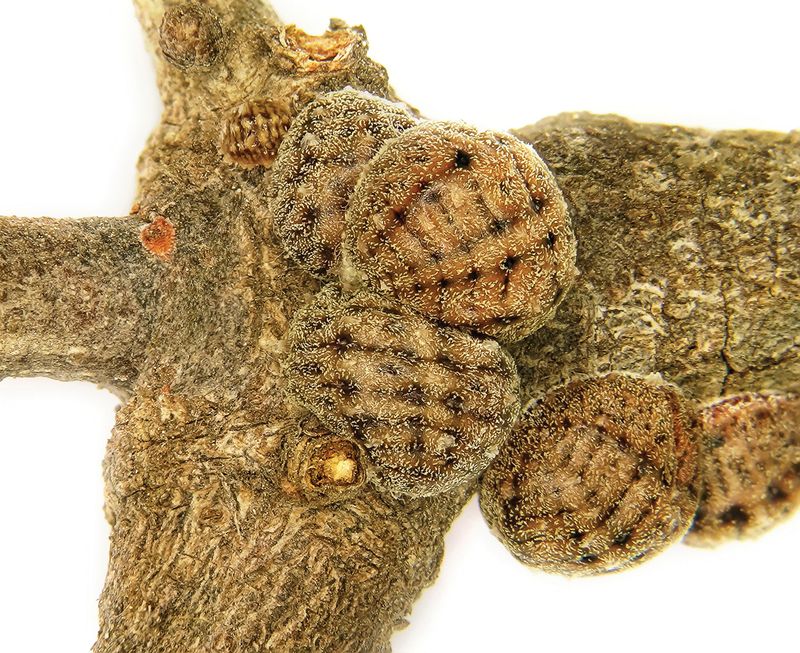
Walk up to one of your backyard oaks right now and look closely at the small twigs near the lower branches.
You might spot something that looks like a tiny, rounded gall stuck to the bark, easy to dismiss as a natural bump.
What you could actually be seeing is a kermes oak scale, a sap-feeding insect that can go unnoticed until the tree starts showing real wear.
No single pest is attacking North Carolina oaks statewide, but this group of scale insects is the strongest match for quiet, easy-to-miss damage on yard oaks, especially across parts of the Inner Coastal Plain.
Kermes Oak Scales Can Hide on North Carolina Oaks
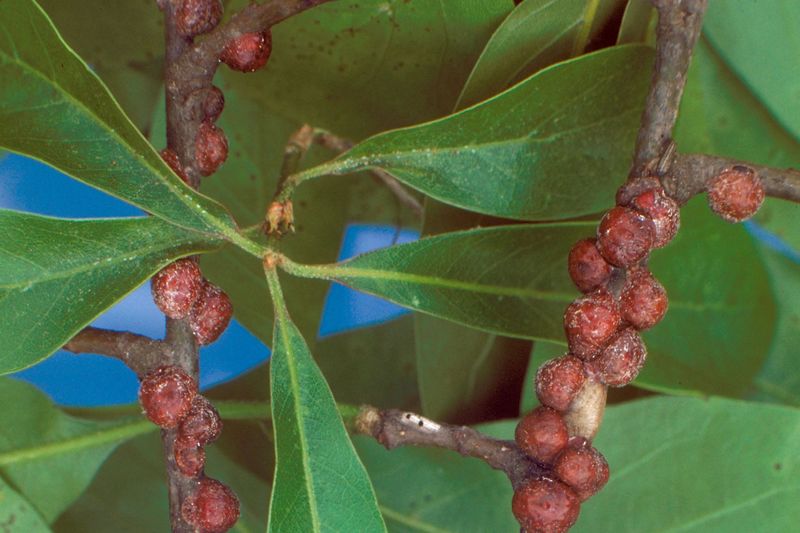
Rounded, irregular bumps on an oak twig can stop you cold once you know what you are looking for.
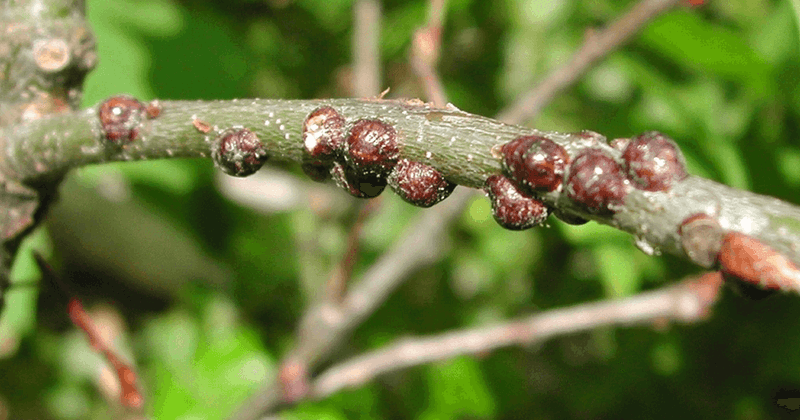
Kermes oak scales are a group of poorly studied soft scale insects that insert themselves onto oak twigs and branches and, over time, form small, gall-like swellings that most people walk right past.
They are sedentary, often the size of a small pea or smaller, and their earthy coloring blends into bark so well that a casual glance turns up nothing unusual.
The N.C.
Department of Agriculture and Consumer Services has documented these insects on willow oak, water oak, and black oak, with reports concentrated in parts of North Carolina’s Inner Coastal Plain.
That geographic pattern matters: if your yard holds one of those oak species and sits in the eastern half of the state, kermes oak scales are worth keeping on your radar.
NCDA&CS reporting on oak scale activity describes them as a native, oak-associated sap feeder rather than a newly arrived invasive pest.
What makes them tricky is the combination of small size, slow movement, and a body shape that mimics a natural growth.
Expert identification may be needed to confirm which specific scale is involved, because several related species can appear on the same host tree.
The article’s headline implies one insect is broadly attacking oaks across the state, but the honest picture is narrower: kermes oak scales can go unnoticed on certain oak species in certain regions, and early signs are genuinely easy to overlook.
That is a real concern worth understanding, just not a statewide tree-killing emergency.
Heavy, Repeated Infestations Create the Greater Risk
Here is where it gets tricky.
A single bumpy twig is not a crisis.
Kermes oak scales feed by pushing straw-like mouthparts into oak tissue and drawing out sap, but a healthy tree with a moderate number of scales can often carry that load without obvious decline.
The problem builds when infestations repeat season after season or when the tree is already under pressure from something else.
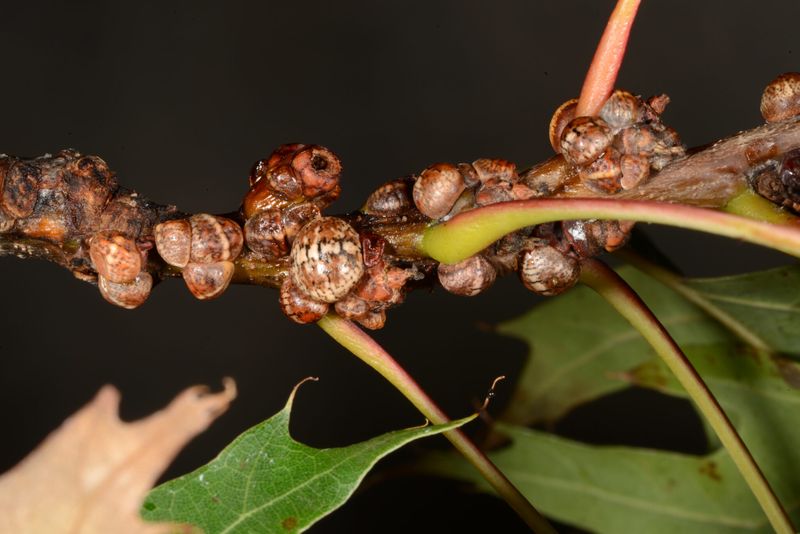
Heavy or repeated feeding leads to twig dieback called flagging, where small branch tips die back and hang brown among otherwise green foliage.
The insects also produce honeydew, a sticky liquid that drips onto bark and leaves and feeds a black fungus called sooty mold.
That combination, flagging plus blackened bark or leaves, is one of the clearer field signs that scale activity may be significant.
State guidance on kermes oak scale damage patterns connects meaningful growth reduction to repeated heavy infestations rather than to isolated early signs.
The variables that tip the balance toward real decline are the ones many Piedmont and Coastal Plain oaks face every summer: prolonged drought, storm damage, root zone compaction from foot traffic or construction, fungal disease, or concurrent injury from borers or other insects.
Any one of those stressors can reduce the tree’s ability to push back against sap loss.
So when you see flagging, the right question is not just “are there scales” but also “what else is this tree dealing with right now.” That fuller picture determines how seriously to take what you found.
Natural Enemies Often Keep Scale Populations in Check
Before you reach for anything, consider what is already working in your yard.
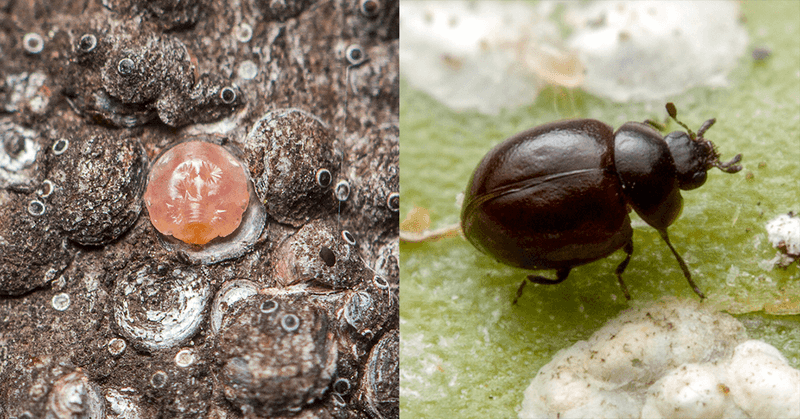
Lady beetles, lacewings, parasitic wasps, and certain predatory moth larvae are all documented natural enemies of soft scale insects, and NCDA&CS notes that these natural enemies commonly suppress kermes oak scale populations before infestations reach damaging levels.
That suppression is genuinely part of the biological system, not a lucky accident.
The practical question is whether your yard supports those beneficial insects or works against them.
Broad insecticide applications, including ones aimed at other pests, can knock back predator populations and leave scales with fewer checks.
Diverse plantings that include native flowering plants can support parasitic wasps and other beneficials, though planting natives alone cannot be presented as a direct cure for a specific scale problem on a specific tree.
Think of it as one supportive layer, not a treatment.
NC State Extension guidance on biological pest control recommends assessing the whole system before intervening.
For an oak showing one bumpy twig or a small patch of sooty mold, the more useful exercise is watching the tree over several weeks.
Look for expanding dieback, new flagging on additional branches, reduced canopy density compared to prior years, or signs that the tree is not putting on normal growth.
A single scale bump on an otherwise vigorous oak is a very different situation from repeated dieback appearing across the lower canopy of a drought-stressed tree.
Reaction should match the actual pattern you observe, not the worst-case scenario.
Inspect Twigs Before You Reach for Spray
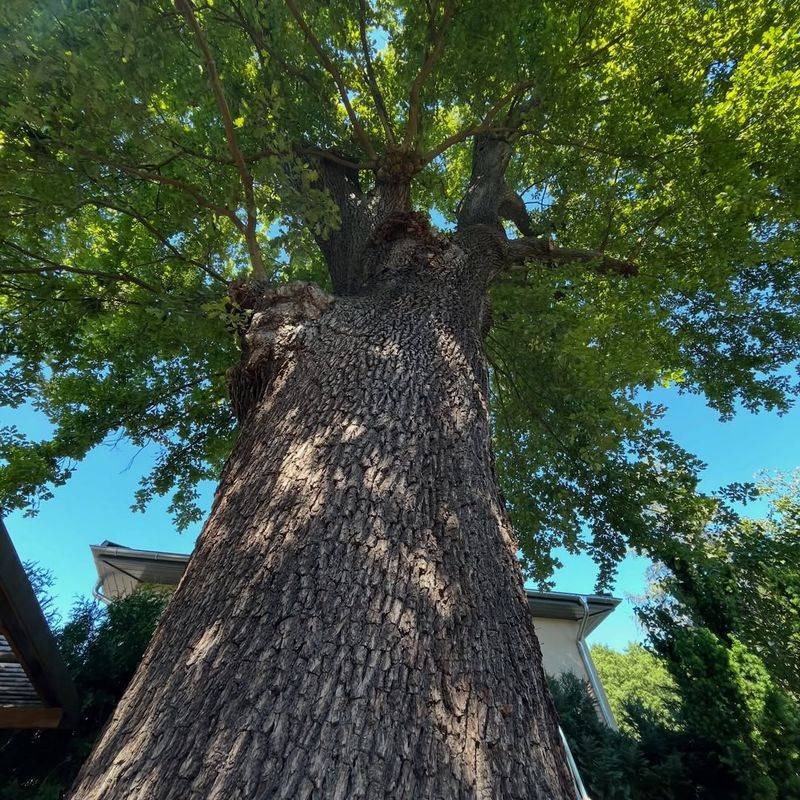
A good inspection costs nothing and saves a lot of trouble.
Start at the lower canopy and work through accessible branches, paying close attention to small twigs, branch crotches, and the undersides of stems where scales tend to settle.
You are looking for small rounded bumps that do not brush off easily, dead twig tips that seem isolated from any visible wound, patches of blackened bark that feel slightly sticky, or sections of foliage that look thinner than neighboring branches.
Bring a hand lens if you have one, or use your phone camera zoomed in close.
Many scale insects are small enough that the naked eye catches only the bump, not the insect itself.
Clear photographs from multiple angles will help enormously when you bring the question to someone who can actually identify it.
Forest Service guidance on forest insect identification is consistent on this point: effective management depends on correctly identifying the pest first, not on treating the most likely candidate.
Symptoms alone cannot confirm kermes oak scales.
Thinning foliage, dead tips, and sooty mold can come from fungal disease, other sap feeders, borers, or environmental stress just as easily as from scale insects.
Once you have photographs and a sample twig if possible, contact your county N.C.
Cooperative Extension office or your N.C.
Forest Service county ranger.
Both can help you move from “something is wrong” to an actual diagnosis, which is the only foundation for a response that actually works.
Match the Response to the Diagnosis
Once you have an identification in hand, the response becomes much clearer.
For a lightly or moderately affected oak that is otherwise healthy, the first moves are not chemical at all.
Water the tree during prolonged dry spells, because even mature oaks in North Carolina’s sandy Coastal Plain soils or Piedmont red clay can suffer meaningful drought stress by mid-July.
Protect the root zone from compaction by keeping foot traffic, vehicles, and heavy equipment at least 10 to 15 feet from the trunk whenever possible.
Avoid unnecessary pruning outside of removing clearly dead wood, because fresh wounds create entry points for secondary problems.
For heavier infestations on accessible landscape trees, a few conditional options exist.
Pruning and removing heavily infested limbs can reduce the scale population directly and improves air circulation.
Hand removal of individual scales is practical on small trees or isolated branches.
Dormant horticultural oil applied before bud break can affect overwintering females, but NC State Extension’s guidance on horticultural oils makes clear that oils can injure foliage when applied during heat, direct sun, temperature extremes, or incompatible spray windows.
Timing and conditions matter as much as the product itself.
Certain labeled systemic insecticides may be appropriate when crawlers, the mobile juvenile stage, are active, but their suitability depends on the specific insect, life stage, formulation, application site, and the current product label.
EPA guidance on reading pesticide labels is direct: the label is the law, and no application is legal or safe unless it follows the label exactly.
Check the current North Carolina Agricultural Chemicals Manual and the specific product label before using anything.
N.C.
Forest Service pest management resources can point you toward current state recommendations.
No homeowner should spray before identifying the pest, and no pesticide should be treated as a universal fix.
Spotted Lanternfly Is a Different North Carolina Concern
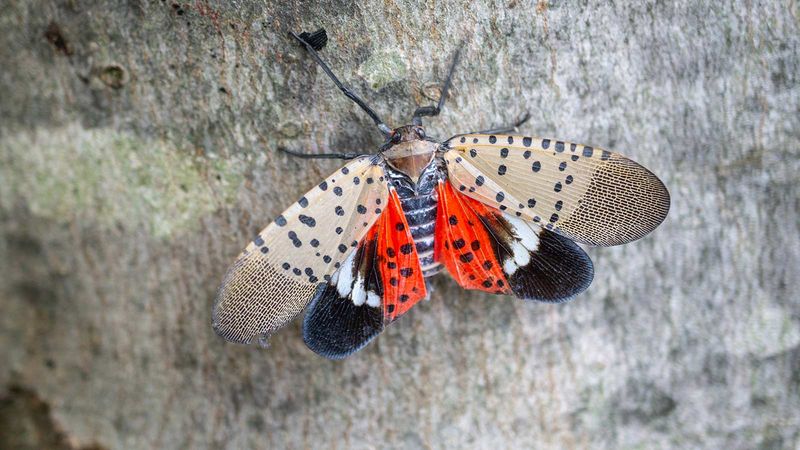
Spotted lanternfly gets a lot of attention right now, and for good reason, but it is a separate story from kermes oak scales.
The two pests can both show up on oaks, and both can produce honeydew and sooty mold, but their biology, appearance, and management are distinct enough that mixing them up leads to real confusion about what you are actually dealing with.
Adults are roughly 1 inch from head to wing tip and have distinctive spotted forewings with red hindwings that flash when the insect takes flight.
Egg masses are about 1 inch long, contain around 35 eggs, and look like a smear of dried mud on bark or flat surfaces.
Nymphs hatch in spring, late nymphs appear from late May through July, and adults are present from July through December in North Carolina.
While oak is among the plants spotted lanternfly feeds on, late nymphs and adults strongly prefer tree-of-heaven as a host.
NCDA&CS spotted lanternfly identification and host information lists grapes, fruit trees, maple, walnut, and willow among the many other hosts beyond oak.
As of February 10, 2026, NCDA&CS confirmed established populations in seven North Carolina counties: Forsyth, Guilford, Rockingham, Caldwell, Caswell, Davidson, and Rowan.
That does not mean spotted lanternfly is hitting oak trees statewide.
If you spot what looks like a spotted lanternfly outside those counties, photograph it with a size reference such as a coin, note the location and date, and report it to NCDA&CS.
Also inspect your vehicle, trailer, patio furniture, grill, and lawn equipment for hitchhiking insects or egg masses before traveling, because that is one of the main ways the insect spreads into new areas.
Check Other Causes Before Blaming an Insect
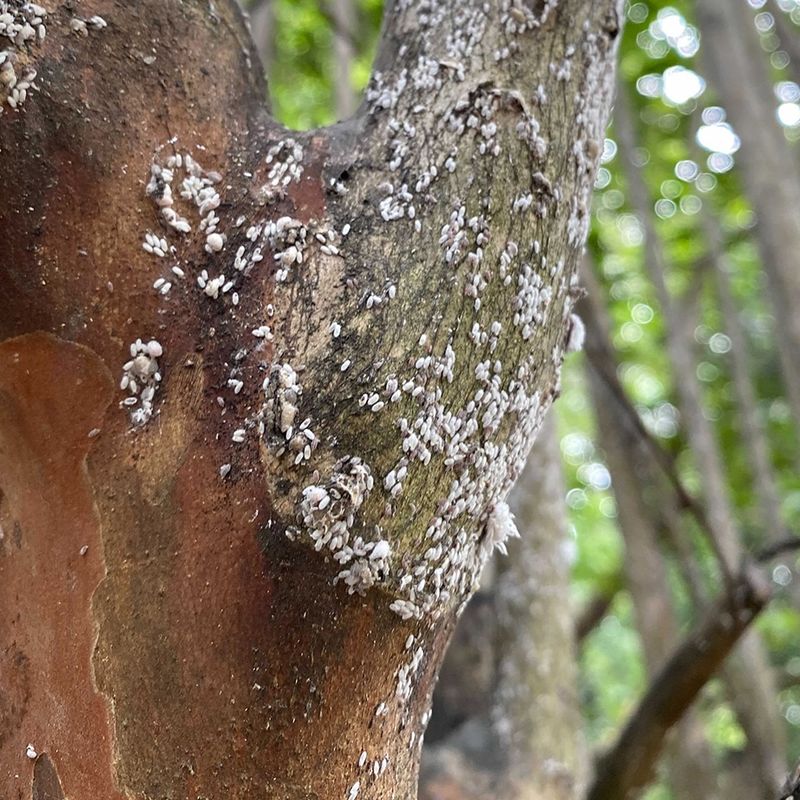
Oaks are genuinely tough trees, but they attract a long list of problems that can look alike from the ground.
Premature leaf drop, canopy thinning, galls, and dieback can all come from fungal disease, oak leaf blister, leaf miners, caterpillars, borers, other scale species, or simply from a dry summer followed by a cold snap, which is a pattern many North Carolina oaks know well.
NC State Extension’s overview of common oak diseases and pests lists all of these as legitimate possibilities before a diagnosis is made.
Oak apple galls are a good example of something alarming that usually turns out to be minor.
Those large, papery spheres hanging from twigs are caused by small wasps, not scale insects, and they generally do not seriously harm a healthy tree.
No management is typically needed.
On the other end of the scale, NC State Extension notes that orangestriped oakworm feeding in late August and September is generally less harmful to tree health than defoliation that happens in spring, when a tree has spent its energy reserves on new growth.
Timing and tree condition both shape how much damage actually matters.
NC State Extension’s guide to common oak insect pests is a practical starting point for sorting through the possibilities.
The calm action plan is straightforward: inspect early in the season when signs are most readable, support tree vigor through watering and root zone protection, avoid actions that harm natural enemies, document what you see with photographs and dates, and seek an identification before treating anything.
An oak that has stood in your yard for 30 years has already survived a lot, and a careful, informed response gives it the best chance to keep doing exactly that.