
The One Winter Mistake That Ruins Texas Crape Myrtles Before Spring
Follow us on Google
The winter mistake is topping, which means chopping a crape myrtle’s branches back to bare stubs, often all at one height. You see it on a cold January morning in neighborhoods all over Texas, rows of trees cut down to knobby fists.
Many people think the tree needs this to bloom, but it does not. Here is how to spot topping, what it can do to your tree, and what to do instead.
Recognize Topping
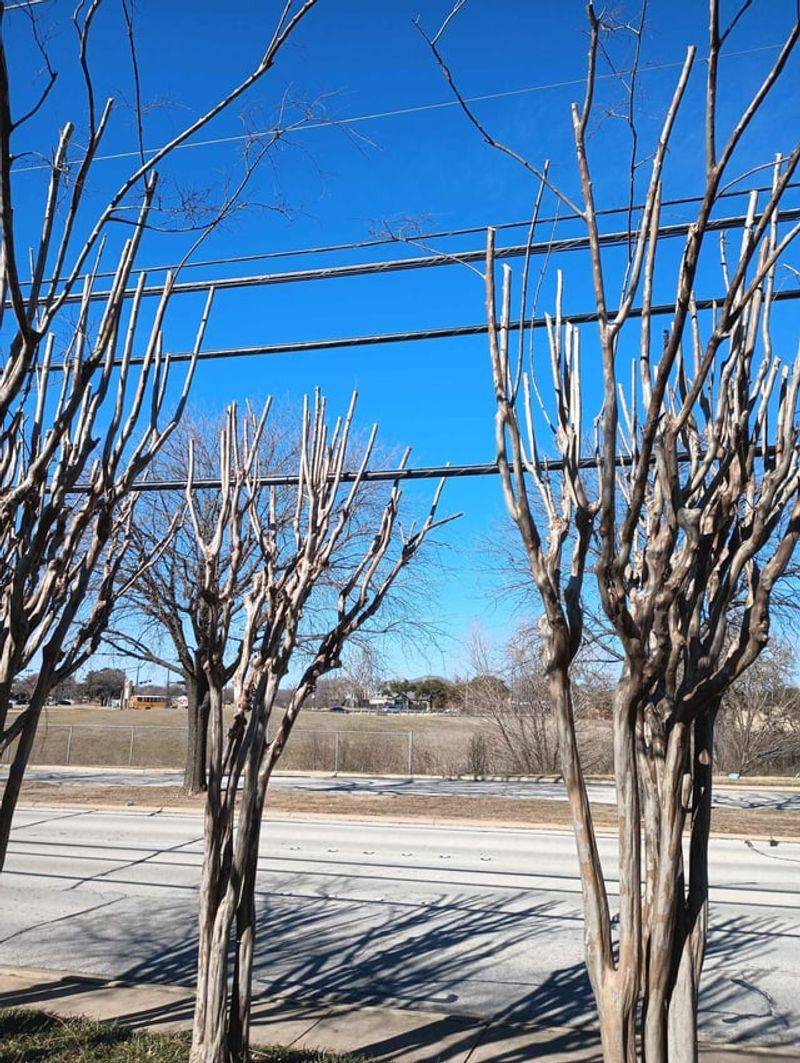
Picture a crape myrtle in January with every branch sawed off at the same height, leaving a cluster of blunt stubs that look like fists raised at the sky. That is topping.
It means cutting established branches back to bare stubs, often at one uniform height, because someone believes the tree must be cut hard to bloom.
Notice what this article is not saying. Pruning a crape myrtle in winter does not doom it.
Careful, selective cuts are a normal part of tree care. The trouble is the blunt, all-at-once cutback, the kind you can spot from the street.
Texas A&M sources are clear on this point. The Texas A&M Forest Service Trees of Texas entry for crapemyrtle calls the practice incorrect, and a Texas A&M AgriLife Extension newsletter says not to top crape myrtles.
So here is a quick test you can run from the sidewalk. Look for thick limbs ending in flat cuts, all at about the same level, with no graceful taper to thin tips.
If you see that, you are looking at a topped tree.
The good news is that spotting it is the hard part. Once you know the look, you will see it everywhere, and you will know to skip it in your own yard.
What Topping Can Do to the Tree
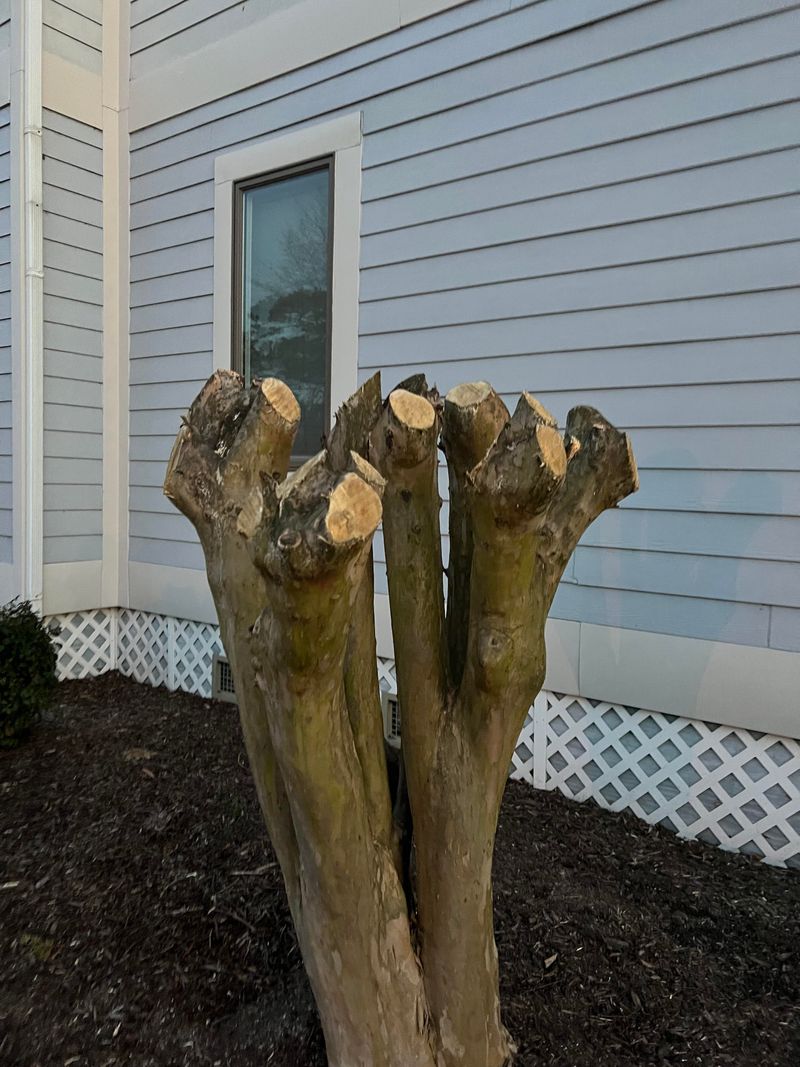
A tree is built like a well-planned frame, with branches that taper and spread. Topping tears up that plan.
The natural, graceful shape is lost, and large cut ends are left exposed to weather.
Then the tree fights back. Fast shoots often sprout right below each cut, and they can be weakly attached, which makes them more likely to snap under the weight of heavy blooms or a hard Texas thunderstorm.
According to University of Florida IFAS Extension, topping and pollarding can delay bloom by up to a month, may shorten the bloom season on some cultivars, and flower numbers can drop as pruning gets more severe. Effects vary by cultivar and by pruning method, so do not count on hard cuts to produce more flowers.
This does not mean the tree dies. Many topped crape myrtles keep growing for years.
They just lose their natural form and carry more weak growth, which is a quieter kind of damage.
You may hear about pollarding, and it is a different thing. Pollarding is a deliberate system of repeated pruning that builds up knuckle-like heads over time.
Casual topping is not that, and pollarding is not a reason to chop a home landscape tree at random.
The Texas A&M Forest Service also describes the tree’s natural, spreading form, which is the very thing topping removes.
Late Winter Depends on Local Conditions
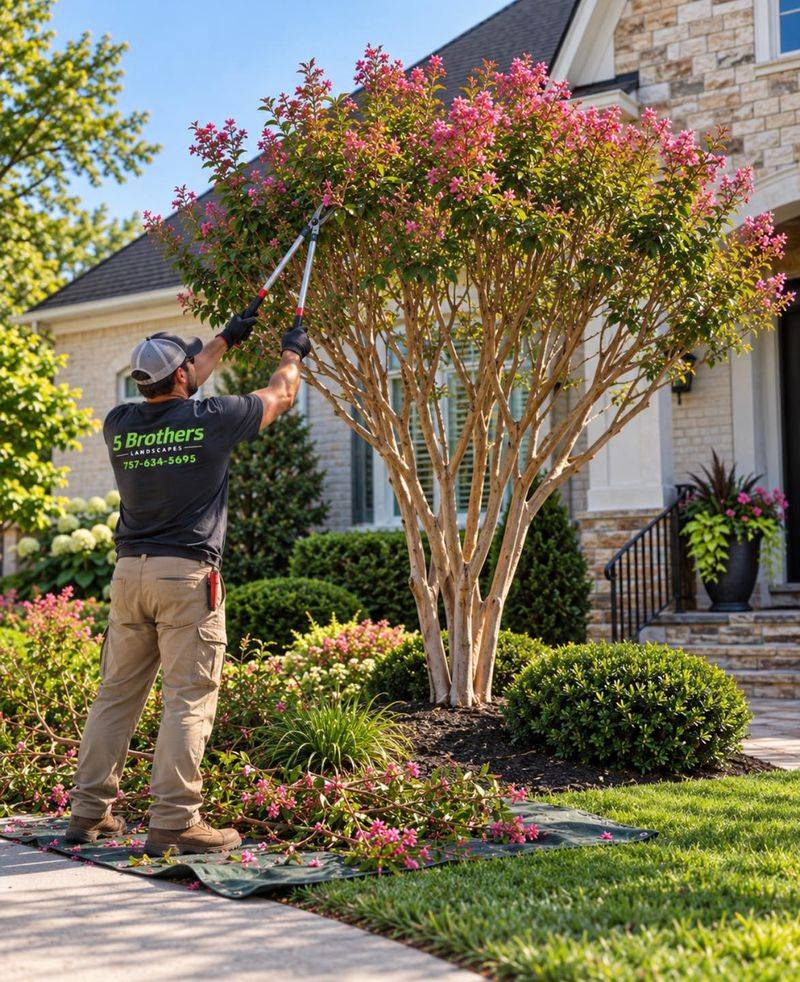
Timing is where many Texans get tangled up. When a crape myrtle needs structural pruning, the general guidance is late winter, before new growth resumes.
That is the advice in Texas A&M’s Earth-Kind pruning guidance.
Texas is huge, so late winter does not land on one calendar date. Weather and bud development differ between the Panhandle, Central Texas, and the Gulf Coast.
A warm spell can wake buds weeks earlier on the coast than in the north.
You may also see a December to early February window. That comes from a South Plains newsletter about pruning landscape shade trees, ending at bud swell.
It is regional advice, not a statewide crape myrtle calendar.
There is one more wrinkle. A 1991 study found reduced cold hardiness after winter pruning of Natchez crape myrtles under its specific experimental conditions.
It suggested late winter or early spring, preferably just before budbreak. That is one cultivar and one set of conditions, so do not read it as proof that every winter date is unsafe in Texas.
The practical takeaway is simple. Watch the buds, not the calendar, and prune only when you have a real reason.
Make Selective Cuts, Not a Hard Cutback
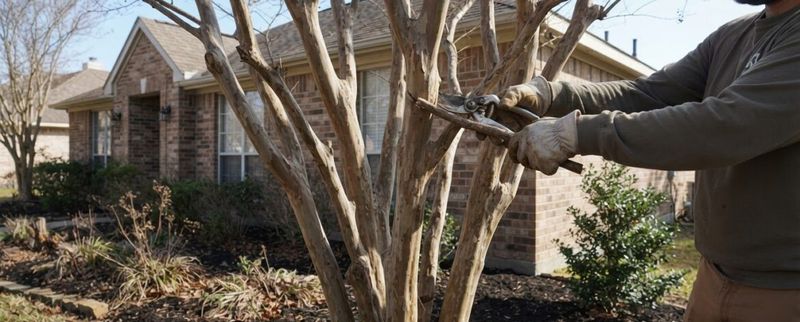
Here is the myth in one line: crape myrtles must be cut back hard every winter to bloom. They do not.
These trees flower on the current season’s growth, so new wood will carry blooms without a drastic haircut.
University of Georgia Extension calls the yearly cutback a misconception in its crape myrtle culture guide, and says limited or no pruning produces a natural form. Many established trees need little or nothing at all.
When you do prune, think selective. Look for branches that are dead, damaged, diseased, crossing, or growing inward toward the center.
Those are the candidates for removal, and the rest of the canopy can stay as it is.
Where you cut matters, too. Make each cut just outside the branch collar, the slightly swollen area where a branch joins a larger one.
Do not leave a long stub, and do not slice flush into the collar. The UF/IFAS crapemyrtle pruning guide backs this approach of preserving the natural canopy.
The Texas A&M Earth-Kind guidance supports the same idea of restrained, thoughtful cuts rather than a blanket cutback.
Think of it as editing, not rewriting. Take out the troublemakers, step back, and let the tree show you its shape.
Choose a Tree That Fits Its Space
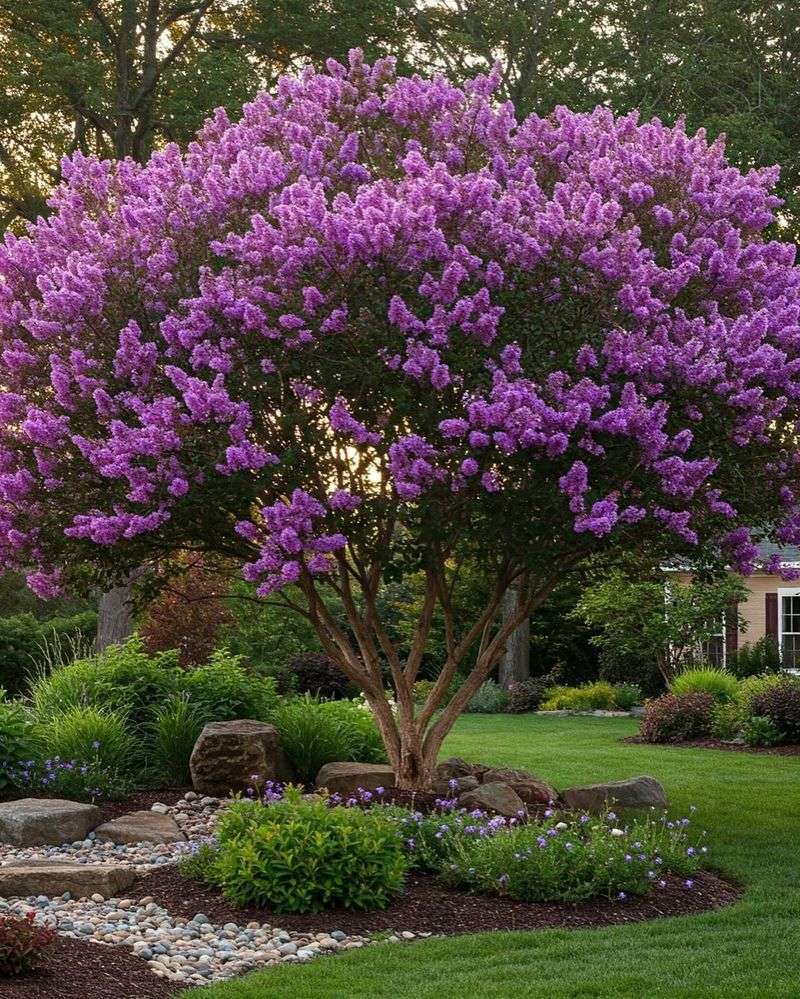
Sometimes the real issue is not pruning at all. It is a tree planted in the wrong spot.
If your crape myrtle needs severe cuts every year just to squeeze past the roofline or the fence, it is telling you it does not fit.
Mature size varies by cultivar. As a typical example, the Texas A&M Forest Service says a crape myrtle can grow about 20 feet tall and 15 feet wide.
Some cultivars stay much smaller, and some get larger.
Repeatedly chopping down a too-big tree sets up the very problems described earlier, like weak shoots and lost form. A UF/IFAS publication points to choosing the right size of cultivar for the site as the better path.
So the next time you shop, read the tag for mature height and width, then match it to the spot. A smaller cultivar suits a tight bed near the house, while a bigger one can anchor an open corner of the yard.
If you already have an oversized tree, you can also consider moving future plantings to a better location. Start with the space you have, not the size you hope to force.
A tree that fits needs very little from you, and that is a pretty good deal.
Know When to Call for Help

Some jobs are not worth a trip up a ladder. Keep your own pruning to what you can reach safely from the ground, such as small dead twigs or a crossing branch at shoulder height.
Large limbs, work off the ground, and anything hazardous belong to qualified help, like a certified arborist. The Texas A&M guidance reserves big branches for professionals, and the Earth-Kind pruning page is a good place to read the basics.
The South Plains newsletter from Texas A&M AgriLife advises against pruning from a ladder, and says to call the utility company if a power line is within 10 feet. That is regional safety advice, not permission to tackle risky work yourself.
Here is a simple way to decide. If the tree is healthy and well placed, leave it alone.
If it has a few small problem branches within easy reach, make selective cuts just outside the branch collar. If the limb is large, high up, or near a line, call a professional.
That path keeps you safe and keeps your tree in shape.
A crape myrtle does its best work when you give it room and a little patience.
