
These Underused Florida Natives Pull Off The Resort-Tropical Look For A Fraction Of The Price
Follow us on Google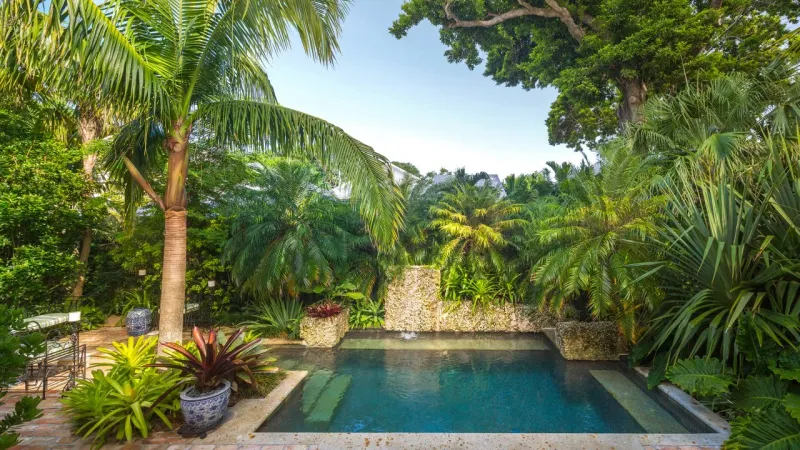
Walk out to a Florida backyard that looks like a boutique hotel poolside, and chances are the plants doing the heavy lifting are not the expensive tropicals from the garden center endcap.
A handful of Florida natives can pull off that same lush, layered look while potentially costing you less in water, fertilizer, and replacement plants over the long haul.
The catch is that native status alone does not guarantee savings at the register or success in your yard.
What actually makes the difference is choosing the right plant for your specific site, your region, and the way your soil drains after a summer downpour.
Build the Resort Effect Without Making a Price Promise
Forget the idea that you need to spend a fortune on specialty tropicals to get a yard that looks like it belongs at a five-star resort.
The resort effect comes from layered foliage, bold plant forms, repeated textures, and a mix of fine and coarse leaves, not from a particular price tag or country of origin.
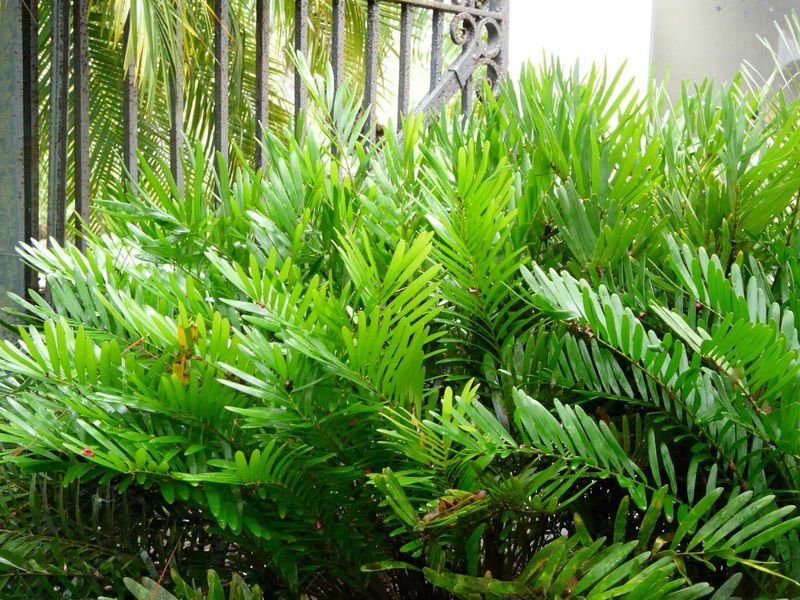
Coontie (Zamia floridana), a low-growing Florida native with feather-like evergreen fronds and a distinctly tropical growth habit, is a strong starting point.
UF/IFAS guidance on coontie recommends spacing plants 3 to 5 feet on center for a massed clumping effect, and suggests mixing plants of different sizes to make the grouping feel natural rather than planted in a row.
That layered, abundant look is exactly what resort landscapers charge for.
Beyond coontie, the palette expands quickly.
Firebush, muhly grass, Simpson’s stopper, American beautyberry, saw palmetto, and live oak each contribute a different visual layer, from berry color to grass plumes to broad canopy shade.
Here is where the price conversation needs an honest correction.
Florida natives do not universally cost less at the register than tropical ornamentals.
Purchase price depends on species, container size, cultivar, regional availability, nursery demand, and shipping.
The financial case for natives builds over time, through potentially lower irrigation bills, fewer fertilizer applications, reduced pesticide needs, and fewer replacement plants when the species genuinely matches the site.
That long-term cost-of-ownership benefit is real and worth planning around, but it is not automatic and it is not guaranteed on day one.
Use Layers, Repetition, and Texture to Create Luxury
A single beautiful plant sitting alone in a bed of mulch looks like an afterthought.
The same plant repeated three or five times, anchored behind a mass of fine-textured grass and fronted by a low evergreen, suddenly looks intentional and expensive.
UF/IFAS landscape design guidance recommends repeating forms, colors, and textures throughout a planting, using focal plants sparingly, and balancing coarse-leaved plants with fine-textured ones to create visual depth without clutter.
That is the actual design system behind resort landscaping, and it works just as well with natives as with any imported ornamental.
The practical layout goes like this.
Place a taller evergreen shrub or small native tree at the back of the bed.
Step down to medium shrubs in the middle.
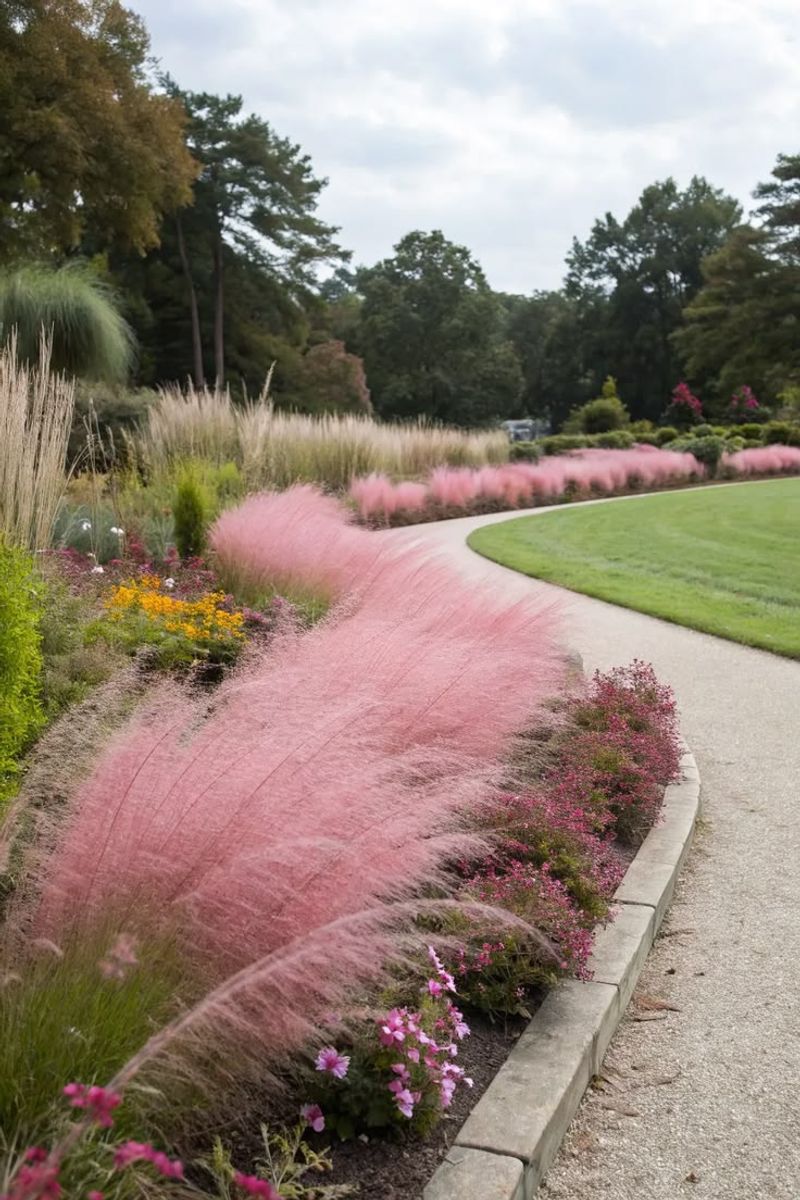
Then repeat a fine-textured plant like pink muhly grass (Muhlenbergia capillaris) in the foreground, using drifts of 3 or more plants rather than a single specimen.
A lone muhly looks sparse.
A drift of 5 plants catching afternoon light looks like something from a design magazine.
Pink muhly is hardy from USDA zones 7a through 11, so it works across most of Florida, from the Panhandle to the southern tip.
Its soft, cloud-like fall blooms provide a strong contrast against the bold, glossy leaves of stopper or the coarse fans of palmetto.
That contrast, coarse against fine, glossy against airy, is what keeps the eye moving and makes the planting feel layered rather than flat.
Repetition does not mean monotony, it means the eye finds a rhythm, and that rhythm is what reads as luxury.
Choose the Evergreen Backbone for Your Region
The backbone of any resort-style landscape is the evergreen layer, the plants that hold the scene together in January and July alike.
Choosing the wrong backbone for your part of Florida is one of the fastest ways to watch your landscape budget disappear.
Firebush (Hamelia patens) is a go-to for Central and South Florida.
UF/IFAS firebush data lists a typical mature size of 6 to 12 feet tall with a 5- to 8-foot spread, dense evergreen foliage, red-orange tubular flowers, and fruit that attract butterflies and hummingbirds.
It is suited to USDA zones 9 through 11.
That zone cutoff matters: gardeners in North Florida or the Panhandle, where hard freezes can arrive without much warning, risk losing firebush to cold damage.
In those areas, it is a better candidate for a protected microclimate than a front-yard focal point.
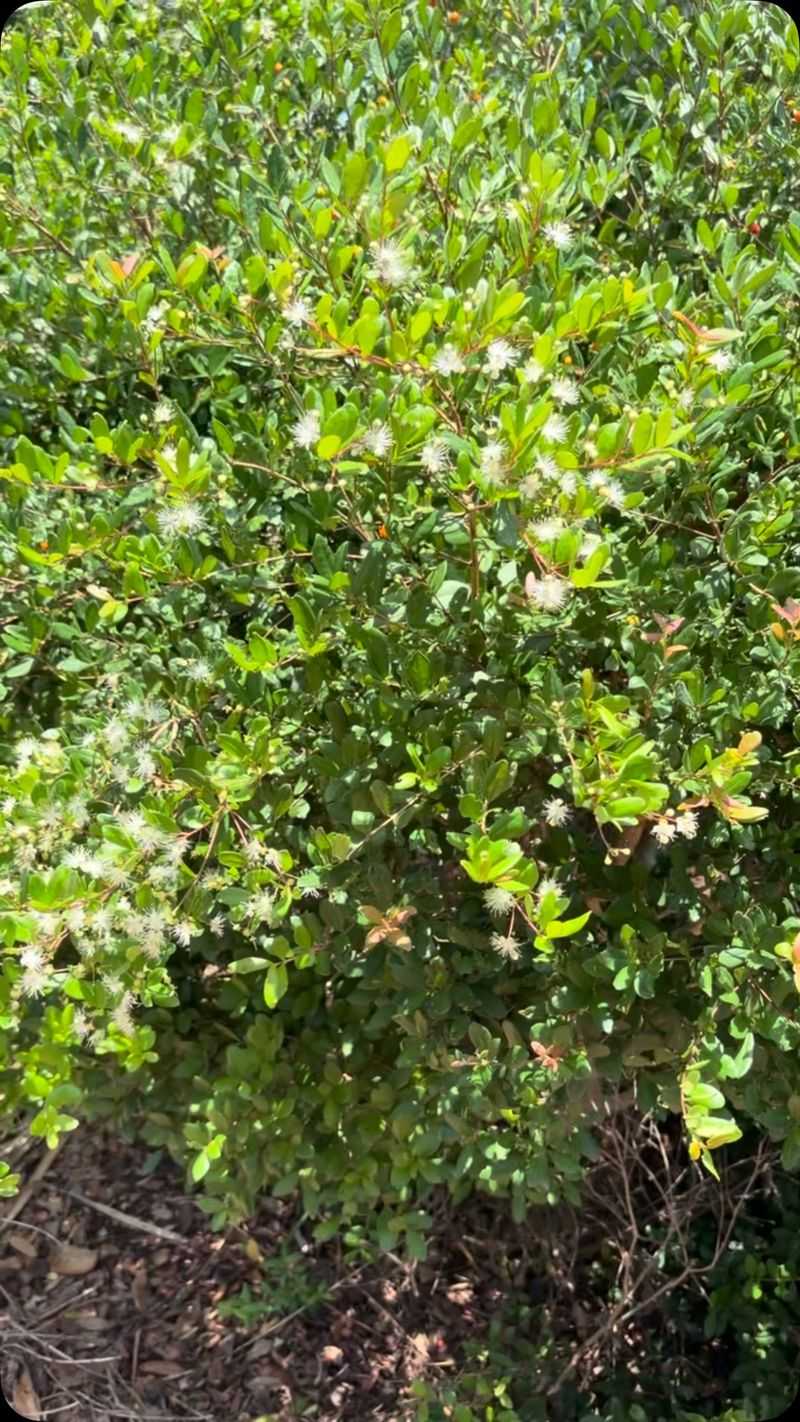
Simpson’s stopper (Myrcianthes fragrans) earns its place in Florida landscapes from the Gulf Coast to the Atlantic side.
It offers fragrant white flowers, orange-red berries, and reddish peeling bark that genuinely looks like it belongs on a resort path.
Salt tolerance makes it a reasonable choice near the coast, but check its mature dimensions before you plant: Treasure Coast native plant guidance lists it at 5 to 20 feet tall and 3 to 5 feet wide.
That is a wide range, and the taller end means it should not go directly below a window or beside a narrow walkway without a pruning plan.
Saw palmetto (Serenoa repens) delivers the unmistakable Florida silhouette that no tropical substitute quite matches.
Its fan-shaped leaves read as tropical from 20 feet away.
UF/IFAS saw palmetto documentation lists it as generally 3 to 6 feet tall with high salt-spray tolerance, but the petioles carry backward-pointing spines.
Keep it away from narrow paths, children’s play areas, and seating where someone might brush against it in the dark.
Assign Color, Seasonal Drama, and Canopy Separate Jobs
Every plant in a well-designed landscape has a specific job.
When you assign color, seasonal drama, and canopy to different species rather than expecting one plant to do everything, the result looks deliberately composed rather than randomly assembled.
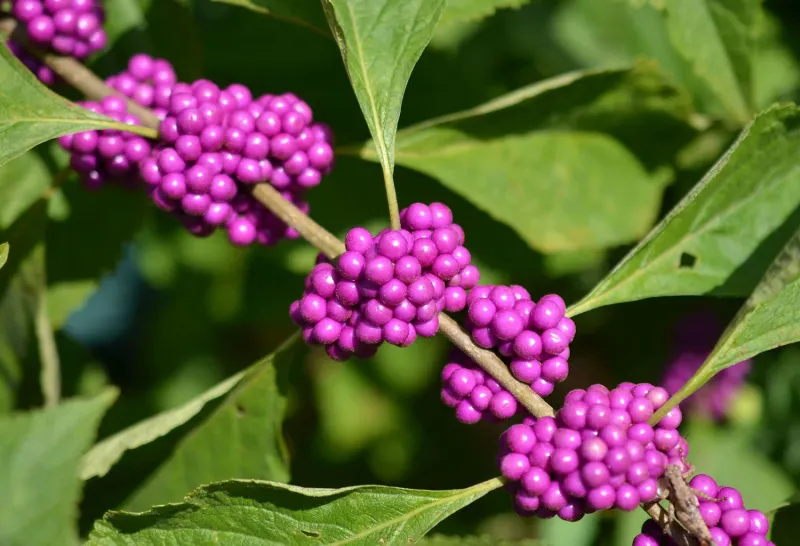
American beautyberry (Callicarpa americana) brings the color.
Its arching branches and clusters of vivid purple berries in late summer and fall are genuinely hard to match in any plant palette.
UF/IFAS Florida-Friendly plant data lists it as tolerant of full sun to partial shade and a range from dry to wet conditions across zones 6 through 10b.
One honest caveat: beautyberry is deciduous.
It drops its leaves during part of the year, which means it cannot serve as a year-round evergreen screen.
Use it as a seasonal color anchor, not as a privacy hedge.
Pink muhly grass handles seasonal drama through its fall bloom display.
Repeated drifts of it catch the low afternoon light in October and November in a way that stops people mid-stride.
Its job is accent and movement, not structure, so place it in front of your evergreen backbone where the plumes can be seen against a darker background.
Live oak (Quercus virginiana) is the canopy investment that makes a yard feel like it has been there for generations.
That feeling of maturity and shade is genuinely difficult to fake with smaller plants.
But live oak is not a foundation shrub or a quick fix.
UF/IFAS lists its mature height at 60 to 80 feet, with a canopy spread of 80 to 100 feet.
Native plant placement guidance makes clear that trees of this scale need substantial clearance from structures, driveways, overhead utilities, and any underground lines.
Plan the location before you plant, not after the tree has grown into the roofline.
Let the Site Decide Whether the Landscape Saves Inputs
Native status is not a workaround for a bad planting site.
A coontie dropped into a low, poorly drained pocket in Central Florida will struggle just as much as any tropical ornamental would.
The site determines whether the plant thrives, and the plant’s long-term success is what actually delivers the lower-input benefit.
Florida soils are not one thing.
Sandy soils across much of the state drain quickly and dry out fast between rains.
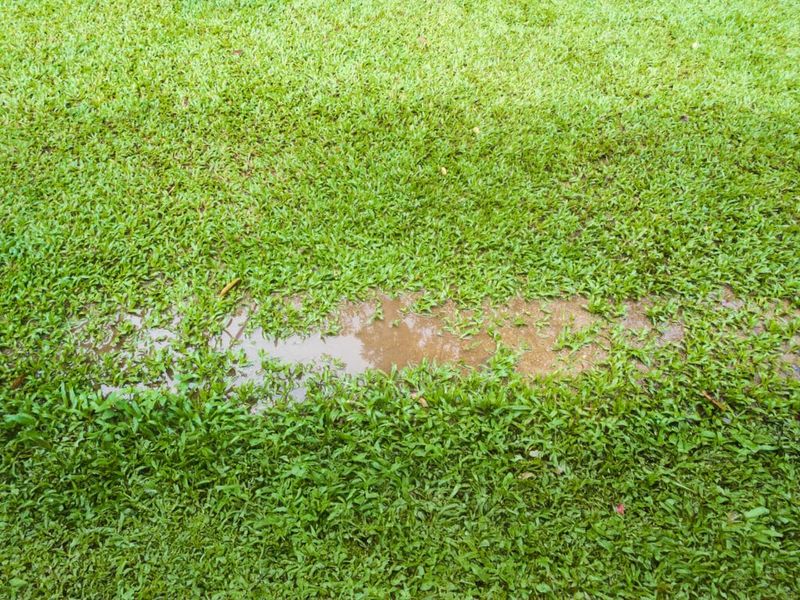
Compacted areas and low pockets stay saturated long after a summer storm passes.
UF/IFAS disease management guidance for ornamentals identifies waterlogged soils as a primary driver of root and crown diseases caused by pathogens like Phytophthora and Fusarium.
A plant described as drought-tolerant can still rot in a poorly drained hole, so dig a test hole and watch how fast it drains before you commit to a planting plan.
Coastal sites add another layer of complexity.
Salt spray, saline irrigation water, saline soil, wind, sand abrasion, and storm surge are not the same stress.
UF/IFAS windbreak species guidance is careful to distinguish salt-spray tolerance from resistance to flooding and storm surge.
Simpson’s stopper, coontie, and saw palmetto all show documented salt-spray tolerance, but no native plant should be promised as storm-surge proof.
South Florida and the Keys require special attention because of shallow alkaline limestone soils.
A plant that performs well in acidic sandy soil in North or Central Florida may respond very differently in high-pH, shallow limestone conditions.
Coontie’s UF/IFAS profile and Treasure Coast native plant recommendations both reflect regional specificity.
Check drainage, measure sun exposure, and identify your soil type before selecting plants, and the cost-of-ownership benefit becomes genuinely achievable rather than theoretical.
Establish the Plants Before Expecting Lower Water Use
The promise of lower water use comes true after establishment, not the day you plant.
Rushing through installation or skipping first-year care is the most common reason a native landscape ends up costing more than expected, not less.
Start with the planting hole.
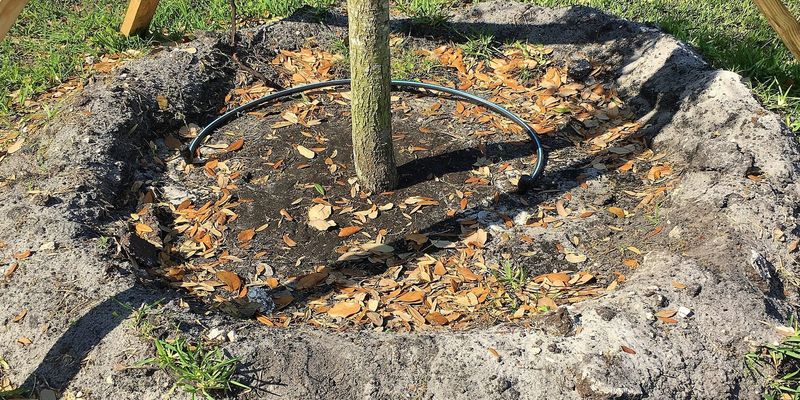
UF/IFAS shrub planting guidance recommends digging a hole wider than deep, locating the root flare (the point where the trunk begins to flare out at the base), and setting the root ball so the flare sits just slightly above the surrounding soil line.
Planting too deep is one of the quietest killers in Florida landscapes.
Water the plant in thoroughly right after planting, even if rain is in the forecast.
Hot, sunny, dry conditions slow establishment considerably.
UF/IFAS establishment research reports that root growth to the outer edge of the canopy typically takes about 20 to 28 weeks under normal rainfall.
During the first year, plants need consistent irrigation during dry stretches.
When more than about 2 weeks pass without at least 1/4 inch of rain, plan to water, roughly 1 to 2 gallons per plant depending on species and soil, though sandy soils may need more frequent attention than heavier ones.
Mulch is not optional.
Spread it 2 to 3 inches deep across the bed, but leave about 2 inches of bare soil around each trunk and stem.
UF/IFAS mulch guidance warns that piling mulch against trunks can divert rainfall, encourage rot, and create rodent habitat.
Pull it back from the base and spread it wide instead.
Once plants are established, irrigation should become less frequent rather than stopping entirely.
UF/IFAS landscape irrigation guidance recommends microirrigation for tree and shrub beds during establishment, transitioning to supplemental watering mainly during severe drought after roots are settled.
That shift from regular to occasional irrigation is where the water-bill savings actually begin to appear.
Protect the Landscape Without Overpromising Wildlife or Pest Control
Native plants do not come with a pest-immunity guarantee.
Whiteflies have a trick: they find the undersides of leaves on firebush, muhly grass, and glossy-leaved shrubs just as readily as on any tropical ornamental.
Thrips, scale insects, fungal leaf spots, and root diseases can all appear in a native planting, especially during Florida’s long humid summers.
The response is monitoring and selective treatment, not blanket spraying.
UF/IFAS guidance on natural pest management products notes that horticultural oils and insecticidal soaps can control soft-bodied pests like whiteflies and some scale insects, but they can also injure plants under heat stress, drought stress, high application rates, or temperatures above 90 degrees Fahrenheit.
Dish soap is not a substitute for a labeled insecticidal soap product, and broad neem-oil applications applied without identifying the specific pest can harm beneficial insects and burn foliage.
Match the product to the pest, read the label, and test on a small area first.
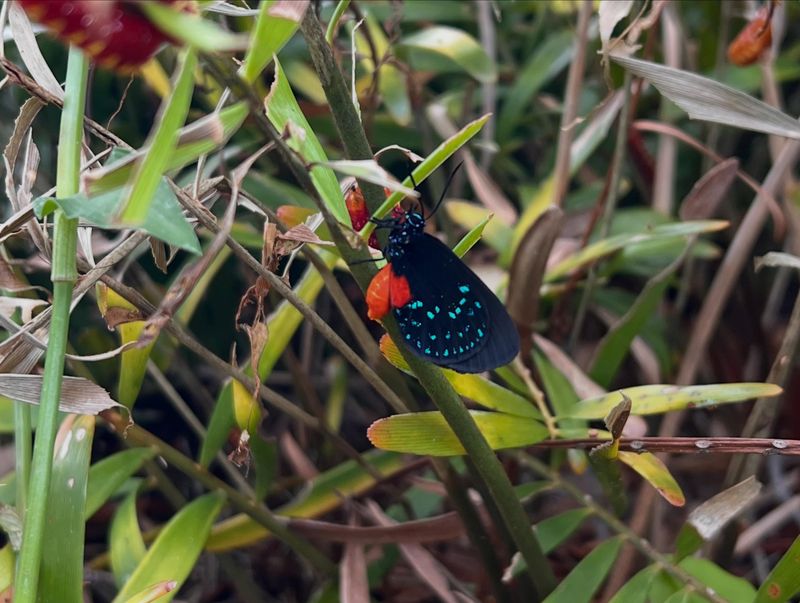
Coontie supports the Atala butterfly, a striking native species that uses coontie as its larval host plant.
That is a genuine wildlife benefit worth mentioning.
UF/IFAS poisonous plant guidance confirms that all parts of coontie can be poisonous if eaten, especially the seeds, so the wildlife value comes with a real safety consideration for homes with dogs, cats, or young children.
For monarch support, Florida Native Plant Society guidance on butterflies favors regionally native milkweed species over tropical milkweed (Asclepias curassavica), which is not a Florida native and is listed as a Category 2 invasive species.
Gulf fritillaries and zebra longwings will visit firebush and passionvines on their own terms.
Build the habitat, monitor it honestly, and the landscape earns its keep one season at a time.