
Leaving Purple Coneflower Seed Heads Can Provide Winter Food for Goldfinches
Follow us on Google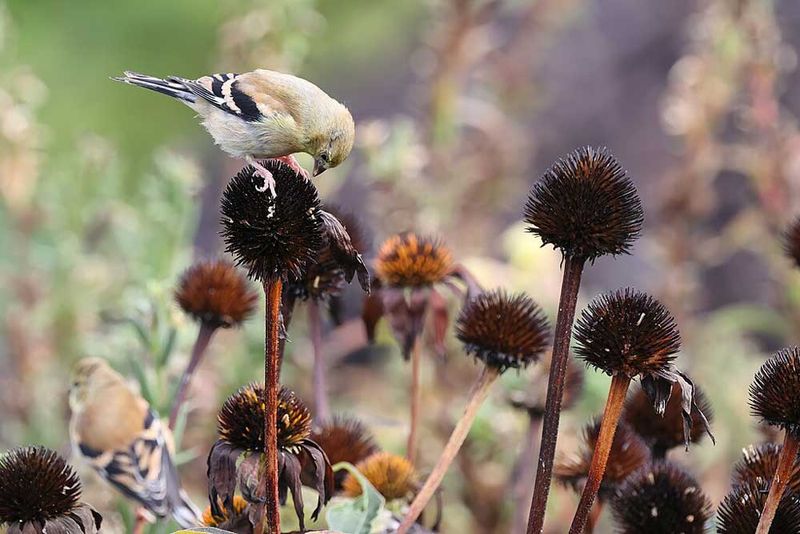
Late summer, the purple coneflowers in your yard quietly stop blooming and start doing something different. The flower petals drop away, and those spiky brown centers harden into seed heads that small birds can actually use.
Skipping the fall cleanup on healthy plants may be one of the simplest things you can do to support American Goldfinches through the colder months, depending on where you live and what the season brings.
Purple Coneflower Becomes a Fall Seed Source
Most gardeners know purple coneflower, Echinacea purpurea, as a mid-summer bloomer with rosy petals and a raised, bristly center. What happens after those petals fall is just as interesting.
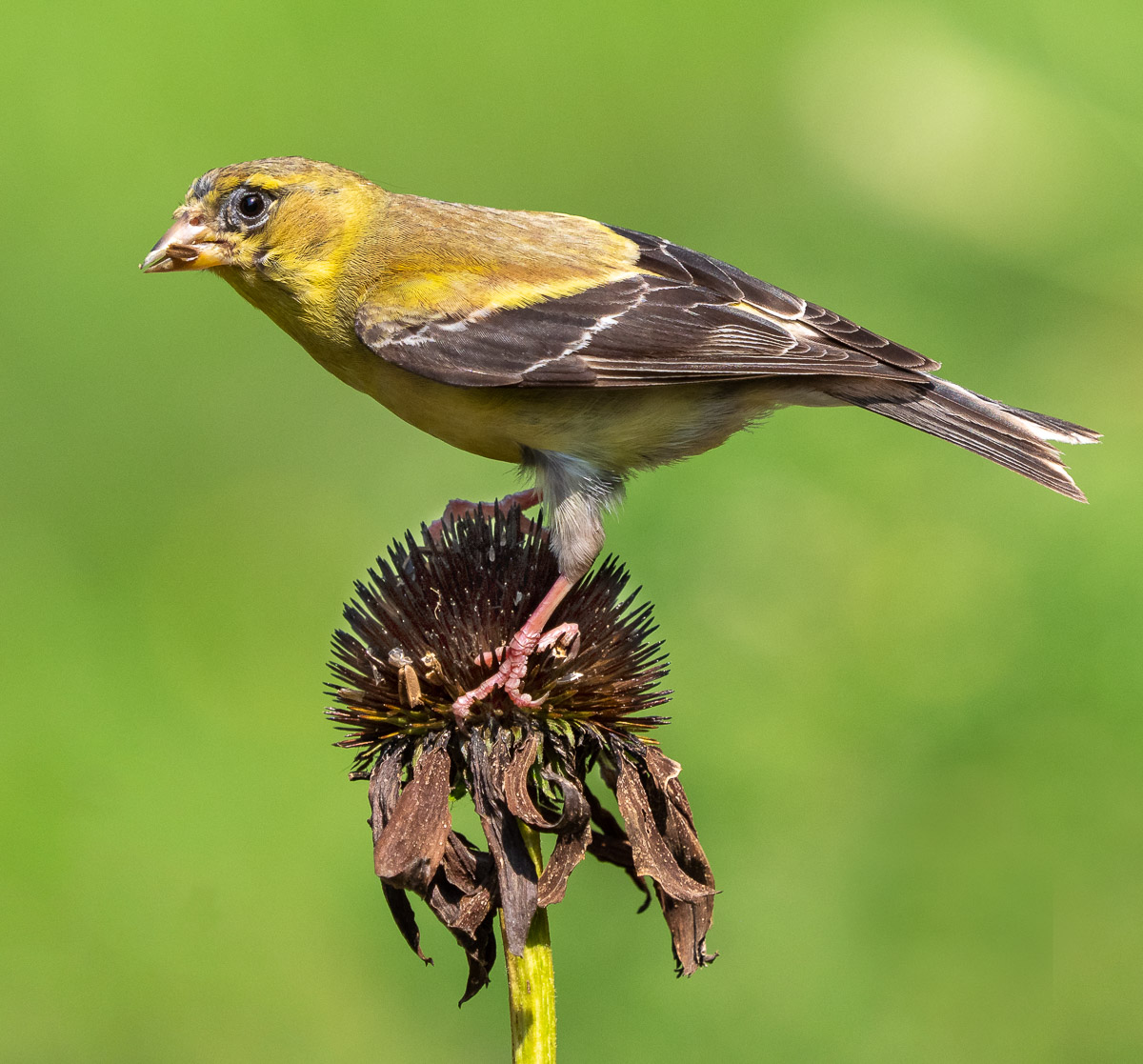
The dome-shaped disc at the center matures into a dry, spiky seed head packed with small achenes, the seeds that songbirds, particularly American Goldfinches, can pry loose through fall and into winter.
Penn State Extension describes Echinacea purpurea as an important seed source for songbirds and recommends leaving the heads standing. That single fall decision, resist the urge to cut things back, keeps the food supply intact.
Removing the heads during cleanup eliminates that option entirely.
The first practical choice of the season is simply whether to leave healthy seed heads or remove them. Leaving them costs nothing extra and requires no equipment.
Removing them tidies the garden but takes away food that birds might otherwise use on a cold January morning.
One thing worth knowing before you skip cleanup entirely: “coneflower” is a broad common name. It can refer to other Echinacea species, such as pale purple coneflower, and to Rudbeckia species like black-eyed Susan, which are yellow-flowered plants in a related but different group.
North Carolina Extension describes Echinacea purpurea as native to portions of the central and eastern United States, not every US region. Those related plants may also offer seeds to birds, but their growing conditions, seed production, and wildlife value differ, so this article focuses specifically on purple coneflower.
Goldfinches Use Many Seed Plants
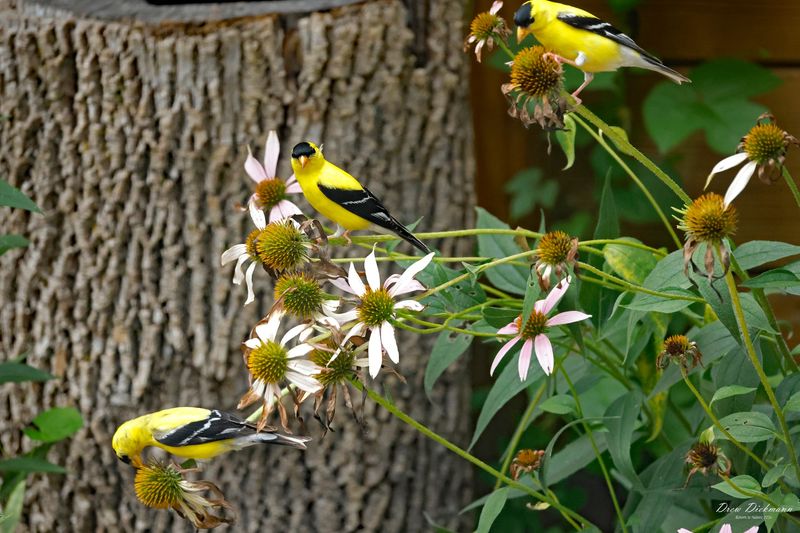
American Goldfinches are among the most seed-dependent birds in North America. Cornell Lab of Ornithology’s life history account confirms that goldfinches eat seeds almost exclusively and regularly forage on composite plants in the daisy family, a group that includes sunflowers, asters, thistles, and coneflowers.
That dietary habit is what makes a mature coneflower seed head genuinely useful to them.
But useful is not the same as guaranteed. Goldfinches use many seed plants across a season, and coneflower is one option among several.
Whether birds visit your specific garden depends on what else is growing nearby, how much seed a given plant produces in a given year, and local weather. A dry summer can reduce seed set, and a bumper crop of thistle down the road might pull birds away from your yard entirely.
Migration timing adds another layer. The American Goldfinch range map at Cornell shows that their presence shifts by season and region.
Some areas host goldfinches year-round, others only during breeding or migration. A gardener in Kansas may see them all winter, while someone in northern Minnesota might see only fall visitors before the birds move south.
In the western United States, Lesser Goldfinches, a separate and smaller species, are often the goldfinch most likely to visit a garden. Cornell’s overview of American Goldfinches notes their broad but variable range, and regional wording matters when you are deciding what to plant for birds.
Standing coneflower seed heads can offer food where goldfinches remain through winter, but they work best as one piece of a wider planting rather than a standalone feeding plan.
Leave Healthy Heads and Deadhead Selectively
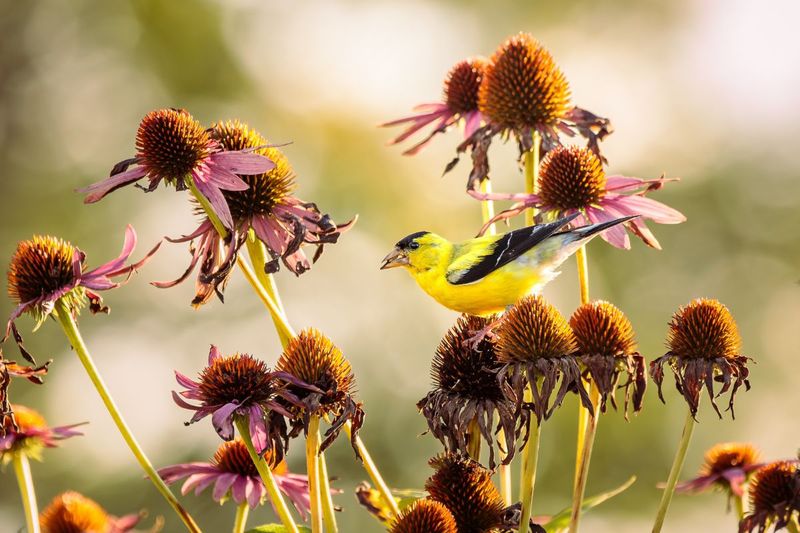
Fall cleanup does not have to be all or nothing. The most practical approach for most home gardens is to leave a group of healthy seed heads standing while selectively removing spent flowers in spots where appearance matters most, such as along a front walk, beside a patio, or near the mailbox.
Penn State Extension’s deadheading guide explains that removing spent flowers can encourage some plants to produce additional blooms, and coneflowers are no exception. So deadheading a few stems in mid-summer may extend your flowering season.
But once fall arrives and the seeds have matured, removing those heads reduces the food available to birds and may also reduce the number of volunteer seedlings that sprout the following spring.
Illinois Extension notes that coneflowers often rebloom without heavy deadheading, which means you do not have to choose between flowers and bird food early in the season. Later in the year, once blooming has finished and seeds have formed, the calculus shifts.
Leaving heads intact through winter preserves both the food and the structure.
A workable compromise for most yards: leave the back or middle of the planting untouched, where the seed heads are visible from a window or a favorite chair. Tidy the edges near high-traffic areas if you prefer a neater look.
University of Minnesota Extension recommends leaving seed-bearing plants like coneflowers standing for winter food and habitat, and a partial approach still delivers much of that benefit without requiring you to leave every corner of the garden looking rough through February.
Flower Form and Site Shape the Food Supply
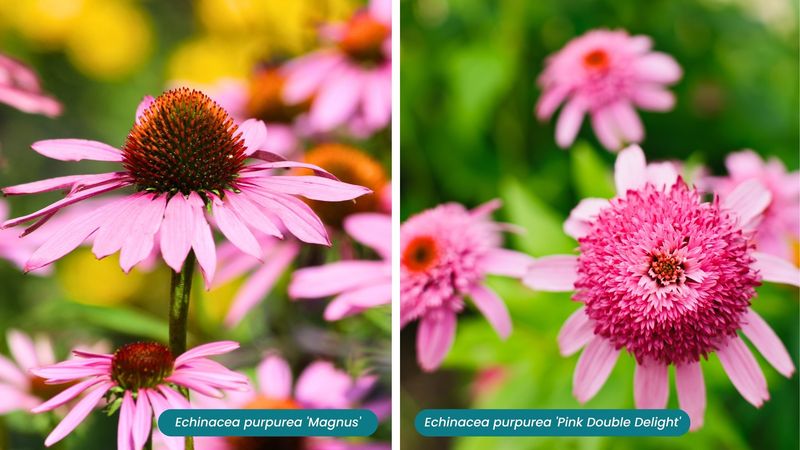
Not every plant sold as a coneflower produces the same amount of usable seed. The difference often comes down to flower form.
Straight-species purple coneflower and single-flowered cultivars have a prominent raised disc at the center, and that disc is where the seeds develop. Illinois Extension reports that highly double-flowered coneflower cultivars, the ones with layers of extra petals, often have fewer functional disc flowers because the additional petal tissue replaces the structures that produce pollen, nectar, and seed.
Fewer disc flowers can mean fewer seeds for birds to eat.
If supporting bird food is a priority, choosing species-type plants or simpler single-flowered cultivars gives you more reliable seed production. Double or “pom-pom” forms can still be beautiful in a border, but they may contribute less to the winter food supply than their plainer relatives.
Growing conditions also shape how productive a plant becomes. Purple coneflower performs best in full sun, meaning at least 6 hours of direct sunlight per day, though it can manage in partial shade.
North Carolina Extension’s plant profile describes it as tolerant of clay, rocky, sandy, and loamy soils, as long as drainage is reasonable. Wet, waterlogged spots tend to cause root rot over time.
Mature plant size varies by cultivar and site. Many plants reach roughly 24 to 36 inches tall, though some can stretch to 3 or 4 feet in rich soil with good sun.
Penn State Extension lists planting space from about 12 inches to 3 feet depending on the cultivar, so check the tag before you plant. Established plants handle dry spells better than newly planted ones, which need consistent moisture through their first full growing season to get a solid root system in place.
Delay Spring Cleanup for Habitat
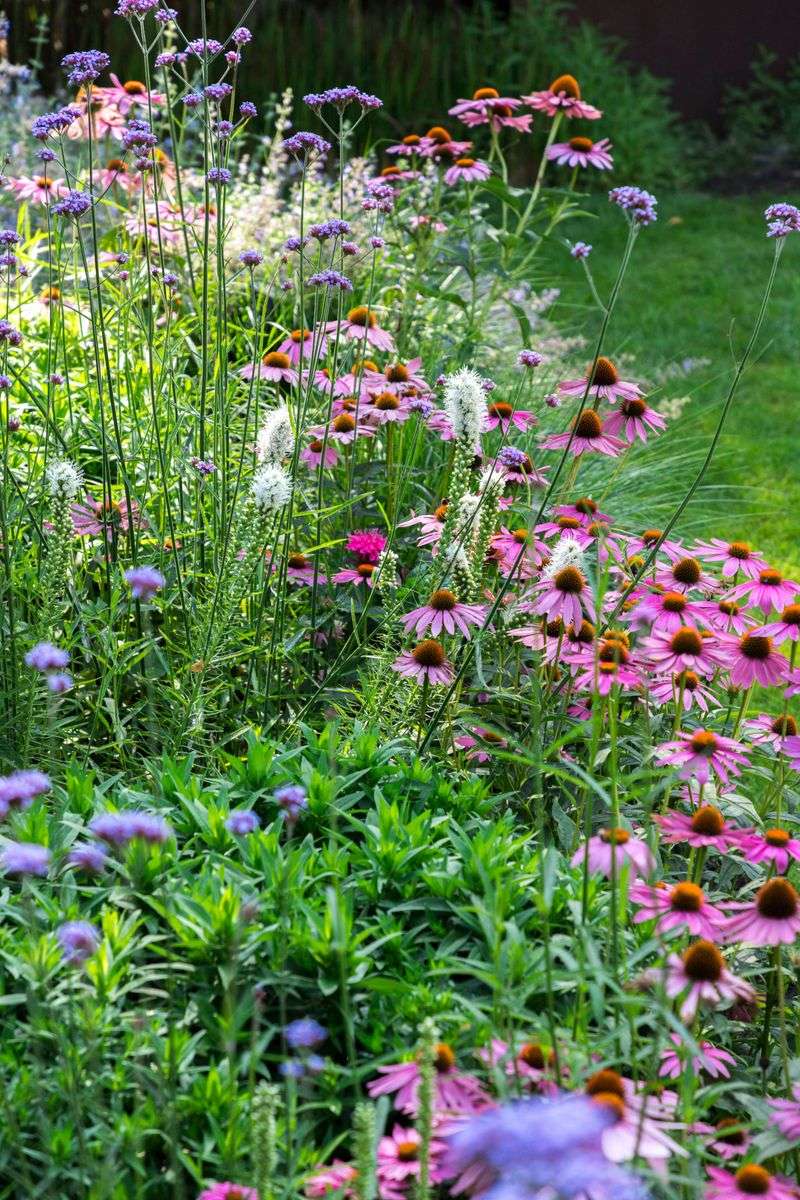
Once you have decided to leave seed heads through winter, the next question is when to clean up in spring. A calendar date does not work well here because spring arrives at very different times across the country.
A more reliable signal is when the weather has genuinely warmed and you can see new growth starting at the base of the plants.
The Xerces Society recommends leaving perennial stems through fall and winter and cutting them back only after spring warmth arrives. Waiting matters because dry stems do more than hold old seed heads.
Illinois Extension notes that hollow or pithy stems can provide nesting sites for some native bees, and cutting them down in October removes that potential shelter before insects have finished using it.
When you do cut back in spring, you have options. Leaving stems at roughly 8 to 24 inches, or cutting to about knee height, preserves some of the stem-nesting habitat while still tidying the planting.
Cutting all the way to the ground is also fine once the season has clearly turned, if a cleaner look is the goal.
Purple coneflower can self-seed, which is worth knowing before you commit to leaving every head intact all winter. Penn State Extension explains that seeds may need a period of cold exposure, called cold stratification, before they germinate.
Seed that falls naturally in fall often gets that chilling over winter and sprouts the following spring. In a small garden, volunteer seedlings can fill gaps nicely.
In a tighter space near a path or lawn edge, you may want to remove a few heads before they drop seed, rather than pulling dozens of seedlings in May.
Remove Diseased Plants Instead
Leaving seed heads standing is good advice for healthy plants. For plants showing serious disease or abnormal growth, the guidance flips.
Diseased material should come out, not stay up for the birds.
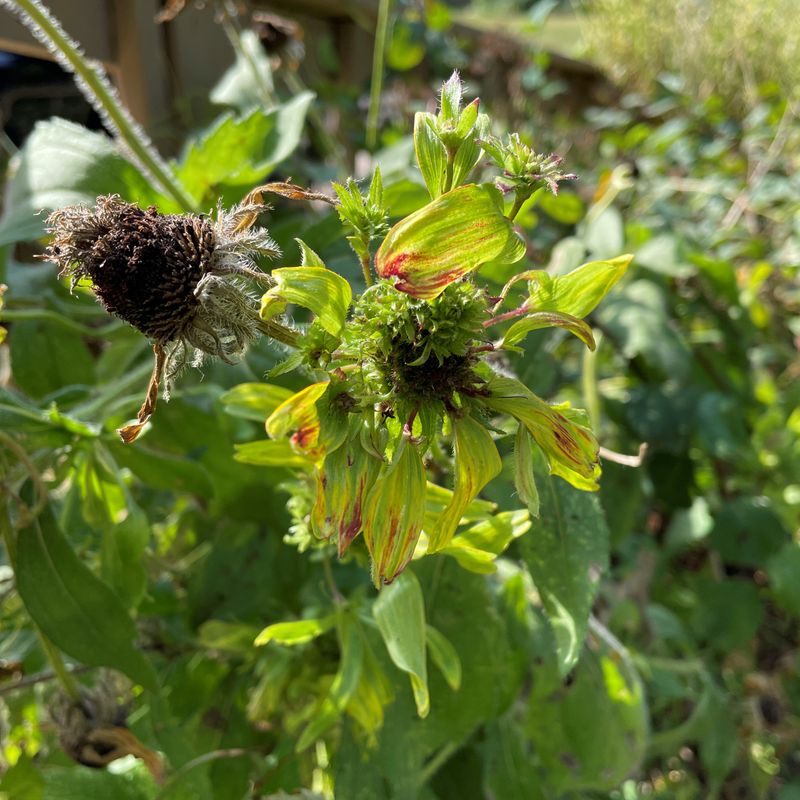
Aster yellows is one disease to know. It is caused by a phytoplasma, a microscopic organism spread by leafhoppers, and it can affect purple coneflower along with many other garden plants.
Illinois Extension’s aster yellows guide describes possible signs including yellowing foliage, stunted growth, green or distorted flowers, and clusters of abnormal tissue where normal flower parts should be. An infected plant does not recover.
The recommended response is to remove the entire plant, including the roots, and destroy it rather than composting it, because leafhoppers can pick up the pathogen from an infected plant and carry it to nearby healthy ones.
Rosette-like distortion of the flower head, where the central cone develops a tangled, leafy, or crown-like structure, can look similar to aster yellows but may instead indicate coneflower rosette mite. Illinois Extension’s garden scoop on aster yellows addresses this distinction and recommends cutting off and disposing of affected flower heads rather than composting them.
The rest of the plant may remain if it looks otherwise healthy, but the distorted heads should go.
When symptoms are unclear, local help is worth seeking. Your state’s Cooperative Extension plant diagnostic lab or a master gardener program can often identify the problem from a photo or a sample.
Penn State Extension also lists other purple coneflower problems including powdery mildew, leaf spot, stem rot, and anthracnose, most of which appear as surface discoloration or lesions rather than the flower distortion seen with aster yellows or rosette mite. The general rule is straightforward: a dry, naturally aging brown seed head is fine to leave.
A plant with green flowers, twisted growth, or obvious disease signs should come out.
Build a Wider Winter Bird Habitat
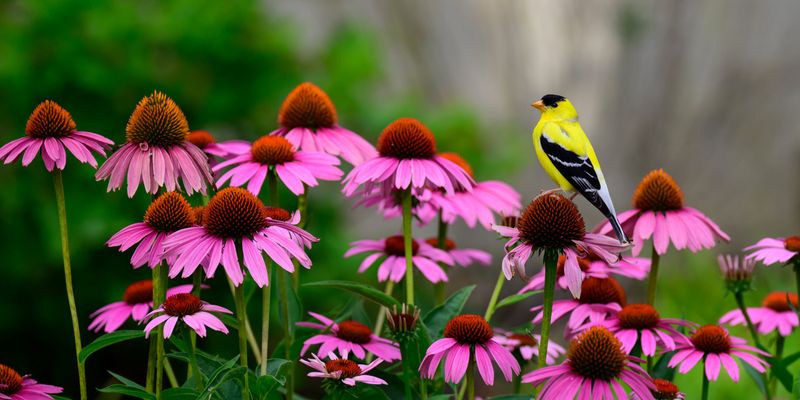
Standing coneflower seed heads are a real contribution to winter bird habitat, and they are also just one piece of a larger picture. American Goldfinches eat seeds from thistles, sunflowers, asters, grasses, and trees as well, and they move around a landscape following whatever food is available.
A yard with several seed-bearing plants gives them more reason to stay than a yard with a single species.
Cornell’s goldfinch life history page confirms that seeds make up the vast majority of their diet, and that they forage widely across open habitats and gardens. Adding a few clumps of coneflower to a yard that already has ornamental grasses, native asters, or black-eyed Susan gives birds a longer foraging route and a more reliable food supply than any single plant can provide on its own.
If you use a supplemental bird feeder, keeping the area beneath it raked reduces the risk of mold and disease that can harm birds over a long winter. Cornell’s goldfinch overview notes that feeder hygiene matters for bird health, and a clean feeding area complements rather than competes with what the garden provides naturally.
A shallow dish of water, kept ice-free on cold days, can also draw birds in when natural water sources are frozen.
The practical takeaway is simpler than it might sound. Leave enough healthy coneflower heads to offer food through winter where goldfinches remain in your area.
Tidy the spots near paths and seating where you want a neater look. Pull any plants showing obvious disease, and do not worry about getting every stem perfect.
A garden that does most of this most years is doing plenty, and the birds will find what you leave them.