
A Possible Winter Visitor: The Painted Bunting at Florida Feeders
Follow us on Google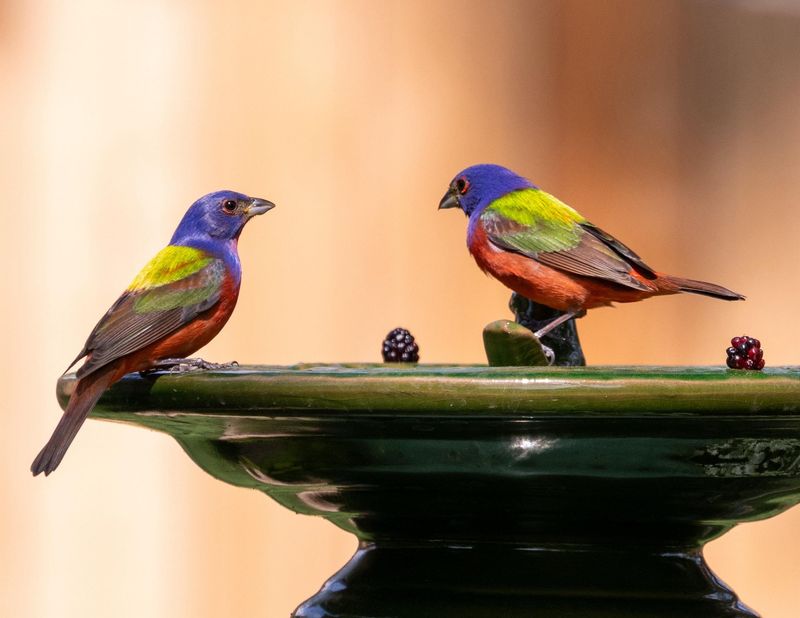
You step onto the patio after breakfast, and something small and green flicks into the shrubs by your feeder. It might be a Painted Bunting, one of the most colorful birds in North America.
In Florida, some of these birds spend the winter, but where you live and who shows up both matter. Here is what you can do to make your yard more welcoming, without any promises.
The Painted Bunting Is A Possible Seasonal Guest
Late November in Florida can feel quiet at the feeder. Then a small, shy songbird shows up.
That could be a Painted Bunting, but not every yard gets one.
Florida is not one uniform wintering ground. The Florida Fish and Wildlife Conservation Commission describes two populations.
The eastern population winters in south and central Florida and the Caribbean. The western population breeds in extreme northwest Florida and winters farther west and south, in Mexico and Central America.
That split matters for your expectations. A homeowner in South Florida or the central part of the state is in a likelier spot to host a wintering eastern bunting.
A Panhandle yard sits in a different story, because those western birds head south and west for the winter. Buntings are not equally likely everywhere, and no yard is guaranteed one.
The eastern birds travel on a schedule. A peer-reviewed migration study reports that they move toward southern Florida and the Caribbean in late September or October.
So by late November, an eastern bunting that has settled in for the winter is a real possibility in the right part of the state. Western birds, by contrast, winter in southern Mexico or northern Central America.
Think of it as a seasonal welcome mat. You can set one out, but the bird decides whether to wipe its feet.
A Male’s Rainbow Is Not The Whole Story
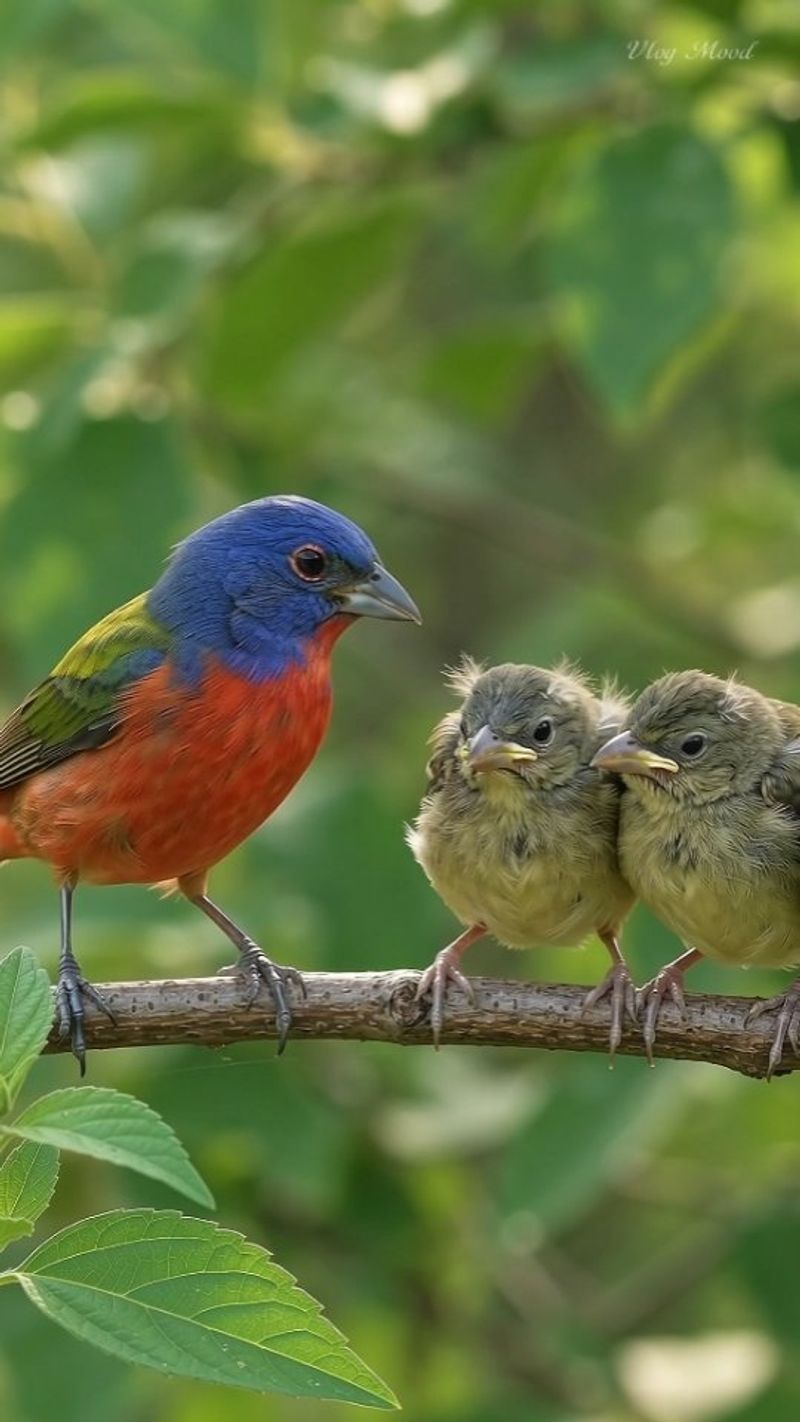
Many people picture the rainbow bird from the photos and then miss the real visitor. A plain green songbird hopping under your shrubs can be a Painted Bunting too.
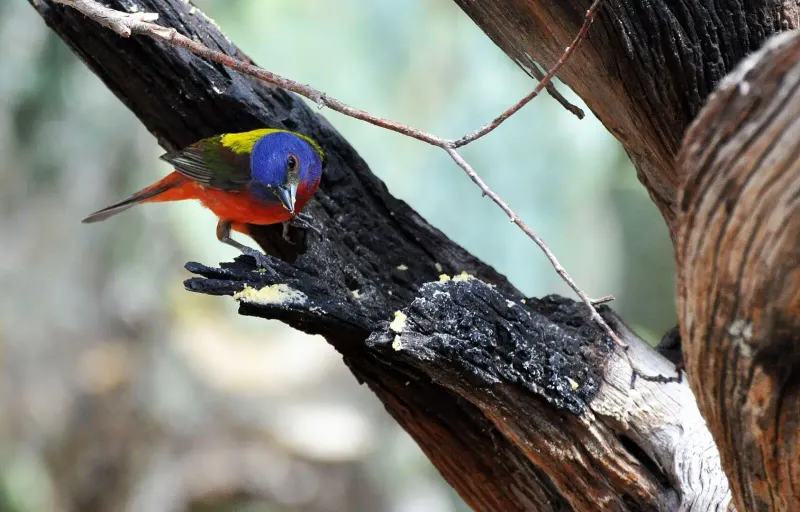
According to Audubon’s field guide, adult males wear striking blue, green, and red plumage. Females and immature birds are green.
That means a yard can host buntings without ever hosting a brightly colored adult male.
Here is a practical habit. When you see a small, chunky, olive-lime bird that seems almost too bright for a leafy shadow, slow down and look again.
Green on green is a clever disguise, and the bird is counting on you walking past.
Color is a separate question from migration. A bird’s plumage tells you its age and sex, not whether it will stay or leave.
So do not judge your yard by whether a male in full color shows up.
Keep a notebook by the window, jot down dates, and snap a photo if you can. A green visitor is still a genuine win, and it is easier to enjoy when you stop waiting for the rainbow.
White Millet Is A Practical Feeder Option
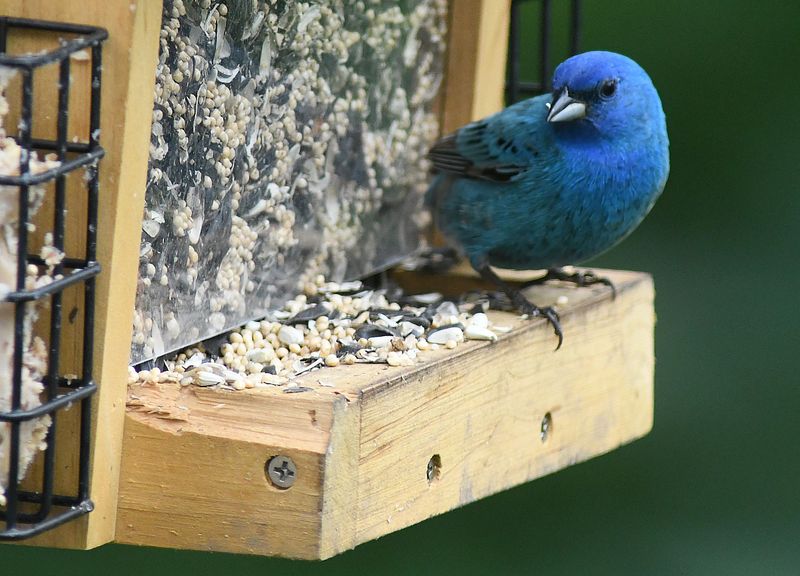
If you want one low-effort first step, start with the seed. Painted Buntings are seed eaters for most of the year, and the U.S.
Fish and Wildlife Service says they prefer white millet.
Their habits help explain why. Cornell’s life history notes describe a bird that forages low and eats seeds through much of the year, including winter.
A small tray or low platform with millet fits that style better than a tall tube.
Keep the offering modest. A small handful in a clean tray is plenty to try.
Millet may appeal to a visiting bunting, but it is not bait, and it will not pull a migrating bird off its route.
More seed is not always better. Extra food that sits out gets damp, stale, and messy, especially in Florida’s humid weather and sudden downpours.
Other birds, like doves and sparrows, will also show up for millet, so expect a crowd.
Birds do not need your feeder to survive. Treat it as a bonus for them and a front-row seat for you, and adjust if the seed is going to waste.
Low, Dense Cover Makes A Yard More Appealing
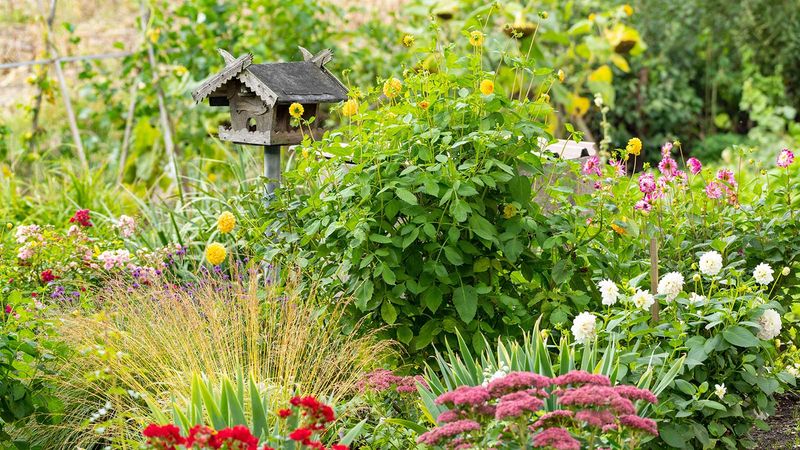
A feeder in the middle of an open lawn is a bit like a dinner table in a parking lot. Shy birds want somewhere to duck out of sight.
Cornell’s All About Birds says Painted Buntings favor low, dense vegetation and are more likely to visit feeders in yards that have it. So if you have a thick hedge, a tangle of shrubs, or a brushy corner, set your seed offering within easy hopping distance of it.
For a place to start, look at what you already have. A feeder about 10 feet from a thick shrub line gives a bird a quick escape route without making it feel boxed in.
Skip the idea of planting one magic species. No particular plant is proven to attract buntings.
Broader advice comes from UF/IFAS Extension, which recommends layered native vegetation, water, and cover for Florida wildlife in general. That is helpful habitat guidance for many birds.
It is not proof that any one plant draws a bunting.
Build it in layers over time, with low shrubs, taller shrubs, and a shade tree or two. Add a shallow water dish.
The yard may become more welcoming for lots of wildlife, and a bunting could be one of them.
Clean Feeders And Fresh Seed Matter
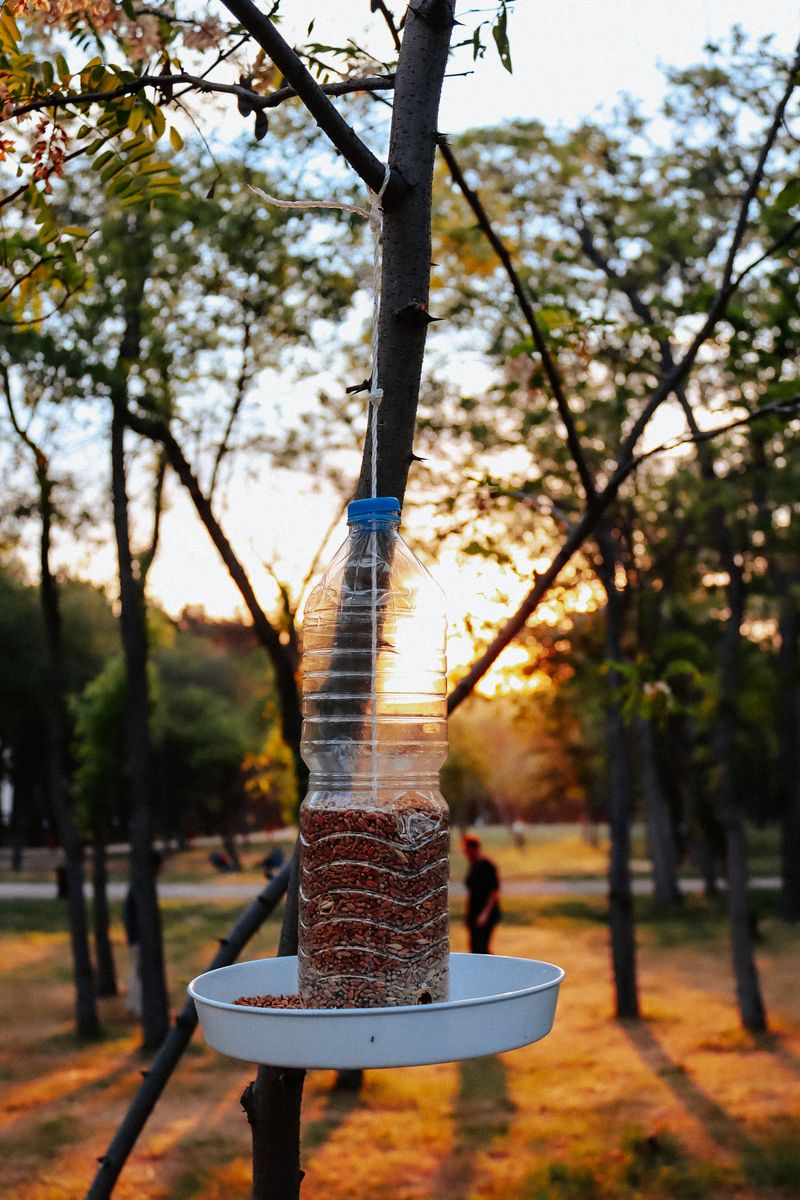
A feeder is only a good idea if it stays clean. Birds share bacteria and droppings at the same perches, and damp seed can grow mold fast in Florida’s long humid summers.
The U.S. Fish and Wildlife Service recommends cleaning feeders at least every two weeks.
Sweep up discarded seed under the feeder, keep seed dry, and toss anything old or moldy. If birds appear sick, remove the feeder for a while as a precaution.
For a deeper clean, follow Project FeederWatch’s method. Scrub the parts first.
Then soak the cleaned parts for 10 minutes in a solution of one part bleach to nine parts water, rinse carefully, and let them dry fully before refilling.
A feeder break is not a universal fix. Project FeederWatch cautions that when you remove one feeder, birds may move to other feeders in the neighborhood, which can crowd them there.
So a pause helps your yard, but it may shift the problem down the street.
Set a reminder on your phone every two weeks. Small chores like this keep a welcoming yard from turning into a risky one.
Reduce Window, Cat, And Pesticide Risks
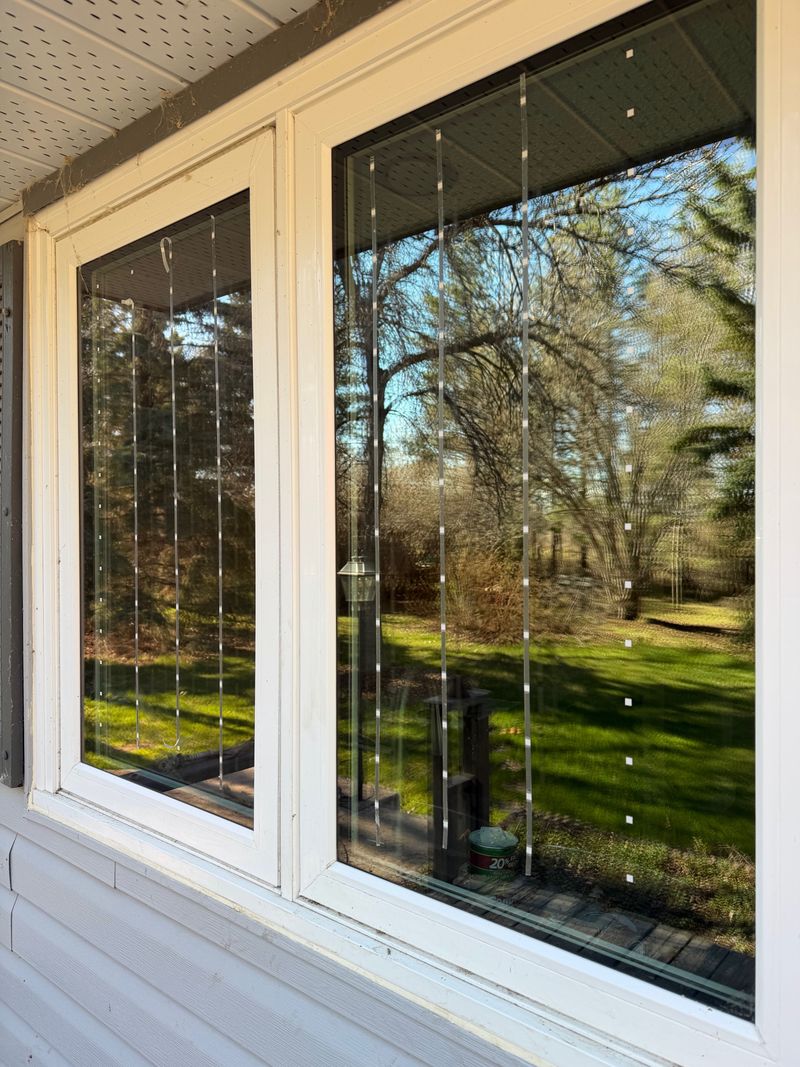
Glass is a quiet danger for small birds. A reflection of sky and shrubs looks like open air, and a fast bird does not see the pane until it is too late.
The Fish and Wildlife Service guidance in its feeding article suggests placing a feeder within 3 feet of a window or more than 30 feet away. Close in, a startled bird cannot build up speed.
Far away, it is less likely to fly toward the glass. Cover reflective windows with decals or screening too.
Cats are the next piece. Keeping them indoors where possible protects ground-feeding birds, and buntings often forage low.
A bird on a low tray is easy prey.
Pesticides also matter. Audubon’s guidance on helping birds points to reducing pesticide use as one way to lower risks.
Think twice before spraying for every chinch bug or whitefly, and spot treat when you can.
None of these steps makes a yard perfectly safe. They are layers of risk reduction.
Add them one at a time, starting with the window nearest your feeder.
Make A Welcome, Not A Promise
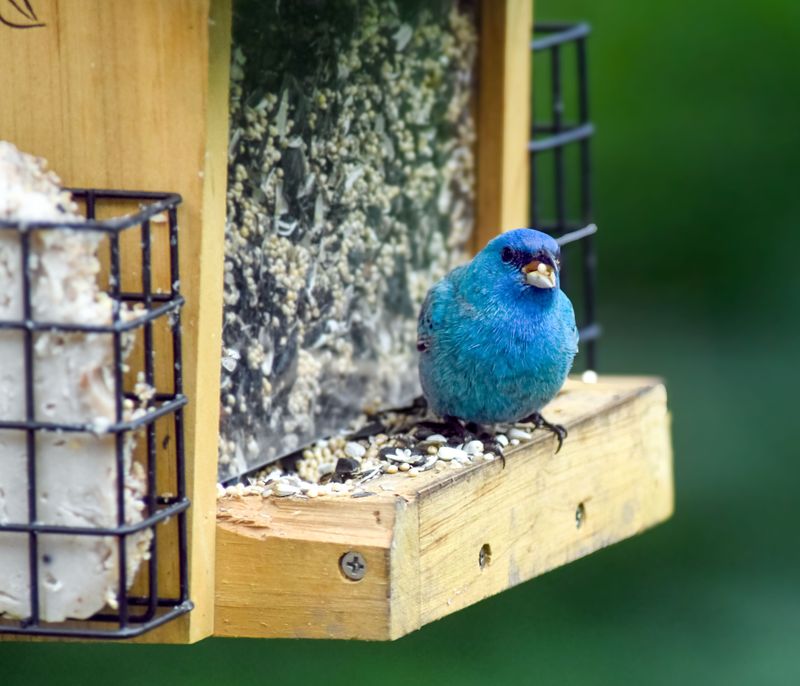
Seed, cover, and safer habits may make visits more likely. They do not decide whether an individual bunting appears, and they cannot make one stay for winter.
Remember that Florida’s wintering range varies. FWC places the eastern population in south and central Florida, while western birds winter elsewhere.
And Cornell links low, dense vegetation with more feeder visits, not guaranteed ones.
So aim for a better yard, not a sure sighting. Check your feeder every few days, watch for green visitors, and enjoy whatever flits through.
Some mornings the best bird is the one you almost missed.
