
These North Carolina HOA Plant Rules Homeowners Have Every Right To Push Back On
Follow us on Google
You plant a row of native beautyberries along your fence, and two weeks later a letter arrives from your HOA demanding removal by Friday.
It happens to North Carolina homeowners more often than you might think, and the demand does not always rest on solid legal ground.
Before you pull a single plant or write a check, you deserve to know whether the association can actually point to a rule that covers your situation.
Not every landscaping demand an HOA sends out is enforceable, and understanding the difference can save you real money and a lot of stress.
Start With the Document Behind the Demand

Your property manager sends a strongly worded email.
A board member stops you in the driveway and says your rain garden has to go.
Before you reach for a shovel, ask one question: what document actually requires this?
A property-manager email and a board member’s personal opinion are not the same thing as a recorded covenant, and that distinction matters more than almost anything else in an HOA landscaping dispute.
The North Carolina Planned Community Act recognizes several sources of association authority: the recorded declaration, the bylaws, the articles of incorporation, and duly adopted rules and regulations.
The declaration controls when it conflicts with the bylaws.
A board’s general power to adopt rules does not automatically let it create brand-new property restrictions out of thin air.
Send a calm, written request to the association asking for the exact section number, the complete current text of the rule, its adoption date, and a specific description of the alleged violation.
You are not being difficult.
You are asking the board to do what any enforceable demand requires: point to the authority behind it.
The relevant language matters too.
A rule about “weeds” is not the same as a rule about “ornamental plantings,” and a visibility requirement is not the same as a height limit.
Read the actual words carefully, because the board’s interpretation and the document’s plain text sometimes tell very different stories.
Chapter 47F also applies to many communities created before January 1, 1999, unless the governing documents specifically opt out, so do not assume an older community operates under different rules without checking.
The first real question in any landscaping dispute is never whether your plant is controversial.
The first question is whether the association can identify a valid source for the demand at all.
Can the Board Rewrite Your Original Deal?

Here is where it gets tricky.
Many North Carolina homeowners bought their lots under one set of expectations and later received landscaping demands that look nothing like what the original declaration described.
The question worth asking is whether the association is applying an existing promise or effectively writing a new one.
In Armstrong v.
Ledges Homeowners Association, the North Carolina Supreme Court held that a general amendment clause cannot be used to impose new and substantially different burdens that homeowners did not reasonably accept when they purchased their lots.
A board may apply an existing landscaping standard to a new situation, but that is a very different thing from using a broad amendment power to add an entirely new category of restriction.
Think about it this way: if the original declaration said front yards must be “maintained in a neat and orderly condition” and the board now demands that you remove a pollinator garden and replace it with turf grass, that demand may go well beyond interpreting the original language.
It may be creating a new obligation the declaration never actually imposed.
That does not mean later rules automatically fail.
Article 2 of the Planned Community Act allows associations to amend declarations and adopt rules when the governing documents and statute authorize that power.
The practical test is whether the demand genuinely interprets something the community already agreed to or whether it adds a new burden dressed up as an interpretation.
Knowing which situation you are in shapes every response you make from that point forward.
Vague Words Create Real Pressure
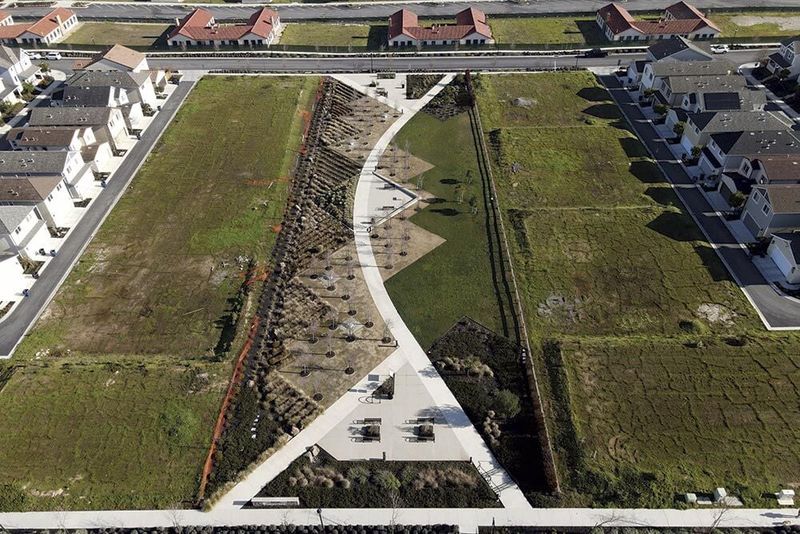
“Unsightly.” “Unkempt.” “Not in keeping with community standards.” Words like these show up in HOA landscaping demands all across the Piedmont and Coastal Plain, and they can feel impossible to argue with because they do not tell you what, exactly, you are supposed to fix.
North Carolina courts generally read restrictive covenants in favor of the free use of land when that reading does not defeat the covenant’s clear purpose.
The Armstrong decision also established that affirmative obligations need enough clarity for a court to actually apply them.
A rule that a court cannot objectively measure is a rule with an enforcement problem.
A more recent case reinforces this.
In Schroeder v.
Oak Grove Farm Homeowners Association, decided by the North Carolina Supreme Court in 2025, the court again addressed how ambiguity in restrictive-covenant language affects enforceability, confirming that context, purpose, and the surrounding restrictions all matter when a court evaluates a vague provision.
Vagueness alone does not guarantee you win.
A board enforcing a “neat and orderly” standard is not automatically acting outside its authority, especially if the recorded covenant clearly supports aesthetic review.
Context matters: the covenant’s language, the property, the surrounding restrictions, and the specific facts of your situation all feed into how a court would assess the demand.
What vagueness does give you is a reason to ask for objective details.
Request a written explanation of exactly what visual standard the board is applying, which specific plants or conditions are at issue, what the deadline is, and how comparable yards nearby have been treated.
A board that cannot answer those questions in writing has a harder time defending its demand later.
State Law Helps in Narrow Places
State law does give North Carolina homeowners one clear, specific protection worth knowing about, but it covers a narrower situation than many people assume.
G.S. 47F-3-122 limits certain landscaping-irrigation requirements during qualifying severe, extreme, or exceptional drought conditions when applicable government water-conservation measures actually prohibit watering.
During those specific conditions, an HOA generally cannot require you to water in ways the government has already told you not to.
The statute defines landscaping to include lawns, trees, shrubbery, and ornamental or decorative plants, so the coverage is reasonably broad within its scope.
If your HOA sends a fine notice because your lawn went dormant during a drought emergency, that statute is worth reviewing with a North Carolina attorney.
Here is what this protection does not do.
It does not give you a general right to install any plant you choose, grow a naturalized yard free from HOA oversight, or defeat rules about plant location, visibility, height, maintenance, invasive species, drainage, fire safety, or access to utility easements.
The irrigation provision is a narrow limit on a specific type of demand during specific conditions, not a broad gardening-rights law.
Local rules add another layer entirely.
The Planned Community Act preserves the application of local land-use and building rules, which means your city or county’s zoning ordinances, stormwater requirements, sight-distance rules, and nuisance codes apply independently of what your HOA documents say.
A yard arrangement that survives an HOA challenge could still create a stormwater problem your municipality cares about, especially along the Coastal Plain where drainage issues are common after heavy storms.
A Fine Requires More Than a Letter

Getting a violation letter in the mail feels alarming, but a letter is not the end of the process.
Under North Carolina law, when the declaration does not provide its own specific procedure, the association generally must follow a defined sequence before a fine becomes final.
Knowing that sequence is how you protect yourself.
The North Carolina Planned Community Act requires that you receive notice of the charge, an opportunity to be heard and present evidence before the board or an adjudicatory panel, and notice of the decision.
A fine may be up to $100 for the initial violation.
Additional daily fines can follow after more than 5 days, but only when the statutory conditions are met, so not every notice triggers the same penalty structure.
If a panel hears the matter instead of the full board, you generally have 15 days to appeal the panel’s decision to the executive board.
Homeowners also have a right to speak at open board meetings under G.S. 47F-3-108, which can be a useful way to raise concerns on the record before a formal hearing.
Turn the law into a checklist.
When a notice arrives, preserve the original with its envelope and postmark.
Calendar every deadline.
Send a written request asking the board to identify the exact rule, describe the violation with objective details, state the correction deadline, and explain the hearing procedure.
Attend the hearing, bring photographs and any documents supporting your position, and keep proof of everything you send or deliver.
A homeowner who follows the process carefully is in a much stronger position than one who ignores the notice or waits too long to respond.
Records Show How the Rule Works
Frustration and neighborhood gossip are understandable, but neither one holds up in a hearing room.
What actually helps is paper.
Association records can show whether the rule was properly authorized, whether the board applies any consistent standard, and whether yards genuinely similar to yours have been treated differently.
Under G.S. 47F-3-118, association financial and other records must be reasonably available for examination by lot owners and their authorized agents, as required by the bylaws and Chapter 55A.
Relevant records in a landscaping dispute may include the rule itself, the minutes from the meeting when it was adopted, architectural-review decisions, violation notices sent to other homeowners, hearing notices, and any written correspondence about comparable properties.
Those records connect directly to the core legal questions.
Did the board actually adopt this rule through the required process?
Does the board apply an objective standard, or does it enforce selectively based on who complains?
Have genuinely comparable yards received different treatment, and if so, is there a documented reason why?
A word of caution on the selective-enforcement argument: inconsistent enforcement does not automatically erase a valid covenant.
To make a waiver, estoppel, or bad-faith argument stick, you need evidence that the other properties are genuinely comparable to yours and that the association’s conduct has real legal significance in context. “My neighbor has the same plant and never got a letter” is a starting point, not a finish line.
Keep your records request calm and specific.
Name the rule, the violation notice, and the time period you are asking about.
A written request tied directly to your dispute is more likely to produce useful documents than a broad demand for everything the association has ever filed.
Push Back Without Creating a Bigger Problem

The goal is to protect your yard and your rights without turning a landscaping dispute into a lawsuit or a lien.
A calm, written response does more good than a heated reply at a board meeting, and it creates a record that serves you if the dispute goes further.
Start with a written letter to the association.
Ask it to identify the exact covenant or rule section it is relying on.
Quote the alleged violation back, word for word as stated in the notice, and ask for an objective description of what correction is required and by what deadline.
Ask the board to identify the hearing or appeal path available to you.
Close by stating clearly that you are preserving your rights while seeking clarification, and that you are not waiving any defenses by responding.
Gather your supporting materials at the same time.
The recorded declaration, your photographs of the yard taken before and after the notice, plant receipts, any prior approvals the association gave you, emails or letters from the board, dated violation notices, and any photographs of comparable properties in the community are all potentially useful.
Organize them by date.
On the financial side, understand the difference between assessments and fines before assuming the worst.
Unpaid assessments may support statutory lien remedies under the Planned Community Act, while fines are governed by separate enforcement and collection rules.
Do not assume a fine automatically becomes an assessment or qualifies for a lien without legal review.
G.S. 47F-3-120 also addresses attorneys’ fees, which can run in both directions depending on how the dispute resolves.
Get a North Carolina real-estate or HOA attorney involved before you remove an established tree, refuse to comply, pay a charge you plan to dispute, or make an expensive landscape change.
The Planned Community Act gives homeowners real procedural tools; using them well, rather than reactively, is what actually keeps a manageable dispute from becoming a costly one.
A yard you love is worth defending thoughtfully.