
The Amish July Garden Habit Pennsylvania Homeowners Wish They Had Tried Years Ago
Follow us on Google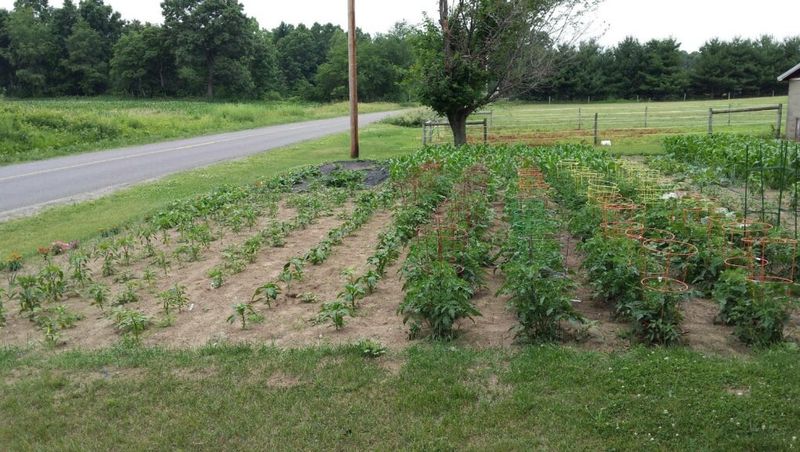
Walk out to your garden on a July morning in Pennsylvania, and the air is already thick before 8 a.m.
Something is always going wrong quietly out there, a wilting pepper, a weed that doubled overnight, a squash leaf with suspicious holes.
A simple morning garden round, a short loop to check soil, pull young weeds, water where it counts, and catch problems early, can change how manageable July feels.
That routine shows up in some Amish and Pennsylvania German gardening traditions, and its staying power comes from good horticultural sense, not from folklore.
The Useful Idea Is a Morning Garden Round
Headlines about secret Amish gardening habits make for good reading, but reliable evidence does not establish one universal July routine shared by all Amish gardeners, and there is no documented record of Pennsylvania homeowners broadly wishing they had copied it sooner.
Amish communities vary by settlement, church district, geography, and how much they blend tradition with newer ideas.
What the available sources actually support is simpler and more useful: a short morning garden round.
The round goes like this.
You step outside before the day heats up, check whether the soil actually needs water, direct irrigation to the root zone when it does, pull any young weeds while the ground is still damp, and look each plant over for early signs of trouble.
That is it.
The whole thing can take fifteen minutes in a modest kitchen garden, and it works because it follows sound horticultural principles, not because any one culture owns it.
Penn State Extension’s guidance on watering myths supports early-morning irrigation, root-zone delivery, and soil-moisture checks as genuinely practical habits.
Descriptions of Amish and Pennsylvania German kitchen gardens do emphasize productive use of space, hand labor, soil care, and planting in successive stages rather than treating the garden as a single summer harvest.
Those are real values worth borrowing.
But a peer-reviewed study of Amish farming and society specifically cautions that Amish agriculture is not frozen or identical across communities.
The morning round earns its place because it works, full stop.
Small July Checks Catch Manageable Problems
July in Pennsylvania is genuinely unpredictable.
A week of humid heat followed by a fast thunderstorm can stress plants, push weeds, and invite fungal problems all at once.
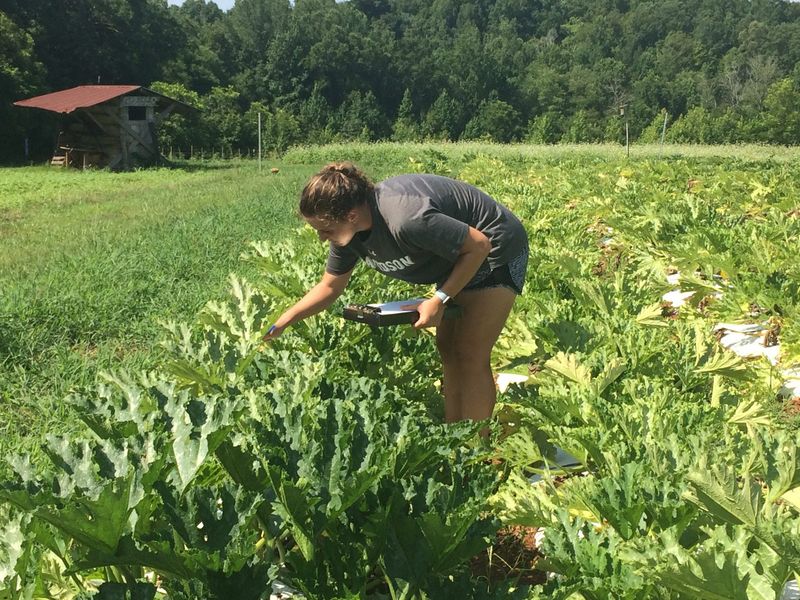
Walking the garden daily, or close to it, gives you a chance to catch small problems while they are still small.
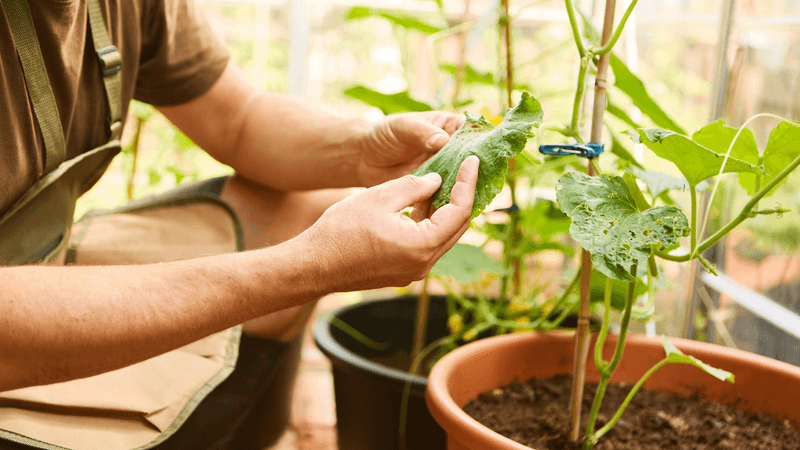
A brief look at each plant can turn up wilting that signals drought stress or a root problem, chewed leaves that point to caterpillars or beetles, yellowing that may mean nutrient issues, discolored patches that could be early disease, insect clusters forming on stems or the undersides of leaves, broken cages or stakes, and produce that has quietly gone past its peak.
Overripe vegetables left on the plant can slow new production and attract pests, so spotting them early matters.
Penn State Extension’s integrated pest management guidance frames frequent scouting as early detection, not pest elimination.
You are looking for clues, not guarantees.
Scouting also connects to watering decisions.
University of Minnesota Extension notes that checking plants regularly helps gardeners recognize the difference between midday wilt from heat and true drought stress that needs water right away.
Pennsylvania’s summer rainfall is notoriously uneven.
A garden in the Susquehanna Valley can get a solid inch of rain while a garden ten miles away on higher ground stays dry.
Daily attention helps you respond to your actual conditions rather than guessing.
Think of it less as a chore and more as a short conversation with your garden before the day gets away from you.
Water the Root Zone When Plants Need It
Morning is generally a good time to water, and the reason is practical.
Cooler air and lower wind speed mean less evaporation before water reaches the root zone.
Foliage that gets wet in the morning also has hours of daylight to dry, which matters for disease-prone vegetables like tomatoes, squash, and cucumbers.
But morning is a preference, not an absolute rule.
If your plants are already wilting at noon on a hot July afternoon, do not wait until the next morning.
Water them.
University of Minnesota Extension is clear that emergency watering should not be postponed when plants are under real drought stress.
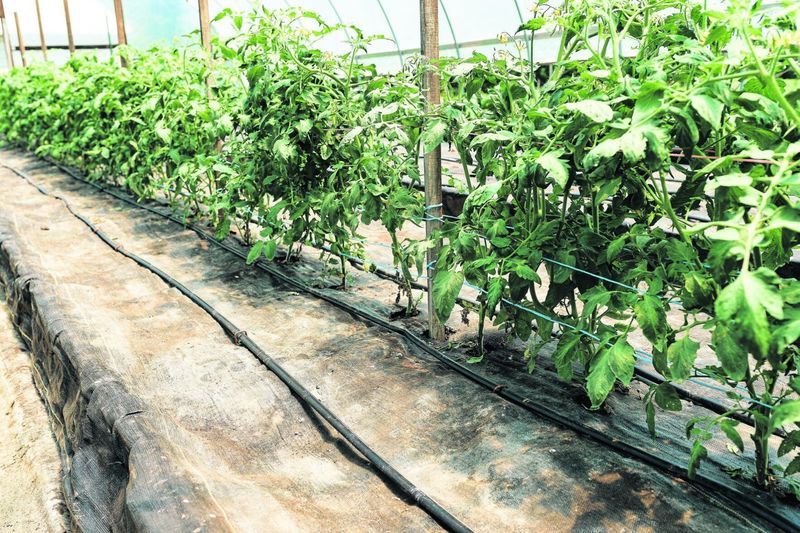
A soaker hose or drip line at the base of the plant is the most efficient delivery method for routine irrigation because it puts water where roots can actually use it and keeps foliage dry.
For in-ground vegetable gardens, Penn State Extension suggests a general target of 1 to 1.5 inches of water per week, adjusted for plant size, heat, wind, rainfall, and growth stage.
That range is a starting point, not a fixed prescription.
A practical check is to push your finger or a small trowel about 2 inches into the soil.
If it feels dry there, the garden likely needs water.
If it still feels moist, hold off.
Do not trust a heavy thunderstorm at face value.
Penn State’s watering guidance notes that intense rain can run off compacted or sloped ground before soaking in, and a simple rain gauge is more reliable than judging a storm by how wet the street looks.
Pennsylvania summers can drop an inch of rain in twenty minutes and leave the root zone barely touched.
Use Mulch to Stretch Soil Moisture
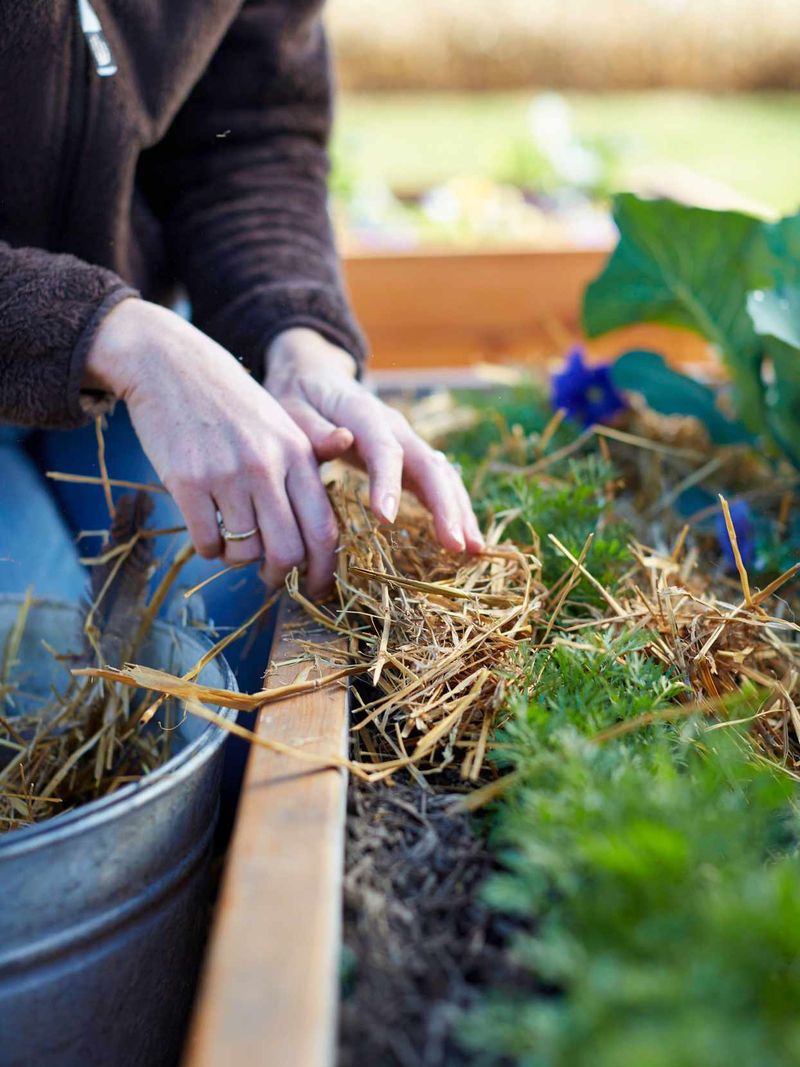
Mulch does one thing really well: it slows down evaporation from the soil surface.
In a Pennsylvania July, when afternoon temperatures regularly climb into the upper 80s and low 90s, that slower moisture loss can make a real difference between watering every day and watering every two or three days.
University of Illinois Extension recommends organic mulch as a practical tool for reducing surface evaporation and moderating soil conditions between rain events.
A layer generally in the 2-to-4-inch range works well for most vegetable gardens, but the right depth depends on the material and your drainage situation.
Straw, shredded leaves, and wood chips all behave differently.
Finer materials can compact and shed water if applied too thickly.
In heavy clay soils, which are common across parts of southeastern Pennsylvania and many central valley areas, too much mulch can trap excess moisture around roots.
More is not always better, especially in poorly drained spots.
The one firm rule is to keep mulch away from stems and crowns.
Penn State Extension advises leaving a gap between mulch and plant bases because consistently wet crowns can encourage rot, particularly in humid summers.
Pull the mulch back an inch or two from each stem and let air circulate there.
Mulch supports your watering routine, it does not replace it.
Penn State’s guidance on watering myths is clear that mulch reduces evaporation but does not eliminate the need to check soil moisture directly.
Keep doing the 2-inch finger test even after you mulch.
The garden will tell you what it actually needs.
Keep July Plantings Moving Toward Fall
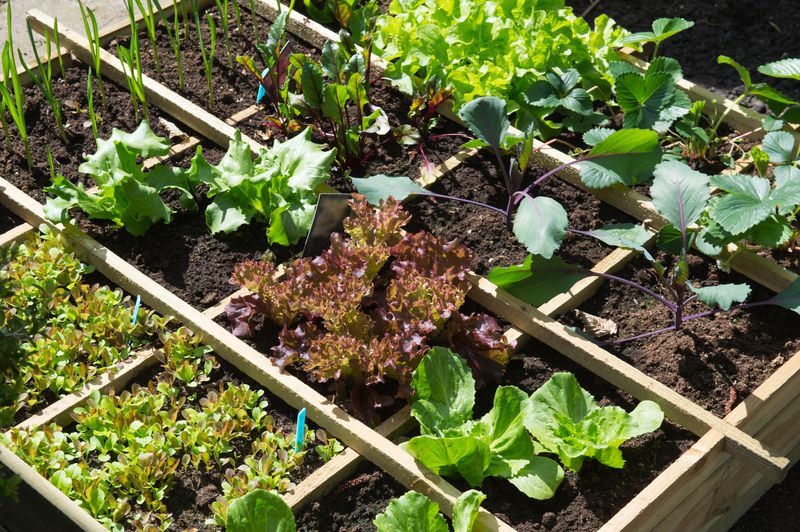
Most Pennsylvania gardeners think of July as the height of summer harvest, and it is.
But it is also a legitimate planting window for a second round of crops that will carry you into October and beyond.
Succession planting, putting new seeds or transplants in the ground while the first crops are still producing, is a broadly useful technique for making the most of your garden space.
It is not a uniquely Amish practice, though kitchen garden traditions in Pennsylvania German communities did emphasize keeping beds productive across the full season.
The crops that work well for a July-to-fall planting include beans, beets, carrots, lettuce, kale (Brassica oleracea var. sabellica), collards, broccoli, cabbage, radishes, and spinach, depending on your region and the variety you choose.
Penn State Extension’s Allegheny County guidance describes transplanting fall brassicas in mid-to-late July, using 60 to 90 days from transplant for many varieties, with consistent watering and mulch for young plants getting established in summer heat.
The key calculation is straightforward.
Find your local first-frost date, then count backward using the days-to-maturity number on your seed packet.
Add a buffer of one to two weeks to account for shorter daylight hours and the slower growth that comes with cooler September temperatures.
Penn State notes that first-frost timing across Pennsylvania ranges from around September 13 in Ridgway to October 28 in Philadelphia, a difference of more than six weeks.
That gap matters enormously for what you can realistically plant in July.
Gardeners in the northern tier, the Allegheny Plateau, and higher elevations in the Poconos or Laurel Highlands are working with a much tighter window than those in the Delaware Valley or southeastern Pennsylvania.
If your frost comes early, focus on fast-maturing varieties and cool-season crops.
Penn State’s season-extender guidance and Penn State’s vegetable garden maximizing resource both describe relay and succession planting as practical tools for extending harvests when local conditions and crop maturity allow, not as a guarantee of a bigger yield.
Separate Cultural Context from Gardening Proof
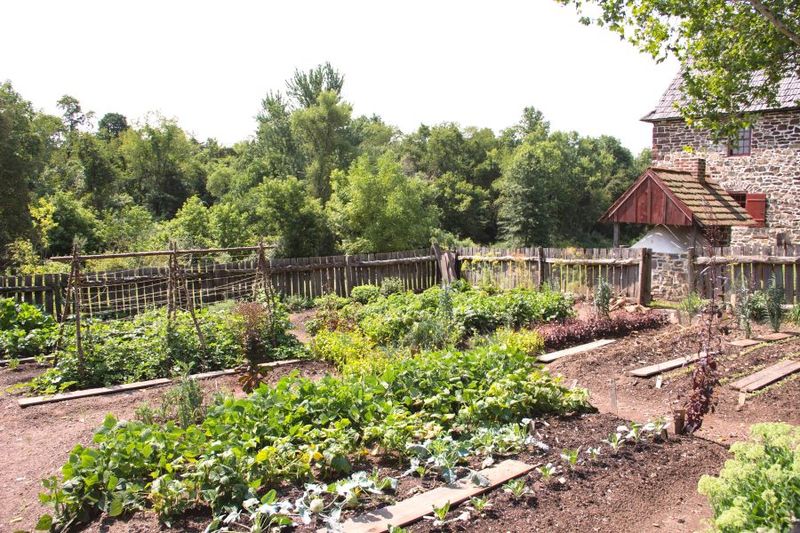
There is something genuinely worth learning from Amish and Pennsylvania German gardening traditions.
Productive use of space, careful soil care, hand labor, nutrient cycling, and planting in successive stages are all real practices with real horticultural value.
Penn State Extension’s account of the Pennsylvania kitchen garden describes early German settlers using raised beds, enclosed plots, manure, lime, wood ash, and planting boards to maintain productive gardens close to the house.
Those details are useful historical context.
What they are not is proof of a current, universal Amish July schedule.
A peer-reviewed study of Amish farming and society specifically notes that Amish agriculture is shaped by family, community, horse farming, hand labor, and biological pest management, but also warns that contemporary Amish practices combine traditional approaches with newer ideas.
Scholarship on Amish identity and nature reinforces that Amish communities vary significantly by settlement, church affiliation, geography, technology use, and market orientation.
Treating them as a single, uniform system misrepresents a genuinely diverse group of people.
One old-fashioned fertility practice worth addressing directly is manure.
Some Pennsylvania German garden accounts mention heavy use of animal manure, and it remains a useful soil amendment when handled correctly.
Fresh manure should never go directly onto growing vegetable beds.
Penn State Extension advises a 120-day interval between applying raw manure and harvesting crops whose edible parts contact the soil, such as carrots or lettuce, and a 90-day interval for crops whose edible parts do not contact the soil.
Penn State’s food-safety guidance covers this in detail.
The tradition is worth keeping, but the safety interval is not optional.
Build a Routine That Fits Your Garden
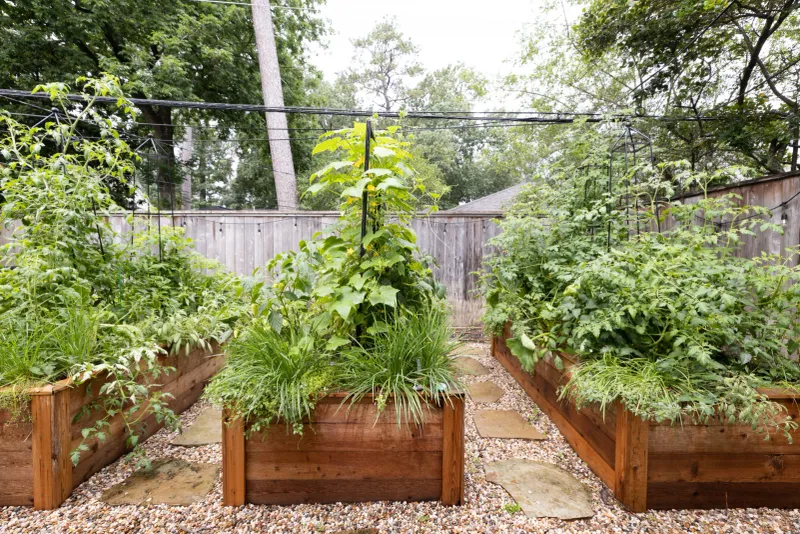
Pull all of this together into a routine that actually fits your schedule.
The morning garden round does not need to be elaborate.
Walk the beds, check a few spots in the soil about 2 inches down, water the root zone if it is dry, pull any weeds that came up overnight while the soil is still damp from dew or yesterday’s rain, and give each plant a quick look.
That last part, the visual scan, is where you catch things early.
Penn State Extension’s pest management guidance frames regular scouting as early detection within a broader integrated pest management approach.
Finding Japanese beetles or squash vine borer damage on day two is genuinely better than finding it on day ten, but scouting alone does not control pests.
You still need to identify what you are dealing with and respond appropriately.
Morning attention improves your odds of catching a problem when options are still open.
Check plant supports while you are out there.
A tomato cage that tipped overnight can snap a loaded stem by afternoon.
Harvest anything that is ready, because Penn State notes that prompt harvesting encourages continued production in most vegetable crops.
And after a heavy storm, use a rain gauge or the 2-inch soil check before assuming the garden is satisfied.
Penn State’s watering guidance is clear that intense rain often runs off before soaking in, especially in compacted or sloped ground.
These small actions may reduce avoidable water loss, limit weed pressure, and improve your early response to problems.
They will not make the garden effortless, and they do not prove a universal Amish custom.
What they do is put you in the garden regularly enough to actually know what is happening out there, which turns out to be most of the work.