
When A Houseplant Keeps Making Leaves But No Flowers, This Is Usually The Missing Piece
Follow us on Google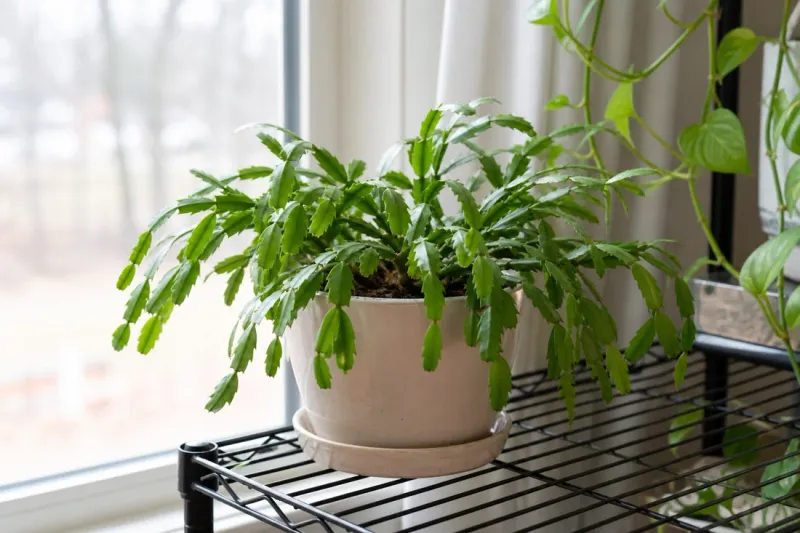
Your plant looks healthy enough, full and green and growing steadily, but there is not a single bud in sight. That gap between a thriving plant and a flowering one frustrates a lot of indoor gardeners, and the reason is usually something specific rather than a mystery.
For many common flowering houseplants, the missing piece is inadequate or unsuitable light, though other factors can keep blooms away even after you fix the light. Knowing what to check, and in what order, can save you from chasing the wrong fix for months.
Start With Light, But Do Not Stop There
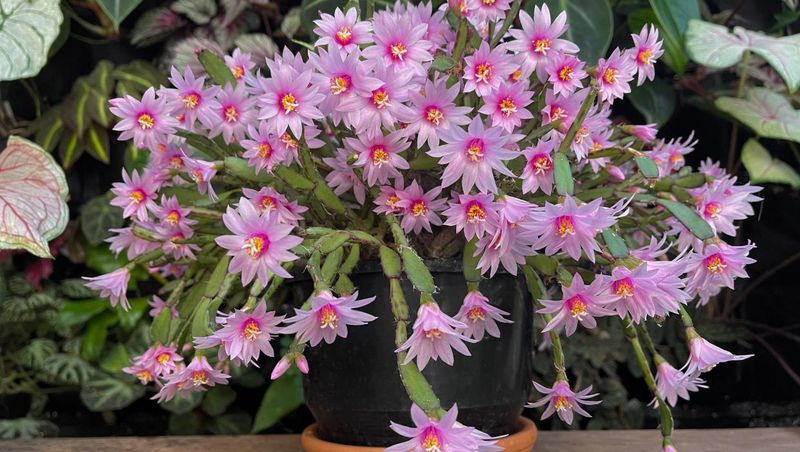
Light is the engine behind everything a plant does. Through photosynthesis, a plant captures light energy and converts it into the carbohydrates it needs to grow leaves, build roots, and, when conditions allow, form flower buds.
When the light coming through your window falls short of what a flowering species needs, the plant can still survive and push out new leaves, but it may not have enough energy left over to bloom.
University of Minnesota Extension guidance on lighting for indoor plants confirms that inadequate light is a common reason flowering houseplants fail to bloom indoors. The plant is not broken.
It is simply running on a budget too tight to cover flowers.
That said, light is the first thing to investigate, not the only thing. Illinois Extension’s houseplant troubleshooting resource points out that flowering also depends on the species, the plant’s age and maturity, its watering and drainage conditions, nutrition, temperature, and whether it has gone through the seasonal or dormancy cycle it needs.
A plant grown for foliage, like a mature monstera, may rarely flower indoors at all, and that is normal. The practical starting point is to treat inadequate light as the most likely suspect for many flowering houseplants, test that hypothesis carefully, and stay open to other causes if moving the plant closer to a window does not eventually change things.
Use Growth Patterns As Clues, Not Proof
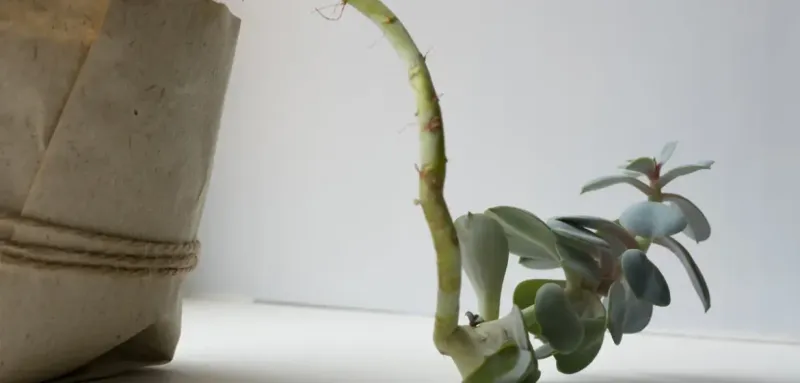
Walk around your plant slowly and look at how it has been growing. Stems that stretch long between each pair of leaves, a habit gardeners call legginess, can suggest the plant has been reaching for more light than it is getting.
Pale or washed-out leaf color and a noticeable lean toward the nearest window point in the same direction. A plant that has been sitting near the same spot for months without forming a single bud adds one more piece to that picture.
None of those signs confirm low light on their own. Poor watering, temperature swings, nutrient imbalance, root damage, and pests can each produce similar-looking symptoms.
Minnesota Extension notes that rotating plants periodically promotes more even growth, which also shows how much direction and light intensity affect the way a plant holds itself.
On the other side of that coin, scorched patches, bleached-out areas, or crispy leaf edges can point to too much direct sun or heat stress after a plant was moved too quickly into brighter conditions. Sudden wilting is less specific and should not be blamed on light alone.
Check the soil moisture first, then look at the roots and drainage, consider the room temperature, and scan for pests before assuming the light level is the problem. Minnesota Extension’s guide to insects on indoor plants is a useful reminder that mites, aphids, and other small pests can stress a plant quietly and mimic the look of an environmental problem.
Use growth patterns to build a hypothesis, then test it against everything else you observe.
Improve Light Without Shock
Moving a plant from a dim corner to the sunniest spot in the house in one afternoon sounds like a solution, but it can do real damage. A plant that has been living in low light has adjusted its leaf chemistry to that environment, and sudden exposure to strong sun can scorch tissue that was never built to handle it.
The safer approach is a gradual move, shifting the plant a few feet closer to a brighter window every few days and watching for any signs of heat or sun stress along the way.
Illinois Extension’s lighting guide offers approximate indoor light levels as rough reference points: around 75 foot-candles for low-light conditions, 150 for medium light, 300 for bright indirect light, and roughly 1,500 for direct sunlight. A foot-candle is simply a measure of how much light reaches a surface.
South-facing windows tend to deliver the highest indoor light levels, while east- and west-facing windows generally land in the medium range. These figures vary by season, window size, and what is outside blocking the glass, so treat them as starting points rather than targets.
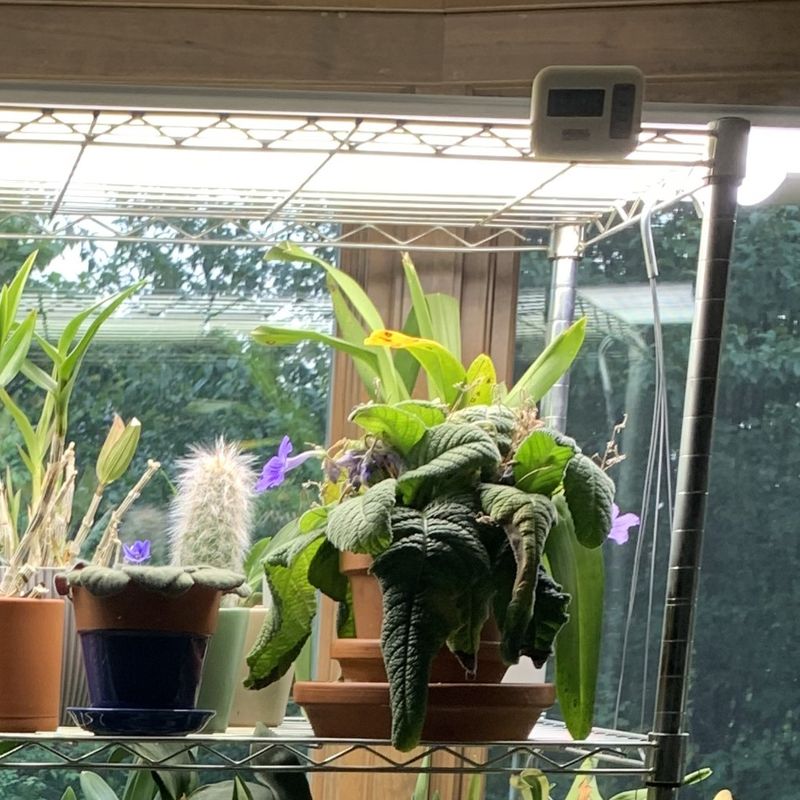
If natural light is genuinely limited in your home, supplemental grow lights can fill the gap. Minnesota Extension recommends positioning flowering houseplants roughly 6 to 12 inches from the fixture, depending on the lamp’s heat output, and running the light for about 14 to 16 total hours per day as a general range.
Do not exceed 16 hours, because many plants need an uninterrupted dark period to function properly. Always check the care instructions for your specific plant, since some species have very different requirements, and a general timer schedule may not suit them.
Protect The Dark Period
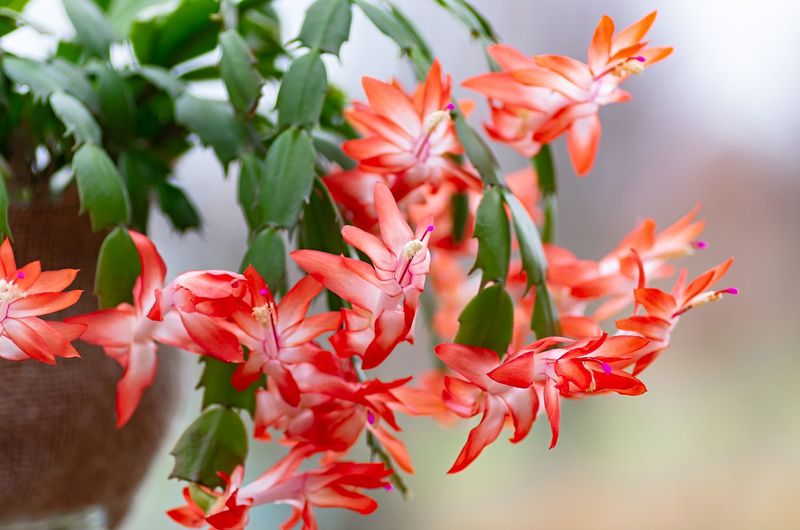
Some plants do not just need more light. They need the right balance of light and darkness, and getting that ratio wrong can prevent flowering just as surely as a dim window.
This response to day length is called photoperiodism, and it matters more than many indoor gardeners realize.
Short-day plants are the clearest example. Poinsettias, chrysanthemums, Thanksgiving cactus, and Christmas cactus all need long, uninterrupted nights to trigger bud formation.
That means roughly 12 to 14 hours of complete darkness, night after night, during the weeks leading up to their natural blooming period. A lamp left on in the corner of the room, a television flickering nearby, or a hallway light seeping under the door can interrupt that dark period and delay or prevent flowering entirely.
Minnesota Extension explains this photoperiod response and notes that even brief light exposure during the critical dark period can reset the plant’s internal clock.
Not every flowering plant works this way. African violets and some begonias are considered long-day plants, meaning they tend to flower more readily when days are longer or light periods are extended.
Day-neutral plants are less sensitive to the light-to-dark ratio and respond more to overall light intensity. Illinois Extension’s lighting resource distinguishes these categories and reinforces why adding more light without understanding your plant’s photoperiod needs can backfire.
Before extending a grow-light schedule or moving a plant to a brighter room for more hours, check whether your species is a short-day plant that actually needs protection from evening light rather than more of it.
Check Water, Drainage, And Roots
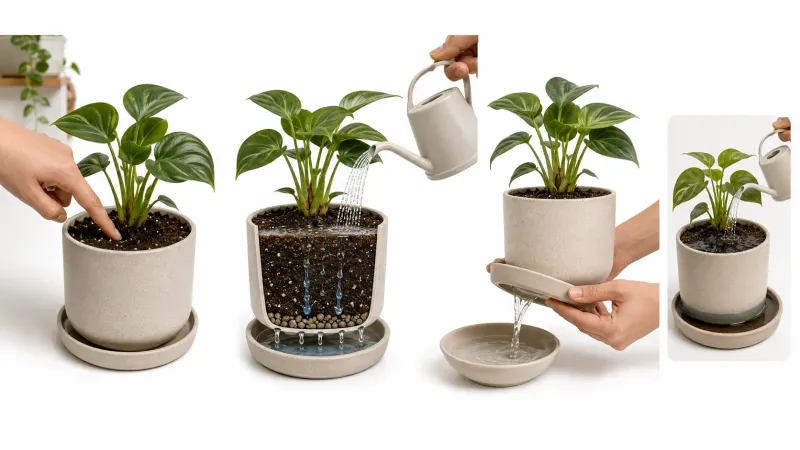
Better light cannot rescue a plant whose roots are in trouble. Chronic underwatering stresses the plant and pulls resources away from flowering.
Constantly wet soil is just as damaging, because roots sitting in soggy mix lose their ability to absorb water and nutrients, which leaves the plant struggling even when the pot feels heavy and moist.
Rather than watering on a fixed calendar, check the growing medium directly. Push a finger an inch or two into the soil and feel whether it is dry, moist, or wet.
Most flowering houseplants want the medium to dry out partially between waterings, but the right amount varies by species. Penn State Extension’s guide on African violet flowering notes that African violets prefer evenly moist soil, which means not soggy and not bone dry.
Orchids sit at the other end of the spectrum.
Penn State’s orchid care guidance describes how moth orchids need an open, fast-draining medium that does not hold moisture around the roots for long. Room-temperature water is recommended, and the ice-cube watering method popular on social media does not align with what orchid roots actually need.
Cold water can shock sensitive roots, and no watering trick substitutes for a pot with proper drainage holes and an appropriate growing medium. If roots look brown, mushy, or tightly circling the bottom of the pot with no healthy white tips visible, drainage and root health deserve attention before you make any other changes to the plant’s care.
Feed Carefully Instead Of Chasing Blooms
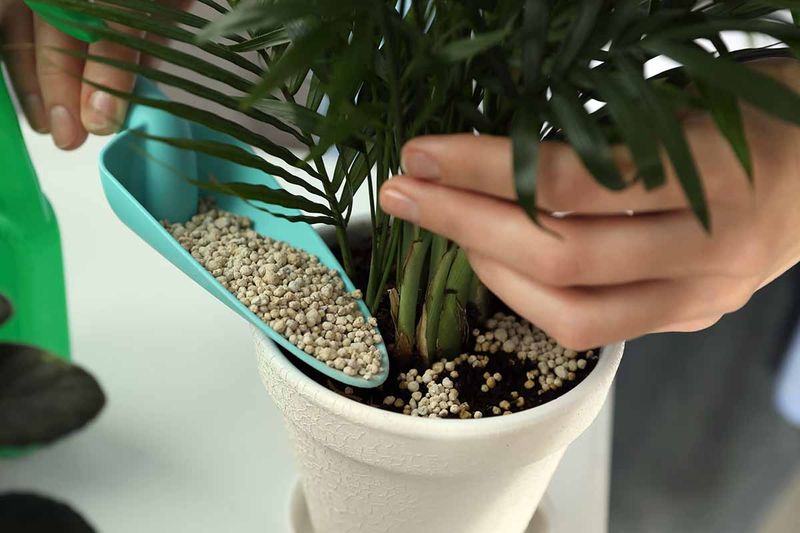
Reaching for a bloom-booster fertilizer is a tempting move when a plant refuses to flower, but fertilizer cannot substitute for adequate light, healthy roots, or the right seasonal conditions. Phosphorus plays a role in plant energy and root development, and some gardeners assume that a high-phosphorus product is the missing piece.
The reality is more complicated.
Penn State Extension is direct on this point: more fertilizer is never better. Excess fertilizer can burn roots and push a plant to produce lush, dark green foliage at the expense of flowers, which is the opposite of what you want.
If light, moisture, and drainage are not right, adding fertilizer may worsen the problem rather than fix it.
That said, a long-term container plant that has been growing in the same potting mix for a year or more may genuinely be running low on nutrients. Illinois Extension recommends fertilizing most houseplants only during active growth, generally from March through September, and only about once every one to three months depending on the plant and conditions.
A complete, balanced fertilizer used at the rate listed on the label is a reasonable starting point for most flowering houseplants. Feeding comes after you have confirmed that light, water, and root health are in reasonable shape, not as a first response to missing blooms.
Account For Species, Age, And Seasonal Triggers
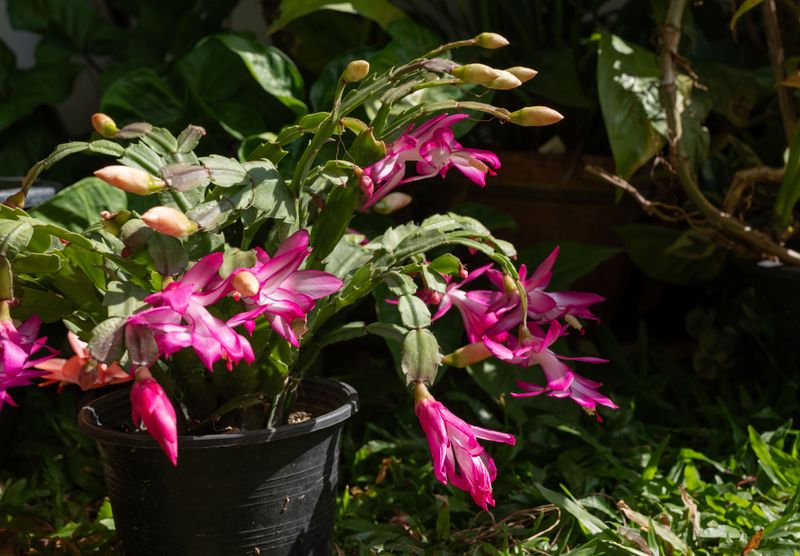
Light improvement is worth trying first for many flowering houseplants, but some plants will not bloom regardless of how bright their spot is if other conditions are not met. Species, maturity, temperature, dormancy, and seasonal timing each play a role, and they play it differently depending on what you are growing.
Orchids are a useful example. A healthy, well-cared-for moth orchid may rebloom only about once a year, and Penn State Extension notes that patience is part of orchid care.
Illinois Extension adds that Phalaenopsis orchids often rebloom more readily when nighttime temperatures drop about 10 degrees below daytime temperatures for several weeks. A steady, warm room may prevent reblooming even when light is adequate.
Holiday cacti follow a different set of rules. Illinois Extension’s holiday cactus guide explains that both shorter days and cooler temperatures in the 50 to 55 degree Fahrenheit range help trigger bud formation.
Some bulb-type plants, like amaryllis, require a dry rest period before they will flower again. Skipping that dormancy, even accidentally by keeping the plant warm and watered year-round, can result in leaves without any bloom.
Plant maturity matters too. A cutting or small division may need a full season or more of vegetative growth before it is old enough to flower.
And some plants simply do not flower reliably indoors. Monstera deliciosa rarely flowers or produces fruit outside its native tropical habitat or a controlled greenhouse setting, so a healthy monstera making leaves without blooms is not a sign of a care problem.
UGA Cooperative Extension notes that temperatures between 60 and 75 degrees Fahrenheit suit many common flowering houseplants, but species-specific guidance is always more reliable than a universal indoor temperature target.
Inspect Buds And Leaves For Pests
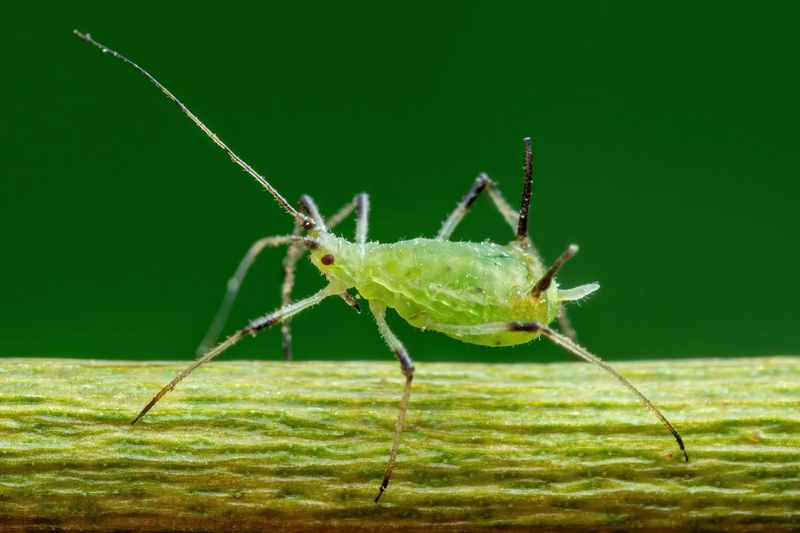
When light seems reasonable and the routine care is sound but flowers still do not appear, a pest problem may be working quietly in the background. Small insects can damage or destroy buds before they ever open, and the signs are easy to miss if you are not looking closely.
Aphids sometimes cluster beneath developing flower buds, draining plant tissue and causing buds to shrivel or drop before they bloom. Thrips are even more disruptive, distorting flowers and causing buds to fail entirely.
Spider mites, cyclamen mites, mealybugs, and scale can each weaken a plant enough to suppress flowering. Minnesota Extension’s guide to insects on indoor plants recommends inspecting buds, stems, and the undersides of leaves carefully, since that is where many pests hide and feed.
Penn State Extension also covers disease and pest interactions that can mimic other care problems.
For minor infestations, washing the plant gently with water or using a labeled insecticidal soap product are reasonable first steps. Homemade dish-soap mixtures are not a safe substitute.
Minnesota Extension specifically warns that homemade soap products can burn plant tissue, and any pesticide you use should list your plant type and indoor use on the label.
Whatever you find, change one major condition at a time. Move the plant to better light, or correct the watering, or treat for pests, then give the plant a realistic window to respond.
Flowering houseplants are not vending machines, and the timeline depends on the species, the season, and how long the problem has been building. A plant that finally gets what it needs will often show you, just not always on your schedule.