
The Right Way To Cut Back Florida Hibiscus So It Blooms Twice As Hard Next Season
Follow us on Google
Walk past a neglected hibiscus on a warm February morning in Florida and you can almost feel it waking up, new buds pushing at the tips of every branch.
Most gardeners either ignore the plant until it gets leggy and sparse, or they hack it back hard and then wonder why the flowers disappear for months.
Pruning tropical hibiscus the right way is genuinely simple once you understand why the plant blooms and when it is ready to respond.
Get the timing and the cuts right, and you give the plant its best chance at a full, healthy flowering season ahead.
Start With Tropical Hibiscus
Before you pick up the pruners, make sure you know which hibiscus is growing in your yard.
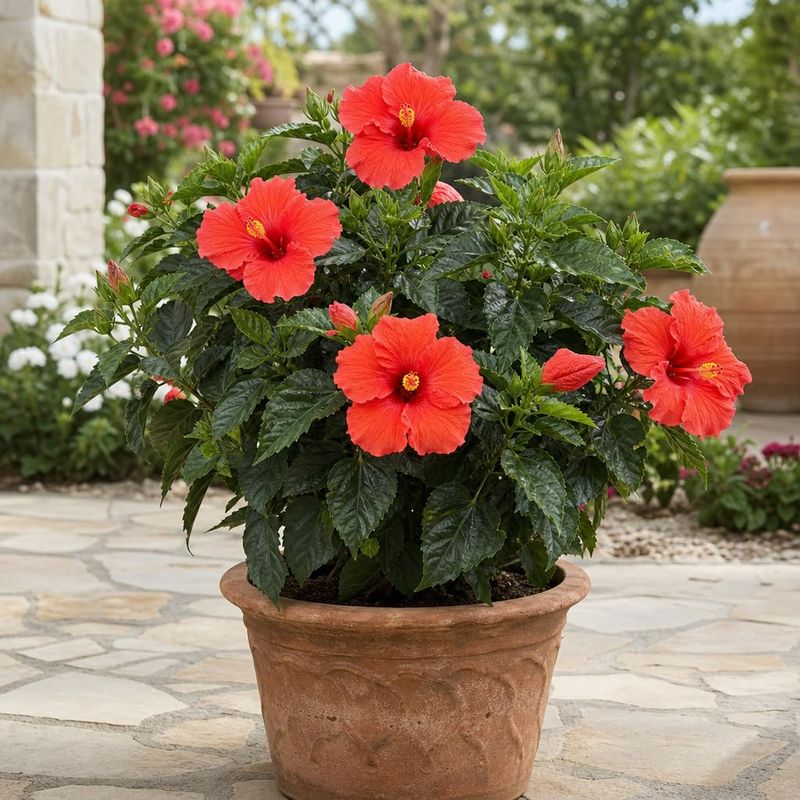
The plant this article is about is tropical hibiscus, Hibiscus rosa-sinensis, the evergreen flowering shrub you see in pots on front porches and planted along fences across Central and South Florida.
It keeps its leaves year-round in frost-free areas, produces large showy flowers in shades of red, orange, pink, yellow, and white, and it responds well to selective pruning when the timing is right.
Not every plant called hibiscus follows the same rules.
UF/IFAS Gardening Solutions points out that the hibiscus family includes hardy hibiscus, rose-of-Sharon, and native rosemallows such as Hibiscus coccineusHibiscus grandiflorus and .
Those native species often grow in wetter sites, may die back to the ground in cold weather, and have different moisture and pruning needs.
Applying tropical hibiscus pruning advice to a native rosemallow could set it back rather than help it.
Telling them apart is usually straightforward.
Tropical hibiscus has glossy, dark green leaves and a woody evergreen structure.
Native rosemallows tend to have larger, softer leaves and a more upright, herbaceous habit, and they often go dormant in winter.
If you are not certain which one you have, the Nassau County UF/IFAS hibiscus fact sheet offers a helpful comparison of common types grown in Florida.
Once you have confirmed you are working with Hibiscus rosa-sinensis, selective pruning before the spring growth flush can support fresh branching and better flowering potential during the coming season.
That is a real and useful benefit, though no single pruning method can guarantee a doubled bloom display.
Light, water, temperature, soil drainage, nutrition, and pest pressure all shape what actually happens on the plant.
Prune Before The Spring Growth Flush
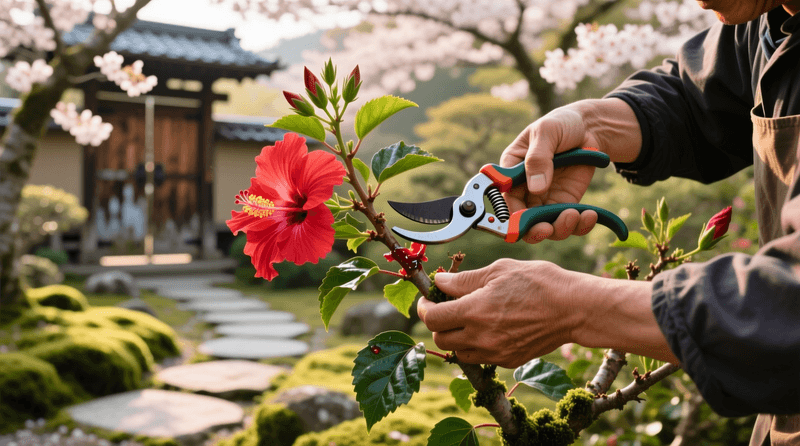
Tropical hibiscus puts its flowers on new wood, meaning the shoots that grow this season are the ones that carry this season’s blooms.
That single fact explains everything about when to prune.
If you cut before the plant pushes its spring growth flush, you are setting up fresh branching that can support more flower buds.
If you wait until summer and cut heavily, you are removing the very shoots that were about to open.
For much of Florida, late February through March is a reasonable general window for major shaping.
The UF/IFAS tropical hibiscus fact sheet confirms that the plant blooms on current-season growth, which makes pruning just ahead of active growth the practical sweet spot.
Think of it as giving the plant a head start rather than playing catch-up after new shoots are already running.
Late February through March is a reference range, not a statewide rule written in stone.
Local frost risk matters more than the calendar date, and a warm spell in January does not mean the coast is clear everywhere in the state.
Central Florida can still see a cold night in early March that catches a freshly pruned plant off guard.
What pruning can realistically do is encourage branching and improve the plant’s structure going into the growing season.
The headline promise of blooming “twice as hard” is not something any pruning technique can guarantee.
UF/IFAS Extension in Okaloosa County describes the benefit as improved shape and renewed growth, not a predictable doubling of bloom volume.
Bloom quantity depends on light, consistent water, temperature stability, nutrition, drainage, and the cultivar itself, all working together with the pruning you do.
Let Local Frost Risk Set The Date
Florida is not one climate, and the pruning calendar shifts significantly depending on where you live in the state.
Gardeners in North Florida and the Panhandle deal with a genuinely different situation than someone in Naples or Homestead.
Treating the whole state as a single zone is one of the most common mistakes people make with cold-sensitive plants like tropical hibiscus.
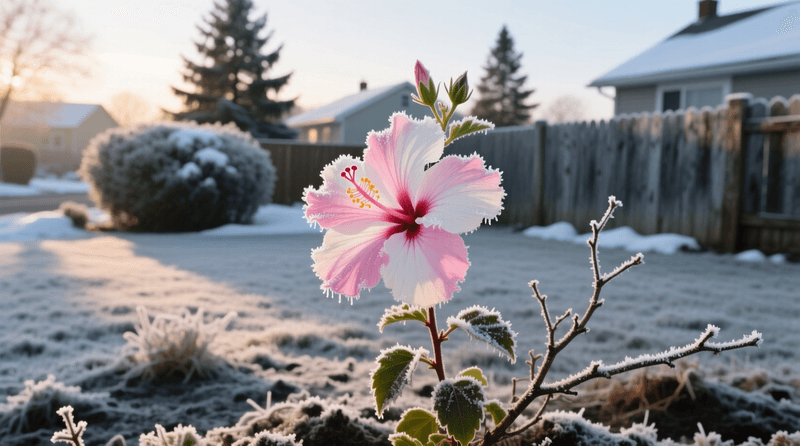
In North Florida and the Panhandle, a hard freeze can kill hibiscus stems back to the ground or damage them well into the canopy.
UF/IFAS Extension advises waiting to prune cold-injured landscape plants until new growth emerges and shows you clearly where the living tissue ends.
Cutting before that point can remove wood that was still alive and recovering, and it can push out tender new growth right before another cold event arrives.
The Duval County UF/IFAS Extension office reinforces the same point: brown, damaged stems after a freeze are not a signal to prune immediately.
Scratch a stem with your thumbnail.
If you see green tissue underneath the bark, the stem may still be alive.
Wait for the plant to tell you where it stands before making any cuts.
Central Florida sits in a middle zone where brief cold snaps can arrive even after a stretch of warm days.
A safe approach is to watch the 10-day forecast and hold off until nighttime temperatures are consistently staying above freezing before you make major cuts.
South Florida faces far fewer freeze concerns, and gardeners there generally have a longer window for late-winter shaping, though late February or early March remains a reliable time for significant pruning.
In the Keys, local frost exposure and salt spray from the ocean are both real factors, so let your specific site conditions and the actual weather guide your timing rather than a fixed date on the calendar.
UF/IFAS winter plant protection guidance offers practical steps for protecting tender plants during unexpected cold events across the state.
Make Selective Cuts Above Healthy Nodes
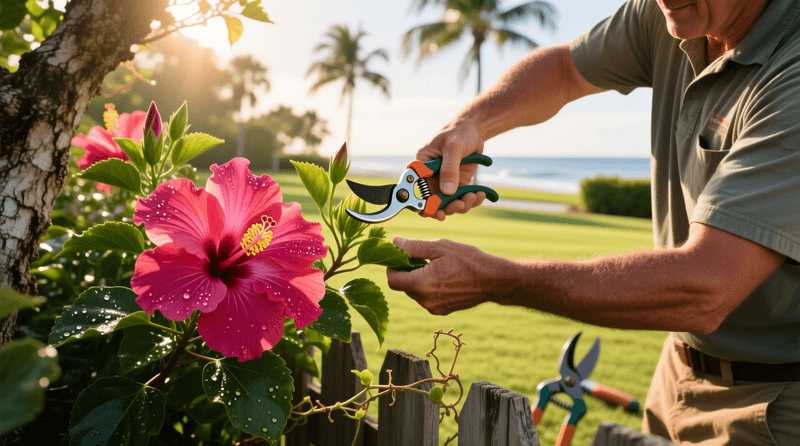
Here is where many well-meaning gardeners go wrong.
They grab the hedge shears, run them along the outside of the shrub in a straight line, and step back satisfied with a tidy shape.
The plant looks neat for about two weeks, and then it sulks.
Shearing a tropical hibiscus removes dozens of actively growing tips and developing flower buds at once, leaving behind a wall of dense interior foliage and far fewer blooms than the plant is capable of producing.
Selective hand pruning is the better approach.
Start with the three Ds: dead, diseased, and damaged stems.
Remove those first, cutting back to healthy wood or to the base if the stem is fully dead.
Then look for crossing branches that rub against each other, and take out the weaker of the two.
Finally, shorten any stems that have grown too long or are pulling the plant out of shape.
Every heading cut should land just above a healthy node, which is the point on the stem where a leaf attaches and a dormant bud waits.
UF/IFAS Pinellas County Extension explains that the angle and placement of each cut influences where the next branch grows.
Aim the cut so that the lowest remaining bud points outward, away from the center of the plant.
That keeps the interior open to light and air.
Avoid leaving long stubs above the node, because stubs can die back and invite disease.
Avoid flush cuts that slice into the protective collar at the branch base, because that tissue helps the wound close.
The UF/IFAS guide to pruning landscape trees and shrubs covers proper cut placement in detail and is worth keeping as a reference.
Use sharp, clean hand pruners for stems up to about half an inch in diameter.
UF/IFAS Osceola County Extension recommends cleaning your tools with a disinfecting solution before moving from one plant to another, especially when you have been cutting out diseased tissue.
Keep Routine Pruning Moderate
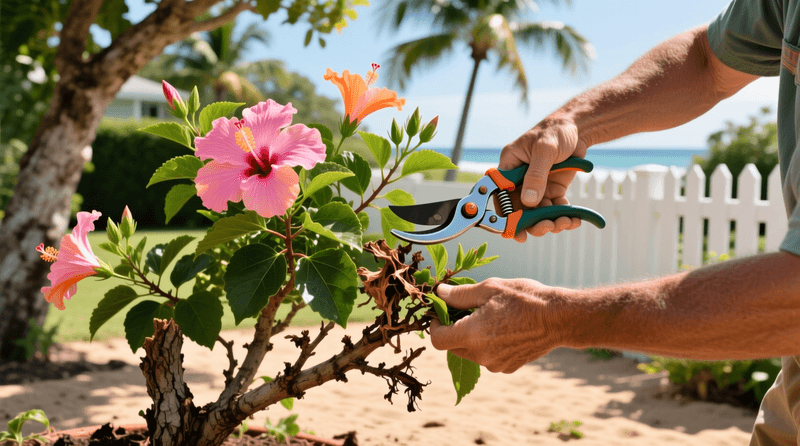
One of the most common misunderstandings about hibiscus pruning is that harder means better.
The logic seems reasonable: cut it back hard, and the plant pushes back with more growth and more flowers.
But tropical hibiscus does not actually work that way during routine maintenance, and removing too much at once can set the plant back rather than move it forward.
A practical guideline from UF/IFAS Extension is to remove no more than one-third of the plant’s total mass in a single pruning session.
That limit applies to routine maintenance, the kind of shaping you do each late winter or early spring to keep the plant healthy and well-structured.
Staying within that range removes enough old or weak wood to encourage fresh growth without stressing the plant or stripping away too many potential flowering points.
Shearing the whole shrub into a tight geometric shape is a separate problem.
Beyond removing developing buds, repeated shearing pushes growth to the outer shell of the plant while the interior becomes increasingly dense and shaded.
Over time, that interior shading reduces flowering and makes the plant harder to manage.
UF/IFAS Pinellas County Extension is clear that selective hand pruning produces better results for flowering shrubs than mechanical shearing does.
A severely overgrown hibiscus that has become a tangled, woody mess is a different situation.
In that case, UF/IFAS St. Johns County Extension notes that a hard renovation cut to about 1 foot above the ground may sometimes be appropriate as a size-reduction measure.
That is a rescue option for a plant that has outgrown its space, not the standard approach for encouraging flowers on a reasonably healthy shrub.
Use Summer Pinching Sparingly
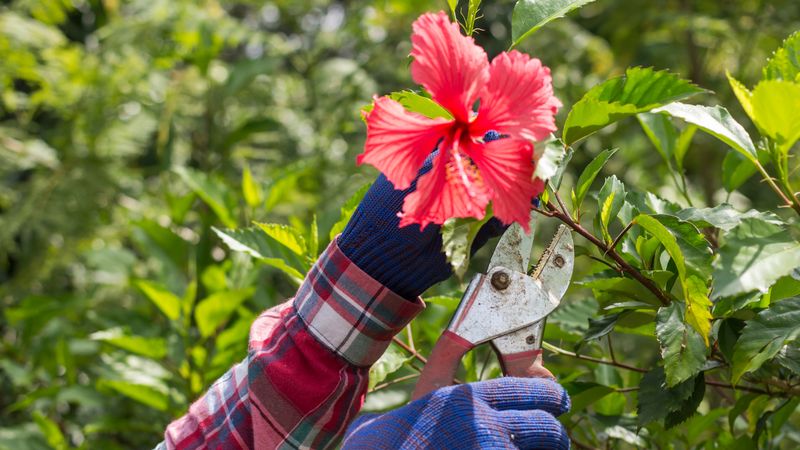
Summer pruning on a tropical hibiscus is not the same thing as late-winter shaping, and mixing up the two can cost you weeks of flowers during the season when the plant is working hardest.
Many Central Florida gardeners have cut their hibiscus back hard in July thinking they were helping it rebound, only to watch it sit flowerless through most of August while it recovered.
What actually makes sense during summer is light tip pinching, not heavy cutting.
Pinching means removing just 2 to 3 inches from selected growing tips while the plant is actively pushing new growth.
The UF/IFAS tropical hibiscus fact sheet identifies spring and midsummer as useful times for this kind of light shaping.
The goal is to encourage the pinched stem to branch into two shoots instead of continuing as one long, unbranched leader.
More branching points over time means more potential sites for flower buds.
The key word is selected.
You are choosing a few stems that have grown long and leggy, pinching their tips, and leaving the rest of the plant alone.
That is a very different action from cutting the entire shrub back by half in August.
Severe summer pruning removes developing buds that were already on their way to opening, and the plant temporarily stops flowering while it redirects energy into rebuilding its canopy.
Summer pinching can be a useful tool, but it is not a guaranteed bloom trigger and it does not replace well-timed late-winter pruning.
Think of it as a light adjustment between seasons, not a substitute for the main event.
UF/IFAS pruning guidance consistently frames heavy summer cutting as a practice that delays rather than accelerates flowering on actively growing shrubs.
Support Flowers With Light And Steady Moisture
Pruning gives the plant a better structure to work with, but it cannot substitute for the right growing conditions.
A perfectly pruned hibiscus in deep shade or in soil that stays waterlogged will still struggle to bloom, because the plant’s energy is going somewhere other than flower production.
Getting the site right is genuinely as important as getting the cuts right.
Tropical hibiscus performs best in full sun to light shade, with moist but well-drained soil.
The UF/IFAS tropical hibiscus fact sheet notes that the plant prefers consistent moisture and warns that both overwatering and underwatering can contribute to bud drop.
A hibiscus that is dropping buds before they open is often telling you something is off with its water supply, not its pruning schedule.
Aim to keep the soil evenly moist without letting the roots sit in standing water between rain events.
If you are planting hibiscus as an informal hedge, UF/IFAS Nassau County Extension lists a spacing of 3 to 4 feet between plants as a practical guideline.
That spacing allows enough air circulation to reduce fungal problems and enough light penetration to keep the interior of each plant productive.
Coastal placement deserves extra thought.
UF/IFAS Charlotte County Extension notes that tropical hibiscus is not tolerant of salt spray or salty irrigation water.
Along exposed Atlantic and Gulf Coast sites, and in the Keys where salt air and salt-influenced irrigation can both be factors, a protected position on the property can matter as much as any pruning decision you make.
A plant pounded by salt-laden wind off the water will not reward good pruning with a flush of blooms.
Check Nutrition, Pests, And Flowering Expectations
When a hibiscus stops blooming, the first instinct for many Florida gardeners is to feed it.
More fertilizer feels like a logical answer, but it can actually make the problem worse.
UF/IFAS Nassau County Extension explains that excess fertilizer, especially excess nitrogen, tends to push lush leafy growth at the direct expense of flowers.
The plant puts its resources into building canopy instead of setting buds.
Established hibiscus plants generally need conservative fertilizing, and Florida-specific fertilizer restrictions may apply in your county, particularly during the rainy season from June through September.
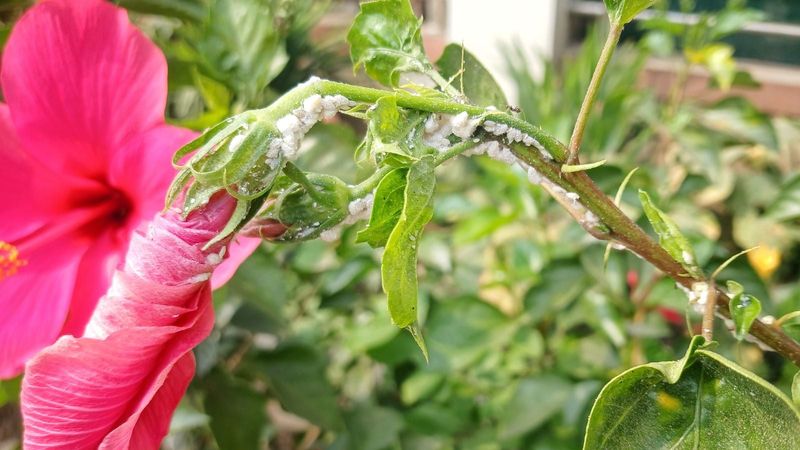
Pests are a more common cause of poor flowering than most gardeners expect.
Aphids, whiteflies, mealybugs, scale insects, thrips, spider mites, and caterpillars all attack tropical hibiscus at various points in the growing season.
Whiteflies in particular have a way of building up quietly on the undersides of leaves before the damage becomes obvious.
Scout the plant regularly, checking both leaf surfaces and the tender growing tips where pests tend to concentrate first.
UF/IFAS integrated pest management guidance recommends scouting and sanitation as the first line of response, including removing fallen buds and plant debris from around the base of the plant when pest pressure or bud drop is present.
One more expectation worth setting: each individual tropical hibiscus flower lasts about one day.
UF/IFAS Gardening Solutions notes that the plant naturally cycles through blooms over a long season rather than producing one dramatic flush.
Deadheading spent flowers is a tidy habit, but removing old blooms alone will not force a sudden surge of new ones.
The plant blooms continuously when conditions are right, not in dramatic waves triggered by removing yesterday’s flowers.
Moderate, well-timed pruning works best as one part of a complete approach.
Light, steady moisture, stable temperatures, conservative nutrition, regular pest scouting, and good drainage all contribute to what actually shows up on the plant.
Get those pieces working together, and your hibiscus will do what it is built to do: bloom steadily and reliably through Florida’s long warm season.
That is a result worth working toward, even if no single cut can promise to double it.