
The August Scorpion Change Texas Homeowners Never See Coming
Follow us on Google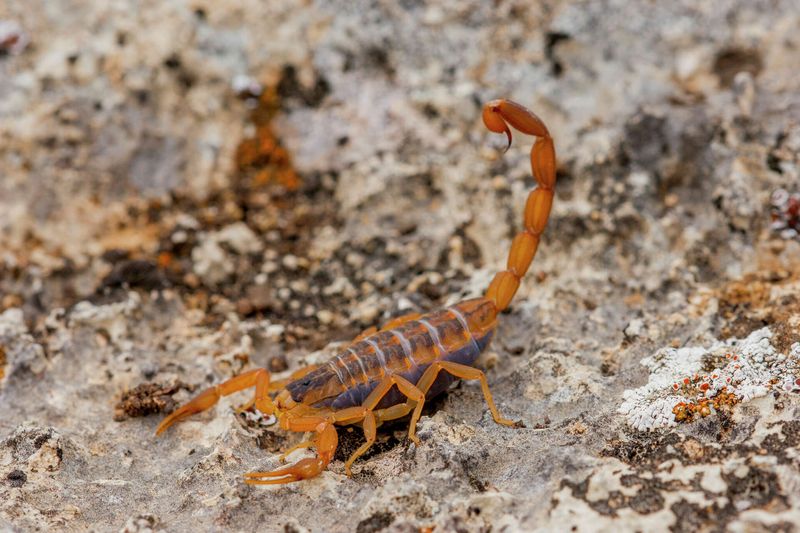
Most Texas homeowners have felt it: you step outside after dark in late summer and something skitters near your boot on the porch.
Scorpion sightings seem to tick up right around the time the heat gets truly relentless, and a lot of folks assume August flips some kind of biological switch that sends every scorpion in the state marching toward the back door.
The truth is a little more complicated, and understanding it can actually help you do something useful about it.
Late-summer heat and dryness can push scorpion activity closer to your home under certain conditions, and a few targeted steps around your threshold and yard can make a real difference.
Late Summer Can Raise Encounters Without Creating An August Peak
Plenty of Texas homeowners swear that August is the month scorpions go haywire, and the feeling is not entirely wrong, but the science behind it is more layered than a single calendar flip.
A Texas Parks and Wildlife-supported scorpion field study found that adult striped bark scorpions were most active in July during one sampling period, while juveniles peaked in August during another, and the researchers noted that activity was shaped by temperature, wind, precipitation, lunar conditions, habitat, and sampling location all at once.
That is not a statewide August switch.
That is a seasonal window shaped by a tangle of local variables.
What many Central Texas and Hill Country homeowners are actually noticing is the effect of prolonged heat and dryness on scorpion movement near and around structures.
When conditions get harsh enough, scorpions may shift toward cooler, more sheltered, or more hospitable spots, and homes with existing gaps, woodpiles, or irrigated landscaping nearby can end up in the path of that movement.
The pattern is real, but it is not identical across Texas, and it is not guaranteed for every yard.
One more distinction worth making early: encountering a scorpion on your porch is not the same as being stung, and being stung is not the same as facing a medical emergency.
Sting risk depends on contact and on how your body responds.
The goal of everything that follows is to reduce the chance of that contact in the first place, using an exclusion-first approach that addresses the actual routes scorpions use to reach your living spaces.
Heat And Dryness Can Redirect Nighttime Movement
Scorpions are built for tough conditions, but even they have limits.
Texas A&M AgriLife has reported that hot, dry weather may lead scorpions to seek water or a more hospitable environment, which can bring them closer to structures that offer shade, retained moisture, or cooler air near foundations and entryways.
That is a conditional behavior, not a guaranteed response, and it matters because homes with sealed thresholds, dry perimeters, and little nearby debris may see far fewer visitors than homes that offer easy shelter and access.
Scorpions are primarily nocturnal, resting under bark, rocks, mulch, and debris during the day and foraging after dark.
When surface temperatures stay extreme even into the evening, their movement patterns can shift.
They may cover more ground searching for a tolerable microclimate, which increases the odds of ending up near a wall, a door gap, or a weep hole in the brick.
Texas A&M reporting from 2023 confirmed that indoor pest pressure, including scorpions, tends to rise as heat and drought persist through late summer.
Irrigation, prey availability, and local habitat all play separate roles in this picture.
A yard with drip irrigation running every other night near the foundation creates a moisture gradient that can attract insects, and insects attract scorpions.
The striped bark scorpion is an active forager that follows food and favorable conditions rather than following a fixed seasonal script.
In South Texas and West Texas, species diversity and habitat differences mean the pattern may look different than it does in the Hill Country or North Texas suburbs, so local conditions always matter more than a statewide rule.
The Striped Bark Scorpion Can Reach High And Hidden Spaces
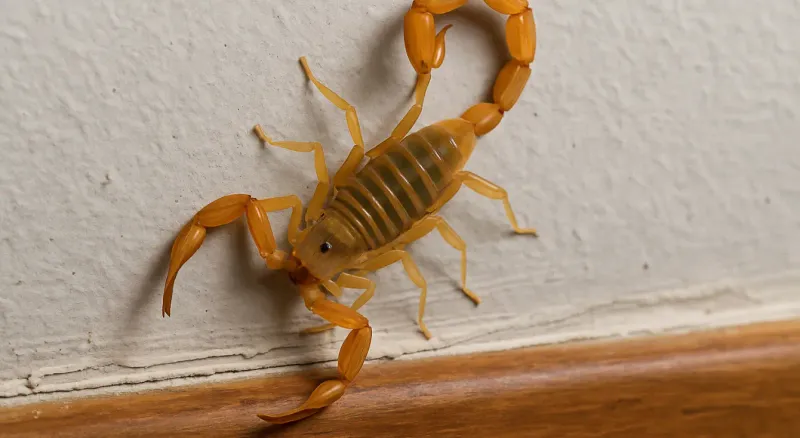
Most people picture scorpions crawling along the floor, but the striped bark scorpion (Centruroides vittatus) is a capable climber that does not dig traditional burrows, making it genuinely different from the burrowing species of West Texas and the Trans-Pecos.
It moves up trees, exterior walls, and rough masonry with ease, and it can reach attics, wall voids, and upper-story windows through routes that most homeowners never think to inspect.
Texas A&M AgriLife identifies Centruroides vittatus as the only scorpion found throughout the entire state, including East Texas, where many people assume scorpions are rare.
Texas actually has 18 recorded scorpion species, with the highest diversity concentrated in the Big Bend and Trans-Pecos regions, but the striped bark scorpion is the one most likely to show up in a Hill Country garage, a North Texas suburb, or a Central Texas bedroom.
Regional species and habitat differences mean the advice here is a safe statewide framework, not a one-size answer for every county.
When a scorpion turns up inside, many homeowners assume the house is heavily infested.
Extension guidance notes that scorpions can be transient pests that enter accidentally through gaps or follow prey and shelter gradients, so a single indoor visitor does not automatically signal a large colony.
Repeated sightings in multiple rooms, or scorpions found consistently near attic access points, wall voids, garages, or foundation cracks, are the signals that justify a more systematic inspection or professional service.
One scorpion in the bathroom at midnight is alarming.
A pattern of them is a different problem that calls for a different response.
Shelter And Prey Around The House Create More Encounters
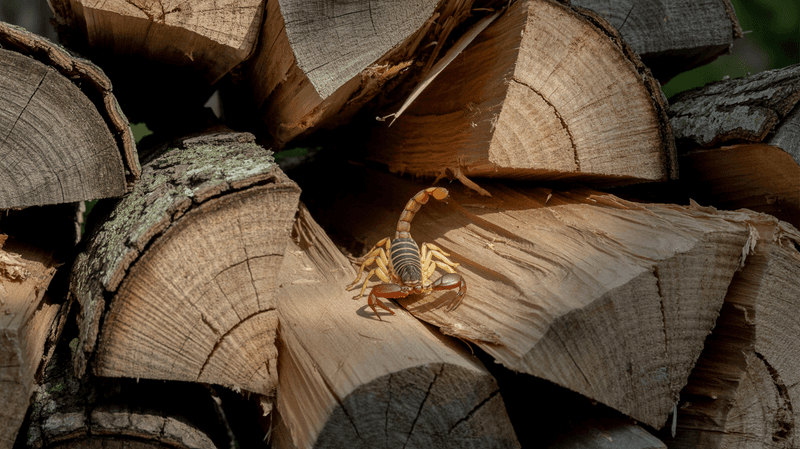
Walk around the outside of almost any Texas home and you will find at least a few things that make a scorpion feel welcome: a stack of firewood against the wall, some loose flagstones, a pile of leftover bricks from a project two summers ago, or a row of dense shrubs pressing right up against the foundation.
Texas A&M specifically recommends moving debris, wood, and materials away from the foundation as a first-line step because these features offer exactly the kind of protected, shaded resting spot that scorpions seek during the day.
Scorpions are predators of insects, spiders, centipedes, worms, and other arthropods, which means a yard with heavy insect activity near the foundation is also a yard with a reason for scorpions to linger.
Dense mulch beds, tall grass near walls, and branches touching the roofline all create travel corridors and resting spots that keep scorpions close to your living spaces.
The goal is not to sterilize your entire yard of every arthropod.
The goal is to reduce the convenient shelter and easy contact opportunities right at the perimeter.
Extension guidance on scorpion management consistently emphasizes that outdoor control is genuinely difficult, and reducing nearby shelter is one of the more reliable layers of the approach.
Prune branches and shrubs so they do not touch the structure.
Keep grass mowed closely within about 2 feet of exterior walls.
When you move firewood, rocks, boards, or stored materials, wear leather gloves and boots, and do not reach blindly under anything.
A scorpion resting under a board does not want to sting you, but it will if it feels trapped.
Seal The Threshold Before Reaching For Pesticide

Stand at your back door and crouch down.
If you can see daylight under the threshold, a scorpion can fit through that gap, because a striped bark scorpion can squeeze through an opening roughly as wide as a credit card is thick.
That gap is the single most important thing to fix before you do anything else, and a new door sweep or threshold seal costs about 10 to 20 dollars and takes less than 30 minutes to install.
Exclusion is the foundation of the whole approach.
After the door sweeps, move to weather-stripping around door frames and repair any window screens with holes or gaps where they meet the sill.
Check the seals around exterior pipes, electrical conduit, cable lines, and any utility penetration in the foundation or siding, and fill gaps with appropriate exterior caulk or, for larger openings, with copper mesh before caulking.
Masonry weep holes, those small open gaps left in brick walls near the foundation for drainage and ventilation, are a route that many homeowners overlook entirely.
You can cover them with small pieces of fine copper or stainless mesh cut to fit, which allows drainage and airflow while blocking entry.
Because the striped bark scorpion uses exterior walls, roof eaves, and vegetation as travel surfaces, also check where roofline trim meets fascia and where any gap exists where the wall meets the soffit.
Sealing these routes does not promise that you will never see another scorpion outside.
What it does is remove the easy path from outside to inside, which is a meaningful difference on a hot August night.
Use Night Monitoring To Find The Route
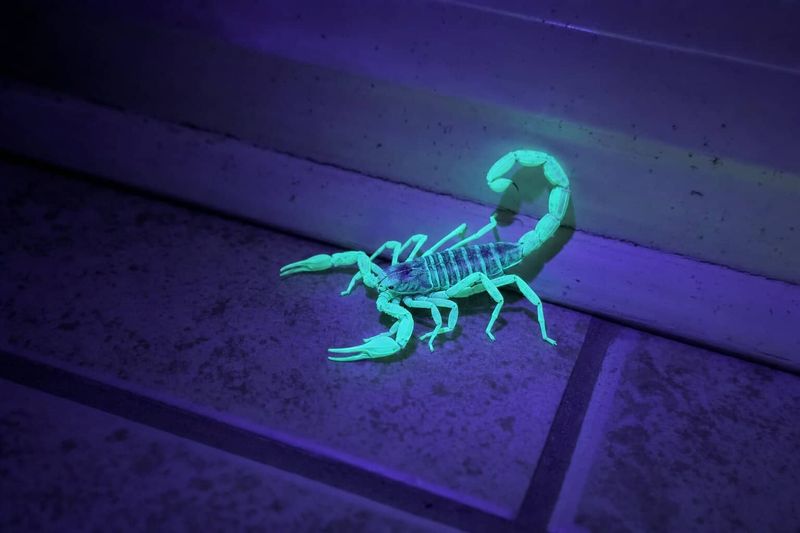
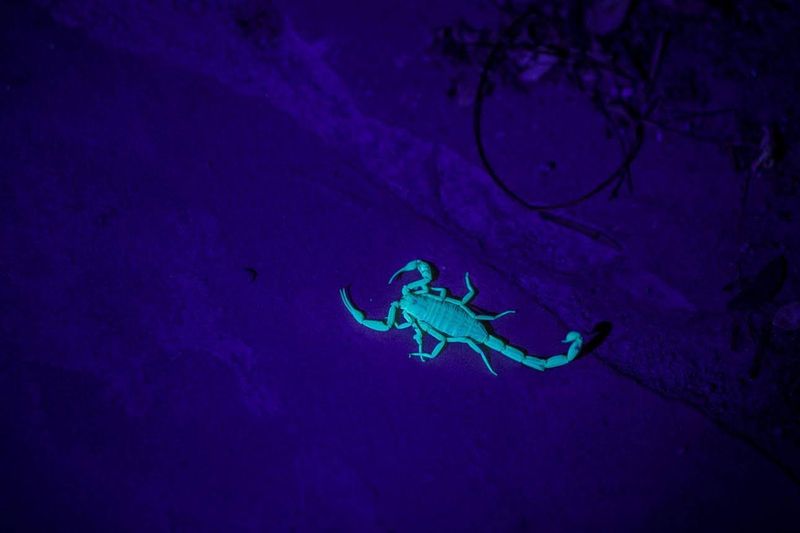
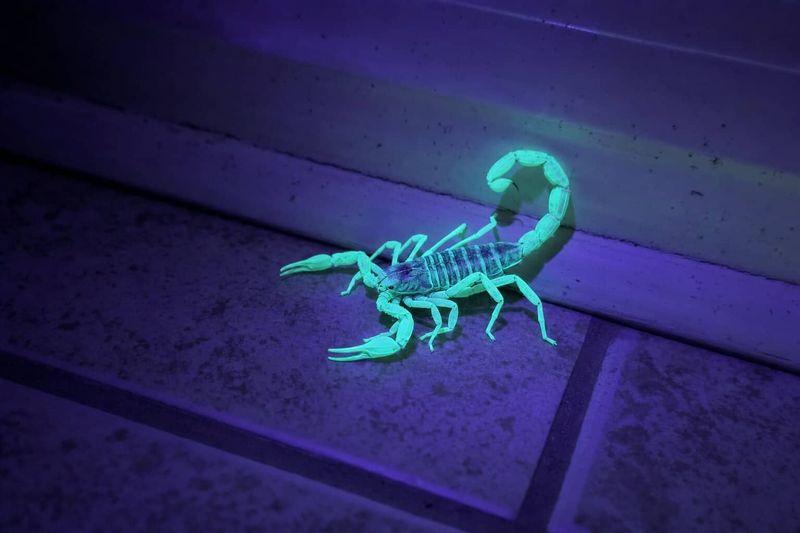
Here is something genuinely useful to know: most scorpions fluoresce under ultraviolet light, glowing a bright yellow-green that is easy to spot against concrete, stone, or wood.
A handheld UV blacklight flashlight costs around 10 to 15 dollars and can show you in one evening’s walk exactly where scorpions are resting and which routes they are using around your home.
Texas A&M recommends UV blacklight inspections as a practical monitoring step during periods of elevated indoor pest pressure.
Start your inspection at least an hour after full dark, around 9 or 10 p.m. in late summer.
Sweep the light slowly along the foundation, across the porch, into the garage corners, along the woodpile, around rock borders, and across any wall surface near a gap you identified during your daytime inspection.
Wear closed-toe shoes the entire time, and do not pick up or touch any scorpion you find.
Extension guidance is clear that direct handling creates unnecessary sting risk.
If a scorpion’s location or markings seem unusual, photograph it from a safe distance, that image can help a pest professional or extension agent identify the species without anyone putting a hand near it.
Sticky traps placed along interior walls, near garage doors, or close to suspected entry points can help you track movement patterns over several days.
They are a monitoring tool, not a control program.
Texas Poison Center guidance emphasizes cautious awareness rather than aggressive handling, and that principle applies to monitoring too.
An isolated scorpion on a sticky trap near the back door tells you to recheck the threshold seal.
Three scorpions in three different rooms over a week tells you a more systematic inspection, or a call to a licensed pest professional, is the right next move.
Targeted Treatment Must Follow The Label
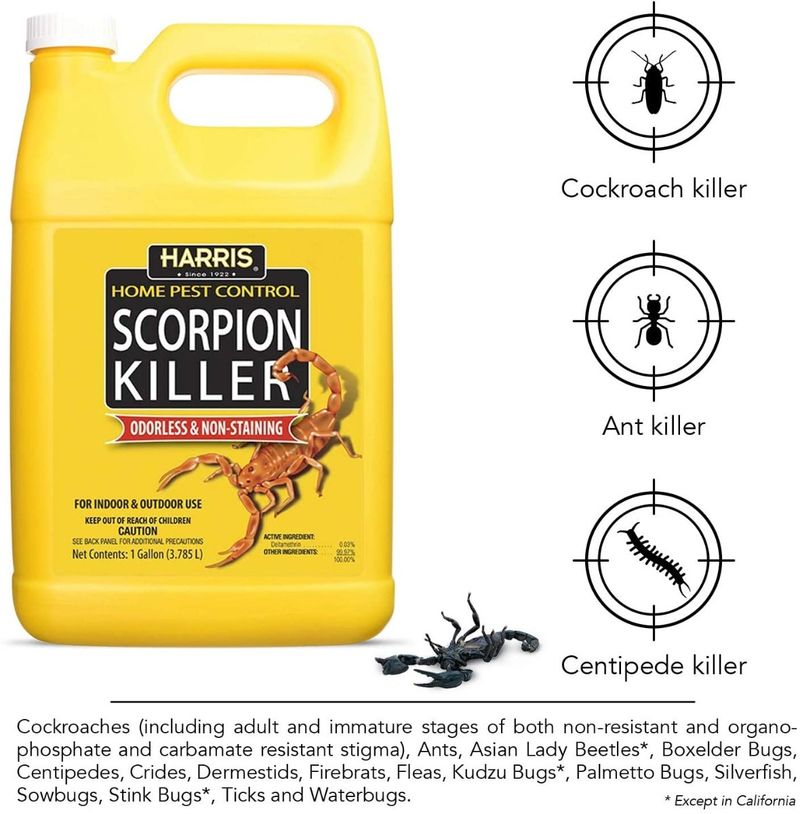
Chemical treatment has a place in managing scorpions around a Texas home, but it works best as one layer added after exclusion, debris reduction, and monitoring are already in place.
Texas A&M Entomology lists active ingredients used in products labeled for scorpion control, including permethrin, cyfluthrin, cypermethrin, lambda-cyhalothrin, deltamethrin, bifenthrin, carbaryl, and related compounds, but product labels differ significantly in permitted sites, application rates, and reentry requirements.
The label is the legal document.
Read it completely before mixing or applying anything.
The Texas A&M School IPM action plan specifies that applications should target labeled exterior foundation, crack-and-crevice, or entry-point locations, not broad indoor surfaces.
Outdoor pesticide products must not be sprayed indoors, and the label will tell you exactly which sites are permitted.
Apply only at the rate the label specifies, because using more product does not improve results and increases risk to people, pets, and the environment.
Before any application, move children, pets, toys, food, and pet bowls away from the treatment area.
Keep people and pets off treated surfaces for the period the label specifies, or until the surface is fully dry, whichever is longer.
Do not apply during rain or when wind could carry product toward gardens, pools, storm drains, or waterways.
If you are uncertain about any part of the label, contact a licensed pest control professional rather than guessing.
A targeted, label-compliant application at foundation cracks and confirmed entry points is a reasonable IPM step.
A broad spray applied in frustration is not.
Respond To A Sting Without Handling The Scorpion

A scorpion sting hurts immediately, and knowing what to do in the next few minutes matters.
Texas Poison Center guidance recommends washing the sting site with soap and water, then applying a cool compress or ice pack to the area without immersing the skin in ice water.
After that, contact a healthcare provider or call the Texas Poison Center Network at 1-800-222-1222 for specific instructions based on the person’s age, weight, and symptoms.
Most Texas scorpion stings cause immediate pain, localized swelling, itching, or numbness that may last anywhere from a few minutes to several days.
Individual responses vary, and children and older adults may react more strongly.
Those neurological signs include muscle twitching, staggering, drooling, slurred speech, or difficulty swallowing.
Do not wait to see if those symptoms resolve on their own.
Do not handle the scorpion after a sting.
If identification could be helpful for medical treatment, the Texas Poison Center Network can assist with guidance, and a photograph taken from a safe distance gives medical professionals what they need without putting anyone’s hand near a live animal.
The practical takeaway from everything in this article is not complicated: a sealed threshold, a cleared perimeter, and a cautious nighttime routine can genuinely reduce the chance of a late-summer encounter.
You will probably still see a scorpion in the yard now and then, and that is actually fine.
The goal is keeping them out of the bedroom, and that part is well within reach.