
Five Old-Fashioned Beans Your Grandparents Grew That Taste Nothing Like The Canned Kind
Follow us on Google
It’s a sweltering July afternoon, cicadas humming so loud the air seems to shake.
You’re by the garden fence when your neighbor frowns at their green bean patch and says they just wish it tasted like the ones grandma grew.
You know exactly what they mean.
Supermarket and canned beans get bred for shipping and shelf life, not flavor, so the taste goes flat and the texture turns to mush.
But five old-fashioned heirloom beans still carry the rich, snappy flavor your grandparents took for granted, and they grow just fine in a backyard garden today.
1. ‘Contender’ Bush Bean: The Dependable Early Harvester
Spring barely got here and you’re already itching for that first taste of summer.
Many gardeners wait what feels like ages before a single pod shows up.
But there is a shortcut that skips the sad, watery can entirely.
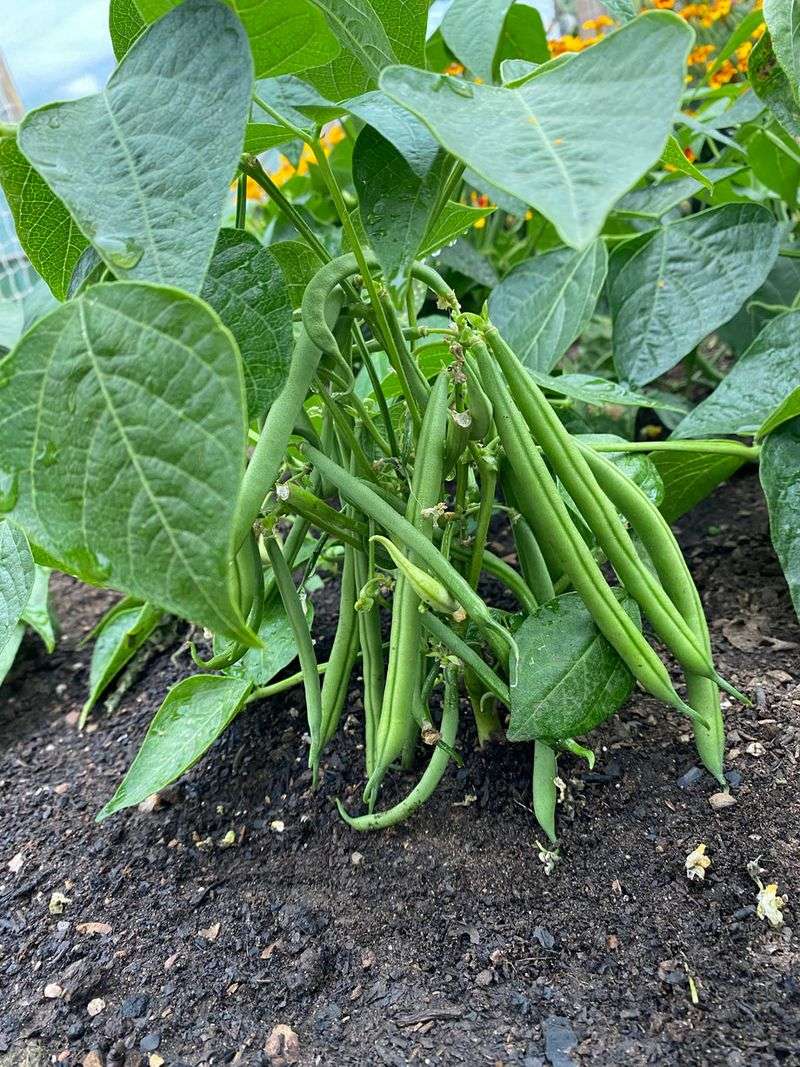
The ‘Contender’ bush bean (Phaseolus vulgaris) landed in gardens back in 1949 and earned its keep fast.
It throws out straight, stringless pods with a mild, clean flavor that holds a crisp snap instead of going limp.
That texture alone puts it in a different league than anything sealed in tin.
Sow seeds directly outdoors one to two weeks after your last spring frost, once soil holds at least 65 degrees Fahrenheit.
Plant them about 1 inch deep, 3 to 4 inches apart, in rows 18 to 24 inches apart.
These self-supporting plants top out around 12 to 20 inches, so you can skip the trellis.
In just 50 to 57 days, you get one concentrated flush of beans.
Pick often, and the plants keep offering more.
So if you’re impatient, this is the bean that rewards you first, weeks ahead of the pole types.
2. ‘Kentucky Wonder’ Pole Bean: A Sweet, Meaty Classic
Picture a warm evening, the grill going, and you reaching for a handful of plump beans right off the vine.
If bush beans are all you’ve known, this one hits differently.
The flavor is hearty enough to stand on its own plate.
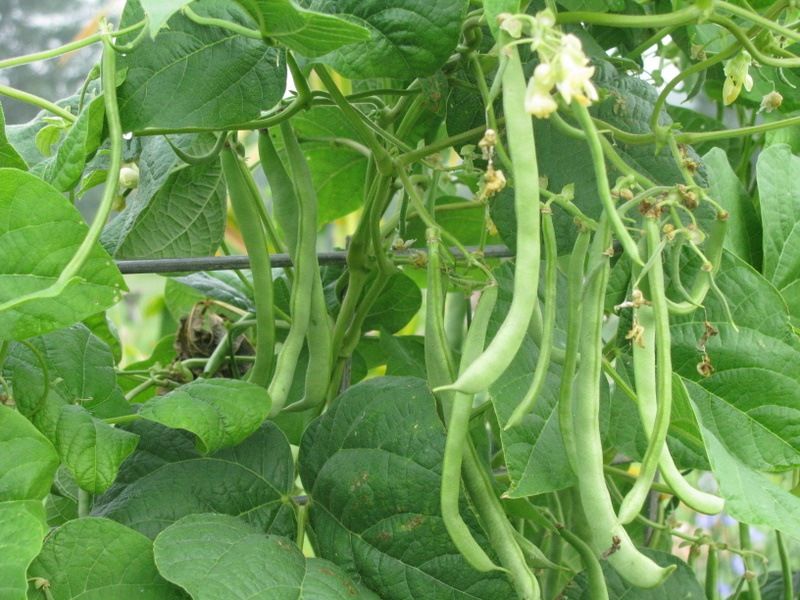
Dating to the mid-1800s, ‘Kentucky Wonder’ (Phaseolus vulgaris) once went by names like Old Homestead and Texas Pole.
It climbs vigorous vines that reach 6 to 8 feet, so it needs a sturdy trellis, fence, or pole to lean on.
The pods stretch 7 to 9 inches with a tender bite and an intense, sweet richness many gardeners call unmatched.
That meaty flavor even survives the pot, which the diluted canned version simply cannot manage.
Plant seeds 1 inch deep and 3 to 4 inches apart, rows about 3 feet apart.
Wait for soil above 60 degrees, though 70 to 80 works best, and give it six to eight hours of full sun.
It shrugs off disease and keeps producing in heat.
Expect first picking near 50 days, then a steady run from midsummer until fall frost.
3. ‘Rattlesnake’ Pole Bean: Built For The Heat
Down South and across the Mid-Atlantic, many gardeners watch their beans quit the moment July turns brutal.
Blossoms drop instead of setting pods, and the harvest thins out just when you want it most.
The heat is the antagonist here, and one bean refuses to fold.
The ‘Rattlesnake’ pole bean (Phaseolus vulgaris ‘Rattlesnake’) keeps cranking out pods through heat and humidity that stall other varieties.
Its vines climb up to 10 feet, dressed in purple flowers before the pods arrive.
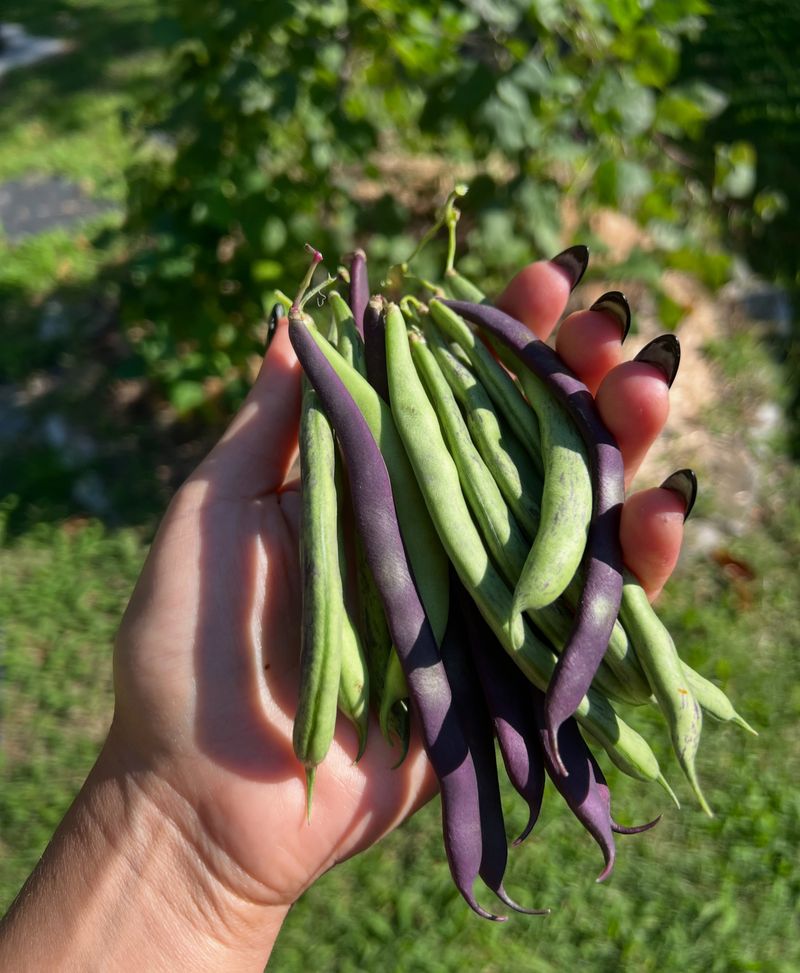
Those green pods wear purple streaks like snakeskin, and the marks vanish when cooked, a handy cue for blanching.
The flavor runs sweet, rich, and juicy, and it freezes without turning rubbery, which is rare among beans.
Sow seeds 1 inch deep and 4 inches apart in rows 30 inches apart, with a solid trellis ready.
Give it full sun and soil above 65 degrees.
Maturity lands around 60 to 73 days, then you’re picking several times a week.
The Texas A and M AgriLife Extension Master Gardener program notes its performance in hot, humid areas and through dry stretches, which makes it a genuinely tough pick for rough summers.
4. ‘Dragon’s Tongue’ Bush Bean: A Decorative Delight
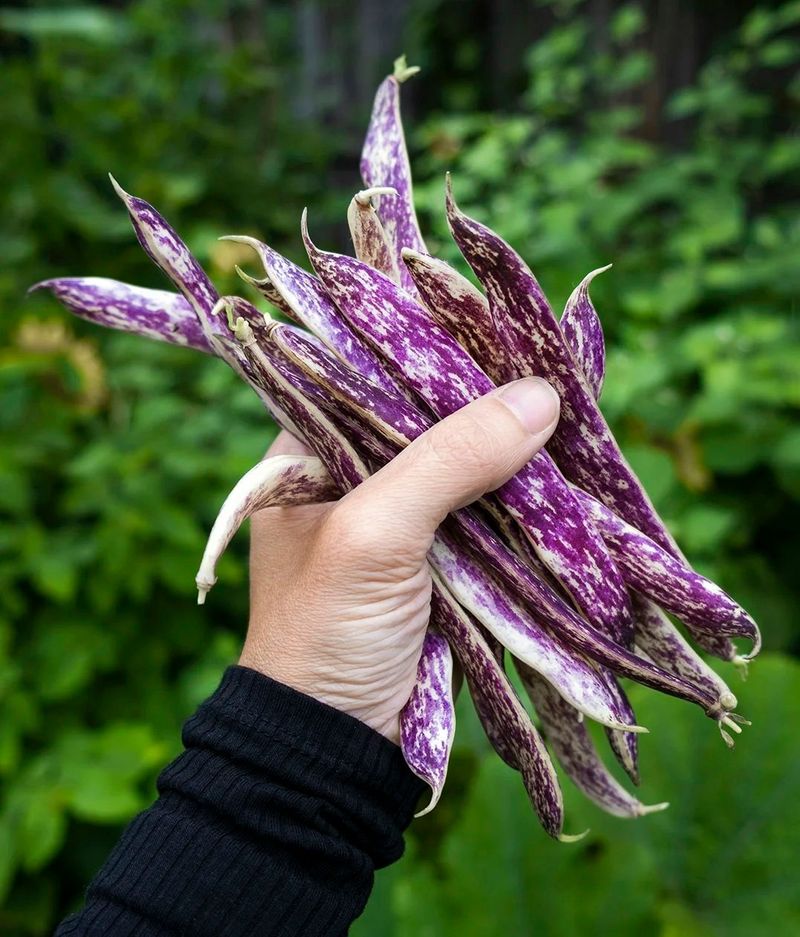
Some beans earn a spot on the plate before you even taste them.
If plain green is your whole idea of a bean, this Dutch heirloom will widen the picture.
It looks like candy and eats even better.
The ‘Dragon’s Tongue’ bush bean (Phaseolus vulgaris) shows off flattened, cream-yellow pods brushed with purple stripes.
The purple fades in the pot, but raw in a salad it’s a small piece of art.
Underneath the looks sits a rich, slightly sweet, nutty flavor with a firm snap.
It stays tender and stringless even as the pods size up, so it forgives you when life gets busy and picking slips a day.
These compact plants reach 2 to 3 feet and rarely need staking, which suits raised beds and tight yards.
Plant seeds 1 inch deep, 3 to 4 inches apart, in well-drained soil and full sun.
Harvest starts around 55 to 60 days, and it keeps giving over a long window.
Pick the pods near 6 inches, young and tender, for the best flavor whether you eat them fresh, sauteed, or pickled.
5. ‘Cherokee Trail Of Tears’ Pole Bean: A Living Legacy
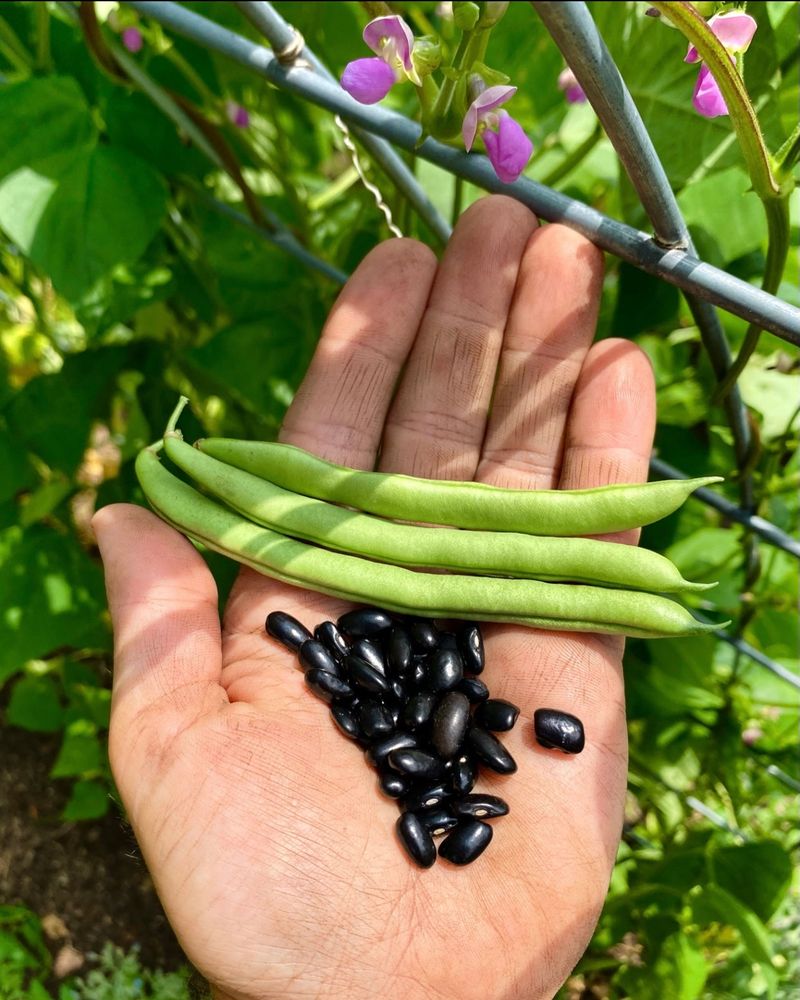
A bean sat in a family’s hands through one of the darkest chapters in American history, and it is still growing today.
That fact alone changes how a garden feels.
Some plants carry more than dinner.
Cherokee ancestors carried the ‘Cherokee Trail of Tears’ pole bean (Phaseolus vulgaris) during the forced relocation of 1838 and 1839, keeping a piece of home alive through unimaginable loss.
The vines climb 8 to 10 feet and open light purple flowers.
Its 6-inch pods run green with a faint purple wash, slim and tender and stringless when young, with a familiar, honest green-bean taste.
Let a few pods mature and they hand you shiny jet-black seeds, perfect for drying and rich in soups and stews.
Plant after your last frost, once soil holds at least 60 degrees, though 75 to 80 germinates best.
Sow seeds 1.5 inches deep, 2 to 3 inches apart, with a sturdy trellis waiting.
Snap beans arrive in 65 to 90 days.
Growing it is one quiet way to keep a resilient piece of history feeding people, right there beside your porch.