
The Prickly Pear Corner That Turns Your Texas Yard Into Roadrunner Habitat
Follow us on Google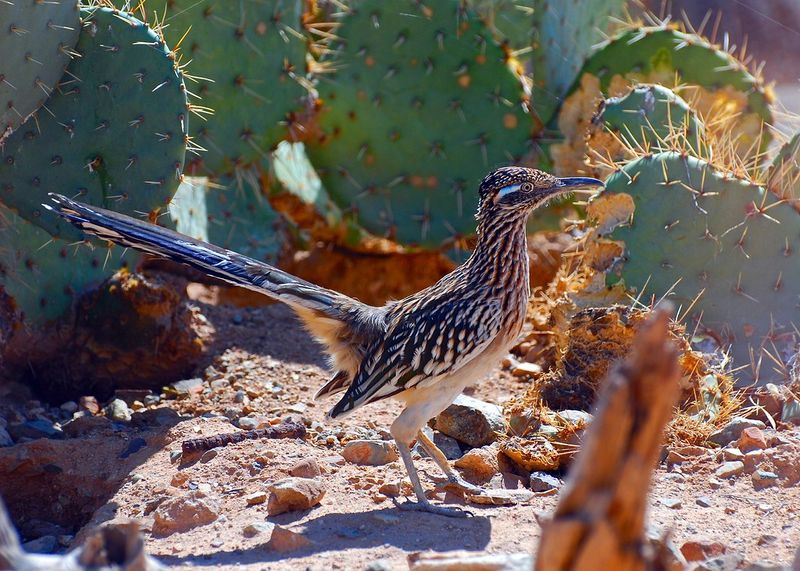
Most Texas yards have a forgotten corner baking in full sun where nothing much grows except weeds and regret.
That spot might actually be the best place you have got.
A locally appropriate native prickly pear planted there can add real, thorny cover that Greater Roadrunners use for concealment and that supports the insects and lizards they hunt.
One plant will not guarantee a roadrunner shows up, but it gives a passing bird one more reason to linger.
A Locally Native Prickly Pear Can Add Cover
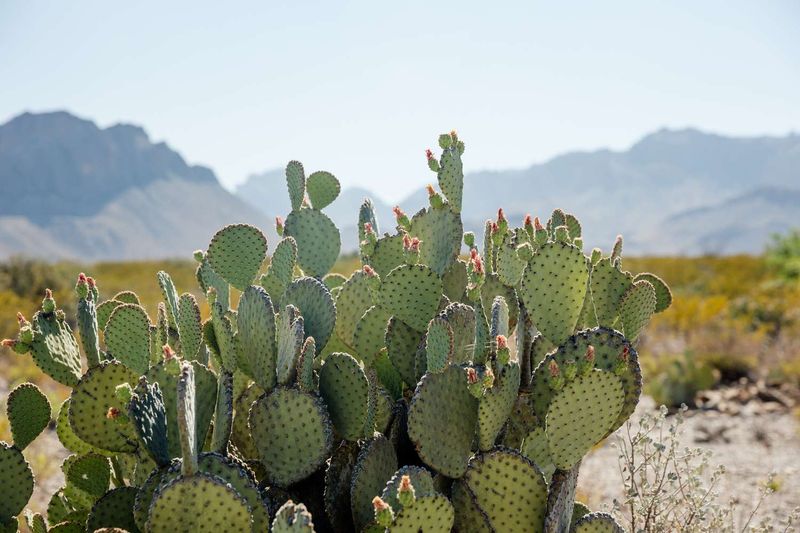
Walk past a dense, shin-high thicket of prickly pear and you will understand immediately why a roadrunner might slip into it.
The pads lock together into a low, impenetrable wall of spines and glochids that almost nothing can push through uninvited.
That structure is exactly what makes a locally appropriate native Opuntia worth planting.
The phrase “locally appropriate native” matters more than it sounds.
The common name prickly pear covers dozens of Opuntia species and cultivated forms, and not every plant sold under that name is equally native to your county, cold hardy in your zip code, or thorny enough to offer real cover.
Texas A&M AgriLife’s Earth-Kind plant selector divides the state into regional zones, and the right Opuntia for the Panhandle is not the same plant that thrives on the Gulf Coast or along the Rio Grande Valley.
Buy from a reputable nursery or a native-plant society sale, and ask specifically which species is in the pot.
A single loose pad stuck in the ground does not create meaningful cover.
Texas Parks and Wildlife Department notes that roadrunners may nest in cactus and thorny shrubs, and a mature, expanding clump offers far more concealment and potential nesting structure than one isolated pad ever will.
Give the planting a few seasons to fill in, and the cover value grows with it.
A dense clump can also support the food web around it.
USDA ecological-site data specifically describes roadrunners thriving in communities that include mesquite and prickly pear, and notes that the birds may nest in larger prickly pear plants.
What it does not say is that one cactus corner will turn a standard suburban lot into complete roadrunner territory.
Think of the planting as one useful habitat layer added to a much larger landscape.
Pair Thorny Cover With Open Hunting Ground
Here is where a lot of well-meaning gardeners get it wrong.
They plant cactus, then plant more cactus, then add a row of Texas sage, and wind up with a solid wall of vegetation that looks great in a drought but gives a roadrunner almost nothing to work with.
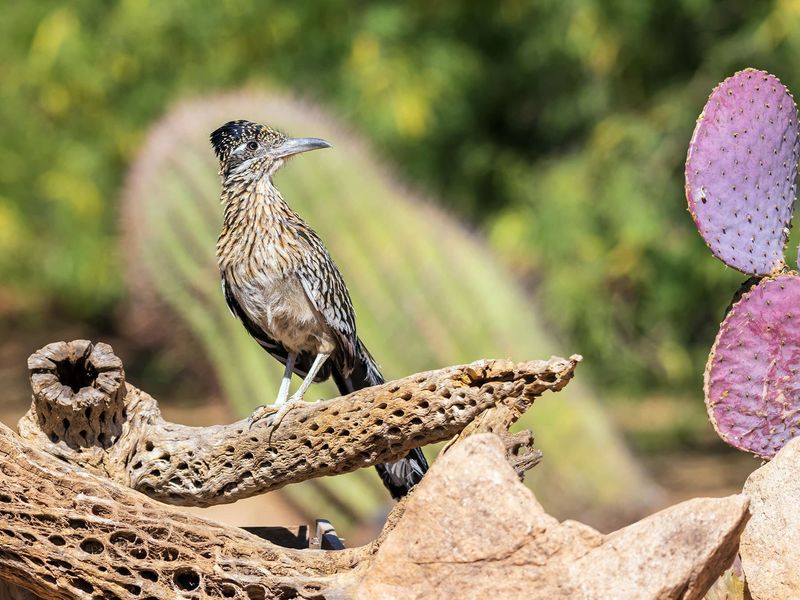
These birds are runners, not hiders.
Texas Parks and Wildlife Department describes roadrunners as birds that use open ground for hunting, with scattered trees, bushes, or cactus nearby for cover.
The hunting happens in the open.
The cover patch is where a bird can conceal itself between runs, watch for prey, and potentially nest.
Those two zones need to sit beside each other, not replace each other.
Texas research backs that layout.
A study of roadrunner habitat in north-central Texas found that birds selected mesquite woodland and mesquite savanna and actually avoided extensive grass-forb cover.
A separate West Texas study found that habitat selection varied by vegetation type and landscape position.
Neither study found that packing in more cactus improved things.
The pattern across both is open foraging space beside brush or cactus, not a monoculture of either.
Audubon’s roadrunner profile similarly emphasizes a mix of open areas and dense low cover.
So the practical layout is this: plant the cactus clump in one corner and keep the ground beside it bare, graveled, or very sparsely planted.
That open edge is where a roadrunner will actually hunt if one comes through.
The cactus is the base camp, not the whole operation.
Choose The Right Opuntia For Your Region
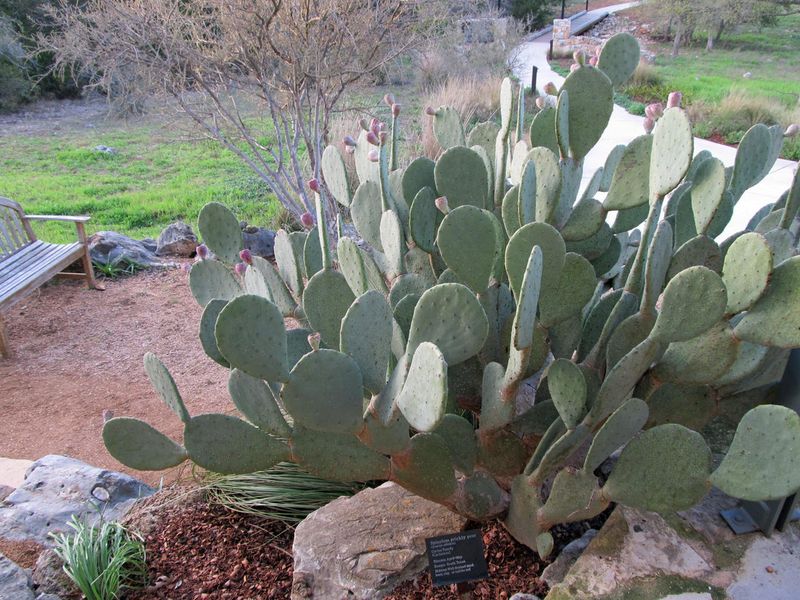
Buying the right prickly pear starts with admitting that the common name alone tells you almost nothing useful.
A bin labeled “prickly pear” at a big-box garden center might hold an ornamental cultivar bred for colorful pads, a non-native species that barely survives a Panhandle winter, or a perfectly appropriate native Opuntia that will thrive for decades.
You genuinely cannot tell from the label.
The Texas A&M AgriLife Earth-Kind plant selector divides the state into distinct regional zones, and what works in one zone may struggle or spread aggressively in another.
In the Panhandle and North Texas, cold hardiness matters most.
In East Texas with its acidic sandy soil, drainage around cactus roots can actually be easier to manage than in blackland clay.
Along the Gulf Coast, occasional hurricane rainfall and high humidity change the equation entirely.
Match the species to your county, not to a general Texas label.
Texas A&M AgriLife Extension describes prickly pear as growing across habitats ranging from dry rocky soils to heavy clay, which reflects how broadly the genus adapts.
But broadly adapted does not mean every species fits every spot.
Ask your nursery staff for the botanical name, look it up against your region, and verify the mature size of that specific plant.
The Texas Master Gardener native and adapted plant list cites prickly pear with full-sun preference and low water needs, and attributes a 3-to-5-foot mature size to the listed entry.
Apply that size range only to the specific species or cultivar on that list, and check the dimensions of whatever plant you actually bring home.
A reputable native-plant nursery or a Texas Native Plant Society sale will give you a named species and honest regional advice that a roadside find or an unlabeled ornamental simply cannot.
Site The Patch Where Hunting Stays Open
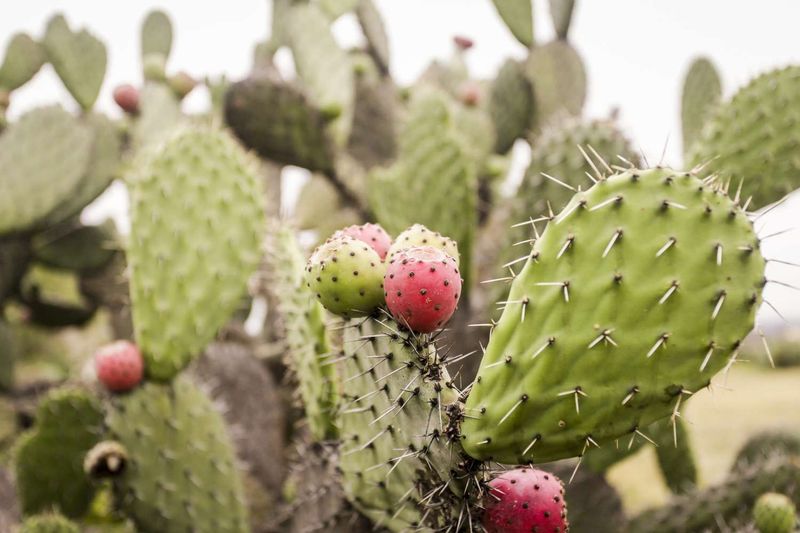
Before you move a single plant, walk your yard and find the sunniest corner that is also naturally away from the back porch, the kids’ trampoline, and the path to the gate.
That combination of full sun and low foot traffic is your target zone.
Prickly pear needs at least 6 hours of direct sun daily to stay dense and healthy, and a dense healthy plant is what actually provides cover worth using.
The Texas Master Gardener plant list confirms full-sun preference and low water needs, so a spot that bakes all afternoon is genuinely an asset here, not a problem.
Leave at least 10 to 15 feet of open or sparsely planted ground beside the cactus.
Cornell Lab of Ornithology’s roadrunner account and Audubon’s field guide both describe roadrunners using open areas for hunting with cover nearby, so that open edge is not wasted space.
Soil drainage is the factor that kills more prickly pear than any Texas summer ever does.
In the blackland clay of North and Central Texas, water sits around cactus roots far longer than the plant tolerates.
In the shallow caliche of the Hill Country or West Texas, drainage can actually be adequate, but rooting depth is limited.
Arizona Cooperative Extension specifically recommends planting on a raised mound when soil is poorly drained or clayey, and that advice translates directly to Central Texas yards that stay soggy after a spring thunderstorm.
A mound does not need to be dramatic.
Raising the planting area 6 to 8 inches above the surrounding grade with sandy soil or decomposed granite mixed in is often enough to keep roots from sitting in standing water.
Keep the patch buffered at least 4 to 5 feet from any walkway, fence line with foot traffic, or area where children and pets play.
Glochids travel farther than you expect, and a buffer is the simplest safety measure you have.
Propagate And Handle Pads Safely
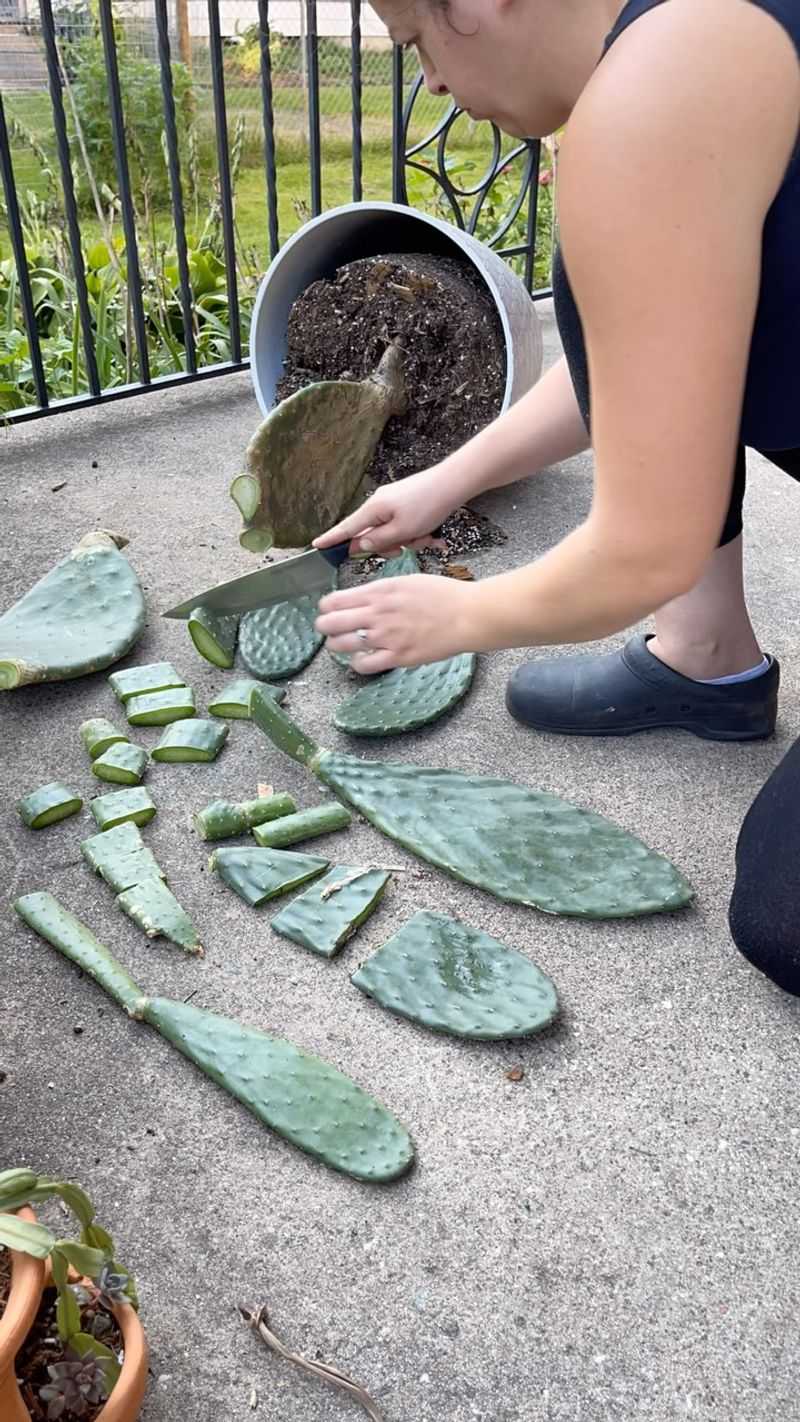
Starting a prickly pear from a healthy pad is genuinely one of the easier propagation projects in Texas gardening.
The plant wants to reproduce this way.
A pad that falls off a mature plant and lands in decent soil will often root on its own, which is part of why Opuntia spreads so readily across the landscape.
The process starts with choosing a firm, undamaged pad from a healthy parent plant.
Arizona Cooperative Extension’s propagation guide advises removing Opuntia cuttings at the joint between pads and letting the cut end dry in a shaded spot for 1 to 2 weeks before planting.
That drying period, sometimes called callusing, helps prevent rot where the cut tissue meets soil.
Skip it and you are gambling with the one step that matters most.
Timing matters too.
Rooting is generally more reliable when nighttime temperatures are at least 60 degrees Fahrenheit, which in most of Texas means late spring through early fall.
That does not mean propagation is impossible below that threshold, but success rates drop when nights stay cool.
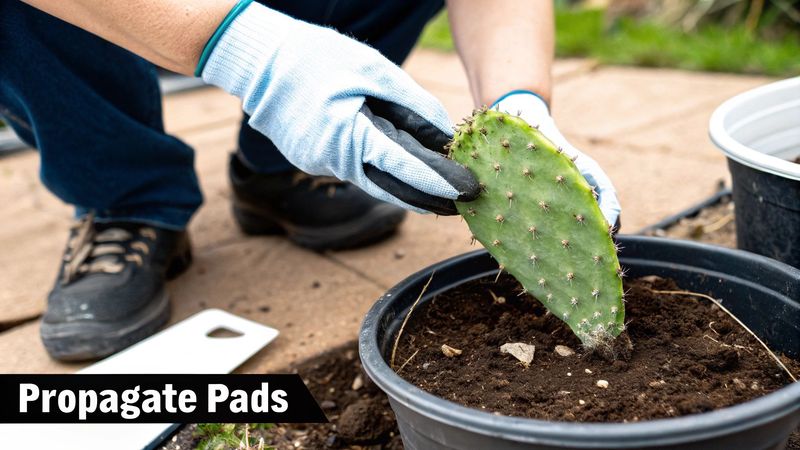
University of Arizona Extension’s cactus care guide recommends planting the lower portion of the pad deeply enough to stay upright, commonly about one-half to three-quarters of the lowest pad’s depth in well-draining soil.
Now for the part that most gardeners learn the hard way.
Arizona Cooperative Extension warns that ordinary gloves may not provide reliable protection against prickly pear, because the tiny barbed glochids can work right through fabric.
Use metal tongs or wrap a section of old garden hose around the pad to grip it safely.
Additional Arizona Extension safety guidance reinforces that bare hands are never the right tool for handling prickly pear pads, no matter how careful you think you are being.
Set the pad in a spot with good air circulation while it calluses, keep it out of direct rain during that window, and plant it when the cut end looks dry and slightly sealed.
Establish The Plant Without Overwatering
The first few weeks after planting are the only time a prickly pear will ask anything significant of you in the water department.
A newly planted pad or transplanted young plant needs occasional moisture while its roots reach into the surrounding soil.
Water once every 1 to 2 weeks during that establishment window, and let the soil surface dry out between each application.
Once the plant shows a new pad growing, it has rooted and the rules change.
Texas A&M AgriLife Extension’s cactus management guidance and University of Arizona Extension’s cactus care recommendations both point toward the same principle: established prickly pear should dry between irrigations and should not remain saturated or waterlogged for prolonged periods.
Frequent shallow watering is actually more damaging than neglect.
Texas weather does not cooperate with a fixed calendar.
Arizona Cooperative Extension’s transplanting guide recommends watching the plant rather than the calendar, and that advice fits Texas conditions perfectly.
A summer in San Antonio might bring 6 weeks without meaningful rain, while a Gulf Coast yard near Corpus Christi could absorb 6 inches in a single August storm.
After a heavy downpour, check whether water pools around the base of the plant.
If it does, that mound you built at planting is doing its job, and no supplemental water is needed until the soil dries again.
Cold snaps can cause pads to look soft and slightly shrunken, which alarms new growers.
Texas A&M AgriLife Extension notes that prickly pear is broadly adapted across Texas habitats, and most locally native species recover from brief freezes without intervention.
Wait until spring to assess real damage before cutting anything away.
A healthy, expanding clump will offer far better roadrunner cover than a stressed or rotting plant ever could.
Protect The Food Web Around The Cactus
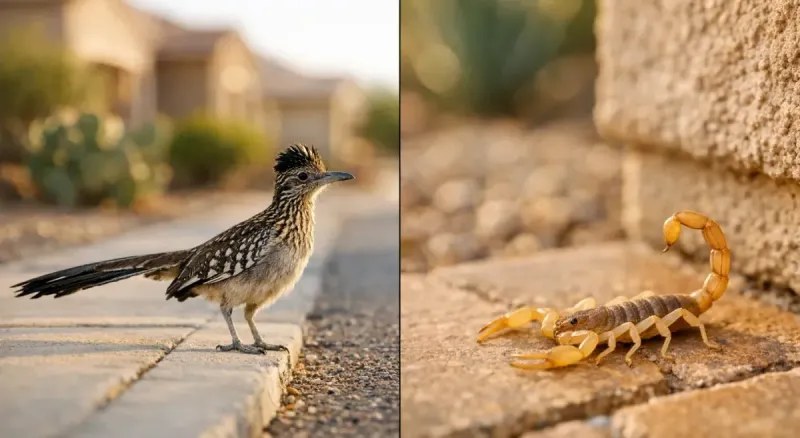
A prickly pear clump sitting inside a yard that gets sprayed with broad insecticide every other month is not roadrunner habitat.
It is a thorny decoration.
The food web around the cactus matters as much as the plant itself, and Texas Parks and Wildlife Department warns that pesticides can harm birds directly or by poisoning the insects and small animals they eat.
Reducing broad pesticide applications is the single most impactful thing most Texas homeowners can do for yard wildlife.
That does not mean abandoning pest management entirely.
It means choosing targeted, least-toxic approaches for specific problems rather than blanket spraying.
TPWD’s Partners in Flight guidance identifies pesticide reduction as a key action for supporting bird populations, and the logic is straightforward: fewer poisoned grasshoppers and lizards means more food available for an opportunistic hunter like a roadrunner.
The diet of a Greater Roadrunner is genuinely varied.
Cornell Lab’s life history account describes the birds eating insects, lizards, snakes, rodents, scorpions, small birds, seeds, and fruit.
A TPWD study found reptiles in 33 percent of examined roadrunner stomachs, including Texas horned lizards and multiple snake species.
A yard that supports roadrunners is hosting an opportunistic predator that will eat whatever is available, including lizards and small birds you may enjoy watching.
That is natural food-web behavior, not a flaw in the plan, but it is worth knowing before you commit.
Outdoor cats are a separate problem entirely.
TPWD identifies them as a major threat to yard wildlife, and a cat positioned near a cactus patch will undermine everything else you have done.
Keep cats indoors or in an enclosed catio.
A shallow, frequently refreshed birdbath placed well away from shrubs or fences where a cat could crouch can add broader wildlife value to the yard, as Audubon’s wildlife garden guidance recommends, though water alone is not a roadrunner-specific draw.
Build The Feature And Let The Landscape Decide
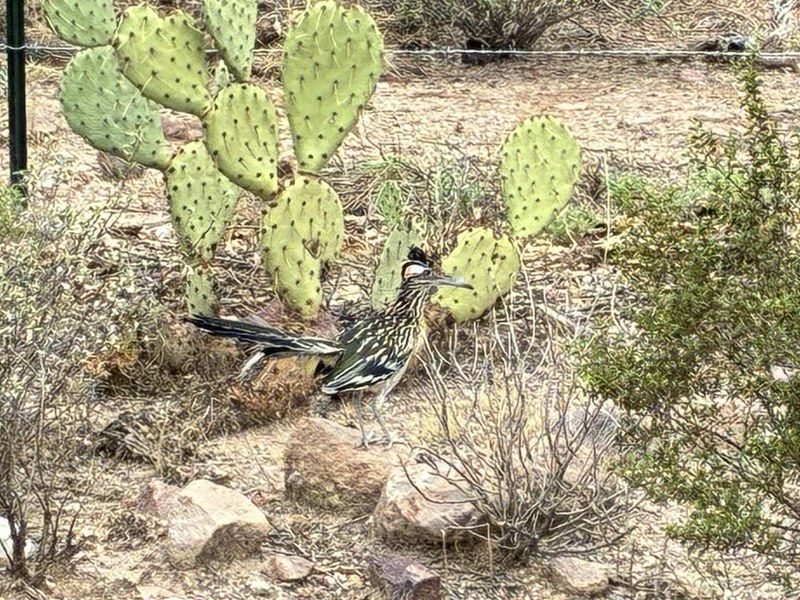
Greater Roadrunners live in Texas year-round.
They do not migrate.
The Texas Breeding Bird Atlas records breeding activity from early March through late October, with the possibility of multiple nesting attempts in a good year.
A roadrunner in your general neighborhood is not a seasonal visitor passing through, it is a resident working a territory every day of the year.
That territory is large.
A West Texas study found home ranges of roughly 43 hectares, and research in north-central Texas found ranges of about 80 to 90 hectares.
A standard suburban backyard covers a fraction of one hectare.
Your prickly pear corner is one small stop on a very long daily circuit, not a territory in itself.
What a finished patch actually does is give a passing or neighborhood bird one more credible option.
Texas Parks and Wildlife describes roadrunners using open ground with scattered cover nearby, and a dense cactus clump beside open hunting space fits that description honestly.
Add a healthy food web, keep cats out of the equation, and you have built something real.
Expect patience to be the main ingredient.
A roadrunner may pass through once and never return, or it may work your block regularly without ever sitting still long enough for a good look.
Build the feature well, keep the surrounding yard as alive as you can manage, and let the larger landscape determine whether a bird uses it.
That quiet uncertainty is part of what makes a sighting, if it comes, actually worth something.