
The Meaning Behind Seeing Cardinals In Your North Carolina Yard Goes Deeper Than Most People Think
Follow us on Google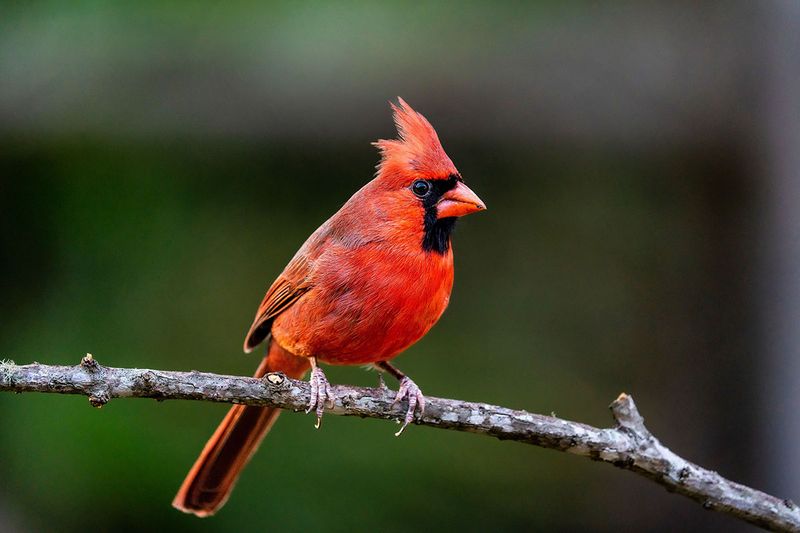
You step onto the back porch with your coffee, and there it is, a flash of red so bright it stops you mid-sip.
A Northern Cardinal is sitting in the dogwood like it owns the place, and for a second you forget what you were doing.
That moment feels like more than coincidence, and honestly, you might be right on both counts.
There is a plain, satisfying wildlife explanation for why that bird chose your yard, and there is room beside it for whatever the sighting means to you personally.
The Bird Is a Northern Cardinal
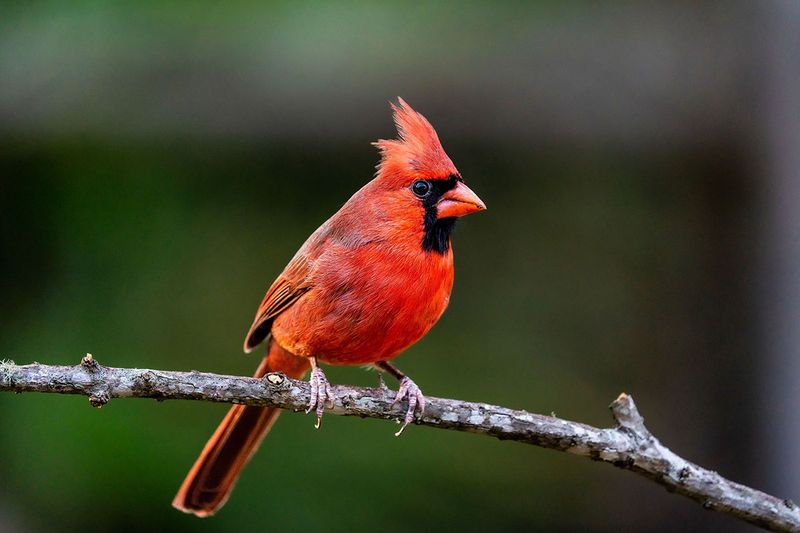
That red bird is the Northern Cardinal, Cardinalis cardinalis, and it is about as North Carolina as a bird can get.
Cornell Lab of Ornithology’s life history account confirms that cardinals are nonmigratory, year-round residents, meaning the bird on your feeder in January is not passing through.
It lives here, and it occurs widely throughout North Carolina.
The male is the one that stops traffic.
He carries that unmistakable all-red plumage with a pointed crest and a black mask that runs from his face down to his throat.
The female is mostly warm brown with reddish tinges on her crest, wings, and tail, and she is quieter-looking but just as present in the yard.
Both sexes have that heavy orange-red bill built for cracking seeds.
Cardinals are not shy about showing up in residential spaces.
They use backyards, forest edges, hedgerows, shrubby ornamental landscapes, and dense thickets with equal comfort.
You are more likely to spot a male because that red coat catches the eye, but a female may have been visiting your yard for weeks without you noticing.
During breeding season, a male may also attack his own reflection in a window or a car mirror, mistaking it for a rival, so a cardinal pecking at your glass is not a mystery message.
It is a bird doing what birds do.
Males hold their bright red color through every season, which is part of why a winter sighting feels so striking against bare branches.
That year-round visibility is one reason the cardinal feels so familiar and so personally significant to so many North Carolina families.
Your Yard Is Offering Something Useful
A cardinal does not show up in your yard by accident.
It showed up because your property is genuinely offering something it needs, and that is actually a compliment to your outdoor space.
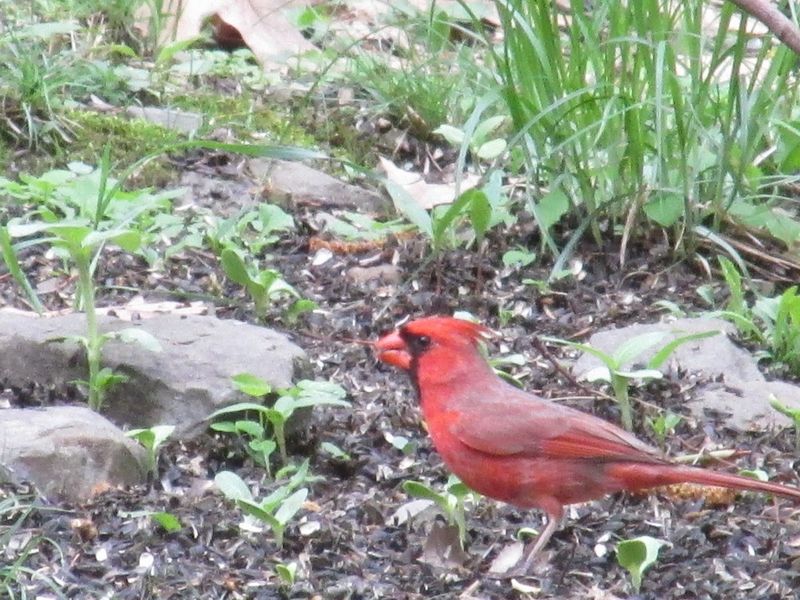
Cardinals eat seeds, fruit, and insects, and they forage mostly on or near the ground, hopping through leaf litter or low branches in search of a meal.
If your yard has any of those things within reach, you are already on the bird’s regular route.
Food is the most obvious draw.
Sunflower seeds, berries from dogwood or holly, wild grape, and blackberry are all fair game.
Insects matter too, especially when adult cardinals are feeding nestlings in spring and early summer, because protein-rich bugs fuel that growth in ways seeds alone cannot.
A yard with some leaf litter, a few berry-producing shrubs, and a little less tidiness than a golf course is genuinely attractive habitat.
Cover and nesting space pull cardinals in just as strongly as food does.
Dense shrubs, small trees, and layered vegetation give them safe places to rest, hide from hawks, and raise a brood.
A yard that is all open lawn with a single feeder hanging in the middle of it offers food but very little else.
Water is the third piece.
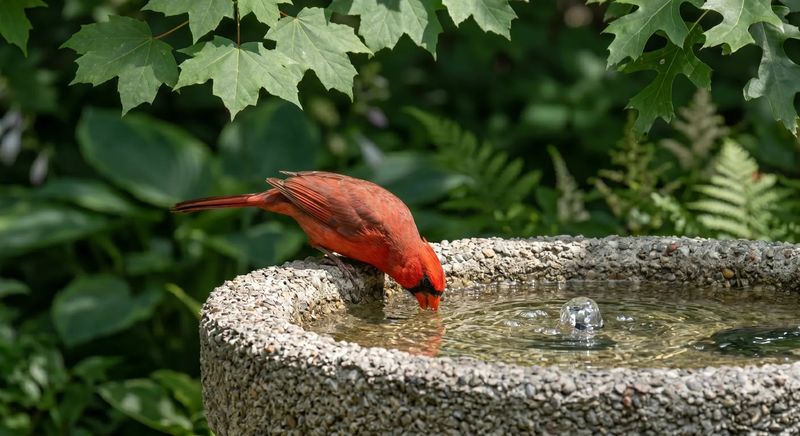
A clean, shallow birdbath can make your yard a reliable stop, especially during dry stretches.
NC State Extension identifies food, water, and cover as the three basic requirements of backyard bird habitat, and cardinals respond to all three.
Weather, predators, and the time of year can all shift when and how often you notice the birds, but the underlying pull is always the same: your yard has what they need.
Personal Meaning Can Sit Beside Biology
Here is where the conversation gets more personal.
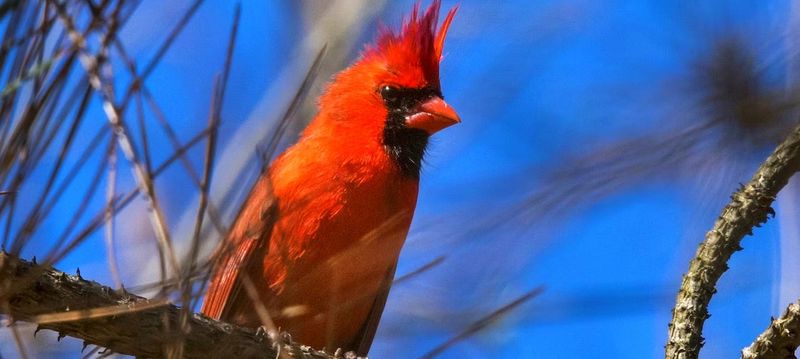
Many people, after a loss, look out the window and feel something shift when a cardinal appears.
Some interpret it as comfort, a sign of hope, or a sense that someone who died is close by.
That interpretation is a contemporary belief held by some people, not a conclusion from ornithology, but that does not make the feeling any less real or worth honoring.
Grief research actually supports the reality of those moments, even if it does not explain them as supernatural.
Researchers who study continuing bonds after bereavement describe those connections as involving memory, meaning-making, spiritual belief, and perceived closeness, all of which are genuine parts of how people process grief.
The science is not saying a bird carries a message.
It is saying that the human experience of feeling connected to someone who died is common and meaningful in its own right.
So what do you do with that?
You do not have to choose between the two explanations.
A cardinal can be a nonmigratory wild bird responding to the shrubs and seeds in your yard, and it can also be the thing that made you stop and think about someone you loved.
Both of those truths can occupy the same porch step at the same time.
Nobody gets to tell you what a sighting must mean to you personally.
What this article can honestly offer is the wildlife science on one side and a respectful acknowledgment of the human side on the other, and leave the interpretation exactly where it belongs, with you.
North Carolina Gives the Cardinal State Symbolism
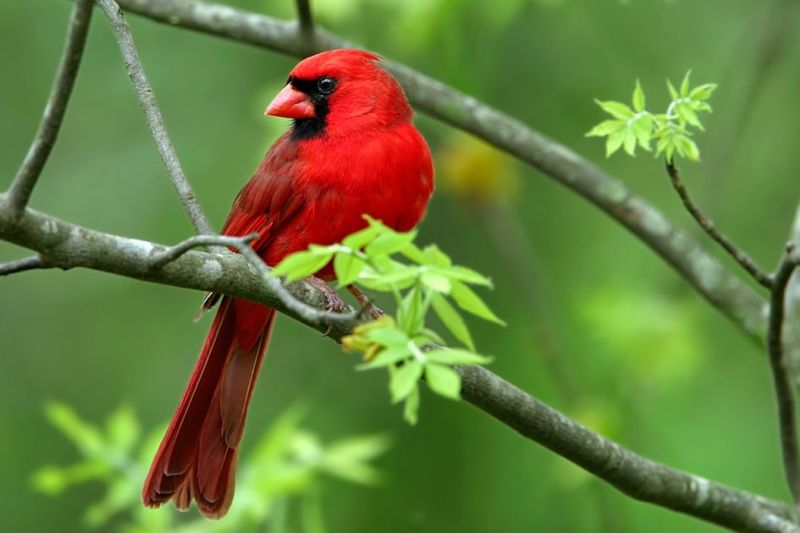
North Carolina has a recognized, official connection to this bird.
The General Assembly named the Northern Cardinal the state’s official state bird in 1943, and that designation has been part of the state’s identity ever since.
Whether that history adds something to the moment when you spot one in your yard is a personal call, but the symbolic association is real and long-standing.
On the cultural side, it is worth being precise about where specific interpretations come from.
A Cherokee Nation educational resource describes the cardinal as culturally significant within Cherokee tradition, with a distinct interpretation involving news, visitors, and death.
That teaching belongs specifically to that source and that community, and it should not be borrowed, blended, or presented as a universal Indigenous belief.
Traditions differ by nation, community, and source, and combining them into a single generalized meaning does a disservice to each distinct culture.
What this means practically is that a reader who is Cherokee, or who has a connection to that tradition, may bring a specific and layered understanding to a cardinal sighting that is different from a neighbor’s experience a few streets over.
Both responses are valid.
Neither one is the official answer.
The state-bird designation gives North Carolinians a shared civic association with the cardinal that people in other states do not have in quite the same way.
For some readers that adds a layer of local pride to the sighting.
For others it is just an interesting footnote.
Either way, the bird was here long before 1943, doing exactly what it does now, living in your shrubs and eating your sunflower seeds.
Build Cover Before You Add Seed
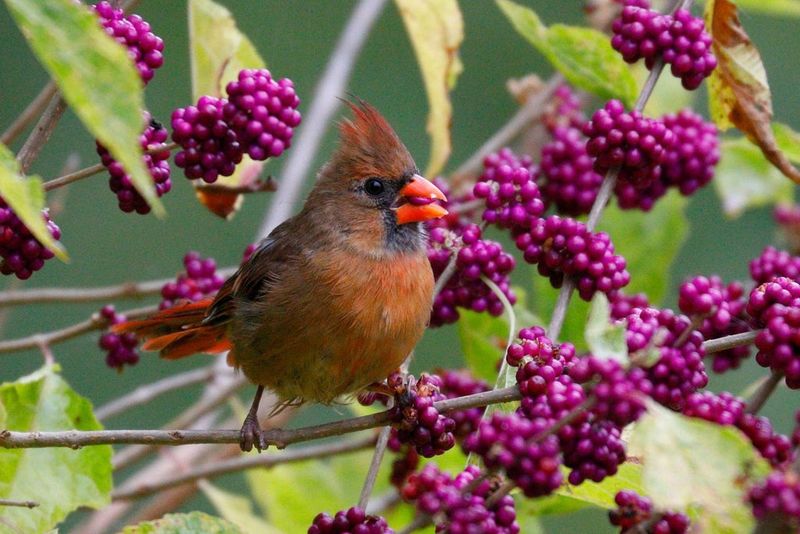
A single plant will not bring cardinals to your yard, and no one plant is a guaranteed magnet.
What actually works is layering: shrubs at different heights, small trees overhead, some groundcover below, and a corner or two that you let go a little wild.
NC State Extension’s backyard bird habitat guidance frames it around three basics, food, water, and cover, and the cover piece is where most tidy suburban yards fall short.
Native plants do the most work because they support the insects that cardinals feed to their young, and they produce the berries and seeds that sustain adults year-round.
Flowering dogwood (Cornus florida) offers spring blooms and fall fruit.
American holly (Ilex opaca) holds berries through winter when other food is scarce.
Yaupon holly (Ilex vomitoria) is especially tough and productive in the Coastal Plain.
Eastern redcedar gives dense year-round cover.
Redbud, oaks, wax myrtle, wild grape, sumac, blackberry, and native grasses round out a layered planting that feeds and shelters birds across every season.
Plant choice has to match your site.
NC State Extension’s native plant landscaping guidance lists yaupon holly as particularly suited to the Coastal Plain, while flowering dogwood, redbud, and American holly perform across multiple North Carolina regions.
Light, moisture, soil type, and your specific region all affect which plants will actually thrive.
A plant that flourishes in Piedmont red clay may struggle in sandy Sandhills soil, and a shade-tolerant shrub will sulk in a full-sun spot.
The payoff for getting the layers right is a yard that works for cardinals whether or not you ever hang a feeder.
Natural food and cover are a more durable foundation than seed alone, and they support a whole community of birds and beneficial wildlife alongside the cardinals.
Feed Cardinals Without Creating New Risks

Feeding cardinals is genuinely satisfying, and black oil sunflower seed is the most practical place to start.
Cardinals prefer a platform feeder or a covered hopper style where they have room to perch and crack seeds without balancing on a narrow tube.
NC State Extension confirms that cardinals commonly use above-ground platform and covered feeders and notes that feeder placement and maintenance both affect how safely birds can use them.
Placement matters more than most people realize.
Put the feeder within 10 feet of shrubs or brushy vegetation so birds have a quick escape route if a hawk comes through.
But do not tuck it deep inside dense vegetation, because that same cover lets cats approach without being seen.
Outdoor cats are one of the most significant threats to songbirds, and keeping cats indoors is the most direct way to protect the birds visiting your yard.
Maintenance is where feeding can go wrong fast.
Fish and Wildlife Service notes that dirty feeders can spread disease among wild birds, and that risk is real enough to take seriously.
Clean your feeder at least every 2 weeks under normal conditions, and clean it sooner whenever it looks visibly soiled or wet seed has started to clump.
Spilled seed on the ground can attract rodents, and a busy feeder near a window can increase collision risk if placement is not thought through.
Feeding is optional support, not a requirement for a cardinal-friendly yard.
Cornell Lab’s feeder placement guidance is worth reading before you hang anything.
A feeder run well adds real value, but a feeder run poorly can create more problems than it solves, which is exactly why habitat comes first.
Make Windows and Water Safer
Windows are one of the quietest hazards in a cardinal-friendly yard, and most homeowners do not think about them until a bird hits the glass.
The fix starts with feeder placement.
Cornell Lab recommends placing feeders either within 3 feet of a window or more than 30 feet away, because the middle distance is where birds build up enough speed to cause a serious injury on impact.
If a window is in a risky spot, exterior treatments are the most effective solution.
Fish and Wildlife Service recommends exterior window patterns with marks at least one-quarter inch wide and spaced no more than 2 inches apart, because birds need to see the visual barrier on the outside surface of the glass.
Decals or stickers placed only on the inside of a window are much less effective.
Exterior screens, exterior window films, or paint patterns applied to the outside of the glass all work better than interior decorations alone.
Water deserves the same care as food and cover.
A birdbath should be shallow, roughly 2 to 3 inches at the deepest point, with a rough or textured surface that gives birds secure footing.
Change the water every few days and scrub the basin at least once a week, or sooner if it looks cloudy or dirty.
Algae and standing water can harbor bacteria, so regular cleaning protects the birds you are trying to attract.
If you find a bird on the ground after a window strike, do not pick it up bare-handed.
Keep children and pets away, give the bird quiet time in a sheltered spot away from cats, and contact a licensed wildlife rehabilitator or your state wildlife agency if it shows signs of injury such as bleeding, labored breathing, or an inability to hold its head up.
FWS guidance on bird-window collisions notes that birds can appear to recover and still have internal injuries, so cautious observation matters.
A cardinal can visit your yard for entirely ordinary biological reasons and still carry a meaning that feels anything but ordinary, and both of those things can be true at once.