
The Pennsylvania Native Wildflower That Spreads Aggressively In The Best Possible Way Along A Sunny Fence
Follow us on Google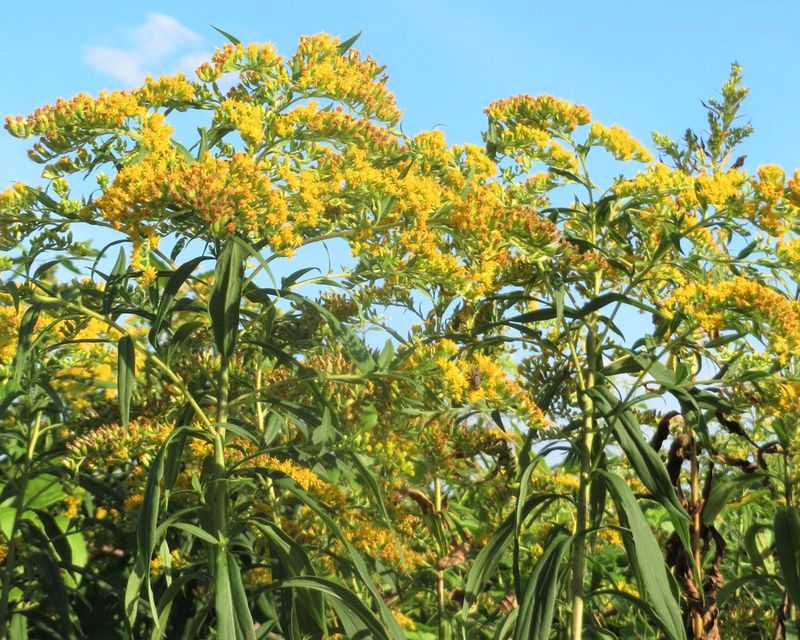
Walk the back edge of a Pennsylvania yard in late summer and you might notice a tall, golden-plumed plant doing exactly what you wish the rest of the fence line would do: filling in, standing up, and not asking for much.
That plant is very likely Canada goldenrod, Solidago canadensis, a native Pennsylvania wildflower that spreads with real purpose.
Most gardeners hear the word aggressive and back away, but along a roomy, sun-baked boundary where nothing else wants to grow, that same energy is exactly what you need.
Canada Goldenrod Fits The Headline
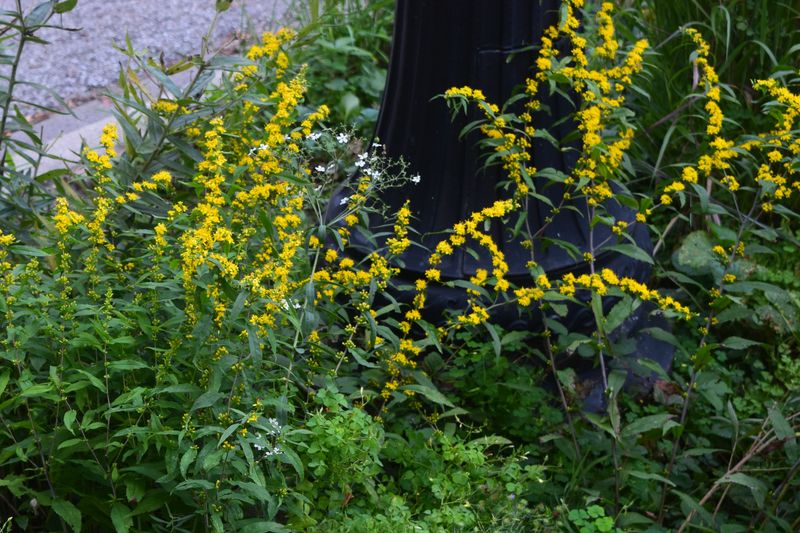
If you have ever stared at a long, hot fence line and wondered what on earth could fill it without constant babysitting, Canada goldenrod is the most honest answer a Pennsylvania gardener can get.
Solidago canadensis is native across much of North America, and the Pennsylvania Natural Heritage Program’s vascular plant checklist confirms it among the state’s documented native species.
That nativity matters because it means the plant is already adapted to Pennsylvania soils, seasons, and rainfall patterns rather than fighting them.
The recommendation here is specific.
Canada goldenrod fits a spacious, naturalized fence line, a roadside strip, a slope, or a property edge where broad coverage is the goal.
It is not the right pick for a tidy 12-inch border beside a patio or a gate, and it is genuinely not a one-size-fits-all plant for every Pennsylvania yard.
Here is where the word aggressive deserves a closer look.
Canada goldenrod, as a native plant in its home range, does not meet that definition, even though it spreads with real force.
Aggressive growth and invasive status are two different things, and confusing them leads gardeners to pull out exactly the plants their pollinators need most.
That is a candid acknowledgment, not a warning to avoid the plant entirely.
Other native Solidago species exist that stay smaller and spread more slowly, and those will come up later as options for tighter spaces.
Its Spread Creates Broad Boundary Coverage
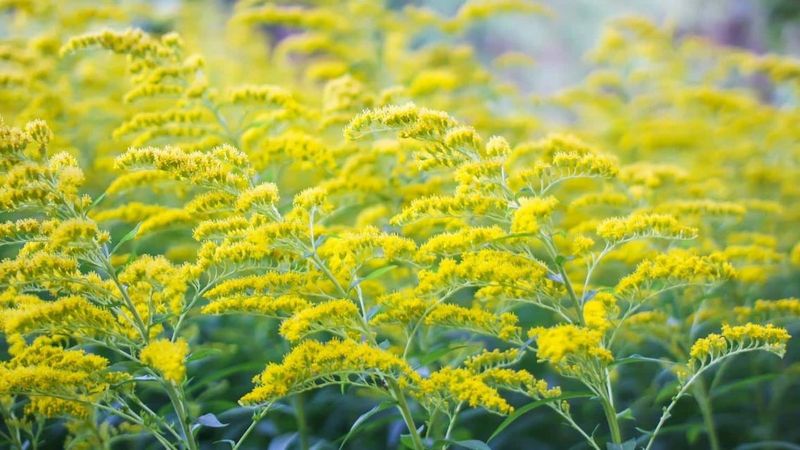
Canada goldenrod does not politely stay where you put it.
Those two routes of spread working together are exactly why a single nursery plant can become a full fence-line planting over several seasons.
The dimensions are worth knowing before you plant.
Canada goldenrod commonly reaches about 4 to 7 feet tall and may spread about 4 to 5 feet or farther over time, depending on soil quality, moisture, and the specific plant you buy.
That height makes it a back-of-border plant, not a front-row specimen.
Place it where it has room to move outward without immediately bumping into a lawn, a neighbor’s bed, or a path you use every day.
Think of a hot, dry fence line the way you would think of a job nobody else wants.
Missouri Botanical Garden confirms that Solidago canadensis tolerates full sun and dry to average soil conditions, which makes it genuinely useful along a south- or west-facing fence where the ground bakes in July and August and most ornamentals sulk.
The result of that spread, given a suitable site, is relatively low-input coverage after establishment.
That phrase matters.
Low-input is not the same as free, maintenance-free, or guaranteed.
You will still need to monitor the edges, remove unwanted shoots, and clip seed heads before they ripen if containment is part of your plan.
Penn State Extension describes native perennials as potentially low-input after establishment, not completely care-free, and that honest framing should travel with every goldenrod planting.
Late-Season Flowers Justify The Space
Physical coverage alone would not be enough reason to give a forceful spreader a permanent home along your fence.
The flowers are the second argument, and they arrive at the moment the garden most needs them.
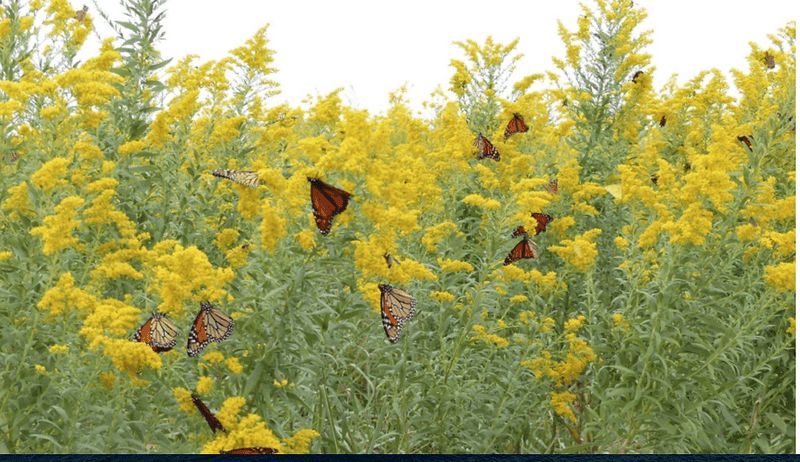
Goldenrod blooms from late summer into fall, right when most spring and summer perennials have finished and the yard can start to feel a little empty and brown.
Penn State Extension explains that goldenrod provides nectar and pollen for a wide range of native insects, including bees, wasps, beetles, and butterflies, at a time when fewer flowering plants are available.
For Pennsylvania gardeners trying to support native pollinators through the full season, that timing actually fills a gap that most ornamental plantings leave open.
Native bees preparing for winter, migrating monarchs passing through the central valleys or the Susquehanna corridor, and late-season beetles all benefit from a plant that is still offering food in September and October.
The site still has to fit.
Full sun means at least 6 hours of direct sunlight per day, and performance depends on drainage, moisture, and the specific species or cultivar you choose.
A goldenrod planted in a low spot that collects runoff from a downspout is not working with the same conditions as one on a dry, south-facing slope in the Laurel Highlands.
The USDA plant guide notes that Canada goldenrod is adapted to a range of soil types but performs best in well-drained conditions.
Match the plant to the actual site you have, not the ideal one you wish you had.
Match The Goldenrod To The Available Room
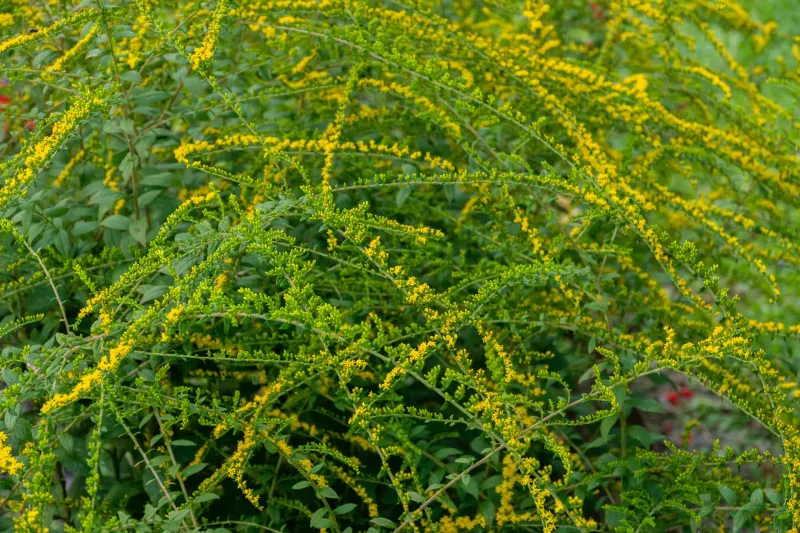
Goldenrod is a genus with dozens of species, not a single plant with one predictable behavior.
Treating every goldenrod as interchangeable with Canada goldenrod is the fastest way to end up with a plant that has outgrown its welcome by midsummer of the second year.
Penn State Extension specifically recommends researching the species or cultivar before buying because growth habits differ substantially across the Solidago genus.
Canada goldenrod is the right match for a roomy, naturalized boundary where movement is acceptable.
Shorter or more clump-forming Pennsylvania-native species are the better pick near a lawn edge, a walkway, a patio, a gate, or a neighbor’s property line.
Two documented Pennsylvania-native examples worth researching are stiff goldenrod (Solidago rigida) and blue-stemmed goldenrod (Solidago caesia).
Penn State Extension highlights blue-stemmed goldenrod as a shade-tolerant option and stiff goldenrod as a more upright, clump-forming choice that tends to stay put better than its taller relatives.
Neither is a perfect substitute for Canada goldenrod’s forceful coverage, but both are genuinely more manageable in a confined space.
The Pennsylvania Natural Heritage Program’s plant checklist can help you confirm which Solidago species are native to the state before you buy.
A 12-inch strip beside hardscape is a poor match for any rhizomatous plant.
The roots do not recognize the edge of a sidewalk as a boundary, and once goldenrod rhizomes reach a crack or a soft soil margin, they will use it.
Penn State Master Gardener resources confirm that goldenrod’s value is highest when it has room to naturalize rather than when it is squeezed into a narrow formal strip.
Give the plant the space it needs or choose a different species for the spot you have.
Plant It While The Soil Is Workable
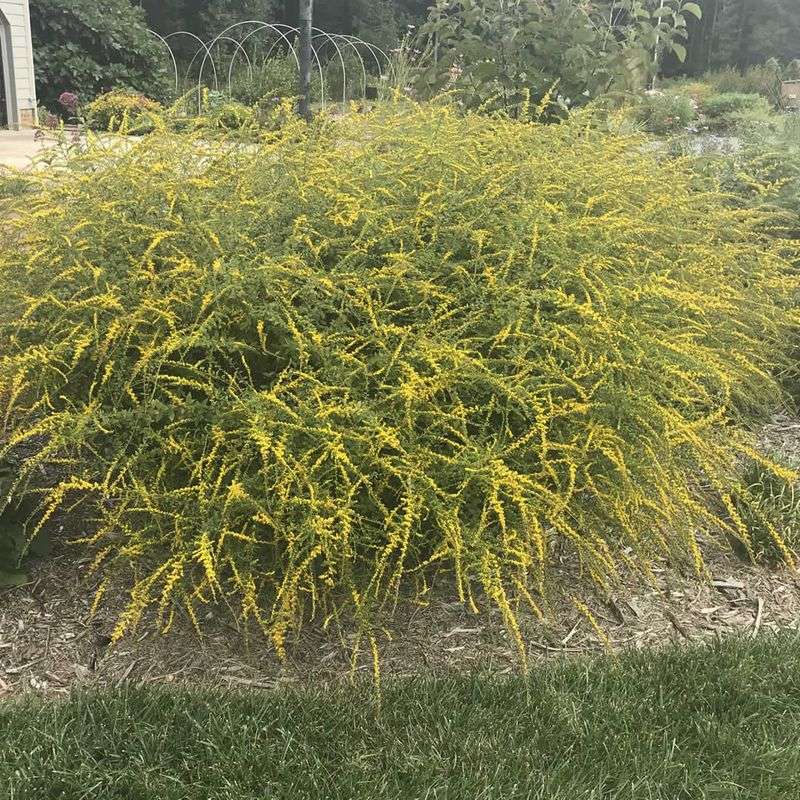
Start with a plant from a reputable nursery that sells nursery-propagated native stock.
Do not dig from roadsides, fields, or wild Pennsylvania populations.
Solidago identification can be genuinely tricky in the field, some species have conservation value, and moving wild plants rarely gives them the establishment conditions they need anyway.
Penn State Extension recommends planting native perennials at the same depth as their nursery container, watering thoroughly right after planting, and applying about 2 inches of mulch while keeping it away from the stems.
Spring, early summer, and fall are all workable windows as long as the soil is not frozen or waterlogged.
Fall planting gives roots time to settle before winter, while spring planting gives the plant a full growing season to anchor before its first Pennsylvania summer.
Watering during establishment is the job that determines whether the plant actually takes hold.
Penn State Extension advises targeting about 1 inch of water per week from rain or supplemental irrigation, but treat that as a general guide rather than a rigid rule.
A heavy thunderstorm in the Susquehanna Valley can drop an inch of rain in 20 minutes and produce mostly runoff rather than deep soil moisture, especially in clay-heavy or shale-based ground.
Check the soil 3 to 4 inches below the surface before you water again.
If it is still damp at that depth, wait.
Penn State Extension recommends watering slowly at the root zone rather than sprinkling foliage, and newly planted perennials may need watering every 5 to 7 days during the first growing season, with adjustments for sandy or rocky soils that drain fast and for stretches of drought between Pennsylvania’s summer downpours.
Consistent root-zone moisture during that first season supports root development far more than sporadic heavy watering.
Skip the fertilizer unless a soil test shows a specific deficiency.
Penn State trial garden observations note that goldenrod is forgiving in lean soil and may actually perform poorly when soil is excessively enriched, producing floppy stems and reduced flowering rather than the sturdy, upright stand you want along a fence.
Lean soil suits this plant.
Let it work.
Contain Rhizomes And Seed Before They Reach The Lawn
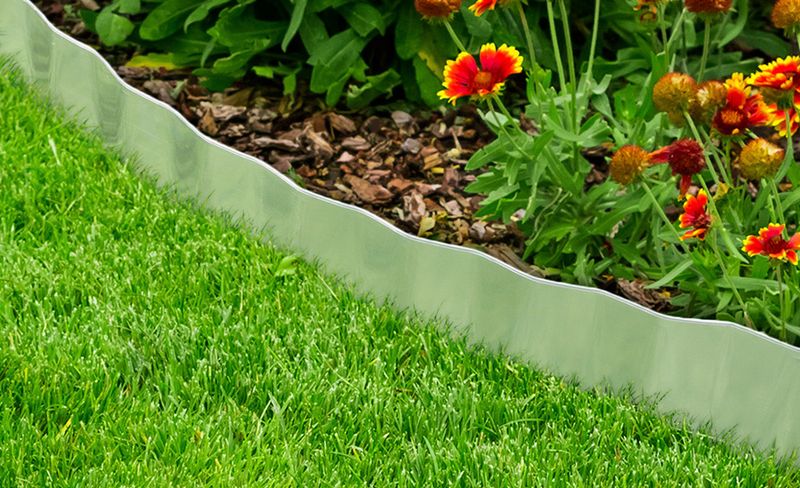
Canada goldenrod’s spreading behavior is the whole point of planting it along a fence, but that same energy needs a clear boundary agreement.
The plant spreads through two routes: underground rhizomes that push outward from the root mass and windborne seed that can carry a surprising distance on a fall breeze.
Managing both routes is what keeps a useful planting from becoming a yard-wide project.
Removing flower heads before seed ripens limits the seed route.
The USDA plant guide notes that deadheading helps reduce seeding but does not stop rhizomatous spread, so clipping seed heads is only part of the agreement.
Watch the bed edge for new shoots pushing into lawn, gravel, or path areas, and remove them when they appear rather than letting them establish a second season of roots.
Missouri Botanical Garden suggests that planting in a buried container or removing new growth regularly can help manage the plant’s spread in situations where a hard boundary is needed.
A buried root barrier along the lawn-side edge is a practical option if the fence strip is narrow enough that rhizomes would reach the grass within a season or two.
Division every few years also keeps the stand from becoming a solid, impenetrable mass that is harder to manage later.
Keep paths, lawn edges, gates, and the neighbor-side boundary outside the plant’s mature footprint from the start.
Penn State Extension frames native perennial maintenance as an ongoing relationship rather than a one-time task, and goldenrod fits that description well.
Occasional thinning and edge work are the practical tradeoff for broad, late-season coverage, not evidence that the plant failed.
The plant is doing exactly what it promised.
Know The Limits Before You Plant
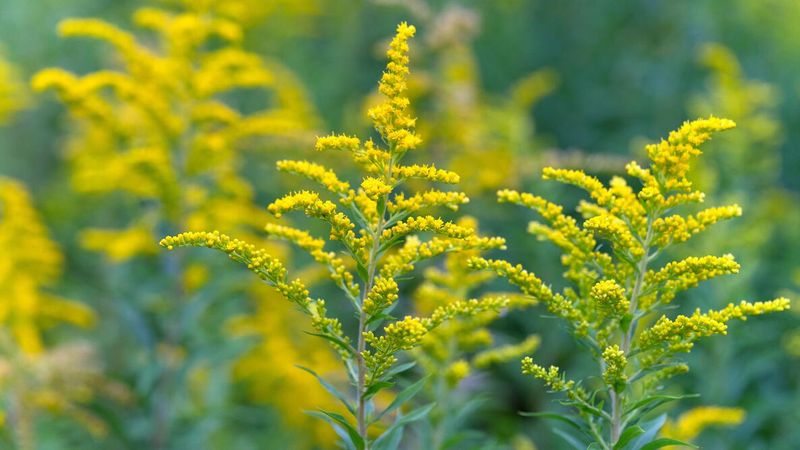
A hot, sunny fence line sounds like a perfect site, and often it is, but a few site conditions can quietly undermine the planting before it gets going.
Poor drainage is the most common one.
Missouri Botanical Garden lists root rot, rust, powdery mildew, and leaf spot as possible problems in poorly drained soils.
A fence line that collects runoff from a downspout or sits in a low spot that stays wet after rain is not automatically a good goldenrod site, even if it gets full sun.
Check the drainage before you plant, not after the third season of struggling stems.
The hay fever question comes up almost every time goldenrod is mentioned, and it deserves a plain answer.
Goldenrod pollen is heavy and sticky, carried by insects rather than wind, so it is not the airborne culprit behind late-summer allergies.
Penn State Extension explains that goldenrod blooms at the same time as ragweed, which does release windborne pollen, and goldenrod takes the blame simply because it is tall and yellow and easy to see.
Ragweed is the actual problem for most allergy sufferers.
Buy your plants from a reputable nursery that sells nursery-propagated stock.
The Pennsylvania Natural Heritage Program notes that some Solidago species carry conservation status, including slender goldenrod (Solidago erecta), which is listed as Pennsylvania Endangered.
Digging from roadsides or fields risks removing plants with conservation value and makes accurate identification difficult in a genus where many species look similar.
Once established, goldenrod may need little supplemental water except during extended drought, but it is not maintenance-free.
Penn State plant science resources confirm that if removal becomes necessary, following the product label carefully and preventing drift onto desirable plants, water features, vegetable gardens, and neighboring property are the first priorities before reaching for any herbicide.
A sunny boundary can accommodate a plant with real movement.
A formal edge, a narrow strip, or a bed beside a neighbor’s lawn needs a different goldenrod entirely, and the good news is that Pennsylvania has several to choose from.