
The Overlooked Pennsylvania Native That Pulls Hummingbirds Into A Quiet Yard
Follow us on Google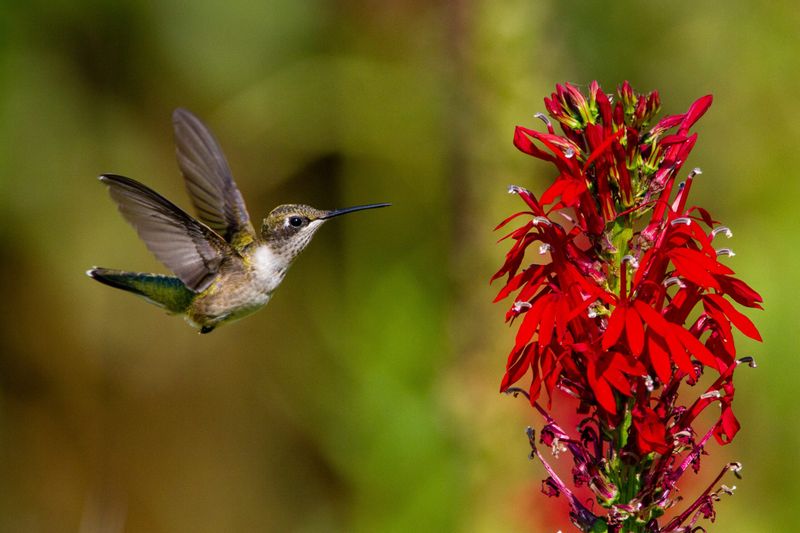
Late August in a Pennsylvania backyard can feel almost too still, the kind of quiet where you notice every leaf.
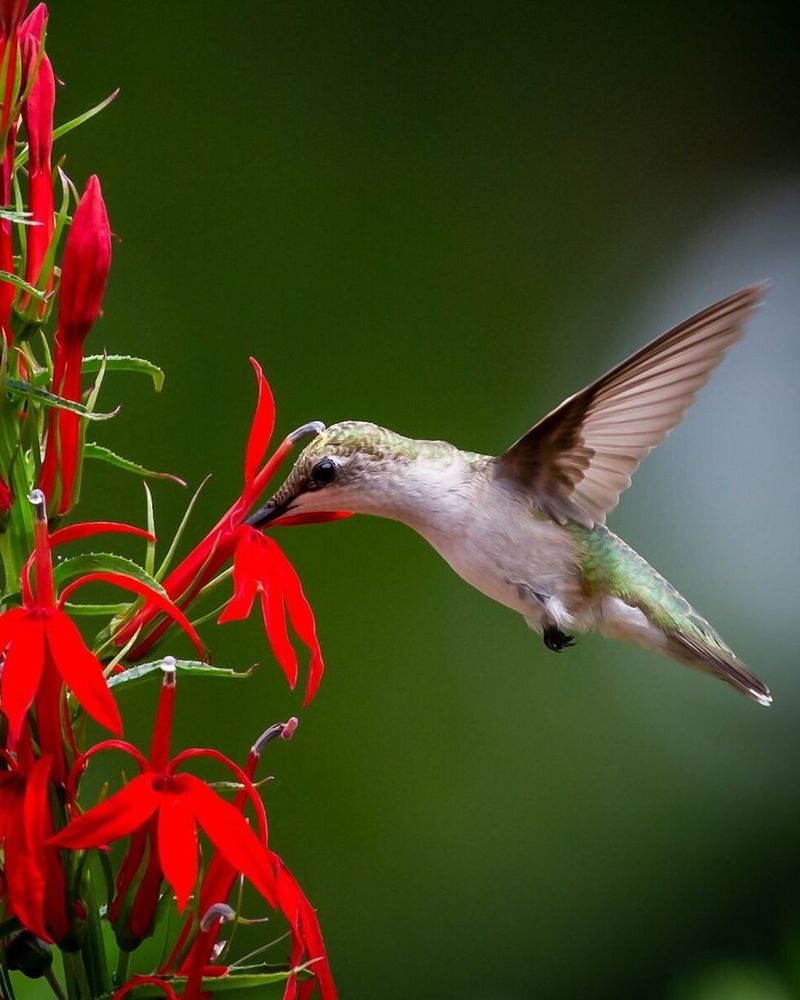
Then a flash of movement cuts through the air, and a ruby-throated hummingbird hovers over a tall spike of red blooms you planted along the rain garden edge.
That plant is cardinal flower, Lobelia cardinalis, a Pennsylvania native that can make your yard genuinely more attractive to hummingbirds during the late-summer weeks when not much else is blooming.
It will not summon birds by magic, but if your soil stays reliably moist and local hummingbirds are moving through, the odds shift in your favor.
Cardinal Flower Offers A Late-Summer Hummingbird Opportunity
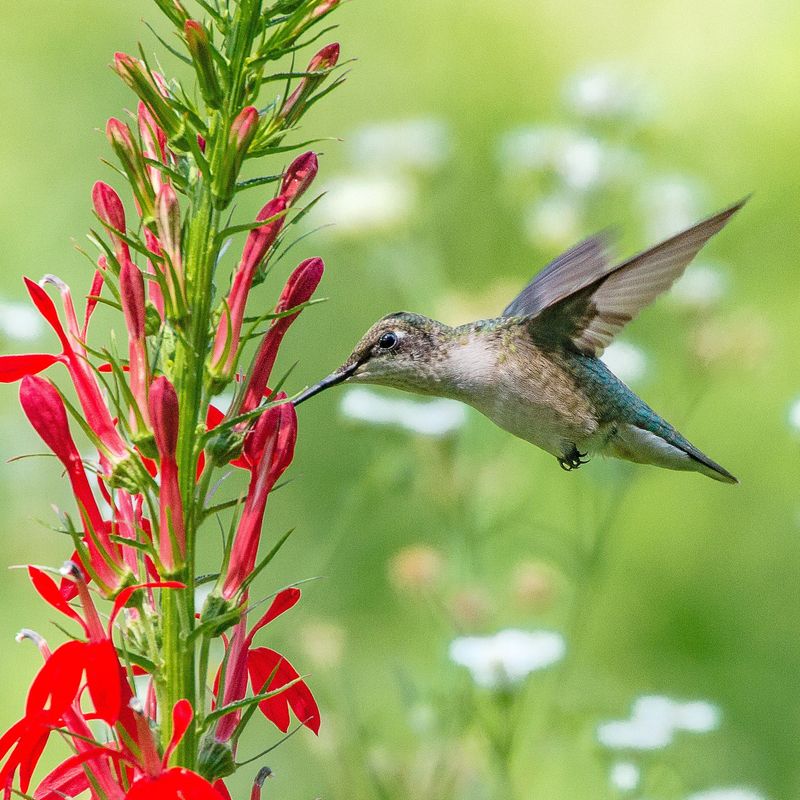
Cardinal flower, Lobelia cardinalis, is a perennial wildflower native to Pennsylvania, and it is one of the most consistently recommended plants for gardeners who want to give hummingbirds a reason to slow down in a quiet yard.
The Pennsylvania Flora database confirms it as a true Pennsylvania native, and both Penn State Extension and conservation sources list it among the state’s most useful hummingbird plants.
The flowers are a deep, saturated red, arranged on tall upright spikes that can reach 2 to 4 feet at maturity with a spread of roughly 1 to 2 feet.
Each individual bloom is tubular, narrow at the opening, and shaped in a way that suits a hummingbird’s long bill and hovering feeding style far better than a flat, open flower would.
The bloom window runs mainly from July through September, with Penn State Extension noting August through September as the core period.
That timing matters because late summer is when many Pennsylvania yards go quiet on nectar, and cardinal flower fills that gap.
It is a late-season plant, not an all-summer one, and treating it that way sets realistic expectations.
What cardinal flower offers is attraction potential, not a promise.
Whether a hummingbird actually appears depends on whether birds are present in your area, whether the plant is in bloom when they pass through, and whether the rest of your yard gives them any reason to stay.
The plant does its part well, but the result is never fully in your hands.
Red Tubular Blooms Match A Hummingbird’s Feeding Style
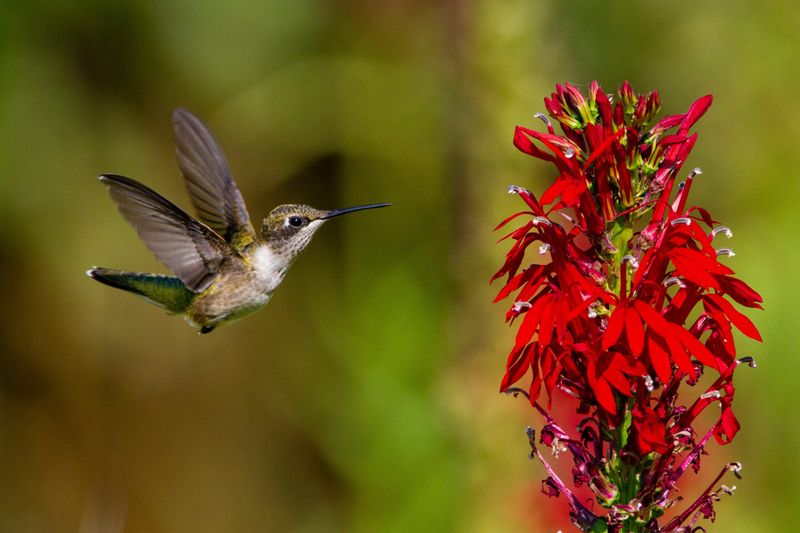
Ruby-throated hummingbirds, Archilochus colubris, are the hummingbird Pennsylvania gardeners are most likely to see.
Cornell Lab of Ornithology confirms that the ruby-throated is the only hummingbird species that breeds regularly in eastern North America, making it the bird behind almost every backyard sighting from the Delaware Valley to the northern tier.
These birds show a strong preference for red and orange tubular flowers, and cardinal flower fits that description almost perfectly.
The long narrow tube keeps shorter-tongued insects from reaching the nectar easily, which means the plant has essentially evolved to reward the hummingbird’s particular anatomy.
Penn State Extension notes that hummingbirds favor red, orange, and pink tubular flowers, though they will visit other colors when nectar is available and they are hungry enough.
Here is where it gets tricky.
Planting cardinal flower does not guarantee a visit any more than setting out a porch light guarantees moths on a cold night.
Local hummingbird presence varies across Pennsylvania, and migration timing shifts from year to year.
Birds tend to arrive earlier in warmer southeastern areas near Philadelphia and later at higher elevations in the Poconos or the Allegheny Plateau.
Yard conditions also play a role.
Open sightlines, nearby perches such as a shrub or small tree, and a yard that is not drenched in pesticide all make the space more welcoming.
Cardinal flower provides a strong nectar signal, but the bird still decides whether to come in for a closer look.
Choose A Site That Stays Reliably Moist
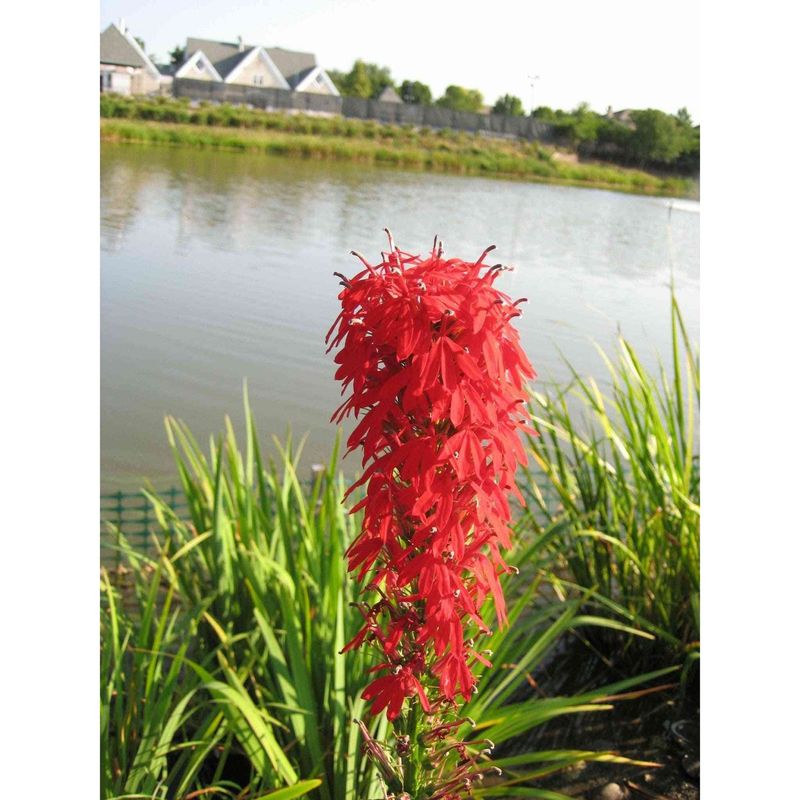
Moisture is the one requirement you cannot work around with cardinal flower.
This plant does not tolerate dry spells the way black-eyed Susan or coneflower might.
Missouri Botanical Garden describes the soil requirement as constantly moist, and that word choice is deliberate.
A site that dries out between rain events is genuinely a poor match.
Good locations include the edge of a rain garden, a low spot in the yard that collects runoff, a drainage swale, a stream bank, or a moist woodland margin where the soil stays damp without becoming stagnant and foul-smelling.
Penn State Extension specifically recommends cardinal flower for rain garden use and notes that it can tolerate brief flooding, which makes it useful in spots where other plants struggle.
A dry foundation bed on the south side of a house, a hot slope in full sun with thin soil, or a compacted urban planting strip are poor fits regardless of how much you water.
The plant’s roots want to stay cool and damp, and supplemental irrigation rarely compensates for a fundamentally dry site through a Pennsylvania summer drought.
Cardinal flower can grow in several soil textures, including clay, loam, and sandy soils, but texture matters less than whether the site actually stays moist.
Before you plant, observe the spot after a hard rain.
If it drains completely within a few hours and shows no surface dampness the next morning, look for a different location or a different plant.
Compost and mulch can help retain some moisture, but they cannot manufacture the reliable wetness this plant needs to thrive.
Build A Visible Cluster And Plant At The Right Time
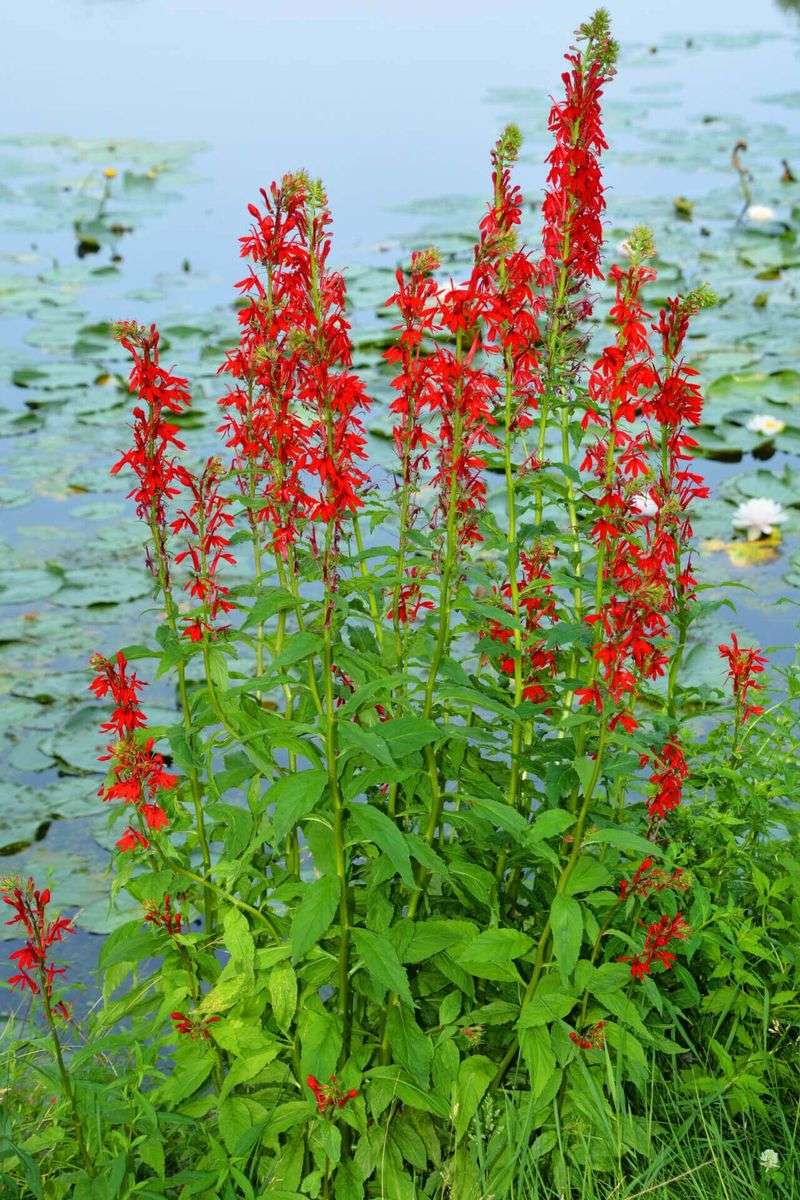
A single cardinal flower planted in a far corner of the yard is easy for a passing hummingbird to miss entirely.
Penn State Extension recommends grouping hummingbird plants because a conspicuous cluster is simply easier for birds to spot from the air than a lone stem tucked between other greenery.
Arrange your cardinal flowers as a visible block near a window or patio where you can actually watch what happens.
How many plants and how far apart to space them depends on the cultivar and the nursery-grown plant’s mature width, so follow the label rather than a fixed number.
The supported mature spread is roughly 1 to 2 feet, but cultivars vary, and spacing that works in a consistently wet rain garden may be too tight in a site with occasional dry spells.
The label gives you the most accurate guidance for what you actually bought.
Timing the planting to Pennsylvania’s conditions takes a little thought.
Spring planting after the soil becomes workable and the worst frost risk has passed gives roots a full growing season to establish before their first summer bloom.
Fall planting can also work if you get the plants in the ground early enough for roots to settle before the ground freezes, though the window for that varies considerably across the state.
A garden in the Delaware Valley near Philadelphia may have weeks of workable fall soil that a yard in the northern tier or at elevation in the Laurel Highlands simply does not.
Check your local frost dates rather than following a statewide calendar, because Pennsylvania’s planting windows are genuinely not the same from one end of the state to the other.
Keep The Soil Moist And Let The Plant Renew Itself
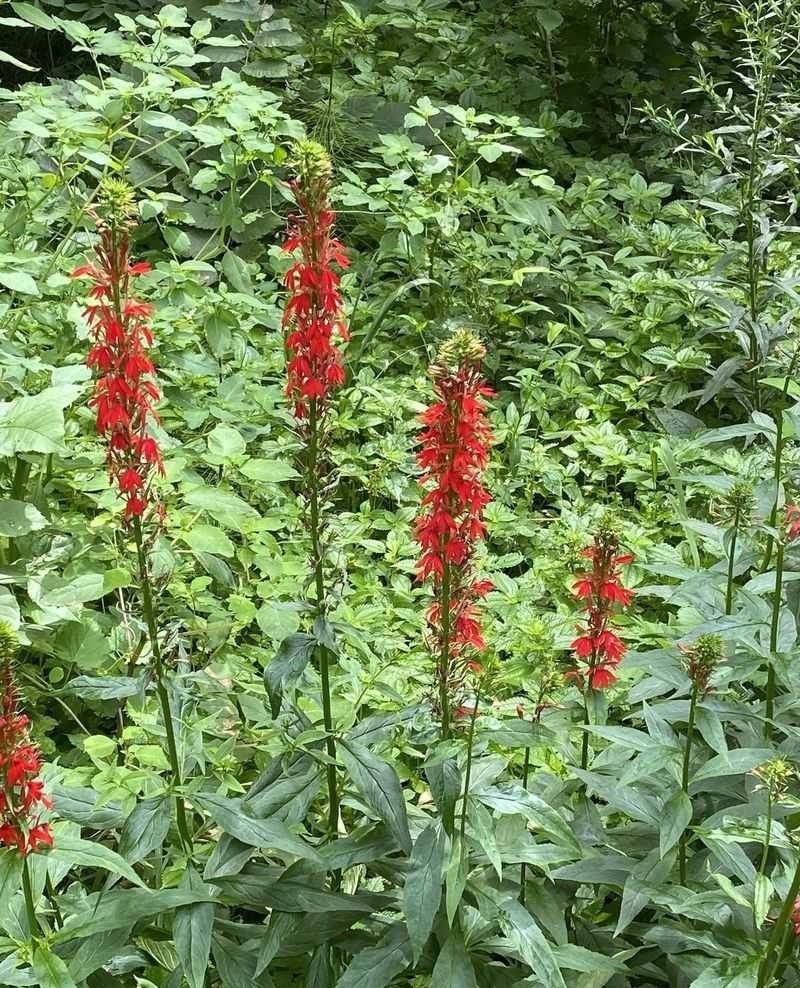
Watering cardinal flower is less about following a schedule and more about checking whether the soil around the roots is staying damp.
The Missouri Botanical Garden guidance is direct: keep the soil consistently moist and do not let the plant dry out.
In a wet Pennsylvania summer with regular thunderstorms, you may need to do almost nothing.
During a dry stretch in August, when the central valleys and western Pennsylvania can go weeks without meaningful rain, you will need to water more actively.
There is no universal weekly volume that works for every yard.
Sandy soil in one part of the state drains faster than heavy clay in another.
A shaded site near a stream holds moisture longer than a sunnier spot even at the same property.
Water when the soil around the plant feels close to dry at the surface, and water enough to soak the root zone rather than just wetting the top layer.
Penn State describes cardinal flower as clump-forming and self-seeding, which is the plant’s way of maintaining itself over time.
It is genuinely short-lived in some gardens, sometimes persisting only 2 or 3 years before the original clump fades.
Self-seeding can keep the planting going, but only if you let it happen.
Avoid aggressive fall cleanup around the base of the plant.
Penn State Master Gardener resources describe it as a short-lived self-seeder, so leaving seed heads intact and allowing them to drop naturally gives next year’s plants their best start.
A native plant still needs your attention, just different attention than a high-maintenance annual.
Extend Nectar Beyond Cardinal Flower’s Bloom Window
Cardinal flower earns its place in a hummingbird-friendly yard, but it cannot carry the whole season on its own.
Its main bloom period arrives in July or August and runs through September, which means a yard planted with cardinal flower alone offers nectar for roughly 6 to 10 weeks at best.
A hummingbird that arrives in May to set up territory has nothing to find.
Penn State Extension recommends keeping flowers blooming from May through early September to give hummingbirds a useful resource across their Pennsylvania season.
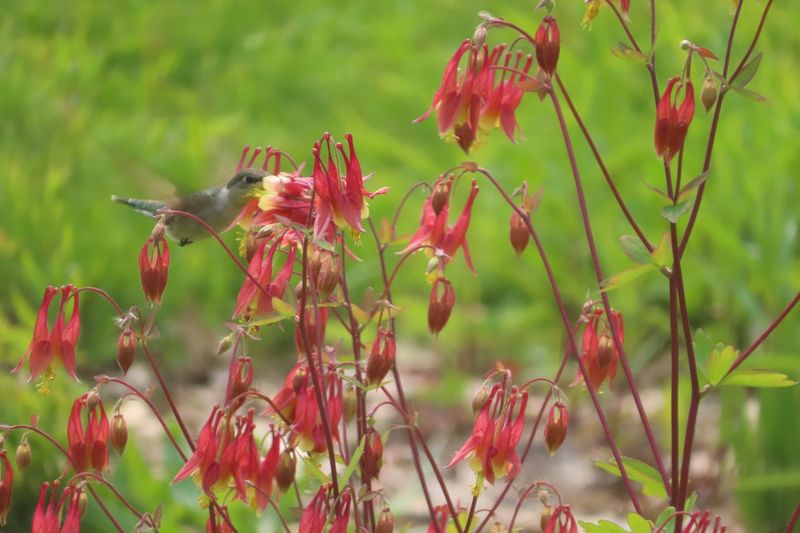
Eastern columbine, Aquilegia canadensis, is another Pennsylvania native that blooms in spring and bridges the gap between the bird’s arrival and summer-blooming plants.
Bee balm, Monarda species, and trumpet honeysuckle, Lonicera sempervirens, can carry nectar into early and midsummer before cardinal flower takes over.
Think of the sequence as a relay rather than a single runner.
Each plant hands off to the next, and the hummingbird has a reason to keep checking back on your yard rather than moving on to a neighbor’s more varied garden.
The benefit is a longer window of nectar availability, not a guaranteed increase in the number of birds you see.
Local bloom timing shifts across Pennsylvania.
A columbine that peaks in April near Philadelphia may not open until late May at elevation in the Poconos.
Cardinal flower that blooms in August in the Susquehanna Valley may run a week or two later in the northern tier.
Build the sequence around what actually blooms in your part of the state, not a fixed statewide calendar.
Protect The Habitat Around The Flowers
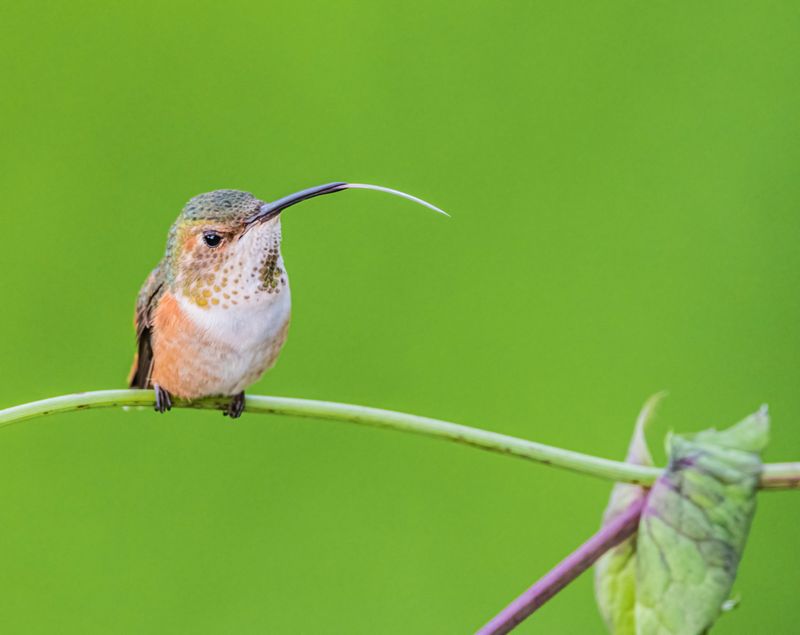
Hummingbirds do not live on flower nectar alone.
Cornell Lab of Ornithology documents that ruby-throated hummingbirds eat insects and spiders as a significant part of their diet, using them as a protein source that nectar cannot provide.
Spraying insecticides through your yard, even products labeled as safe for gardens, can strip away that food supply and make the space less hospitable than you intended.
Unnecessary pesticide use is a poor fit for any yard trying to attract hummingbirds.
Penn State Extension warns that pesticides reduce available insects and may harm birds directly.
Spot-treat problem plants when you must, but avoid blanket spraying around flowering areas.
A feeder can supplement your flowers, but it works best as an addition to habitat, not a replacement for it.
Penn State recommends a nectar mixture of 1 part white table sugar to 4 parts water, with no honey, brown sugar, artificial sweeteners, red dye, or commercial additives.
Honey can support harmful fungal growth.
Red dye is unnecessary and potentially harmful.
Plain sugar water is actually what the birds need.
Replace the nectar every 3 to 5 days, and sooner during hot weather when fermentation happens faster.
Clean the feeder at least weekly, or immediately if the liquid becomes cloudy, discolored, or warm.
Fish and Wildlife Service notes that spoiled nectar can harm hummingbirds, making regular cleaning a genuine responsibility rather than a suggestion.
Feeder placement carries its own risks.
Cats are a real danger, so keep them indoors or hang feeders high in open areas where a cat cannot crouch and wait.
Windows are another hazard.
Feeders placed 15 to 30 feet from a window sit in a particularly dangerous zone where birds build up enough speed to cause fatal strikes.
Place feeders within 3 feet of a window or well beyond 30 feet, and consider window treatments or decals if strikes become a pattern.
Decide Whether Cardinal Flower Fits Your Yard
Before you order plants, walk the yard after a heavy rain and find the spot that stays damp longest.
That is where cardinal flower belongs.
Penn State’s rain garden guidance and the Pennsylvania Flora database both point to consistently moist or wet conditions as the plant’s core requirement, and no amount of enthusiasm compensates for the wrong site.
If the site passes that test, arrange the plants as a visible cluster, follow the nursery label for spacing, and keep the soil moist through the first growing season.
Allow seed heads to mature in fall rather than cutting everything back, because self-seeding is how the planting sustains itself over time.
Add earlier-blooming natives if you want hummingbirds to have a reason to visit before August, and reduce pesticide use so the yard’s insect life stays intact.
Penn State Extension is clear that no single plant makes a complete hummingbird habitat, and cardinal flower is not the right choice for every Pennsylvania yard.
It is not maintenance-free, it may not return permanently, and its name has nothing to do with northern cardinals, which are attracted by entirely different food sources.
What it is, honestly, is a strong late-summer nectar plant for a moist site, native to the state, and shaped by evolution to fit the ruby-throated hummingbird’s feeding style almost perfectly.
Get the site right, plant a visible group, and keep the soil from drying out.
Come August, you may find a hummingbird hovering over those red spikes while the rest of the yard sits perfectly still.