
Your Tomatoes Are Not Behind Schedule, They Are Heat-Locked And Waiting For The Nights To Cool
Follow us on Google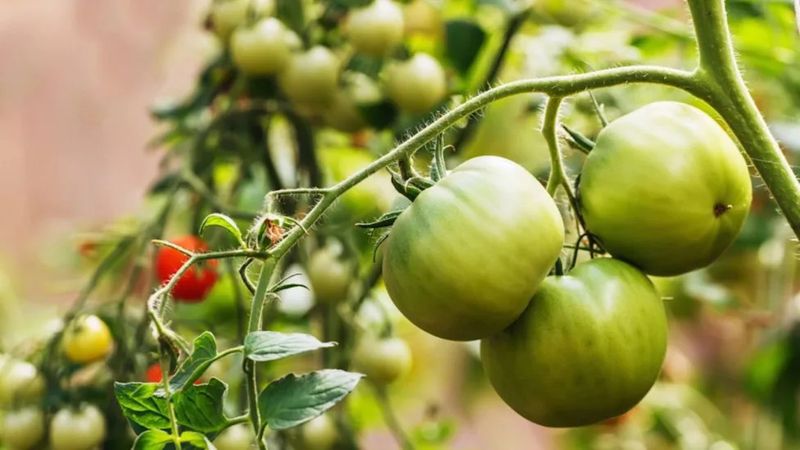
Pull back the leaves on an August tomato plant and you might find a dozen full-sized green fruits just sitting there, looking like they forgot what they were supposed to do.
Before you blame your timing or start pulling plants, there is a simpler explanation worth checking.
Prolonged heat can slow or stop color development in tomatoes that have already set, leaving them green and firm long past when you expected red.
Understanding what is actually happening, and what to do about it, can save a lot of good fruit.
A Green Tomato May Be Full-Sized Without Being Ready
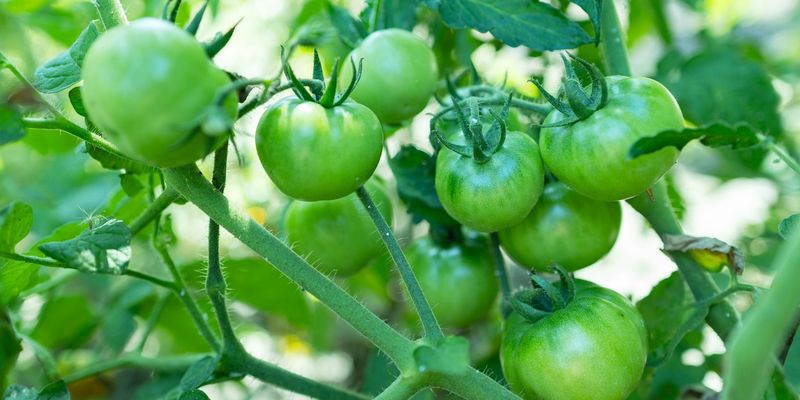
Size is not the same as readiness.
A tomato can reach most of its final diameter weeks before it develops any red color, and that gap is normal.
What you are seeing when you find a big green fruit in August is not necessarily a failure of timing or a plant that is running late.
It may simply be a tomato that has finished growing in size but has not yet begun the color stage of ripening.
Fruit development, fruit set, and ripening are three separate events.
Fruit set is when a fertilized flower becomes a tiny tomato.
Development is when that tomato grows to full size.
Ripening is when pigments form, sugars concentrate, and the texture softens.
A tomato can complete the first two stages and then stall on the third, especially under stress.
Heat is one common reason, but disease, moisture imbalance, nutrient problems, sunscald, late planting, or simply the variety itself can all produce a green fruit that is not moving toward red.
Cornell Cooperative Extension notes that tomatoes generally take six to eight weeks from pollination to full maturity, with variety and weather both affecting that window significantly.
Iowa State Extension puts a similar general range at roughly 45 to 55 days after fruit set.
Either way, that timeline is an estimate, not a guarantee, and summer heat can stretch it considerably.
So before concluding that heat is the culprit, take a closer look.
Feel the fruit.
A firm, glossy, full-sized tomato that has simply not changed color is a different situation from one that is matte, small, or showing spots.
Green color alone is not a diagnosis.
Use it as a starting point, not a conclusion.
Prolonged Heat Can Delay Red Color
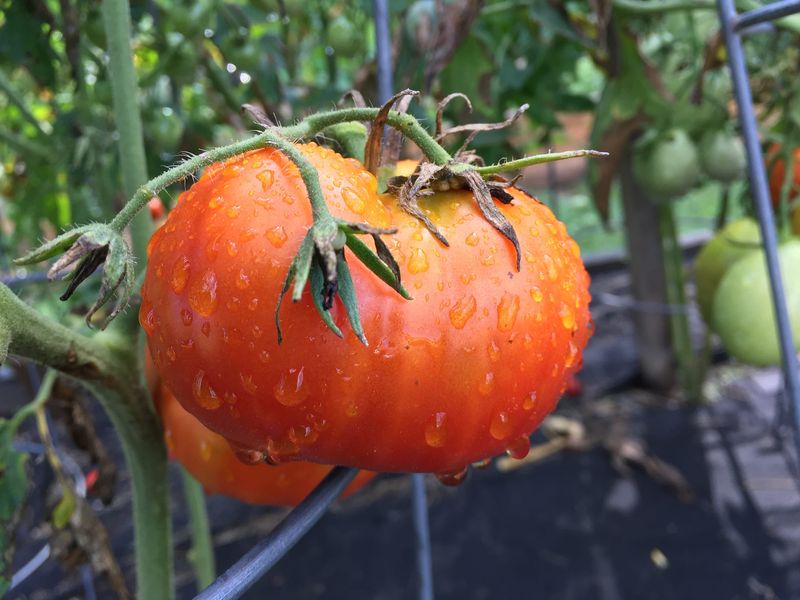
Here is what actually happens inside a tomato when temperatures stay high for days on end.
The red color in a ripe tomato comes primarily from lycopene, a pigment that forms best when fruit temperatures sit in a range of roughly 65 to 75 degrees Fahrenheit.
When fruit temperatures climb above approximately 85 to 90 degrees, lycopene production can slow significantly or stop altogether.
The tomato does not turn red because the chemistry that makes red pigment has essentially been switched off by heat.
What makes this confusing is that not all pigment formation stops at the same temperature.
Carotene, which contributes yellow and orange tones, may keep developing even when lycopene cannot.
The result is a tomato that turns orange, develops uneven patches of color, or stays green at the shoulders while showing some orange or yellow lower down.
University of Alaska Fairbanks Cooperative Extension explains how temperature affects both fruit set and pigment development across the ripening process.
This is why a heat-affected tomato does not always look the same from one plant to the next.
The fruit surface itself can run hotter than the air around it, especially on the south-facing side of a cluster in full afternoon sun.
So even on a day when the thermometer reads 88 degrees, the skin of an exposed tomato may be experiencing temperatures well above that threshold.
University of Florida IFAS guidance notes that direct radiation on exposed fruit is a meaningful factor in both color delay and sunscald risk.
This explanation applies most directly to fruit that has already set and reached full size.
If the tomato is still small and developing, a different set of factors may be at work.
Heat-delayed color is one possible cause of green fruit in summer, not the only one.
Hot Nights Can Disrupt Flowers And Fruit Set
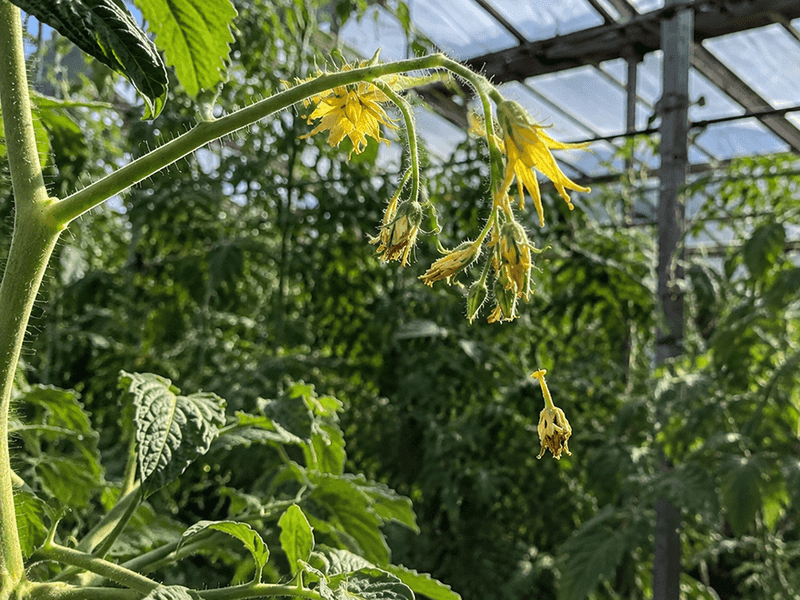
Night temperatures matter most before the tomato exists at all.
When a flower is trying to release pollen, when that pollen is trying to germinate, and when fertilization is happening, the overnight temperature plays a significant role in whether the process succeeds.
This is a different problem from color delay in fruit that has already set, and mixing the two up leads to misdiagnosis.
Virginia Tech Cooperative Extension identifies the favorable nighttime range for fruit set as roughly 59 to 68 degrees Fahrenheit.
Nights that drop below about 55 degrees or climb above roughly 70 to 75 degrees can reduce fruit set, depending on the variety and conditions.
When nights stay hot for a stretch of days, fewer flowers successfully set fruit, and some drop before they get the chance.
High daytime temperatures add to the problem.
Ohio State University vegetable production research points out that daytime temperatures above 90 degrees can interfere with pollen viability and flower survival.
Dry air and low humidity compound the stress.
Published research on heat stress and tomato pollen shows meaningful differences among cultivars in how well they tolerate high temperatures during flowering.
The practical distinction is this: a plant with dropped flowers, sparse new fruit, or very few small tomatoes forming may be experiencing pollination failure, not just color delay.
A plant carrying a full load of large green fruits that simply have not turned red is a different situation.
Both are heat-related, but the fix is not the same, and recognizing which problem you have changes what you do next.
The First Blush Marks A Safer Harvest Point
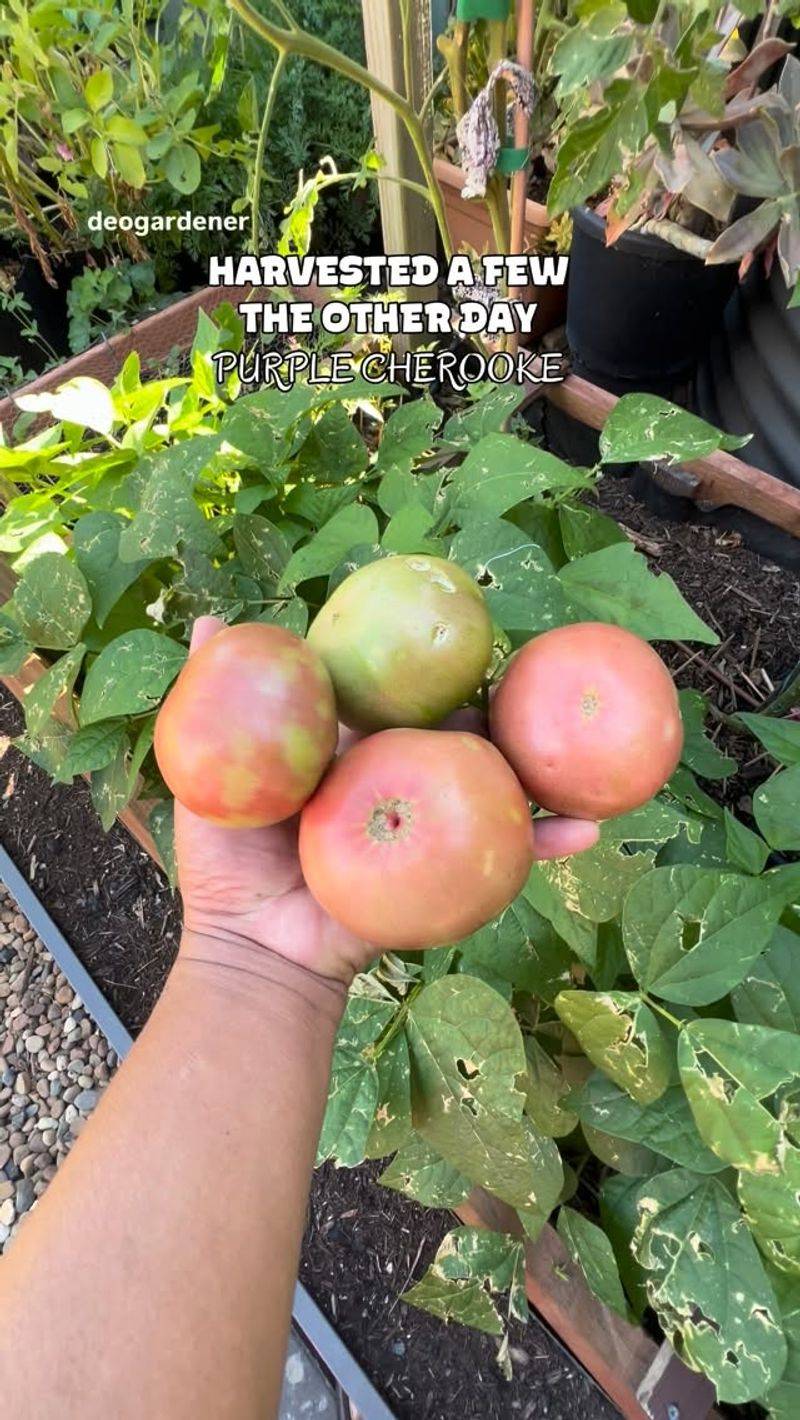
Waiting for a tomato to turn fully red on the vine during a heat wave is not always the best strategy.
Once a tomato reaches what extension specialists call the breaker stage, the fruit has crossed a biological threshold that makes it a reasonable candidate for harvest.
Penn State Extension describes the breaker stage as the point when color first appears at the blossom end, the bottom of the fruit.
At that stage, the tomato is producing ethylene, the natural plant signal associated with ripening, and it can continue ripening after it leaves the vine.
Picking at the breaker stage removes the fruit from ongoing field heat, direct afternoon sun, birds, squirrels, cracking from rain after dry spells, and the softening that accelerates in high temperatures.
Colorado State Extension guidance on indoor ripening notes that shiny, developed green fruit may also ripen successfully indoors, but that uniformly matte, dark-green fruit that has not reached maturity may not develop good flavor or ripen dependably.
Use the first blush whenever you can, especially with large slicers and heirlooms.
To harvest cleanly, use snips or clean hands and handle the fruit gently to avoid bruising.
University of Minnesota Extension recommends looking for full size, a lighter or slightly whitish cast at the blossom end, and a developed glossy appearance as signs that a still-green tomato has reached enough maturity to ripen off the vine.
A tomato that is small, dull-surfaced, or still clearly immature is not the same as a mature-green fruit, and pulling it early will not produce a good result.
Harvesting does not undo damage that is already present.
Sunscald, disease, or internal breakdown will not reverse indoors.
Pick for what can still be saved, and leave the rest to finish or assess separately.
Let Suitable Fruit Ripen Indoors
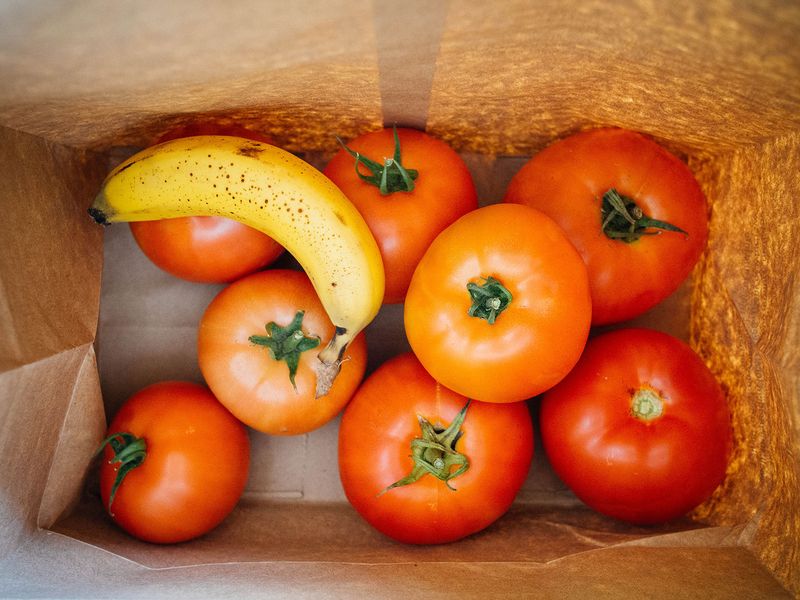
Bringing tomatoes inside to finish ripening is not a compromise.
For fruit that has already crossed the breaker stage, a countertop at room temperature is actually a friendlier environment than a garden baking in afternoon sun.
The goal is to keep the fruit in the range where ripening chemistry works well, roughly 70 to 75 degrees Fahrenheit for active ripening, without the added heat and radiation of the garden.
Set the tomatoes in a single layer with a little space between them so air can circulate.
Colorado State Extension and University of Minnesota Extension both recommend keeping tomatoes out of direct sunlight indoors.
Light is not required for ripening, and a sunny windowsill can raise the fruit surface temperature enough to slow the very process you are trying to encourage.
A kitchen counter away from the window works well.
A paper bag with a few small holes punched in it can concentrate the ethylene that the tomatoes are already producing naturally, and some gardeners find it speeds things along.
An apple or banana placed nearby may add a small amount of additional ethylene.
University of Illinois Extension notes that tomatoes naturally produce ethylene once they reach the appropriate maturity stage, so neither the bag nor the added fruit is required.
They are optional tools, not essential steps.
Check the tomatoes daily and remove any that develop soft spots or rot, because one going bad can affect the others nearby.
Expect ripening to take anywhere from several days to a couple of weeks, depending on how mature the fruit was at harvest and how warm your kitchen runs.
NC State postharvest guidance is clear that refrigeration slows ripening and can impair both flavor and texture, so keep tomatoes at room temperature until they are fully ripe.
Once ripe, short-term refrigeration is an option if needed, but quality is best when they are eaten at room temperature.
Protect The Crop Without Exposing More Fruit
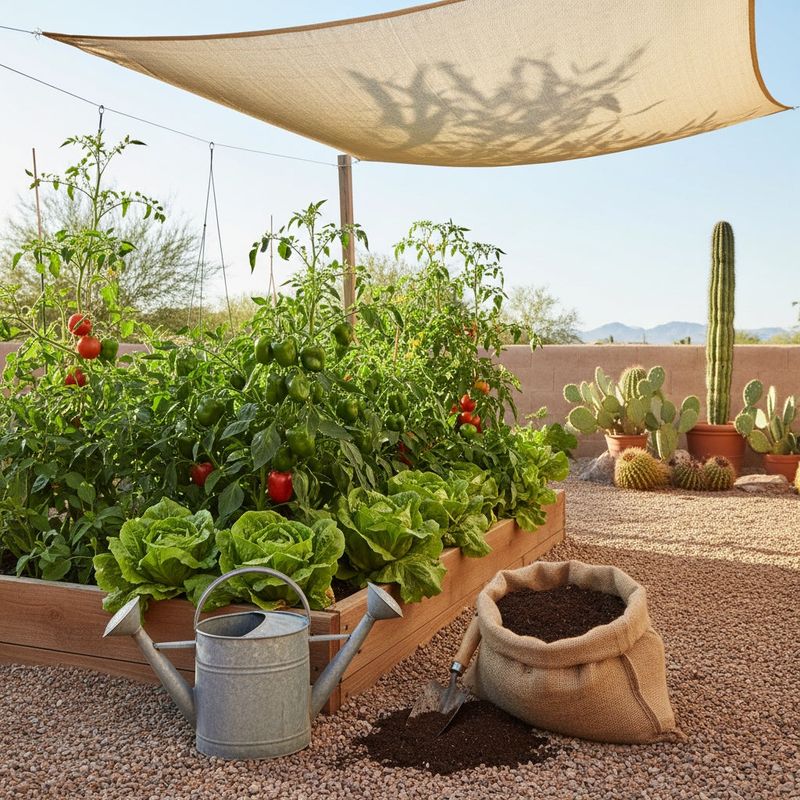
A common mistake during a heat wave is to strip away leaves so the sun can reach the green tomatoes and hurry them along.
That is the wrong move.
Direct sun on exposed fruit raises the surface temperature and increases the risk of sunscald, a condition where the skin turns pale, papery, or blistered on the side facing the sun.
University of Illinois Extension warns specifically that air temperatures around 90 degrees or higher can speed softening while color development slows, meaning the fruit is not simply paused and protected.
It is actively under stress.
Water is the most important tool you have right now.
Deep, consistent watering at the soil surface keeps the plant from shutting down and helps buffer temperature swings inside the fruit.
Mulch laid two to three inches thick around the base of the plant reduces evaporation, keeps the root zone cooler, and prevents the soil from drying out between waterings.
University of Alaska Fairbanks Cooperative Extension emphasizes that consistent moisture is a key factor in reducing heat stress across the whole plant.
Shade cloth, supported on stakes or a simple frame above the foliage rather than draped directly on the plants, can reduce heat stress and improve airflow.
Oregon State Extension notes that shade cloth can lower temperatures by up to about 10 degrees Fahrenheit in some situations.
Oregon State’s heat stress guide also recommends maintaining good airflow around plants to prevent additional stress from heat buildup.
Every one of these steps is a layer of protection, not a complete cure.
They cannot restore flowers that already failed to set, reverse disease, or fix fruit that is already damaged.
What they can do is reduce further losses and give the plant a better chance once temperatures ease.
Use Variety And Symptoms To Check The Diagnosis
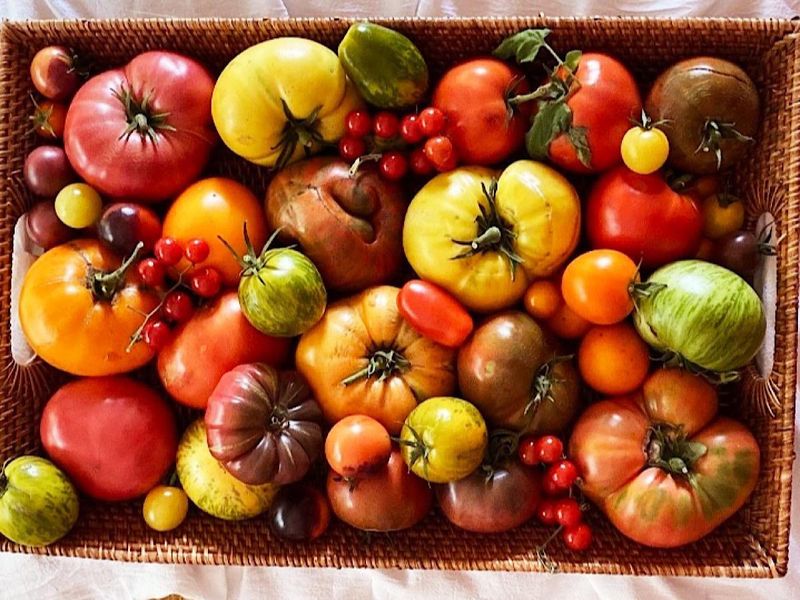
Not every green tomato in August is heat-delayed.
Cherry tomatoes, paste varieties, heirlooms, and large slicing types do not all behave the same way under heat stress.
Published research on cultivar differences in heat tolerance shows meaningful variation in pollen behavior, fruit set, and heat response across tomato types.
Some heirloom varieties have a genetic tendency toward green shoulders that never fully color, regardless of temperature.
Others may turn orange or develop uneven color patterns that look like heat damage but are simply how that cultivar ripens.
Ohio State vegetable production research confirms that cultivar selection is one of the more effective long-term tools for managing heat stress in tomatoes.
If your current variety struggles every August, that is useful information for next season’s seed order.
University of Florida IFAS also notes cultivar differences in how fruit responds to high temperatures during ripening.
Before attributing every green fruit to heat, run through a short checklist.
Check whether the plant was set out late in the season, which would make immaturity the more likely cause.
Look for spots, lesions, or sunken areas that suggest disease or sunscald.
Consider whether watering has been inconsistent, since moisture stress and excess nitrogen are both linked to uneven ripening.
University of Illinois Good Growing guidance connects irregular watering and fertilizer practices to blotchy or slow-ripening fruit.
When prolonged heat is genuinely the issue and full-sized fruit is at risk, harvesting at the breaker stage is the safest general choice.
University of Minnesota Extension and University of New Hampshire Extension both acknowledge that vine-ripened tomatoes are generally considered highest quality, and that breaker-stage fruit can retain good flavor when handled carefully.
Protect what is ripe enough to save, keep the plant healthy, and reassess as the weather shifts.
The plant is not finished with you yet.