
The One Yard Change That Finally Brought Painted Buntings Back And Kept Them
Follow us on Google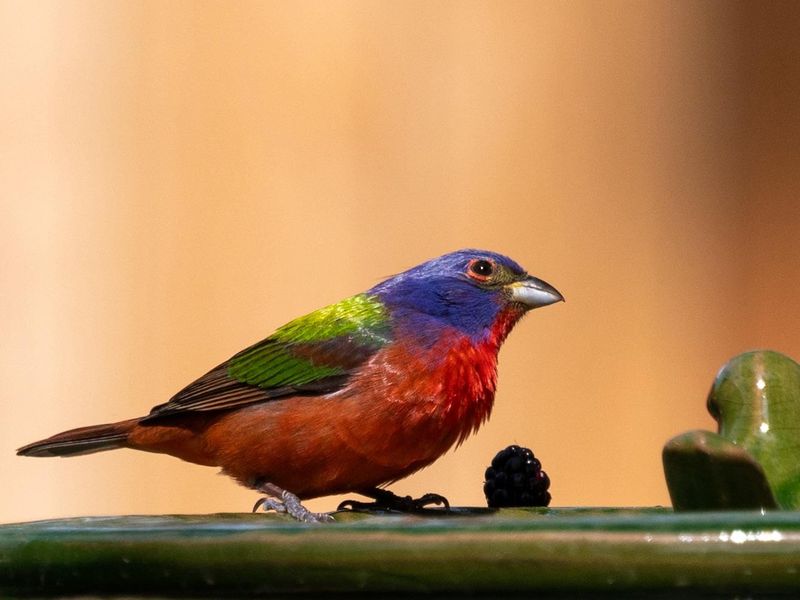
You step onto the back porch one cool November morning, coffee in hand, and there he is, a male painted bunting sitting at the edge of the grass like a living piece of stained glass.
Florida yards can actually draw these birds in, but getting them to show up takes more than wishful thinking and a random bag of seed.
A low seed station placed beside the right kind of cover may be the most practical move you can make, and understanding why it works helps you set it up in a way that gives buntings a real reason to pause in your yard.
A Practical Setup May Encourage Visits
Forget the image of a tall pole feeder dangling in the middle of an open lawn.
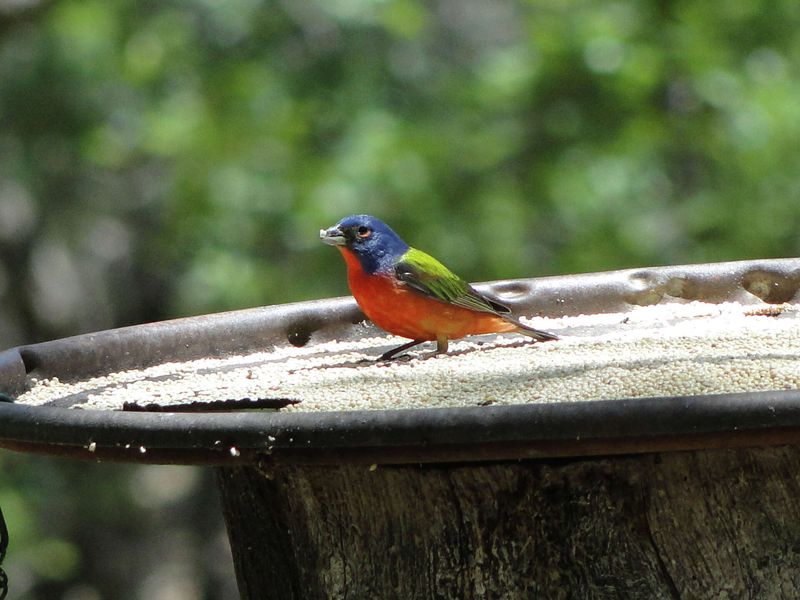
Painted buntings are ground-foraging birds, and the setup most likely to catch their attention is a low platform feeder, a shallow tray, or a clean ground-feeding area placed right beside low, dense vegetation.
Cornell Lab of Ornithology guidance on painted buntings specifically notes that these birds are more likely to visit feeders in yards that offer low, dense cover nearby.
That combination, accessible seed plus a quick escape route into vegetation, is what the evidence actually supports.
White millet is a reasonable seed to try in that tray.
Many small, ground-feeding birds favor it, and it works well in low, open feeders.
But millet is not a painted-bunting-exclusive food, and offering it is a trial worth running rather than a guaranteed lure.
The stronger case is for the whole setup together: a low, stable feeding surface, a modest amount of seed, and shrubs or grasses close enough to offer cover.
What this combination may do is make your yard a more comfortable place for a bunting to pause.
What it cannot do is promise a permanent return or prove that one change caused the bird to appear.
Visits depend on season, migration timing, what food is available elsewhere in the landscape, predator pressure, and broader population patterns.
Setting up the station correctly gives you the best realistic shot, and that is genuinely worth doing.
Ground-Foraging Behavior Explains The Recommendation
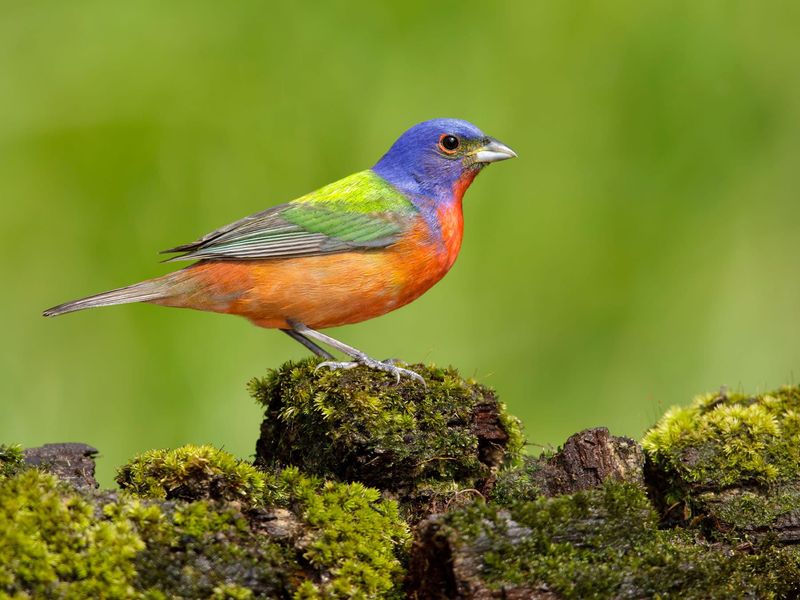
Painted buntings (Passerina ciris) eat seeds for most of the year, and they gather that food mainly at ground level or just above it.
Watch one work a weedy field edge and you will see it hopping through low stems, picking at fallen seed, rarely going higher than knee height to feed.
Cornell’s painted bunting life history confirms that the species forages on or near the ground and favors dense cover during feeding.
A tall tube feeder is not their first instinct.
They can use one, but a low platform or shallow tray simply fits how they naturally move and eat.
Placing food at or just above ground level removes a behavioral barrier and makes the station feel safer to a bird wired to stay low and dart into cover fast.
The seasonal piece matters too.
During the breeding season, painted buntings shift toward insects, including grasshoppers, beetles, caterpillars, and other small invertebrates.
A yard that offers only seed does not provide the full range of resources a breeding bird needs.
For most Florida homeowners, the realistic goal is encouraging winter visits from birds passing through or spending the cooler months in the state, not establishing a nesting pair in the backyard.
Understanding that distinction keeps expectations honest and helps you design a setup that actually fits the bird’s life.
Place Food Near Cover But Not In An Ambush
Placement is where a lot of well-meaning setups go wrong.
The feeder needs to sit close enough to low shrubs or grasses that a startled bird can reach cover in about 2 seconds of flight, but the vegetation cannot crowd right up to the seed.
A dense shrub pressed against the tray gives an outdoor cat the perfect hiding spot, and ground-foraging birds are especially exposed to ambush predators.
Aim for a gap of roughly 5 to 10 feet between the feeding surface and the nearest thick cover, with open sightlines so birds can see trouble coming.
Audubon’s guidance on bird-safe yards is direct about cats: keeping them indoors is one of the most effective steps a homeowner can take to protect visiting birds.
A bunting feeding at ground level has almost no defense against a cat hidden in a shrub 3 feet away.
Window collisions are a separate hazard worth solving at the same time.
The middle distance, roughly 5 to 30 feet from glass, is the most dangerous range because birds build up enough speed to cause serious injury.
Place your feeder either within 3 feet of a window or more than 30 feet away.
Cornell’s life history notes on nesting habitat reinforce the value of open feeding areas near low perching vegetation, which mirrors the safe-placement logic.
Adding window screens or closely spaced exterior decals, spaced no more than 2 inches apart vertically and 4 inches apart horizontally, can further reduce collision risk wherever the feeder must go.
Treat White Millet As A Measured Trial
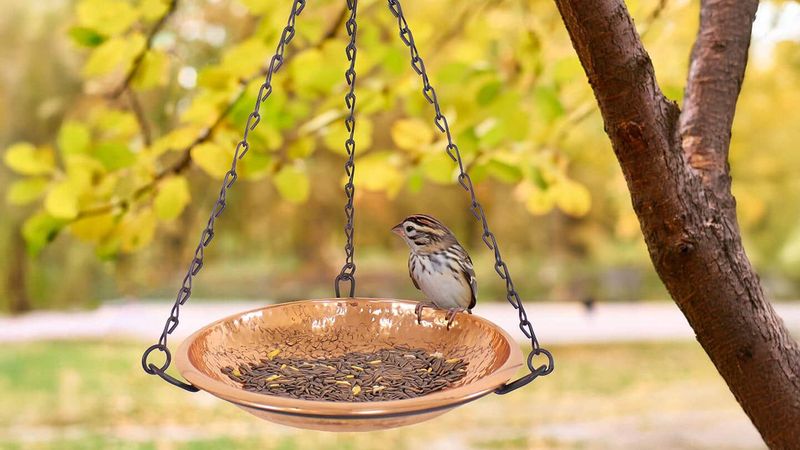
Starting small is the right move.
Put out a handful of white millet, enough to cover the bottom of a shallow tray in a single layer, during the cooler months when eastern painted buntings are more likely to be present in Florida.
Check the tray the next morning.
If the seed is gone, you can add a little more the following day.
If most of it is still sitting there after 24 hours, scale back and try again.
Cornell’s seed guide describes white millet as a favorite of many ground-feeding birds, which is exactly why it attracts more than just buntings.
Cowbirds, blackbirds, and House Sparrows all respond to millet, sometimes in numbers that crowd out the quieter birds you were hoping to see.
Watching what shows up in the first week tells you a lot about what your yard and neighborhood support.
Project FeederWatch’s feeding guidance is clear that scattering large quantities of seed on bare ground and leaving it indefinitely creates problems: mold grows fast in Florida’s humidity, rodents move in, and nuisance wildlife follows.
Only offer what birds can realistically consume in a single day.
Rake up spilled seed and empty hulls beneath the feeder every day or two, keep the tray surface clean, and think of the whole setup as a living experiment rather than a set-it-and-forget-it station.
Florida Timing Shapes What A Visit Means
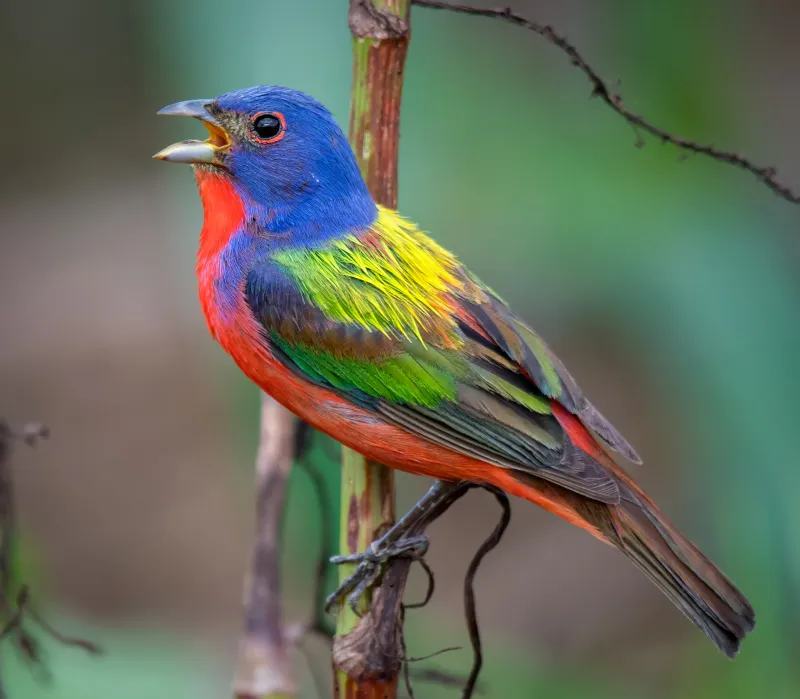
Seeing a painted bunting at your feeder in January is genuinely exciting, and it also means something specific.
Florida Fish and Wildlife Conservation Commission research confirms that Florida is the only state with both breeding and wintering populations of the eastern painted bunting.
The winter range across the state is broader than the breeding range, which is more tightly concentrated along northern Atlantic coastal areas and parts of the Panhandle.
A bird using your feeder in winter is most likely a visitor spending the cold months in Florida before heading north to breed in spring.
That is a real and worthwhile visit, but it is different from a bird nesting in your yard.
The feeder may become a regular stop during those winter weeks, and then the bird will leave.
That departure is not a failure of your setup.
A long-term USGS mark-recapture study found meaningful site fidelity in the eastern coastal population, meaning many adult birds do return to the same general areas.
But that pattern reflects population-level behavior at study sites, not a guarantee that the same individual will return to your specific tray feeder next November.
Visits can shift because of migration routes, food availability, weather patterns, habitat changes, predator pressure, and natural population fluctuations.
Holding the setup loosely, as something that may help rather than something that locks birds in, keeps the whole experience more honest and more enjoyable.
Build Habitat Beyond The Feeder
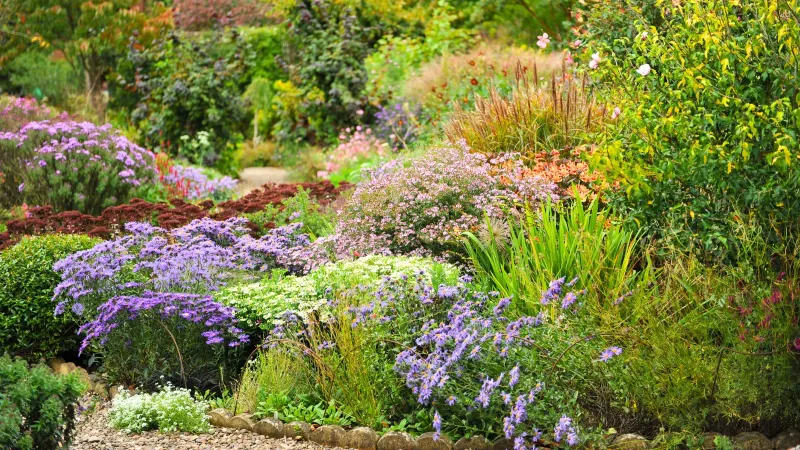
A feeder supplies food.
It does not supply a habitat.
Painted buntings in the wild use coastal scrub, maritime hammock, shrub edges, weedy fields, and dense understory, places that offer shelter, perching spots, insects, and nesting possibilities all in one package.
FWC’s habitat guidance frames a complete wildlife yard as one that provides food, water, shelter, and space to raise young, and a feeder alone handles only the first of those four.
Layering native shrubs, ornamental grasses, and small trees around and near the feeding area adds genuine value.
FWC’s native plant connection resource explains that native plants support the insects that birds, including painted buntings during breeding season, depend on for protein.
Limiting pesticide use in the yard keeps that insect base intact.
A yard sprayed heavily for mosquitoes or lawn pests may have fewer of the caterpillars, beetles, and grasshoppers that buntings actively seek when raising young.
FWC’s habitat tips suggest thinking in layers: low groundcovers and grasses at the base, mid-height shrubs in the middle, and taller trees at the back or perimeter.
For Florida yards, that might mean native grasses along a fence line, a few dense shrubs near the feeder, and a canopy tree further out.
No single plant is a proven painted-bunting magnet, but a layered planting gives any visiting bird more reasons to stay for more than a quick snack.
Clean Stations Protect Birds And Neighbors
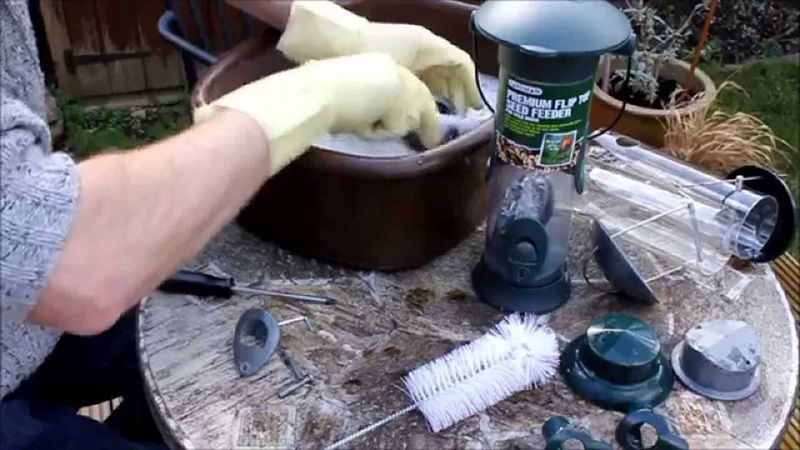
Bird feeders concentrate animals in a small space, and that concentration creates real risks.
Crowding spreads disease faster, competition stresses birds, and wet seed sitting in Florida’s heat and humidity can grow mold within 24 hours.
FWC’s guidance on feeding wildlife is honest about this: feeding stations can increase crowding, competition, and disease transmission when managed carelessly.
A practical sanitation routine is not complicated.
Scrub old seed and droppings off the tray every 1 to 2 weeks as a baseline, and more often during Florida’s hottest, most humid stretches or when use is heavy.
When the feeder needs a deeper clean, use a solution of 1 part bleach to 9 parts water, scrub thoroughly, rinse completely, and let the feeder dry all the way before refilling.
Project FeederWatch’s sanitation guidance echoes this routine and warns specifically against adding any medication to seed or water.
If a bird appears sick, do not try to treat it yourself.
If you spot a bird that looks lethargic, puffed up, or disoriented near your station, take the feeder and birdbath down temporarily, clean both pieces of equipment, and keep pets away from the affected bird.
FWC’s wildlife health reporting channels are the right place to report sick or dead birds so biologists can track emerging illness patterns.
Resuming feeding before a disease event has passed can spread illness to healthy birds passing through your yard, which is the opposite of what any of this is meant to do.
Let Nature Set The Schedule
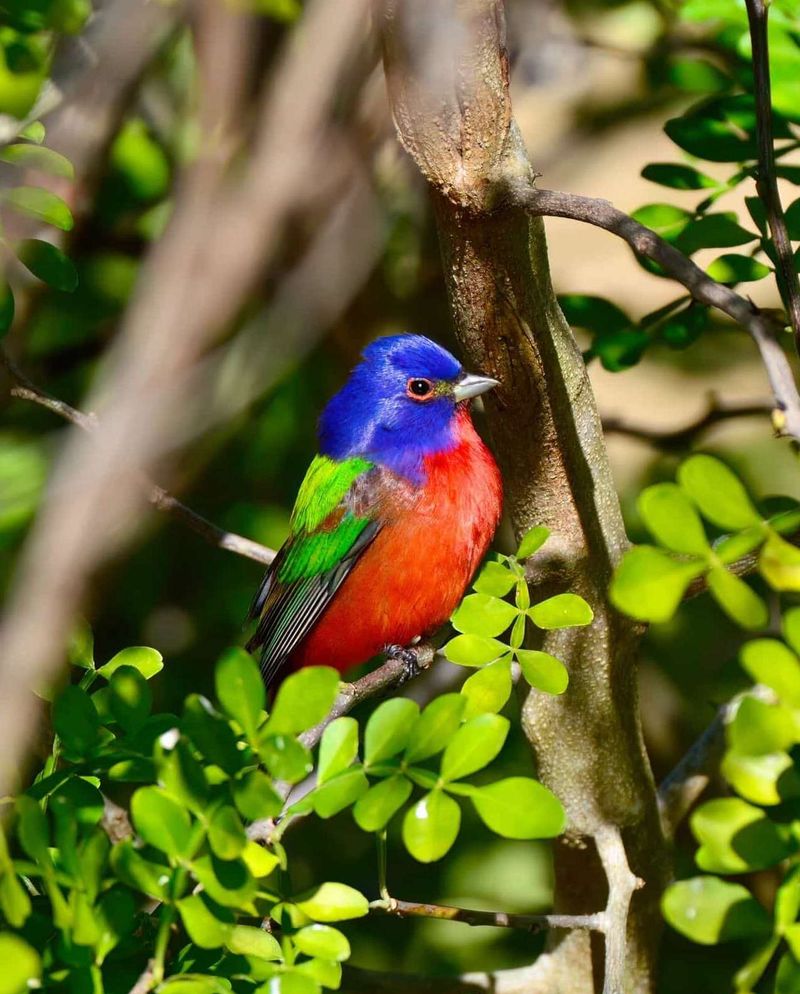
A clean, low station placed beside safe, dense cover may make your yard a more useful stop for painted buntings moving through Florida.
Adding a shallow birdbath within about 10 feet of the vegetation, limiting pesticides to protect the insect base, and keeping cats indoors rounds out the setup in a way that supports birds across the whole season, not just during the minutes they spend at the tray.
FWC’s habitat framework ties all of those elements together as complementary pieces rather than a ranked list of guaranteed fixes.
FWC’s painted bunting profile documents Florida breeding and winter survey declines of roughly 4 to 6 percent annually, driven by habitat loss, illegal trapping, and other pressures that a backyard feeder cannot reverse.
A well-managed yard can function as a safer stopover and improve your chances of observation, but it operates at a local scale while the larger population challenges play out across the whole landscape.
The USGS site-fidelity research shows that painted buntings do return to familiar areas, but that pattern belongs to the population, not to any promise about your specific tray.
Set the station up well, keep it clean, and let the birds decide on their own schedule.
The ones that do show up will have found something genuinely worth stopping for.