
The Meaning Behind An Owl Landing In Your Texas Yard During A Heat Wave
Follow us on Google
You step outside before breakfast and the patio already feels like a sauna, and there it is, an owl sitting in your yard like it owns the place.
Most people freeze, then reach for their phone to look up what it means.
The honest answer is more interesting than any omen: the bird probably found something useful in your yard, and understanding what that is can actually make your outdoor space better for wildlife.
Here is what the sighting is really telling you, and what to do next.
Read the Sighting as Habitat, Not an Omen
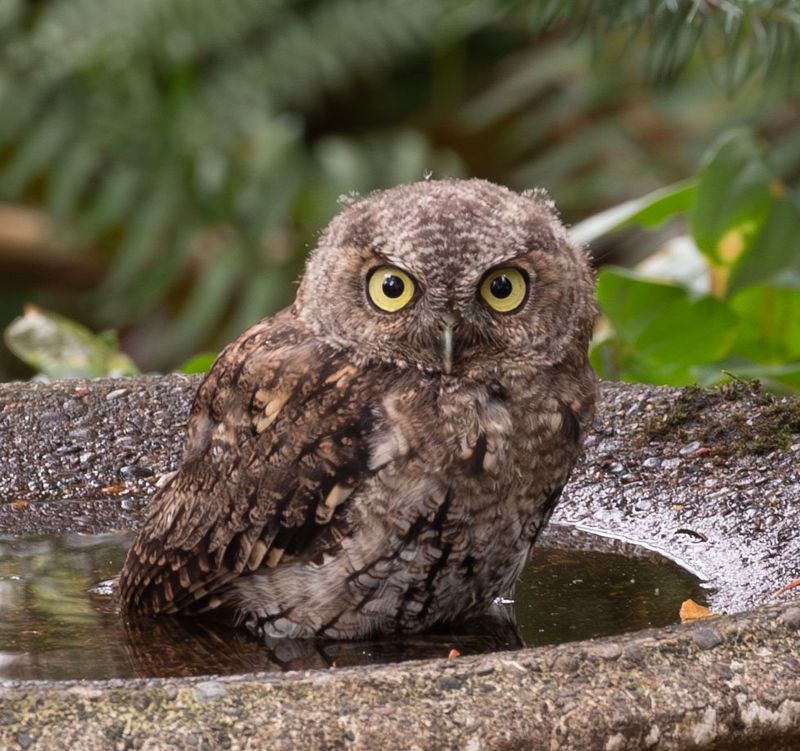
An owl sitting in your yard during a Texas heat wave is not delivering a message about death, incoming storms, or a windfall of good luck.
What it most likely found was something useful: shade, a quiet perch, a patch of cover, a water source, or prey moving through the area.
Texas Parks and Wildlife Department owl guidance documents that owls regularly use suburban yards, parks, tree cavities, and other sheltered spots as part of their normal range.
One visit cannot tell you exactly which resource drew the bird, but the heat wave makes useful habitat especially plausible.
Across many cultures, owls carry dramatic symbolic weight.
A global review of cultural beliefs about owls found that interpretations range from death omens to symbols of wisdom and good fortune, varying widely by region and tradition.
None of those beliefs are wildlife evidence.
The bird is not forecasting anything.
It responded to what your yard offered at that moment, the same way it would respond to any patch of habitat along its route.
The same logic applies to the idea that one owl proves your property is overrun with mice or rats.
That assumption gets ahead of the evidence too, and the next sections will explain why.
For now, the most useful frame is this: your yard may be offering a small piece of workable habitat during a hard stretch of summer weather.
Texas Parks and Wildlife habitat resource guidance treats water, cover, and native vegetation as critical resources for birds in the state’s hot, dry climate, and an owl finding your yard during a heat wave fits that picture.
Before doing anything, watch the bird from a comfortable distance.
Its posture, alertness, and behavior will tell you more than any folklore ever could.
Heat Makes Water and Shelter Plausible Resources
Triple-digit Texas summers put real pressure on wildlife.
Water sources dry up, shade shrinks as the sun climbs higher, and the ground radiates heat long after sundown.
Under those conditions, a yard with a birdbath, a dense shrub, or a shaded live oak becomes genuinely more attractive to birds moving through the area, and that includes owls.
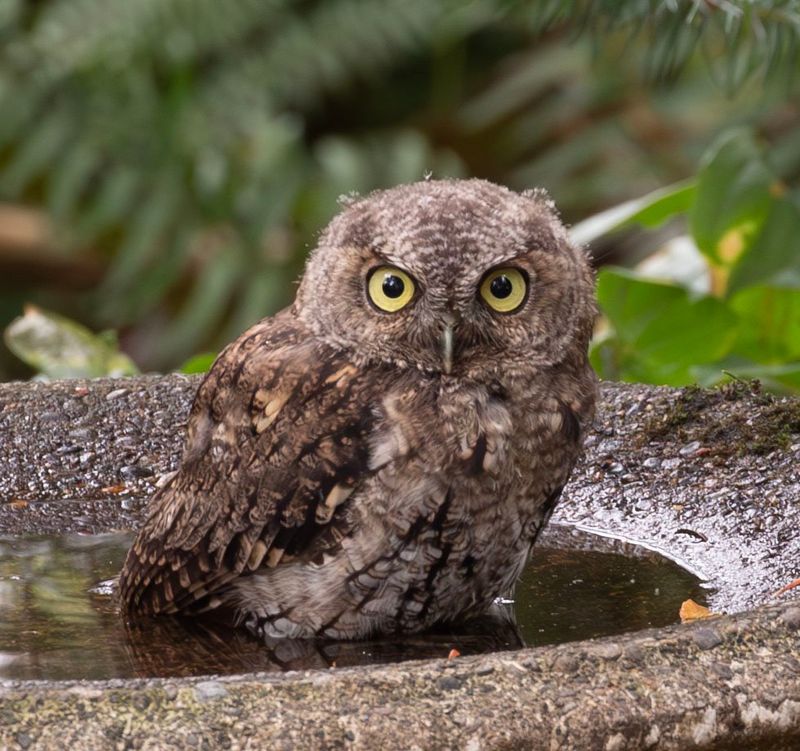
A Texas Parks and Wildlife account from a drought season describes a barred owl visiting a backyard water basin, at one point sitting with its talons in the water.
That is a real, observed behavior.
But the account is one example, not a universal explanation for every owl that shows up near a birdbath.
The bird may have been drinking, cooling its feet, watching prey near the water’s edge, using the basin as a landmark, or simply choosing a nearby perch because the spot felt secure.
The point is that hot, dry conditions can raise the value of water, shade, and shelter in your yard without meaning the owl was in crisis.
Texas Wildscapes guidance recommends shallow water features and native plantings specifically because they support birds during the state’s long dry stretches.
Your yard may have offered a resource that was simply harder to find elsewhere on a 105-degree afternoon in August.
What you cannot determine from one sighting is which resource mattered most, or whether the owl will return.
Shade and shelter are just as important as water in a hot yard, and the bird may have been drawn by any combination of them.
The heat wave makes the visit plausible habitat behavior, not proof of any single cause.
Daylight Does Not Automatically Mean Distress
Seeing an owl in broad daylight surprises most people, and the instinct is to assume something is wrong.
For many Texas owl species, daytime activity is genuinely unusual, but unusual does not automatically mean distressed or injured.
Context matters more than the time on your clock.
Texas Parks and Wildlife notes that most Texas owls hunt primarily at twilight and nighttime, while some species are active during the day.
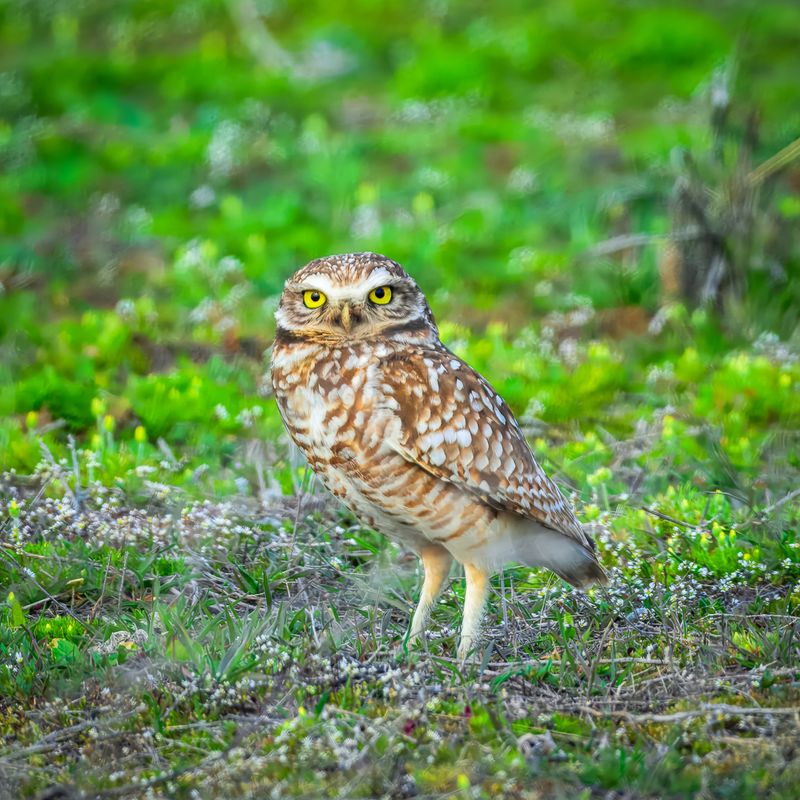
The burrowing owl is a clear example: burrowing owl species information from Texas Parks and Wildlife confirms that this small, ground-dwelling bird found in West Texas and the Panhandle may hunt by day or night depending on conditions.
Spotting one standing upright in an open area during daylight is completely normal behavior for that species.
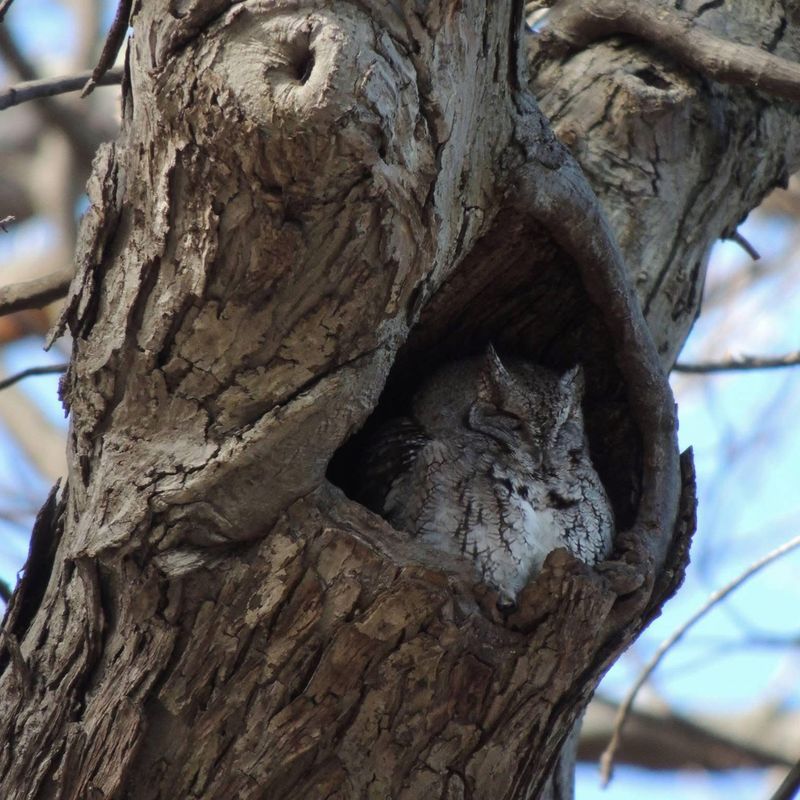
An eastern screech-owl, by contrast, typically spends daylight hours tucked into a tree cavity or an old woodpecker hole, barely visible.
If you see one sitting quietly inside a hollow or pressed against a branch with its feathers tight against its body, it is almost certainly roosting normally.
That bird does not need help.
Young great horned owls add another layer.
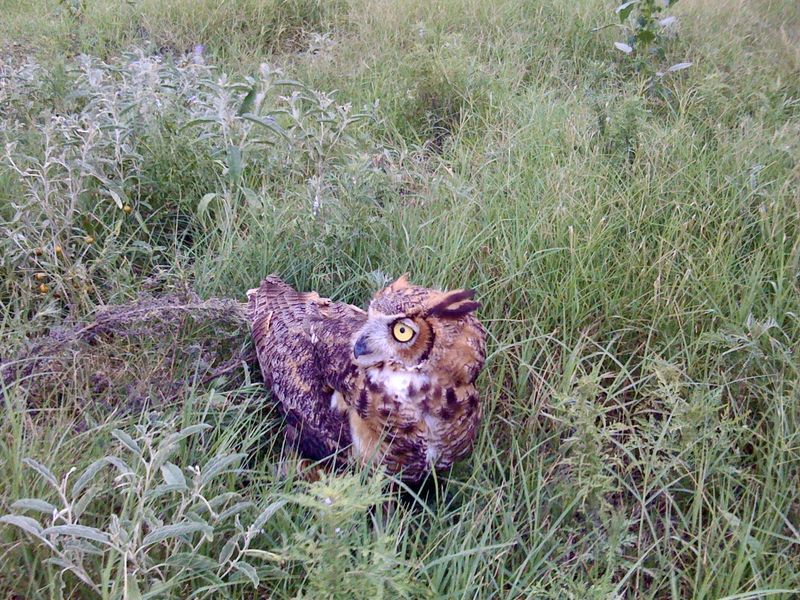
Cornell Lab of Ornithology coverage of great horned owl fledglings describes young birds spending several weeks exploring nearby trees after leaving the nest, sometimes sitting low or in exposed spots while their parents continue feeding and watching them.
A fledgling that looks awkward or vulnerable is not necessarily abandoned.
Cornell’s barn owl overview describes barn owls as normally nocturnal and hidden during the day.
A barn owl visible in daylight warrants closer attention to its behavior, though even then, posture and alertness matter more than the hour.
Barn owl nest heat-stress observations from Cornell show that birds may open their bills or droop their wings to release heat, but those documented behaviors involve observed nestlings, not a blanket rule for every species.
The practical approach is to assess what you actually see: Is the bird upright and alert?
Can it track movement with its eyes?
Does it fly when approached?
Those answers matter far more than whether the sun is up.
Observe First and Avoid Unnecessary Rescue
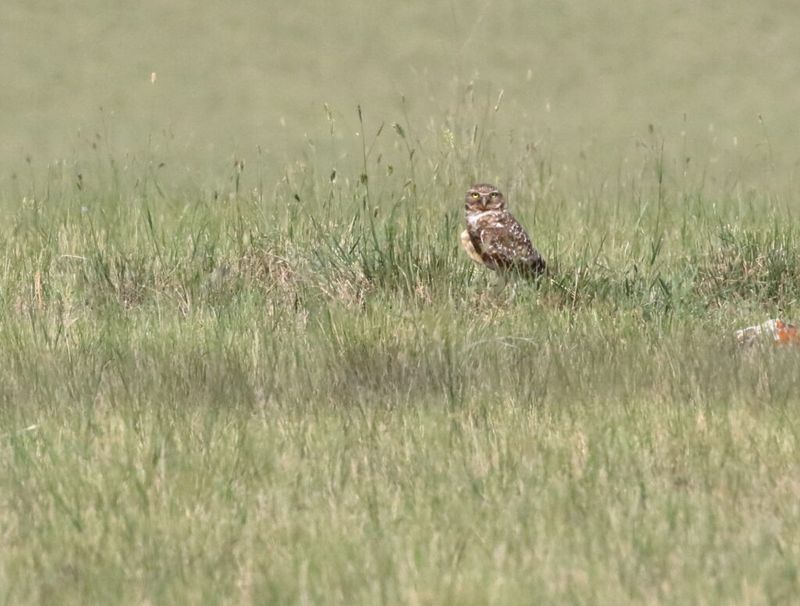
An upright, alert owl that can fly does not need your intervention.
The best thing you can do in that moment is step back, give the bird at least 20 to 30 feet of space, and watch quietly.
Owls are not tame animals, and even a healthy bird that looks calm can become stressed when people move toward it.
As a general safety precaution, keep dogs, cats, and children away from the area while the owl is present.
Raptors have sharp talons, and a stressed or cornered bird may defend itself.
Loud noise and sudden movement can also push a resting bird into unnecessary flight during the hottest part of the day, which costs the bird energy it may need.
Reducing disturbance protects both the bird and anyone nearby.
Owls are protected under federal and Texas law.
The Migratory Bird Treaty Act generally prohibits capturing, killing, selling, or transporting protected migratory birds without authorization, and Texas Parks and Wildlife confirms that owls may not legally be killed.
That protection extends to well-meaning homeowners who might otherwise try to move or contain a bird they think is in trouble.
Texas Parks and Wildlife’s wildlife rehabilitation guidance makes a point that resonates here: people often do more harm by intervening too quickly with wild animals.
If the owl is perched, alert, and showing no visible signs of injury, calm observation is the right and complete response.
You do not need to do anything dramatic.
Watching a wild owl from your back door on a hot Texas morning is genuinely one of the better things your yard can offer you.
Offer Clean, Shallow Water and Better Cover
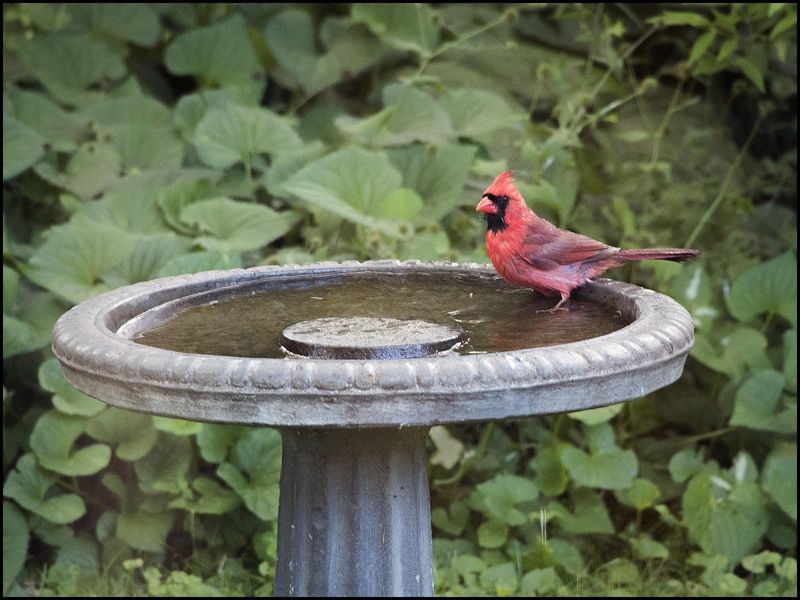
You cannot lure an owl to your yard on demand, but you can make the yard more genuinely useful to wildlife during extreme heat.
The place to start is water, done right.
Texas Partners in Flight water guidance recommends a dish less than 2 inches deep placed in a shaded location.
Audubon’s birdbath guidance suggests roughly 1 to 1.5 inches of water and recommends adding stones or a flat rock so birds have secure footing and can choose their depth.
A stable, wide dish works better than a tall, narrow one that tips easily.
During triple-digit weather, refresh the water at least once a day, because sitting water heats up fast and loses its appeal quickly.
Cleaning matters as much as filling.
Audubon’s guidance on keeping birdbaths clean recommends scrubbing the basin regularly and disinfecting it with a weak bleach solution, then rinsing thoroughly before refilling.
Texas Parks and Wildlife habitat resource guidance also warns that water features should be cleaned to reduce algae and mosquito problems.
A neglected birdbath can actually work against wildlife health rather than supporting it.
Do not add oil, dish soap, or random mosquito treatments to a small water dish.
Texas Parks and Wildlife specifically warns that oil can harm wildlife.
The safer approach to mosquito control in a small container is simple: empty it, scrub it, and refill it every 2 to 3 days so water never has time to become a breeding site.
Audubon’s bird care FAQ supports this approach.
Avoid deep containers or slippery surfaces that could trap a bird that wades in too far.
Water is one piece of the picture.
Shade and shelter matter too.
Texas Parks and Wildlife Wildscapes design tips and Texas Wildscapes habitat tips both recommend native trees, shrubs, snags, and layered vegetation as important parts of wildlife habitat.
A live oak (Quercus virginiana) that shades the south side of your yard, a dense native shrub like Texas sage (Leucophyllum frutescens), or an old snag left standing can provide roosting spots, cover, and hunting perches that no birdbath alone can replicate.
No single feature guarantees that an owl will return, but a yard with multiple resources is genuinely more useful than one with none.
Do Not Turn One Owl Into a Pest-Control Plan
Here is where a lot of well-meaning advice goes sideways.
Someone sees an owl and immediately concludes the yard has a serious mouse problem, then starts planning around the bird as if it were a hired exterminator.
One owl sighting cannot diagnose a rodent infestation, and trying to use owls as a pest-control strategy creates its own risks.
Owl diets are much broader than most people realize.
Texas Parks and Wildlife’s owl overview notes that owls eat rodents, insects, reptiles, amphibians, and other animals depending on species and habitat.
The eastern screech-owl eats insects, spiders, crayfish, small birds, and small mammals.
The elf owl, the smallest owl in North America and found in parts of West Texas and the Trans-Pecos, subsists largely on insects and scorpions.
A single visit from any of these birds tells you nothing specific about your rodent population.
The rodent-poison issue is serious.
If you use anticoagulant rodenticides around your property and an owl eats a poisoned mouse or rat, the owl can absorb a lethal dose of the chemical itself.
Forest Service research on anticoagulant rodenticide exposure in owls and a related Forest Service biological assessment both identify secondary poisoning from rodenticides as a documented conservation concern for raptors.
If you want owls around, skip the poison bait stations.
For actual rodent concerns, the practical approach is sanitation, exclusion, and snap traps rather than hoping a visiting owl solves the problem.
Predators contribute to natural balance over time, but one owl cannot replace a well-managed property.
Attracting owls is a long-term habitat goal, not a quick fix for a pest problem you can count in your garage.
Recognize an Injured Bird and Call Before Acting
Most owls you see in a Texas yard are fine.
But occasionally a bird genuinely needs help, and knowing the difference between a bird that is resting and one that is in trouble can matter a great deal.
Contact a permitted wildlife rehabilitator if you see any of the following: visible wounds or bleeding, a broken or dangling wing, an inability to stand or fly after several minutes, repeated collapse, a severe head tilt, entanglement in netting or wire, or behavior that is unusually tame and unresponsive to your presence.
Texas Parks and Wildlife’s wildlife rehabilitation page can help you find a permitted rehabilitator in your area.
Contact them first, before you attempt to catch or transport the bird, and follow their specific instructions.
Do not force water, food, or medicine into a grounded bird.
Texas Parks and Wildlife’s orphaned and injured animal guidance warns that inexperienced handling can cause water to enter a bird’s lungs, and that inappropriate feeding can cause serious harm to birds of prey.
Raw hamburger, pet food, and hot dogs are not safe substitutes for proper care.
Home treatment almost always makes things worse.
A young owl sitting low or looking awkward may simply be a fledgling.
Cornell Lab documentation of great horned owl fledglings in Austin notes that young birds can spend several weeks moving through nearby trees while their parents continue feeding and watching them from a distance.
That bird is not abandoned, it is just learning.
Leaving it alone, with pets and children kept away, is the right call.
The central lesson of the whole sighting holds here too: distance, patience, and a yard that offers real habitat usually do more good than any dramatic intervention.
Your job is to watch carefully, act only when the evidence actually calls for it, and know who to call when it does.
A yard that is genuinely useful to wildlife tends to take care of the rest on its own.