
The North Carolina Native Vine That Turns A Plain Fence Into The Kind Of Thing Neighbors Slow Down For
Follow us on Google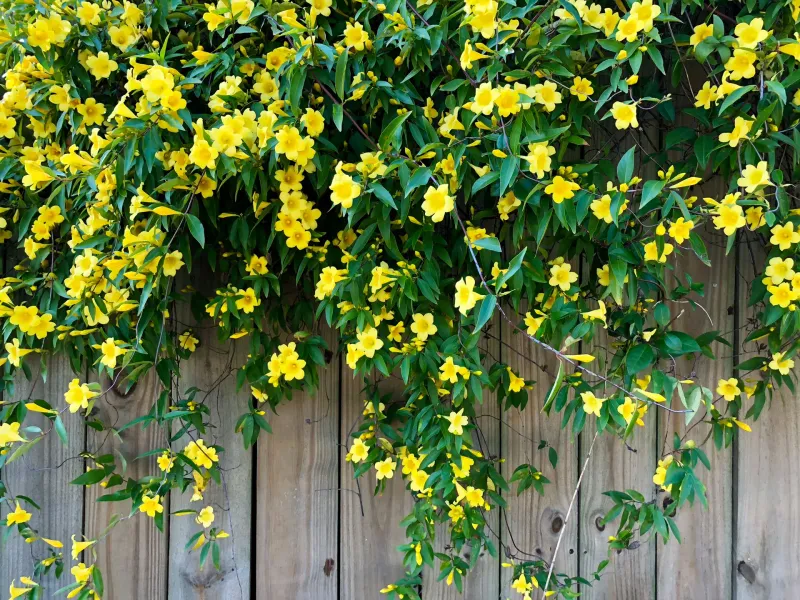
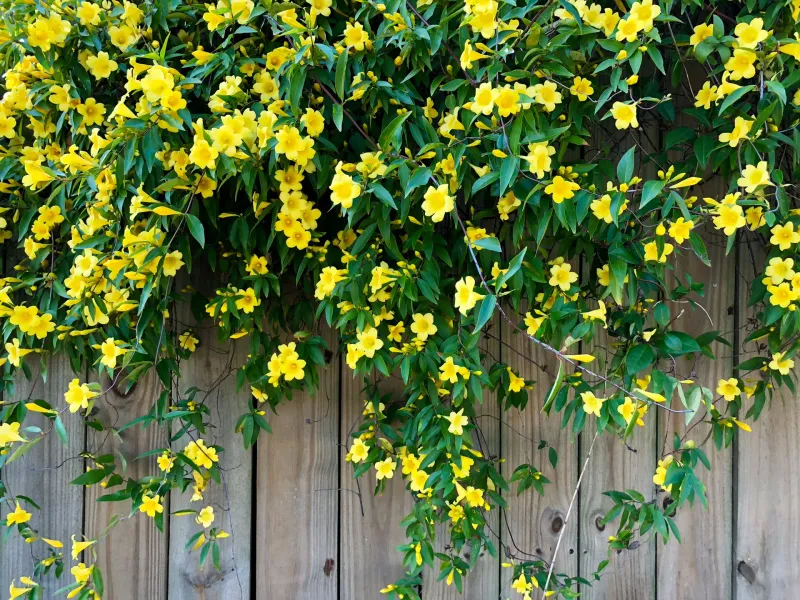
Sometime in late February, when most of eastern North Carolina still looks like a gray watercolor painting, a fence near your neighborhood suddenly catches fire with yellow.
Not one or two blooms, but waves of fragrant, trumpet-shaped flowers draped from one post to the next.
That vine is Carolina jessamine, Gelsemium sempervirens, and it is genuinely one of the most striking things a homeowner in the Coastal Plain or Piedmont can grow on a fence with almost no fanfare and a little patience.
Meet The Carolina-Native Vine
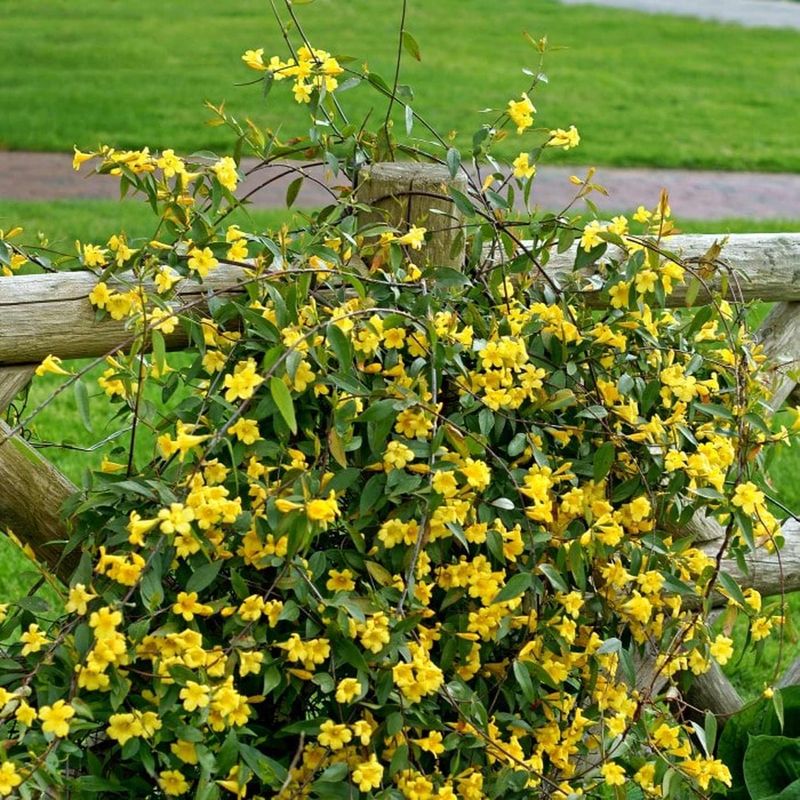
Somewhere along a back road in the Coastal Plain, or climbing a split-rail fence on the edge of a Piedmont neighborhood, Carolina jessamine, Gelsemium sempervirens, does something quietly remarkable.
Its stems wind around rails and wires, its glossy dark-green leaves catch the low winter light, and then, when February arrives, it opens hundreds of small yellow trumpets that smell faintly sweet on a warm afternoon.
NC State Extension lists it as a native vine, a hummingbird plant, a pollinator plant, and a showstopper, all in the same breath.
The twining stems are the first thing to understand.
Carolina jessamine does not cling to flat surfaces with sticky pads or aerial roots the way English ivy does.
It wraps itself around whatever is narrow enough to grip, a wire, a trellis rail, a porch column, and it builds from there.
Give it a proper support and it will use every inch.
Here is the geographic detail that matters before you buy a plant.
The North Carolina Botanical Garden’s vascular-plant records show natural populations across the Coastal Plain and eastern and southern Piedmont, but not in the mountains or much of the northwestern Piedmont.
A safer way to say it is that Carolina jessamine is native to much of eastern and central North Carolina, not the whole state.
One more thing worth saying plainly: Carolina jessamine is not North Carolina’s state flower.
Clemson Extension notes that it holds that honor in South Carolina.
North Carolina’s official state flower is the dogwood, full stop.
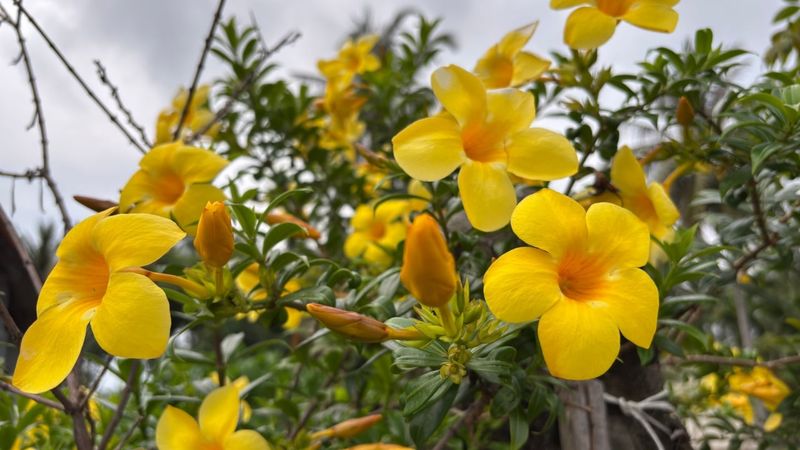
And do not confuse this plant with true jasmine, Jasminum, a different genus that sometimes shares shelf space at garden centers.
The scientific name on the tag is your best protection against a mix-up.
Why The Fence Looks Remarkable In Spring
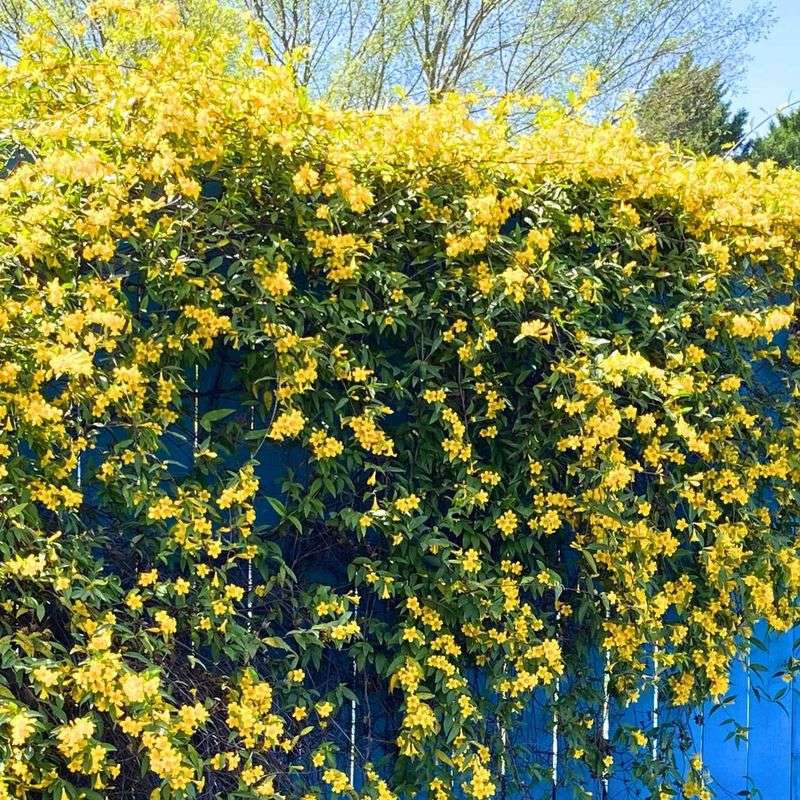
The payoff is real, and it happens at exactly the right time.
Most of the yard is still waiting on winter to release its grip when Carolina jessamine decides it is done waiting.
North Carolina’s natural-history records place the bloom window from February into early May, with the exact timing depending on your location and whatever the weather decides to do that year.
A mild spell in the Coastal Plain can push flowers out in the first week of February.
A cold snap in the Piedmont might hold them until March.
When the flowers do open, they come in clusters.
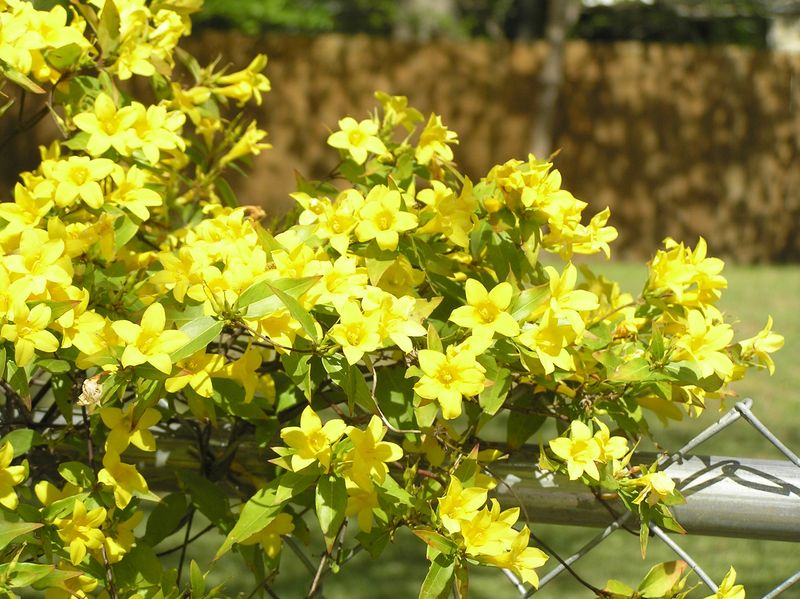
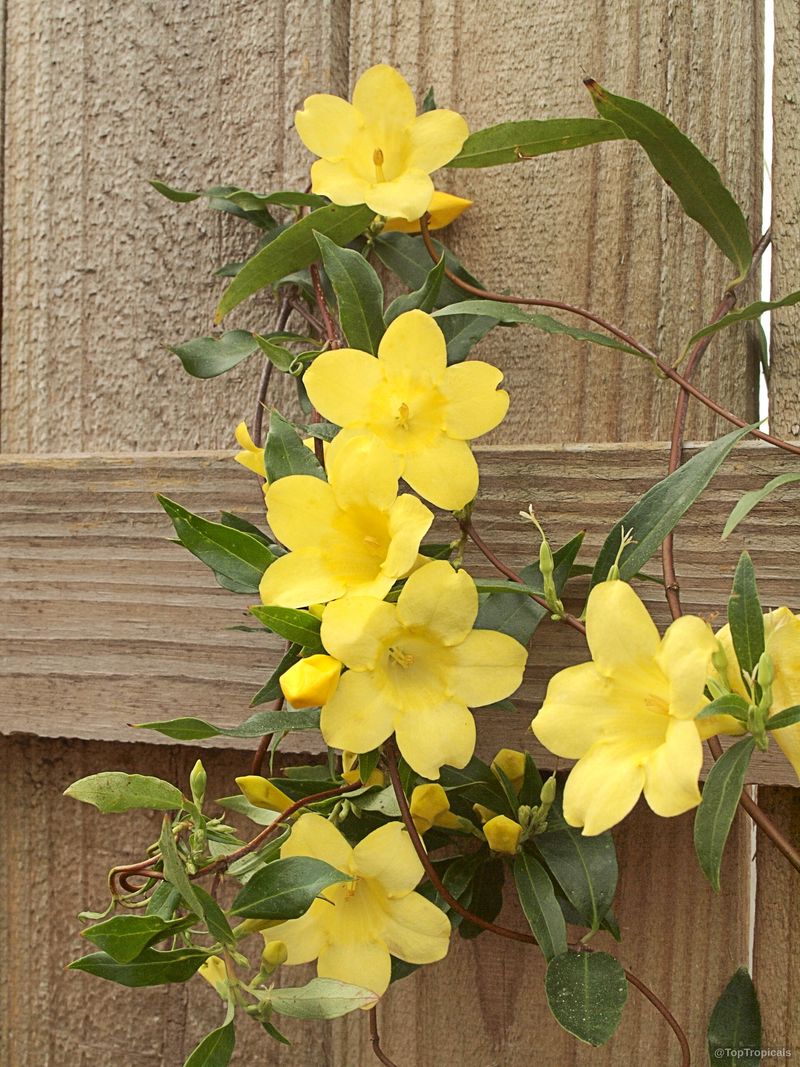
Each one is a small yellow trumpet, maybe an inch long, and together they create a wash of color along the fence line that reads from across the street.
The fragrance is light and sweet, the kind you notice when you step outside in the morning rather than something that overwhelms the yard.
The foliage is part of the picture too.
The leaves stay glossy and dark green through most of the year, though NC State notes they can bronze during cold winters, and the plant behaves as semi-evergreen toward the colder edges of its range.
Do not count on a dense, picture-perfect green screen through every North Carolina winter, especially inland where cold snaps arrive without much warning.
Clemson Extension describes trained plants reaching roughly 12 to 20 feet on a support, which is enough to fill a fence run beautifully.
But that coverage builds over several growing seasons, not one.
And once the main spring display fades, the vine holds its foliage through summer without putting on another big flower show.
Plan for a spectacular spring moment, not a continuous color source from May through September.
Give Its Twining Stems Something To Hold
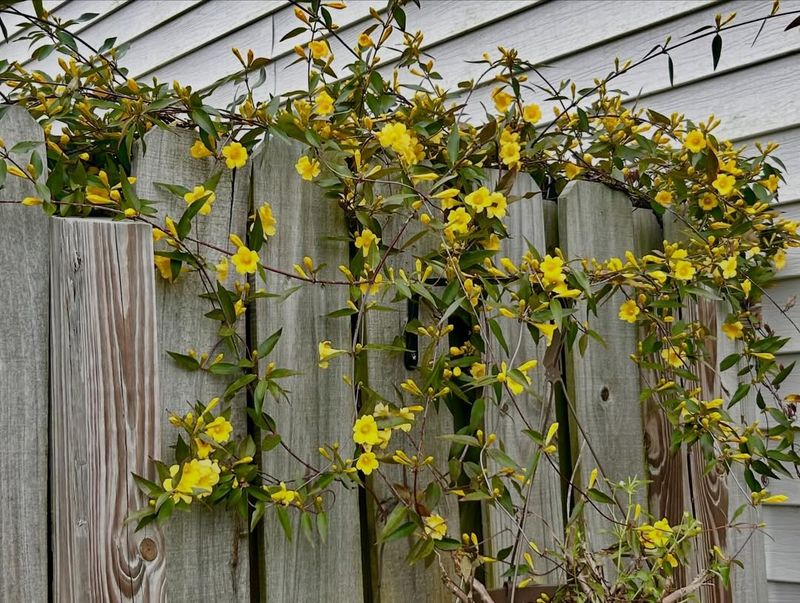
Carolina jessamine is a twiner, which means it moves by wrapping its stems around whatever is close enough to grab.
That one fact should shape every decision you make about where and how to install it.
A broad, flat surface like painted cinder block or smooth wood siding gives the stems nothing to grip, so the vine cannot climb it on its own.
A wire fence, a trellis with narrow members, an arbor, a porch column, or a wooden lattice screen, those are the structures that actually work.
The best fence setup for this vine is one with horizontal wires or rails spaced close enough that young stems can find them without wandering too far.
NC State’s plant account confirms the twining habit and lists fences, trellises, and arbors as appropriate supports.
A chain-link fence works well because the vine has dozens of grip points.
A solid privacy board fence works much less well unless you add wire or trellis panels across the face.
Training from the start saves real headaches later.
When new stems emerge, guide them toward the support and loosely tie them if needed.
Stems that find the support early build the framework for everything that follows.
Stems that wander sideways or droop toward the ground tend to pile up at the base and create a tangled mass that is harder to manage after the fact.
Here is where it gets tricky: do not install this vine where stems can reach siding, deck boards, eaves, or any combustible part of a structure.
NC State gives Carolina jessamine a high flammability rating, which means the fence or freestanding trellis is the right home for it, not the wall of the house.
Keep it where you can see it and redirect it when it starts reaching somewhere it should not go.
Choose Sun, Soil, And Spacing Before You Plant
Sun is the first decision, and it is not a close call.
Full sun, meaning at least 6 hours of direct sunlight every day, produces the strongest flowering and the densest growth.
Partial shade is tolerated, but the tradeoff is fewer blooms and thinner coverage along the fence.
Many Piedmont homeowners try to tuck this vine into a partly shaded corner and then wonder why it looks thin and reluctant.
The answer is almost always light.
Soil quality matters too, though Carolina jessamine is more flexible here than it is about sun.
Clemson Extension recommends moist, organically rich, well-drained soil as the ideal starting point.
The vine can handle some drought after it has established itself through a full growing season, which is useful in the sandy Coastal Plain where summer rain can be unpredictable.
What it does not prefer is sitting in poorly drained, waterlogged ground, so if your fence line stays wet after rain, amend the soil or choose a different spot.
Fall planting is the timing Clemson Extension recommends for container-grown plants.
The cooler soil temperatures in October and November let roots establish before the vine has to push new growth in spring, and the timing lines up well with North Carolina’s mild autumns before the first hard freeze arrives.
For spacing along a fence or trellis, the guidance from Clemson is 4 to 8 feet between plants.
A single plant can eventually cover a meaningful stretch of fence, but planting two or three along a fence run at proper spacing fills the line faster and more evenly.
NC State also notes a modest growth rate during establishment, so patience is part of the plan from day one.
Fertilize with a moderate amount of a slow-release balanced fertilizer during active growth in spring.
More is not better here.
Excess fertilizer pushes leafy growth at the expense of flowers, which is the opposite of what you want from a vine you planted for its spring display.
Let Patience And Pruning Build The Display
The first spring after planting, do not expect the fence to disappear under a curtain of yellow.
A newly installed Carolina jessamine spends most of its first season putting energy into roots rather than top growth, and that is actually a good sign.
NC State describes a modest growth rate until establishment, with trained growth of 12 to 20 feet potentially taking 3 to 4 growing seasons.
That timeline is honest, and homeowners who know it going in tend to stick with the plant long enough to see the real payoff.
Pruning is where most people go wrong with vines, either skipping it entirely or doing it at the wrong time.
With Carolina jessamine, the rule is straightforward: prune after the main flowering period ends, not before it.
Clemson Extension and NC State both recommend post-bloom pruning for shaping, training new growth, and removing dead or broken stems.
Cutting before bloom means cutting off the flower buds that are already forming, which costs you the spring display you waited all winter to see.
On older, established vines that have grown sparse at the base or top-heavy at the top, a more aggressive post-bloom trim can redirect energy back into the framework.
Think of it as editing rather than punishment.
Remove the sections that have stopped contributing and let the healthy growth take over.
One more thing to keep in mind: Carolina jessamine can become weedy in disturbed areas along roadsides and fence lines.
In a managed garden setting it is controllable, but it does require regular oversight rather than a plant-it-and-forget-it approach.
Check the fence line each season and redirect or cut back stems that are spreading beyond the planned area.
Winter appearance varies by location.
In the Coastal Plain and warmer parts of the Piedmont, the foliage typically stays green or close to it.
Farther north or inland, leaves may bronze or thin out during cold snaps.
The vine is not fully deciduous, but it is not a guaranteed dense green screen through every North Carolina winter either.
Use The Flowers As One Layer Of Habitat
A fence covered in Carolina jessamine in February is not just a pretty thing to look at from the street.
It is one of the earliest sources of nectar available in the yard, arriving weeks before most other flowering plants have decided winter is over.
That early timing is actually what makes it useful to wildlife, not just visually striking to people.
NC State Extension lists Carolina jessamine as a nectar plant that attracts hummingbirds, butterflies, and other pollinators.
The tubular yellow flowers are shaped well for hovering visitors, and the bloom timing lines up with the arrival of ruby-throated hummingbirds in North Carolina, typically in late March or April as they move north.
NC State’s backyard habitat guidance names bright, tubular flowers among the plants that suit ruby-throated hummingbirds specifically, the only hummingbird species that breeds in North Carolina.
Butterflies and native bees also visit the flowers, and early spring nectar sources matter in a yard where most of the summer-blooming plants have not yet woken up.
Think of Carolina jessamine as the opening act in a longer season of habitat planting, not the whole show.
That qualification matters.
The vine provides real early-season value, but it is one resource among several that a genuinely wildlife-friendly yard needs across the full year.
Pair it with later-blooming natives like Joe Pye weed, goldenrod, or native asters if supporting pollinators through the full season is the goal.
Carolina jessamine gets the season started, and other plants carry it forward.
The habitat value is genuine, and it comes with conditions covered in the next section.
The flowers attract desirable wildlife, but the plant as a whole is not universally safe for every creature in the yard.
Check Toxicity And Fire Risk Before Choosing A Spot
Before you decide where this vine goes, two facts need to be part of the conversation.
The first is toxicity.
Every major part of Carolina jessamine, leaves, flowers, fruit, roots, stems, seeds, bark, and sap, is poisonous if eaten.
NC State’s plant account is direct about this, and the Merck Veterinary Manual lists the entire plant as toxic to animals, describing weakness, incoordination, dilated pupils, convulsions, coma, and possible death following ingestion.
Ordinary contact with the plant is not the same as poisoning.
The documented risk is ingestion, not brushing past the leaves or touching the flowers.
But that distinction matters most for placement decisions.
A fence that small children or chewing dogs can reach directly is a different situation than a fence along a property line where access is limited.
Keep trimmings away from children and animals, do not use clippings as mulch near areas where pets graze, and if you suspect any person or animal has eaten part of the plant, contact poison control or a veterinarian promptly rather than waiting to see what happens.
The second fact is fire risk.
NC State gives Carolina jessamine a high flammability rating.
That rating is a direct instruction about placement: do not install this vine in the defensible space immediately around a home.
Do not let it climb toward wood siding, deck boards, eaves, or any other combustible part of the structure.
A freestanding fence away from the house, a garden arbor in the open yard, or a trellis panel well clear of the building are the appropriate homes for it.
The honeybee question deserves careful handling.
NC State warns about toxic pollen.
USDA Agricultural Research Service findings showed that the compound gelsemine may affect honeybee feeding and queen egg-laying at some tested concentrations, but the researchers noted that effects on whole colonies are not yet fully understood.
The honest takeaway is that caution is warranted near managed hives, but the evidence does not establish that every planting causes colony-level harm.
Make The Fence Decision With Clear Eyes
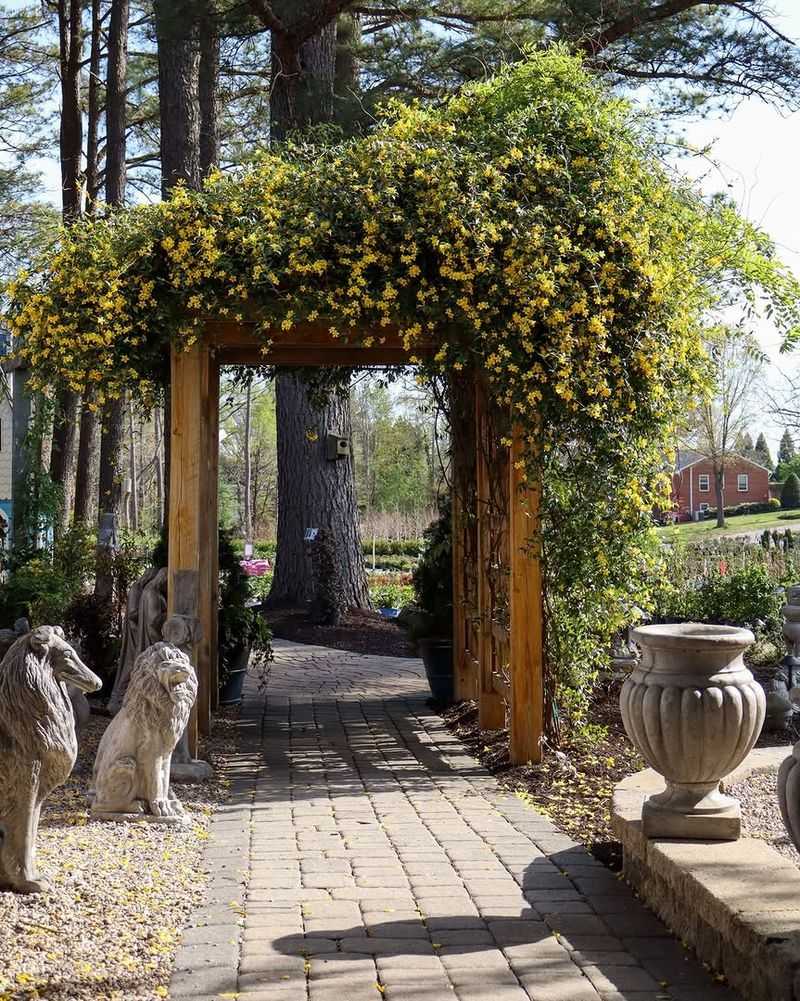
Carolina jessamine can genuinely make a fence memorable.
The early yellow flowers, the fragrance on a warm February morning, the vertical structure through the growing season, and the early nectar for hummingbirds and pollinators are all real.
NC State Extension and Clemson Extension both support its use on fences and trellises in the right setting.
But the right setting involves a checklist, and skipping any part of it tends to produce frustration rather than a showstopper.
Work through these questions before you buy a plant.
Is your property in the Coastal Plain, eastern Piedmont, or southern Piedmont, the areas where natural populations are documented?
Does the fence line get at least 6 hours of direct sun daily?
Is there a narrow support like wire, trellis members, or lattice for stems to wrap around?
Can you space plants 4 to 8 feet apart and commit to 3 to 4 growing seasons before the fence looks full?
Are you prepared to prune after bloom each year and redirect stems that wander beyond the plan?
Also ask: Can children or chewing pets reach the vine or its trimmings?
Is the fence close enough to the house that a climbing vine could eventually reach siding, eaves, or deck boards?
If the answers to those last two questions are yes, placement needs to change before the plant goes in the ground.
This vine is not instant privacy, not a summer-long color source, not a pest deterrent, and not something you can ignore after planting.
What it actually is, for the right fence in the right location, is one of the most striking early-spring moments a North Carolina yard can produce, and that is a promise the plant keeps reliably, year after year, once it settles in.