
The North Carolina Native Shrub Whose Compounds Showed Laboratory Tick Repellency
Follow us on Google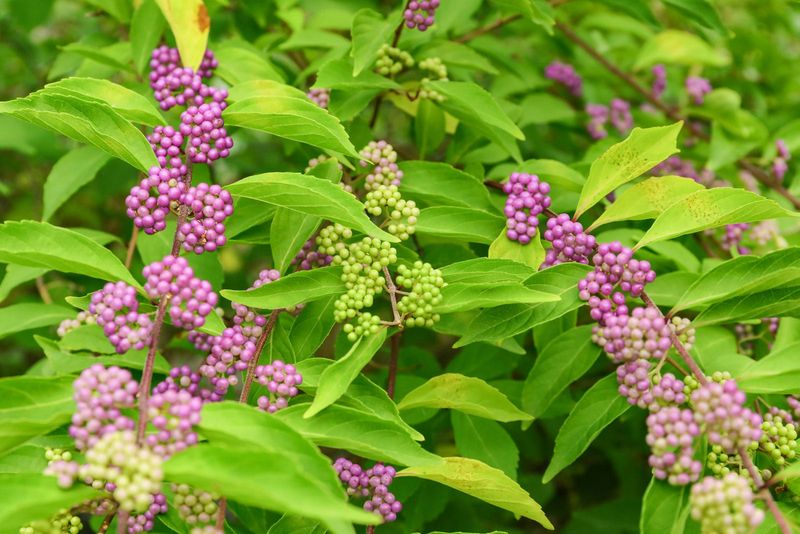
Somewhere between pulling weeds and checking the dog for ticks, a lot of North Carolina homeowners have heard that a native shrub in the backyard might help with the tick problem.
The plant is American beautyberry, and there is real science behind the connection, but the story is more specific than most social media posts let on.
Understanding what researchers actually found, and what they did not, helps you make smarter choices about your yard this season.
Meet the Native Shrub Behind the Tick Research
American beautyberry, Callicarpa americana, earns its name in late summer when clusters of glossy purple berries appear up and down every arching branch.
The shrub is a genuine North Carolina native, and NC State Extension’s native plant guidance lists it among the regionally appropriate deciduous shrubs suited to the state’s varied landscape.
Its connection to tick science, though, comes from a laboratory, not a backyard.
The tick story starts with compounds extracted from beautyberry leaves, not with a living shrub growing in a garden bed.
Researchers isolated specific chemicals and tested those chemicals in a controlled setting.
Planting the shrub does not automatically recreate those conditions, and no published study has measured whether a growing beautyberry changes the number of ticks crawling through a residential yard.
Set that caveat aside for a moment and the plant itself is worth knowing.
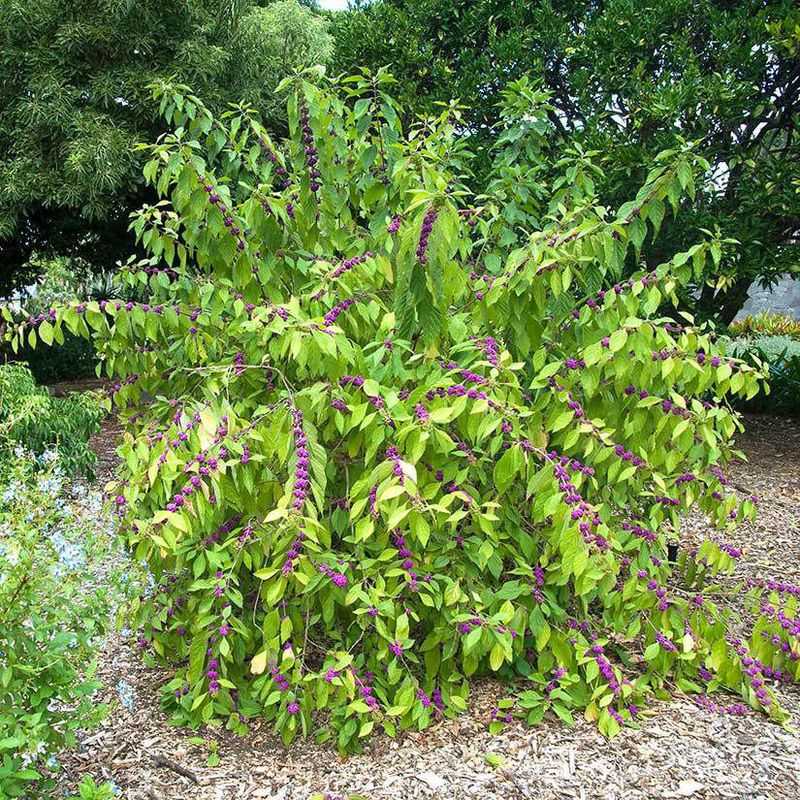
Beautyberry grows roughly 3 to 8 feet tall and 3 to 6 feet wide, which fits comfortably into a typical suburban yard without crowding a fence line or shading out a vegetable bed.
The NC State Gardener Plant Toolbox profile for Callicarpa americana notes that the berries feed songbirds and small mammals through fall and into winter.
Mockingbirds, robins, and brown thrashers all visit the fruit.
The flowers are small and easy to overlook in summer, but pollinators find them.
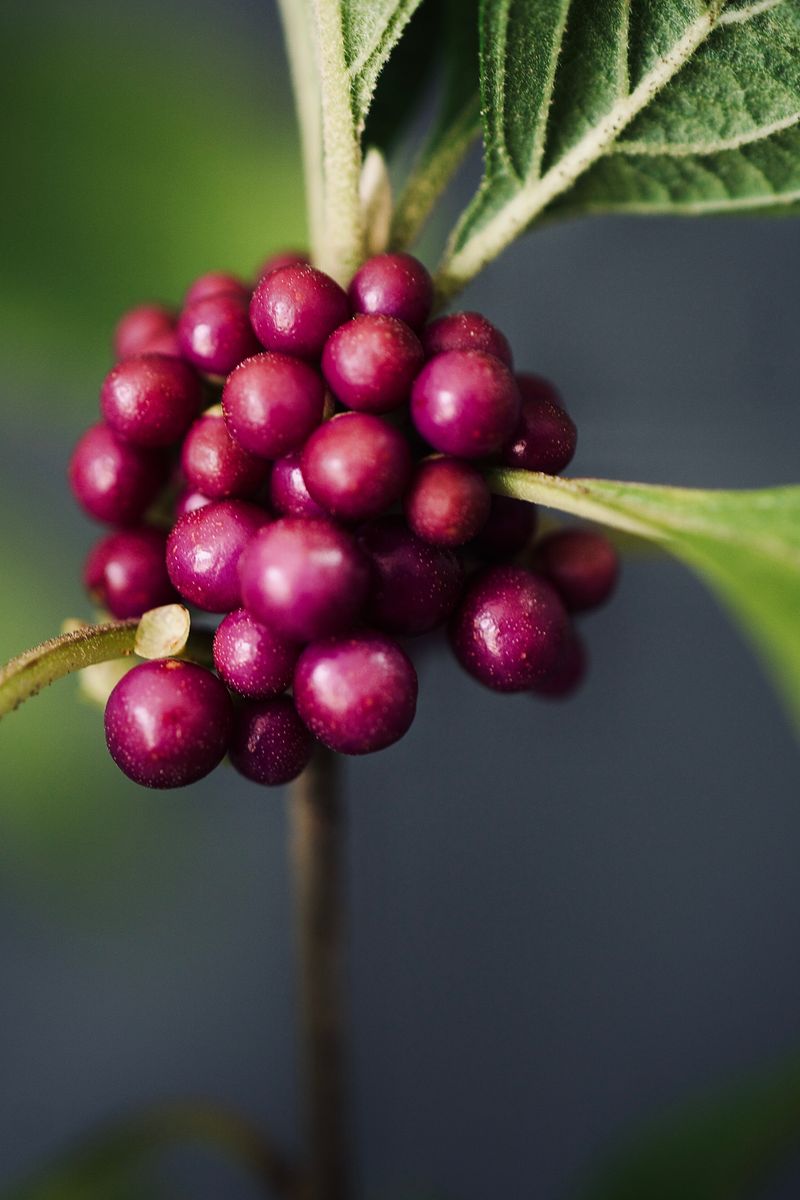
Then those electric purple berry clusters arrive in September and stay on the branches until wildlife strips them clean.
That seasonal show is reason enough to grow it, entirely apart from any tick discussion.
Think of beautyberry as a productive native with an interesting scientific footnote, not as a tick-control solution in plant form.
What the Beautyberry Study Actually Tested
Here is where the story gets specific in a way most articles skip.
USDA researchers isolated two terpenoid compounds from beautyberry leaves, callicarpenal and intermedeol, and ran them through a behavioral repellency assay against tick nymphs.
The published study in the Journal of Medical Entomology reported that callicarpenal repelled 98 percent of blacklegged tick nymphs at one tested laboratory dose, while intermedeol repelled 96 percent at a comparable dose.
Those are striking numbers, and they are real, but the context matters as much as the figures.
The assay used treated cloth, not a garden.
Researchers applied a measured amount of the isolated compound to a piece of fabric, then released tick nymphs onto a fingertip covered by that fabric and observed whether the ticks moved away.
That method is a standard way to screen chemicals for repellent potential.
It answers the question “does this compound affect tick behavior under controlled conditions” rather than “does this plant reduce ticks in a yard.”
A living shrub in your yard is a different situation entirely.
The plant produces these compounds in its leaves, but it does not necessarily release them into the surrounding air at the concentrations used in the lab test.
No study has placed beautyberry in a residential setting and counted ticks before and after.
The USDA Agricultural Research Service summary of the findings described the results as preliminary and as a starting point for future repellent development, which is exactly the right framing.
What the study does support is this: beautyberry is worth paying attention to scientifically.
Researchers thought the compounds showed enough promise to pursue further work.
That is genuinely interesting, and it is also honestly incomplete.
The shrub earned its place in this conversation, just not the place the headline usually gives it.
Why the Tick Species Difference Matters in North Carolina
Not all ticks responded the same way in the laboratory, and that gap matters a great deal for North Carolina homeowners.
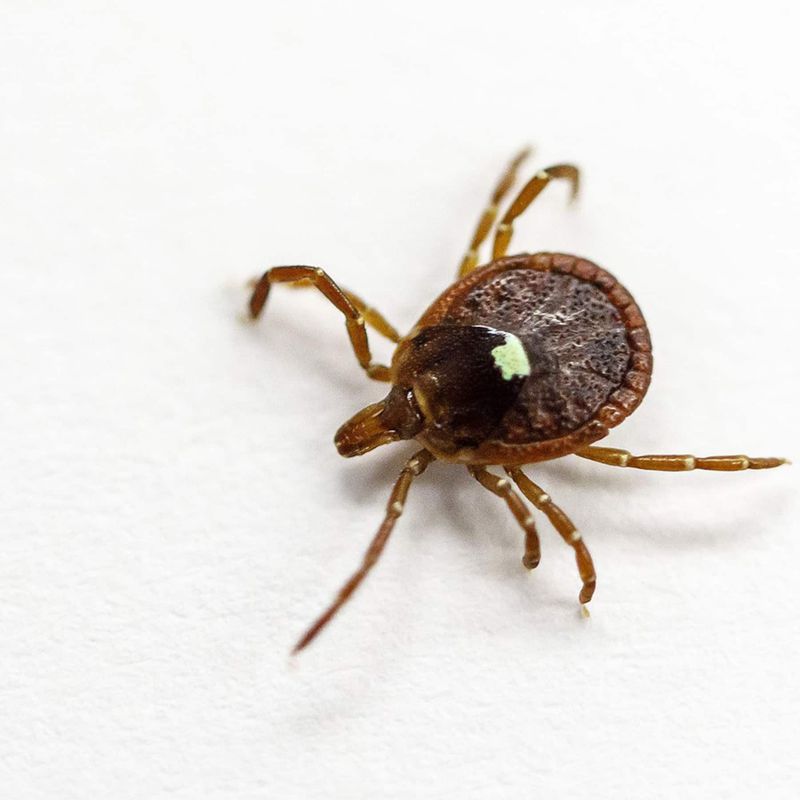
The same study that reported high repellency against blacklegged tick nymphs found that the compounds were substantially less effective against lone star tick nymphs, especially callicarpenal.
The two species are not interchangeable threats in this state.
Lone star ticks are aggressive human biters and are widely distributed across the South.
A CDC-linked study of ticks removed from outdoor workers in North Carolina found that lone star ticks made up roughly 93 to 95 percent of submitted ticks in 2011 and 2012.
That proportion is not a small footnote.
It means that for most North Carolina residents working or playing outdoors, the tick most likely to land on them is exactly the one the beautyberry compounds handled less impressively in the lab.
Blacklegged ticks, sometimes called deer ticks, are present in North Carolina too, particularly in wooded areas and along the Piedmont’s forested edges.
CDC guidance on where ticks live confirms their range across the eastern United States.
Both species are real concerns, but the proportions in North Carolina shift the practical picture considerably.
So if you read that beautyberry compounds showed nearly 98 percent repellency and assumed that covered the tick crawling through your Coastal Plain yard or your Piedmont tree line, slow down.
The strongest result applied to a species that may not be your most common visitor.
That is not a reason to dismiss the research, it is a reason to keep it in perspective and layer in protection strategies that work against the ticks you are actually most likely to encounter.
How to Grow Beautyberry in a Carolina Yard
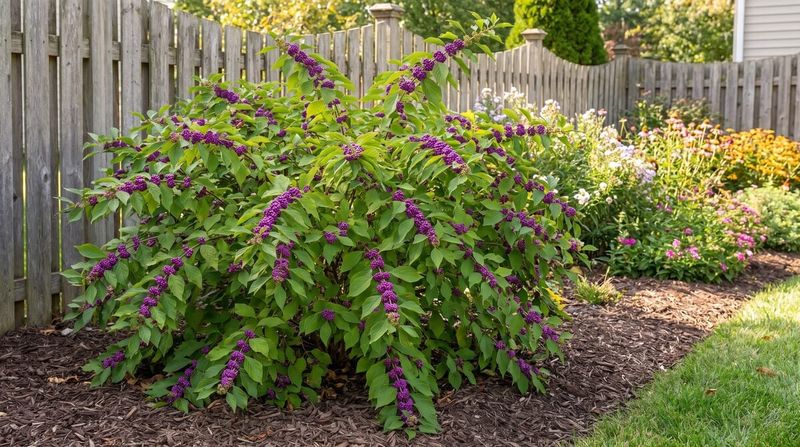
Growing beautyberry well is straightforward once you match it to the right spot.
The NC State Plant Toolbox entry for American beautyberry lists tolerance for clay, loam, and sand, along with adaptability to dry soil, moist soil, heat, and occasional wet conditions.
That range covers most residential yards across the Piedmont’s red clay and the sandy soils of the Coastal Plain.
Full sun to partial shade works well, though more sun generally means more berries.
Mature plants typically reach 3 to 8 feet tall and 3 to 6 feet wide.
Give each shrub enough room to arch outward naturally, because the berries form along the length of each branch and a crowded plant loses some of that dramatic effect.
Spacing plants about 4 to 6 feet apart in a loose grouping lets them fill in without competing for light.
The pruning detail is the one most gardeners miss.
Beautyberry blooms and fruits on new growth, meaning the current season’s fresh shoots are where the action happens.
NC State’s French mulberry growing guide recommends cutting plants back to about 1 foot high in late winter, typically February in most of North Carolina, before new growth begins.
That hard pruning encourages vigorous new shoots that will carry the berries by September.
Skipping it for a year or two produces a leggy, sparse plant with fewer berries and less wildlife value.
This pruning improves plant performance and berry production, not tick repellency.
Worth saying plainly so there is no confusion.
NC State’s native plant handbook frames beautyberry as a productive landscape shrub with genuine wildlife value across much of eastern and central North Carolina.
Grow it for those reasons and you will not be disappointed, whether or not the tick research ever produces an approved product.
Use It as Wildlife Habitat, Not a Tick Barrier
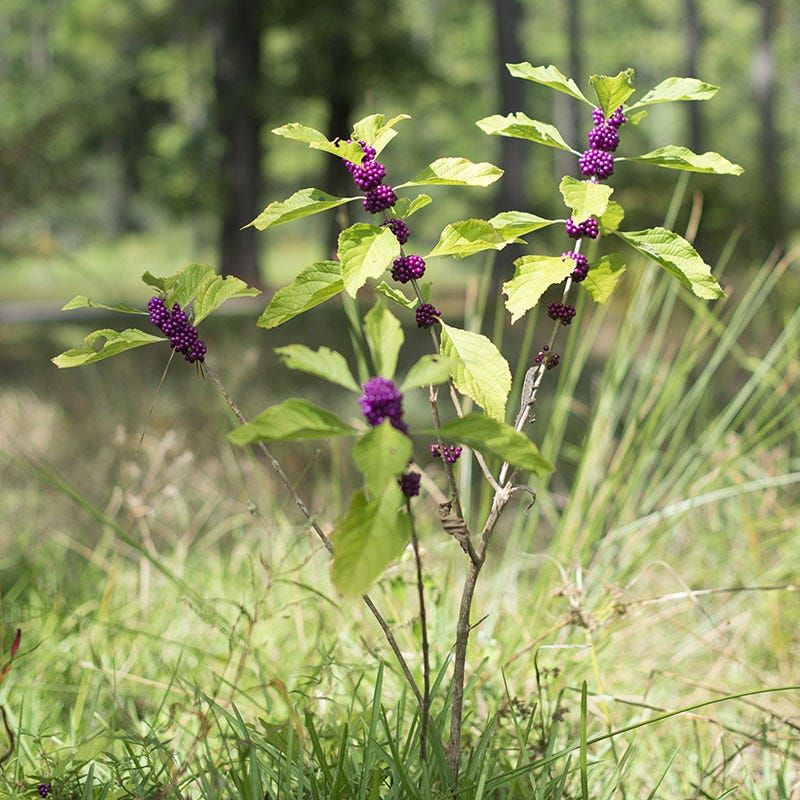
Placement makes a real difference in how much value beautyberry adds to your yard.
The NC State Plant Toolbox profile describes it as a good specimen shrub or border plant, and that guidance points toward the edges of a yard rather than the center of the patio zone.
Tucked near a tree line or at the back of a wildlife garden, a few beautyberry shrubs can produce berries all fall without putting a dense shrub right where kids and dogs spend most of their time.
That layout is sensible for two reasons.
First, it gives wildlife, including songbirds and small mammals, a foraging spot at the yard’s perimeter rather than in the middle of high-traffic areas.
Second, it keeps the shrub’s naturally loose, arching form from encroaching on seating areas, play equipment, or walking paths where tick contact is most likely.
NC State’s guidance on landscaping for wildlife with native plants supports this kind of layered design, where native shrubs anchor habitat zones while maintained lawn or hardscape provides clear separation.
Here is the honest part: a wildlife-friendly yard still moves ticks.
Birds and small mammals that visit your beautyberry can carry ticks into the yard with them, which is why placing the shrub near the edge rather than near the deck matters.
CDC guidance on reducing tick habitat specifically advises keeping patios, decks, and play equipment away from brushy or wooded edges, and that recommendation applies even in a thoughtfully planted native garden.
Welcoming wildlife and managing tick risk are not opposites, but they do require keeping the two zones distinct.
Beautyberry belongs in the habitat zone, doing what it does best, feeding birds and looking spectacular in September.
Make the Yard Less Favorable to Tick Exposure
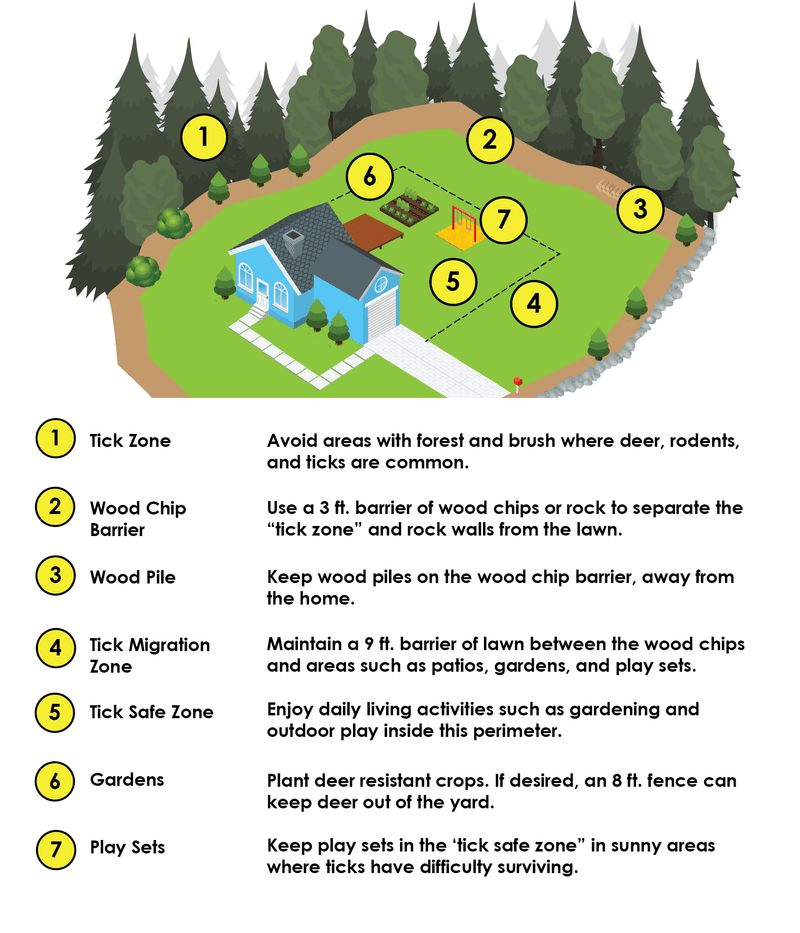
A well-chosen native shrub is a good start, but the yard habits with the strongest track record are less photogenic.
CDC guidance on reducing tick exposure around the home focuses on habitat management: mow grass regularly, remove leaf litter, clear tall grass and brush, and trim back branches and shrubs to let sunlight reach the ground.
Ticks prefer cool, moist, shaded spots, and cutting off those conditions is more reliable than any single plant.
One of the most practical recommendations from that guidance is creating a 3-foot-wide barrier of wood chips or gravel between your lawn and any wooded or brushy area.
That strip interrupts the path ticks travel from the leaf-litter zone into maintained yard space.
It does not eliminate every tick, but it reduces the contact opportunity, especially for nymphs, which are tiny and easy to miss during a tick check.
Around patios, play equipment, and paths, the goal is a clear zone: short grass, no leaf piles, no overgrown shrub edges pressing against the swing set.
The CDC Tick Management Handbook outlines these steps in detail and explains that keeping sunlight on the ground raises soil temperature and reduces the humidity ticks need to survive.
Even a partial reduction in favorable conditions translates to fewer ticks lingering in the spaces where people actually sit and play.
The wildlife zone and the maintained zone can coexist in the same yard.
Keep the beautyberry and native plantings at the back or along the fence, maintain a mowed buffer between that area and the deck, and rake leaves from that buffer at least once in fall.
That combination keeps the yard feeling alive while reducing the conditions that favor tick activity near the spaces your family uses most.
Layer Personal and Pet Protection

No amount of good landscaping replaces what you put on your body before you head outside.
CDC recommendations for personal tick-bite prevention call for EPA-registered repellents containing DEET, picaridin, IR3535, oil of lemon eucalyptus, para-menthane-diol, or 2-undecanone.
These are tested, registered products with known concentrations and application guidance.
Treating your clothing with 0.5 percent permethrin before going into grassy or wooded areas adds another layer, and permethrin-treated clothing retains effectiveness through multiple washes.
After any time outdoors, check yourself, your kids, and your pets before coming inside.
Nymphs are about the size of a poppy seed, so a real check means running fingers along the hairline, behind the ears, under the arms, behind the knees, and around the waistband.
EPA guidance on using repellents safely also covers how to apply products to children, including keeping repellents away from hands, eyes, and mouths.
Follow label directions, because concentration and reapplication timing vary by product.
Pets are part of the equation too.
Dogs pick up ticks in the same yard edges where people walk, and they can carry those ticks indoors.
Ask your veterinarian about tick prevention options appropriate for your dog’s size, age, and health.
Cats should never receive tick products intended for dogs, and EPA guidance on repellent product categories makes clear that skin-applied products are regulated based on their specific intended use and formulation.
One more thing to skip: do not make or apply homemade beautyberry sprays, boiled-leaf extracts, or crushed-leaf preparations to yourself, your children, or your pets.
The laboratory research does not establish safe household concentrations, skin safety, reapplication intervals, or performance under sweat and heat.
Beautyberry is a genuinely valuable native shrub, and it fits well into a layered tick-prevention routine as a landscape plant.
That is actually a meaningful role, just not the one the headline usually promises.