
The Native Florida Palm Quietly Replacing Areca Palms And Ending The Endless Frond Cleanup
Follow us on Google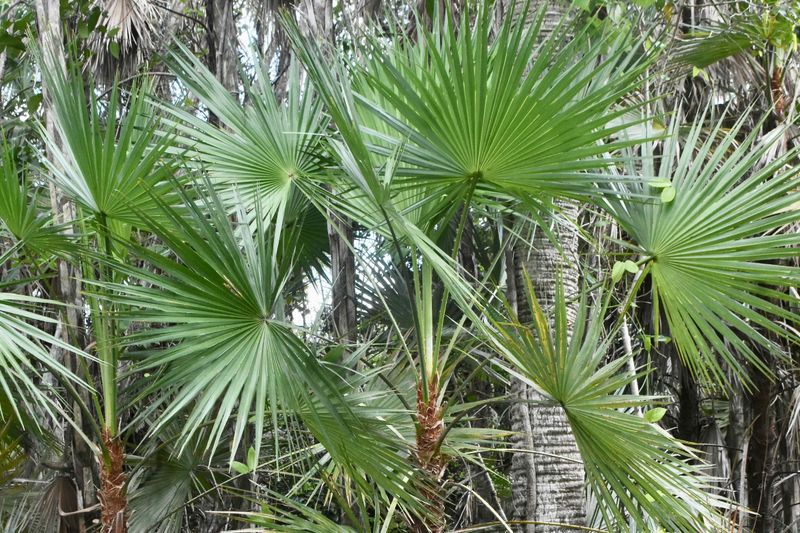
If you have ever spent a Saturday morning raking up fallen areca fronds while your neighbor’s yard looked effortlessly tropical, you have probably wondered whether there is a better option.
A headline making the rounds suggests a native Florida palm is quietly taking over where areca palms leave off, promising to end the frond-cleanup grind for good.
The palm most likely behind that claim is Paurotis palm, Acoelorrhaphe wrightii, a clumping fan palm native to southern Florida and the Everglades region.
Before you pull out a single areca, here is an honest look at what Paurotis can and cannot actually do for your yard.
The Likely Palm Behind the Headline
Somewhere in Florida, a homeowner posted a yard photo and the internet ran with a story: a native palm is replacing areca palms and ending the frond-cleanup era.
The plant most likely behind that headline is Paurotis palm, botanically Acoelorrhaphe wrightii, and also called Everglades palm.
No reliable source documents a statewide movement away from areca or confirms that Paurotis is driving it, so this article treats the headline as a plausible gardening question worth answering honestly rather than a verified trend.
What the sources do confirm is genuinely useful.
UF/IFAS guidance on ornamental palms for South Florida lists Paurotis as a Florida-native, clumping fan palm that can serve as a specimen or informal tropical screen, particularly in moist Central and South Florida landscapes.
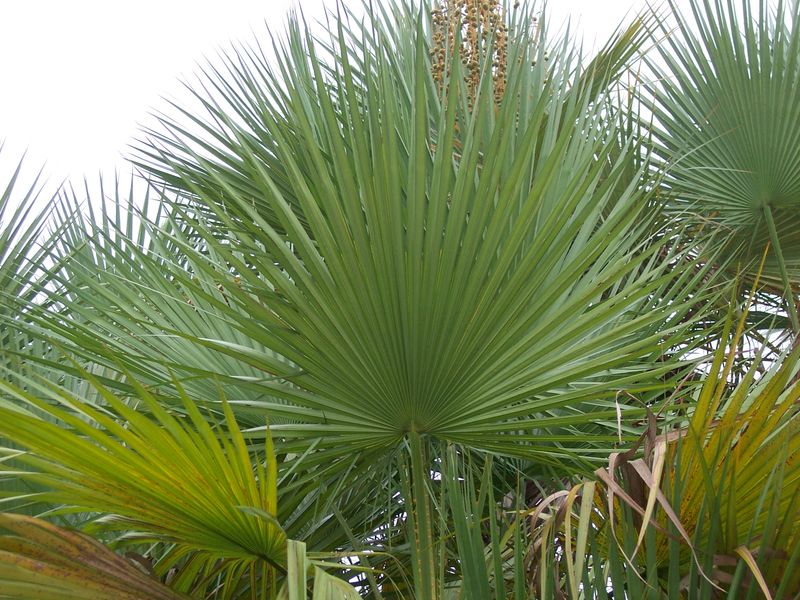
It is evergreen, grows in multiple slender stems rather than a single trunk, and produces fan-shaped leaves that give a yard a distinctly tropical character without importing a non-native plant.
The Florida Native Plant Society records Paurotis as native to moist habitats associated with the Everglades, as well as parts of the Caribbean and Central America.
Its fruits mature from green to orange to black and attract birds, which adds ecological value a standard areca hedge cannot match.
That native status matters to many Florida homeowners who want a yard that works with the local ecosystem rather than against it.
Think of this article as an evaluation of a plausible option, not a confirmation of a market shift.
Paurotis may genuinely suit your landscape, but the decision deserves a clear look at what it offers and what it asks of you in return.
A Tropical Mood, Not an Areca Replica
Stand in front of a mature areca palm, Dypsis lutescens, and you see something soft and feathery.
The fronds are pinnate, meaning they branch like a feather from a central rib, and the canes range from yellow-green to dark green depending on light and nutrition.
It reads as lush, dense, and a little formal when planted in a tight row.
Paurotis gives you a different picture entirely.
UF/IFAS describes Paurotis as producing fan-shaped leaves up to about 2 feet across on petioles that can reach 3 feet, all carried on fibrous, upright stems that are more open and architectural than areca’s cane-like structure.
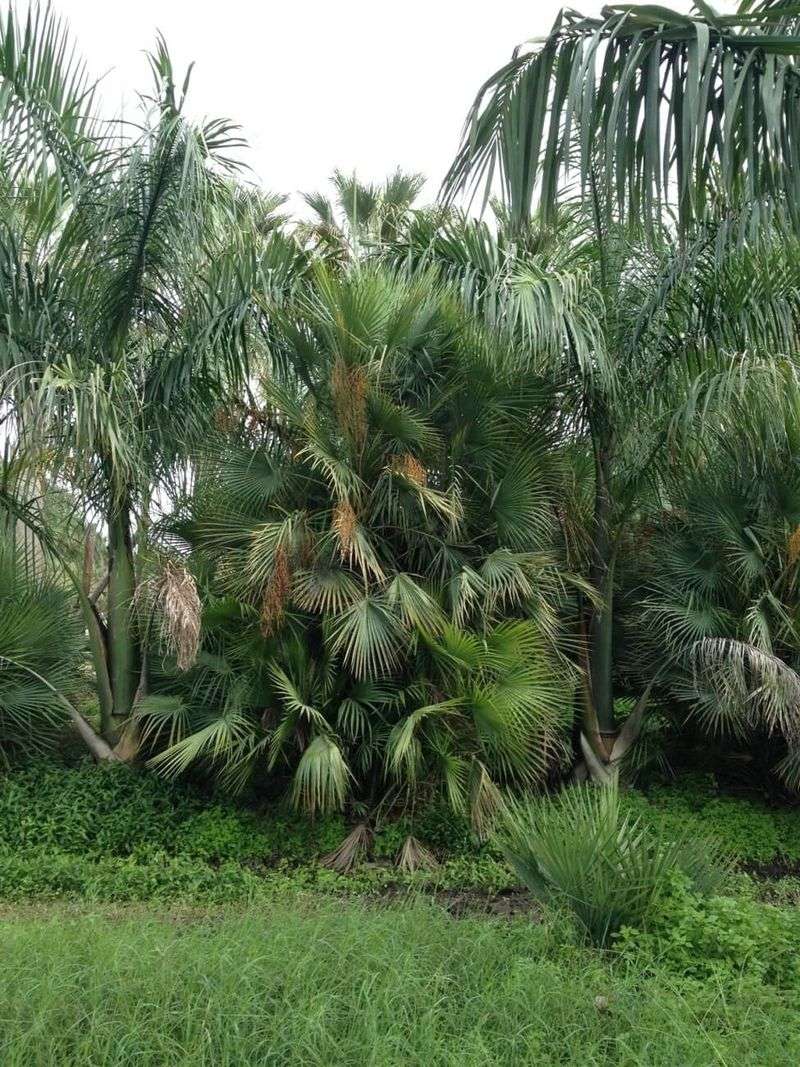
The overall silhouette is taller and airier, with gaps you can see through rather than the wall-like density areca achieves at its best.
That difference matters when you are trying to decide whether Paurotis can do the same job.
UF/IFAS notes that areca palm can reach 20 to 35 feet tall with a 10- to 20-foot spread, while Paurotis tops out at roughly 20 to 30 feet with a mature spread in the 10- to 20-foot range depending on the source.
The sizes are broadly comparable, but the visual effect is not interchangeable.
Paurotis delivers a tropical mood, and it does it well, but a homeowner expecting the same soft, hedge-like screen as a row of areca palms may be surprised by how different the result looks.
Assess your sightlines, your available width, and your honest design goals before treating these two palms as swappable options.
They are related in spirit, not in appearance.
What Paurotis Cleanup Really Looks Like
Here is where the headline oversells the plant.
Paurotis does not end frond cleanup, and understanding why helps you plan realistically.
Many palms with a crownshaft, the smooth, waxy collar at the top of the trunk, drop their older fronds cleanly without any help from you.
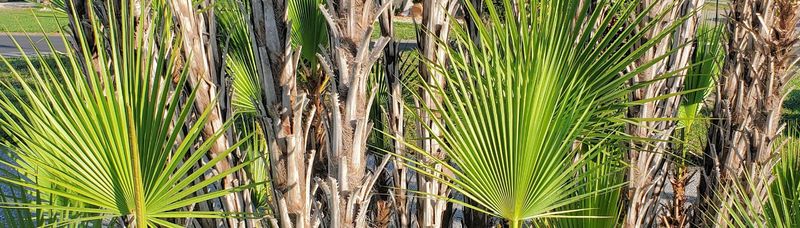
Paurotis has no crownshaft, which means older leaves can stay attached to the stems rather than falling on their own schedule.
UF/IFAS guidance on ornamental palms specifically identifies Paurotis as a non-crownshaft palm, a category that typically retains persistent leaf bases and may need occasional manual removal of dead fronds.
Flower stalks and spent fruit clusters can also accumulate over time and may need clearing when they become unsightly or weigh on the lower stems.
That said, a UF/IFAS fact sheet on Paurotis describes it as having no significant litter problem and needing little pruning to develop a strong structure.
Those two things can both be true at once.
Paurotis is not a constant mess, but it is not maintenance-free either.
Think of it as a palm that asks for occasional attention rather than weekly management.
Slow growth is a real trait of Paurotis, and some gardeners read that as meaning less work overall.
Slower size expansion does mean you are less likely to find it suddenly pressing against a fence or roof, but it does not eliminate fertilizing, watering during dry stretches, or clearing dead material.
Those tasks remain.
UF/IFAS pruning guidance is clear on one point worth repeating: healthy green fronds should stay on the palm.
Removing live fronds strips the plant of photosynthesis and stored nutrients, adds stress, and does not make it look cleaner for long.
Only fully dead fronds and spent or hazardous stalks should come off, and for anything elevated or difficult to reach, professional help is the safer choice.
Match the Palm to a Moisture Zone
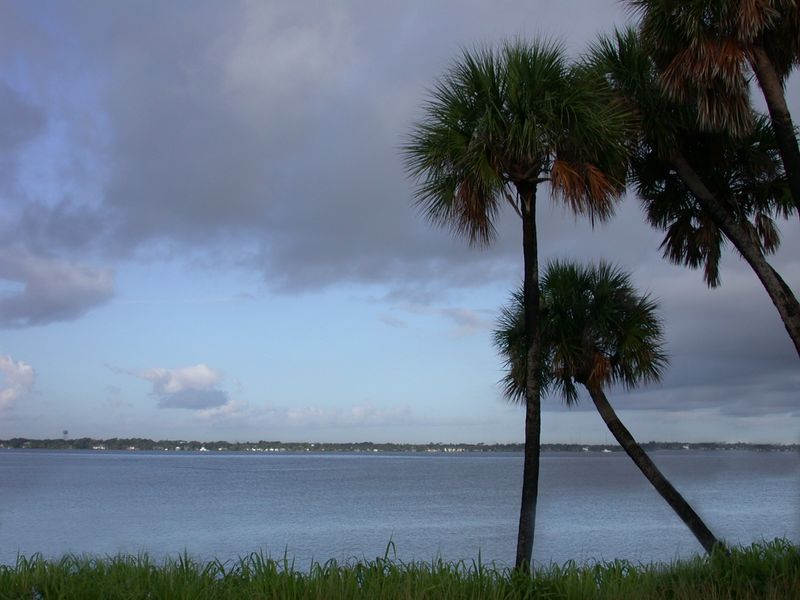
Most of the care decisions for Paurotis come down to one question asked before you plant: does this spot stay moist?
The palm is native to wet habitats in and around the Everglades, and that origin shapes everything about how it performs in a yard.
It can tolerate intermittently flooded soil, which is a trait very few ornamental palms share, and it genuinely thrives where water lingers after a summer downpour.
UF/IFAS Extension Charlotte County recommends full sun as the best exposure but notes that Paurotis can accept some light shade.
Pond edges, low moist beds, rain-fed areas, and irrigated landscapes with consistent moisture are where this palm performs most reliably.
A dry, sharply drained side yard that bakes between rainstorms is a poor match, and no amount of hopeful watering fully compensates for fundamentally wrong drainage.
Establishment is the most demanding phase.
Newly planted palms need thorough watering of the root ball, and in Florida’s sandy soil, high summer heat, and long dry spells, that can mean irrigating every day or two for the first several months.
Once the root system has extended into the surrounding soil, the palm becomes more self-sufficient, but it still benefits from supplemental water during extended dry periods, particularly in Central Florida where winter dry seasons can stretch for weeks.
Plant at the original root-ball depth, no deeper.
Setting the palm too low in the ground can contribute to iron deficiency and chronic stress that looks like a watering problem but is not.
Match the site to the plant’s actual needs, and Paurotis rewards you with steady, if slow, growth through Florida’s long humid summers.
Plan for the Full Clump
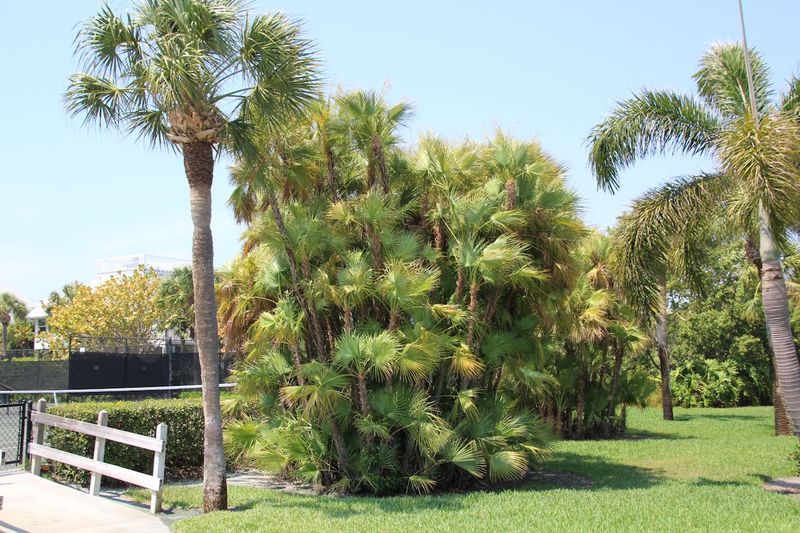
Paurotis does not grow like a single-trunk palm you can tuck into a narrow side yard.
It spreads by producing multiple stems from a shared root system, and over time that clump gets wider as well as taller.
Many homeowners underestimate how much horizontal room a mature planting needs, and that is where planning pays off more than any fertilizer schedule.
UF/IFAS Extension Charlotte County gives a typical mature width of 10 to 15 feet, while other UF/IFAS references list approximately 20 feet for a full clump.
A conservative planning allowance is at least 10 feet of width per plant, with more room where you want a lush, fully developed specimen.
Crowding Paurotis against a fence or another plant does not create a denser screen; it creates competition and poor air circulation.
The leaf stalks carry sharp teeth along their edges, and that is not a minor detail.
Keep the planting away from narrow paths, play areas, and anywhere children or pets move through regularly.
A clump placed at the back of a large bed or along a property line with open space in front is a much safer and more attractive arrangement than one squeezed into a high-traffic corridor.
UF/IFAS planting guidance recommends keeping mulch pulled back from the base of the stems and planting at the exact depth of the original root ball.
Mulch piled against the stems traps moisture against fibrous tissue that needs airflow, and deep planting sets up the kind of slow decline that takes months to show up and longer to diagnose.
Give the clump room, keep the base clear, and the form takes care of itself over time.
Know the Climate, Soil, and Coast Limits
Paurotis is a Florida-native palm, but that phrase covers a lot of ground across a state that runs from USDA Zone 8b in parts of the Panhandle to Zone 11b in the Keys.
Paurotis is listed for Zones 9A through 11, with cold tolerance down to roughly 22 degrees Fahrenheit to 25 degrees Fahrenheit.
That makes it a realistic choice for much of Central and South Florida, but a risky one for colder parts of North Florida and most of the Panhandle, where a single hard freeze can push temperatures well below that threshold.
UF/IFAS species guidance for Paurotis flags limestone and calcareous soil as a serious limitation.
South Florida landscapes built on limestone fill or alkaline marl are not good candidates unless the soil conditions can be amended and monitored carefully.
Manganese deficiency is a real risk in alkaline soil, and it produces frizzletop, a condition where new growth emerges distorted, streaked, and eventually necrotic at the center of the crown.
Yellow or twisted new leaves on a Paurotis planted in South Florida are not automatically a sign of underwatering.
Soil chemistry, planting depth, drainage, and palm nutrition all need to be evaluated together.
Coastal placement adds another layer of caution.
UF/IFAS ornamental palm guidance rates Paurotis as moderately salt tolerant in one table, while a detailed species sheet says it is not tolerant of salt spray.
Because the sources differ, the safe rule is to avoid direct ocean exposure, brackish flooding, and highly exposed positions where salt-laden wind hits the foliage without a buffer.
A yard a few blocks from the Gulf or Atlantic coast with some tree or structure protection is a different situation than a front-line beachside property.
Match the plant to the actual site conditions rather than the regional label, and you avoid the most common reasons Paurotis disappoints.
Care, Fertilizer, and a Responsible Purchase
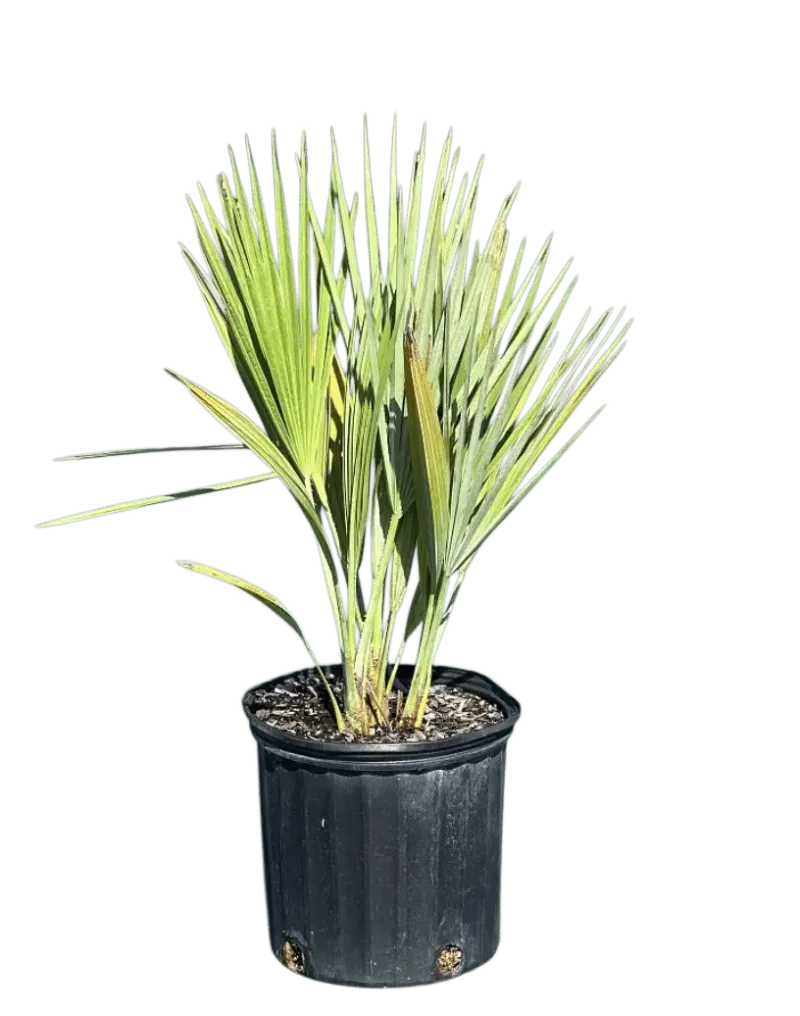
Once Paurotis is established in a suitable site, the ongoing care routine is manageable but not absent.
Establishment water comes first, and in Florida’s sandy soil that means consistent irrigation for the first several months after planting, especially during the dry season or any stretch without meaningful rain.
After the root system settles in, the palm still benefits from supplemental water during extended dry periods rather than being left entirely to rainfall.
Fertilization matters more than many homeowners expect.
UF/IFAS guidance on landscape palm fertilization recommends a controlled-release palm fertilizer with a formulation close to 8-2-12-4Mg, including micronutrients, or an acceptable 8-0-12-4Mg blend.
The general South Florida application rate is about 1.5 pounds per 100 square feet of canopy or bed area, applied roughly every 3 months when conditions and local fertilizer ordinances allow.
Central Florida schedules often skip the winter application, and some counties restrict fertilizer use during the rainy season, so check current local rules before you apply anything.
Dead frond removal and spent stalk cleanup are occasional tasks, not weekly ones, and UF/IFAS pruning guidance is consistent: green fronds stay, fully dead material and hazardous stalks come off when needed, and elevated or difficult work belongs to a professional.
On sourcing, buy nursery-grown Paurotis rather than collecting from natural areas.
Florida lists the species as threatened, and FDACS guidance on Florida’s endangered plants covers the regulatory framework around protected native species.
The rules around wild harvesting are nuanced, so direct any collection questions to current FDACS guidance rather than relying on secondhand summaries.
Choose Paurotis when you have moist soil, generous space, and genuine interest in a native tropical character that grows on its own terms.
It is not an areca replacement or a zero-work palm, but in the right yard it is something better: a plant that actually belongs here.