
The Native Florida Edibles That Keep Feeding Your Family Through August Heat Without The Hose
Follow us on Google
You step onto the patio after breakfast and the air already feels heavy, a thick warm blanket that promises another day of August sun.
Your garden looks parched, wilting, and you are tired of dragging the hose around by noon.
But picture stepping outside and finding a snack for your family, already ripe, from plants that shrug off this heat and barely touch your water bill.
You can genuinely have edibles thriving this month with no daily watering, and these nine natives are the ones that actually deliver.
1. The Spiny Guardian Offering Sweetness
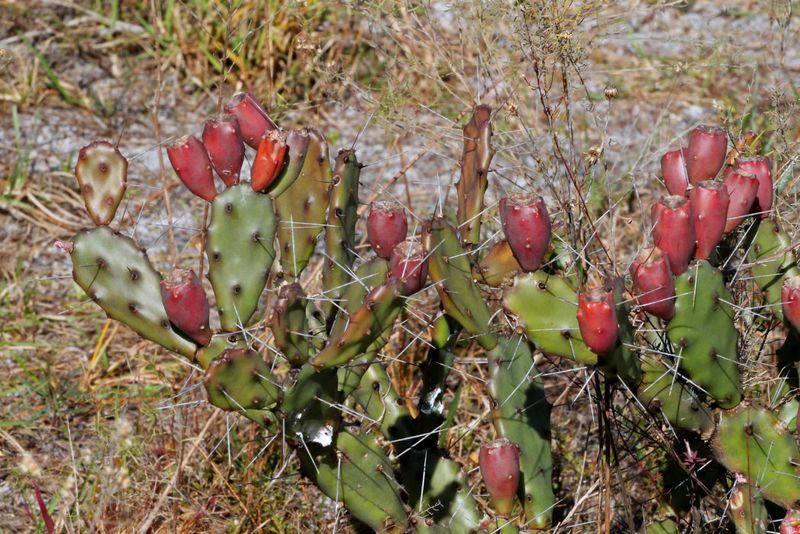
Many Central Florida gardeners know the prickly pear cactus (Opuntia spp.) as a tough landscape plant, but its hidden bounty often goes overlooked.
It is a wonder in dry, sunny spots where softer edibles simply melt away by mid-August.
Its flat, paddle-like pads, called nopales, and its egg-shaped fruits, known as tunas, are both edible.
You will find them growing across the whole state, from the sandy Panhandle down to the limestone bedrock of the Keys.
Here is where it gets tricky.
Those pads and fruits come armed with spines and tiny irritating bristles called glochids.
But do not let that scare you off.
When harvesting in late summer, wear thick gloves and use tongs to twist off the ripe fruits, which turn deep red, purple, or yellow depending on the variety.
Once picked, de-bristle them carefully before eating.
Young pads taste a bit like green beans when sauteed or grilled.
Plant individual pads about 2 feet apart to give the low, mat-like form room to spread.
These plants need no supplemental watering once established, which makes them a genuine hero for your water bill.
That is a plant working while you rest.
2. The Fragrant Shrub With Late Summer Berries
Walk along the Gulf Coast in late summer and you might catch a faint, spicy-citrus scent drifting through the humid air.
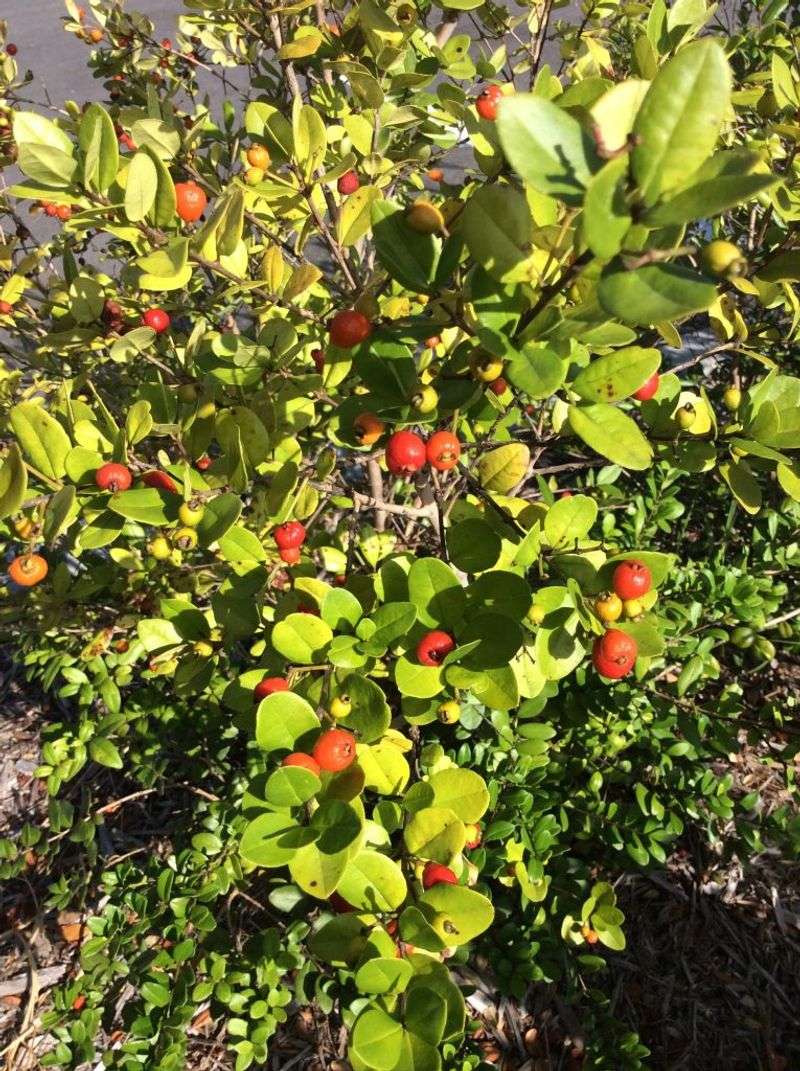
That is likely the Simpson’s stopper (Myrcianthes fragrans) at work, a Florida native shrub that thrives without constant fuss.
It offers fragrant white flowers in spring, but it is late summer and early fall when its small orange-red berries start to ripen.
They are not the biggest berries, and some folks find them plain, but others describe a pleasant, slightly candied orange-peel flavor.
The berries are edible.
Just spit out the bitter seeds.
Mockingbirds, blue jays, and cardinals adore them too, so you may have to compete for your share.
Simpson’s stopper is remarkably drought-tolerant once established, weathering intense sun and coastal wind without complaint across zones 8b to 11.
Plant them 3 to 5 feet apart for a dense hedge, or give a single specimen 5 to 10 feet to reach up to 20 feet tall.
Young plants need regular water their first year.
After that, established shrubs only want a deep drink during extended dry spells.
So the hose stays coiled, and the porch stays fragrant.
3. Purple Jewels That Keep Mosquitoes Away
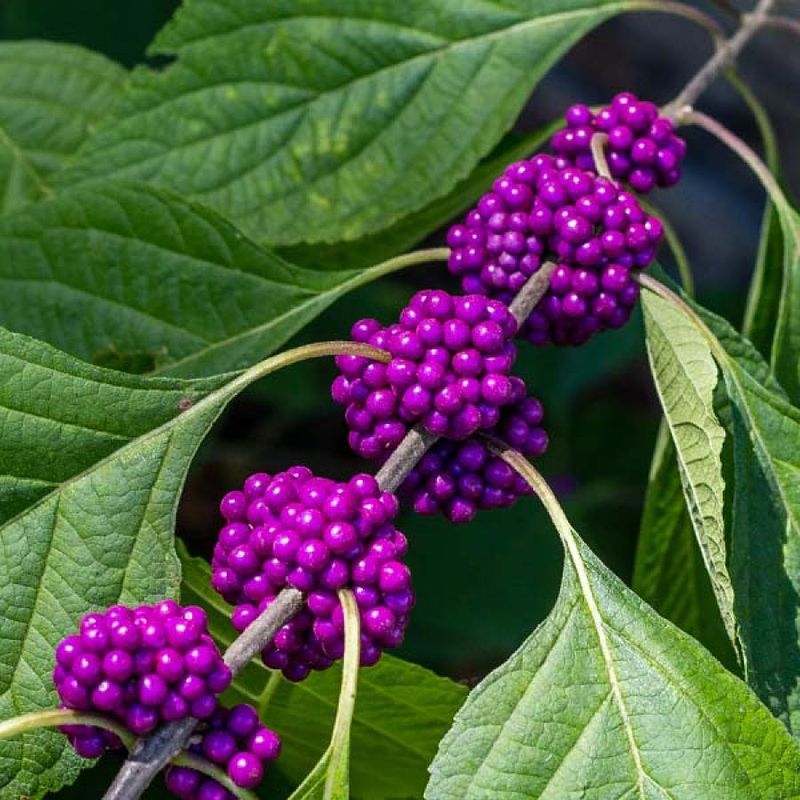
American beautyberry (Callicarpa americana) becomes a showstopper in late summer and fall, when its branches load up with clusters of magenta-purple berries.
This native shrub, common across North and Central Florida, is a quiet hero for more than its looks.
The berries are astringent and unappealing raw, but they truly shine once cooked into jams and jellies with a spicy-sweet edge.
Picture that splash of purple on your morning toast.
Here is the part that matters for a Florida homeowner.
The leaves contain compounds called callicarpenal and intermedeol, which UF/IFAS research has linked to deterring mosquitoes.
Crush a handful and rub them on your skin for a natural, temporary repellent during an evening cookout.
Beautyberry is highly drought-tolerant once established and handles soils from sandy to loamy, in full sun to partial shade.
Give it room, because it can grow 3 to 8 feet tall and wide.
Planting a hedge?
Space them 3 to 6 feet apart.
After the first season of steady watering, it asks little from your hose.
A snack, a jelly, and fewer bites at dusk, all from one shrub.
4. The Hummingbird Magnet With Edible Berries
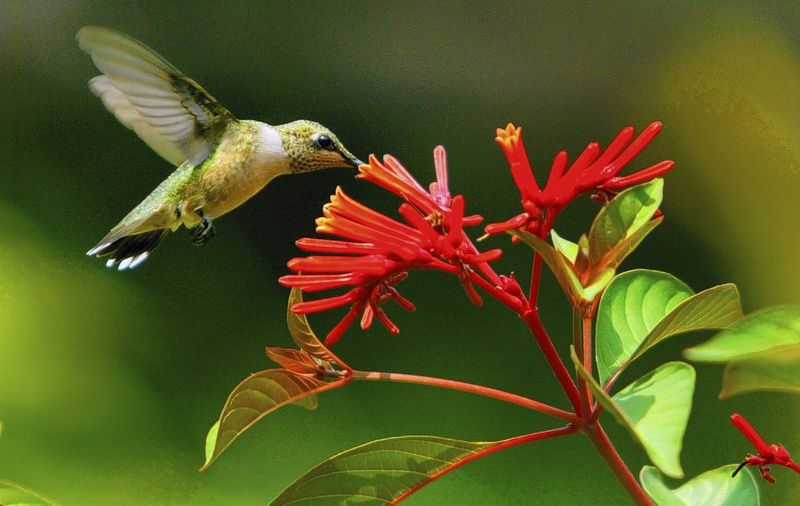
Want constant backyard activity even through stifling August heat?
Look at the firebush (Hamelia patens).
This fast-growing, evergreen native is a hummingbird and butterfly magnet, its tubular orange-red flowers blooming almost year-round in warmer parts of South Florida.
Beyond the pollinators, firebush offers a late-summer snack.
Small juicy berries ripen from yellow to red and finally black.
The raw berries can taste acidic or bitter, so many gardeners collect them for syrups instead.
The flower nectar itself is sweet, and kids love tasting it straight from the blooms.
Firebush is remarkably adaptable, tolerating sun and part shade, and it turns moderately drought-tolerant once established.
It can climb to 12 feet tall and wide, but it responds well to pruning if you want it tidy.
For a hedge or mass planting, space plants 36 to 60 inches apart.
Like other settled natives, it only wants water when the soil feels genuinely dry, freeing your hose for other chores.
One honest note.
Pick the true native Hamelia patens var. patens over non-native cultivars, because the wildlife value is not the same.
Get that right, and the yard hums all summer.
5. The Coastal Favorite Bearing Fruit
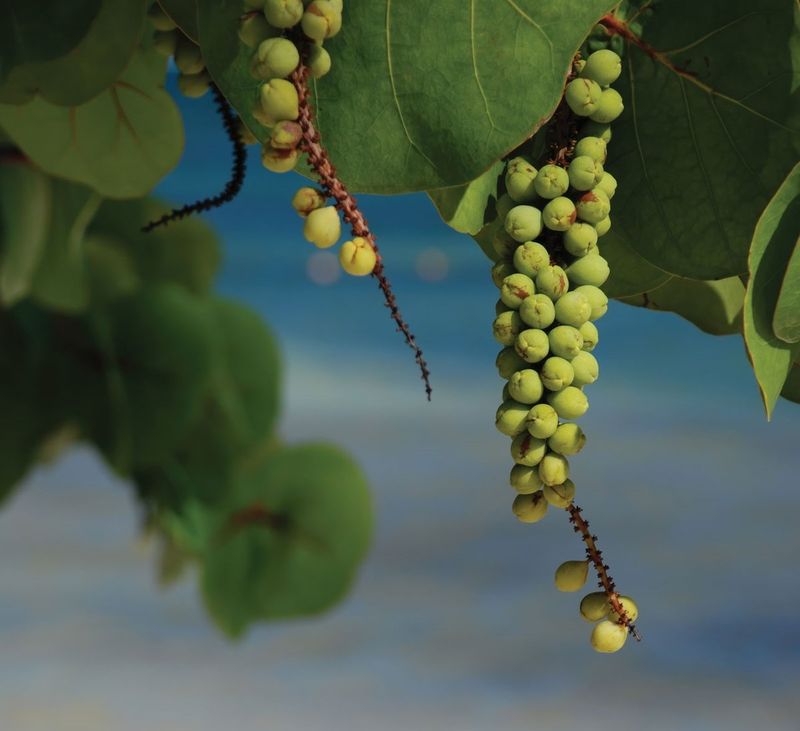
For anyone living near Florida’s Atlantic or Gulf coasts, the sea grape (Coccoloba uvifera) is a familiar, formidable presence.
This resilient native shrub or small tree is a champion of salt tolerance and drought, built for the harsh conditions of coastal hammocks.
Its main harvest usually runs September through October, but the grape-like fruit sets in mid-summer.
So in August you will already see plenty of developing clusters, a harvest just around the corner.
The fruit ripens from green to deep reddish-purple, sweet with a tart muscadine-like tang, and it makes fantastic jams and jellies.
Sea grapes also stabilize dunes and shelter wildlife, including nesting sea turtles protected from artificial light.
They grow large, up to 25 feet tall and wide as a tree, or kept as a dense hedge.
For a hedge, space them 3 to 4 feet apart.
For a standalone specimen, allow 8 to 10 feet of clearance.
Once established, sea grapes are highly drought-tolerant and need irrigation only during long dry stretches.
Keep in mind they are dioecious, meaning you need both a male and female plant for fruit.
Plant a few to stack the odds in your favor.
6. The Everglades Standby In Your Own Yard
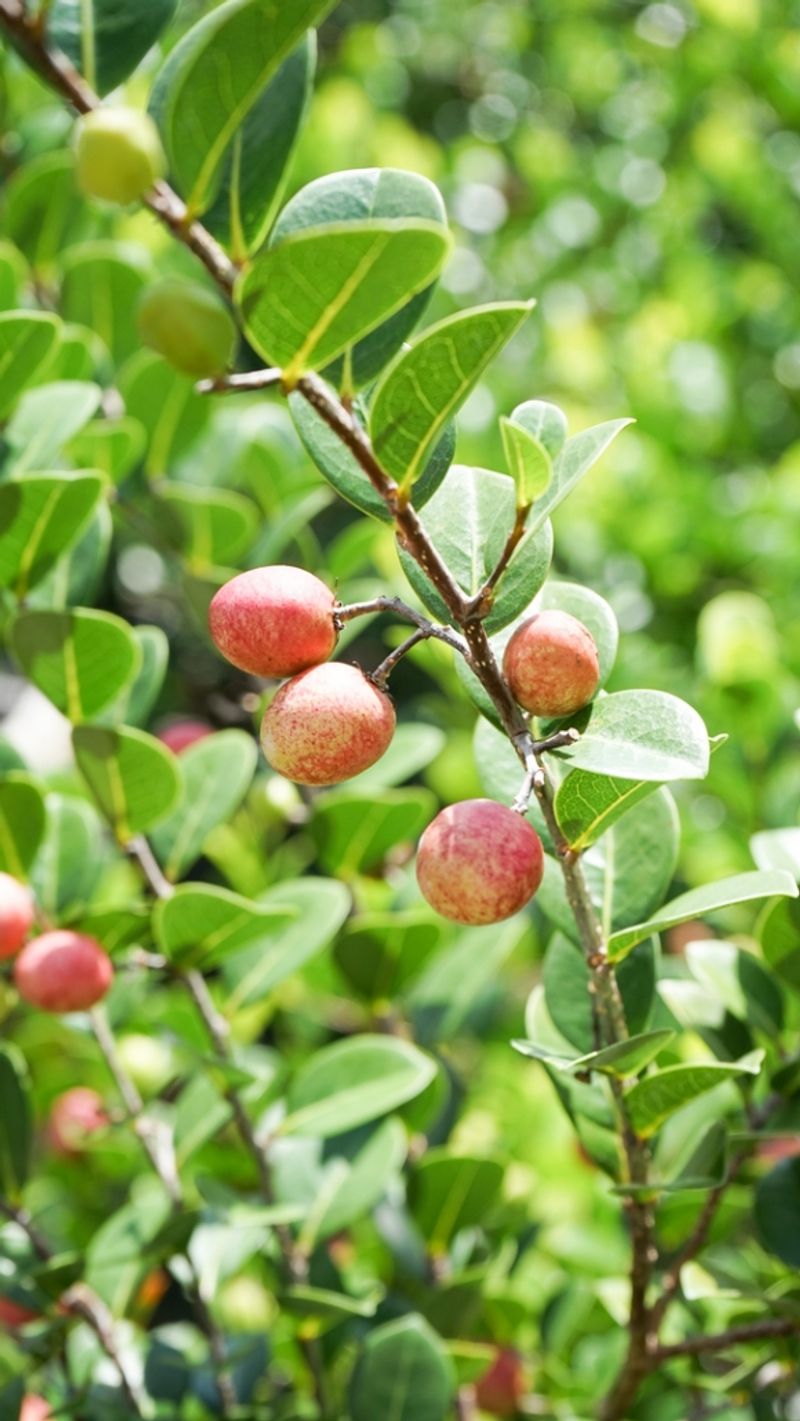
Down in South Florida and the Keys, cocoplum (Chrysobalanus icaco) does quiet, dependable work while the sun beats down.
It is a rounded native shrub with glossy leaves that seem to shine even at midday, and it holds up in the shallow limestone soils that defeat plenty of other edibles.
The fruit is the payoff.
Round plums ripen to dark purple or blush pink, with a mild, faintly sweet, cottony flesh that folks eat fresh off the branch or simmer into jelly.
The seed inside is edible too, tasting a little like almond when roasted.
Cocoplum shrugs off salt spray, which makes it a strong pick for both coasts in zones 10 and 11.
It tolerates brief flooding in those poorly drained low pockets, then turns around and handles drought once its roots settle in.
Left alone it grows 6 to 15 feet, but it clips easily into a formal hedge that keeps most HOA boards happy.
Space plants 3 to 4 feet apart for a solid screen.
Give it steady water the first few months.
After that, it lives on rainfall in a normal summer.
A fruiting privacy hedge that ignores the salt air, that is a good trade.
7. The Palm That Feeds The Panhandle
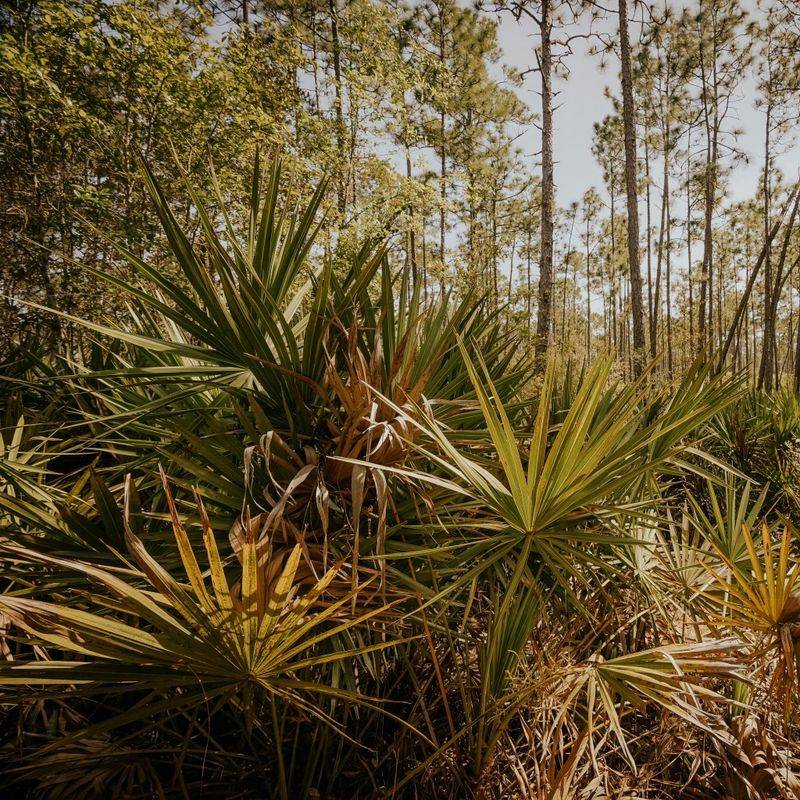
Saw palmetto (Serenoa repens) rarely gets credit as an edible, yet it has fed Florida wildlife and people for centuries.
You see it everywhere, from the pine flatwoods of the Panhandle down through Central Florida, low and fan-leaved and utterly unbothered by heat.
Its dark ripening berries, out in late summer and fall, have a strong, olive-and-tobacco flavor that early Florida settlers ate for energy.
Most people today dry them for tea or tinctures rather than snacking, and honestly the taste is an acquired one.
The real value here is toughness.
Saw palmetto survives hard freezes in North Florida, drought, poor sandy soil, and even fire, coming back from underground stems like it never left.
It spreads slowly into a mound 5 to 10 feet wide, so give each plant at least 4 to 6 feet of space.
It wants full sun to light shade and essentially no irrigation once rooted.
Bees flock to the spring flowers, which produce a prized honey.
So while the berries are a niche harvest, this palm earns its keep as a fireproof, freeze-proof anchor that never asks for the hose.
8. The Wild Grape Climbing Your Fence
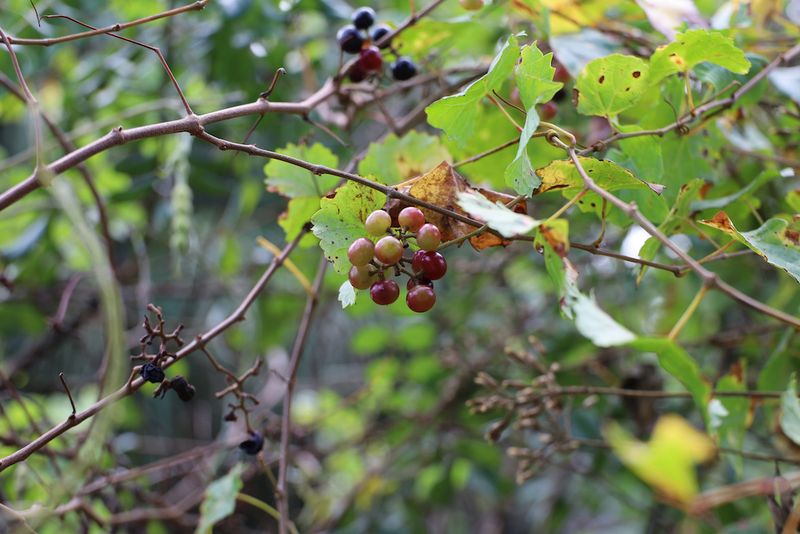
That vine scrambling along the back fence line might already be a native muscadine (Vitis rotundifolia), Florida’s own wild grape.
Across North Florida and the Panhandle it ripens in August and September, dropping fat bronze and dark-purple grapes right when other fruit has quit for the season.
The flavor is bold and musky, sweet with a thick skin you either eat or spit.
They make legendary jelly, juice, and wine, and plenty of families snack straight off the vine on a hot afternoon.
Muscadines love acidic sandy soil and long humid summers, which is exactly what most of Florida hands them.
They laugh at the heat and shrug off the fungal problems that ruin European grapes here.
Train one along a sturdy trellis or fence, spacing multiple vines about 10 to 20 feet apart because they run long.
A single vine can cover a whole arbor and turn it into shade plus dessert.
Water new plants weekly the first summer.
After year one, an established muscadine pulls through August drought on its own roots.
Free fruit and free shade, all from a vine that wants to grow anyway.
9. The Elderflower Shrub That Loves Wet Feet
Every yard has that one soggy low corner where nothing seems happy.
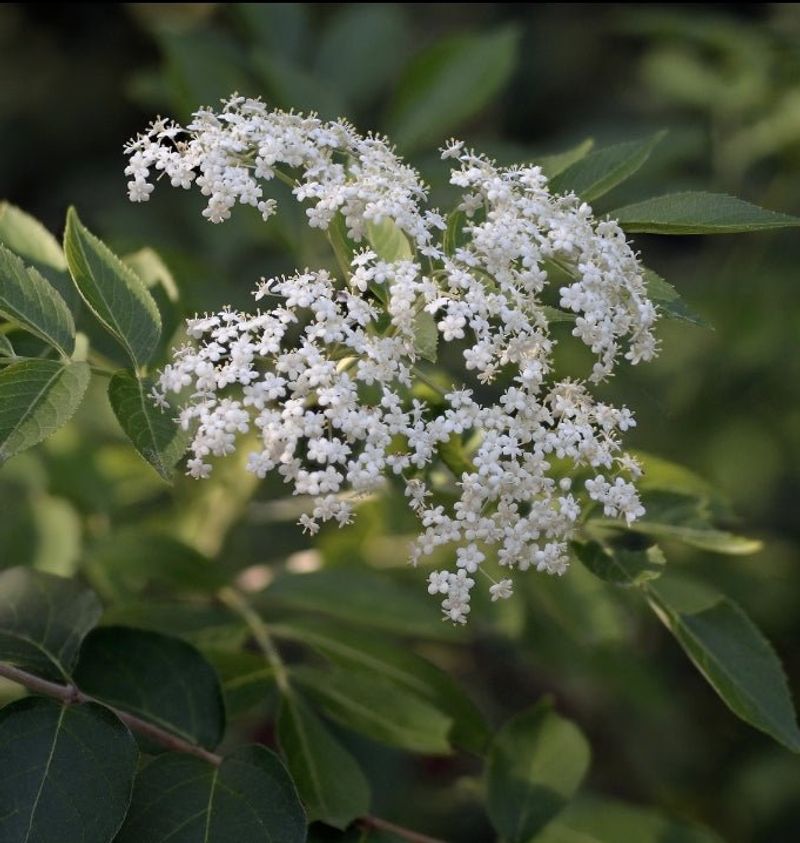
Elderberry (Sambucus canadensis) genuinely wants that spot.
This fast native shrub thrives in the poorly drained pockets that drown most edibles, and it fruits reliably across North and Central Florida.
Flat white flower clusters give way to tiny dark berries in summer, and both are useful.
The flowers make cordial and fritters, and the cooked berries turn into syrup that many Florida families reach for at the first sign of a cold.
One safety note worth respecting.
Eat the flowers and only the fully ripe, cooked berries.
Raw berries, stems, and leaves can make you sick, so do not skip the cooking step.
Elderberry grows fast, 6 to 12 feet tall, and can look ragged, so cut it back hard in winter to keep it productive and neat.
Space plants about 4 to 6 feet apart.
Because it likes moisture, it needs water more often than the desert-tough plants on this list during a real drought, roughly a deep soak every 7 to 10 days when the rain stops.
In a normal wet Florida summer, though, it feeds itself.
Your problem corner becomes your pantry, and the hose stays put.