
Stumble On This Plant In Your Yard And You Have Struck Gold, But Most Folks Walk Right Past It
Follow us on Google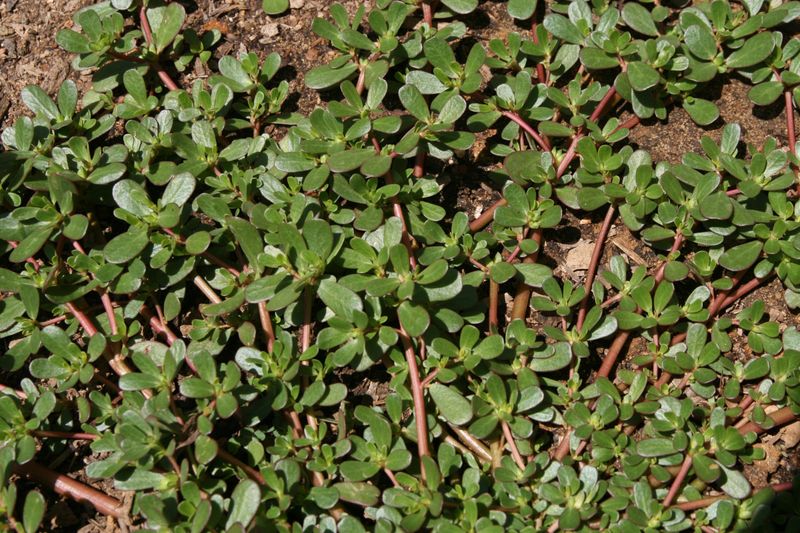
Every summer, a low-growing plant quietly takes over garden beds, sidewalk cracks, and bare patches of lawn across the country, and most people yank it out without a second thought.
That plant is common purslane, and tossing it may mean throwing away a free edible green with a surprisingly useful nutrient profile.
Finding it in your yard is not a lottery win, but it can mean fresh food at zero cost, if you know what you are looking at and where it has been growing.
The Overlooked Plant Is Common Purslane
Somewhere between the tomatoes and the fence line, a plant is probably already doing its thing in your yard.
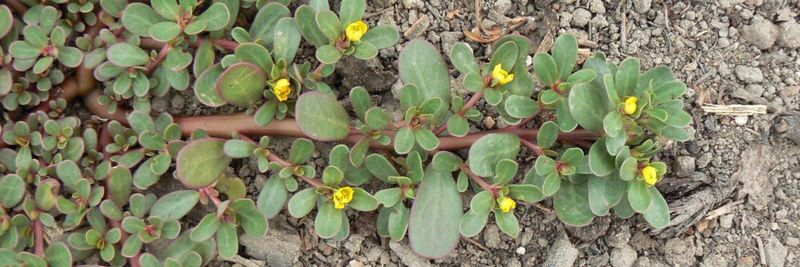
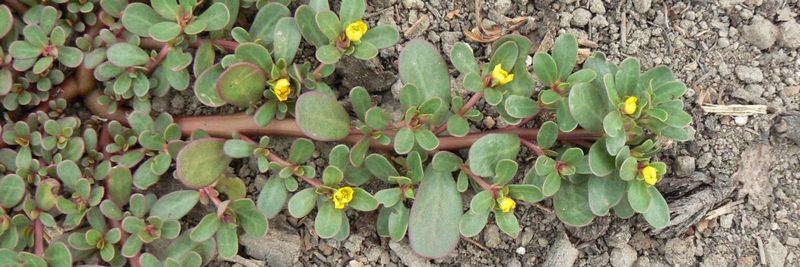
Common purslane, known botanically as Portulaca oleracea, forms a low, spreading mat that hugs the ground rather than reaching upward.
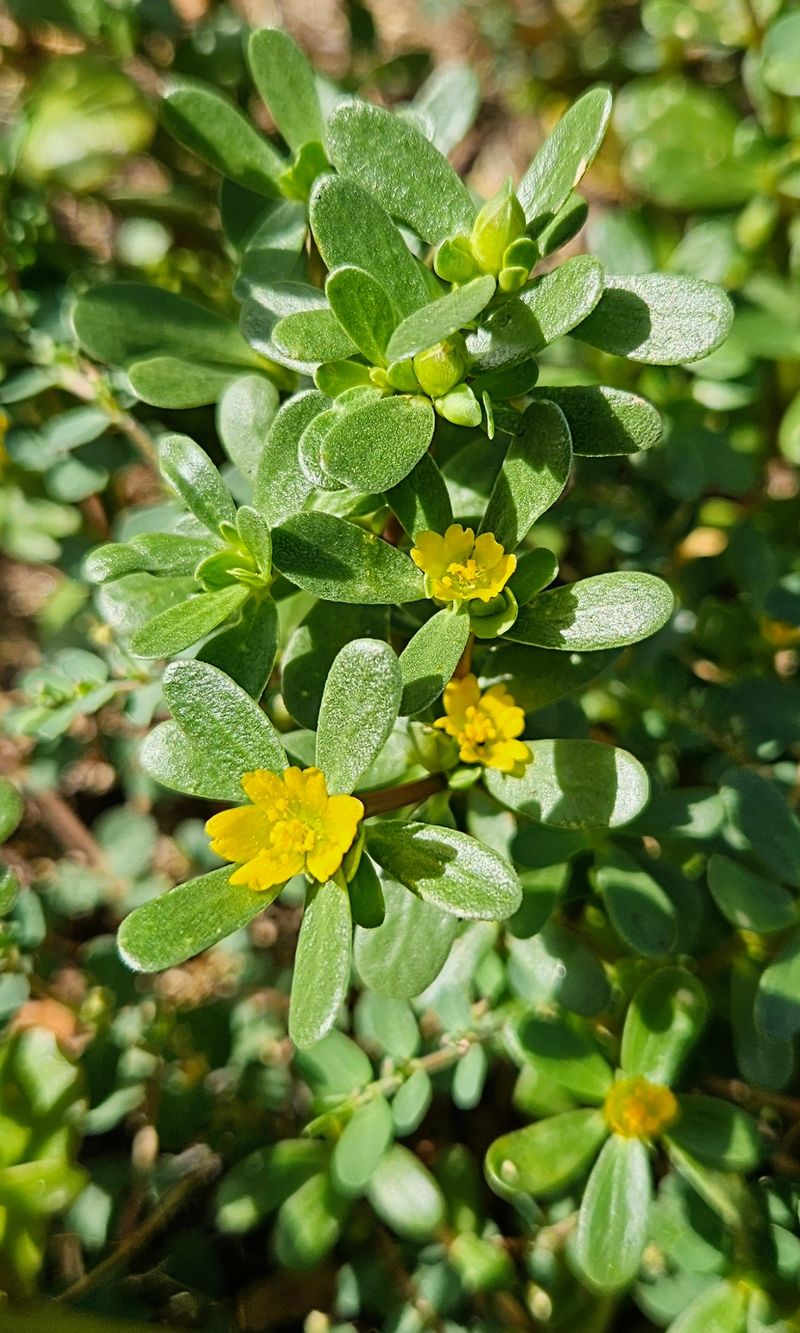
Its leaves are smooth, thick, and fleshy, almost like a tiny jade plant, and its stems are often tinged reddish or deep green and noticeably plump compared to ordinary weeds.
Small yellow flowers appear near the leaf joints and stem tips, typically opening on sunny mornings.
You might spot purslane pushing up through a crack in the patio, colonizing a bare patch near the garden hose, or threading through the base of your raised beds.
Iowa State Extension notes that it thrives in disturbed soil and warm conditions, which is exactly what most home yards offer all summer long.
One reason purslane survives where other leafy plants wilt is that its fleshy leaves and stems store water, giving it real heat and drought tolerance.
Pull it on a hot July afternoon and set it aside on concrete, and it will still be alive the next morning.
That resilience is part of why it spreads so efficiently and why so many gardeners never give it a second look.
When this article calls purslane “gold,” that word means free edible food and a useful nutrient profile, not money.
There is no cash value attached to a yard full of purslane.
What there is, under the right conditions, is a plant worth pausing over before you reach for the trowel.
Its Value Comes From Nutrition, Not Hype
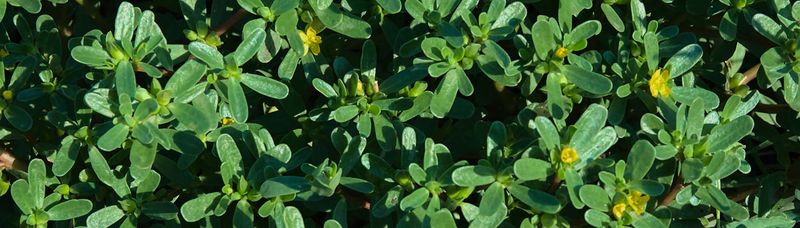
Purslane earned attention from researchers and foragers for a reason that goes beyond its ability to survive a drought.
Among leafy greens, it contains an unusually high level of alpha-linolenic acid, or ALA, a plant-based essential omega-3 fatty acid.
A peer-reviewed nutrition analysis confirms that purslane also supplies vitamin C, vitamin E, beta-carotene, and minerals including calcium, magnesium, and potassium.
Those nutrients make it genuinely worth adding to a meal.
But a clear limit applies here, and it matters.
ALA is not the same as EPA or DHA, the omega-3 fats found in fatty fish and algae-based supplements.
The National Institutes of Health Office of Dietary Supplements explains that the body converts ALA to EPA and DHA only at a limited rate, so eating purslane does not deliver the same omega-3 benefit as eating salmon, sardines, or taking an algae-based DHA supplement.
Purslane is also not a treatment or prevention for any medical condition.
Laboratory studies and small human trials have looked at its compounds, but no published research establishes that eating yard-grown purslane cures or reliably prevents diabetes, cancer, heart disease, or inflammation.
Present it as what it actually is: one nutritious leafy green that can add variety and a few useful nutrients to an already balanced eating pattern.
Think of it as a free side dish with a decent nutrient profile, not a supplement in plant form.
That framing keeps expectations honest and the meal enjoyable.
Identify It Before You Taste It
Correct identification is the first rule of eating any yard plant, and purslane has one look-alike that makes this step genuinely important.
Before anything goes in a bowl, run through a short visual checklist using several features together, not just one.
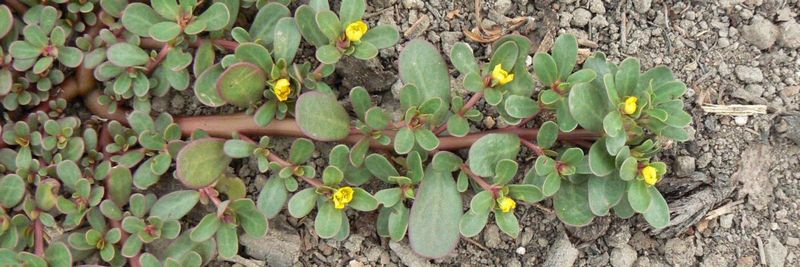
Common purslane grows flat and low, spreading outward rather than upward.
Its leaves are smooth and succulent, thick enough to feel almost rubbery between your fingers.
The stems are fleshy and often reddish, and the leaves tend to crowd together in a way that can look opposite or whorled.
When conditions are right, small yellow flowers, usually with five petals, appear near the tips and leaf joints.
Cornell’s weed science profile describes this combination of succulent texture, prostrate habit, and yellow flowers as the reliable set of traits that separates purslane from most yard weeds.
The plant most likely to cause confusion is prostrate spurge or spotted spurge, an Euphorbia species that also grows flat and low in similar locations.
Spurge generally has thinner, less fleshy stems and smaller leaves.
The critical difference is that spurge releases a milky white sap when you snap a stem.
Common purslane does not produce that milky sap.
Mississippi State Extension specifically flags spurge as the look-alike to rule out before harvesting.
Clear sap alone does not confirm a plant is purslane.
Rely on the full picture: prostrate growth, smooth succulent leaves, thick fleshy stems, yellow flowers, and no milky sap when broken.
If the features do not all line up, contact your county Extension office or use a reliable regional plant guide before eating anything.
An uncertain ID is a reason to wait, not to guess.
A Yard Plant Is Not Automatically Food
Recognizing purslane correctly still leaves one major question unanswered: do you know what that patch of ground has been treated with?
A healthy-looking plant growing in chemically treated soil can carry pesticide residues that no amount of washing will fully remove.
Herbicides, insecticides, fungicides, and even some fertilizers are applied under product labels that do not account for someone harvesting the weeds afterward.
University of Georgia Extension points out that the line between a weed and a useful plant often comes down to context, and context here includes treatment history.
If your lawn has received any spray in the past season and you do not have the product label in hand, that purslane is not food-safe.
Location matters just as much as treatment history.
Plants growing beside busy roads, near parking lots, industrial sites, or treated drainage channels may have absorbed vehicle exhaust residues, heavy metals, or runoff chemicals through their roots and leaves.
Areas where pets regularly defecate add a biological contamination risk on top of any chemical concern.
UF/IFAS Extension specifically suggests collecting seed capsules from a roadside plant rather than eating it directly, then growing those seeds in clean, known soil at home.
None of this means every roadside plant is poisonous or that every suburban lawn is a hazard.
It means you need actual knowledge of a specific location, not just a general sense that the yard looks fine.
When that knowledge is missing, the safer move is to grow purslane from clean seed in a container you control.
Young Stems Can Become Dinner
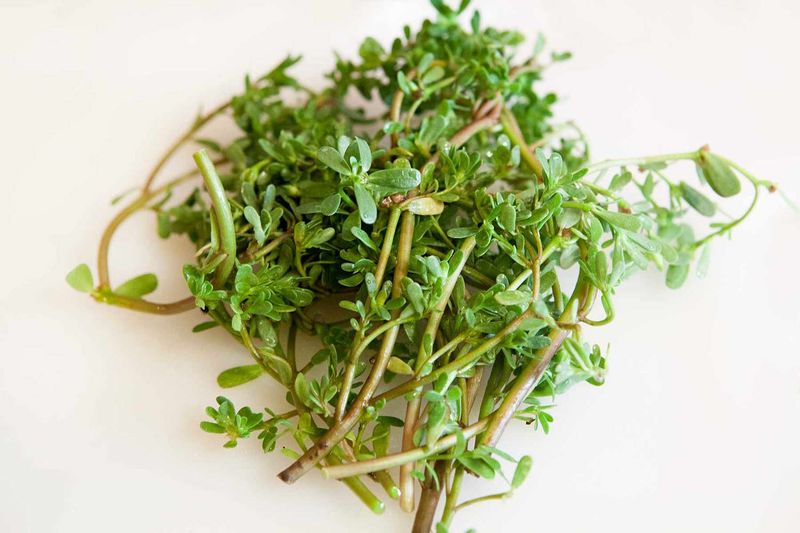
Once you have confirmed the plant and cleared it for clean growing conditions, purslane moves from yard curiosity to kitchen ingredient.
The best parts to use are young plants and tender stem sections harvested before the plant begins to flower heavily.
UF/IFAS Extension guidance recommends harvesting stems around 4 to 6 inches long, which tends to give you the most tender growth with the mildest texture.
Raw purslane has a tart, slightly sour or lemony flavor that comes from the organic acids naturally present in the plant.
Tossed into a salad, it adds a pleasant bite alongside milder greens.
Cooked, it softens and takes on a texture similar to cooked spinach or watercress, making it a reasonable addition to soups, egg dishes, sauces, or cooked greens.
Mississippi State Extension also lists pickling as a traditional preparation that preserves purslane for later use.
One caution applies regardless of how you cook it.
Purslane contains oxalates, naturally occurring compounds found in many leafy greens including spinach and chard.
People with kidney disease, a history of recurrent calcium-oxalate kidney stones, gout, or high uric acid levels should ask a clinician before eating purslane in any significant amount.
University of Wisconsin Extension specifically flags excessive consumption as a concern for people prone to kidney stones.
Cooking can reduce some soluble oxalates, but it is not a complete fix and should not be treated as one.
Eating purslane occasionally as part of a varied diet is a reasonable approach for most healthy adults.
Eating large amounts every day is a different matter, and moderation applies here just as it does with any high-oxalate green.
Grow a Clean Patch Without Losing Control
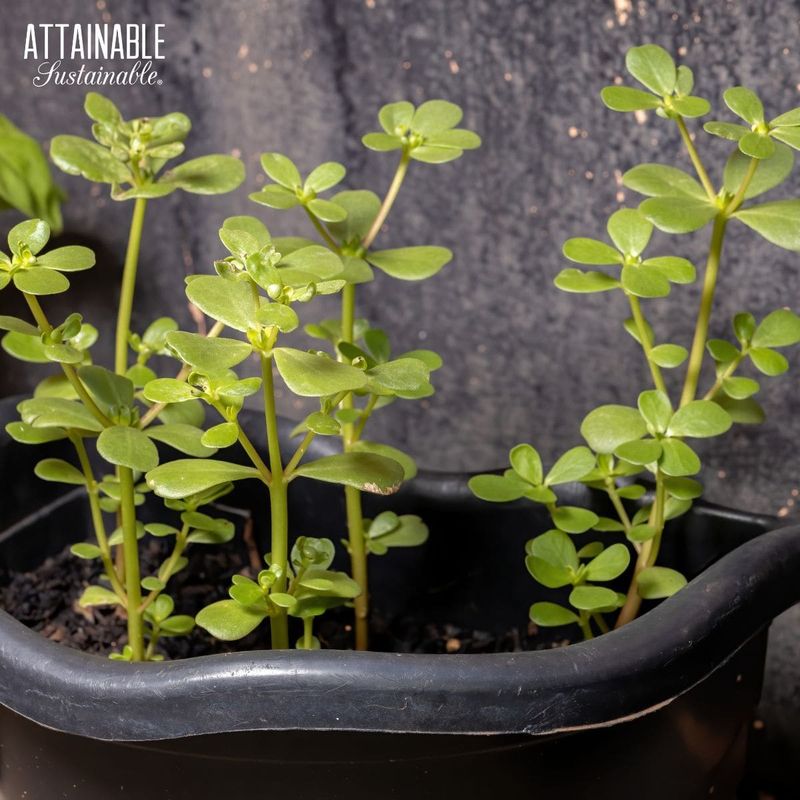
Growing purslane intentionally in a container or a defined bed puts you in charge of exactly what the soil has been exposed to, which solves the contamination problem at the root.
Full sun and well-drained soil are the two conditions that matter most.
Purslane tolerates heat and drought better than most leafy vegetables because its fleshy tissue stores water, but it produces noticeably better-quality, more tender leaves when it gets consistent moisture during the growing season.
For planting, press seeds lightly into the soil surface rather than burying them.
Cornell’s weed science research shows that emergence drops sharply when seeds are buried below about 1 inch, so surface contact is the practical rule.
UF/IFAS Extension recommends shallow grooves spaced roughly 8 to 10 inches apart, then thinning seedlings to somewhere in the 3-to-6-inch range once they are established.
Time your planting to the warm part of your local growing season, since purslane is a summer annual that needs soil temperatures above about 60 degrees Fahrenheit to germinate reliably.
The spread risk is real and worth taking seriously.
A single purslane plant can produce up to 240,000 seeds under favorable conditions, according to UF/IFAS weed management guidance.
Stem fragments left on moist soil can also reroot, so pulling plants and leaving them on a wet garden bed can spread the problem rather than solve it.
UC IPM notes that managing purslane before it sets seed is the most effective strategy for keeping it from taking over.
Harvest stems regularly before flower buds open.
Remove any unwanted plants completely, roots and all, and let cut material dry on a hard surface away from soil before composting it.
A container on a sunny porch or a small raised bed with fresh potting mix gives you the food value without the weed problem spreading into the rest of the yard.
Know When to Pass
Purslane can add a free edible green and a source of plant-based ALA to your meals, but only when three things line up: you have confirmed the botanical identity, you know the growing area has been free of chemical treatment and contamination, and you are treating it as one part of a broader eating pattern rather than a daily staple.
NIH consumer guidance on omega-3 fatty acids makes clear that ALA from plant sources fills a different role than EPA and DHA from fish or algae, so purslane works best alongside other foods rather than as a replacement for any of them.
The oxalate question is worth repeating plainly.
UTEP herbal safety guidance lists kidney disease and high uric acid as reasons for caution, and pregnancy and breastfeeding safety have not been firmly established.
If any of those conditions apply to you or someone in your household, ask a clinician before adding purslane to regular meals.
Purslane is naturalized across much of the United States rather than native in the gardening sense, and it behaves accordingly.
Left unchecked, it seeds prolifically and spreads into beds where it is not welcome.
University of Wisconsin Extension and UC IPM both treat it as a weed to manage, not a plant to scatter freely.
A contained patch, harvested on schedule, keeps its usefulness intact without turning the yard into a purslane farm.
Walk past it if the ID is uncertain, the soil history is unknown, or the location is a red flag.
Harvest it when all three conditions clear, and you have a free summer green that most of your neighbors are pulling and tossing every week without a second thought.