
The Massachusetts Garden Trend Bringing More Color To Small Urban Yards
Follow us on Google
Small city yards across Massachusetts are getting brighter, denser, and far more personal. Instead of chasing wide lawns or sparse landscaping, homeowners are packing compact spaces with layered flowers, bold foliage, and containers that change through the seasons.
The result feels practical and artistic at once, especially in Boston-area neighborhoods where every square foot matters. If your backyard, side yard, or patio looks too tight for impact, this colorful garden approach may be exactly what you need.
Layered Container Clusters
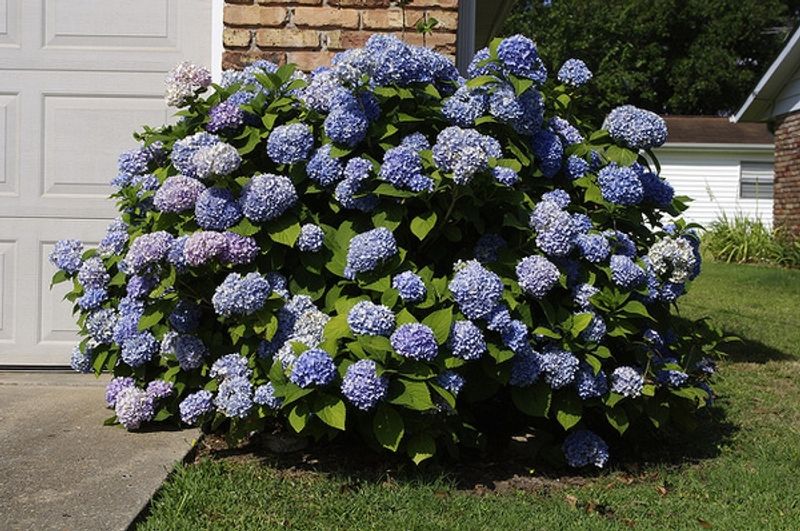
In many Massachusetts city yards, the quickest way to add serious color is by grouping containers instead of scattering them one by one. You get more visual weight in less space, and your eye reads the collection as a planted destination rather than a few lonely pots.
That matters in South End patios, triple-decker backyards, and narrow Cambridge side yards where every inch has to earn its keep.
A strong mix usually starts with three heights, one repeated color family, and a few foliage plants that keep the arrangement grounded. You might pair chartreuse sweet potato vine with magenta petunias, deep purple coleus, and a compact hydrangea in a larger pot behind them.
I also like repeating one container material, such as terracotta or matte black, so the colors feel intentional instead of busy.
Maintenance stays manageable when you cluster plants with similar light and water needs together. Containers can be swapped out as seasons change, which is useful in a climate where spring tulips give way to summer zinnias and fall mums fast.
If your yard feels flat, this layered setup gives you color at eye level, knee level, and ground level without asking for a full redesign.
Native Pollinator Color Mix
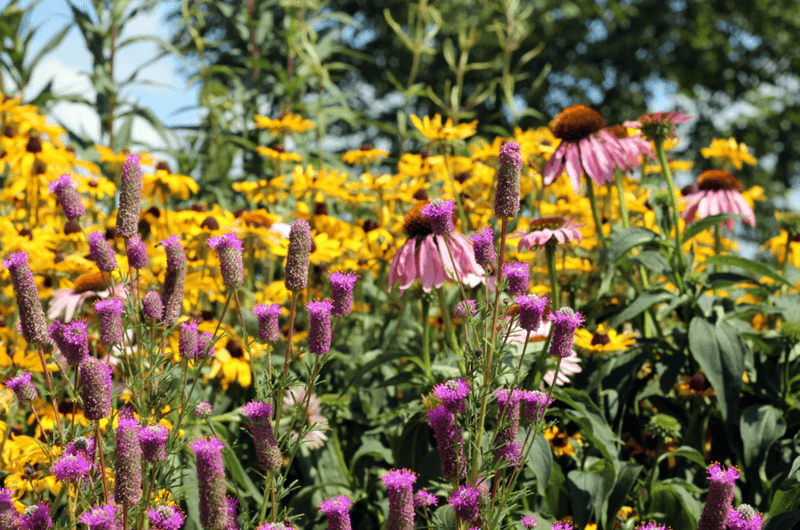
One reason this trend works so well in Massachusetts is that colorful native plants can handle local conditions without acting fragile. In a small urban yard, that reliability matters because you need every plant to contribute for more than a week or two.
Good choices like bee balm, coneflower, black-eyed Susan, asters, and native phlox bring long bloom periods plus the bonus of bees, butterflies, and hummingbirds visiting close to your seating area.
The smartest approach is to think in color waves instead of one big burst. Early bloomers can lean purple and gold, midsummer can shift toward hot pink and orange, and fall can carry the space with lavender, white, and rust tones.
You are not filling a botanical collection here – you are building a small garden that keeps changing while still feeling cohesive from the sidewalk or kitchen window.
I would keep the palette bold but edited, especially if the yard is bordered by fencing, brick, or neighboring buildings. Repeating two or three flower colors helps the space feel larger, not cluttered.
When the planting also feeds pollinators, your compact yard starts feeling alive in a way that decorative-only beds rarely achieve.
Vertical Flower Screens
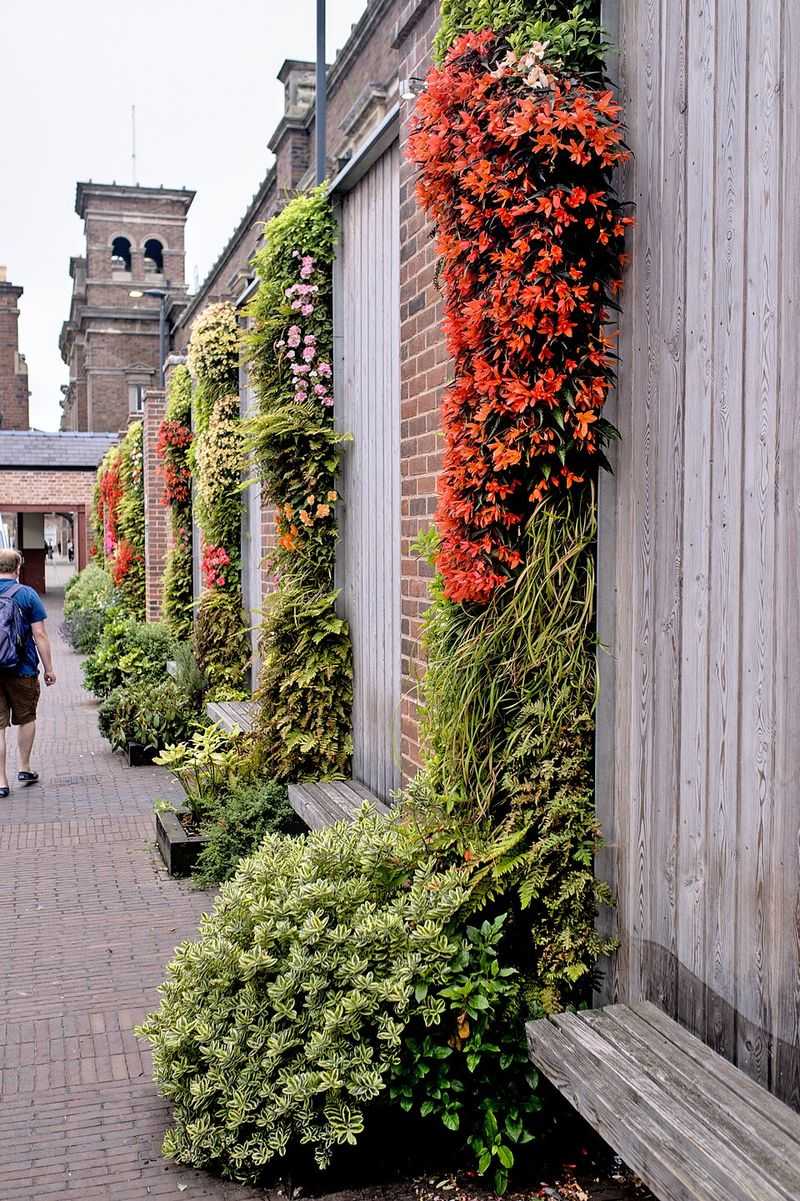
Color does not need to stay at ground level, and that is a big part of why vertical flower screens are showing up in tighter Massachusetts yards. Trellises, wall planters, and slim fence-mounted boxes let you add bloom where there is no planting bed to spare.
In dense neighborhoods, this trick also softens plain fencing and draws attention away from neighboring buildings or utility lines.
Climbing clematis, mandevilla, black-eyed Susan vine, and even pole beans can all earn their keep depending on how ornamental or practical you want the space to be. I like pairing upright flowering vines with trailing annuals below so the display feels full from top to bottom.
If your patio gets strong afternoon sun, a vertical setup can also create a little shade and privacy without making the yard feel boxed in.
Success usually comes down to structure before planting, so use supports that can handle wind, summer growth, and wet weather. Choose one main vertical focal point rather than covering every surface, because restraint keeps the look fresh.
When color rises up the wall plane, your whole yard feels taller, richer, and more finished, even if the footprint is barely larger than an outdoor dining table.
Succession Planting in Narrow Beds
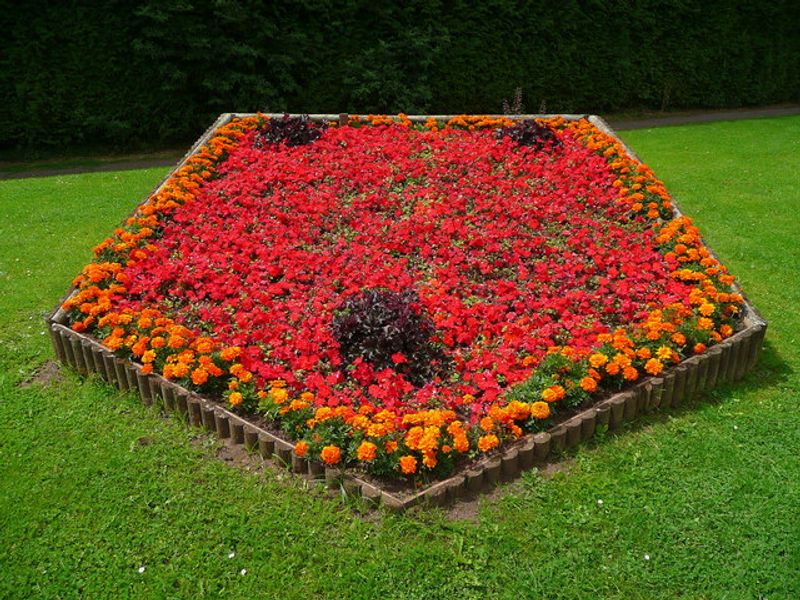
Narrow side yards and skinny foundation beds can look underwhelming if everything blooms at once and then disappears. Succession planting fixes that by layering bulbs, perennials, and annual fillers so the bed keeps changing from April through October.
In Massachusetts, where the growing season moves quickly, this strategy gives a small space a sense of momentum instead of a short-lived peak.
You might start with crocus, tulips, and daffodils, then hand the show to salvia, nepeta, and allium, followed by echinacea, zinnias, and dahlias. Later, asters and ornamental grasses keep the display going when summer flowers fade and the air turns cooler.
I like this method for urban yards because one bed can do the work of three, especially when space is too limited for separate spring, summer, and fall planting zones.
The layout matters as much as the plant list, so place later-emerging perennials where fading bulb foliage will be hidden naturally. Use repeated drifts instead of one-off specimens, because rhythm makes a bed look designed.
If your yard feels colorful for only a few weeks each year, succession planting is probably the missing piece between a nice garden and one that always seems timed just right.
Foliage-First Color Blocking
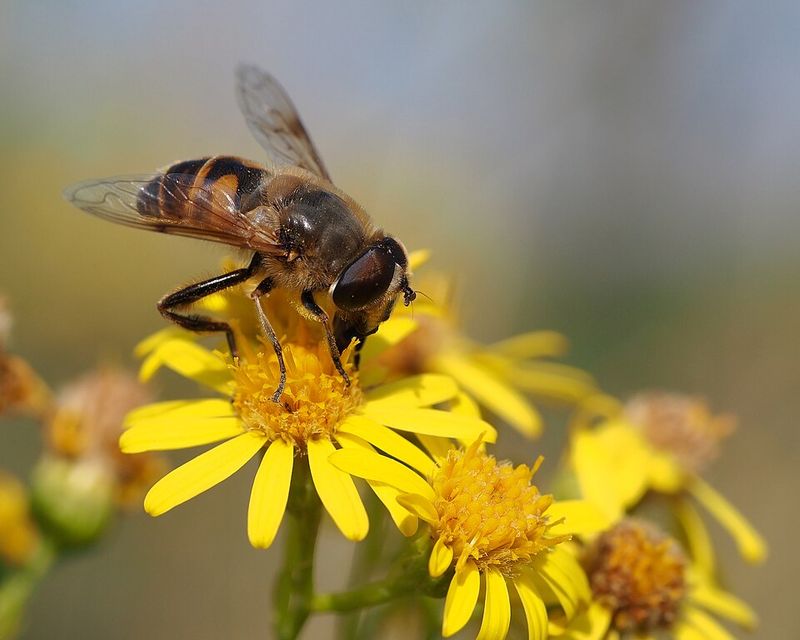
Flowers get most of the attention, but foliage is often what makes a small yard look consistently colorful instead of briefly impressive. In Massachusetts gardens, leaves can carry the design through heat, rain, and seasonal transitions better than many bloom-heavy combinations.
That is why color blocking with coleus, heuchera, hosta, Japanese forest grass, and burgundy shrubs is becoming such a practical move in compact spaces.
The trick is to group plants by leaf color in clear sections rather than mixing every shade everywhere. A chartreuse patch next to deep plum foliage creates contrast that reads from across the yard, while silver or blue-green plants cool down hotter color combinations.
You can still tuck flowers in, but they work best as accents when the foliage structure is already strong.
I would especially recommend this approach if your garden is partly shaded by buildings, fences, or mature trees. Shade can reduce flowering, but it often intensifies leaf texture and tonal variation, which keeps the yard from feeling dull.
When your planting relies on foliage as much as petals, you get a cleaner look, a longer season of interest, and a compact garden that never seems to be waiting for the next bloom cycle.
Seasonal Color Swaps
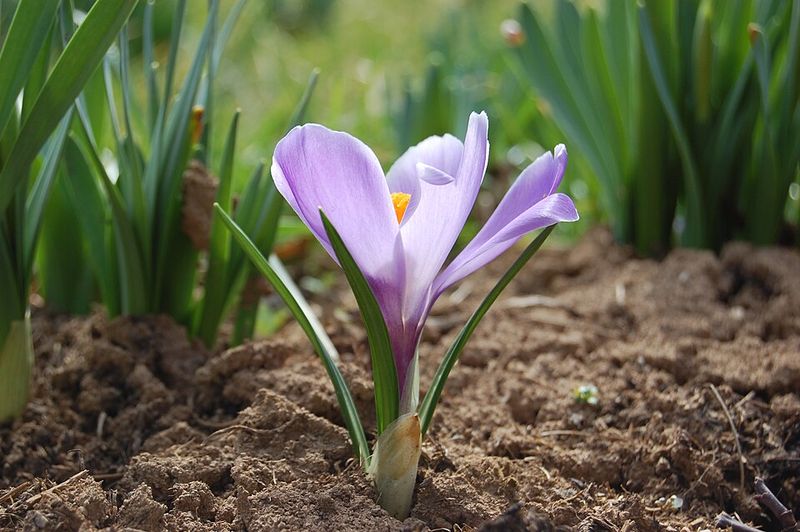
Part of the appeal behind this Massachusetts garden trend is that it does not lock you into one static look. Seasonal color swaps keep a small yard fresh by rotating plants and accents as the weather changes, which is ideal when space is limited and every visible detail matters.
A compact patio can feel brand new with spring bulbs, early herbs, and violas, then shift into summer annuals, autumn grasses, and decorative kale.
This approach works best when the bones of the space stay simple. Keep planters, seating, gravel, or paving consistent, then let the planting palette do the seasonal talking.
You are essentially styling the garden the same way you might update a front stoop, only with more layers and more attention to how colors sit against brick, clapboard, or fencing.
I like this strategy for people who enjoy gardening but do not want a major redesign every year. It also helps you test color combinations before committing them to permanent beds, which can save money and prevent expensive mistakes.
If your urban yard has felt tired by midsummer or forgotten by fall, rotating color in planned stages keeps the space engaged with the season instead of getting stuck in one moment.
Painted Fence Backdrops
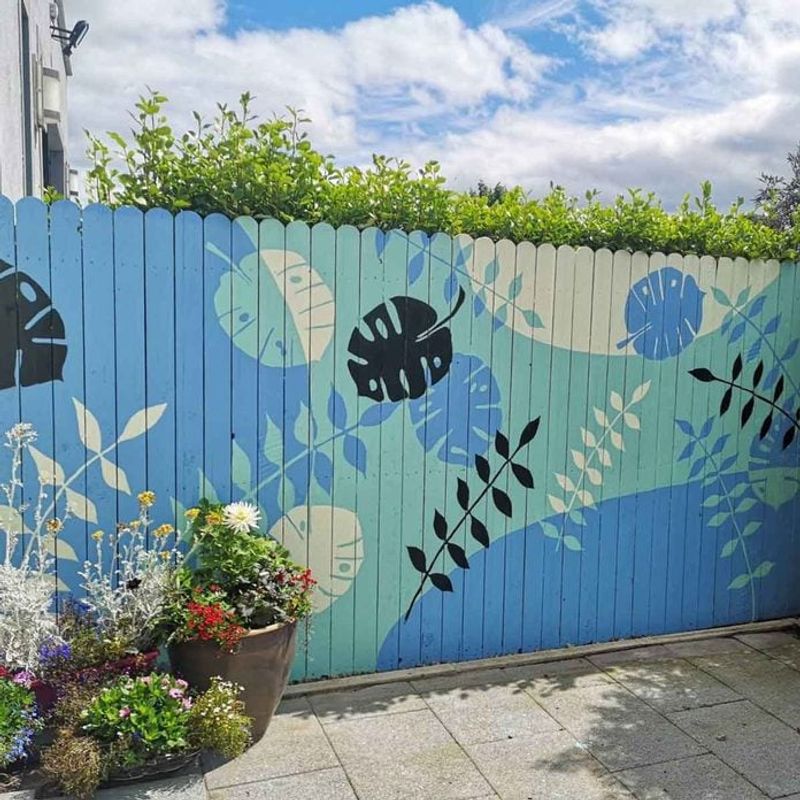
One reason color lands so strongly in a compact Boston yard is contrast, and a painted fence can give flowers that extra push. Deep charcoal, muted navy, and soft brick tones make blooms look brighter without asking you to plant more.
In a tight space, that kind of visual lift is hard to beat.
I like this approach because it works through every season, even when the beds are between flushes. Zinnias, dahlias, and salvias suddenly read as richer and more intentional against a calm background.
It is a simple design move, but it can make a narrow yard feel edited, colorful, and surprisingly expansive.
Color Echo Planting
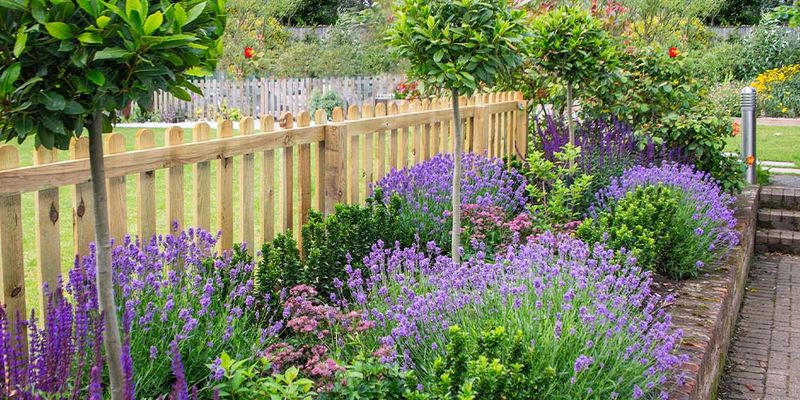
Another smart move in small Massachusetts yards is repeating one or two flower colors across the whole space instead of chasing every shade at once. That echo makes separate containers, railing boxes, and skinny border beds feel connected.
Your eye keeps moving, so the yard reads bigger and more polished.
The trick is to repeat color, not duplicate plants exactly, which keeps the display from feeling stiff. A magenta petunia near the steps can pair with a raspberry dahlia farther back and still create the same rhythm.
When space is limited, that kind of controlled repetition delivers abundance without clutter.