
The Low-Water Texas Shrub Homeowners Grow Instead Of Oleander Along The Fence
Follow us on Google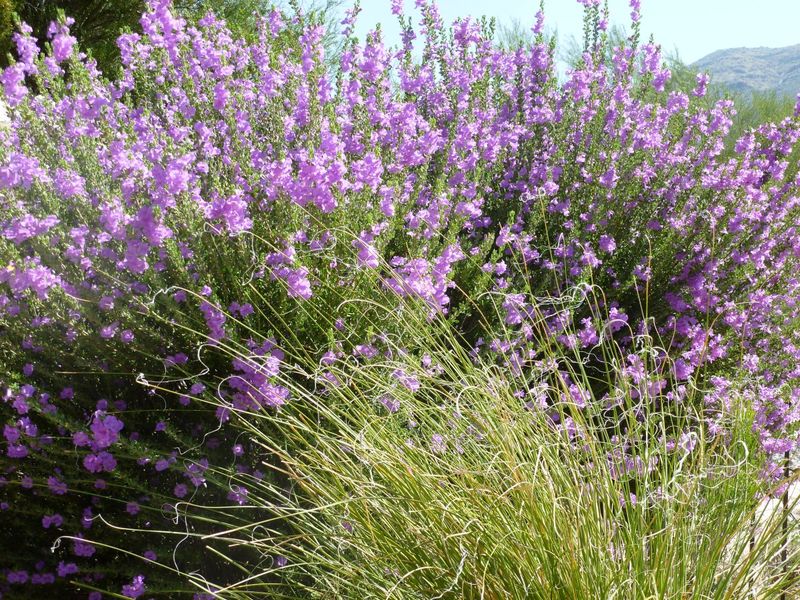
Plenty of older Texas yards have an oleander row running along the back fence, and for years that seemed like a smart call: tough, evergreen, and easy to ignore.
But oleander is genuinely poisonous in every part of the plant, and that concern grows louder once kids or dogs are in the picture.
Texas sage, also called cenizo or Texas ranger and botanically Leucophyllum frutescens, has become a go-to swap for homeowners who want a flowering fence screen without that specific worry.
The catch is that this shrub has real site requirements, and getting them right is what separates a thriving purple-flowered hedge from a row of brown sticks.
A Qualified Texas Alternative to Oleander
Cenizo has been growing along Texas fence lines and ranch roads long before anyone called it a landscape plant.
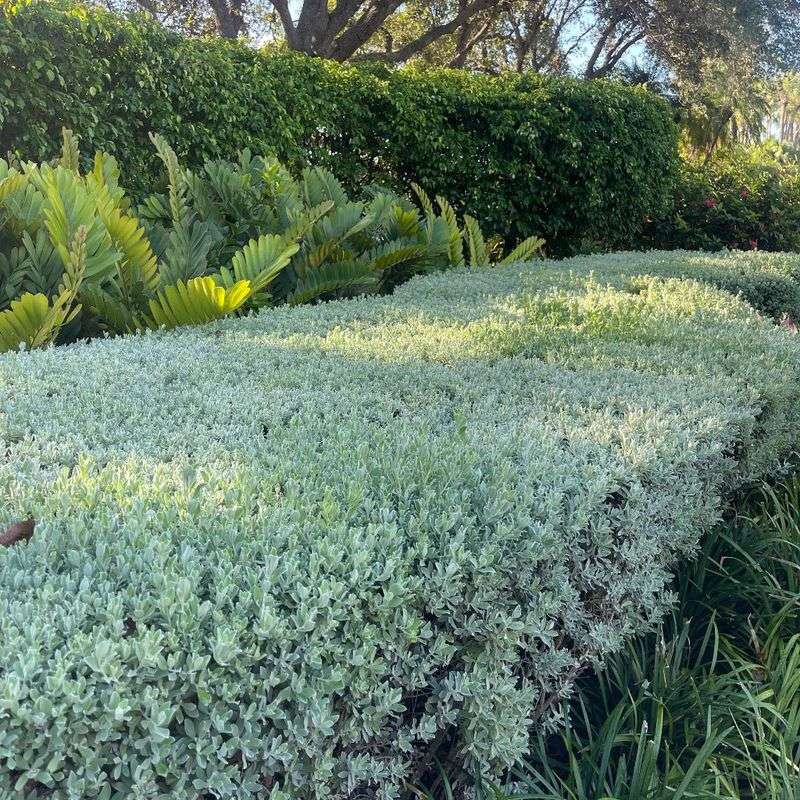
Native to Texas and northern Mexico, Texas sage, also known as cenizo or Texas ranger and botanically Leucophyllum frutescens, is an evergreen shrub built for heat, alkaline soil, and stretches without rain.
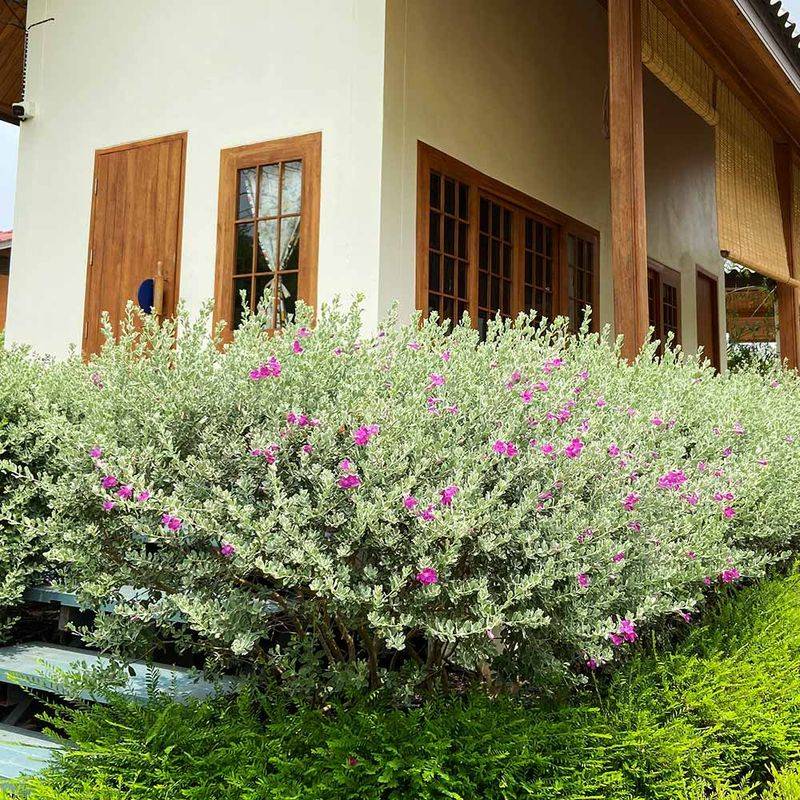
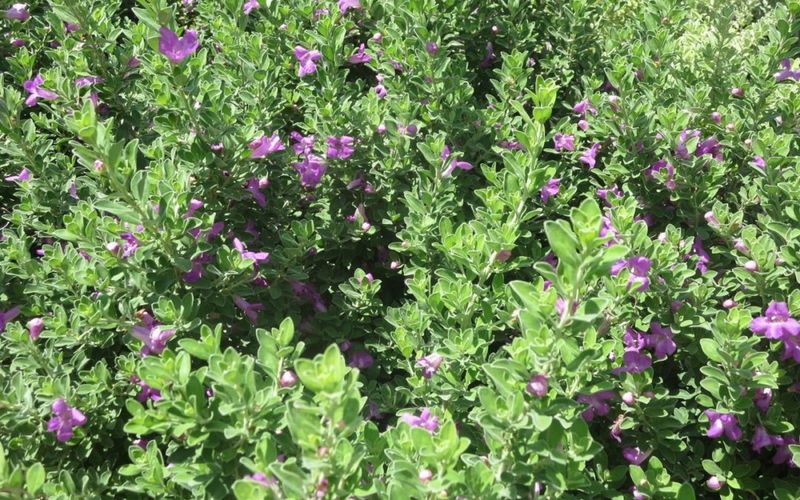
Austin’s official plant guide lists it as a full-sun, low-water evergreen that typically reaches 5 to 8 feet tall, with silver-gray foliage and flowers in purple, pink, or white that appear in pulses throughout the warm season.
For homeowners thinking about pulling out an oleander row, that profile sounds almost too good.
And in the right spot, it genuinely can deliver: an evergreen screen, color after summer rains, and a plant that the reviewed sources do not identify as a known toxic threat the way oleander is.
That is a meaningful difference, but it is not the same as a guarantee of complete safety for every child or pet in every situation.
Here is where the water promise needs a correction.
Texas sage may need less supplemental irrigation than oleander in a dry, well-drained, sun-baked site, and that is a real advantage in the Hill Country or West Texas.
But University of Florida IFAS Extension notes that established oleander is also drought tolerant, which means swapping one for the other does not automatically cut your water bill.
What changes is the toxicity concern and the regional fit, not a guaranteed irrigation reduction.
The swap works best when the site actually matches what Texas sage needs.
Separate Oleander’s Toxicity From Texas Sage’s Name
Oleander, botanically Nerium oleander, is not mildly toxic or toxic only when eaten in large amounts.
Toxic compounds called cardiac glycosides run through every part of the plant: flowers, leaves, stems, twigs, and roots.
MedlinePlus oleander poisoning guidance describes possible effects on the heart, digestive system, nervous system, and blood pressure.
That is a serious and well-documented concern, and it is the clearest reason many Texas homeowners want a different plant along a fence where kids play or dogs run.
Now here is the name problem, because it trips up a lot of people.
When you search “Texas sage non-toxic” or look it up on the ASPCA website, you may find a listing that says Texas Sage is non-toxic to dogs, cats, and horses.
That listing refers to Salvia coccinea, a completely different plant sometimes called scarlet sage.
The ASPCA Texas Sage entry is about that Salvia species, not about Leucophyllum frutescens.
For Leucophyllum frutescens specifically, the ASPCA toxic and non-toxic plant database reviewed for this article does not list it as a known toxic plant, but absence from a list is not the same as a proven safety record.
Do not encourage pets to chew on any ornamental shrub.
And keep in mind that fertilizer, pesticides, mulch, and treated soil around any newly planted shrub create their own separate hazards that have nothing to do with the plant itself.
Match the Shrub to a Dry, Sunny Site
Walk your fence line at noon on a July day and pay attention to what you see.
If that strip of ground bakes in direct sun from morning to late afternoon, never holds standing water after a rain, and sits on rocky or sandy soil, you are looking at a spot where Texas sage can genuinely thrive.
University of Florida IFAS Extension’s Texas sage fact sheet is clear that the plant prefers dry, well-drained, alkaline conditions and performs poorly when roots stay wet or humidity stays high.
That description fits a lot of Central Texas, the Hill Country, West Texas, and the Rio Grande region very well.
Shallow caliche soil, rocky limestone outcroppings, and long dry spells between rains are actually what this plant evolved for.
Missouri Botanical Garden recommends avoiding overwatering and poorly drained locations, and that advice matters more in Texas than almost anywhere else.
Blackland clay in North and Central Texas is the tricky case.
That soil can stay wet for days after a hard rain even during a generally dry year, and saturated roots will damage or kill Texas sage faster than drought will.
If your fence line sits on heavy clay, the fix is not a bag of compost dumped in the planting hole.
A better approach is choosing a spot with a natural slope for runoff, or building a slightly raised planting area to keep roots above standing water.
Austin’s plant guide emphasizes full sun as a non-negotiable requirement, which means at least 6 hours of direct sunlight daily.
Along the humid Gulf Coast or in wetter parts of East Texas, excellent drainage and strong airflow become even more critical, and results there are less predictable.
Choose the Cultivar Before You Set the Spacing
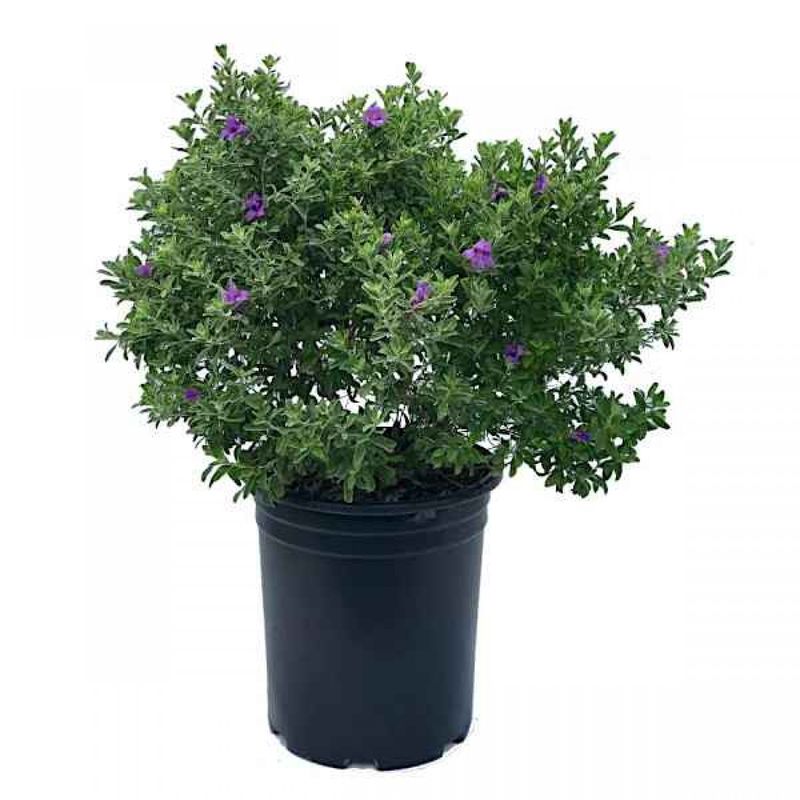
Many homeowners buy Texas sage at a big-box store, grab a few 5-gallon containers, and space them 3 feet apart because that is how far apart they look good in the cart.
Six years later, those plants have merged into a wall, or they have been sheared so aggressively that they barely bloom.
The mistake happens before the first shovel goes in the ground, at the point where most people skip reading the tag.
Mature size in this species varies a lot by cultivar.
Compact selections like ‘Compacta’ or ‘Green Cloud’ can stay near 3 to 5 feet tall and wide, which works well for a lower fence or a tighter yard.
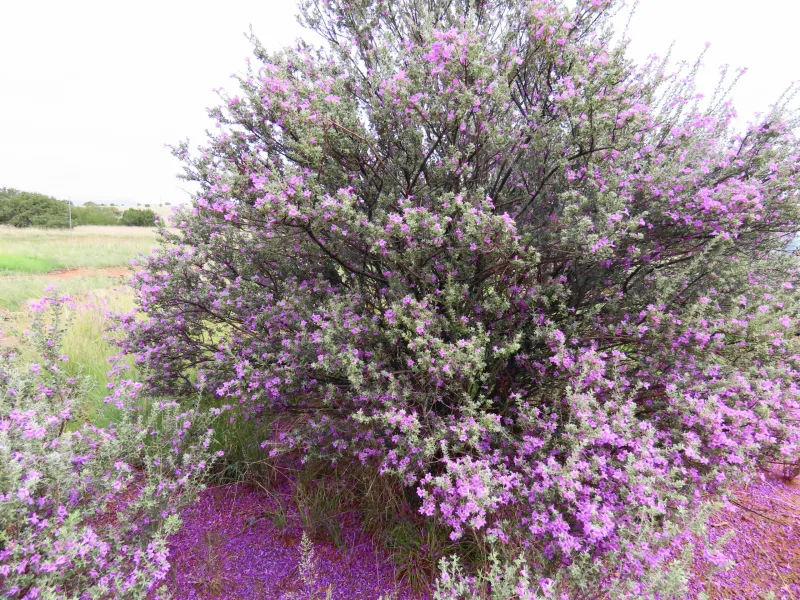
Standard forms commonly reach about 5 to 8 feet tall and 4 to 6 feet wide, as Austin’s city plant guide documents.
And some larger selections, including certain wild-type plants, can approach 8 to 12 feet in ideal conditions.
That range matters enormously when you are planning a fence row.
A reasonable starting point for spacing standard forms is roughly 4 to 6 feet on center, measured from the center of one plant to the center of the next.
That inference comes from published mature widths, not a universal Texas prescription, so let the nursery tag be the controlling source for your specific purchase.
Texas Tech University’s plant resource sheet notes that size varies by selection, which is exactly why the tag matters more than the container size you see at the store.
Also set your expectations honestly: Texas sage creates an informal, airy screen, not an instant solid wall.
It fills in over 2 to 3 growing seasons, and that open structure is part of what makes it attractive.
Water for Establishment, Then Adjust
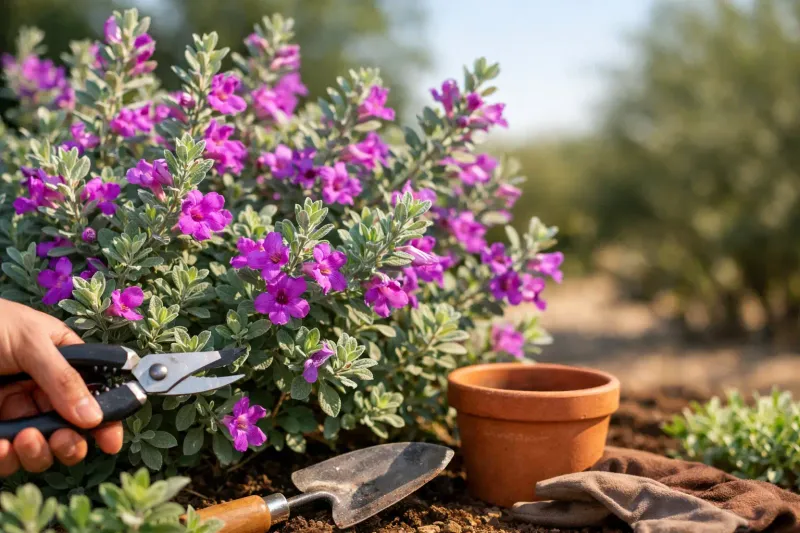
Newly planted Texas sage does not know it is supposed to be drought tolerant yet.
For the first season, it is just a shrub with a small root ball trying to push roots into unfamiliar soil while the Texas sun hammers it from above.
That establishment period is when most Texas sage plants die, and almost always because of too much water or too little, depending on the soil.
Texas A&M AgriLife Extension’s watering guide recommends watering trees and shrubs as infrequently as possible but thoroughly, and notes that most established shrubs may benefit from a thorough deep watering twice monthly during the growing season when rainfall is inadequate.
The key word is thorough: a slow, deep soak that reaches 12 to 18 inches down encourages roots to chase moisture downward rather than staying shallow and vulnerable to heat.
During the first 6 to 12 weeks after planting, water more frequently, roughly every 5 to 7 days depending on heat, wind, and rainfall.
Then gradually stretch the interval as the plant settles in.
Once established, Austin’s Grow Green plant guide classifies Texas sage as a low-water plant that should be watered thoroughly every 3 to 4 weeks if there has been no significant rainfall.
Those are regional benchmarks for Central Texas, not a statewide schedule.
In West Texas or the Lower Rio Grande Valley, conditions differ enough that you should adjust for your local rainfall, soil drainage, wind exposure, and summer heat.
A plant in reflected heat from a south-facing concrete wall will always need more attention than one in open ground.
Let an Informal Screen Flower Naturally
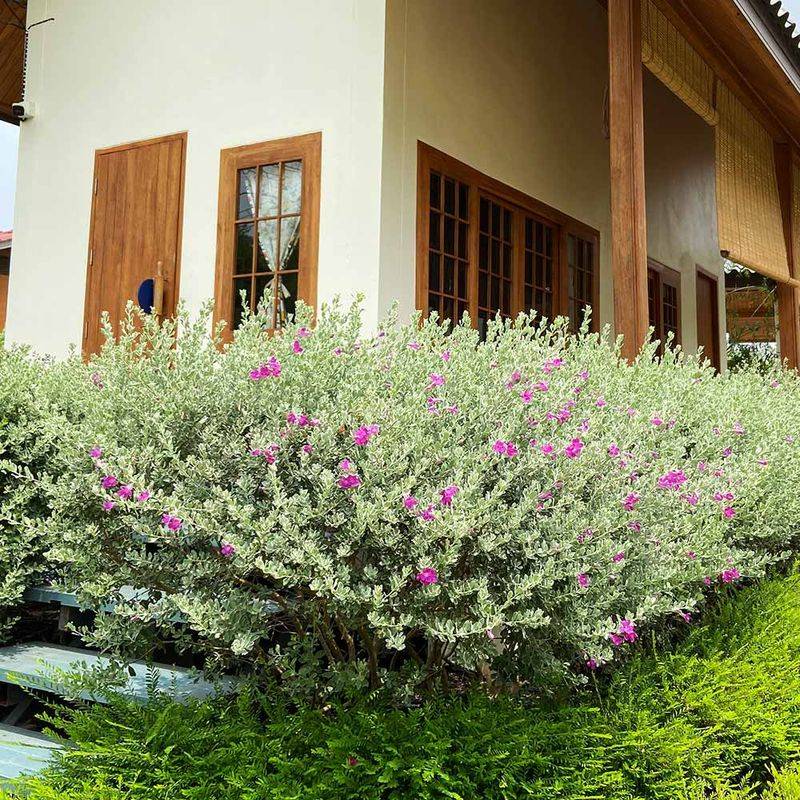
After a summer thunderstorm rolls through Central Texas, something happens in the yard that stops people mid-step.
The Texas sage along the fence lights up with purple blooms almost overnight, turning a silver-gray hedge into something that looks like it was planted for a magazine.
That flowering pulse is one of the best things about this shrub, and it is also one of the most misunderstood.
The “barometer bush” nickname comes from the plant’s tendency to bloom after rain or a shift in humidity.
University of Florida IFAS Extension’s fact sheet documents this rain-triggered bloom pattern, but timing varies by cultivar, moisture level, temperature, and location.
It is not a reliable weather forecast, and not every rain triggers a bloom.
Think of it as a pleasant surprise rather than a predictable calendar event.
To keep the screen healthy and flowering well, the best approach is a light hand with pruning.
Remove dead, damaged, or crossing branches after a bloom cycle or during the dormant season in late winter.
Austin’s plant guide specifically warns against shearing or hedging Texas sage, and that is advice worth following.
Repeated aggressive shearing creates a dense outer shell of foliage while the interior goes bare and woody, which reduces bloom coverage and can leave the plant looking hollow after a hard freeze.
A pair of hand pruners and a light cleanup once or twice a year will serve you far better than a hedge trimmer run along the top every spring.
The plant’s natural rounded shape is actually the screen you are after.
Handle and Dispose of Oleander Carefully
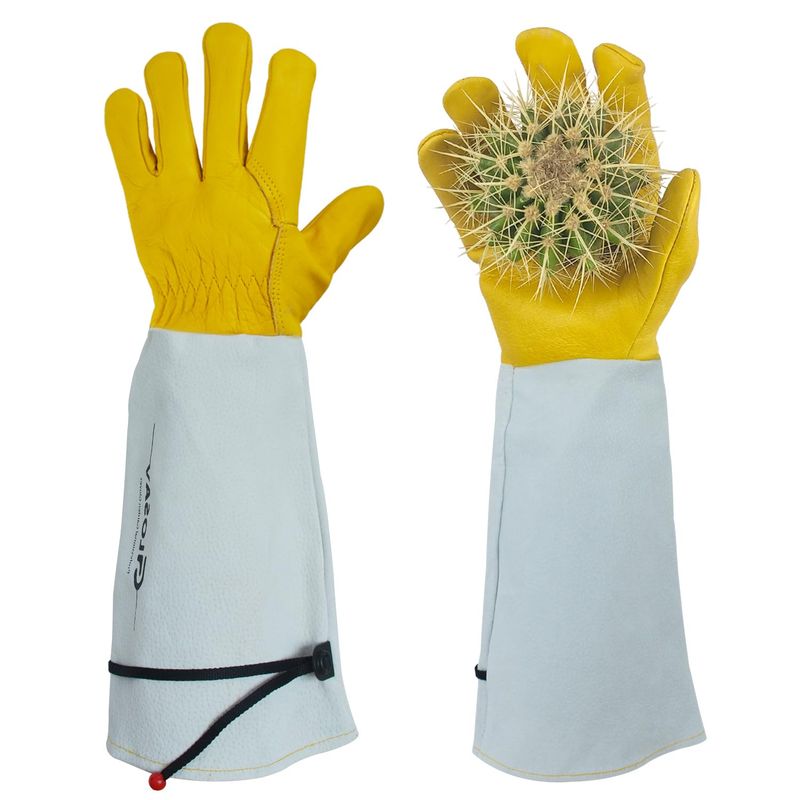
Before Texas sage goes in the ground, the oleander has to come out, and that step deserves more respect than most homeowners give it.
MedlinePlus oleander poisoning information makes clear that toxic compounds are present throughout the entire plant, which means the sap on a freshly cut stem is not something to brush off your skin and forget about.
Wear thick gloves, keep the sap off your face and eyes, and wash your hands and tools thoroughly when the work is done.
The most important disposal rule is one that surprises people: never burn oleander branches.
Smoke from burning oleander can carry toxic compounds and cause serious injury.
City of Austin oleander handling guidance reinforces careful handling and warns against burning.
For disposal, check your local municipal green-waste rules before doing anything else.
Some Texas cities accept oleander in yard-waste pickup with specific bagging requirements, others do not.
When in doubt, a qualified landscape professional or waste disposal service familiar with local rules is the safest call.
Do not assume that composting or chipping at home is universally acceptable without checking.
If anyone in your household, a child, a pet, or an adult, shows signs of possible oleander exposure or ingestion, treat it as a poison emergency.
Contact Poison Help at 1-800-222-1222 or call emergency services right away.
Once the old row is out and the site is clear, run through a quick checklist before buying plants: full sun confirmed, drainage tested after a rain, cultivar size matched to the fence length, and regional conditions considered.
That checklist is what separates a successful planting from an expensive redo.
Make the Site the Final Decision
Every piece of advice in this article points back to one thing: the site decides whether Texas sage works along your fence.
Austin’s plant guide and University of Florida IFAS Extension’s fact sheet both point to the same requirements: full sun, sharp drainage, and a preference for dry conditions.
Get those three things right and you have a real chance at an evergreen, flowering screen that may need less supplemental water than oleander in that specific spot.
Get them wrong and no amount of care will compensate.
Before you buy a single plant, check the fence line after a rain and see how long water sits.
Count the hours of direct sun at midday in summer.
Read the nursery tag on the specific cultivar you are considering, because Texas A&M AgriLife Extension’s watering guidance and the published mature size ranges both confirm that conditions and cultivar choice determine outcomes more than any general rule.
Verify the botanical name is Leucophyllum frutescens on the tag, measure the fence length, and allow for the plant’s full mature width when calculating how many you need.
Texas sage is not a universal fix, and it will not turn a wet, shady, clay-bound fence line into a thriving screen.
But in the right dry, sunny Texas spot, it trades oleander’s documented toxicity concern for silver foliage, seasonal purple flowers, and a plant that genuinely belongs in this climate.
That is a trade worth making when the conditions are actually there to support it.