
The Florida Native Plant That Draws Luna Moths To Your Backyard At Night
Follow us on Google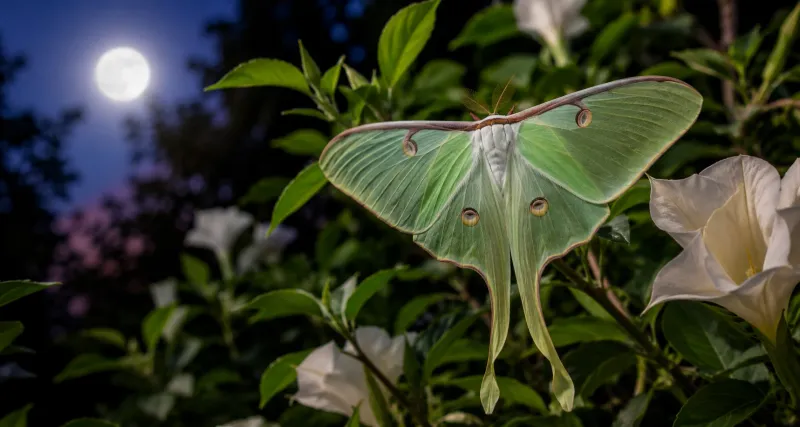
Step onto a North Florida porch on a warm May night and you might catch a glimpse of something that stops you cold, a pale green wing the size of your palm drifting past the porch light.
That is a Luna moth, one of the largest and most striking moths on the continent, and it is genuinely rare to see one unless the right conditions line up.
American sweetgum, Liquidambar styraciflua, is a documented host plant for Luna moth caterpillars in Florida, meaning the tree feeds the larval stage that makes reproduction possible.
Planting one can make your yard more suitable for that life cycle, though it does not promise you a sighting, and the tree comes with real size and site demands worth understanding before you dig a hole.
Sweetgum Supports Luna Moth Caterpillars
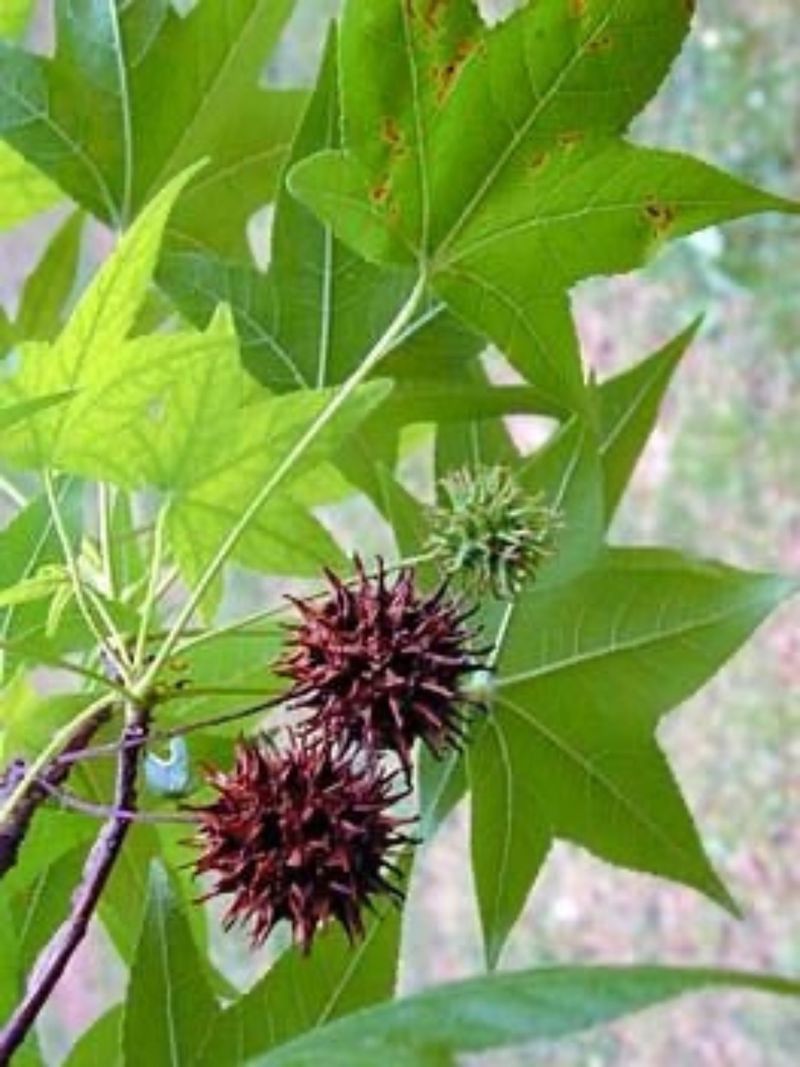
American sweetgum, Liquidambar styraciflua, earns its place in this conversation for a specific reason: Luna moth caterpillars eat its leaves.
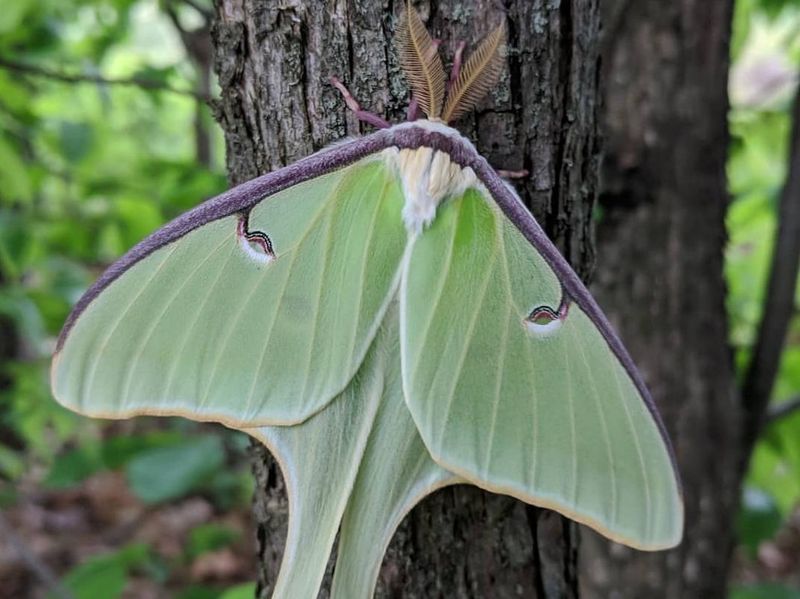
The Luna moth itself, Actias luna, is a very large pale-green moth with long sweeping tails and bold eyespots on its hindwings, the kind of creature that makes people grab their phone and wonder what on earth just landed on the screen door.
UF Natural Area Teaching Laboratory records put the adult wingspan at approximately 4.5 inches, which is roughly the width of your hand.
Sweetgum plays the role of larval host, meaning it supplies food during the caterpillar stage when the insect is actively growing and building toward metamorphosis.
Planting a sweetgum can support that stage and make a yard more favorable for Luna moth reproduction over time.
What it does not do is reliably pull adult moths out of the surrounding landscape or guarantee that you will ever watch one circle your yard at night.
UF/IFAS Featured Creatures identifies sweetgum as a documented host for more southerly Luna populations, and lists hickories, walnuts, sumacs, and persimmon as additional documented host genera.
Sweetgum is one solid Florida option, not the only path forward, and knowing those alternatives matters if your site does not suit a large deciduous tree.
The Caterpillar Stage Makes The Tree Useful
Here is where the biology actually matters for a homeowner thinking about planting.
The adult Luna moth, with that 4.5-inch wingspan, lives for roughly one week and does not eat at all.
Its mouthparts are vestigial, meaning they never fully developed into functional feeding structures, so nectar gardens and night-blooming flowers will not bring a Luna moth to your yard for a meal.
The adult’s entire purpose is to mate and, for females, to find a host plant and lay eggs.
Those eggs hatch into caterpillars that do the real eating.
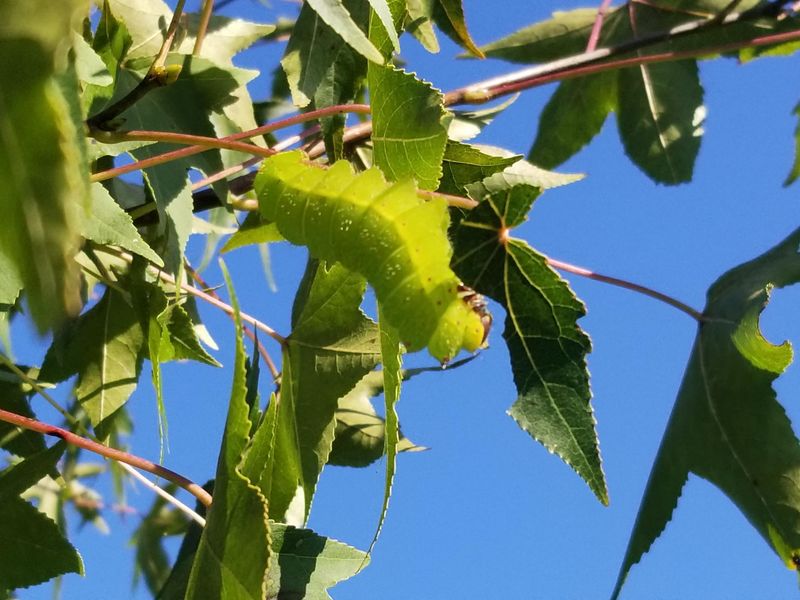
UF/IFAS reports that mature Luna caterpillars reach approximately 2.5 inches in length and spend about a month or longer feeding, depending on temperature.
In Florida’s warm climate, populations can cycle through two to three reproductive generations per year, though that figure describes the species broadly rather than predicting how many caterpillars any single backyard tree will host.
After feeding, caterpillars form cocoons among leaves, which eventually fall to the ground with the tree’s deciduous foliage.
The sweetgum’s value is entirely concentrated in that larval window.
It feeds the stage that cannot survive without the right plant, while the adult stage navigates the wider environment on its own terms, drawn more by light and mating cues than by any single tree in any single yard.
A Host Tree Is Not An Adult-Moth Lure
Many people read “host plant” and picture moths arriving like guests to a party.
The reality is more complicated and more interesting.
A host tree feeds caterpillars, but whether an adult Luna moth ever appears in your yard depends on a different set of conditions entirely.
Understanding that gap before you plant saves a lot of disappointment.
Adult Luna moths are strongly attracted to ultraviolet light, which is one reason people sometimes spot them near porch lights or lit windows.
UF/IFAS confirms this UV attraction, and it is actually one of the more reliable ways to observe moth diversity in a Florida yard.
But attraction to light is not the same as attraction to a specific tree.
Female moths locate host plants for egg-laying through a combination of habitat quality, regional distribution, and mating behavior, not by sensing a single sweetgum from across the neighborhood.
Sighting outcomes vary with host-plant availability across the broader landscape, the moth’s regional distribution, adult behavior during the brief mating window, and the intensity of artificial light nearby.
Xerces Society research notes that excessive outdoor lighting can actually interfere with nocturnal insect behavior, potentially disrupting the mating activity that leads a female to seek out a host plant at all.
Planting sweetgum is one meaningful step toward supporting Luna moth habitat.
It is not a switch you flip to produce a sighting on demand.
Check The Site Before Planting
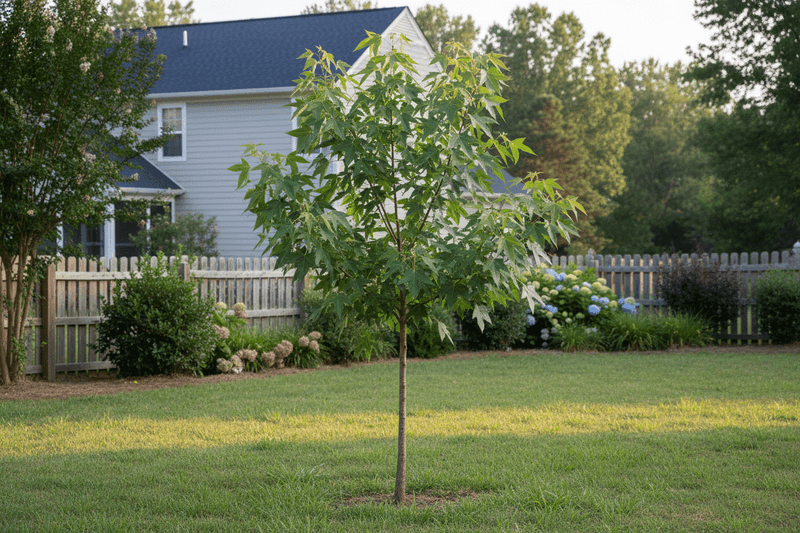
Before sweetgum becomes the answer, the site has to pass a few honest tests.
The Florida Native Plant Society lists sweetgum as a native tree that can reach approximately 80 feet tall and 30 feet wide, which puts it firmly in large-shade-tree territory.
This is not a plant for a small lot, a tight side yard, or anywhere near a roofline, septic system, driveway, or utility line.
UF/IFAS guidance on Liquidambar styraciflua recommends planting at least 8 to 10 feet from curbs and reserving enough open ground for the tree’s mature spread.
Surface roots are real and persistent, and they can lift sidewalks, crack driveways, and create conflicts with underground infrastructure over time.
Give the tree room to grow, or choose a different host plant.
On the soil side, sweetgum tolerates full sun to partial shade and adapts to sand, clay, loam, wet soil, and well-drained ground.
It performs best in deep soil and poorly in shallow, drought-prone conditions.
UF/IFAS recommends a soil pH of 7 or less, which makes the tree a reasonable fit for many of Florida’s naturally acidic sandy soils but a poor match for strongly alkaline sites.
USDA Forest Service range data places sweetgum’s natural distribution south to central Florida.
North Florida and much of Central Florida are generally solid candidates.
In parts of South Florida and the Keys, where shallow limestone-based soil is common and alkalinity runs high, sweetgum may be a poor practical choice even if a local nursery carries it.
The tree is not automatically wrong for every southern yard, but the site conditions have to support it, not just the zip code.
Plan For Roots, Fruit, And Establishment
Once a site passes the space and soil test, the next decisions are about the tree itself.
Buy a nursery-grown container tree rather than attempting to dig up a wild sweetgum from the woods.
UF/IFAS notes that sweetgum is genuinely difficult to transplant and recommends container planting or moving a young tree in spring when root disturbance is least likely to set the plant back.
Once it is in the ground, protect the root zone from foot traffic, construction activity, and extended dry spells because the species is sensitive to both.
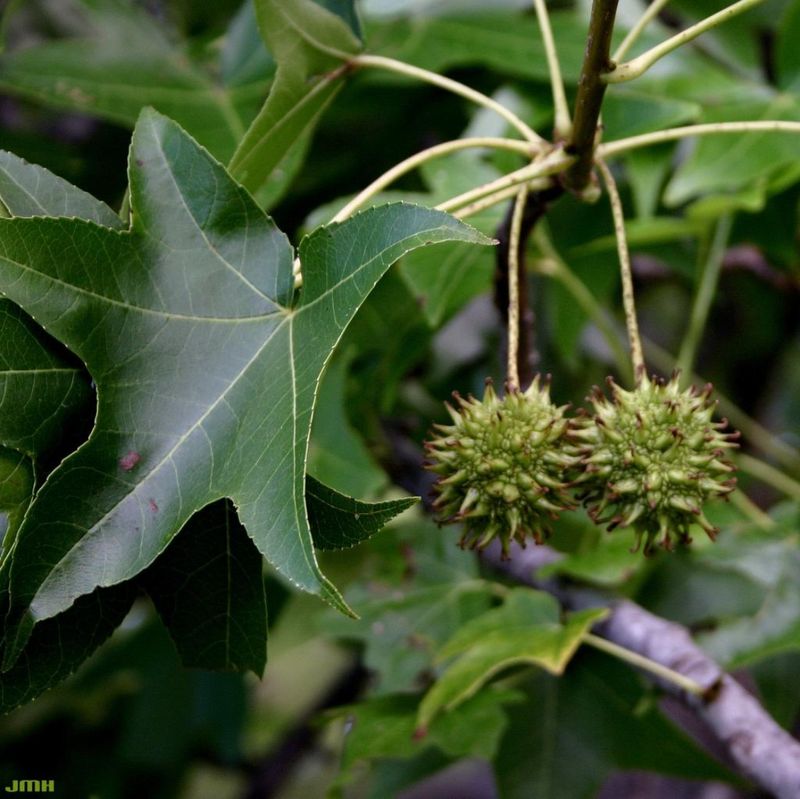
The fruit question comes up quickly with sweetgum.
Those persistent spiny balls, sometimes called gumballs, drop across patios, sidewalks, and driveways from late fall through winter and can create a real slipping hazard.
Many homeowners find them manageable under a tree sited away from walking surfaces, but they are genuinely problematic near a busy path or a kids’ play area.
Plan the planting location with that cleanup reality in mind.
The fruitless cultivar ‘Rotundiloba’ removes that nuisance, and UF/IFAS confirms it produces no fruit.
What the available evidence does not establish is whether ‘Rotundiloba’ provides identical Luna moth host value compared to the straight species in every Florida setting.
If reducing spiny fruit is a priority, that cultivar is worth discussing with a local nursery, but do not assume every cultivar performs the same ecological role without cultivar-specific wildlife data to back it up.
The right call is a location that works for your household and leaves enough canopy and ground space for the habitat you are trying to support.
Protect The Habitat Beneath The Canopy
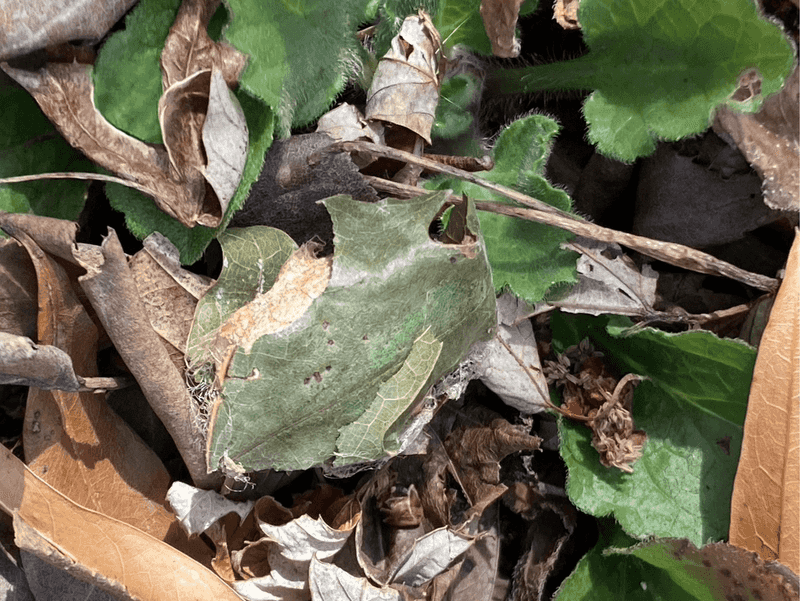
Sweetgum’s job for Luna moths does not end at the branch tips.
When caterpillars finish feeding, they form cocoons among leaves, and those leaf-wrapped cocoons fall to the ground as the tree drops its deciduous foliage in autumn.
A tidy patio swept clean every weekend may actually be removing some of the shelter that moths and other native wildlife depend on to complete their life cycles.
The practical compromise is to leave a reasonably natural patch of leaf litter beneath or near the tree while keeping cleared paths and living areas clean as you need them.
Xerces Society recommends retaining appropriate leaf litter and reducing unnecessary pesticide use in moth habitat.
Insecticides applied around a sweetgum can harm caterpillars and adults, including species you did not intend to affect.
If another pest problem requires treatment near the tree, identify the pest accurately first, read the product label carefully, and consider the timing and coverage area relative to non-target insects.
UF/IFAS is reassuring on one point: Luna caterpillars are not numerous enough to cause significant damage to host trees under normal conditions.
Some leaf loss from a healthy sweetgum is expected and should not automatically trigger any treatment response.
The goal is a yard where the tree can do its ecological work without unnecessary chemical interference, and where the ground beneath it stays natural enough to support the full cycle from egg to adult.
EPA pollinator protection guidance reinforces the value of accurate pest identification and label compliance before any pesticide application near beneficial insects.
Observe Moths Without Leaving Lights On
Not every Florida homeowner has room for a 70-foot tree, and that is a perfectly honest starting point.
If observing moths is the real goal rather than supporting breeding habitat, a temporary setup may be more practical than a major planting decision.
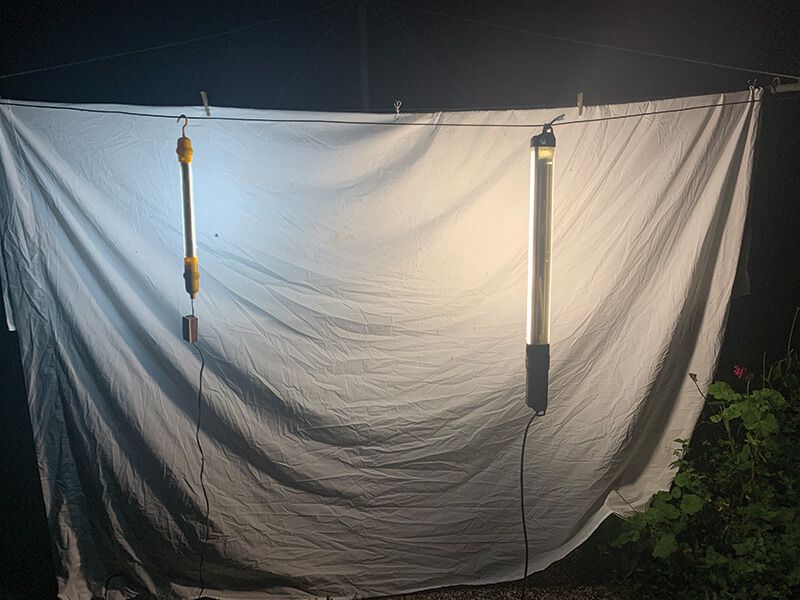
UF/IFAS’s mothing guide describes a straightforward method: hang a white sheet outdoors after dark and position a UV black light 1 to 2 feet from the sheet.
UV light falls in the 315 to 400 nanometer range, and a 10-watt UV LED powered by a standard 10,000 mAh battery can run for roughly three hours, long enough for a good observation session.
Release any moths that land rather than keeping them.
That kind of temporary observation is useful for seeing what species are already moving through your neighborhood.
What it is not is a conservation measure.
Running UV lights routinely can actually interfere with the nocturnal behavior of the insects you are hoping to see.
Xerces Society is direct on this point: turning off unnecessary outdoor lights and limiting brightness, duration, and light exposure reduces disruption to nocturnal insects.
Warmer bulbs, motion-activated fixtures, and shorter burn times can all help reduce that impact, though no single lighting change is a guaranteed population-level fix.
Turning off the flood light over the driveway costs nothing and may do more for the moths already visiting your yard than any new hardware.
Xerces frames reduced light pollution as one of the more accessible steps a homeowner can take for nocturnal insect habitat broadly.
Plant sweetgum only where the property genuinely supports a large tree, treat any Luna sighting as a possibility rather than a promise, and recognize that the quietest yards, the ones where lights go off early and leaves stay on the ground, are often the ones where the most interesting things happen after dark.