
The Florida Hanging Basket Plant That Blooms Reliably Through August With Proper Care
Follow us on Google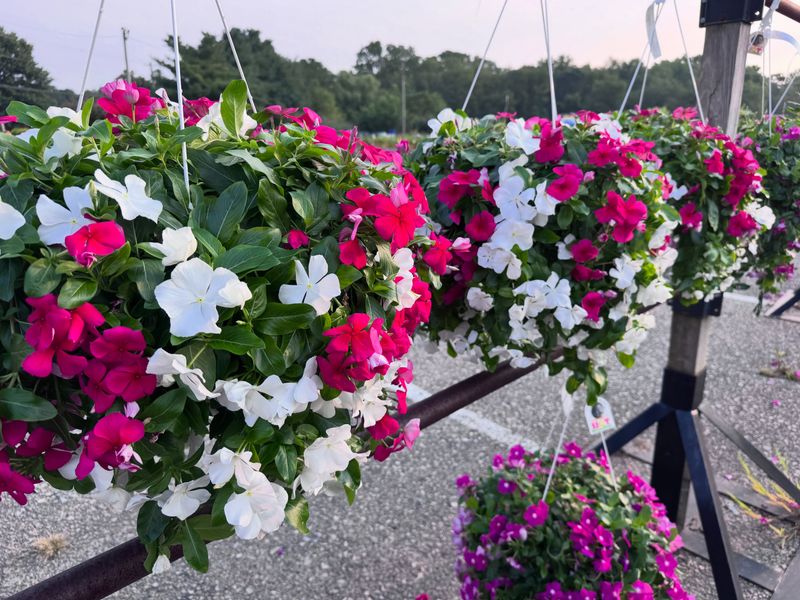
Step onto a Florida porch in late July and the heat hits you like opening an oven door.
Most hanging baskets have given up by now, dropping petals and going limp before noon.
But one plant keeps showing up in full flower on porches from Pensacola to Homestead, even when the thermometer climbs past 95 degrees.
That plant is trailing Madagascar periwinkle, and with the right setup, it can carry serious color through the worst of summer.
A Strong Choice for a Hot, Sunny Basket
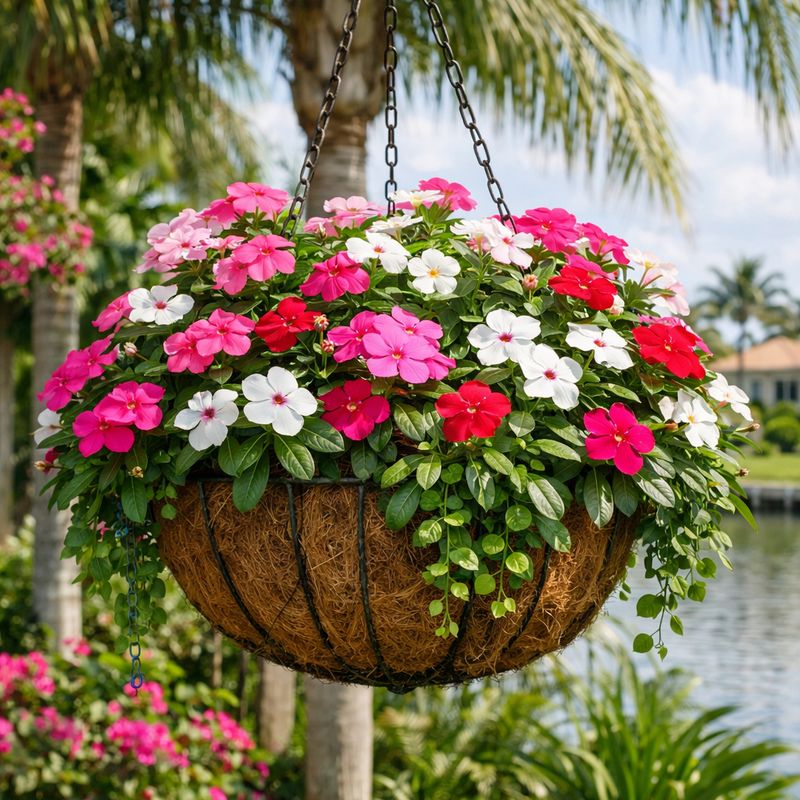
Madagascar periwinkle, also called annual vinca and botanically known as Catharanthus roseus, is one of the better-supported choices for a hanging basket that cooks in direct Florida sun all day.
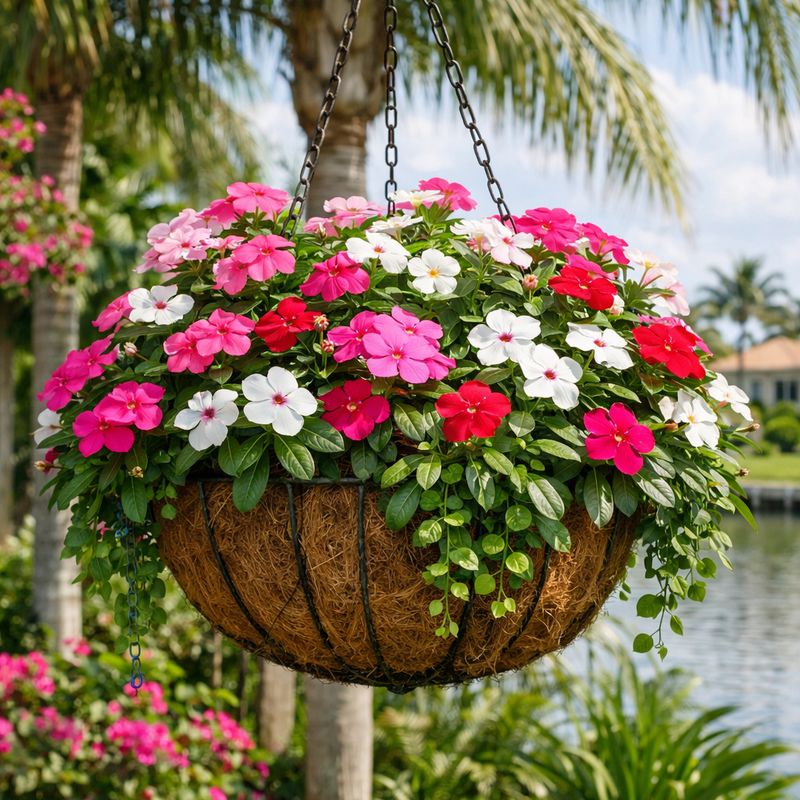
Trailing and cascade cultivars, particularly Cora Cascade, are the relevant types for a suspended container because their stems spill naturally over the basket edge, creating a full, rounded display rather than a stiff upright mound.
UF/IFAS documentation on Catharanthus roseus identifies the plant as heat tolerant, notes that it flowers prolifically from summer through fall, and confirms its suitability for containers and hanging baskets.
That summer-through-fall bloom window matters on a Florida porch, where most bedding plants tap out in June.
Annual vinca tolerates heat and drought conditions better than many common alternatives, and full sun generally pushes it to produce more flowers rather than fewer.
For an exposed, sunny porch with strong direct light most of the day, those traits line up well.
Here is where honest framing matters.
The plant is reliable, not magical.
A basket can still wilt if it dries out completely, becomes root-bound, or runs into disease pressure.
Dependable performance through August is achievable with proper care, not automatic.
Think of annual vinca as a strong partner that rewards attention rather than a plant you can hang up and forget until fall.
What Makes Annual Vinca Fit the Sun
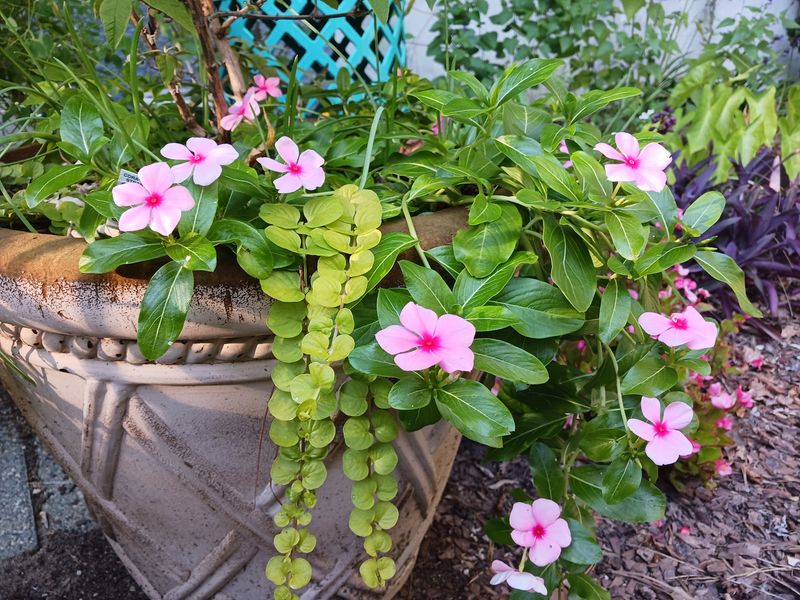
Trailing cultivars of annual vinca typically reach about 1 to 2 feet in height and spread, and the stems on cascade types genuinely spill rather than sit upright.
That growth habit is what makes them useful in a basket.
A compact mounding cultivar fills a pot nicely, but a trailing form creates the waterfall of color that reads well from across a porch or driveway.
Full sun is where this plant earns its reputation.
Stronger light tends to produce denser flowering rather than the stretched, pale growth you often see when shade-tolerant plants get pushed into too much sun.
For a south-facing or west-facing porch that receives direct light from mid-morning through late afternoon, annual vinca is genuinely in its element.
According to UF/IFAS research on Catharanthus roseus, improved Cora and Nirvana cultivars offer better resistance to Phytophthora and related diseases, while Titan and Pacifica cultivars show increased drought tolerance compared to older selections.
No cultivar is immune to failure, and that distinction matters at the garden center.
Disease-resistant does not mean disease-proof.
Drought-tolerant does not mean the basket can go without water for days in Florida’s August heat.
What those improved cultivars do offer is a better starting position, a little more margin before problems develop.
Annual vinca is a strong choice for an exposed, sunny porch, and that recommendation holds when the site actually delivers strong direct light.
A covered porch with filtered light is a different situation, and a different plant may serve it better.
Match the plant to the actual conditions rather than the ideal ones.
Build the Basket Before the Heat Arrives
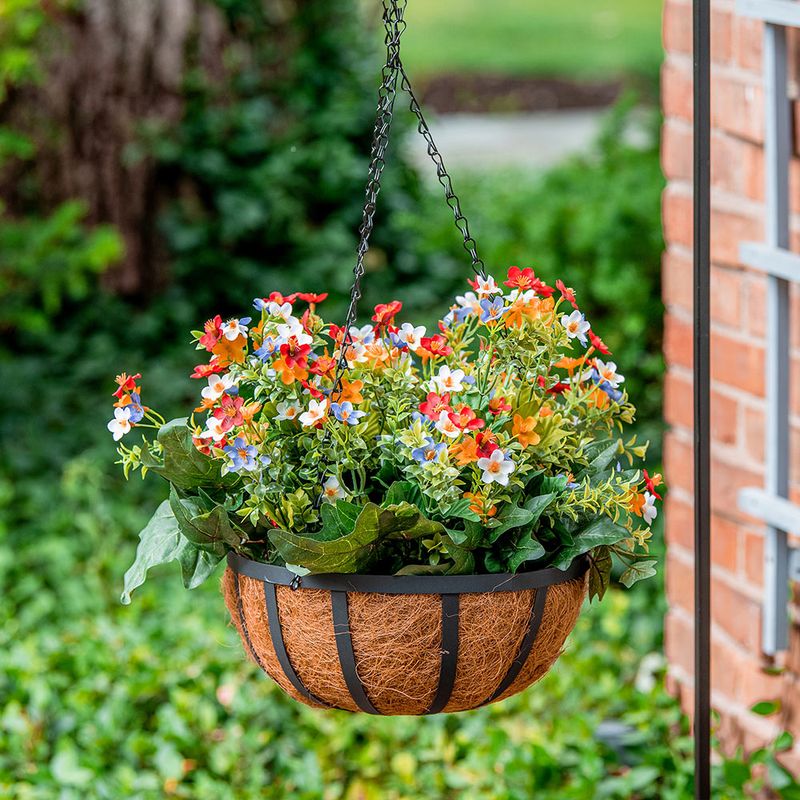
Getting the container right before you hang it up saves a lot of frustration once temperatures climb past 90 degrees.
For a 12- to 14-inch basket, plan on 3 to 5 plants.
A 16- to 18-inch basket can hold 5 to 7 plants comfortably.
Crowding more than that into the same container feels generous at planting time, but it accelerates root competition and pushes the basket toward drying out faster than a correctly planted one.
Iowa State Extension guidance on hanging baskets confirms these planting densities and explains that overplanting increases water demand significantly.
Use a commercial, well-drained potting mix.
Florida garden soil is too heavy for a suspended container, drains poorly when packed into a basket, and can introduce disease organisms you did not invite.
The potting mix should drain freely when you water, while still holding enough moisture to keep roots from drying out between checks.
A container with drainage holes is non-negotiable.
Without them, excess water has nowhere to go and root rot follows quickly.
Several factors specific to hanging baskets speed up water loss in ways that surprise people.
A coir fiber liner, common on wire baskets, dries out faster than a solid plastic container.
A dark-colored basket absorbs heat from the sun and warms the root zone.
Reflected heat from a concrete porch floor or a pale stucco wall can push the temperature around the basket several degrees higher than the air temperature alone.
Wind, which is common on exposed porches near the Gulf Coast or Atlantic Coast, pulls moisture out of both the foliage and the potting mix faster than still air does.
Understanding those stresses before the basket goes up helps you plan a care routine that actually keeps up with them.
Water by the Mix, Not by the Headline
The wilt concern in that headline is actually the most useful thing to focus on, because wilting is almost always a moisture signal.
Water thoroughly every time you water, meaning you pour until water flows freely out of the drainage holes at the bottom of the basket.
That flush pushes water through the entire root zone rather than just wetting the top inch of mix.
Then check the basket again the next day by pressing a finger about an inch into the potting mix.
If it feels dry at that depth, water again.
During Florida’s hottest, sunniest weeks, a full-sun basket may need water once daily or even twice on particularly brutal days.
Iowa State Extension notes that hanging baskets in full sun can require watering more than once per day during hot weather.
That frequency surprises people who are used to in-ground plants, but a basket has a fraction of the root volume and no connection to soil moisture below it.
The flip side matters just as much.
Annual vinca dislikes constantly wet media, and UF/IFAS guidance on Catharanthus roseus recommends reducing irrigation during Florida’s rainy summer periods.
When afternoon thunderstorms roll through daily, as they do across Central Florida from June through September, the basket may need less supplemental water than it did during a dry stretch.
Heavy rain can saturate the root zone quickly, and a waterlogged basket is just as stressful to annual vinca as a bone-dry one.
Heat tolerance is a real trait of this plant, but it does not translate into drought-proof performance inside a container.
Nassau County UF/IFAS Extension notes that overwatering contributes to Phytophthora, stem rot, and root rot in vinca.
The right approach is well-drained and consistently checked, not wet and not bone dry.
Moisture level, current heat, wind, and recent rainfall together tell you when to water, not a fixed schedule.
Feed and Shape It Without Fussy Maintenance
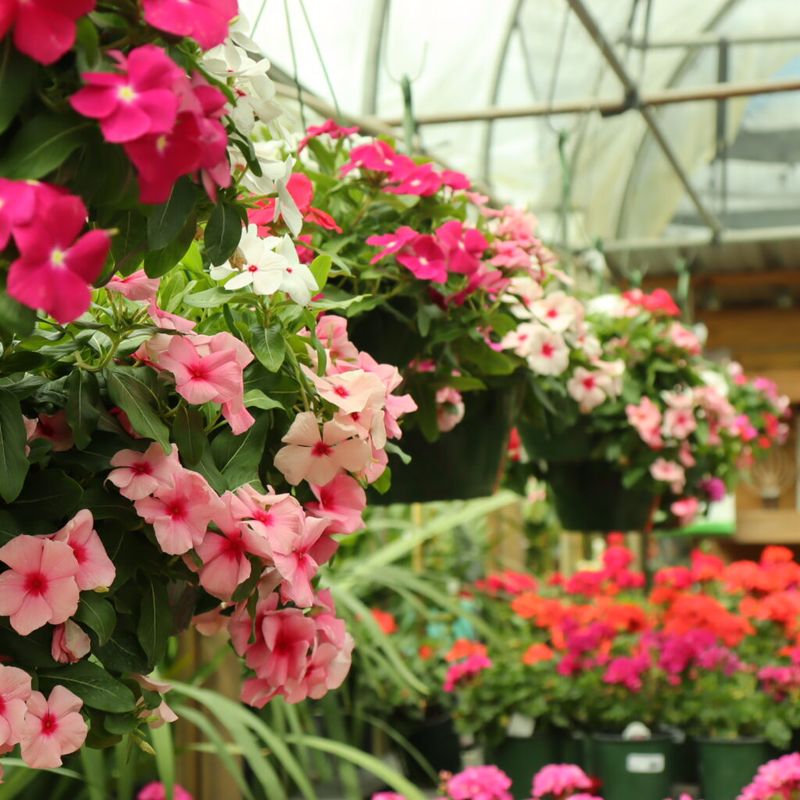
Fertilizing a hanging basket is genuinely straightforward once you accept that more is not better.
A water-soluble fertilizer applied every 1 to 3 weeks through summer, following the product label directions, keeps annual vinca flowering without pushing it toward the problems that come with overfeeding.
A label-directed slow-release fertilizer worked into the potting mix at planting is another reasonable option, and some gardeners use both.
Iowa State Extension hanging basket guidance supports this feeding range for summer containers.
Excessive nitrogen is where things go sideways.
Too much nitrogen pushes the plant toward producing lush foliage at the expense of flowers, and it can increase susceptibility to fungal diseases, which are already a real concern in Florida’s humid summers.
Follow the label and resist the urge to add a little extra.
UF/IFAS plant pathology guidance reinforces that fertilizer management affects disease pressure, not just plant size.
One genuinely pleasant thing about annual vinca is that it does not require deadheading.
UF/IFAS summer bedding plant guidance lists vinca among annuals that continue flowering without the removal of spent blooms.
You can remove faded flowers and damaged leaves if the basket starts looking ragged, and trimming back stems that have grown excessively long can encourage bushier new growth, but neither task is required to keep the flowers coming.
If you are starting from transplants rather than seed, you will reach summer color much faster.
UF/IFAS Santa Rosa County vinca documentation notes that seed-started plants may take roughly 6 to 8 weeks to reach flowering size under suitable conditions.
For a basket you want blooming in July and August, buying established transplants from a local garden center is the practical choice.
Match the Plant to the Porch and Region
Not every Florida porch is the same, and the honest answer is that annual vinca performs best where the light is genuinely strong.
A south-facing or west-facing porch that receives 6 or more hours of direct sun daily is a good match.
Adequate airflow around the basket matters too, because stagnant humid air can increase disease pressure even on a plant that handles heat well.
An exposed porch near the Gulf Coast or along the Atlantic Coast often gets natural airflow that actually benefits the basket.
If the porch is covered and receives bright indirect light rather than direct sun, torenia, also called wishbone flower, is worth considering instead.
UF/IFAS guidance on torenia recommends Summer Wave cultivars for heat, heavy rain, and occasional dry conditions, while noting that the plant performs best in partial shade.
Torenia is not a substitute for annual vinca on a baking, fully exposed porch, but it is genuinely better suited to a shadier situation than annual vinca is.
Regional differences across Florida are real and affect how long you can expect the basket to perform.
In South Florida and along the warmer stretches of the Gulf Coast, annual vinca can flower across many months of the year.
In North Florida and parts of the Panhandle, frost and freezes can damage or kill the plant, so it is treated as a warm-season annual that goes in after cold risk passes and comes down before the first freeze.
South Florida gardeners should also be aware that the UF/IFAS invasive plant assessment places Catharanthus roseus in the Caution category for South Florida because it may escape cultivation in that region.
In Central and North Florida, the current assessment does not list it as a problem species.
That regional distinction is worth knowing before you plant, especially if you garden close to natural areas in the southern part of the state.
Troubleshoot Stress Before You Treat It
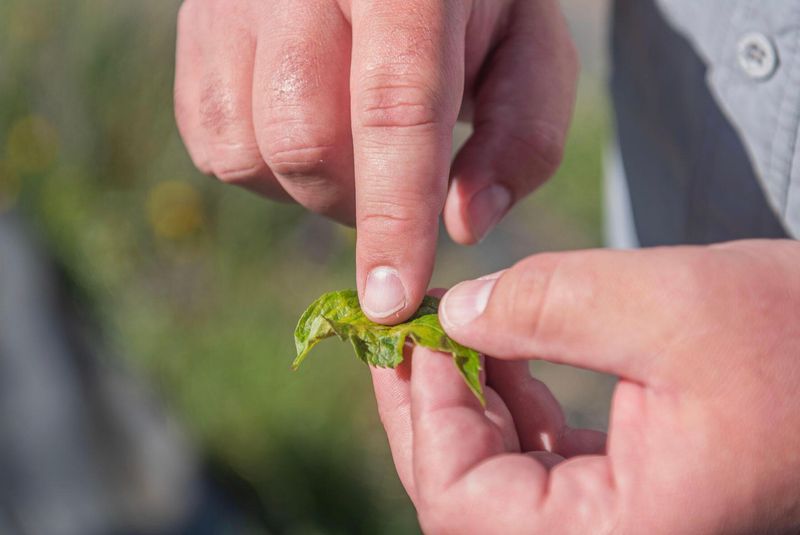
When a basket starts looking bad in August, the first move is to inspect rather than spray.
Check the potting mix moisture by pressing a finger an inch into the mix.
Look at the roots if the plant seems chronically stressed, healthy roots are white or light tan and firm, while rotted roots are brown, soft, and may smell off.
Examine the stems at soil level for discoloration or softness, and check the undersides of leaves for insects before reaching for any product.
UF/IFAS extension guidance consistently directs growers to diagnose the actual problem before applying treatments.
Heat stress and underwatering look similar to disease, and that similarity trips people up regularly.
A wilted basket on a 96-degree afternoon may simply need water and a brief move to afternoon shade to recover.
A basket that wilts despite moist soil, or one that drops leaves and develops dark stem lesions, is showing signs of something more serious.
Annual vinca is susceptible to Phytophthora root rot, Fusarium wilt, stem blight, canker, and dieback.
Improved cultivars reduce that risk, they do not remove it.
Consistently wet media, poor drainage, and high humidity all increase the chance of fungal problems developing.
Buying the right plant at the start prevents a common and frustrating mistake.
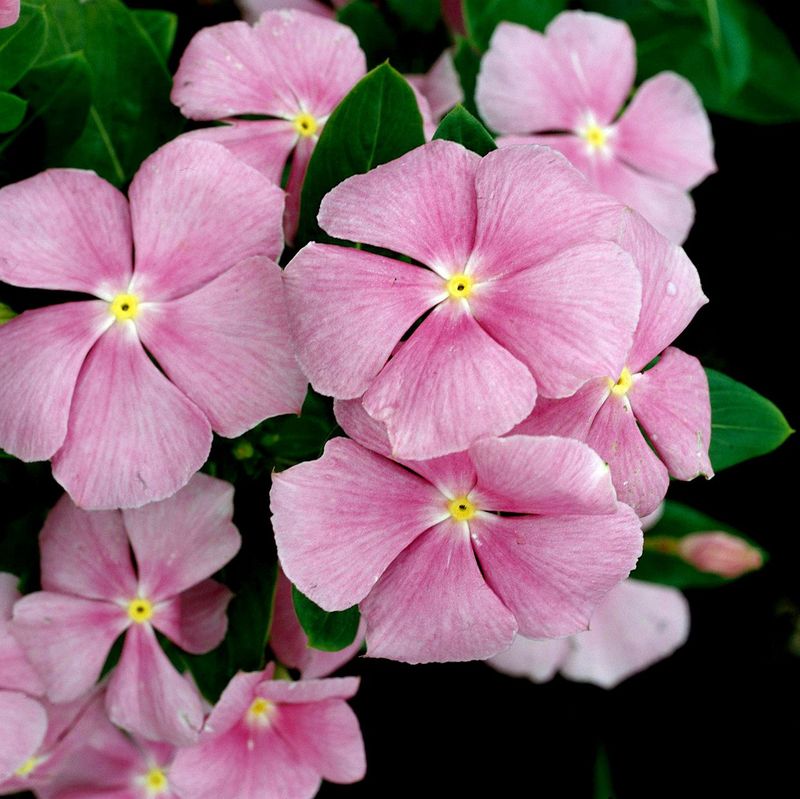
UF/IFAS Santa Rosa County vinca identification documentation distinguishes Catharanthus roseus from common periwinkle, Vinca minor, and other plants sold under the vinca name.
They are different plants with different care requirements.
Check the tag at the garden center for the botanical name or a named trailing annual vinca cultivar before you buy.
One more thing worth stating plainly: UF/IFAS reports that all parts of Catharanthus roseus contain vinca alkaloids and that consuming large amounts can cause symptoms.
Keep the basket out of reach of pets or children who chew on plants.
A correctly placed, properly watered trailing annual vinca can carry abundant color through August under the right conditions, and that is a genuinely satisfying thing to pull off on a Florida porch in the middle of summer.