
Cut Coneflower Seed Heads Too Early And You Could Lose Most Of Your Harvest
Follow us on Google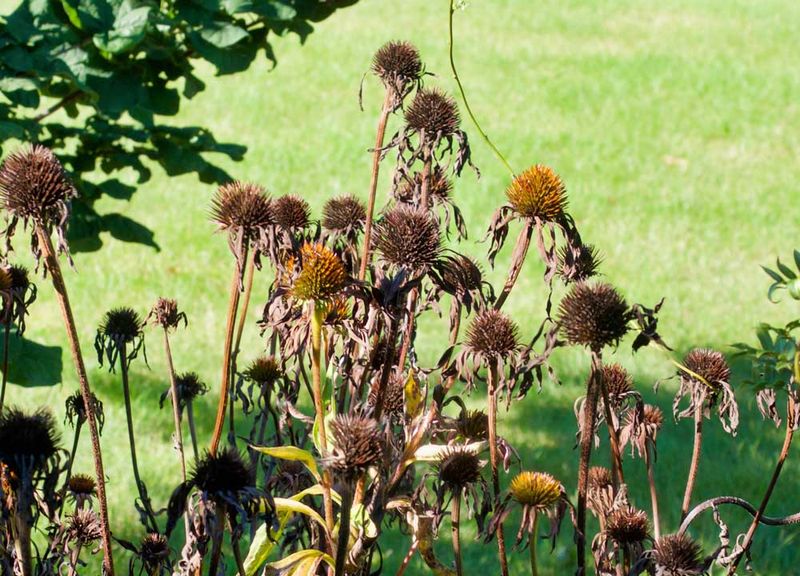
Purple coneflowers are one of the easiest plants to stretch across your yard for free, but the window for collecting good seed is narrower than most gardeners expect.
Cutting the spent heads at the wrong moment can leave you with a bag full of immature seeds that struggle to sprout.
The good news is that the plant itself tells you exactly when it’s ready, and once you know what to look for, you won’t need to guess again.
The Cone Is Your Harvest Calendar
Purple coneflower, Echinacea purpurea, is a tough perennial native to moist prairies, meadows, and open woods across parts of the central and southeastern United States.
Missouri Botanical Garden places its native range from Ohio, Michigan, and Iowa south to Louisiana and Georgia.
That range does not apply to every Echinacea species or ornamental cultivar, so check what you are actually growing before treating any general advice as universal.
Saving seed from this plant is a practical way to grow more coneflowers at very little cost.
But seed saving works best when you treat it as growing more plants rather than cloning a favorite one.
Seedlings from named cultivars can look noticeably different from their parents in color, height, or flower form, so if exact uniformity matters, division or nursery-grown starts are the more reliable route.
The central lesson here is about timing, and the cone gives you a better signal than any calendar.
Cutting too soon can reduce the quantity or quality of viable seed you collect, but it does not guarantee that every single seed will fail.
Germination depends on several factors beyond harvest timing, and the plant gives you an honest read on readiness if you know what to look for.
Rutgers Cooperative Extension recommends collecting E. purpurea seed during late summer to early fall, once heads have dried and seeds can be combed free.
That dried, separating cone is your harvest calendar.
Wait For A Tan, Loose-Seeded Head
Late summer to early fall is the general window for collecting purple coneflower seed, but the calendar is only a starting point.
What matters more is the condition of the head itself, because weather, location, and the individual plant all shift the exact date from year to year.
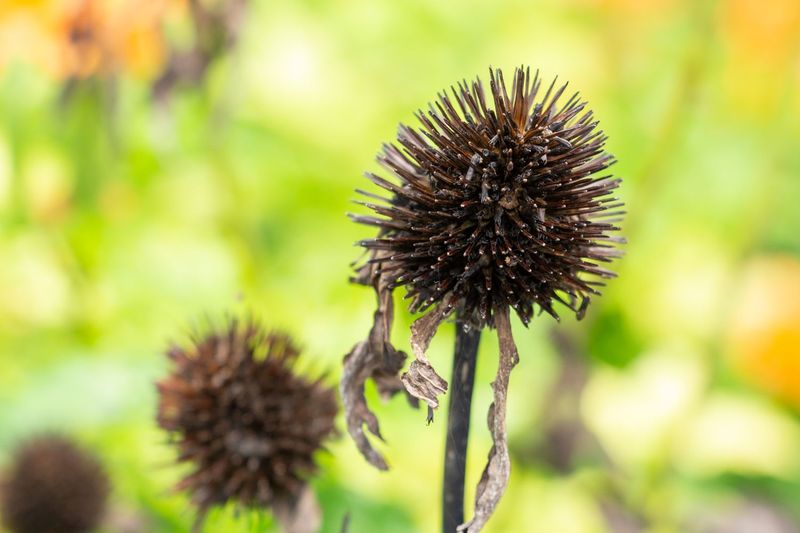
A mature head turns dry and changes color from green to tan, brown, grayish, or light brown.
The University of Minnesota describes ripe fruits as grayish, tan, or light brown, or as seeds that readily drop from the spent head when touched.
Run a gloved finger across the cone or comb it gently.
If seeds loosen and fall with minimal effort, the head is ready.
If they hold firmly and the cone still looks noticeably green, give it more time.
That simple touch test keeps you from collecting too early and from waiting so long that rain and rot take over.
USDA guidance notes that seeds which do not separate easily are probably immature and need more ripening time on the plant.
Plan to harvest on a dry day after the morning dew has evaporated, so the seeds and cone material are as dry as possible when they go into the bag.
Local weather changes the timing every season.
A wet August can slow drying, while a hot dry stretch can move the window earlier than expected.
Check your plants every few days once the petals have fallen rather than marking a single date on the calendar.
The cone will tell you when it is ready.
Petal Drop Does Not Mean Seed Maturity
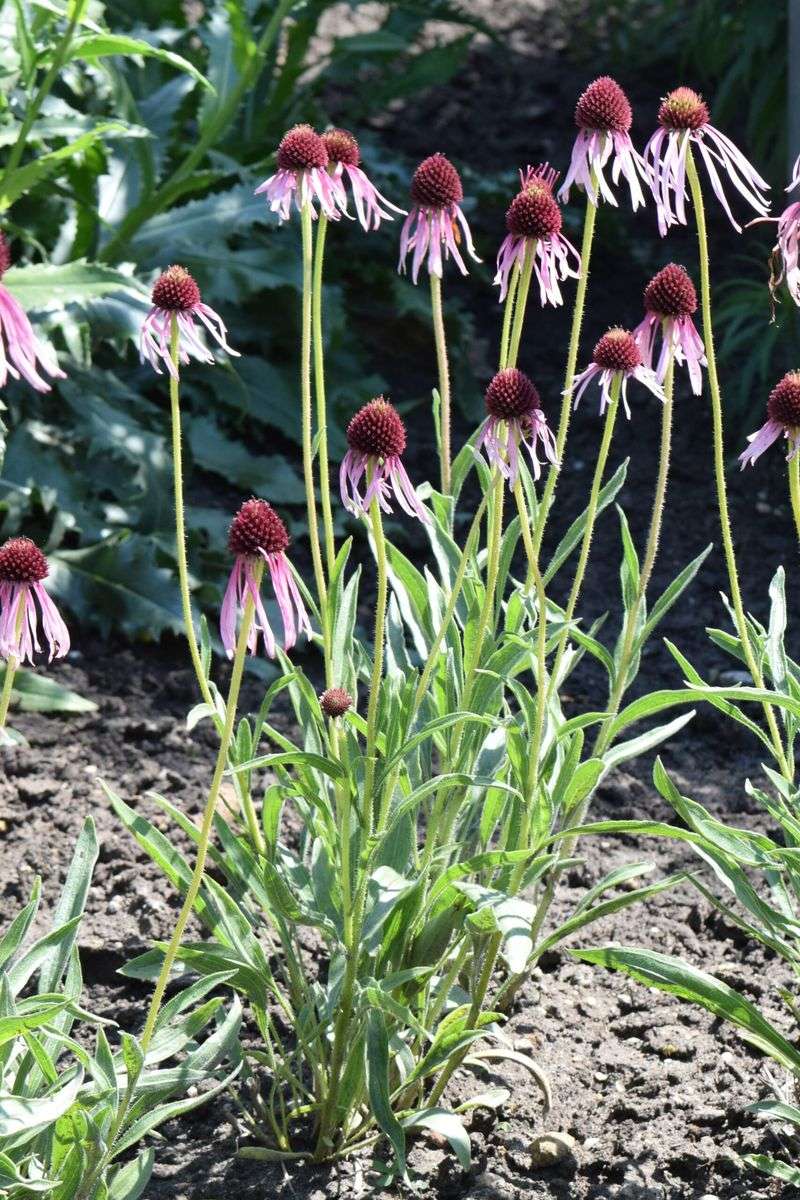
Many gardeners reach for the clippers as soon as the pink petals drop, which makes sense for tidiness but works against seed saving.
A spent flower signals that the display is over, not that the seeds inside the cone have finished developing.
The cone can stay green and firmly packed for several more weeks after the last petal falls.
Cutting at that green stage gives you seed that is potentially immature or poorly filled.
USDA plant guidance identifies seeds that do not separate readily as a sign of immaturity, which points directly to the petal-drop mistake.
Some of those seeds may still germinate, but the odds drop compared to seed collected from a fully dried head.
The absolute claim that cutting early makes every seed fail is not supported by the evidence, germination is affected by seed maturity, viability, moisture, temperature, light, planting depth, dormancy, and plant genetics, so results vary.
Iowa State Extension notes that germination conditions play a significant role in whether perennial seed sprouts successfully, which means even well-timed seed can underperform if sown too deep or kept too wet.
The practical takeaway is simple: let the cone keep developing after the petals go.
The plant is still working, and cutting it short interrupts a process that has a few more weeks to run.
Think of the cone as a slow cooker.
Pulling the lid off early does not ruin everything, but it does interrupt the finish, and the result is less predictable than if you had waited.
Harvest And Clean The Cones Carefully
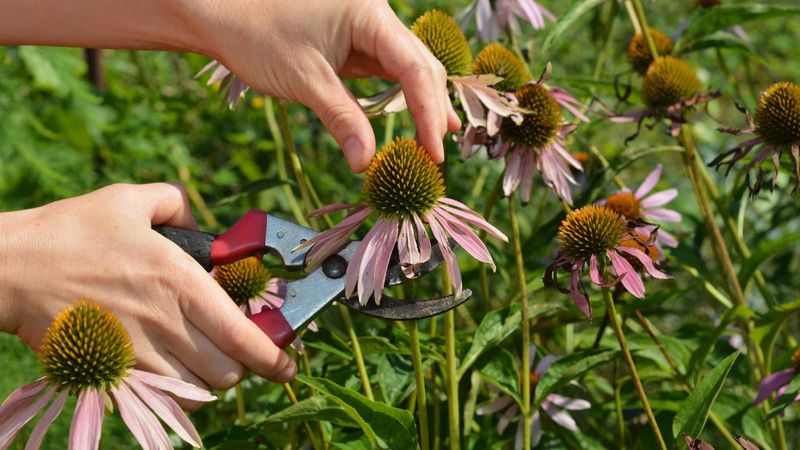
Before you cut anything, confirm you are working with a healthy, positively identified plant.
Rutgers Cooperative Extension advises collecting from positively identified, healthy plants and gathering from several plants when possible to preserve a bit of genetic diversity in your seed lot.
Collect only from your own plants or from cultivated plants where you have clear permission, because taking seed from parks, roadsides, or private land without permission can be legally complicated.
Put on heavy gloves before you touch the cones.
USDA guidance specifically recommends heavy gloves for hand harvesting Echinacea because the dried cone is stiff and pointed enough to poke through light garden gloves.
Cut the dried heads with clean scissors or pruners directly into a paper bag, not a sealed plastic bag.
Trapped moisture inside plastic encourages rot and mold, which can ruin a good seed lot before you ever get to plant it.
Label each bag right away with the plant name and the collection date.
Memory is unreliable when bags sit in a drawer for months.
Once you are inside, spread the heads on a tray and let them finish drying for another few days if they feel even slightly damp.
To clean the seed, gently rub or comb the dry cone over a bowl or tray.
A fine sieve helps separate the small seeds from the lighter chaff and cone debris without crushing anything.
Illinois Extension notes that collecting seed or plant material from protected wild populations can require a permit, so stick to cultivated sources and the whole process stays straightforward.
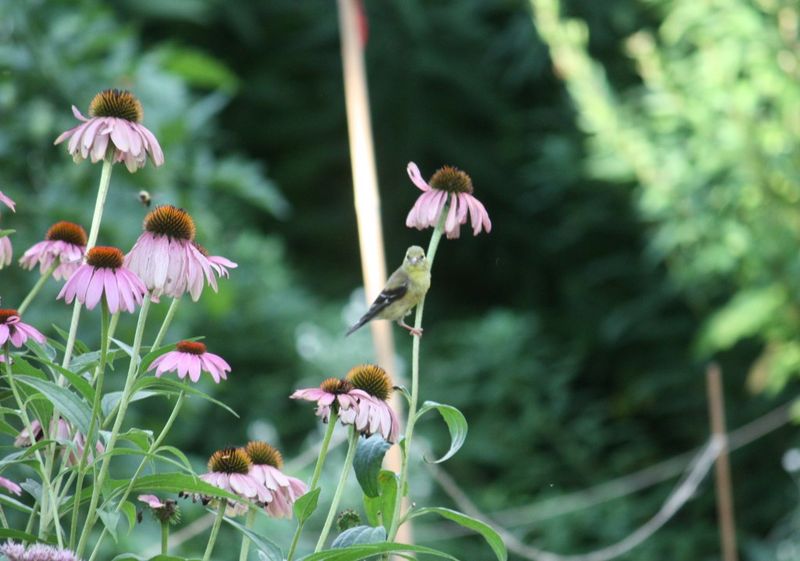
Stripping every seed head off the plant is not the only option, and for many gardeners it is not even the best one.
Mature coneflower seeds are a reliable food source for goldfinches and other birds through fall and into winter, and the upright dried stems add structure to the garden when everything else has gone flat.
Penn State Extension recommends leaving seed heads standing to support birds through the colder months.
At the same time, purple coneflower is a willing self-seeder.
Missouri Botanical Garden notes that E. purpurea freely self-seeds when heads are left on the plant, which can be welcome in an open spot but crowding in a tighter bed.
Leaving every head standing is not universally the right call.
A workable middle ground is to leave several heads for the birds and for any self-sowing you actually want, then harvest or remove the rest.
How many you leave depends on your space, your tolerance for volunteer seedlings, and how much seed you want to collect.
There is no single correct ratio, just a balance that fits your yard.
Think of it as splitting the crop.
The birds get their share, the garden gets some natural replanting, and you walk away with a labeled paper bag of seed for wherever you want more coneflowers next season.
Sow The Seed Shallowly In A Sunny Spot
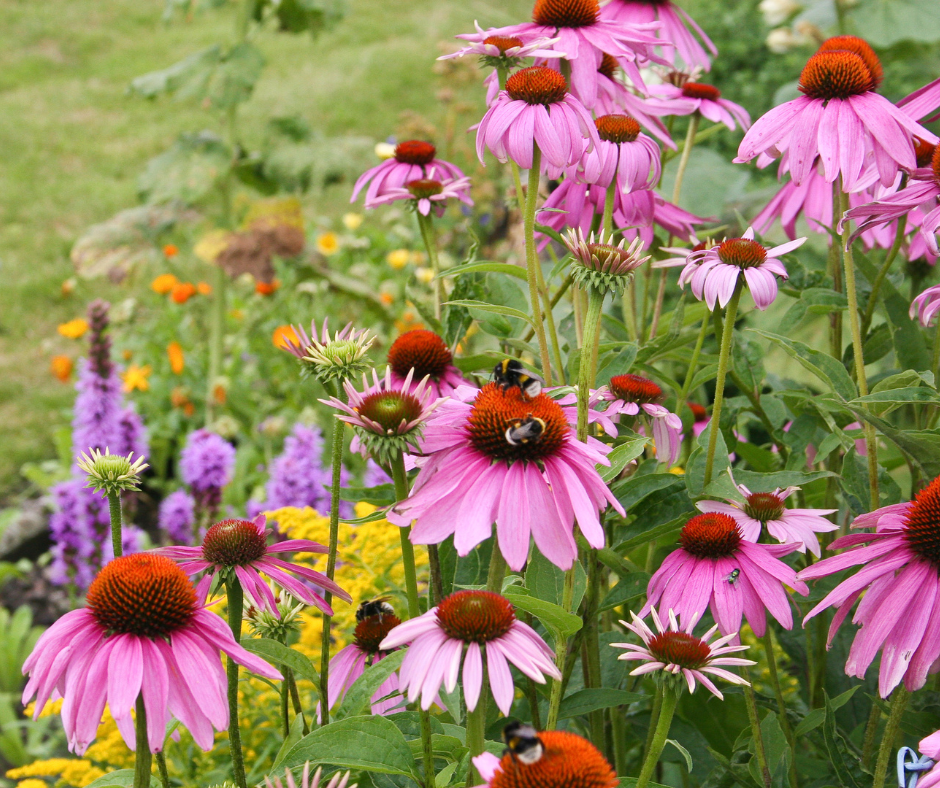
Cleaned seed is ready to plant once you have picked a good spot.
Purple coneflower grows best in full sun and well-drained soil.
Illinois Extension lists a mature height of about 2 to 4 feet and recommends full sun for this species, while Missouri Botanical Garden describes the plant as adaptable to average, dry to medium, well-drained soil.
Choose a weed-free area with firm soil so the tiny seeds make good contact with the ground rather than sitting on loose debris.
Planting depth matters more than most people expect with small seeds.
USDA guidance for eastern purple coneflower recommends a planting depth of 1/8 to 1/4 inch, which is just enough to anchor the seed and hold moisture without burying it too deep to reach the light.
Press the soil gently over the seed rather than packing it hard.
Iowa State Extension lists 65 to 70 degrees Fahrenheit as the ideal germination temperature for purple coneflower, with emergence in roughly 3 to 4 weeks under suitable conditions.
Water new seedlings consistently, but let the soil surface dry slightly between waterings rather than keeping it constantly wet.
Waterlogged soil is harder on young roots than a short dry spell.
Set realistic expectations about the first season.
University of Minnesota Extension notes that Echinacea may produce young plants that bloom in their second year, so a seedling that sits quietly through its first summer is behaving normally, not failing.
Choose Stratification With Realistic Expectations
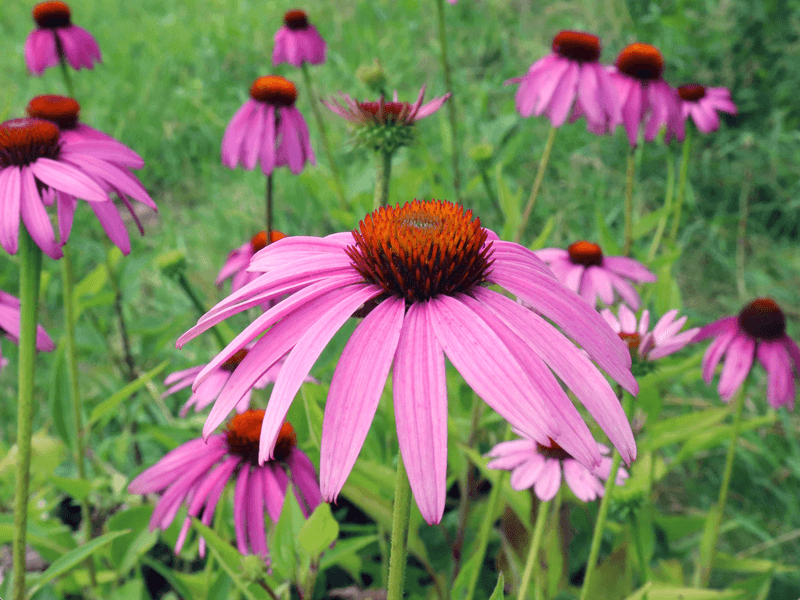
Cold stratification is where the advice gets genuinely inconsistent, and it helps to know why before you decide what to do.
Different university and federal sources give different recommendations for E. purpurea, and none of them is wrong exactly, they are just working from different seed lots, conditions, and goals.
Rutgers Cooperative Extension recommends 90 days of moist cold stratification at around 40 degrees Fahrenheit for E. purpurea.
Illinois Extension gives a broader range of one to three months at 33 to 40 degrees for seeds requiring cold treatment.
The USDA factsheet for eastern purple coneflower says cold stratification is reportedly not necessary but often improves germination.
And Iowa State’s home-garden guidance says no pretreatment is necessary for purple coneflower.
All four sources are credible, and they genuinely disagree.
The practical interpretation is that fresh E. purpurea seed may sprout without any refrigerator treatment, but a period of moist winter cold can make germination more consistent, especially for seed from wild-origin plants or certain cultivars.
Fall sowing outdoors provides natural cold exposure without any extra steps, though you will want to protect the area from birds, rodents, erosion, and competing weeds through winter.
Species differences add another layer.
E. purpurea is not the same as pale purple coneflower, E. pallida, or narrow-leaved coneflower, E. angustifolia.
USDA plant guides for E. angustifolia and E. pallida describe distinct dormancy and establishment requirements, so advice for one species does not automatically apply to another.
Published research on Echinacea also shows substantial variation between cultivated and wild seed lots, which is another reason a treatment that works reliably for one batch may be less critical for another.
Named garden cultivars add one more wrinkle.
USDA agricultural research documents significant differences among selected Echinacea cultivars, and seedlings from those cultivars may not match the parent plant in color, form, or size.
If you want exact copies of a named variety, division or nursery-propagated plants are more dependable than saved seed.
Use The Cone, Not The Calendar
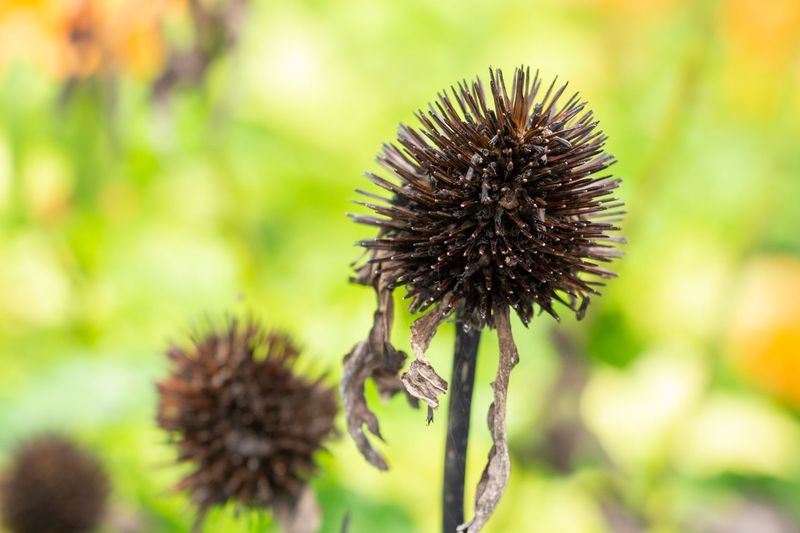
The whole process comes down to one repeatable check.
Identify your plant as E. purpurea, wait until the head is dry and has turned tan or brown, then run a gloved finger across the cone.
If seeds fall free, it is time.
If they hold tight, come back in a few days.
Rutgers Cooperative Extension ties this same separation test to their recommended late-summer-to-early-fall collection window, so you are working within a proven approach.
Harvest on a dry day, use heavy gloves, and drop the heads into a paper bag rather than sealed plastic.
Label the bag before you set it down.
If birds and self-sowing matter to you, leave several heads on the plant and collect only the rest.
USDA guidance reinforces that seeds still firmly attached to the cone are not ready, so there is no benefit to rushing.
Collect only from your own plants or places where you have clear permission.
Iowa State Extension reminds home gardeners that saved perennial seed can produce seedlings that differ from the parent, so go in expecting more coneflowers rather than exact copies.
Sow shallowly, water consistently, and let the first season be a growing year rather than a blooming year.
Second-year flowering is normal for Echinacea seedlings, not a sign that something went wrong.
Patient observation beats a fixed date every time.
The cone knows when it is ready.