
That Sweet Gray Bird With The Crest At Your Feeder Yanks Fur Off Live Dogs To Line Its Nest
Follow us on Google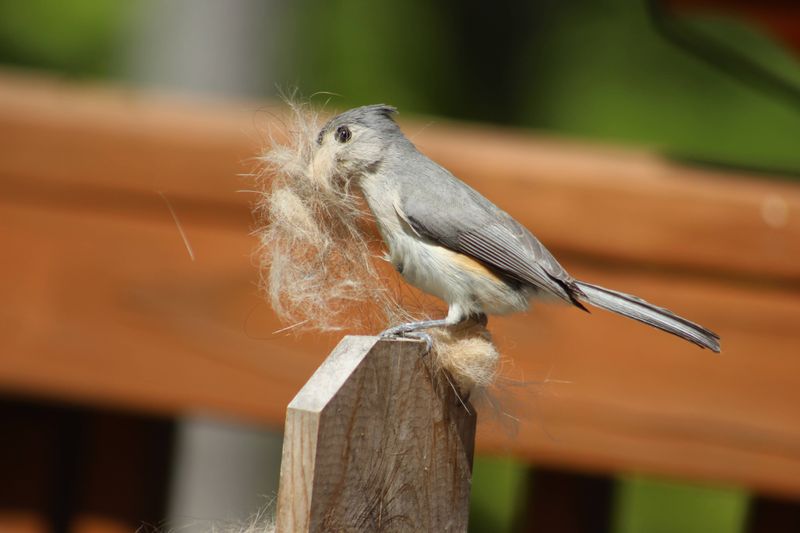
You’ve probably seen it a dozen times without thinking twice: a small gray bird with a perky crest, hopping around your feeder like it owns the place.
Most people assume it’s just after seeds.
But this particular bird has a nesting habit so surprising that it sounds made up, and it involves your dog.
The Gray Crest Belongs to a Tufted Titmouse
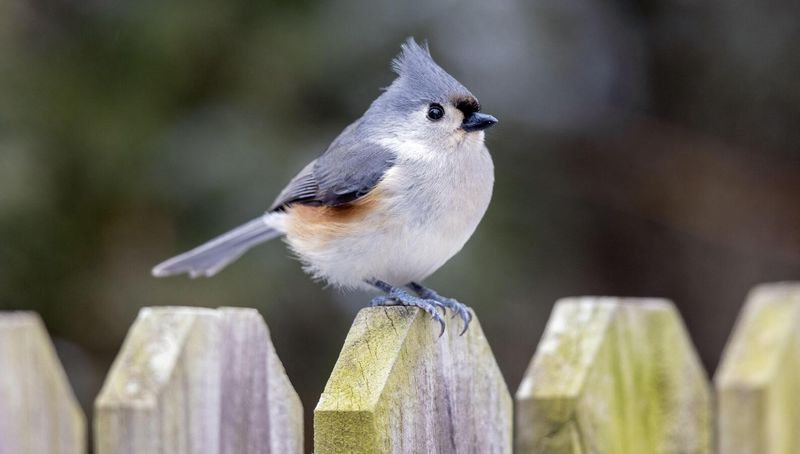
That gray bird with the sharp little crest is a Tufted Titmouse, Baeolophus bicolor, one of the most common feeder visitors across the eastern half of the United States.
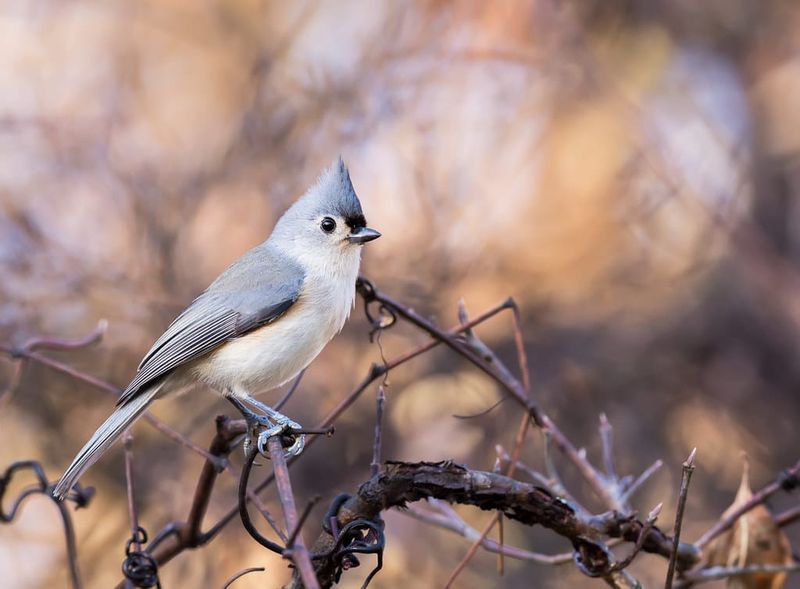
Its field marks are hard to mix up once you know them: soft gray above, pale below, with a wash of rusty orange along the flanks, a bold dark spot above the bill, and that upright crest that gives it a slightly formal look.
Cornell’s overview of the species puts its range from southern Canada down through Florida and west to the Great Plains edge, meaning most U.S. homeowners east of the Rockies have a real chance of spotting one.
At the feeder, it tends to grab a seed and fly off, repeating the trip with quick, purposeful energy.
It is not a bird that lingers and grazes.
That efficiency extends to its nesting habits, which is where things get genuinely surprising.
Tufted Titmice nest in cavities, old woodpecker holes, natural tree hollows, and nest boxes, and they line those nests partly with mammal hair and fur.
Cornell’s life-history account confirms that the birds sometimes collect that hair directly from living animals, including dogs.
This does not describe every Tufted Titmouse in every yard.
The behavior has been documented, but how common it is among individual birds remains an open question.
And the feeder is simply where you happen to notice the bird, not necessarily where the hair collecting happens.
Hair Makes a Soft Inner Nest Lining
Building a nest from scratch takes a Tufted Titmouse roughly six to eleven days, and the bird is methodical about it.
The outer foundation goes in first: damp leaves, moss, grasses, and strips of bark packed together to form a stable cup inside whatever cavity the bird has chosen.
Then comes the inner lining, and that is where hair and fur enter the picture.
According to Cornell’s life-history account for the species, old nests have contained hair from dogs, cats, raccoons, opossums, squirrels, rabbits, woodchucks, livestock, and humans.
The bird is not picky about species.
What it seems to want is soft, flexible material that compresses around eggs and nestlings without leaving gaps.
Hair and fur fit that need well.
Researchers have suggested that a dense fur lining could improve insulation, which would matter in a cavity nest during cool spring nights.
That explanation is plausible, and a 2021 peer-reviewed review of the behavior mentions it as a proposed benefit.
But the specific thermal value of dog fur in a Tufted Titmouse nest has not been measured directly, so it remains a reasonable hypothesis rather than a confirmed fact.
What is clear is that the bird treats concentrated, accessible hair as a useful building material, and it will go looking for it wherever the opportunity arises.
Kleptotrichy Is Real but Still Uncommon in the Record
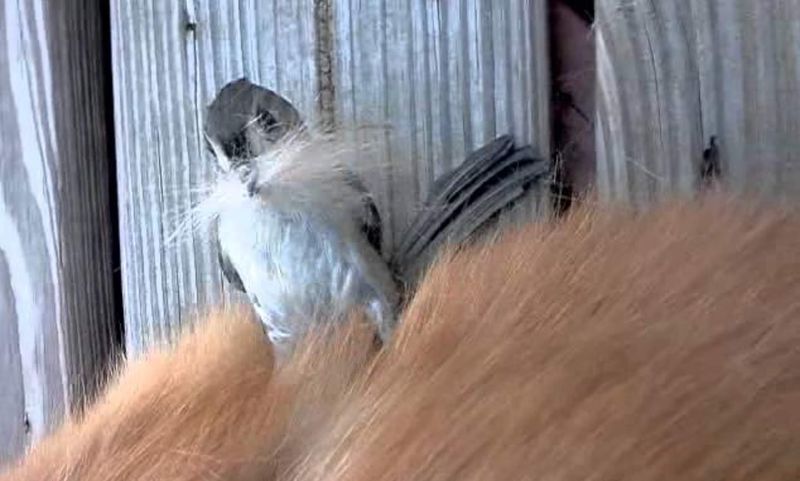
The technical name for this habit is kleptotrichy, which just means collecting or stealing mammal hair from a living host.
The word sounds dramatic, but the behavior itself tends to look quiet.
In most documented cases, the host animal barely reacted, or did not react at all.
The published record is smaller than the internet might suggest.
The 2021 review by Pollock and colleagues found six peer-reviewed observations of Tufted Titmice plucking hair from four mammal species.
The authors also found 45 online video examples involving domestic dogs, which is a notable number but cannot tell us how often this happens across the full population.
Online videos capture moments that people found unusual enough to record, not a representative sample of everyday bird behavior.
One observation from that review describes a single titmouse removing more than 20 tufts of fur from a sleeping raccoon over several minutes.
That detail is striking, and it shows the bird can be persistent.
But one raccoon and one bird on one occasion is an observation, not a pattern.
The review is careful to say that the behavior’s true frequency, and whether individual birds specialize in it, remains uncertain.
It also helps to know that Tufted Titmice collect loose fur too.
The same review found hundreds of online examples showing birds gathering shed hair from the ground or from brushes.
So live plucking is not the only way they source nest material.
The bird is opportunistic, not committed to a single method, and a pile of loose fur on a fence rail may be just as appealing as a sleeping dog.
The Feeder Does Not Cause the Fur Collection
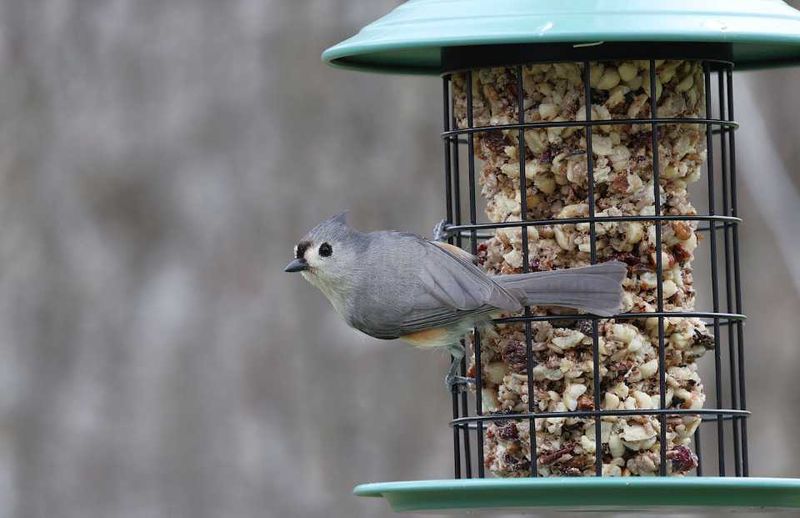
Seeing a Tufted Titmouse at your feeder every morning and then learning about the fur habit can make it feel like the feeder is somehow involved.
It is not, at least not in the way the headline implies.
The feeder brings the bird to your yard for food, full stop.
Cornell’s species overview lists sunflower seeds, peanuts, suet, and other seeds as typical feeder foods for Tufted Titmice, and winter is when they visit feeders most reliably.
Nest construction is a separate activity that happens during the breeding season, typically spring, in whatever cavity the bird has claimed nearby.
A feeder running in January and a nest being built in April are connected only by the bird that uses both.
The species does well in deciduous and mixed woods, orchards, parks, and suburban neighborhoods with mature trees.
Cornell’s life-history page notes that Tufted Titmice are rarely found above 2,000 feet in elevation, so they are genuinely a bird of lowland eastern yards.
If your neighborhood has older trees and some natural understory, a pair may already be nesting within a few hundred feet of your feeder.
What the feeder does is make the bird visible and familiar.
That familiarity is part of why the fur-collecting observation catches people off guard.
The 2021 review does not find evidence that feeder placement drives live-host hair collection or that having a feeder near a dog increases the chance of the behavior.
The feeder and the fur habit are two separate chapters in the same bird’s life.
Do Not Stage the Behavior With a Dog
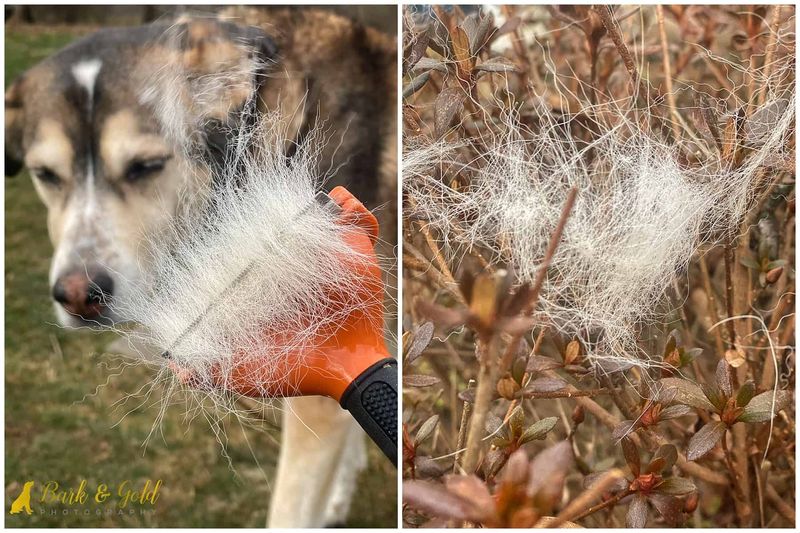
Once people learn that a Tufted Titmouse will sometimes pluck hair from a living dog, the next thought is often: could I set that up to watch?
The short answer is no, and there are real reasons to leave it alone.
The 2021 review notes plainly that the risks and benefits of repeated live-host hair collection have not been adequately studied.
A bird removing a few hairs from a resting dog may cause no obvious injury.
But deliberately placing a dog beside a feeder, holding it still, trimming its coat to make access easier, or arranging any kind of encounter to encourage the behavior goes beyond what the evidence supports.
The behavior is opportunistic and occasional.
Turning it into a staged event is a different thing entirely.
There is also a nest-disturbance concern worth keeping in mind.
Tufted Titmice can be surprisingly assertive near an active cavity.
Cornell NestWatch’s profile for the species and historical life-history accounts both describe birds hissing, lunging, and striking at intruders near the nest.
A dog sniffing around an active nest box is exactly the kind of disturbance that stresses nesting birds and can cause abandonment.
Keep dogs and cats away from any nest box or natural cavity that shows signs of use during spring and summer.
The bird at your feeder may look calm and approachable, and it often is, but near the nest it operates on a different set of rules.
Watching from a comfortable distance is the right call for both the bird and the pet.
Habitat Matters More Than a Fur Dispenser
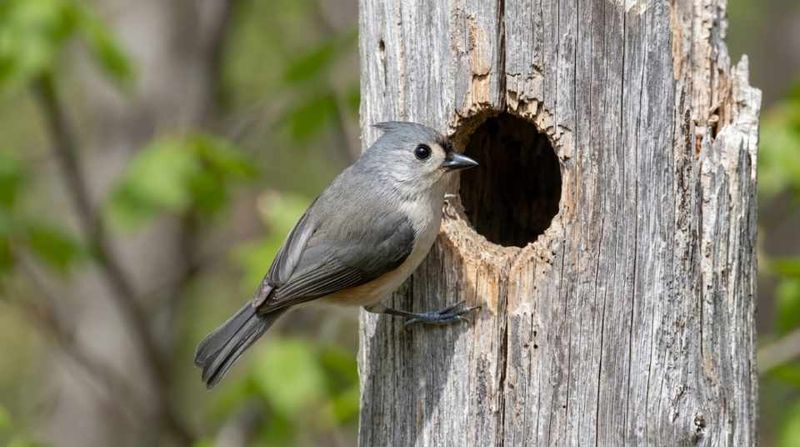
If you want Tufted Titmice to actually nest in your yard, the most useful thing you can offer is not a bag of dog fur.
Mature deciduous trees, woodland edges, dead snags left standing, and natural cavities give the bird what it needs most: a safe place to raise a brood.
Hair is one small component of a nest.
Habitat is the whole picture.
A correctly installed nest box is the most direct way a homeowner can add nesting options.
Cornell NestWatch’s Tufted Titmouse box specifications call for an entrance hole of exactly 1 1/4 inches in diameter, an interior depth of 8 inches, and interior floor dimensions of approximately 5 1/2 by 5 1/2 inches.
Mount the box between 5 and 15 feet above ground, with the entrance hole facing away from the direction of your prevailing winds to keep rain out.
Spacing matters too.
NestWatch’s placement guidance recommends keeping boxes for this species at least 580 feet apart, since Tufted Titmice hold territories and will not crowd together the way some colonial nesters do.
One well-placed box beats three boxes crammed into a small yard.
Even with the right box in the right spot, occupancy is never guaranteed.
The birds weigh cavity availability, predator pressure, local competition, and food resources before committing to a site.
Think of the box as an invitation, not a contract.
Adding native trees and leaving a few dead limbs standing extends that invitation in ways a nest box alone cannot match.
Offer Only Safe Materials and Leave Active Nests Alone
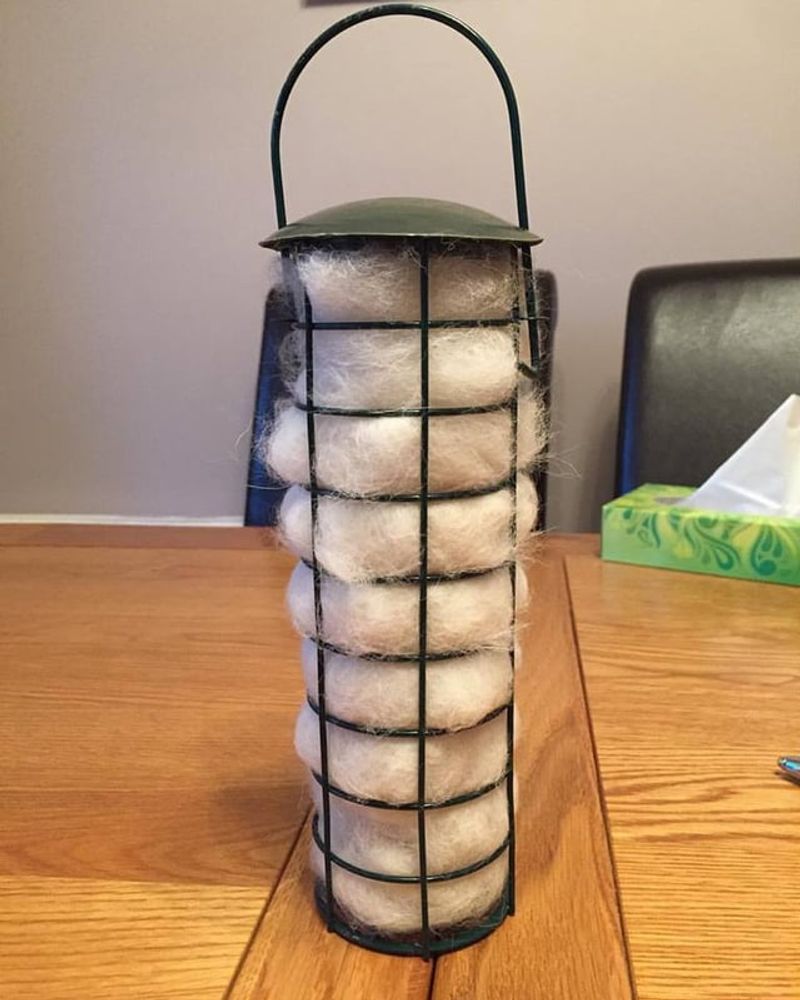
Some homeowners want to offer nesting material as a way to help, and that impulse is fine as long as the material is genuinely safe.
Short, clean, untreated natural fibers are the cautious option.
A loose handful placed in a mesh dispenser or set on a platform feeder gives birds something to evaluate on their own terms.
If you have a dog or cat that sheds, that fur can work, with one firm condition.
Cornell’s guide to nesting materials specifically warns against offering fur from pets that have recently received flea or tick treatments, because the chemicals can transfer to birds and nestlings.
Audubon raises the same concern and adds that long, strong strands of any material, including human hair, can wrap around a nestling’s leg or wing and cut off circulation.
That warning applies to yarn, string, thread, fishing line, and synthetic fibers of any kind.
Dryer lint looks soft but loses its structure when wet, leaving gaps in a nest at the worst possible moment.
Skip it entirely.
The short-material rule is a practical safety inference drawn from entanglement research, not a Tufted Titmouse-specific study, but the logic holds across cavity-nesting species.
Once a box shows signs of active use, leave it alone.
Do not open the lid to check on progress, photograph eggs, or let a pet sniff around the entrance.
Cornell notes that eggs hatch after 12 to 14 days of incubation and nestlings fledge around 15 to 16 days later.
That is a short window.
The best thing you can do during those weeks is stay back and let the bird work.
A yard that gives wildlife room to finish what it started is more useful than any dispenser you could hang from a branch.