
If You See These White Larvae Under Your Pennsylvania Bark, Call The State Right Away
Follow us on Google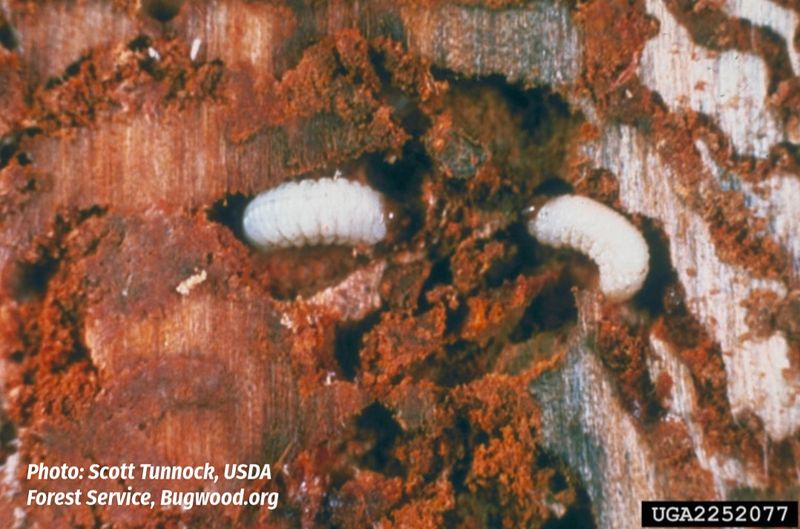
Splitting a log or pulling back a loose piece of bark and finding a pale, wriggling grub inside is the kind of discovery that stops you cold.
Your first instinct might be to assume the worst, and depending on what else you see nearby, that instinct deserves a calm, careful second look.
Pennsylvania sits squarely in the path of one of the most destructive wood-boring insects in the world, the Asian longhorned beetle, and state agencies want to hear about any suspicious finding before it moves anywhere.
This article walks you through what to look for, what it might mean, and exactly what to do next.
Asian Longhorned Beetle Is the Concern
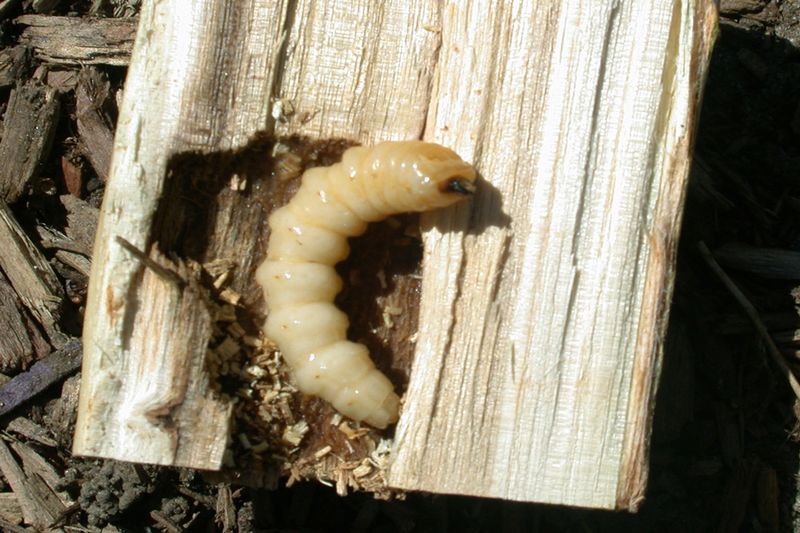
Pale grubs inside a hardwood tree are not an everyday discovery, and the one pest that puts them in a different category from ordinary wood-borers is the Asian longhorned beetle, known by its scientific name Anoplophora glabripennis.
USDA APHIS describes ALB larvae as cream or off-white, legless-looking, and capable of growing to about 2 and a half inches long.
They feed inside hardwood trunks and branches, which is exactly why they are so hard to spot until the damage is already done.
The larvae start out eating the living tissue just beneath the bark, then larger ones tunnel deeper into the sapwood and heartwood.
That tunneling interferes with how the tree moves water and nutrients, weakening branches from the inside out.
By the time a branch drops or bark loosens enough for you to see anything, the tree has often been under attack for more than one season.
The adult beetle looks nothing like the larva.
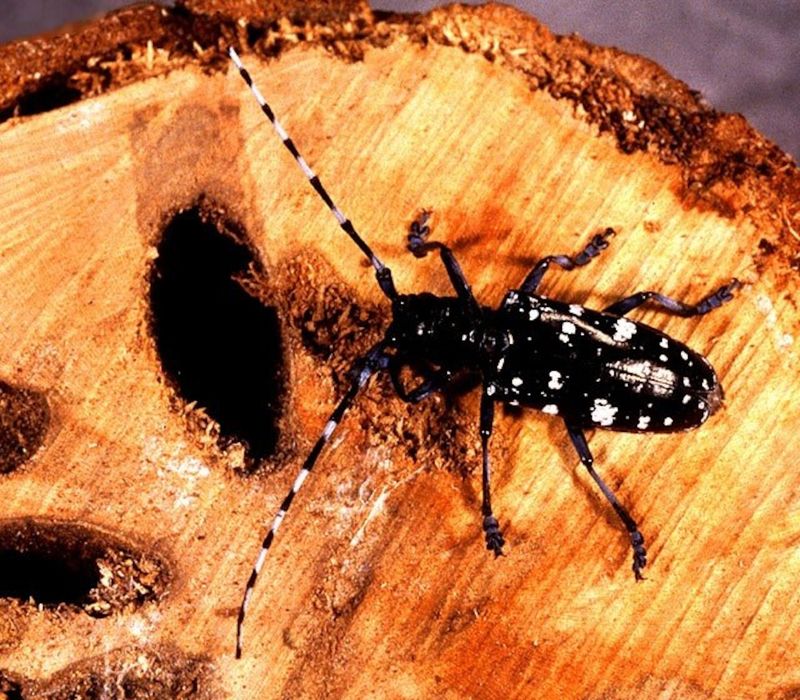
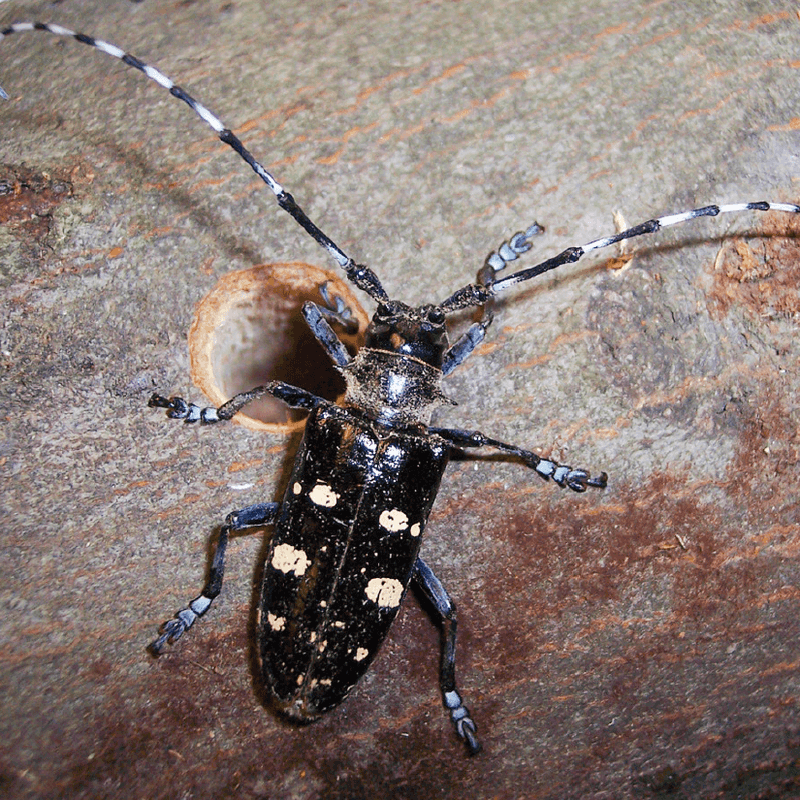
APHIS notes that adults are shiny black with irregular white spots, six legs, and black-and-white antennae that are longer than their entire body.
The body itself runs roughly three-quarters of an inch to one and a half inches long, not counting those striking antennae.
Most Pennsylvania homeowners will never see an adult in their yard, because the insect spends most of its life cycle hidden inside wood.
Finding a pale larva under bark is genuinely alarming, but it is not a diagnosis on its own.
USDA Forest Service research on ALB biology makes clear that several other beetles produce similar-looking larvae.
What you have found is a reason to pay close attention to the rest of the tree, not an automatic confirmation that ALB has arrived in your yard.
The Damage Pattern Matters More Than the Larva
Here is where it gets tricky.
A single pale grub does not tell you much, but the pattern around that grub can tell you quite a lot.
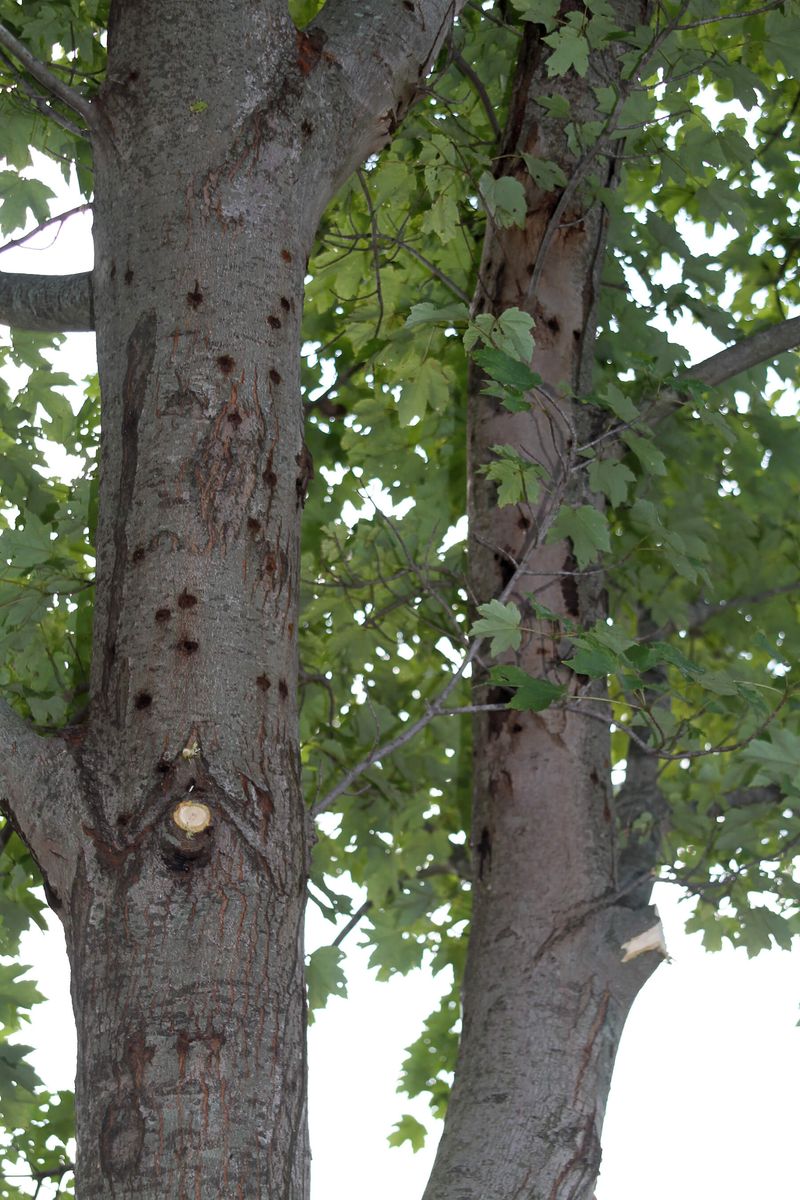
APHIS identifies a combination of signs that together raise legitimate concern about a possible Asian longhorned beetle presence: round exit holes approximately dime-sized or smaller, oval or round egg-laying wounds gouged into the bark surface, sawdust-like frass collecting at branch crotches or on the ground below, and visible tunneling or galleries inside cut wood or broken branches.
Beyond the bark itself, look up.
Premature yellowing of leaves in midsummer, chewed or missing leaf veins, and unexplained branch death in the upper canopy are all part of the pattern that inspectors look for.
A peer-reviewed review of ALB biology explains that larval feeding disrupts the vascular system, so crown symptoms often appear before the exit holes become obvious at eye level.
One important clarification about those round exit holes: they record a past event, not a current one.
An exit hole means an adult beetle completed its development and emerged at some earlier point, possibly last season or the one before.
The holes do not prove that adults are active right now, and they do not tell you whether live larvae remain inside.
USDA Forest Service guidance treats exit holes as year-round evidence worth reporting precisely because their age is hard to judge from the outside.
Document every clue you can find before you call anyone.
No single sign confirms the species, but a cluster of them on a susceptible hardwood puts your report in a much stronger position when officials respond.
Asian Longhorned Beetle Has Not Been Found in Pennsylvania According to Current Guidance
Before the alarm bells get too loud, here is the current reality for Pennsylvania homeowners.
Pennsylvania DCNR guidance states that Asian longhorned beetle has not been found in the Commonwealth.
The Pennsylvania Governor’s Invasive Species Council describes ALB as a serious threat that has not yet arrived in the state.
That distinction matters, because it means a suspicious larva or exit hole in your yard should be treated as a possible sighting and reported promptly, not dismissed and not treated as confirmed evidence of an active outbreak.
Please note that detection and program status can change.
Verify the current Pennsylvania status, any newly listed infestation states, and all contact details directly with state and federal agency pages immediately before acting on this information.
The guidance summarized here reflects sources reviewed during the preparation of this article, and an explicit date check before publication is essential for any reader acting on regulatory details.
APHIS has focused active eradication work in parts of New York, Massachusetts, Ohio, and South Carolina, based on the agency pages reviewed during research.
Pennsylvania is not listed among those regulated states, which makes early reporting here especially valuable.
A confirmed first detection in a state with no existing quarantine is exactly the kind of finding that early reporting is designed to catch.
Pennsylvania residents have two clear reporting routes.
The Pennsylvania Department of Agriculture takes calls at 1-866-253-7189 and accepts reports by email at [email protected].
The PDA entomology survey page provides additional guidance on what to include in your report.
USDA APHIS also operates a dedicated hotline at 1-866-702-9938 and offers an online reporting form through their ALB page.
Use whichever route you reach first, then follow up with the other if you do not hear back within a day or two.
Which Look-Alike Did You Find?
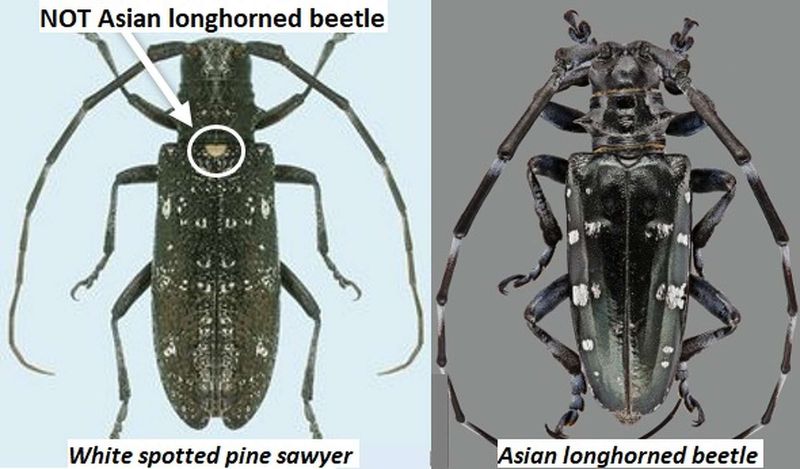
Most pale larvae found under Pennsylvania bark are not Asian longhorned beetle.
A USDA Forest Service identification study found that ALB larvae are genuinely difficult to tell apart from the larvae of related longhorned beetles, and that accurate species identification may require expert examination or even genetic analysis.
That is not a reason to ignore what you found, but it is a reason to let officials make the call.
Pennsylvania has several native beetles that can produce similar-looking larvae and adults.
Pennsylvania iMapInvasives lists documented look-alikes including the whitespotted sawyer, the northeastern sawyer, the cottonwood borer, the eyed click beetle, the brown prionid, and the broadnecked root borer.
Some of these natives actually prefer dead, declining, or already-injured wood rather than healthy living trees, which is a meaningful difference.
Finding a grub in a log that has been sitting on the ground for two seasons is a different situation from finding one inside a living maple that is actively losing branches.
Research on longhorned beetle ecology and regional beetle distribution mapping both reinforce that host species and overall damage pattern carry more diagnostic weight than larval appearance alone.
A pale grub in a red maple with dime-sized round exit holes is a very different picture from a pale grub in a rotting ash log.
Emerald ash borer is worth mentioning separately because it is already widespread in Pennsylvania.
Penn State Extension reports that emerald ash borer had been confirmed in all Pennsylvania counties by 2019.
Its larvae create winding, S-shaped galleries under ash bark, and adults leave small D-shaped exit holes about one-eighth of an inch wide.
Those D-shaped holes in an ash tree point toward EAB, while round, dime-sized holes in a maple or birch raise a different concern entirely.
Neither hole shape alone closes the case, but together with the host species and other signs, they help guide your report in the right direction.
Photograph the Evidence and Report It
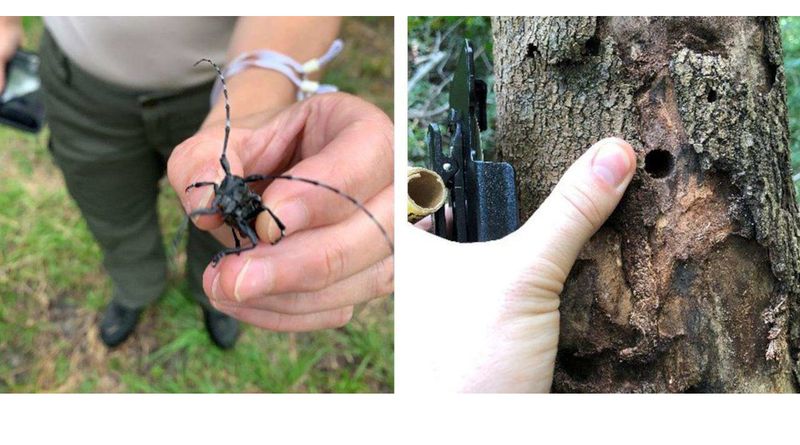
Good photographs are genuinely the most useful thing you can send to a state or federal official before they arrive on site.
Start with the whole tree or branch so inspectors can see the overall condition, the species if you can identify it, and any crown symptoms like yellowing or dead limbs.
Then move in close for shots of individual holes, egg-laying wounds, galleries in split wood, and any frass you can see collecting in bark crevices or at the base of the tree.
Include a common object for scale in at least one close-up shot.
A coin works well, and a dime is particularly useful here because the exit holes you are looking for are described as dime-sized or smaller.
Photograph the exact location from a distance so officials can find the tree easily, and note the street address or GPS coordinates in your report.
APHIS guidance for reporting suspected ALB recommends that if you find an adult beetle, you photograph it immediately and then, if possible, place it in a durable container and freeze it for identification.
That step is specifically for adults, which are shiny black with white spots and unmistakably large antennae.
For larvae or wood damage, the right move is to document the evidence thoroughly with photographs and then contact Pennsylvania or APHIS officials directly to ask for specimen-handling instructions before doing anything else.
You do not need to peel back more bark or excavate into the tree to produce a useful report.
Avoid cutting into a living tree just to investigate further, both to limit unnecessary damage and because officials may need to examine the site exactly as you found it.
Photograph what is already visible, note the host species and location, and make the call.
Keep Suspect Wood Where You Found It
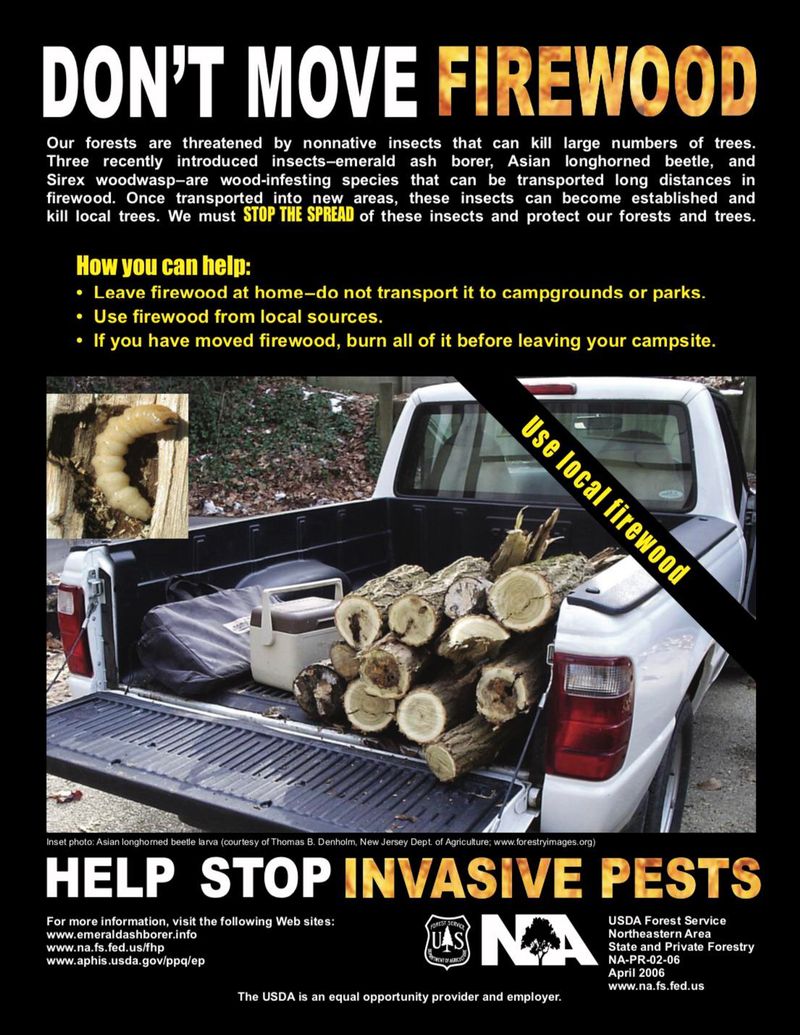
Moving suspected wood is the single most consequential mistake a Pennsylvania homeowner can make after a suspicious find.
Asian longhorned beetle spreads most effectively when people carry infested firewood, logs, branches, or nursery stock from one property to another, sometimes across county or state lines.
That is not a hypothetical risk, it is how invasive wood-borers have expanded their range across the northeastern United States for decades.
APHIS federal rules classify hardwood firewood and host material at least one-half inch in diameter as regulated articles within established quarantine areas.
The APHIS regulated-articles guidance details which materials fall under those movement restrictions.
Pennsylvania is not currently within a quarantine zone based on guidance reviewed during research, but that does not mean suspicious material should be loaded into a truck and hauled to the burn pile across town.
Moving it before officials respond could spread an infestation or interfere with the inspection that would confirm or rule one out.
This guidance applies to common backyard situations that many central valley and Susquehanna Valley homeowners face every fall.
Storm cleanup after a big wind event, splitting firewood from a tree that came down over the summer, or hauling logs between two properties you own are all scenarios where the urge to just deal with it is understandable.
Pause that instinct if the wood came from a tree showing suspicious holes, frass, or dying branches.
The sequence to follow is straightforward: stop movement of the suspect material, photograph it along with any damage you can see, and then contact the Pennsylvania Department of Agriculture at 1-866-253-7189 or [email protected] and ask what to do next.
Officials will advise on whether the material needs to stay in place for inspection or whether it can be handled in a specific approved way.
Let Officials Decide About Treatment and Removal
Reaching for a can of backyard insecticide is a natural impulse when you think something is attacking your trees.
The problem is that ordinary homeowner pesticides cannot reach larvae tunneling several inches deep inside solid wood.
Penn State Extension guidance on invasive pest management and pesticide safety consistently emphasizes that treatment decisions for regulated pests should follow agency evaluation, not a trip to the hardware store.
Cutting down a suspect tree yourself creates a different set of problems.
APHIS tree removal guidance makes clear that official programs determine how and when a tree is removed, how the wood is disposed of, and what movement restrictions apply to the material.
A tree that looks structurally sound from the outside can be significantly weakened inside by larval galleries, which creates a safety risk for anyone doing the cutting.
Leave that call to trained inspectors.
APHIS states plainly that trees infested with Asian longhorned beetle do not recover.
Eradication programs rely on official inspection, regulated removal, chipping or incineration, and other program-approved measures applied by people with the authority and equipment to do it safely.
Reporting does not save the individual tree if ALB is confirmed, but it gives the state and federal response teams the information they need to protect the surrounding trees and forest.
The full action plan for a Pennsylvania homeowner comes down to four steps: recognize the pattern of signs around the larva, document it thoroughly with photographs, keep suspect wood exactly where it is, and report it promptly through Pennsylvania or APHIS channels.
A single report from a backyard in the Poconos or the Laurel Highlands does not signal a statewide outbreak.
What it does is give the people whose job it is to protect Pennsylvania’s hardwood forests the earliest possible chance to respond.
That is genuinely the most useful thing you can do.