
Skip The Fussy Astilbe And Grow These North Carolina Perennials That Take Full Sun And Never Wilt
Follow us on Google
You drag your patio chair into the hot afternoon sun, hoping for a few quiet minutes, but the wilting astilbe in your border looks as worn out as you feel. It is a familiar summer scene across North Carolina, where the heat and thick humidity just wear everything down.
What if you could swap those thirsty, fussy plants for tough perennials that soak up the Carolina sun without a single droop? Here are seven sun-loving beauties that genuinely thrive through our long, muggy summers and leave you feeling like a smarter gardener.
1. Let Liatris Bring The Fireworks To Your North Carolina Yard
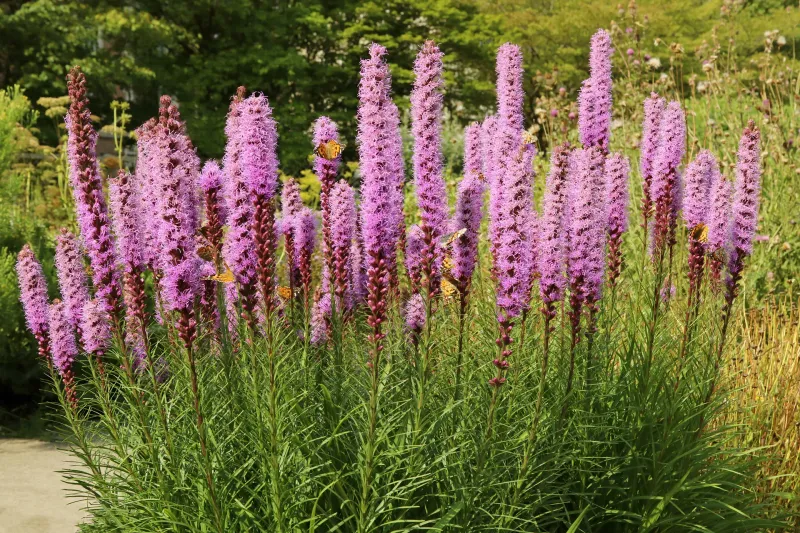
Mid-July in the Piedmont feels heavy, the air pressing down like a wet blanket. But then you spot it, a striking purple spike standing tall and buzzing with butterflies.
That is the magic of Liatris spicata, known as Dense Blazing Star, a true North Carolina native that laughs at summer heat.
The secret hides underground in its corm, a storage structure that hoards water so the plant can ride out dry spells once its roots take hold. Many gardeners are genuinely surprised by how sturdy it is while their delicate flowers melt.
Blazing Star climbs anywhere from 3 to 6 feet, opening its spikes from the top down.
Give it a spot with at least six hours of direct sun a day. It handles our notorious red clay just fine, so long as the soil drains reasonably well.
Space plants about 12 to 15 inches apart for good airflow, which matters in our sticky climate.
Plant in spring after the last frost or early fall, then largely forget about it, watering only during extreme drought. Expect blooms from mid-summer into September.
Bees, butterflies, and hummingbirds swarm it, and you will love watching the monarchs stop by.
2. Goldenrod Offers A Sunny Surprise That Never Quits
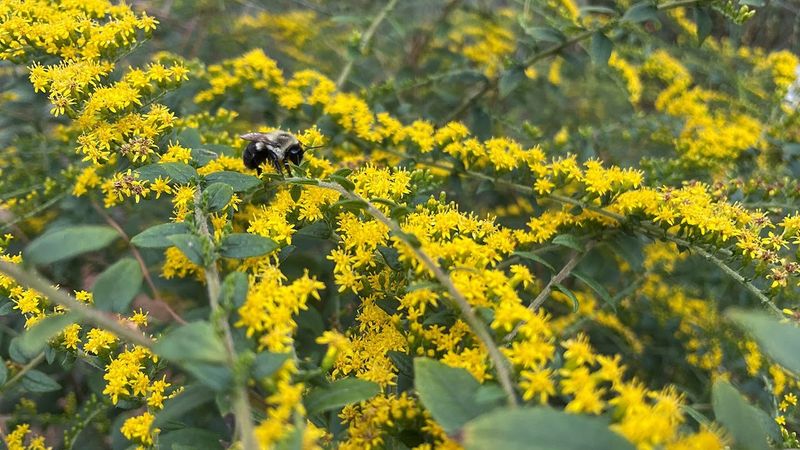
You might remember goldenrod from old fields and roadsides, wrongly blamed for hay fever. That itchy misery actually comes from ragweed, blooming at the same time.
Because of that mix-up, plenty of folks skip a plant that deserves a spot.
Solidago is a genus of roughly 138 species, and many are absolute champions in a sunny North Carolina garden. It shrugs off poor, dry, sandy soils and heavy clay alike, staying cheerful when the thermometer hits 90 degrees and the humidity turns thick.
For your yard, Solidago nemoralis, or Gray Goldenrod, stays between 6 inches and 2.5 feet, a good fit for tight spots or rock gardens. Solidago juncea, Early Goldenrod, starts blooming in mid-June and runs through August.
Plant in spring or fall and give it room, roughly 24 to 36 inches between plants. Be honest with yourself, though, some species spread by underground stems called rhizomes if the soil is too rich.
Their yellow flowers light up late summer and fall, feeding bees and butterflies when other plants are fading. Goldfinches will strip the seeds later, and that quiet flurry of birds is its own small reward.
3. Echinacea Purpurea Stands Strong Through Summer’s Worst
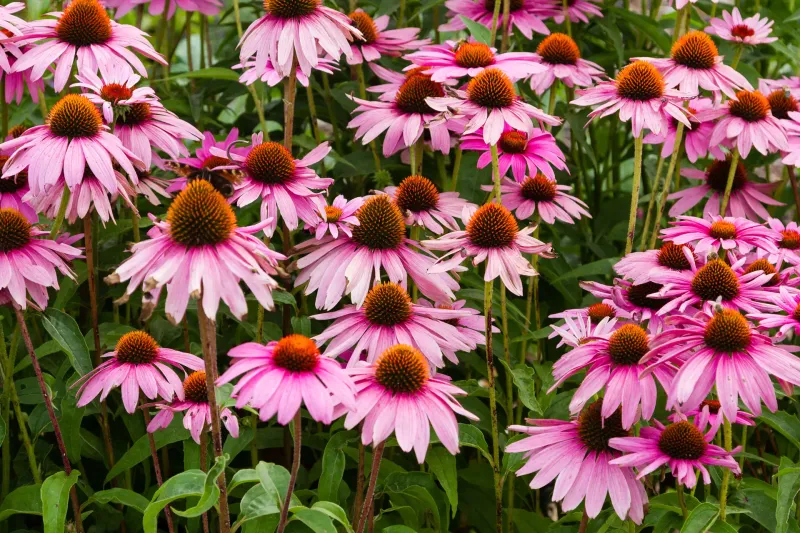
Picture a scorching afternoon in the Sandhills, the air still and heavy. Your purple coneflowers stand tall anyway, petals reaching for the sky like nothing is wrong.
Echinacea purpurea is not just pretty, it is genuinely tough.
Many gardeners assume coneflowers are delicate. But these North Carolina natives are built for punishment, riding out spring downpours and the scorching August sun.
Here is the surprise, they resist deer, heat, humidity, and even some salt, which makes them workable in parts of the Coastal Plain.
This perennial usually reaches 3 to 4 feet and blooms from early summer through mid-fall. It prefers full sun but tolerates a little afternoon shade in the hottest corners of the state.
Well-drained soil is best, though it adapts widely and turns drought tolerant once settled.
When planting, dig a hole a bit wider than the root ball and keep the crown level with the ground. Space plants 16 to 24 inches apart so air moves freely, which helps in our muggy summers.
Butterflies, bees, and hummingbirds crowd the blooms all season. You will be amazed something this lovely asks so little of you.
4. Blanket Flower Will Cover Your Garden With Color
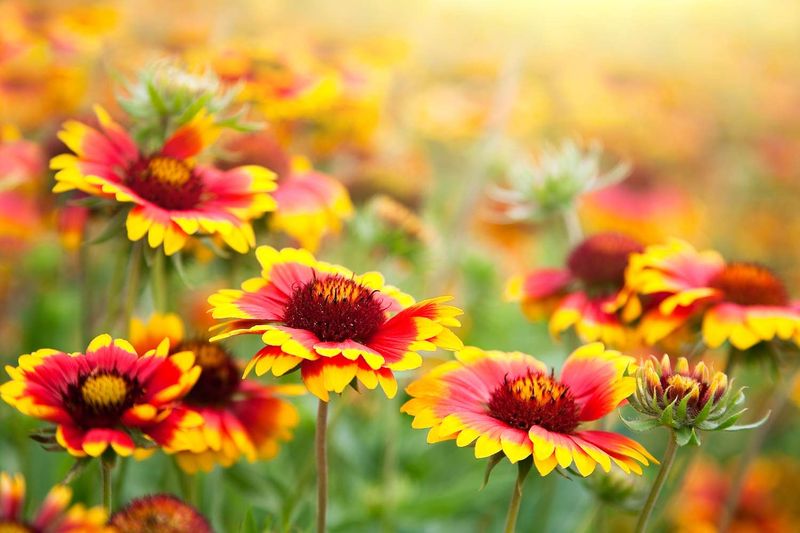
You are on the porch near the coast, salty air drifting in, when a riot of red and yellow flowers catches your eye. They bloom effortlessly, right there in the sandy soil where you figured nothing would take.
That is Gaillardia, commonly called Blanket Flower.
Folks assume only desert plants handle such rough conditions. But blanket flowers are native to North and South America, including our own state, and they are perfectly at home where others give up.
The real showstopper is nonstop bloom from early summer to fall, even in poor, dry ground.
These short-lived perennials want full sun and sharp drainage to truly shine. For a native pick, look for Gaillardia aestivalis, or Sandhill Gaillardia, which thrives in the well-drained soils of the Coastal Plain and grows 1 to 3 feet tall.
Sow seed in fall, or set out young plants in spring after the last frost. Space them 1 to 2 feet apart and they fill in fast, weaving that promised blanket of color.
Native bees and butterflies feast on them all season, and the constant motion makes a hot corner feel alive rather than baked.
5. Black-Eyed Susan Is The Cheerful Comeback Kid
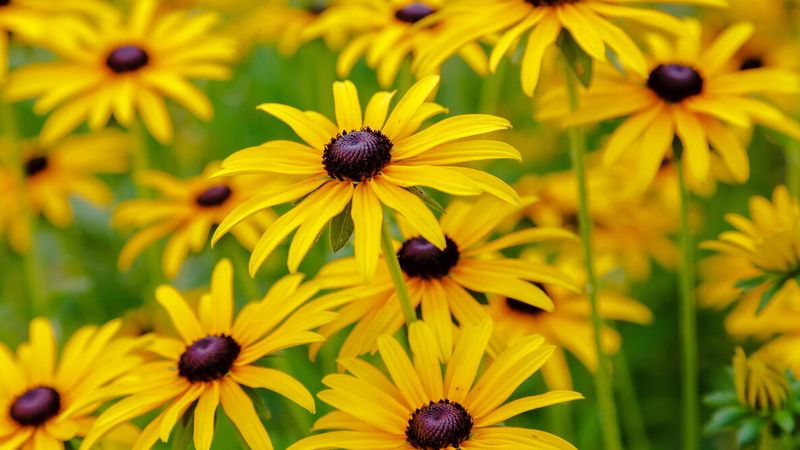
Late summer arrives and the garden starts to look tired, a little slumped from weeks of heat. Then those cheerful faces show up, blooming their hearts out like they never got the memo.
Rudbeckia hirta, or Black-eyed Susan, is a quintessential East Coast native that too many gardeners write off as a common weed.
Its knack for thriving in tough, full-sun spots across North Carolina is worth a second look. It behaves as a short-lived perennial or biennial, often flowering the first year if you sow seed in early spring.
It handles both soggy and dry ground, which suits our pattern of afternoon thunderstorms followed by long dry stretches.
Full sun is the ask, and it takes almost any soil, from heavy Piedmont clay to sandy Coastal Plain ground. It even tolerates city pollution, so a downtown bed is fair game.
Plants reach 1 to 3 feet with golden petals around a dark brown eye. Set them out in spring after frost or in fall, spacing 12 to 18 inches apart.
Water during long dry spells and they bloom hard from June into September. Butterflies work the flowers, then goldfinches arrive for the seeds.
6. Butterfly Weed Brings Brilliant Orange Resilience
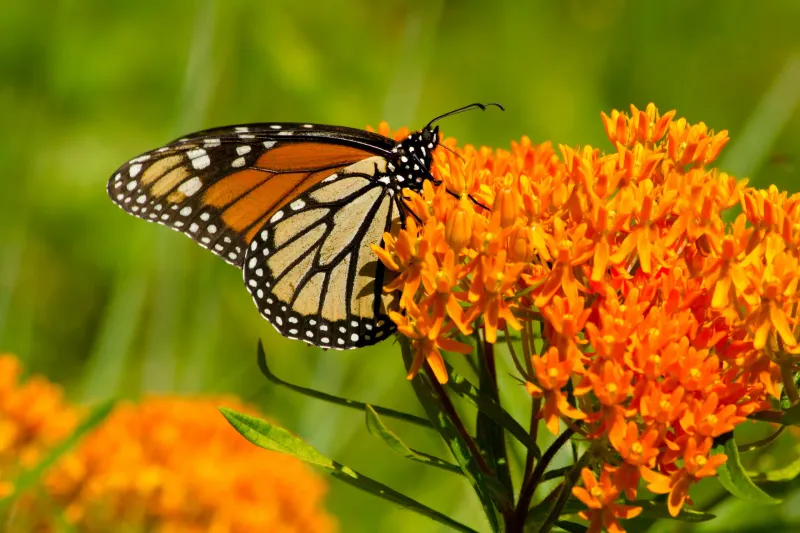
A warm evening on the patio, and a monarch flits past, aiming straight for a splash of brilliant orange in your sunny border. That vivid color belongs to Asclepias tuberosa, known as Butterfly Weed, a powerhouse that thrives in North Carolina heat without a hint of wilt.
Most people know the milky-sapped milkweeds, but Butterfly Weed plays by different rules. It skips the milky sap and grows a deep taproot, its quiet weapon against drought and lean soil.
That taproot is exactly why it takes care of itself once it settles in.
This clump-forming native reaches 1 to 3 feet. It demands full sun and well-drained soil, doing especially well in dry, poor, or sandy conditions, which describes plenty of North Carolina yards.
It even shrugs off some salt, so certain coastal beds work.
Plant in spring, because that deep taproot hates being moved later. Space plants 1 to 2 feet apart, and be patient, seed-grown clumps can take a couple of years to bloom well.
The wait pays off with orange flower clusters from June through August. And it is a critical host plant for monarch caterpillars, so your yard becomes part of their journey.
7. Agastache Is Hummingbird Heaven In The Carolina Sun
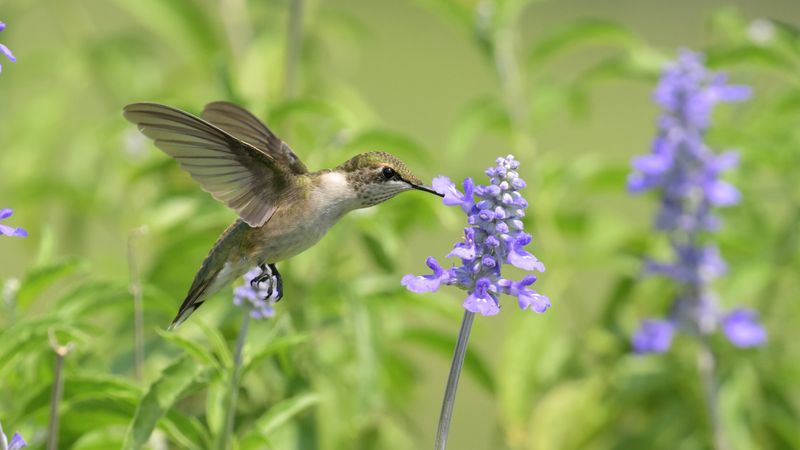
Imagine a late summer evening, a light minty fragrance in the air, and hummingbirds darting among purple-blue spires. That scene comes from Agastache, also called Giant Hyssop or Hummingbird Mint, a full-sun standout many gardeners overlook.
Some Agastache types sulk in our humidity, so honesty matters here. Cultivars like ‘Blue Fortune’ handle North Carolina’s sticky air far better, staying upright when fussier picks flop.
The tall fragrant spikes are a pleasant contrast to its floppy mint-family cousins.
Drainage is the whole game with this plant. Wet winter roots in soggy soil are its true enemy, more than any summer heat.
If you garden in heavy clay, tuck it into a raised bed or a container so water runs through.
Agastache foeniculum can climb 3 to 5 feet, blooming from late July into late autumn in shades of blue and lavender. Space plants 18 to 24 inches apart.
Once established, it turns remarkably drought and heat tolerant, asking almost nothing of you.
The long-lasting blooms pull in hummingbirds, bees, and butterflies until the season winds down. Between the fragrance and the constant flutter of wings, this is the plant that finally makes that hot border feel finished.