
10 Red Perennials Georgia Gardeners Plant For Bold Front Yard Impact
Follow us on Google
A front yard filled with red blooms grabs attention faster than almost any other color choice, especially under Georgia sunshine. The right perennials do more than look bright for a week – they return with dependable color, stand up to heat, and help your entry feel polished from the curb.
If you want planting ideas that look bold without feeling chaotic, these proven picks are worth your space. Each one brings strong visual impact, practical growing value, and a style that reads beautifully from the street.
Red Daylily
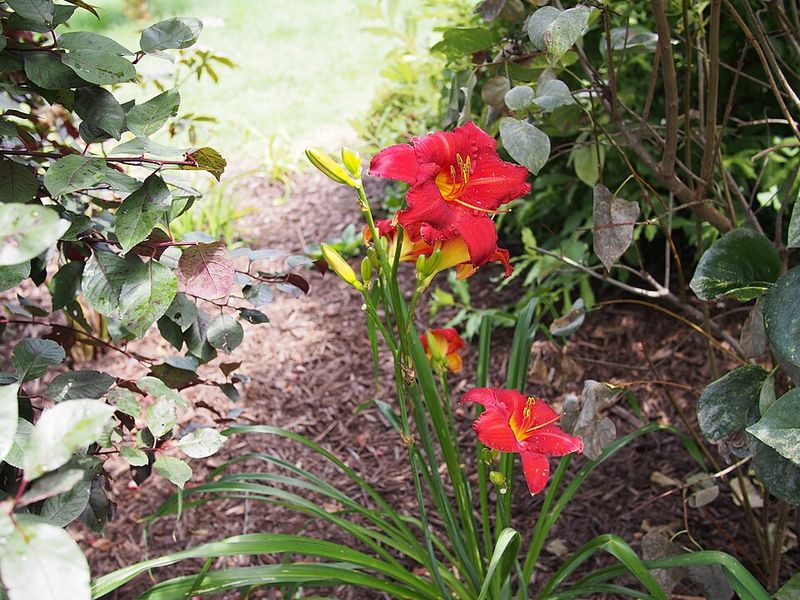
Few plants earn their keep in a Georgia front yard like a red daylily. The strappy foliage stays neat for much of the season, and the blooms show up with enough intensity to read clearly from the street.
You get that strong red punch without needing a fussy maintenance routine.
Morning sun and well-drained soil will give the best flower count, though established clumps handle heat better than many gardeners expect. I like using them near walkways, mailboxes, or the front curve of a foundation bed where repeat blooms feel close to eye level.
Their arching leaves also soften hard edges from stone, brick, and concrete.
Deadheading helps the bed look tidier, but these plants still perform even if your schedule gets busy in midsummer. Divide crowded clumps every few years to keep flowering strong and to spread that color elsewhere in the yard.
If your front beds need a dependable red perennial that looks vivid, survives Georgia summers, and mixes easily with ornamental grasses or dwarf shrubs, this one makes a smart starting point. Pair it with dark mulch and silver foliage nearby, and the bloom color looks even richer from the curb.
Red Bee Balm
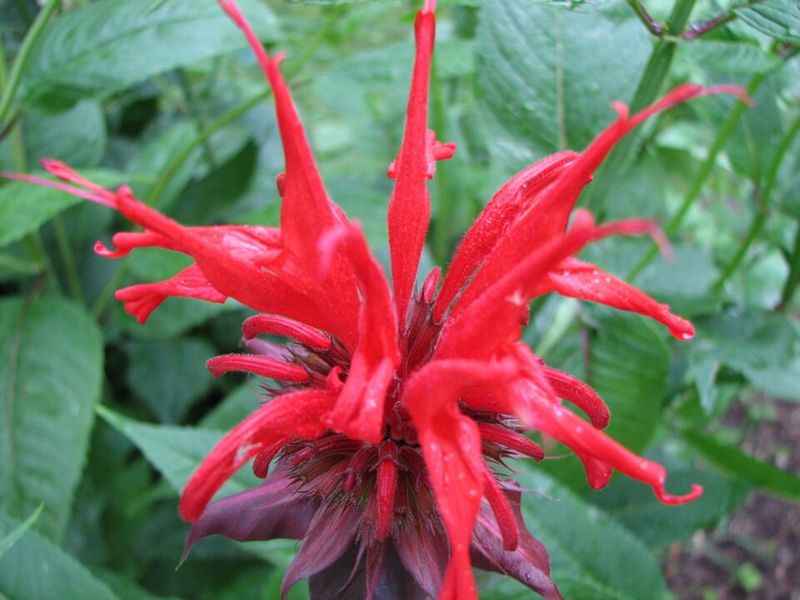
Nothing looks sleepy once red bee balm starts throwing bright, shaggy blooms above fresh green foliage. The flower shape feels lively and slightly wild, which is useful if your front yard needs color that breaks up more formal shrubs and straight foundation lines.
Hummingbirds and butterflies notice it fast, so the bed suddenly feels active instead of static.
Georgia gardeners usually get the best results with good airflow, full to partial sun, and soil that stays evenly moist without turning soggy. I would not cram it into a packed bed where leaves stay damp, because mildew can show up when air circulation is poor.
Give each clump room, and the plant rewards you with stronger stems and cleaner foliage.
That vivid red works especially well beside white coneflowers, blue salvia, or dark-leaved cannas if you want a layered summer display. After the first flush, cutting spent stems can encourage a neater habit and sometimes more bloom.
For a front yard that needs movement, pollinator energy, and a color that reads boldly from the sidewalk, this perennial does the job with personality. It feels garden-rich without looking overworked, which is a balance many curbside beds miss.
Hardy Red Hibiscus
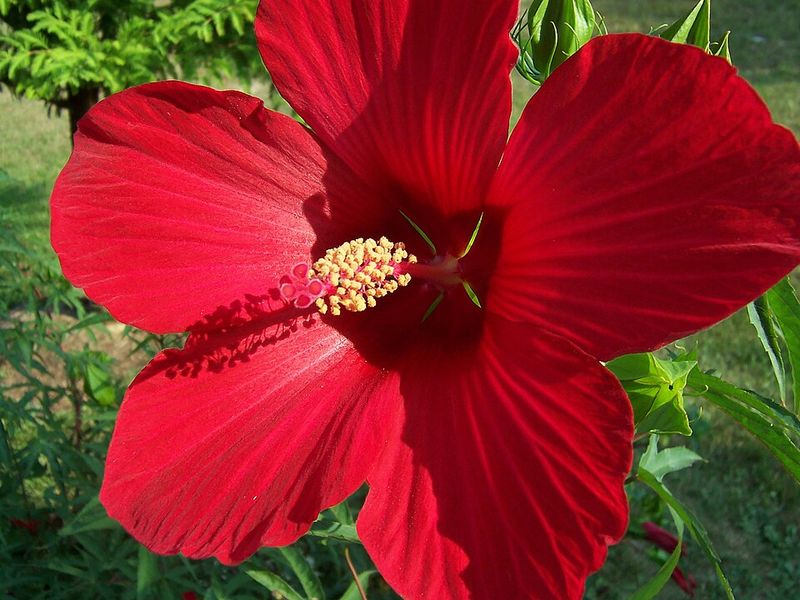
Big flowers can carry an entire front bed, and hardy red hibiscus proves it every summer. The blooms are enormous, saturated, and impossible to miss from the road, which makes this plant perfect for homeowners who want real front yard drama.
It has that tropical look people love, yet it returns like a true perennial in much of Georgia.
Patience matters in spring because growth often appears late, long after other perennials have woken up. Once heat settles in, stems rise quickly and the plant becomes a strong focal point near porch corners, wide foundation beds, or the back of a sunny border.
Moist, fertile soil helps it look its best, so a layer of mulch is worth the effort.
Because the leaves and stems get substantial, I like pairing it with lower companions that do not compete for attention. Think mounded grasses, purple heart, or compact salvias that frame the bloom color instead of crowding it.
If your front yard needs a red perennial that reads bold, architectural, and unmistakably summer-ready, hardy hibiscus brings that impact with very little gimmick. Just give it sun, room, and regular water during dry spells, and you will get a statement plant that looks custom chosen for Southern heat.
Red Yarrow
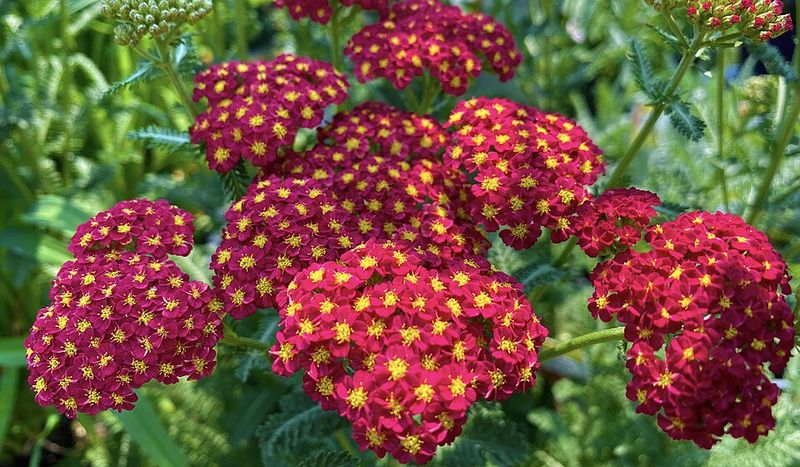
Flat flower clusters give red yarrow a look that is tidy, graphic, and easy to spot from the curb. Instead of reading soft or delicate, the blooms create crisp blocks of color that hold their own against shrubs, stone edging, and broad lawn areas.
That makes it especially useful in front yards where detail needs to register from a distance.
Full sun is the main requirement, and drainage matters more than rich soil for long-term success in Georgia. In fact, plants usually perform better when you avoid pampering them with heavy feeding and constantly wet conditions.
Once established, this perennial handles dry stretches well and stays useful when other flowers begin looking tired.
Those ferny leaves also add texture, which helps balance larger plants like cannas or hardy hibiscus. I like placing yarrow in repeating drifts near the front of a bed so the red color feels intentional rather than scattered.
If stems start to flop after heavy rain or rich growth, a quick trim often restores a tighter shape. For gardeners who want front yard color with a cleaner silhouette and lower water demands, red yarrow is a smart, practical choice.
It gives you strong summer presence without asking for constant rescue through Georgia heat.
Red Hot Poker
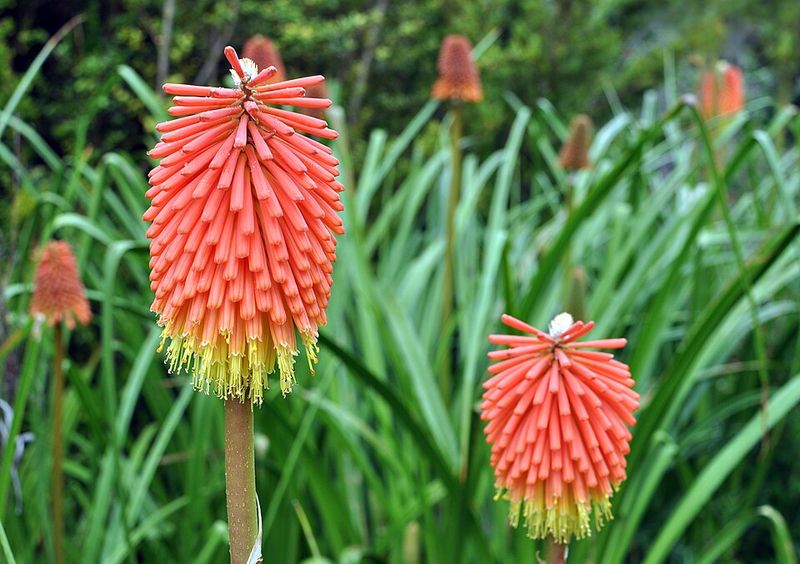
Torch-shaped blooms give red hot poker a vertical punch that few perennials can match. The flower spikes rise above grassy foliage like lit accents, so even a simple planting bed suddenly feels more designed and deliberate.
In a Georgia front yard, that upright form is valuable because it adds height without the bulk of a large shrub.
Sun exposure is important, and drainage needs to be sharp enough that crowns do not sit wet in winter. Once settled, these plants tolerate heat very well and look especially strong beside gravel paths, brick edging, or modern foundation plantings.
I like using them where afternoon light catches the bloom spikes and intensifies the warm red tones.
The foliage stays fairly narrow, which makes it easy to tuck several into a bed without crowding your walkway or porch steps. Pair them with blue-gray grasses, black-eyed Susans, or low mounding evergreens for a front yard palette that feels crisp rather than busy.
Removing old flower stalks keeps the clump cleaner and puts attention back on fresh spikes. If you want a perennial that reads bold, sculptural, and slightly unexpected in Georgia landscaping, red hot poker gives you that statement while still handling summer conditions like a pro.
Red Canna Lily
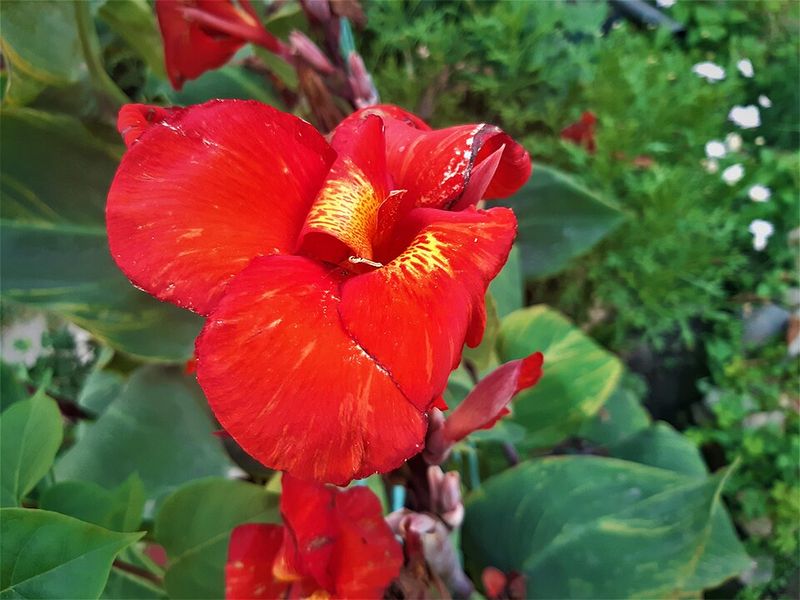
Bold leaves and saturated flowers make red canna lily one of the fastest ways to give a front yard real presence. The plant reads large, confident, and colorful even before every bloom opens, which is useful when you want impact across a long driveway or broad lawn.
In Georgia, that heat-loving habit works in your favor through the hottest stretch of summer.
Rich soil, regular water, and full sun produce the strongest display, though cannas are tougher than their tropical look suggests. I like placing them toward the back or middle of a bed where the foliage can form a dramatic backdrop for lower perennials.
They also look sharp near black shutters, brick walls, or pale stone because the red flowers stand out so clearly.
Clumps expand over time, so dividing every few years keeps the bed from getting crowded and gives you extra plants for other sunny spots. Damaged leaves should be removed quickly since tidy foliage is part of the appeal.
If your front yard needs a perennial that feels energetic, substantial, and visible from the street, red canna lily earns attention without relying on complicated care. Add a few around a mailbox bed or entry walk, and the whole approach to the house starts feeling more intentional.
Red Dianthus
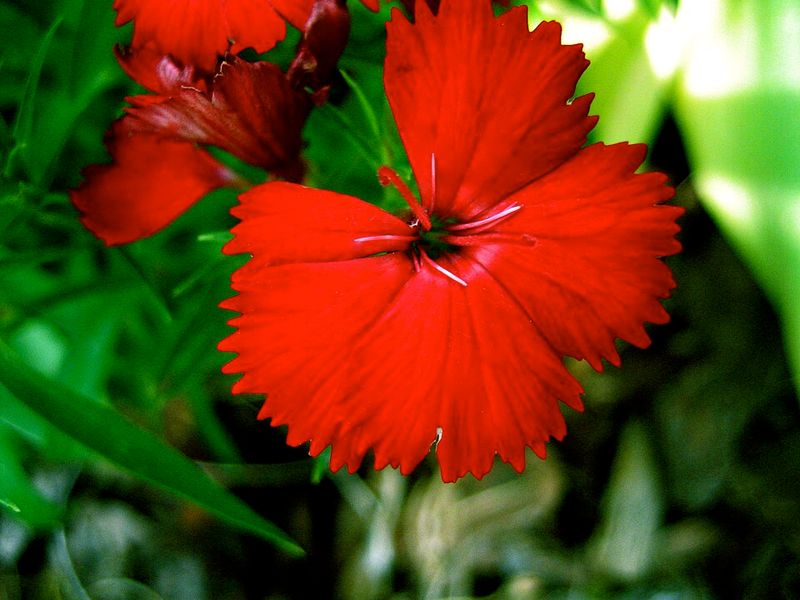
For gardeners who want red color closer to the ground, dianthus brings a cleaner, more tailored look than many taller perennials. The blooms sit above tidy mounds of blue-green foliage, so the plant works beautifully along front walkways and bed edges where details matter.
That compact habit helps the yard feel polished instead of crowded.
Good drainage is essential in Georgia, especially during humid periods when constantly wet soil can shorten the plant’s life. Full sun gives the best flowering, and a spot with some airflow helps keep foliage healthier through changing weather.
I usually think of dianthus as a front-row plant, where its neat shape can frame larger summer performers behind it.
The color pairs well with white stone borders, dark mulch, and evergreen shrubs that need a brighter companion at their feet. Shearing lightly after the main bloom flush often encourages a tidier mound and can bring a smaller repeat show.
If your front yard needs a red perennial that feels orderly, crisp, and welcoming near the entrance, dianthus is an easy answer. It does not overwhelm a small foundation bed, yet the flower color still registers clearly from the curb, which is exactly what many compact Georgia landscapes need.
Red Blanket Flower
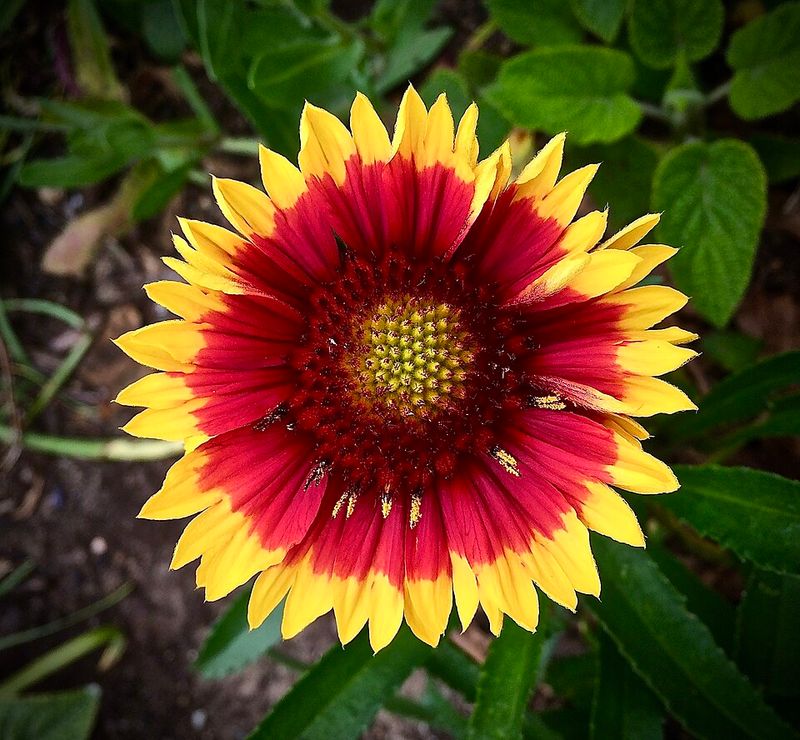
Hot sun does not scare red blanket flower, and that alone makes it valuable in many Georgia front yards. The daisy-like blooms keep coming through summer, bringing a cheerful red that feels bright without turning stiff or formal.
If you want a bed that looks colorful for months, this perennial pulls serious weight.
Lean, well-drained soil usually produces the strongest plants, so avoid overfeeding and heavy irrigation once roots are established. I like placing blanket flower where reflected heat builds up near sidewalks, driveways, or stone edging because it keeps performing when fussier choices begin sulking.
The mounded habit also blends nicely with ornamental grasses and compact salvias.
Regular deadheading can extend bloom time, but even a less attentive gardener usually gets a strong show. Because the flowers attract pollinators, the front yard feels lively and seasonal instead of static.
That matters when you want the space to look welcoming from the street, not just colorful in photos. For anyone trying to build a low-fuss planting with standout red tones, red blanket flower offers endurance, movement, and plenty of visual return.
It is especially effective in repeated groups, where the color appears intentional and bold rather than sprinkled around as an afterthought.
Red Cardinal Flower
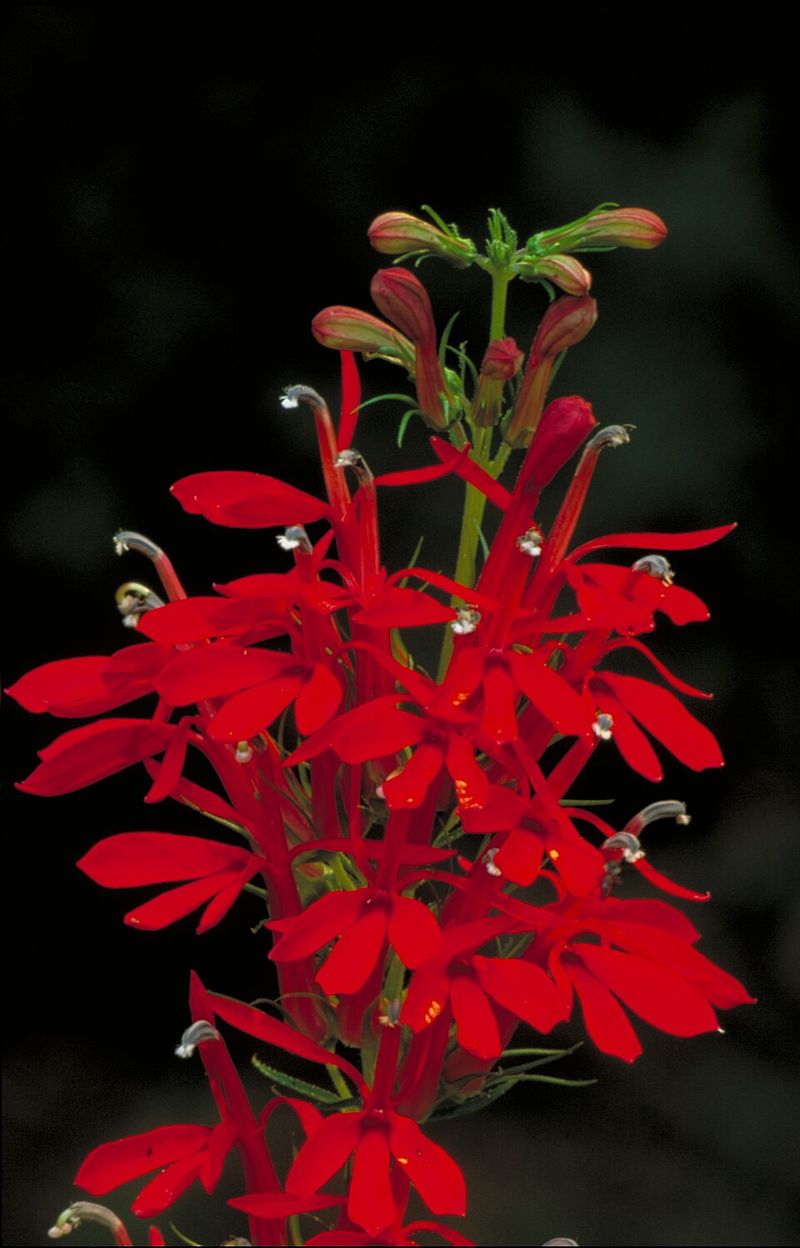
Scarlet flower spikes give cardinal flower a richer, more vertical kind of red than many common border plants. The color feels saturated and elegant, especially when planted where morning light hits the blooms near a front walk or porch bed.
Hummingbirds love it, so the planting quickly becomes more than a static display.
Moisture is the main consideration, because this perennial prefers soil that does not dry out for long stretches. In Georgia, it works beautifully in beds near downspouts, rain gardens, or lower areas that stay evenly damp without becoming swampy.
I would not force it into a blazing, bone-dry strip by the driveway, where it will struggle to show its best side.
When the site is right, the plant brings a refined burst of color that contrasts beautifully with dark green foliage and lighter flowering companions. Grouping several together makes the red read more powerfully from the street than a single isolated stem ever could.
If your front yard includes a moist pocket and you want something more striking than the usual summer annuals, cardinal flower is a memorable choice. It looks intentional, supports pollinators, and adds a sense of depth to the planting palette that ordinary red bedding plants rarely match.
Red Crocosmia
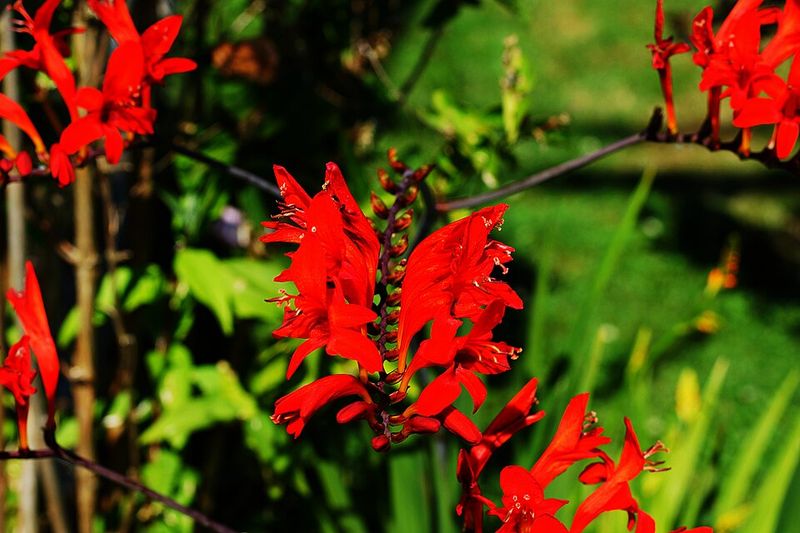
Arching stems covered in red blooms give crocosmia a lighter, more graceful energy than chunkier summer perennials. The flowers seem to float above sword-like foliage, which adds movement to front beds that otherwise feel heavy with shrubs and broadleaf plants.
In Georgia heat, that airy structure can make a planting look fresher and more layered.
Full sun to light afternoon shade works well, and good drainage helps bulbs settle in for repeat performance. I like planting crocosmia where the flower wands can lean slightly through neighboring plants, rather than isolating it in stiff rows.
It looks especially attractive beside fine-textured grasses, dark mulch, and homes with warm brick or cream-colored siding.
After blooming, let the foliage gather strength before cutting it back too quickly, because that helps future flowering. Clumps can spread over time, so dividing when they get dense keeps the display stronger and easier to manage.
For a front yard that needs red color with a bit more motion and elegance, crocosmia is a strong candidate. It catches the eye without shouting, and that balance matters if you want curb appeal that feels intentional instead of overstuffed.
A few well-placed clumps can carry a whole midsummer border with surprising ease.