
North Carolina Moonflowers Run From The Sun While Everything Else Chases It
Follow us on Google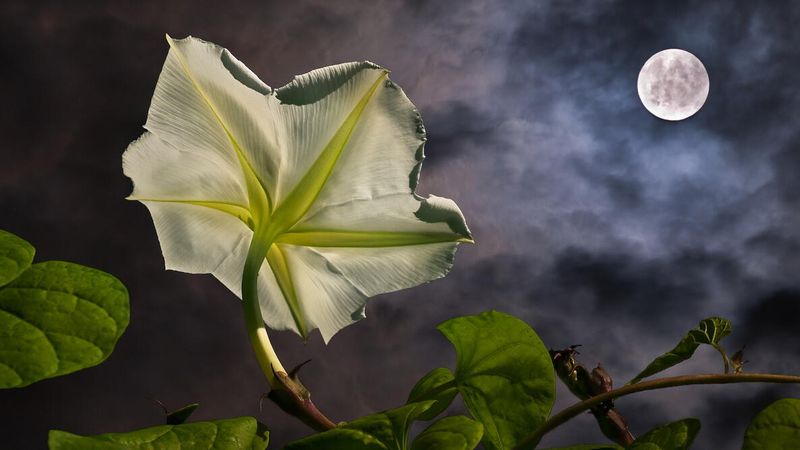
Step onto your porch around dusk on a muggy North Carolina summer evening and you might catch something unexpected: a flower the size of a salad plate, white as fresh paint, unfolding right before your eyes.
That flower belongs to moonflower, Ipomoea alba, and the name makes it sound like it hides from daylight.
The truth is actually more interesting than that, because the vine itself craves every hour of full sun it can get, while its blooms save the show for after dark.
Understanding that split personality is what makes this plant one of the most rewarding things you can grow on a Carolina porch.
The Vine Loves Sun, But Its Flowers Wait
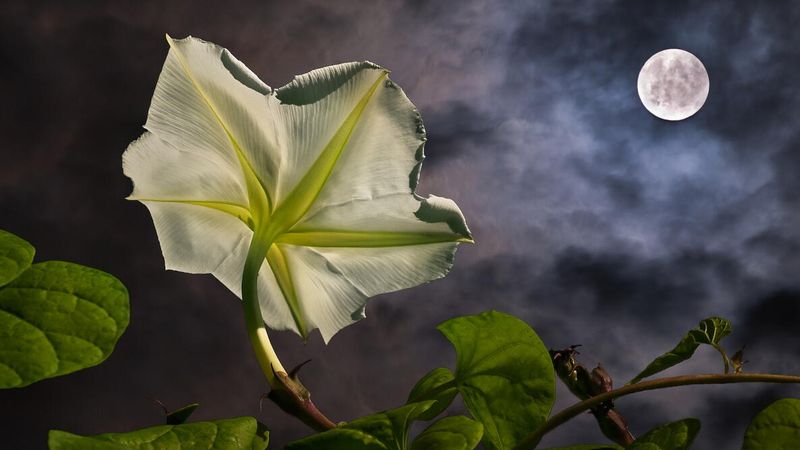
Moonflower, known to botanists as Ipomoea alba and sometimes called moonvine or tropical white morning glory, is not running from anything.
The vine is a full-sun grower that needs at least six hours of direct light each day to build the strong stems and dense foliage that carry those famous blooms.
What it does with that solar energy is spend it quietly, saving the real spectacle for the hours after the sun drops below the tree line.
The flowers themselves are genuinely something to stop and watch.
Each trumpet-shaped bloom can stretch three to six inches across, pure white, with a fragrance that carries across a porch without being sharp or cloying.
NC State Extension’s plant profile for Ipomoea alba describes the flowers as opening in the late afternoon or evening and generally closing around dawn, which means the vine hands you a fresh set of blooms almost every night through summer and into fall.
The opening itself happens fast enough to notice if you are paying attention.
A tight spiral of petals unwinds in a matter of minutes, which is part of what makes this plant feel theatrical without asking you to do anything except sit down with a glass of iced tea.
Botanists studying flower timing note that this rapid movement involves changes in cell pressure and tissue growth coordinated by the plant’s internal systems, as research on flower opening and closure in the Journal of Experimental Botany explains.
So the vine loves the sun, builds itself in the sun, and then produces flowers timed precisely for the dark.
That is the real story behind the headline.
Darkness Starts The Blooming Clock
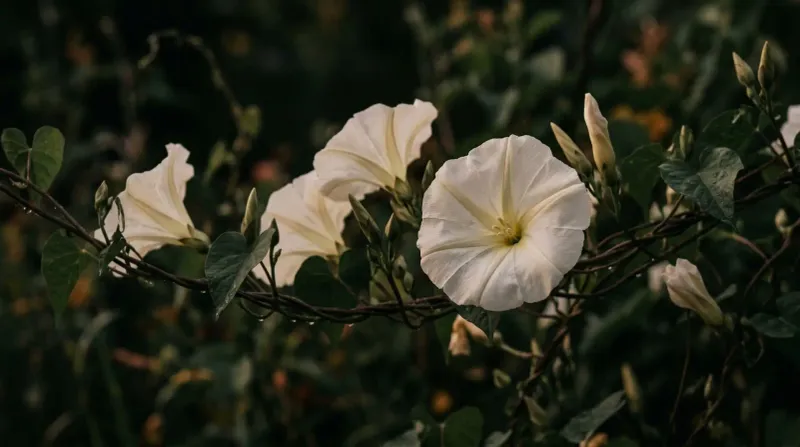
A lot of people assume moonflower blooms because of the full moon, as if the plant is watching the lunar calendar.
That is a satisfying idea and a completely wrong one.
The flowers open on a schedule driven by daily light and darkness, temperature, and the plant’s own internal biological rhythms, not by the phase of the moon.
The common name refers to the flower’s nighttime habit and its pale color, not to any real lunar connection.
Here is where it gets a little tricky.
No single trigger flips the switch.
The plant tracks the length of darkness each night, responds to cooling temperatures as evening arrives, and follows internal timing signals that have been building through the day.
Research on flower opening and closure shows that these rhythms involve coordinated changes in cell water pressure, tissue growth, and biochemical signals across the petals, with temperature and light each playing a role.
Pull any one factor out and the picture gets incomplete.
What that means practically is that you should not expect moonflower to open at exactly the same minute every evening.
On a hot, overcast afternoon in the Piedmont, blooms might start unfurling earlier than on a clear, cooler evening in the foothills.
Gardeners in the Coastal Plain, where summer nights stay warm and humid well past midnight, may see slightly different timing than those at higher elevations.
Botanical work on Ipomoea across the Americas confirms that flower timing can shift with local conditions.
The broader pattern holds: late afternoon to evening opening, closure around dawn, night after night through the warm season.
Your Evening Porch Becomes The Payoff
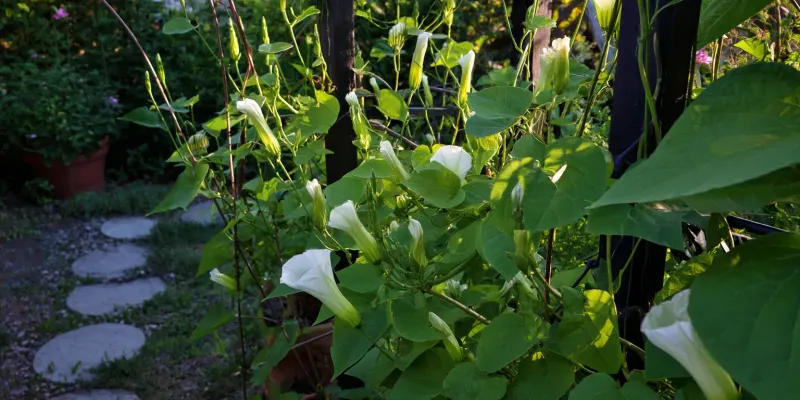
Plant moonflower where you actually spend time after 5 p.m.
That sounds obvious, but many gardeners put show plants in the front bed where nobody sits after dark.
A porch post, a patio arbor, a fence along the outdoor dining area, these are the spots where this vine pays off, because you will be there when the flowers open and the fragrance starts moving on the breeze.
The white color and strong scent are not just pretty details.
Pale flowers are easier to locate in low light, and sweet evening fragrance is a signal that certain night-flying moths follow while foraging for nectar.
University of Minnesota Extension’s overview of nocturnal pollinators notes that many moth species are active after dark and rely on scent and visual contrast to find flowers.
Research on hawkmoth foraging published in a peer-reviewed review of hawkmoth sensory ecology confirms that these moths use both smell and sight while navigating at night, which is exactly what a large white fragrant flower is built to exploit.
What moonflower offers moths is nectar, plain and simple.
Adult moths visit to feed, and that is genuinely worthwhile.
Do not expect the vine to become a larval host plant for common North Carolina caterpillars, reduce mosquitoes on your porch, draw bats to the yard, or guarantee pollination across your garden.
NC State’s profile supports moth attraction as a nectar source and stops there.
A moonflower vine gives you big beautiful blooms, evening fragrance, and the real chance of watching a moth work a flower in the dark.
That is already a lot for one plant to deliver.
North Carolina Heat Sends The Vine Climbing
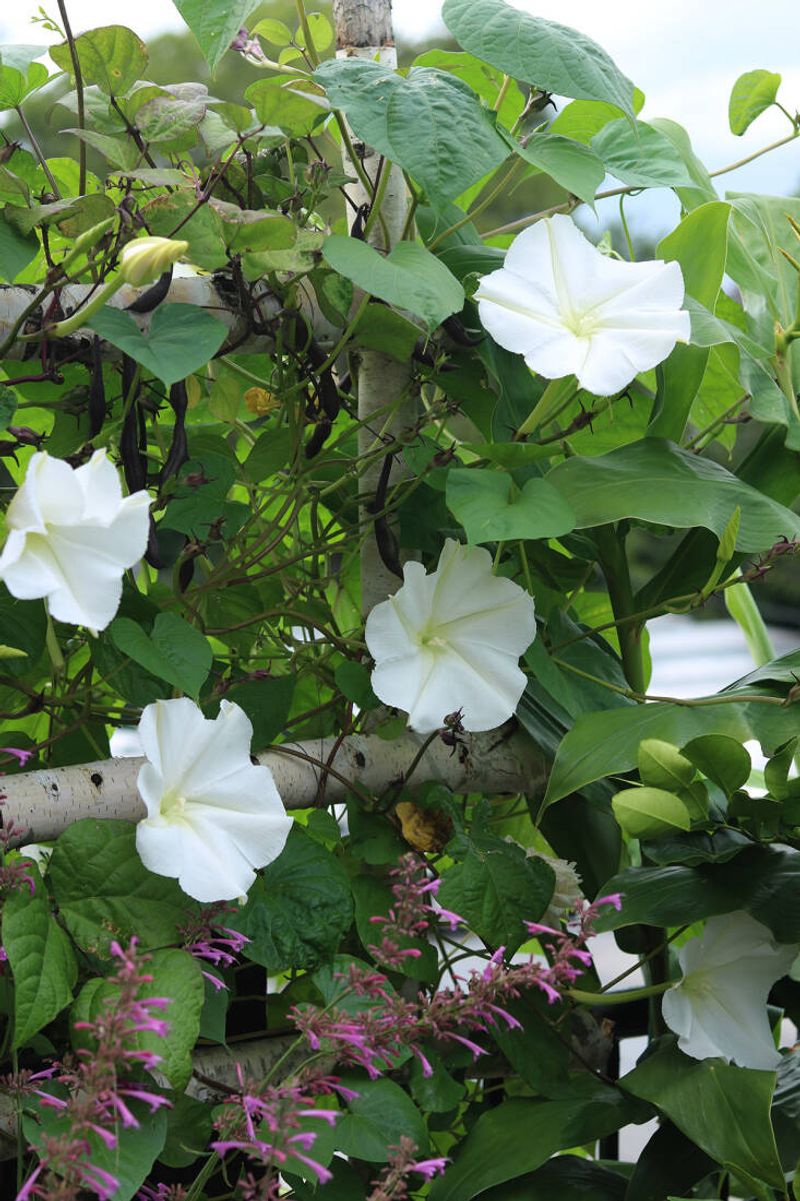
Once July heat settles over North Carolina, moonflower stops being a polite little vine and starts acting like it has somewhere to be.
The plant can reach about 15 feet tall and spread three to six feet wide by late summer, which means the support you install matters as much as where you plant it.
A lightweight tomato cage will not cut it.
A sturdy fence, a well-anchored arbor, a solid trellis bolted to the porch, or a pergola post gives the twining stems something to grip without collapsing under the weight of a full-season plant.
Put the vine where it will receive at least six hours of direct sun each day.
NC State Extension lists Ipomoea alba as requiring full sun and notes that it tolerates the well-drained clay, loam, and sandy soils found across the state, from Piedmont red clay to the sandy soils of the Coastal Plain and Sandhills.
Good drainage matters more than soil type, so avoid low spots that collect standing water after the afternoon thunderstorms that roll through most of North Carolina from June onward.
Moonflower is a tender perennial in its native tropical and subtropical American range, but North Carolina winters are not tropical.
Frost sensitivity means the vine behaves as a warm-season annual here, growing fast through the warm months and dying back when temperatures drop.
That frost sensitivity also means timing your planting is not optional.
Rush it into cold soil and the vine sits there sulking instead of climbing.
Get the timing right and you will have a plant covering an arbor before your neighbors have figured out what it is.
Start Seeds Before Spring Frost Leaves
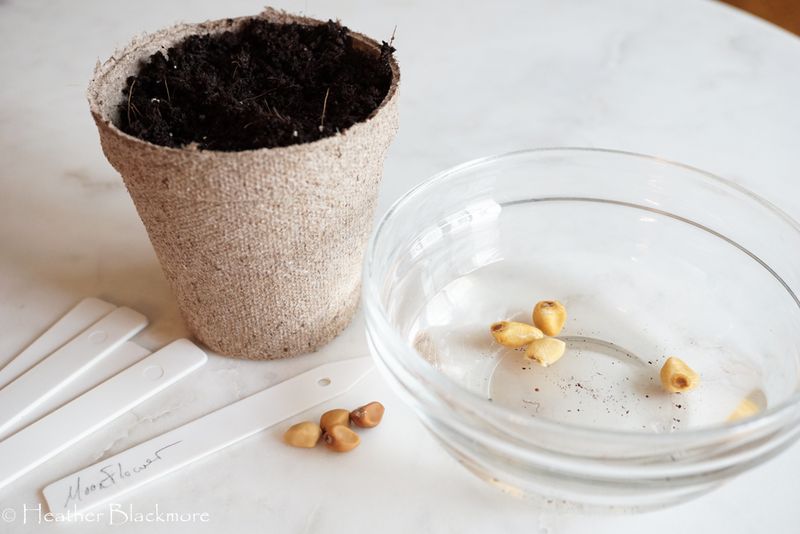
The seeds are the starting point, and they come with a quirk.
Moonflower has a hard seed coat that water struggles to penetrate on its own, so giving it a little help makes a real difference.
Soak seeds overnight in warm water before planting, or nick the seed coat gently with a nail file to let moisture in.
Either method works, and the seed packet for your specific cultivar may have its own recommendation, so read it first.
Start seeds indoors four to six weeks before your local last spring frost date.
NC State Extension recommends this indoor head start for North Carolina gardeners, which gives seedlings time to develop before they face the outdoors.
Keep the seed-starting medium evenly moist but not soggy.
University of Georgia Cooperative Extension’s guide to starting plants from seed places the germination range for many common seeds around 65 to 75 degrees Fahrenheit, and moonflower fits comfortably in that window.
Your seed packet remains the best authority for the exact cultivar you are growing.
Last frost dates vary across North Carolina.
The Piedmont typically sees its last frost in late March to mid-April, while mountain valleys near Boone or Asheville can see frost into early May.
Coastal areas around Wilmington often clear frost by mid-March.
Wait until frost danger has genuinely passed and the soil has warmed before moving seedlings outside.
A cold snap after transplanting will set the vine back significantly, and moonflower in cold soil grows so slowly you will wonder if it is alive.
Warm soil and warm nights are what this plant is waiting for.
The Name Moonflower Hides A Serious Trap
Before you buy a single seed packet, confirm the scientific name printed on the label.
The common name moonflower gets attached to more than one plant, and the difference between getting it right and getting it wrong is not a minor gardening inconvenience.
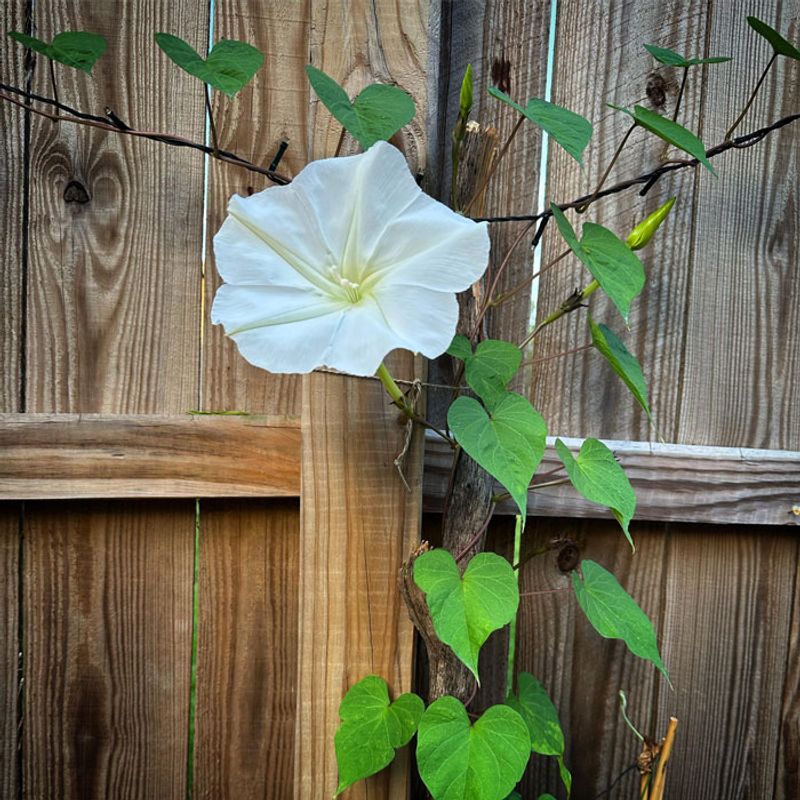
Ipomoea alba is the twining vine this article is about.
Datura stramonium is an upright, branching plant that also goes by moonflower in some references, and the two look nothing alike once you know what to check.
Ipomoea alba climbs by twining its stems around a support, produces heart-shaped leaves, and grows long flexible vines.
NC State’s profile for Datura stramonium describes an upright, branching plant with spiny seed capsules that stands on its own without climbing.
The flower shapes look superficially similar to an untrained eye, which is exactly why the common name creates confusion.
NC State rates Ipomoea alba as having low-severity poisonous characteristics, mainly tied to the seeds.
Datura stramonium is rated high severity, with all plant parts considered dangerous if ingested.
These are not the same risk level, and a label that says only “moonflower” without a scientific name is not enough information to go on.
Seeds and seed pods from Ipomoea alba need to stay out of reach of children and pets even though the overall risk level is lower than Datura.
The ASPCA lists morning glory plants in the Ipomoea group as toxic to dogs, cats, and horses, with reported concerns including vomiting and more serious signs from larger seed quantities.
Poison Control notes that morning glory seeds can be poisonous, especially in large quantities, and recommends keeping seed packets away from children.
Do not eat the flowers, leaves, seeds, or any other part of the plant, and do not encourage kids to collect the pods.
If a child or pet ingests any part of either plant, call Poison Control at 1-800-222-1222 or your veterinarian right away.
Give The Night Blooms A Thoughtful Setting
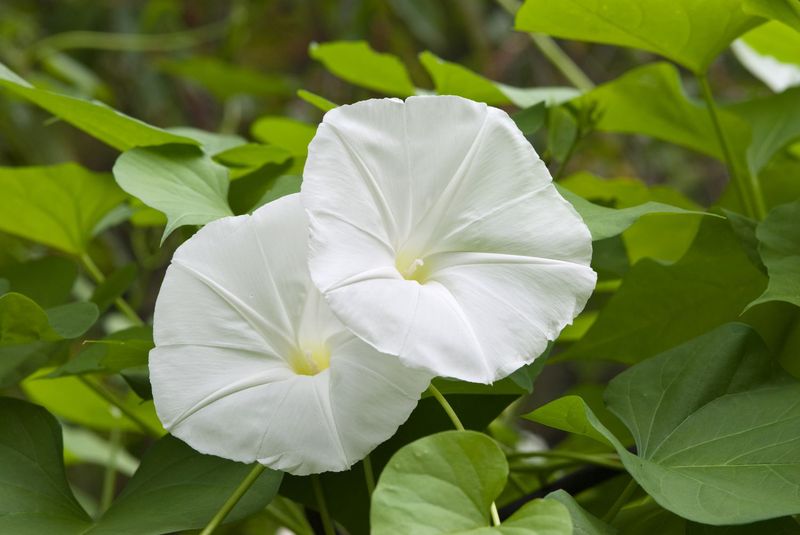
Placement is the last decision and one of the most satisfying ones.
Set the vine where the open flowers will actually be visible from your chair, your outdoor table, or the spot where you end up standing with a neighbor after dinner.
A moonflower growing around the corner of the house where nobody walks after dark is a missed opportunity.
Grow it close enough to smell.
If you want to try keeping the plant through winter, a large container gives you a realistic option.
NC State notes that a container specimen is more manageable for overwintering indoors than a mature vine planted directly in the ground beside a porch.
Move it inside before the first frost, give it a bright spot, and see how it holds.
It is not a guarantee, but it is worth trying if you want a head start the following season.
Outdoor lighting around the vine deserves a little thought.
Research published in Nature Communications on artificial nighttime lighting and pollinator ecology shows that outdoor lights can affect how moths navigate and find flowers.
The evidence does not say one porch light will shut down your moonflower’s moth visitors entirely, and no particular bulb color comes with a guarantee of pollinator protection.
The practical move is to use modest, targeted lighting aimed where you need it rather than flooding the whole vine in bright light.
Keep the basic formula in mind through the whole season: full sun during the day, warm soil after frost, a sturdy support with room to reach 15 feet, and a seat close enough to watch what shows up after dark.
The flowers will handle the rest, and on a good Carolina evening, that is genuinely enough.