
Most People Walk Past This Wildflower Without Knowing Why Good Gardeners Love It
Follow us on Google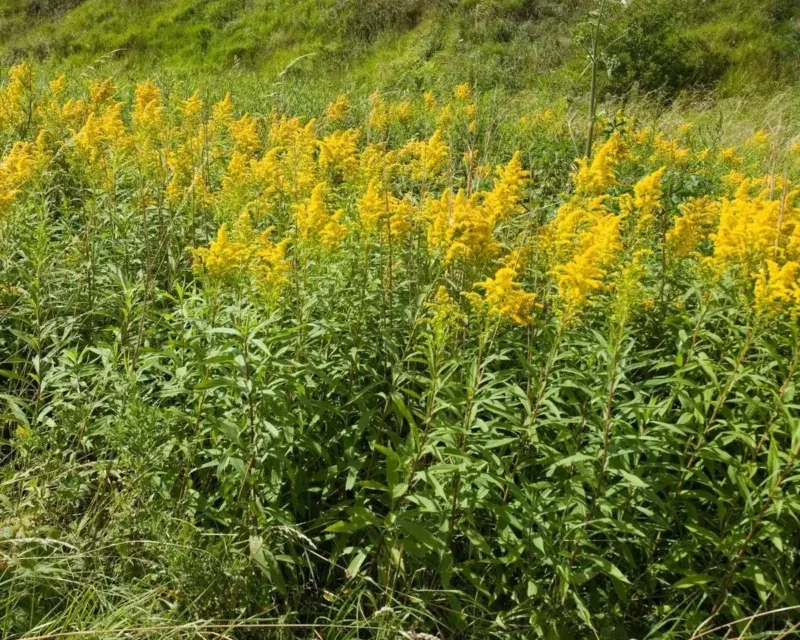
Every August and September, a tall yellow wildflower lights up roadsides, fence lines, and empty lots across the country, and most people keep walking. That plant is likely goldenrod, genus Solidago, and experienced gardeners often stop to take a second look.
The reason has nothing to do with how it looks on a Tuesday afternoon in August and everything to do with what it quietly does for every bee, butterfly, and beneficial insect trying to survive into October. Once you know what you are actually looking at, you may decide to move some into your yard on purpose.
Goldenrod Is The Likely Wildflower
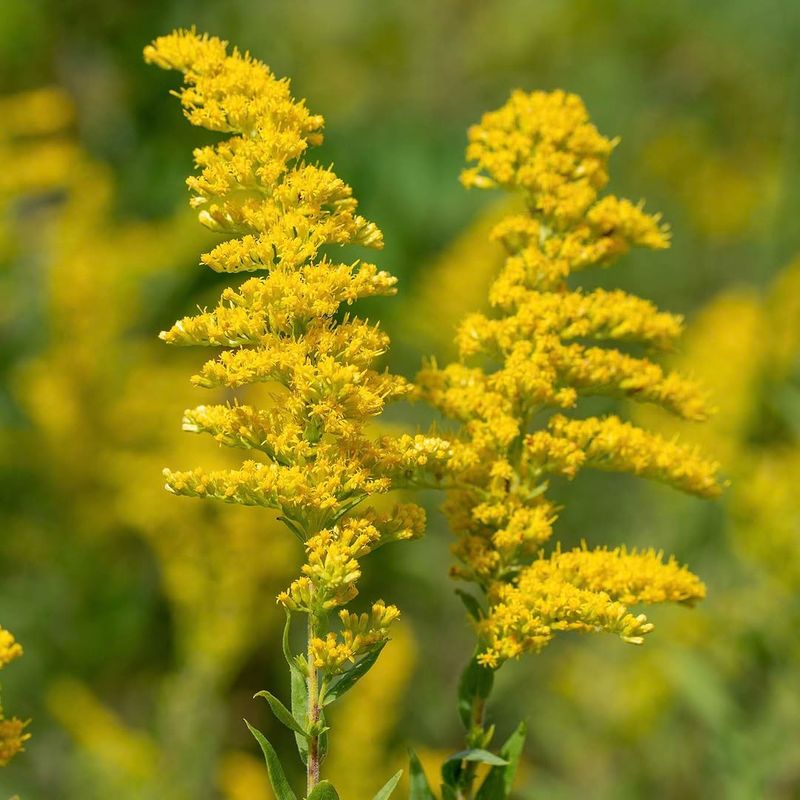
Yellow flower clusters rising from a tall, unbranched stem along a ditch or fence line in late summer are a strong visual cue, and the plant behind them is probably goldenrod, genus Solidago. That said, the identification stays a working hypothesis until you get a closer look, because the genus includes more than 75 species native to the United States, and they do not all behave the same way in a yard.
The most common roadside form is Canada goldenrod, Solidago canadensis, a long-lived perennial that USDA plant records for Canada goldenrod describe as capable of forming large, dense patches through underground stems called rhizomes. It can tower over 5 feet in open, disturbed ground.
That spreading habit is exactly why some homeowners pull it out and why others manage it deliberately.
A garden-friendlier relative worth knowing by name is showy goldenrod, Solidago speciosa. North Carolina State Extension’s profile of showy goldenrod describes upright stems that can reach 2 to 7 feet tall and spread 2 to 3 feet wide, with tighter, more upright flower clusters than the arching plumes of Canada goldenrod.
Showy goldenrod tends to stay where you put it more reliably than its roadside cousin.
The practical first step is to look at leaf shape, flower arrangement, and stem habit before deciding to keep or remove any yellow-flowered plant. Clemson Extension’s comparison of goldenrod and ragweed points out that goldenrod’s bright yellow flower heads are conspicuous and clustered, which makes it easier to spot than many roadside weeds.
Knowing the species matters because your management options, and your realistic expectations, depend on which one is actually growing there.
Its Real Advantage Arrives After Summer
By the time Labor Day passes, most flowering perennials in a typical yard have already finished. Coneflowers are going to seed, daylilies are done, and the garden can look like it is running out of ideas.
Goldenrod, though, is just getting started.
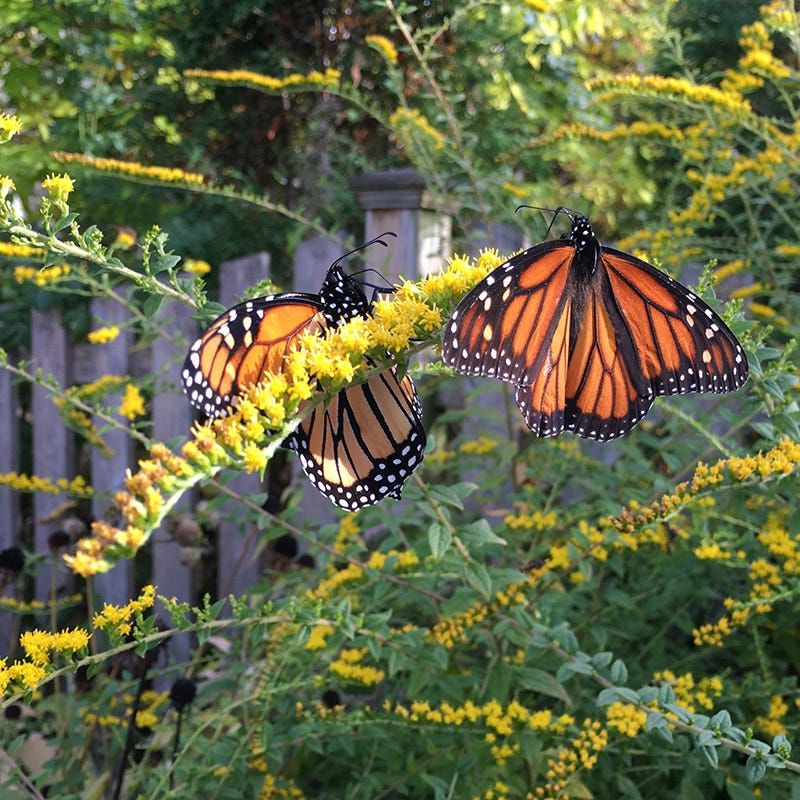
The ecological value of that timing is real and specific. Goldenrod’s late-summer and fall flowers supply nectar and pollen during a window when many bees, butterflies, wasps, and beetles are still active but finding fewer food sources.
USDA’s plant guide for showy goldenrod notes that some Solidago species also support specialized native bees and moth larvae, meaning the benefit goes beyond generalist pollinators to insects with narrower habitat needs.
Think of goldenrod as a late-season diner that stays open after every other restaurant on the block has closed. Migrating monarchs stop at it on their way south.
Bumble bee queens, building fat reserves before winter, work the flower clusters methodically. Soldier beetles and predatory wasps show up too, drawn by the same food source, and those insects do feed on pest species in your garden as a side effect of being there.
That is a real habitat benefit, but it is one layer of a wider picture, not a guaranteed pest-control outcome.
Effective pollinator habitat, as USDA’s habitat assessment guide for yards and gardens makes clear, also requires nesting areas, larval host plants, shelter, and blooms across multiple seasons. Goldenrod handles the late-season piece exceptionally well.
The rest of the calendar still needs other plants to fill it.
Ragweed Gets The Blame Instead
Here is the mix-up that has cost goldenrod its reputation for decades. Late August arrives, eyes start itching, and the closest yellow wildflower gets the blame.
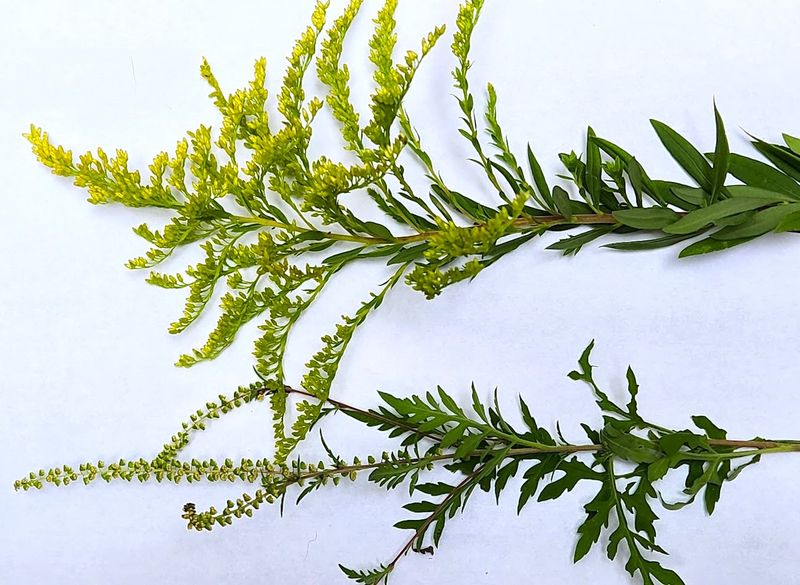
The actual culprit growing right beside it is ragweed, genus Ambrosia, a plant so easy to overlook that most people never notice it.
The difference comes down to how each plant moves its pollen. Goldenrod is insect pollinated, which means its pollen is relatively heavy and sticky, designed to hitch a ride on a bee rather than float through the air and into your sinuses.
Ragweed is wind pollinated, releasing fine, lightweight pollen in quantities large enough to travel miles on a light breeze. Clemson Extension’s guide to telling goldenrod and ragweed apart explains that the two plants bloom at the same time and often grow in the same open areas, which is almost certainly how the confusion started and why it has lasted so long.
Visually, ragweed is easy to separate from goldenrod once you know what to look for. Ragweed leaves are deeply divided and almost ferny looking.
Its flowers are small, green, and easy to miss entirely. Goldenrod, by contrast, puts on a show with conspicuous yellow clusters that attract insects from a distance.
Goldenrod is not generally considered a major airborne cause of seasonal hay fever, but that does not mean every person reacts the same way to every plant. Anyone with diagnosed plant allergies should follow their own medical guidance.
And as with any unfamiliar plant, people with known skin sensitivities should take whatever personal precautions make sense for them.
Choose The Goldenrod Your Yard Can Hold
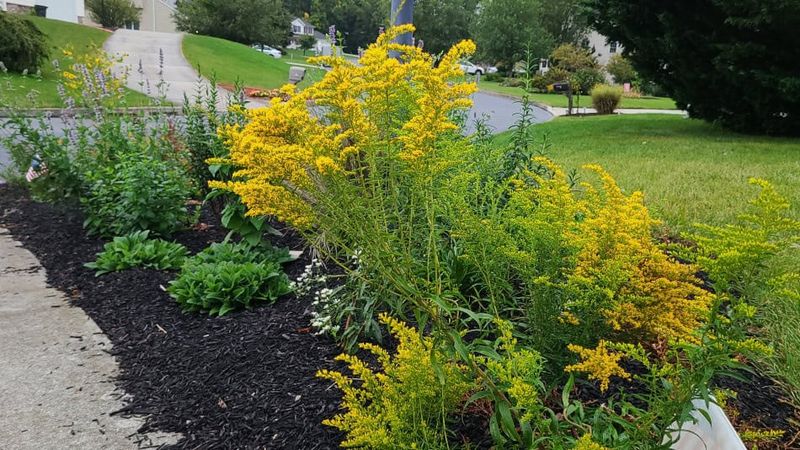
Knowing that goldenrod is probably not making you sneeze is useful. Knowing which goldenrod will actually behave in your yard is what keeps you from spending a future September digging out a 10-foot-wide patch from your flower bed.
Canada goldenrod is the form most people see along roadsides, and it earns that roadside reputation honestly. It spreads through rhizomes, underground stems that push outward season after season, and it can fill a bed faster than most homeowners expect.
For a residential border, a compact cultivar is usually a smarter starting point than whatever is growing in the ditch out front.
Iowa State Extension’s guide to growing goldenrods lists several garden-sized selections worth knowing: ‘Crown of Rays’ tops out around 24 inches, ‘Fireworks’ runs 24 to 36 inches, ‘Golden Fleece’ stays between 15 and 18 inches, and ‘Golden Baby’ reaches 18 to 30 inches. Those sizes are far easier to place near a porch, path, or mixed border than a 5-foot roadside form.
Showy goldenrod, Solidago speciosa, is worth a closer look if you want a species rather than a cultivar. North Carolina State Extension’s profile of showy goldenrod puts its mature size at roughly 2 to 7 feet tall and 2 to 3 feet wide, with a preference for full sun, meaning at least 6 hours of direct light daily.
It tolerates well-drained, occasionally dry, clay, and drought-prone conditions, which makes it a reasonable match for many yards that are not particularly well amended.
Site matching matters more than the label on the pot. A goldenrod planted in soggy shade is going to struggle regardless of what the tag says, while the same plant in full sun and decent drainage can thrive for years with very little intervention once it settles in.
Plant It For A Strong First Season
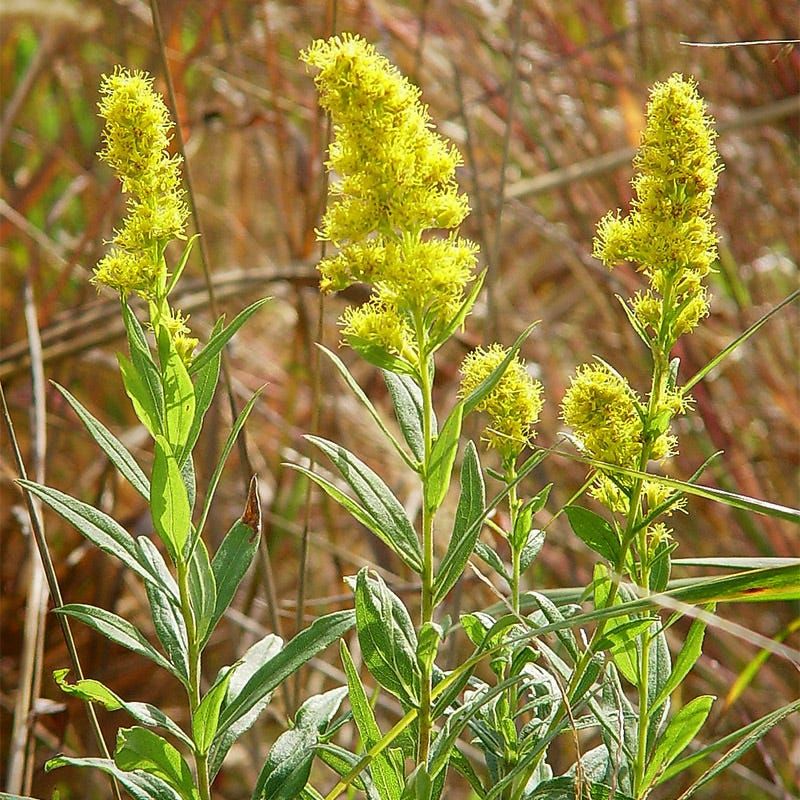
Goldenrod has a reputation for toughness, and that reputation is well earned once the plant is established. Getting it there, though, takes a little attention in the first season, because a newly planted goldenrod is not yet the drought-tolerant workhorse it will eventually become.
Starting from seed is one option, and fall is often the best window for direct sowing. USDA’s plant guide for showy goldenrod recommends sowing into a prepared, weed-free seedbed in late fall or early spring.
Under greenhouse conditions, germination can take anywhere from 14 to 40 days, and growers using warm mats set to 80 to 86 degrees Fahrenheit can speed that process. Those details are useful context for anyone propagating in quantity, but a homeowner direct-sowing into a cleared bed does not need a heat mat to get results.
If spring planting is what your schedule allows, UNH Extension’s guide to establishing wildflower meadows from seed recommends storing seed in a refrigerator at about 35 to 40 degrees Fahrenheit until the ground is ready. That cold, slightly damp storage mimics the natural winter conditioning that many native wildflower seeds need before they will germinate reliably.
Skip the compost and fertilizer at planting time. Many wildflowers, goldenrod included, actually perform better in lower-nutrient soil, and a rich bed can push leafy growth at the expense of flowers.
A clean, weed-free seedbed gives young plants the light and root space they need without extra inputs.
Plugs and divisions establish faster than seed and give you a clearer sense of what you are planting. Iowa State Extension notes that established goldenrods are generally drought tolerant, long lived, and relatively free of serious pest or disease problems.
Water new plants consistently until you see strong new growth, then back off gradually as the root system takes hold.
Spreading Depends On The Plant You Pick
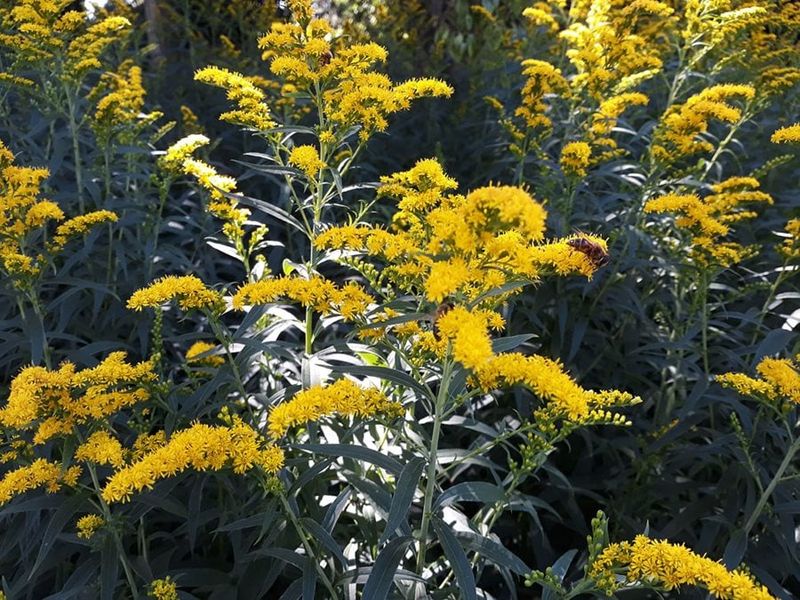
One of the most common complaints about goldenrod is that it took over. That complaint is usually fair, but it is almost always about one specific type of goldenrod rather than the whole genus.
Knowing which species or cultivar you are working with changes your management plan entirely.
USDA’s plant guide for Canada goldenrod describes it as a long-lived perennial that forms large, dense patches by spreading through rhizomes. Once those underground stems get moving in moist or disturbed soil, mowing the tops does not stop them.
The rhizomes keep pushing outward below the blade, and new shoots come up wherever conditions allow.
USDA’s showy goldenrod guide notes that even this more garden-friendly species may become weedy, particularly in moist soil, but it is not reported as invasive within the United States. The same guide directs gardeners to check state natural-resource and agriculture agencies for the current local status of any goldenrod species before planting.
That is practical advice, not excessive caution, because local conditions and regulations vary in ways no single article can predict.
For practical management, a few habits make a real difference. Choose a clump-forming cultivar if a tidy bed is the goal.
Allow the full mature width when spacing plants, roughly 3 feet for showy goldenrod and potentially more for larger selections. Divide clumps every 2 to 5 years when they start to crowd neighboring plants, and remove spent flower heads before mature seeds disperse if you want to limit self-seeding.
Iowa State Extension’s goldenrod guidance supports dividing as a routine way to keep plants vigorous and contained. Spreading is manageable when you pick the right plant for the space from the start.
Build More Than A Goldenrod Monoculture
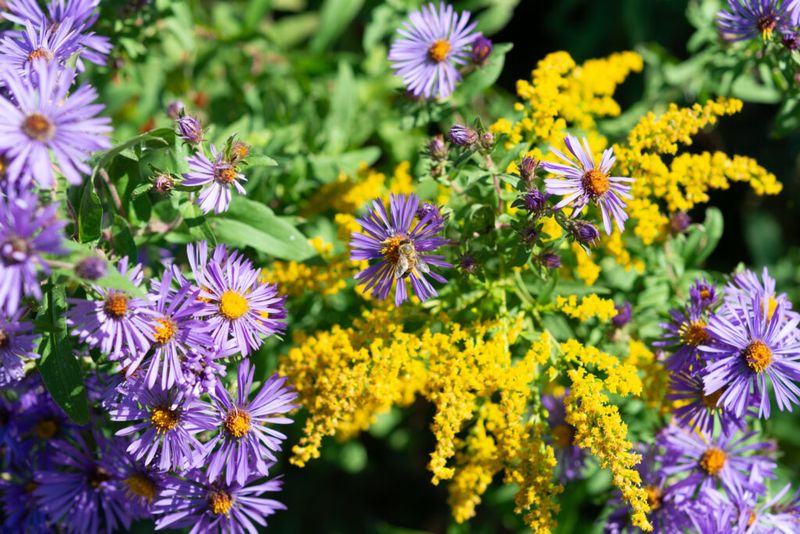
A yard full of nothing but goldenrod is not actually a pollinator garden. It is a goldenrod patch.
The difference matters, because bees, butterflies, and beneficial insects need more than one plant can offer, even a genuinely useful one.
Penn State Extension’s native plant spotlight specifically recommends pairing goldenrod with native asters that bloom at the same time in purple, blue, or white shades. New England aster, Symphyotrichum novae-angliae, and heath aster, Symphyotrichum ericoides, are two examples that overlap with goldenrod’s bloom window and make the planting look deliberate rather than like something that arrived on its own.
The color contrast also helps, because yellow and purple next to each other read as an intentional garden bed rather than an accidental one.
Seasonal diversity matters beyond fall. Early-blooming natives like wild columbine and native violets give spring bees a reason to stay nearby, while summer bloomers such as native coneflowers and bee balm bridge the gap between spring and the goldenrod season.
USDA’s habitat assessment guide for yards and gardens lists Solidago alongside native shrubs, grasses, trees, and other wildflowers as part of a layered planting, not as a stand-alone solution.
Pollinators also need places to nest, overwinter, and complete their life cycles. Bare patches of ground, hollow stems left standing through winter, and brush piles all serve insects that goldenrod flowers alone cannot help.
Keep or plant a well-matched goldenrod when its species, spread, and site fit what your yard can hold, and treat it as one dependable late-season layer in a wider habitat picture. A yard that works for wildlife in October starts with decisions you make in May, and goldenrod is one of the easier ones to get right.