
Cucumber Leaves Turning Yellow In Summer Heat Usually Means You’re Feeding The Wrong Problem
Follow us on Google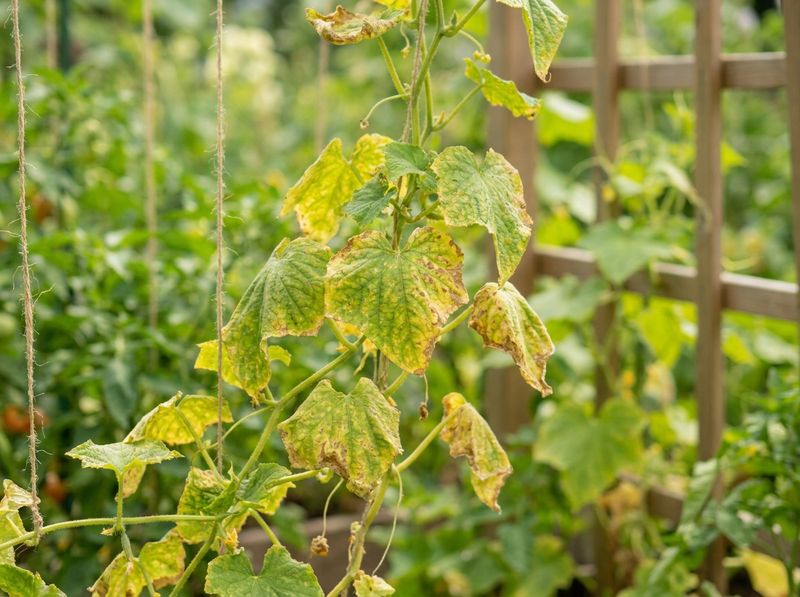
Midsummer is when cucumber vines look their worst, and the instinct to grab a fertilizer bag is strong. But yellow leaves on Cucumis sativus can come from a dozen different problems, and feeding the wrong one can make things worse in a hurry.
Before you add anything to the soil or spray anything on the leaves, your plant deserves a proper look. A five-minute inspection can save you a week of backtracking.
Yellow Leaves Need Diagnosis, Not A Reflexive Feeding
Spotting yellow on your cucumber leaves is genuinely alarming, but the color alone cannot tell you what went wrong. Colorado State University Extension diagnostic guidance makes clear that yellowing is too general for a quick diagnosis, because weather, insects, disease, root problems, nutrient disorders, herbicide injury, and normal leaf aging can all produce similar symptoms.
Reaching for fertilizer before checking those possibilities is a little like taking cough medicine when you have a broken arm.
Start with the whole plant, not just the yellow leaf. Compare the older lower leaves to the newer growth near the vine tips.
Check whether flowers are forming, whether fruit looks normal, and whether symptoms are spreading or holding steady. A few yellowing leaves at the base of a vine that is otherwise producing well tells a different story than new leaves that are pale and curling.
Work through a short checklist before deciding on any treatment. Pull back the mulch and feel the soil near the roots.
Flip a few leaves over and look at the undersides. Check stems for discoloration, soft spots, or insect activity.
Think back over the past two weeks: did you apply fertilizer, a pesticide, or a weed killer nearby? Recent applications can cause leaf symptoms that look exactly like nutrient problems or disease.
According to CSU Extension guidance on cucumbers, consistent moisture and good growing conditions are the foundation. When something disrupts that foundation, the plant signals distress through its leaves.
Your job right now is to figure out which disruption you are actually dealing with, so any treatment you choose has a real chance of helping.
Heat Can Stress Cucumbers Without Naming The Cause
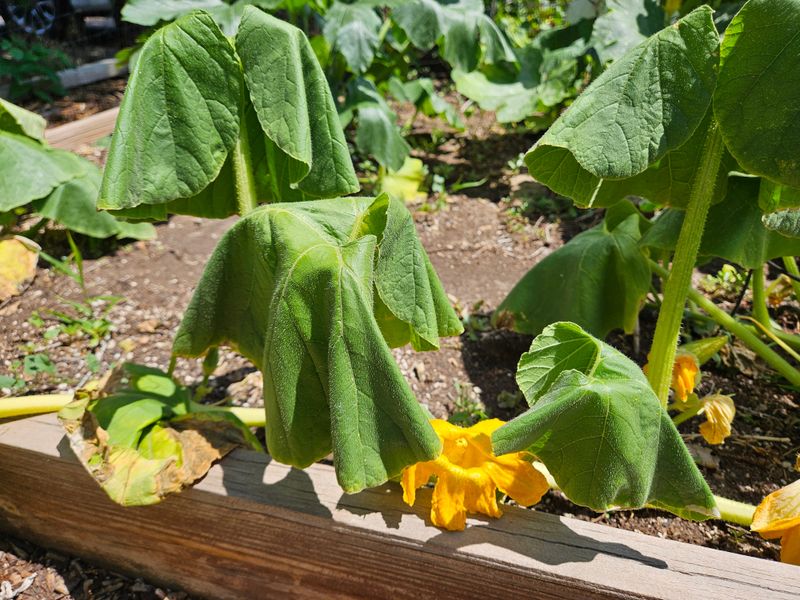
On a July afternoon when the thermometer pushes past 95 degrees, your cucumber vine may droop like it gave up entirely. That is often temporary.
Many gardeners notice that plants perk back up by the following morning once air temperatures fall, and that kind of afternoon wilt is a normal heat response rather than a sign that something is critically wrong.
Wilting that is still present when you check the plant early in the morning is a different situation. Persistent morning wilt can point to inadequate water reaching the roots, root damage, waterlogged soil, or disease.
Heat can reveal or intensify those underlying problems without being the original cause, so a hot week does not automatically explain every symptom you see.
Fruit set is another place where heat shows up quietly. Penn State Extension notes that temperatures above approximately 90 degrees Fahrenheit can contribute to reproductive problems in cucumbers, including flower drop and poor fruit development.
That threshold is approximate and varies by variety and growing system, but it helps explain why a vine can look partly green while producing almost nothing during a heat stretch.
On the fertilizer question, Oregon State University Extension advises waiting to fertilize during extreme heat because pushing new growth when a plant is already stressed can add to that stress. That caution applies to the timing of new applications, not to the idea that heat itself makes appropriate fertilizer dangerous under normal conditions.
Separate those two things and you will avoid both under-treating and over-treating a plant that mostly needs some relief from the weather.
Check Soil Moisture And Drainage Before Adding Water
The fastest useful thing you can do for a struggling cucumber is to dig two fingers into the soil about 1 to 2 inches deep, right next to the plant. What you feel there tells you more than the leaf color does.
Dry, crumbly soil that pulls away from your fingers means the plant needs water. Soil that feels cool, dense, and almost spongy, or that holds standing water in the hole, is a different problem entirely.
CSU Extension guidance on cucumbers places water needs at roughly 1 to 1.5 inches per week once plants cover the soil, with adjustments for your soil type, local rainfall, wind, plant size, and how hot the weather has been. Container plants dry out faster than in-ground beds.
Sandy soil drains quickly, while clay holds water longer but can also become waterlogged.
When the soil is dry, water deeply rather than sprinkling lightly every day. Oregon State Extension recommends watering deeply enough to reach at least 6 inches into the root zone during heat, and other extension guidance suggests reaching 8 to 10 inches for established plants.
Surface sprinkling every morning encourages shallow roots that suffer more during dry spells.
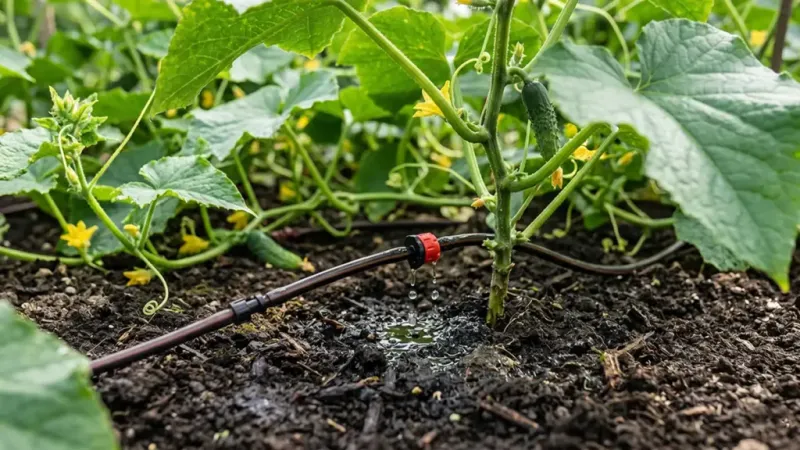
Timing and method matter too. Oregon State’s educator’s guide to vegetable gardening recommends watering at the soil line early in the morning, using drip irrigation or soaker hoses when possible.
Overhead watering that leaves foliage wet through the day can increase disease pressure, especially in humid regions.
Mulch is a real ally here. OSU Extension suggests 3 to 5 inches of organic mulch to slow evaporation and moderate soil temperature swings.
Keep it a few inches away from the stem to avoid trapping moisture against the crown.
If the soil stays wet even without recent rain, drainage is the issue. CSU Extension explains that waterlogged soil restricts oxygen around roots, slowing root activity and making it harder for the plant to take up water normally.
A plant sitting in soggy soil can look drought-stressed even when water is everywhere, so adding more water to that situation makes things worse, not better.
Use Leaf Location And Pattern As Clues
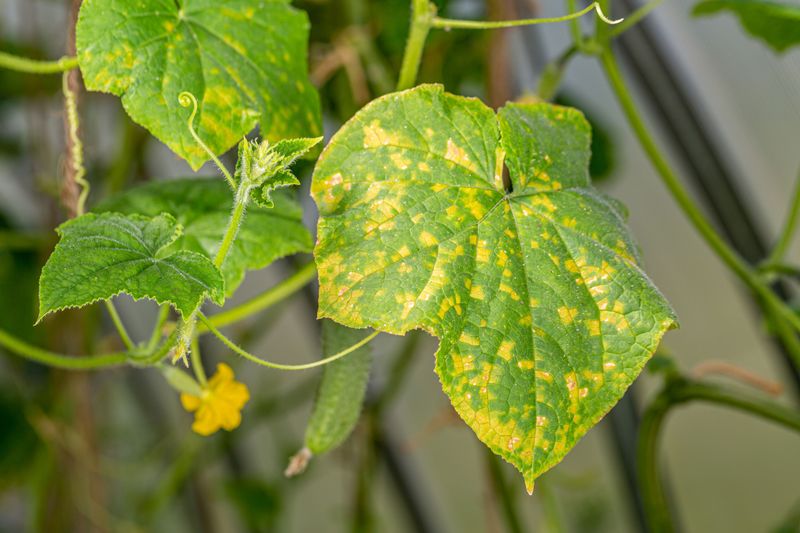
Where the yellowing starts on the plant gives you your first real clue. Older leaves near the base of the vine that turn a fairly even yellow, sometimes alongside weak or slow new growth, can point toward nitrogen shortage.
CSU Extension plant nutrition guidance notes that nitrogen is mobile in the plant, so deficiency symptoms tend to appear on older tissue first as the plant moves available nitrogen toward newer growth.
Yellow or brown patches along the edges of older leaves, rather than the whole leaf surface, can fit a potassium shortage. Young leaves that yellow between the veins while the veins themselves stay green suggest possible iron or manganese uptake problems.
Those are clues worth noting, but they are not proof. High soil pH, root stress, excess fertilizer, and heat injury can all produce similar patterns on young leaves, so the symptom narrows the list rather than closing it.
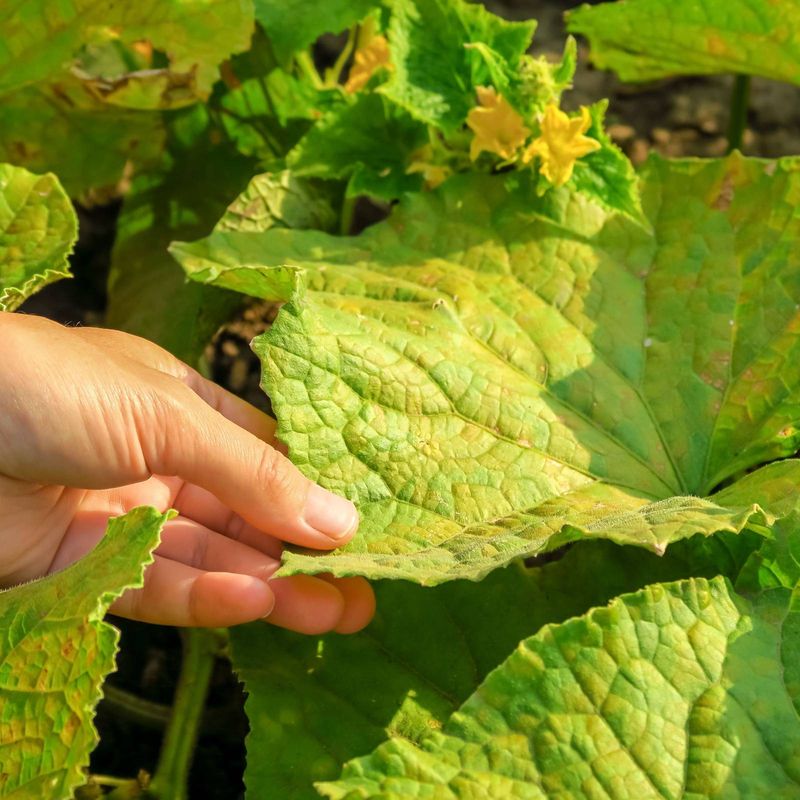
Pattern and texture matter just as much as location. University of Minnesota Extension’s cucumber leaf discoloration diagnosis tool distinguishes among fine stippling, angular spots bounded by leaf veins, powdery white surface coatings, and mosaic or mottled color changes.
Fine, even stippling spread across the leaf surface suggests insect feeding, most likely mites. Angular yellow spots that seem to follow the veins can point toward downy mildew or angular leaf spot.
A white powdery coating on the upper leaf surface is a recognizable sign of powdery mildew.
Mosaic patterns, leaf distortion, stunting, and unusual markings on fruit raise concern for viral infection. Penn State Extension cautions that cucumber mosaic virus symptoms overlap significantly with heat injury, insect feeding, herbicide damage, and nutrient disorders, so symptoms alone cannot confirm a virus.
Use the pattern to narrow your possibilities, then look at the rest of the plant before drawing any conclusions.
Scout For Mites Before Reaching For Pesticide
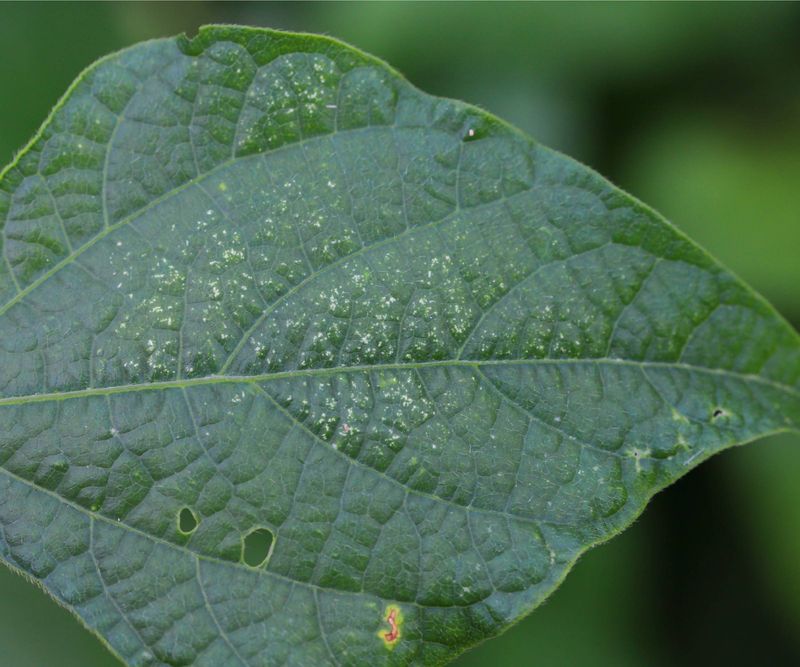
Hot, dry stretches in July and August create near-perfect conditions for spider mites, and their damage can look a lot like heat stress or nutrient trouble at first glance. Illinois Extension describes twospotted spider mite feeding as fine yellow or white stippling that spreads across the leaf surface, sometimes followed by bronzing, browning, leaf drop, and fine webbing on the undersides of leaves.
By the time the webbing is obvious, populations are often already large.
Check the undersides of leaves early and often during heat waves. The white-paper shake test is a practical first step: hold a sheet of white paper under a suspicious leaf, give the leaf a firm tap, and look closely at what falls.
Spider mites are about 1/50 inch long, so a hand lens or reading glasses help. Moving specks are a sign of active mites, but do not assume every mite is harmful because predatory mites, which actually feed on pest mites, can also be present.
Cucumber beetles and aphids are other documented possibilities, though the specific mix of pests varies by region and season. UGA Cooperative Extension’s cucumber growing guide covers multiple pest types and notes that cucumber beetles can transmit bacterial wilt, but wilt can also result from root injury, drought, waterlogging, or disease.
Do not assign a single cause without looking at the full picture.
UGA Extension emphasizes positive identification before any treatment. Cucumbers depend on bee pollination, so avoid applying insecticides while bees are working the flowers.
Oregon State’s heat wave garden guide also notes that some products, including insecticidal soap and neem, can injure plants when applied during high temperatures.
Always check the product label for the cucumber crop listing, target pest, mixing rate, harvest interval, temperature restrictions, and pollinator warnings before using anything.
Fertilize Only When The Evidence Supports It
Nitrogen deficiency does show up in cucumber gardens, and when it does, the picture usually includes more than just yellow leaves. Older lower leaves turning a fairly uniform pale yellow alongside weak stems, slow growth, or small fruit can point in that direction.
But those same symptoms also appear with root damage, chronic moisture stress, heat injury, and pest feeding, so the leaf color alone is not enough to order fertilizer.
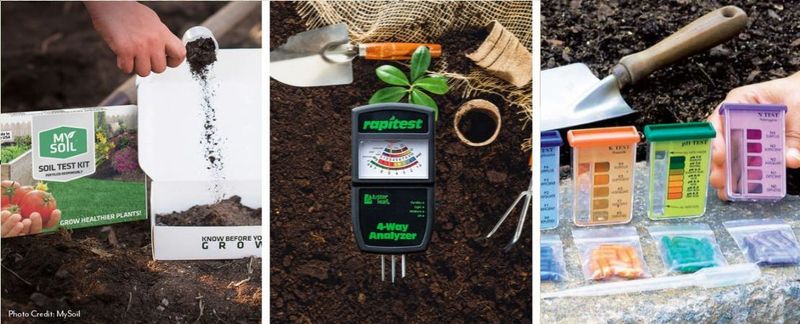
University of Minnesota Extension’s fertilizing guide recommends basing fertilizer decisions on crop needs and, when possible, soil or tissue testing rather than visual symptoms alone. A soil test costs less than most fertilizer bags and tells you what is actually available in your root zone.
Testing is the clearest path to a confident decision.
Excess fertilizer carries its own risks. Too much nitrogen can push leafy growth at the expense of flowers and fruit, delay your harvest, and under some conditions burn roots or scorch leaf edges.
CSU Extension plant nutrition guidance notes that overapplication can damage plants regardless of the season.
Foliar fertilizer is sometimes suggested as a quick fix, but Penn State Extension explains that roots are the primary route of nutrient uptake and that foliar feeding works best when a deficiency has been confirmed or when a specific crop situation justifies it. Concentrated sprays applied to stressed or heat-exposed leaves can injure tissue rather than help it.
The practical rule is straightforward: hold off on automatic or additional fertilizer applications while you work through moisture, pest, disease, and recent-application checks. Oregon State Extension advises delaying fertilizer during extreme heat to avoid pushing new growth when the plant is already under strain.
If you confirm a deficiency through testing or clear extension guidance, address it.
But yellow leaves by themselves are a reason to investigate, not a prescription to feed.
Follow A Measured Recovery Plan
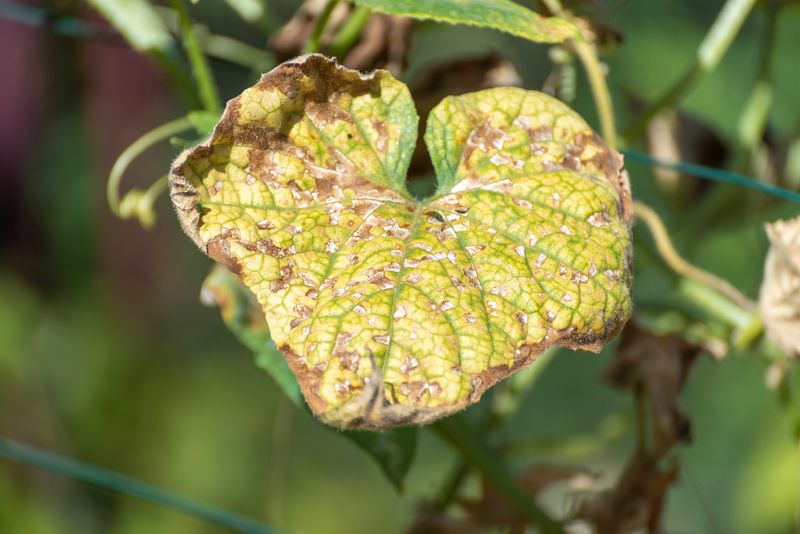
Start with a written or mental record of what you see: which leaves are yellow, where they sit on the vine, what the pattern looks like, and whether the problem has spread since you first noticed it. That record becomes your baseline, and it keeps you from second-guessing yourself a week later.
Next, correct the most likely physical problem first. Dig near the roots, confirm whether the soil is dry or waterlogged, and adjust your watering accordingly.
Direct water to the soil line rather than the foliage, and water in the early morning so the soil has time to absorb moisture before afternoon heat arrives. If drainage is the issue, adding more water will not help and may make root damage worse.
Oregon State’s heat wave garden guide notes that shade cloth can reduce temperatures by up to 10 degrees Fahrenheit when installed with good airflow around the plant. That kind of temporary cover can help young or exposed plants during a brutal heat stretch, but excessive shade reduces photosynthesis and can slow fruit production.
Think of it as a short-term measure, not a permanent fix.
Give the plant two to three days after correcting moisture before deciding on your next step. Watch new growth near the vine tips, check whether morning wilting improves, and note whether flowers are forming or dropping.
Oregon State Extension points out that some heat-related losses, including flower and fruit drop, can improve once temperatures fall, so not every symptom requires an intervention.
A few yellow leaves on an otherwise productive vine are not a crisis. But symptoms that spread quickly, move into new growth, or come with wilting that does not clear by morning deserve a closer look from someone with local knowledge.
Your local Cooperative Extension office can help diagnose persistent or uncertain problems, often for free or a small fee, using your actual soil and plant samples.
The best gardeners are not the ones who never have yellow leaves, they are the ones who know how to read them.