
How To Finally Get Mountain Laurel To Thrive In Your Pennsylvania Yard
Follow us on Google
You walk out on a June morning in central Pennsylvania and there it is, a mountain laurel covered in pink and white cups, humming with bees.
Then you look at your own shrub, the one you planted three springs ago, and it is scorched, thin, and refusing to bloom.
It is not you, and it is not a lost cause.
Mountain laurel is picky about a few specific things, and once you fix them, this Pennsylvania native settles in and rewards you for decades.
Pennsylvania Claims This Plant As Its Own
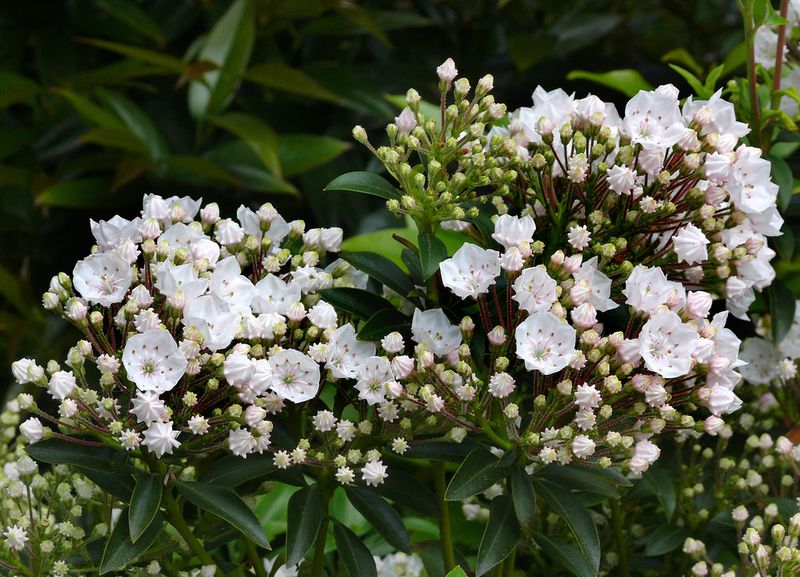
Back in 1933, Pennsylvania made mountain laurel (Kalmia latifolia) its official state flower, and the plant has been growing wild here far longer than that.
You find it tucked along ridges from the Laurel Highlands to the northern tier, thriving in the rocky, acidic ground most other shrubs sulk in.
So why does the state flower struggle in so many actual Pennsylvania yards.
Here is the quiet twist.
The wild ones grow in conditions your manicured yard rarely offers on its own.
Filtered shade under oaks, sharp drainage on a slope, and soil that ran acidic long before you owned the place.
Your job is not to baby this shrub.
It is to hand it back the conditions it already loves.
Once you do, mountain laurel behaves like the tough mountain native it genuinely is, shrugging off cold snaps down to minus 20 degrees in the higher elevations around the Alleghenies.
Think of it as a hometown plant that got moved to the suburbs.
Give it a patch that feels like the ridgeline it came from, and it stops acting homesick.
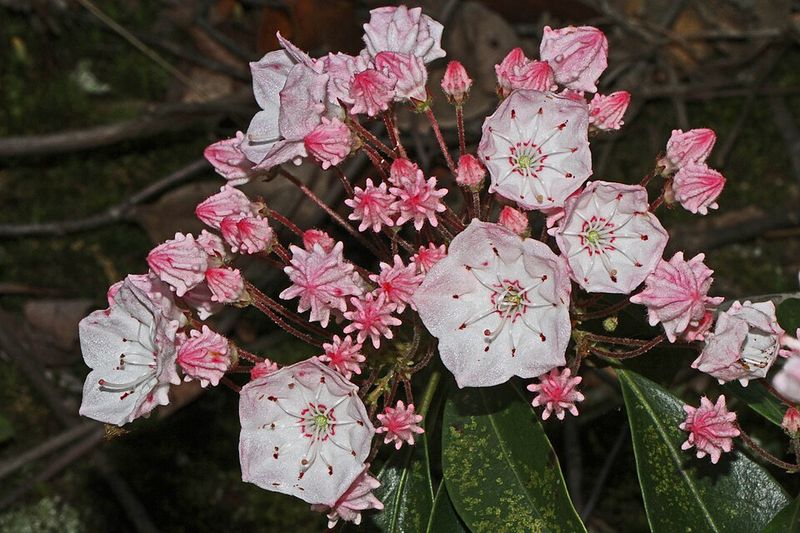
The reward comes in late May and June, when those clustered blooms open like tiny porcelain teacups across the whole shrub.
Sour Soil Is The Secret Nobody Mentions
Most struggling mountain laurel comes down to one number you probably never checked.
The pH of your soil.
This shrub wants sour ground, somewhere between 4.5 and 5.5 on the pH scale, which is more acidic than most lawns and vegetable beds.
Here is where it gets tricky.
Much of central Pennsylvania and the Susquehanna Valley sits on limestone, which pushes soil toward alkaline, the exact opposite of what mountain laurel craves.
Plant it in sweet limestone soil and the leaves yellow while the veins stay green, a sign it cannot pull iron from ground that is too basic.
Grab a soil test kit from Penn State Extension for around 10 to 12 dollars and check before you plant anything.
It takes a couple weeks to get results, and it saves you years of frustration.
If your soil runs too sweet, work in elemental sulfur or plenty of pine bark and peat before planting.
Retest each fall, because acidifying soil is a slow, ongoing conversation, not a one-time fix.
Get the pH right and half your battle is already won.
The shrub will actually start using the nutrients that were sitting there all along, locked away.
Drainage Decides Whether It Lives Or Rots
Picture the wild mountain laurel you have seen on a hike.
It was almost never sitting in a low, soggy spot.
It clung to a slope or a rocky rise where rain ran off fast and the roots stayed damp but never drowned.
Now picture the heavy clay in parts of southeastern Pennsylvania and the Delaware Valley.
Water pools there for hours after one of those sudden summer thunderstorms.
Mountain laurel roots sitting in that wet clay develop root rot, a fungal problem that quietly kills the plant from below while the top still looks fine for a while.
The fix is elevation, not drainage pipes.
Plant on a mound or a gentle slope, setting the root ball about 2 inches higher than the surrounding grade.
Mix in plenty of pine bark fines to open up dense clay.
Never plant it in the low corner where your downspout empties.
That is a swamp waiting to happen, and this shrub does not swim.
Do this right and the roots get exactly what they want.
Moisture that arrives, does its job, and then moves on, just like a mountain rainstorm.
Too Much Sun Turns Leaves To Toast
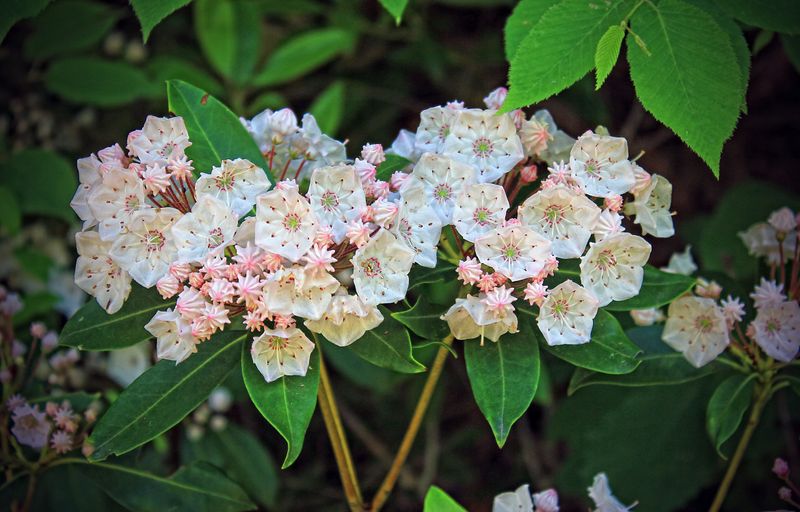
You would think the state flower could handle a Pennsylvania summer.
And it can, but only if you place it where it evolved to stand.
Under the high, filtered shade of taller trees, at the woodland edge rather than out in the open lawn.
Full afternoon sun in July, when temperatures climb into the upper 80s and the humidity hangs thick, scorches the leaf edges brown and stresses the whole plant.
The blooms fade fast and the shrub looks tired by August.
Aim for morning sun with afternoon shade, or the dappled light you get beneath oaks and pines.
Roughly 4 hours of gentle light keeps it happy.
Deep shade is the other extreme, where the shrub survives but barely flowers, stretching leggy toward whatever light it can find.
In the cooler, higher elevations of the Poconos and the Allegheny Plateau, mountain laurel tolerates a bit more sun because the air stays cooler.
Down in the warmer pockets near Philadelphia, lean harder toward shade.
Match the light to your region and the leaves stay a deep, glossy green all season.
That alone makes the shrub worth having, even between blooms.
Fall Planting Beats Spring Every Time
Most folks buy mountain laurel in spring because that is when it is blooming and pretty at the garden center.
Understandable.
But spring planting throws the shrub straight into the hardest season of its life, right before summer heat and drought.
Roots need time to settle before they carry a plant through a hot, dry stretch.
Plant in early fall, roughly late September through mid October across most of Pennsylvania, and the roots grow into cool, moist soil for weeks while the top rests.
By the time next summer arrives, the plant is anchored and ready.
Spring-planted laurel spends its first summer scrambling just to stay alive.
Space multiple shrubs about 4 to 5 feet apart, since a mature mountain laurel spreads that wide over time.
Crowd them and airflow drops, which invites leaf spot in our humid summers.
Water deeply right after planting, then keep the soil damp until the ground freezes.
In the northern tier, where the first hard frost can hit by early October, plant on the earlier end of that window.
Give it that head start and the shrub greets its first summer already tough.
You will notice the difference by the second June.
Mulch Is The Blanket Its Roots Crave
Mountain laurel keeps its feeding roots up near the surface, which means they dry out fast and cook in a heat wave.
A wild laurel gets a free layer of fallen leaves and needles doing this work.
Your tidy yard does not, unless you add it.
Lay down 2 to 3 inches of an acidic mulch such as pine bark, pine needles, or shredded oak leaves around the base.
Keep it pulled back a couple inches from the stem so the trunk does not stay wet and rot.
The mulch does three jobs at once.
It holds moisture through summer dry spells, it keeps the soil cool for those shallow roots, and as it breaks down it feeds a little acid back into the ground.
Skip the dyed hardwood mulch.
It can nudge soil toward alkaline over time, working against everything you fixed with your pH efforts.
Refresh the layer each spring and again lightly in fall.
In the Laurel Highlands and other snowy areas, that fall layer also buffers the roots against the repeated freeze and thaw cycles that heave shallow-rooted shrubs out of the ground.
It is a small chore with an outsized payoff.
Think of it as tucking the roots in for every season.
Deer Will Nibble But Rarely Devour
Deer treat many Pennsylvania yards like an open buffet, and gardeners in the central valleys and northern tier know the heartbreak of a stripped shrub by morning.
Good news on mountain laurel.
It ranks as one of the more deer-resistant native shrubs you can plant.
The leaves contain compounds that are mildly toxic and taste bitter, so deer usually walk on by.
Usually.
In a hard winter with deep snow, hungry deer will browse almost anything, including laurel, so resistant does not mean bulletproof.
For a young plant during its first couple winters, a simple cage of chicken wire or a light spray repellent through the coldest months adds cheap insurance.
Reapply repellent every 3 to 4 weeks or after heavy rain.
Once the shrub matures and toughens up, the browsing pressure usually fades on its own.
Mature laurel shrugs off the occasional nibble without missing a bloom season.
Pair it with other deer-shy natives like spicebush (Lindera benzoin) for a woodland edge the herd tends to skip.
You get a layered, natural look without waking up to a chewed-off disaster.
For a state where deer are a genuine antagonist, that built-in defense is a quiet relief.
Water Deep Then Walk Away
Overwatering kills more mountain laurel than drought does, which surprises people who assume more water is always kindness.
The roots want steady moisture, not a swamp, and daily sprinkles keep the surface wet while the deeper roots go thirsty.
Water deeply and less often.
Give an established shrub about 1 inch per week, delivered slowly with a soaker hose so it soaks down 6 to 8 inches into the soil.
Then let the top inch dry before the next round.
Our Pennsylvania summers play a trick here.
You get heavy downpours, then two or three weeks of nothing, especially in a drought year.
During those dry stretches, check the soil with your finger and water when it feels dry an inch down.
Newly planted laurel needs closer watching for its first year.
Keep that root ball consistently damp, never soggy, right up until the ground freezes.
In sandy or rocky glacial soils of the northern tier, water drains faster, so you may water a touch more often.
In heavy southeastern clay, ease off, because that ground holds water long after a storm.
Get the rhythm right and the shrub stops looking stressed between rains.
Deep roots make a calm, drought-steady plant.
A Light Trim Keeps The Blooms Coming
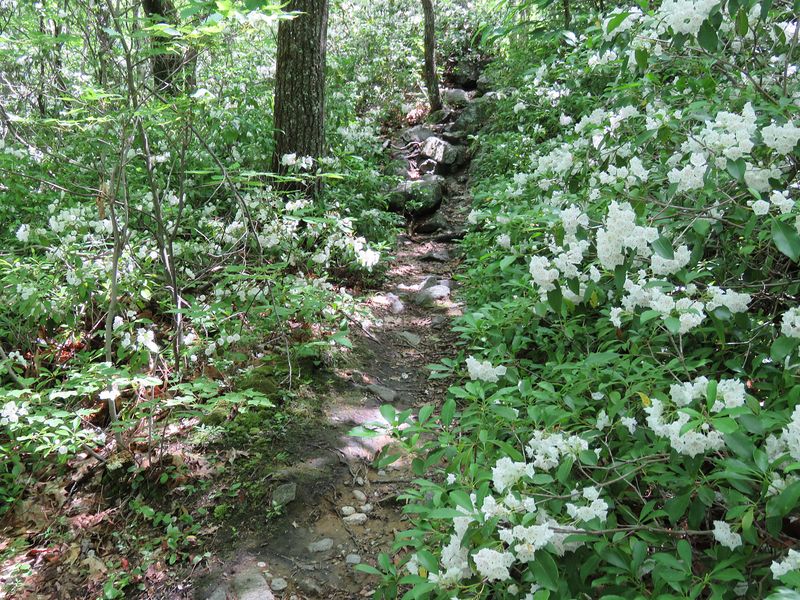
Reach for the shears at the wrong moment and you cut off next year’s flowers without even knowing it.
Mountain laurel sets its buds soon after blooming, on what gardeners call old wood, so timing is everything.
Prune right after the flowers fade in June, and you are safe.
Wait until fall or winter and you snip away the buds that were already forming for the coming spring.
Keep it gentle.
Snap off the spent flower clusters so the plant pours energy into growth instead of seeds, a trick called deadheading.
Remove any dead or crossing branches while you are in there.
Older, leggy laurel that has gone bare at the bottom can take a harder cut.
Reduce it by up to a third in June, and it will slowly refill, though it may skip a bloom season while it recovers.
Wear gloves and wash up after.
Every part of mountain laurel is toxic if eaten, so keep the trimmings away from kids, pets, and livestock.
Handled right, a quick June tidy-up is genuinely all this shrub asks for.
It is a slow, tidy grower that does not fight you the way faster shrubs do.
The Shrub That Pays You Back For Decades
Picture a warm June evening on the porch a few years from now.
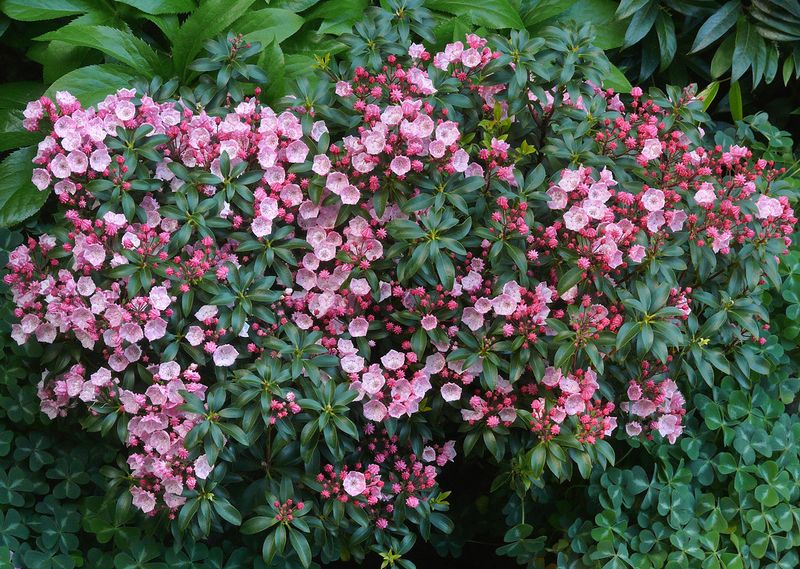
The mountain laurel you fixed is a rounded, glossy mound five feet across, covered in those pink-cupped blooms while native bees work it over.
That is the payoff, and it lasts.
A well-sited mountain laurel can live 75 years or more, growing slowly into a permanent piece of your yard.
It is not a quick-fix plant for instant color.
It is a long-game native that rewards patience with beauty you settle into rather than replant.
Everything it needs traces back to one idea.
Give it a spot that feels like the Pennsylvania ridgeline it came from.
Sour soil, sharp drainage, filtered light, a mulch blanket, and a deep drink during dry spells.
Miss those and it sulks, which is why so many yards hold a sad, scorched specimen.
Nail them and the same plant becomes the thing neighbors stop to ask about.
Penn State Extension keeps solid free guides on growing native shrubs like this one, worth a look before you dig.
You are not fighting this plant.
You are just returning it home.
Do that, and the state flower finally acts like it belongs in your yard, because it always did.