
A Groundcover Hydrangea Changes The Usual Hydrangea Deal In One Very Big Way
Follow us on Google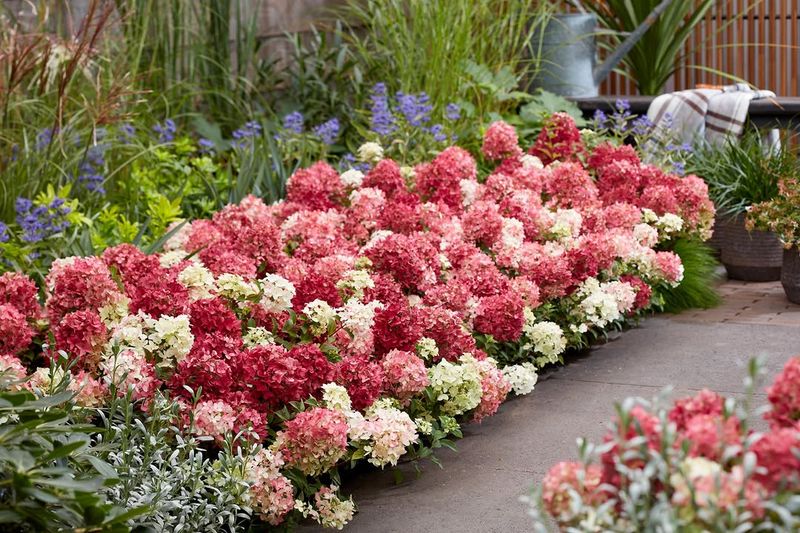
Most hydrangeas want space, and lots of it. They grow tall, spread wide, and quickly outgrow the spot you had in mind for them.
The Groundbreaker series flips that script by staying genuinely low and wide, which opens up planting spots that a conventional hydrangea would simply swallow whole. If you have an awkward front border, a foundation edge that needs softening, or a slope you want to dress up without planting a shrub that takes over, this plant is worth a close look.
Groundbreaker Hydrangea Stays Low and Wide
Picture a hydrangea that hugs the ground instead of reaching for the sky. That is the core idea behind the Groundbreaker series, a group of compact Hydrangea paniculata selections bred specifically for a low, spreading habit.
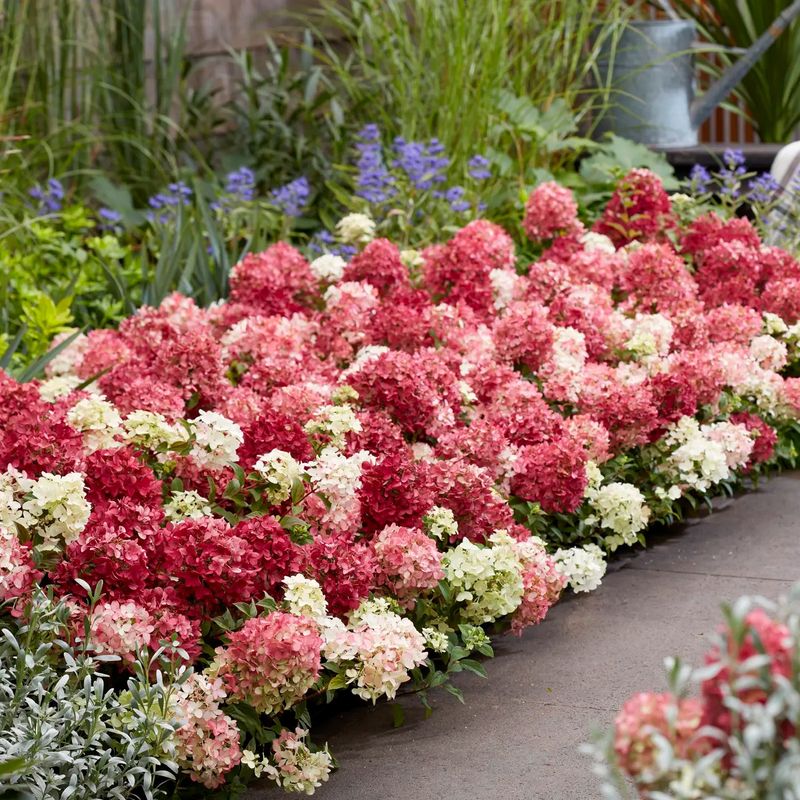
The series currently includes three cultivars: Blush, which reaches about 12 inches tall and 24 inches wide; Ruby, which grows to roughly 16 inches tall and 28 inches wide; and Greeny, which also hits about 16 inches tall but spreads out to around 32 inches wide.
What sets them apart is not flower color. It is the deliberate horizontal branching that keeps the plants dense and low instead of building upward the way most shrubs do.
That form is what allows them to work as low ornamental elements in borders, along foundation edges, in mass plantings, on ornamental slopes, and in containers sized to fit each cultivar.
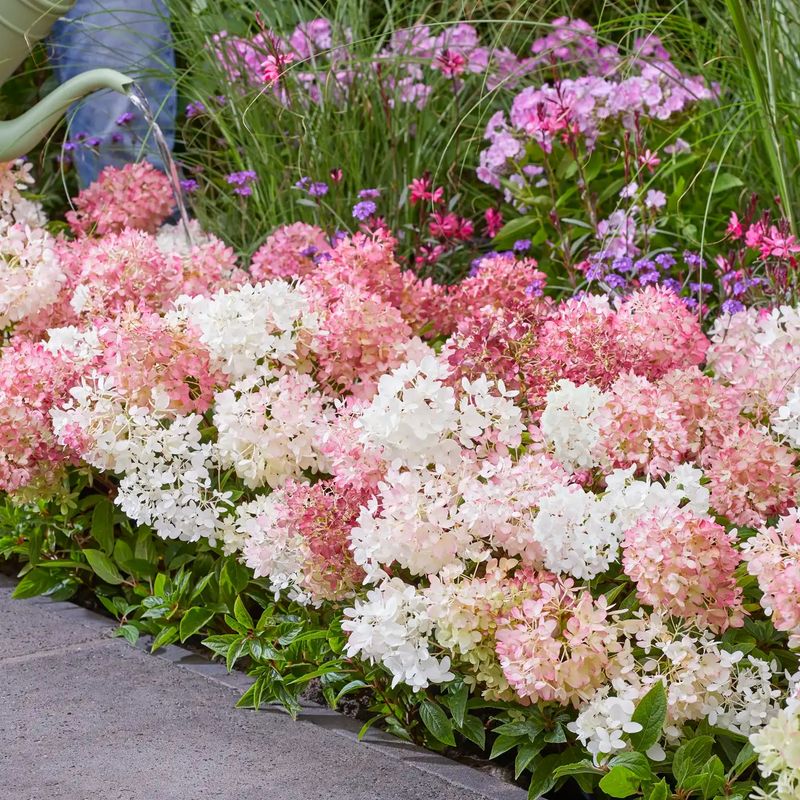
The flowers themselves start white and shift over the season, developing pink, blush, ruby, or green tones depending on which cultivar you have chosen and what the weather is doing. The breeder describes a flowering window of up to 100 days, but actual timing will vary by cultivar, your climate, when you planted, and the season’s weather, so treat that figure as a generous possibility rather than a guarantee.
One thing to plan for: the RHS notes that Groundbreaker is deciduous, meaning it drops its leaves in fall and will not provide any green winter cover. As of the publication date of this article, Plant Addicts has been marketing the series as new for 2026 in USDA Zones 5 to 8, though inventory and availability can shift, so check current listings before you head out to shop.
Its Shape Changes the Hydrangea Job
Most homeowners have run into the same problem. You plant a hydrangea where you want a little color, and three seasons later it has grown into a rounded shrub that crowds the walkway, blocks the window, or simply looks wrong for the space.
Conventional hydrangeas can reach anywhere from 3 to 8 feet tall depending on the cultivar, and that size is the whole issue for front borders, tight foundation beds, and smaller yards.
Groundbreaker addresses that problem directly. At roughly 12 to 16 inches tall with a spread of 24 to 32 inches, Plant Addicts describes the series as a low ornamental layer suited to borders, edges, and containers where a taller shrub would overwhelm the design.
Along a foundation, the plants can soften a hard line without climbing toward windows. At the front of a mixed border, they can carry cone-shaped flower clusters at a height where taller neighbors can still show behind them.
For an ornamental slope, the spreading habit means you can cover more horizontal ground per plant than an upright shrub would allow. That is a design advantage, though it is worth saying plainly: planting Groundbreaker on a slope is an ornamental choice, not an erosion-control strategy.
The plant has not been independently tested for slope stabilization or runoff reduction.
Think of the form as a low visual layer that may reduce visible bare space after the plants establish and fill their footprint. Coverage will not be instant, complete, or perfectly uniform across every site.
And because the branching stays dense but close to the ground, the breeder is clear that this is an ornamental planting, not a walkable surface. Foot traffic will flatten or break the growth.
What the Groundcover Label Does Not Promise
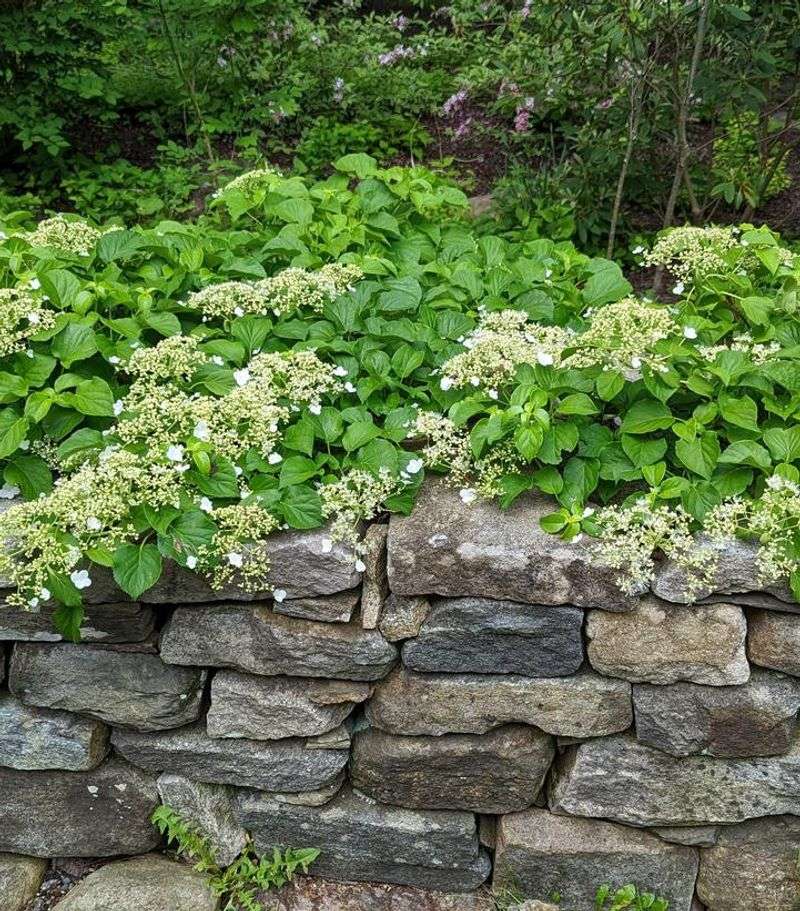
The word groundcover does a lot of heavy lifting in gardening marketing, and it can mean very different things depending on who is using it. The RHS notes that the breeder defines the groundcover category by a plant growing at least twice as wide as it is tall, which is a design and marketing framing, not a recognized universal horticultural standard.
So when you hear groundcover hydrangea, that label describes a landscape function, not a set of guaranteed behaviors.
Groundbreaker is not the same plant as climbing hydrangea, which is Hydrangea anomala subsp. petiolaris. The Morton Arboretum explains that climbing hydrangea is a woody vine capable of spreading across the ground and scaling walls or trees.
Groundbreaker is a compact, shrubby Hydrangea paniculata selection bred to stay low and wide. The two plants are not interchangeable, and the climbing species has its own very different maintenance needs.
Groundbreaker is also different from ordinary dwarf hydrangeas. Proven Winners notes that some compact panicle cultivars can serve as edging or informal groundcover, but many still mature into rounded shrubs several feet tall.
Groundbreaker’s distinction is a unusually low mature height combined with a deliberately horizontal spread, which is a narrower and more specific trait than the broad dwarf label suggests.
A few other limits are worth keeping clear. The plants are deciduous, so bare stems are what you will see from late fall through early spring.
Dense branching after establishment may reduce how much open soil you can see and may slow some annual weed germination, but it will not eliminate existing perennial weeds or make bed preparation optional. University of Minnesota Extension guidance on mulching confirms that even dense plantings benefit from early weed removal and a consistent mulch layer to keep annual weeds manageable during the establishment window.
Choose Light and Moisture for Your Climate
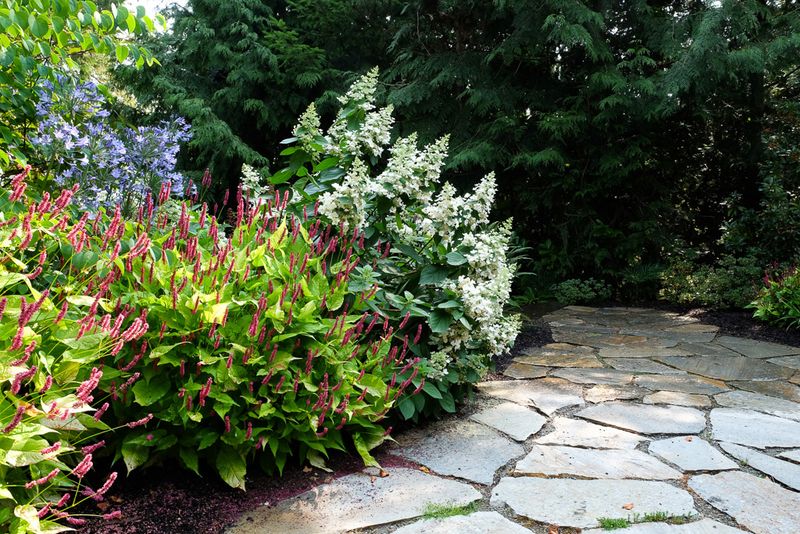
A hardiness zone tells you one thing: roughly how cold your winters get. It does not tell you about summer heat, afternoon sun intensity, rainfall, wind, or soil drainage, all of which matter just as much when you are deciding where to put a hydrangea.
Plant Addicts recommends full sun to part shade for Groundbreaker, with protection from harsh late-day sun in hotter regions, and that range is genuinely site-dependent rather than a single universal prescription.
If you garden in the South, the Southwest, or any exposed location where afternoon temperatures regularly climb past 90 degrees Fahrenheit, morning sun with afternoon shade is a practical starting point. Oregon State University Extension warns that heat stress can push hydrangeas toward spider-mite problems, and that panicle hydrangeas, while more adaptable than bigleaf types, should not automatically be assumed to handle full sun or dry heat without support.
A spot that gets morning light and relief from the hottest part of the day will reduce stress and help the plants hold their moisture longer.
In cooler or cloudier parts of the country, such as the Pacific Northwest or the upper Midwest, more sun is often fine as long as the soil does not dry out quickly. OSU Extension notes that hydrangea placement depends on both light and moisture together, not on zone alone.
Fertile, well-drained soil that stays evenly moist during establishment is the consistent baseline across climates.
Spring planting after your last local frost and before the hottest summer stretch is a safe general window. The breeder lists the series at a cold tolerance of approximately minus 30 degrees Celsius, or about minus 22 degrees Fahrenheit, and the U.S. seller lists USDA Zones 5 to 8.
Both figures describe winter cold tolerance only. For containers, the breeder recommends sizing the pot to the cultivar’s mature dimensions.
Plant Addicts specifies a minimum 16-inch-wide container for Ruby specifically. Blush and Greeny need container choices based on their own mature sizes, not Ruby’s recommendation.
Prune by Species and Cultivar Guidance
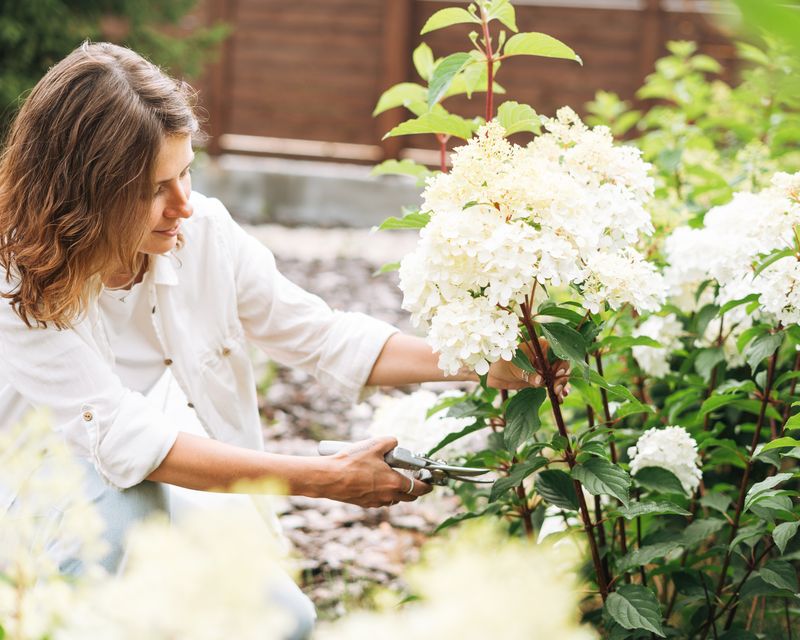
Pruning hydrangeas trips up a lot of gardeners because the rules genuinely differ by species, and cutting at the wrong time can cost you a full season of flowers. Groundbreaker belongs to Hydrangea paniculata, and that species distinction is the key piece of information you need.
University of Minnesota Extension explains that panicle hydrangeas flower on new wood, meaning the growth the plant produces during the current season. That means you can prune them in late winter or early spring, before active growth begins, without sacrificing the coming season’s blooms.
That timing is the opposite of what you would do with many bigleaf hydrangeas, which often flower on stems produced the previous year. Cut those at the wrong time and you remove the buds before they ever open.
With Groundbreaker, a late-winter cleanup is the safer and generally recommended approach.
What that cleanup looks like in practice depends on your cultivar and your goals. Plant Addicts provides specific pruning guidance for Ruby that reflects that cultivar’s growth habit and the seller’s recommendations.
That guidance should not be applied wholesale to Blush or Greeny without checking each plant’s tag or the seller’s current instructions, since the appropriate amount of pruning can vary by cultivar size and local climate.
A reasonable general approach is to remove any dead, damaged, or obviously weak stems in late winter, then consult the cultivar tag or seller guidance before making any larger cuts. Penn State Extension reinforces that pruning decisions should always start with species identification, because the same cut that refreshes one hydrangea can silence another for an entire growing season.
Pruning can help manage the plant’s shape over time, but no single pruning method guarantees that every plant will hold its advertised low form in every climate or soil condition.
Build the Planting Before Expecting Coverage
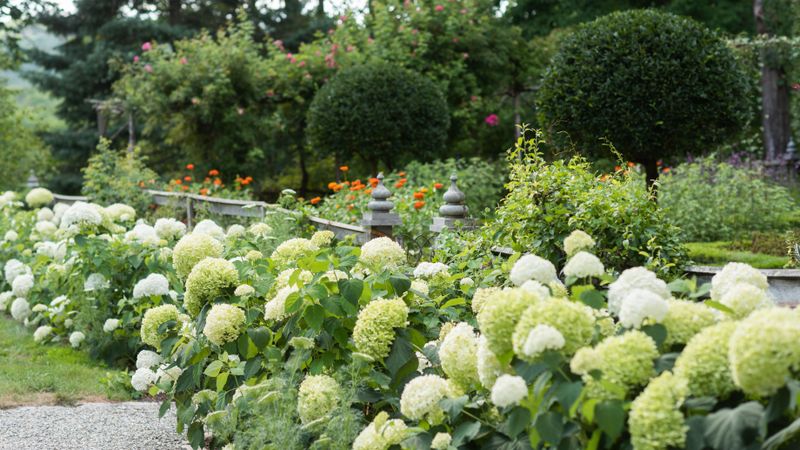
A low ornamental groundcover still needs real preparation before it can do its job. Skipping that step is the most common reason a mass planting looks thin and patchy two years in.
Start by clearing the bed of existing perennial weeds, because dense branching and mulch can slow annual weed seeds but will not smother an established thistle or creeping grass that was already there when you planted.
For spacing, Plant Addicts recommends planting Groundbreaker Ruby about 24 to 30 inches on center for a connected drift. That is a useful starting point for Ruby specifically, but you should compare it against each cultivar’s listed mature width before you dig.
Blush spreads to about 24 inches, Ruby to about 28 inches, and Greeny to about 32 inches, so the right spacing for a joined planting will differ by selection. If you prefer individual mounds with visible space between them, you can plant a bit wider and let each plant develop its own shape.
Watering during the first season is where most low-maintenance expectations run into reality. New plants need regular moisture until their roots spread into the surrounding soil.
Check the upper 2 to 3 inches of soil during dry stretches rather than watering on a fixed calendar schedule, since rainfall and temperature vary widely by region and week. Containers dry out faster than in-ground beds, sometimes needing a moisture check daily during hot weather.
Mulch is one of the most practical tools in this situation. University of Minnesota Extension recommends a 2- to 4-inch layer of organic mulch kept a few inches away from plant stems to stabilize soil moisture and temperature and to suppress many annual weeds.
Mulch will not handle established perennial weeds on its own, and it does not make the planting maintenance-free. Any reduction in visible bare soil is a possible result of establishment over time, not a guaranteed coverage schedule you can count on by a specific date.
Decide Whether Its Limits Fit Your Yard
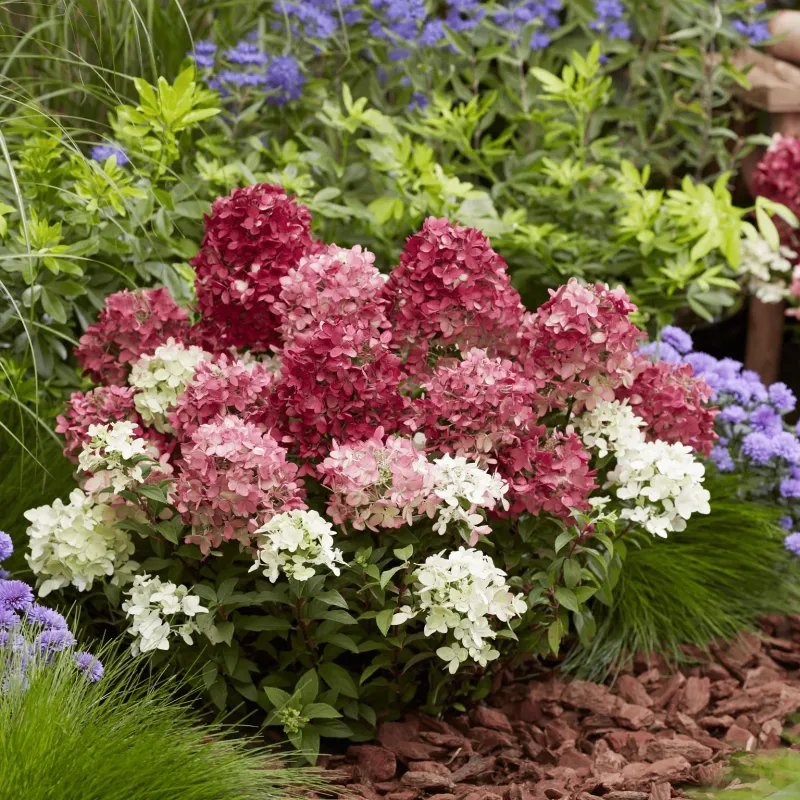
Before you add this plant to your cart, run it through a quick honest checklist. Groundbreaker is a good fit when you need a flowering, low, wide ornamental plant for a front border, foundation edge, mass planting, ornamental slope, or a container large enough for the cultivar’s mature size.
The RHS coverage of the series frames it as a design solution for spaces where conventional shrubs become too large, and that framing is the most accurate description of what it actually does.
Do not choose it as a lawn substitute, an evergreen winter cover, a walkable planting, or a drought-tough solution for a hot exposed site without afternoon shade and consistent watering. OSU Extension is direct that no hydrangea should be assumed drought tolerant, and Groundbreaker’s panicle hydrangea roots do not change that baseline.
If habitat and pollinator support are your primary goals, Groundbreaker is not the strongest choice on its own. The plant was bred in the Netherlands from Hydrangea paniculata, a species native to parts of Asia, so it carries no native status in the United States.
Penn State Extension recommends regionally appropriate native groundcovers when habitat value is the main objective. Groundbreaker can be one layer in a thoughtfully planted bed, but native plants selected for your region will do more for local insects and birds.
For households with dogs, cats, or horses, placement matters. The ASPCA lists hydrangea as toxic to dogs, cats, and horses if eaten, with possible vomiting, depression, and diarrhea noted as signs.
The risk is ingestion, not ordinary contact or walking past the plant. Keep the planting out of reach of pets that are likely to chew plants, and pick up any fallen stems or flower heads.
A low plant is easier for a curious dog to reach than a tall shrub, so factor that into where you site it. Choose the right spot for the right reason, and Groundbreaker will genuinely deliver on its narrow but useful promise.