
Coral Honeysuckle, Native to Parts of Texas, Is a Hummingbird Vine to Try Along a Fence Instead of Vigorous, Suckering Trumpet Vine
Follow us on Google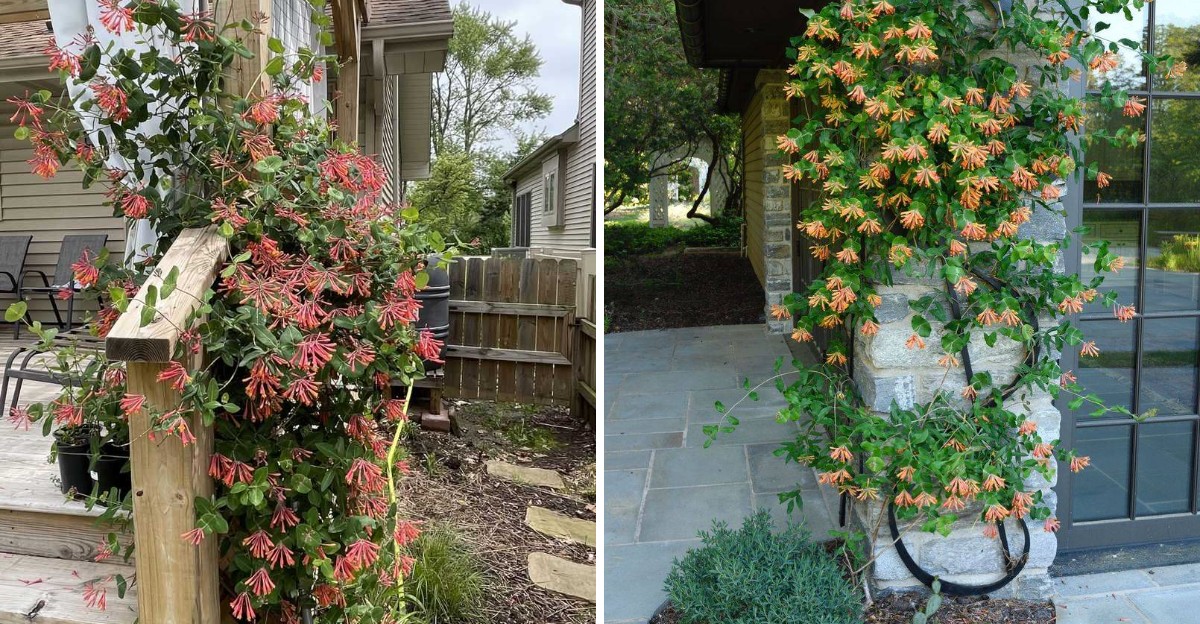
You hang a hummingbird feeder by the back fence in Texas, and the vine you planted for color has started creeping toward the siding. Trumpet vine draws hummingbirds, but it can also grow hard and send up suckers far from where you put it.
Coral honeysuckle is a more mannerly choice with red tubular flowers that hummingbirds like. It still needs a support and some pruning, so here is what to expect before you plant.
Meet Coral Honeysuckle, a Mannerly Alternative
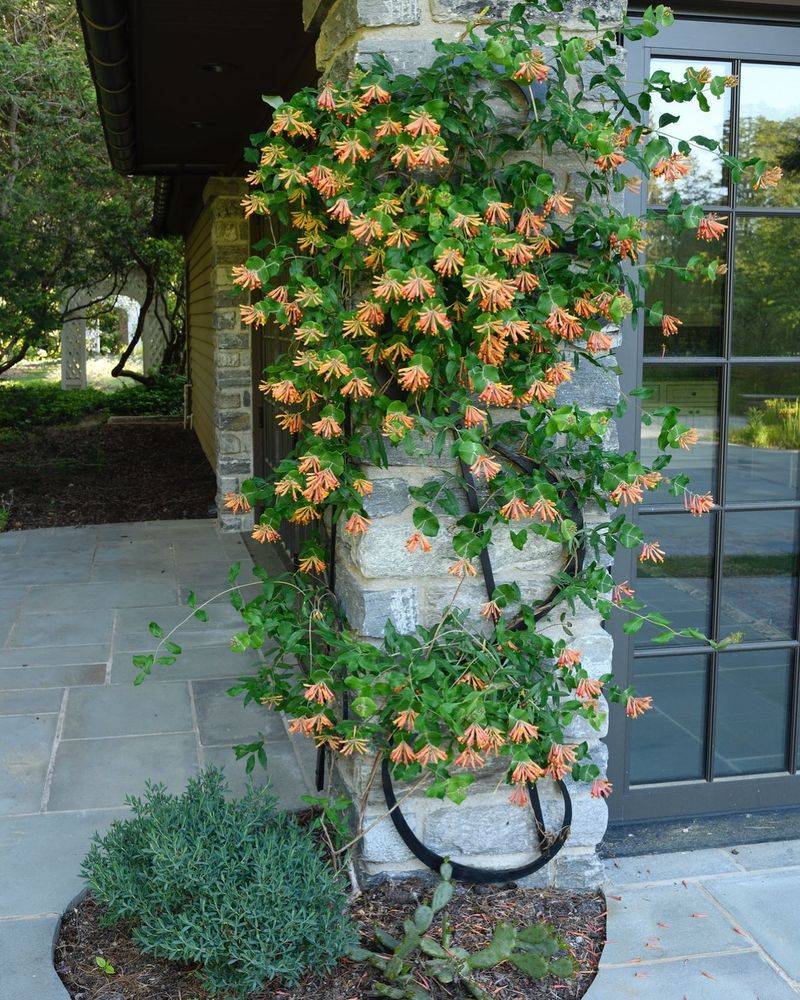
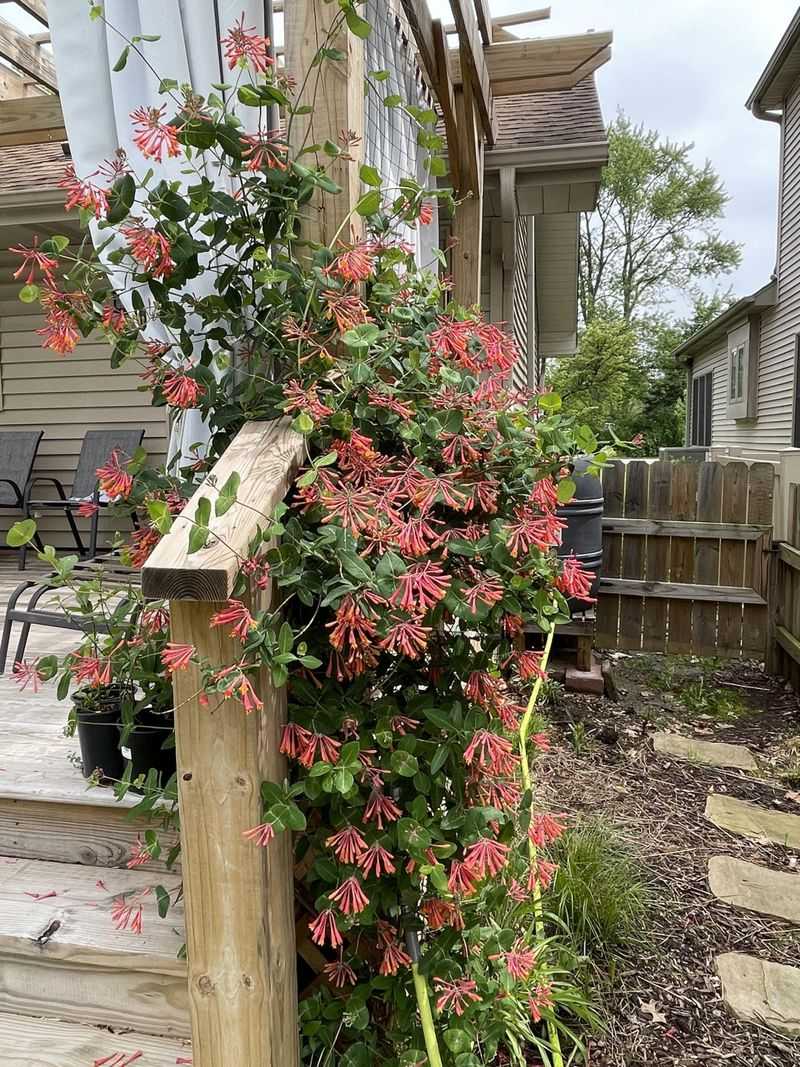
Picture a wooden fence in late spring, with clusters of red tubular flowers climbing along it. That is coral honeysuckle (Lonicera sempervirens), also called trumpet honeysuckle, and hummingbird gardeners have good reasons to like it.
Texas A&M AgriLife lists it among the vines for hummingbird gardens in South and Central Texas, as described in its hummingbird plant guide. The red, tubular blooms suit a hummingbird’s bill.
No plant can promise visitors, but this one gives them a real reason to stop by.
Texas A&M also describes the vine as comparatively mannerly in Dr. Bill Welch’s spring newsletter. Mannerly is a comparison, not a guarantee.
It is still a vine, it can grow many feet, and it will not stay exactly where you plant it without your help.
Nativity needs a local check too. Texas A&M calls it a native Texas vine, but the City of Austin plant guide says it is not native to the Edwards Plateau or Blackland Prairie.
The safest wording is that it is native to parts of Texas.
Think of it as a more manageable neighbor, not a maintenance-free one.
Trumpet Vine Has Documented Growth Risks
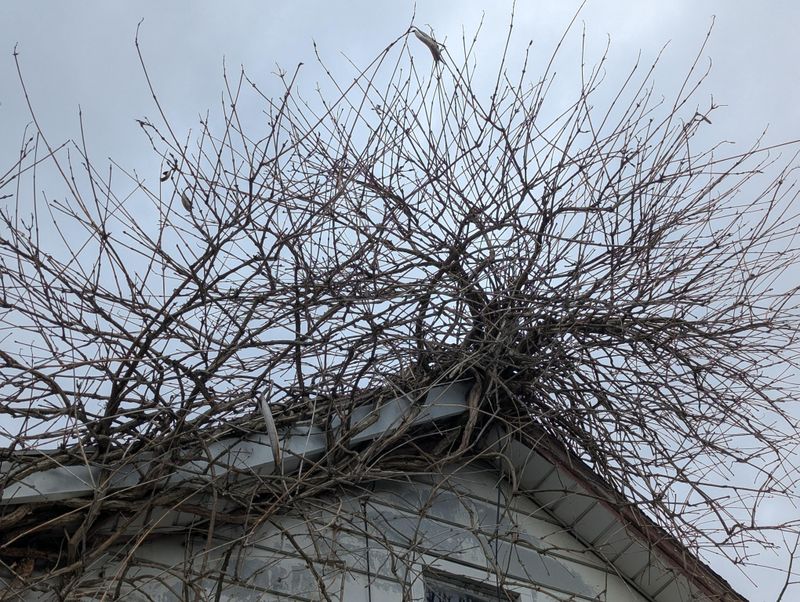
Here is the blunt part. Trumpet vine is a beautiful plant that can be hard to manage.
Extension sources describe vigorous growth and root suckers, which are new shoots that pop up from the roots away from the main plant.
If you have ever mowed over shoots a long way from the parent vine, you know the feeling. Iowa State describes how to prune it in its trumpet vine pruning answer, and the need for that advice says plenty.
Trumpet vine also climbs with aerial rootlets, small clinging roots along the stems. UF/IFAS Extension warns that these can damage siding, shingles, and mortar.
That is a good reason to keep it off the house and away from spots where suckers are hard to handle.
Now the limit. The sources do not show that trumpet vine roots routinely crack house foundations.
The documented concerns are vigorous growth, suckers, and damage to some building surfaces. That is enough to plan around without exaggerating.
Both vines can attract hummingbirds, and Texas A&M lists both in its hummingbird vine list. The blooms are similar, not identical, and visits are never guaranteed.
Choose a Support for a Twining Vine
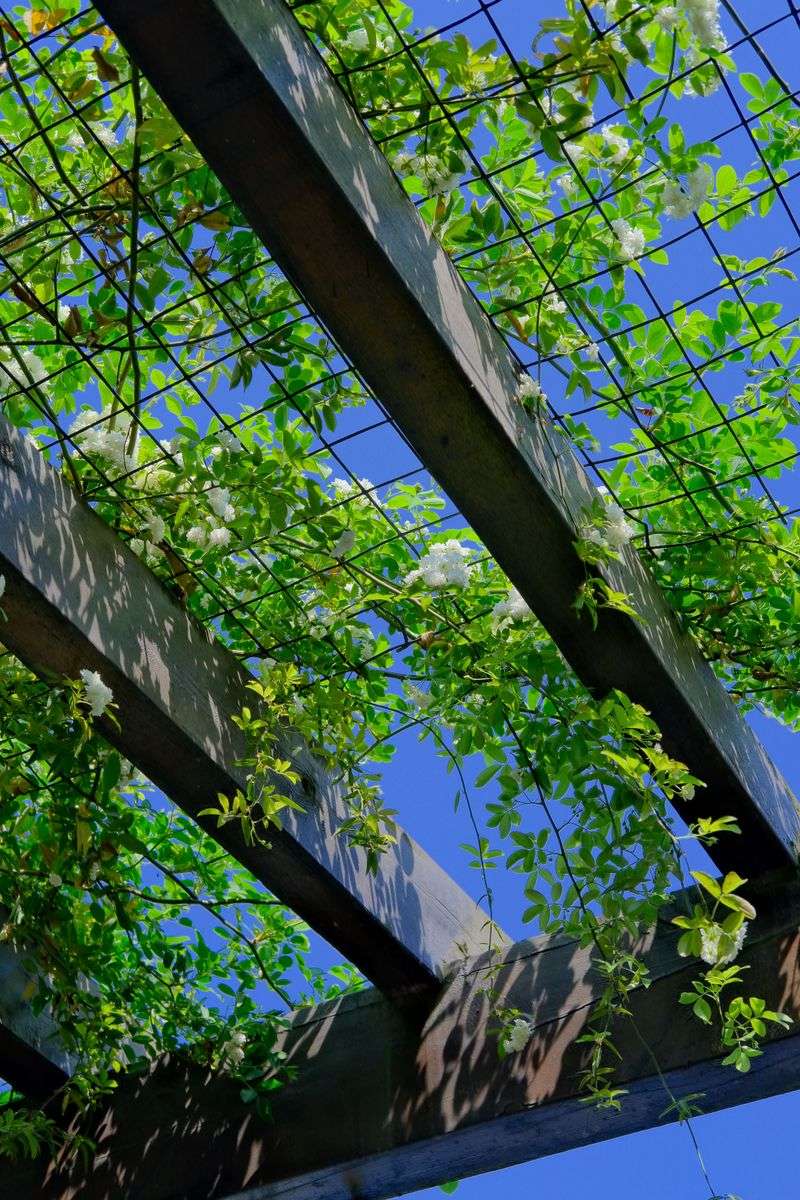
Coral honeysuckle does not hold on by itself. It climbs by twining, meaning the stems wrap around whatever they can reach.
A fence, trellis, or other support gives it something to grab, and it lets you guide where the growth goes.
That is the real difference from trumpet vine’s clinging rootlets. A twining vine wraps around a structure instead of gluing itself to a wall.
A separate fence or trellis is a practical placement choice, not proof that your house is otherwise at risk.
Do not read this as a promise of zero trouble near buildings. A twining vine can still wander onto a nearby eave or gutter if you let it.
Check the vine now and then and redirect stray stems.
The Native Plant Society of Texas gives a broad height range of 3 to 20 feet. Treat that as a wide range, not a size your vine will hit in every yard.
Soil, sun, and water all change the result.
Pick a sturdy support that can handle that range. North Carolina State Extension also describes the plant as a twining climber.
Give it a strong place to wrap and it will do the rest.
Sun, Drainage, and Establishment Water Matter
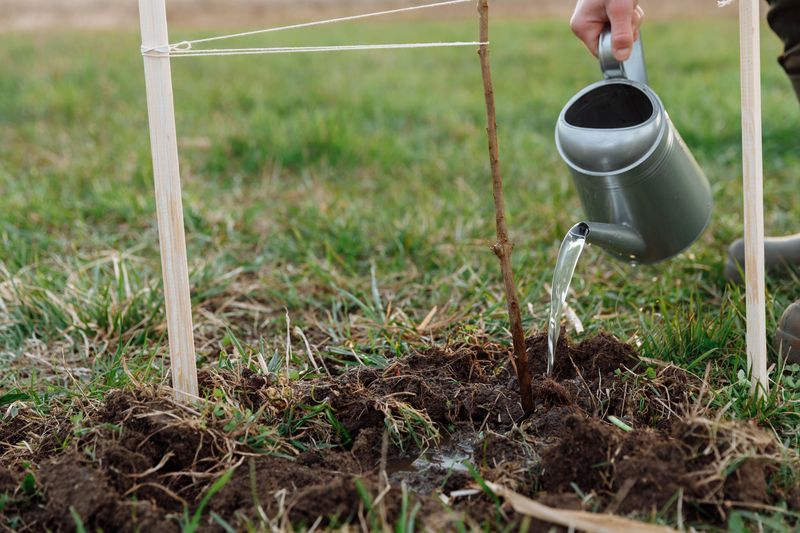
Where you plant it matters as much as what you plant. Full sun supports the best flowering on coral honeysuckle.
Part shade is tolerated, but you may see fewer blooms there, and no spot guarantees equal flowering.
Airflow matters too. A well-drained site with good air circulation helps reduce the risk of powdery mildew, a white dusty film on leaves.
North Carolina State Extension covers these siting points. Skip soggy corners and crowded, stuffy spots.
Then comes patience. The Native Plant Society of Texas says the vine needs supplemental water while it establishes, and that it is drought tolerant afterward.
That first stretch is when a young vine is building its roots.
There is no Texas-wide watering amount to quote, because soils and climates vary so much from the Gulf Coast to the Panhandle. Watch your own plant.
If the soil a few inches down is dry and the leaves droop, it is asking for a drink.
Once it settles in, you can ease off. A little attention early is how a quiet vine earns its keep.
Prune to Guide Growth
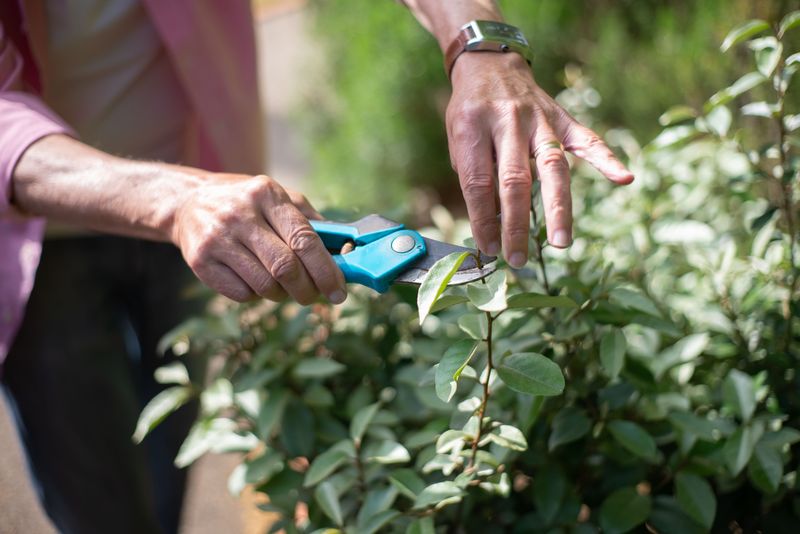
A mannerly vine is still a vine. Pruning is how you direct it, and it is not a sign that something went wrong.
The City of Austin plant guide advises pruning coral honeysuckle to direct and control its growth.
That fits with Texas A&M’s comparison. When the AgriLife newsletter calls it comparatively mannerly, it is comparing it to rougher vines.
It does not say the plant needs no care.
In practice, walk the fence once in a while. Snip stems that reach for the gutter, tuck loose shoots back onto the trellis, and trim anything heading where you do not want it.
You will not find a fixed pruning calendar here. The sources reviewed do not give one that fits every Texas yard, so let your vine and your local conditions set the rhythm.
The same goes for spread. No source gives a guaranteed maximum, so treat it as a plant that can grow many feet.
A few minutes with pruners is a fair price for red flowers on the fence.
Check Local Guidance Before You Plant
Before you buy, spend ten minutes on local guidance. Sources do not agree on exactly where coral honeysuckle is native in Texas.
The City of Austin guide says it is not native to the Edwards Plateau or Blackland Prairie, while the Native Plant Society of Texas lists those ecoregions in its distribution information.
So look up your county or ecoregion in a native-plant guide, and ask a local nursery or extension office. That one check keeps you from guessing.
Then set up a suitable support where the vine can be guided. A fence or freestanding trellis is a sound choice.
It is not a promise of foundation safety, but it gives you a clear place to steer growth. North Carolina State Extension offers a useful plant profile for comparison.
The realistic payoff is a hummingbird-attracting vine you manage through support and pruning.
A well-guided vine and a quiet fence make a good morning.
