
Relocating a North Carolina Box Turtle Far From Your Yard Can Put It at Risk
Follow us on Google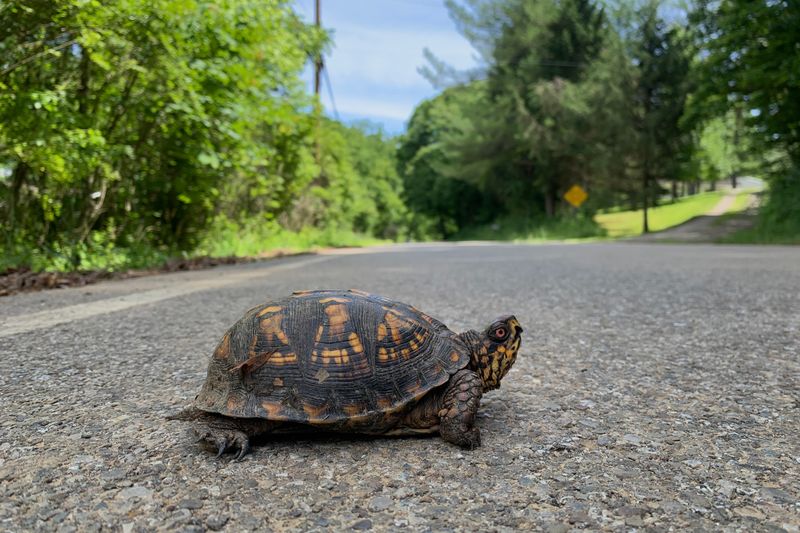
You are watering the tomatoes on a muggy July evening when a domed shell nudges out from under the hostas. A box turtle in your North Carolina yard feels like a small gift.
Your first thought might be to carry it somewhere safer, but that kind thought can backfire. Here is what the research says, and what to do instead.
A Long Life Does Not Prove a Yard History
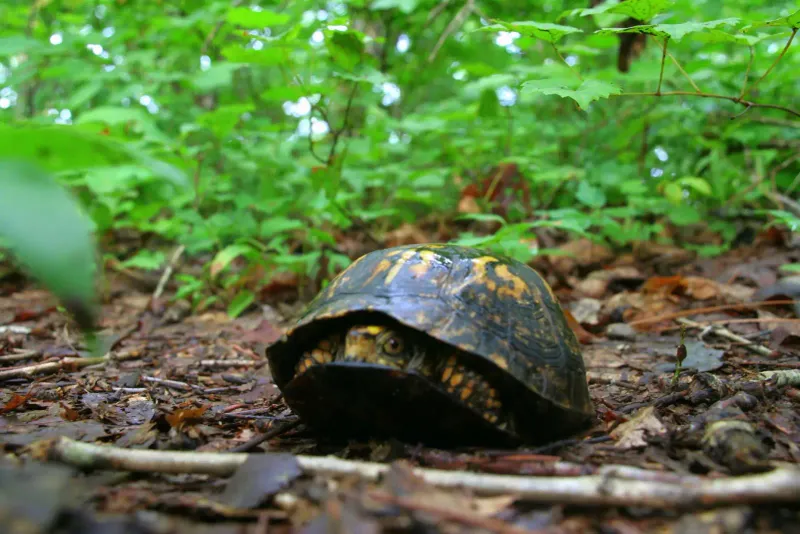
Spotting a box turtle by the hostas feels like meeting an old neighbor. It is easy to picture a wise creature that has patrolled your property since before you bought the house.
That story is charming, but a sighting cannot prove it.
Here is what is solid. North Carolina wildlife biologists note that eastern box turtles can live more than 50 years.
That is the species, though. It tells you nothing about the age of the one under your azaleas.
A young turtle and a very old turtle can look similar at a glance. And seeing one in your yard today does not tell you how long it has used your property.
It may pass through every summer, or it may have wandered in last week.
What you can say is more useful. The state wildlife agency says these turtles are found in fields, forests, and neighborhoods, and that they have strong homing instincts.
A turtle that knows its surroundings has a real advantage over one dropped somewhere new.
So you do not need a decades-long backstory to justify leaving it alone. The turtle is somewhere it can navigate.
That is reason enough to let it keep walking.
How Small Is Its Home Range?
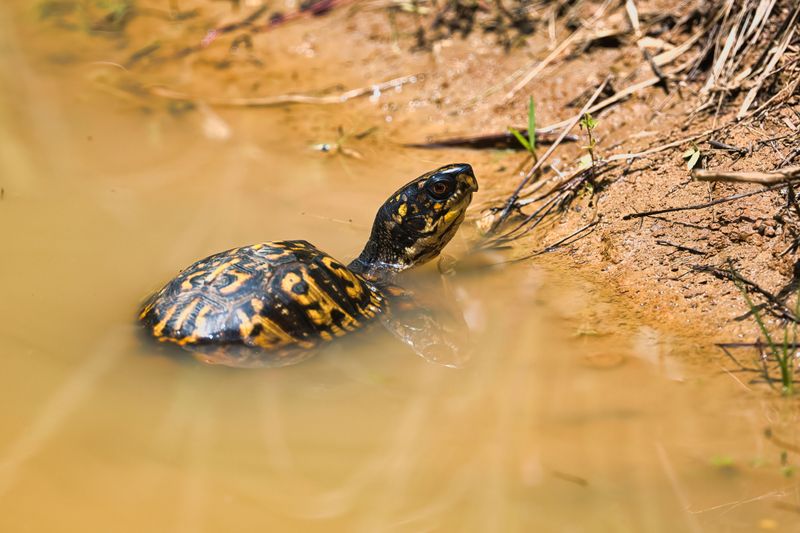
Most of us expect a wild animal to roam for miles. A box turtle does not.
According to the North Carolina Wildlife Resources Commission, these turtles usually occupy a small territory, usually under 2 acres.
Picture that for a moment. Two acres is a modest patch of ground.
In that space a turtle learns where the shade is, where the damp leaf litter stays cool after an afternoon storm, and where the best mushrooms and berries turn up.
Now, a careful point. That figure is a typical territory, not a property line.
Your yard may be a slice of it, or it may be only a stop along the way. A single sighting cannot tell you the full range of the turtle you are looking at.
Still, the size matters. A turtle moved to a park miles away is not arriving at a better home.
It is arriving at a place where it knows nothing about water, shelter, or safe routes.
Think of being dropped in a strange city with no map. The streets might be lovely, but you would spend your energy wandering.
That is the quiet cost of a faraway destination, however pretty it looks.
What Relocation Research Can—and Cannot—Show
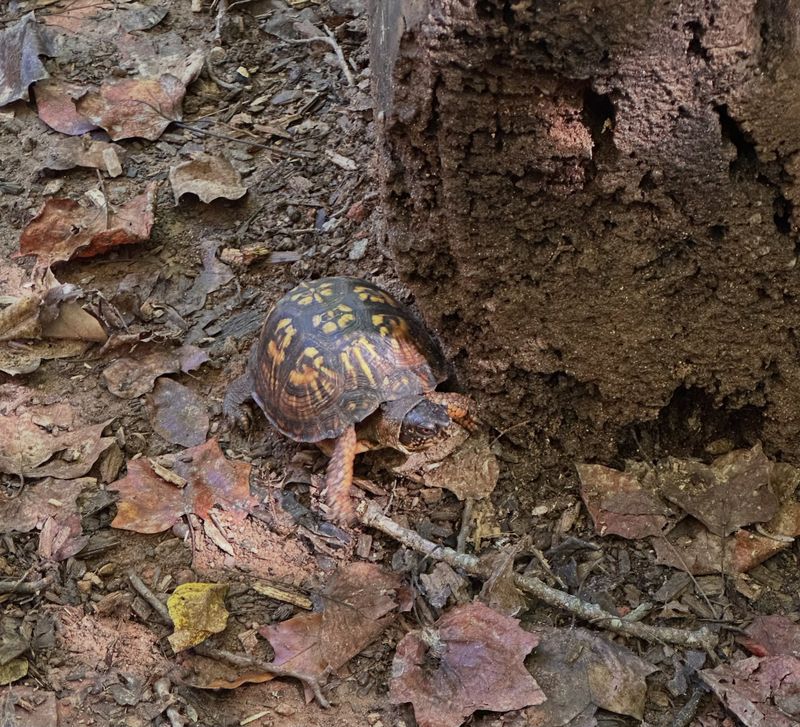
Some of the best evidence comes from right here in North Carolina. In a 2008 study near Davidson, researchers followed 20 turtles.
The published study abstract describes 10 resident turtles that stayed put and 10 that were relocated.
The relocated group behaved differently. Those turtles had larger home ranges and moved farther each day than the residents.
In other words, they kept wandering, as if still searching for home.
The outcomes were sobering. Five of the relocated turtles died or disappeared.
None of the resident turtles did.
Here is the careful part. Disappeared does not mean confirmed dead.
A turtle can slip out of range of a tracker, and the study does not prove why each one vanished. It also involved only 20 turtles, so it is a small sample.
That means the research does not say every relocated turtle dies. It says relocation can disrupt normal movement and may put a turtle at risk.
That is a solid reason for caution, without any need for panic.
Think of it as a yellow light rather than a red one. When a healthy turtle is already living its life, the safest plan is not to interrupt it.
A Healthy Yard Turtle Usually Needs No Rescue
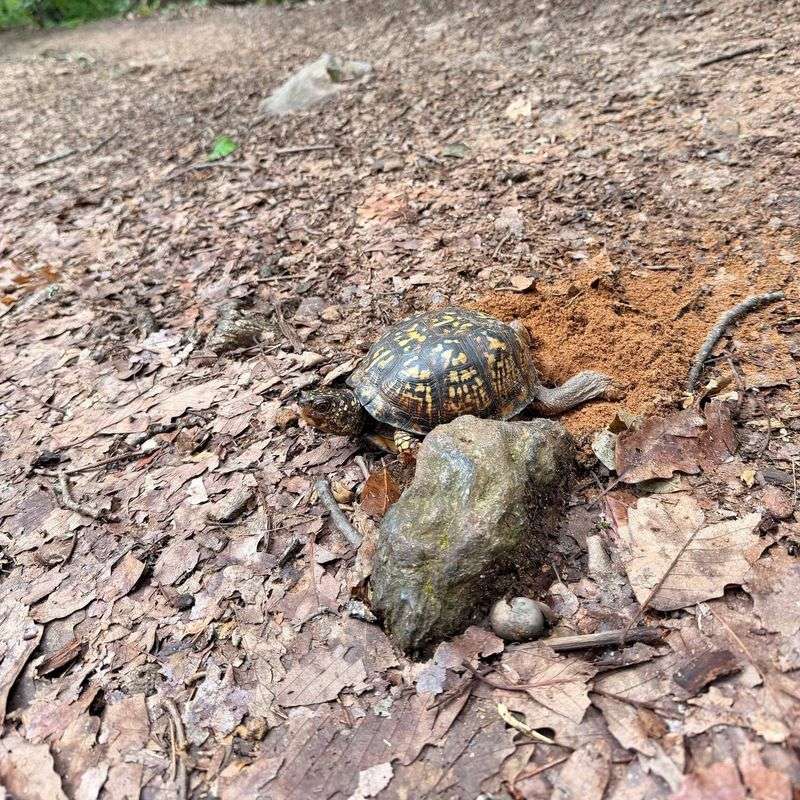
Most turtles you meet in a yard are not in trouble. They are just walking.
A healthy one that is moving along, with a clean shell and bright eyes, is doing exactly what it should.
Your best move is simple. Leave it alone and let it continue.
Keep people and pets from crowding it, and give it a few quiet minutes to wander out of the way.
Resist the urge to take it home or carry it to a pond, woods, or park. State wildlife guidance says not to relocate these turtles.
Box turtles live on land, so a pond is not a refuge for them anyway.
If you mow, walk the lawn first and look for domed shells in the grass. If a dog is nosing around, call it back and give the turtle space.
Sometimes a turtle truly is in the way of danger, such as a spot where a mower or a car is about to pass. In that case, a short move is fine.
Move it the shortest distance needed, ideally less than 50 feet.
That brief nudge to safety is not the same as relocation to another habitat. It keeps the turtle inside the area it likely knows.
The goal stays the same: it keeps walking, and you get to enjoy the visit.
A Road Crossing Changes the Advice
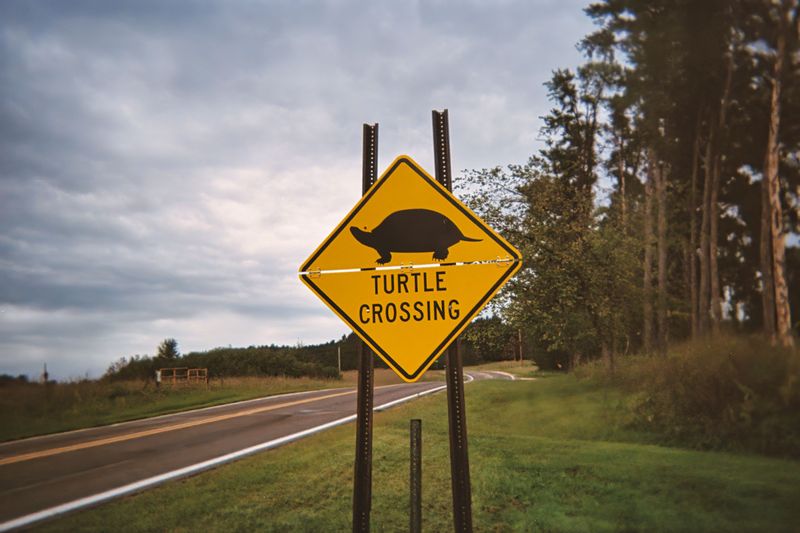
A road is a different story. A turtle on pavement faces danger a yard never poses, and a slow walker cannot dodge a fast car.
This is the one place where stepping in makes sense.
But your safety comes first. Help only if you can do it without putting yourself or other drivers at risk.
If traffic is heavy or the road is fast and blind, it is okay to let it go.
When the coast is clear, pick the turtle up with both hands, holding it by the sides of its shell. Never lift it by the tail.
U.S. Fish and Wildlife Service tips warn against that, and it can injure the animal.
Then carry it across in the direction it was already heading. This detail matters.
North Carolina guidance says to move it to the side it was aiming for, not back where it came from.
Do not just set it at the road edge, either. Carry it well off the pavement so it is not still on the roadway.
A turtle put back on the wrong side will often turn around and try again.
Do not drive it somewhere else. Cross it, set it down, and let it walk on.
It is a two-minute act of kindness that leaves its home range untouched.
Visible Injuries Call for Expert Guidance
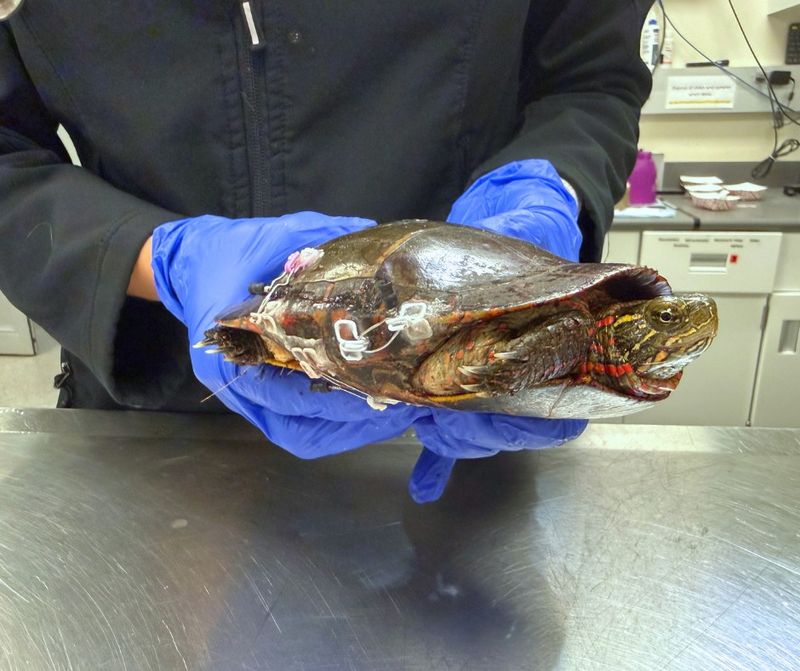
Now and then a turtle really does need help. Look for a cracked shell, bleeding, or another obvious injury.
Those are signs to call for expert advice, not to play veterinarian.
Contact a licensed wildlife rehabilitator. The state wildlife agency’s guidance explains how to find one, and it recommends a licensed reptile rehabilitator for injured box turtles.
They can tell you what to do next.
Do not try to treat the wound or keep the turtle at home. A box turtle is also not a pet by default, and the commission notes that keeping them removes animals from the breeding population.
Keep handling to a minimum while you wait. If you do touch the turtle, wash your hands with soap and water afterward.
The CDC says reptiles can carry Salmonella even when they look perfectly healthy.
That is true for kids too, so keep little hands clean after any turtle encounter. A quick scrub at the hose bib or kitchen sink does the job.
Careful help does not require taking a turtle away. Most of the time, the kindest thing is a wide berth and a clean pair of hands.
