
Butterflies Skip Your Yard For Reasons Most Gardeners Never Notice Until It Is Too Late
Follow us on Google
You planted the flowers, you watered them, and you waited.
A few butterflies drifted through, but nothing like the steady stream you expected.
The yard looks full of color, yet something is clearly missing.
Understanding what butterflies actually need, beyond a pretty bloom, can change that picture over a single growing season.
A Flower-Filled Yard May Still Offer Incomplete Habitat
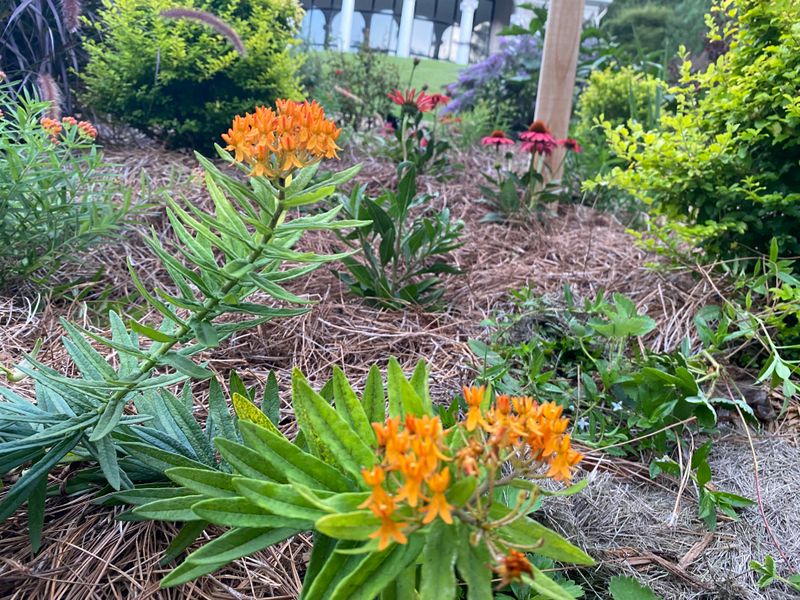
Picture a front bed packed with coneflowers and zinnias on a warm July afternoon.
The blooms are open, the sun is out, and still no swallowtail stops to feed.
That gap between a beautiful planting and a genuinely useful one is exactly where most butterfly gardens quietly fall short.
Visible blooms may address only part of what adult butterflies need, and they do not automatically supply larval host plants, wind shelter, warmth, shallow moisture, or pesticide-free foliage.
Penn State Extension guidance on butterfly gardening draws a clear line between a brief adult feeding stop and habitat that supports multiple stages of a butterfly’s life cycle.
A garden that offers only nectar can attract passing adults without giving females any reason to stay and lay eggs.
The flowers themselves may also be working against you in ways that are hard to see.
Blooms planted in shade produce less accessible nectar.
A single specimen tucked among unrelated plants is easy for a butterfly to miss.
Nectar quality and quantity vary by cultivar, soil fertility, and watering, so a bed that looks lush may not be producing much of what butterflies are actually seeking.
Before assuming the garden has failed, consider that weather, season, and life stage explain a lot of quiet afternoons.
Oregon State University Extension notes that butterflies may be sheltering during wind or rain, active elsewhere in the neighborhood, or present as eggs, caterpillars, or pupae that most gardeners never think to look for.
A yard can be functioning as habitat even when no adult is visible.
Host Plants Help Complete the Life Cycle
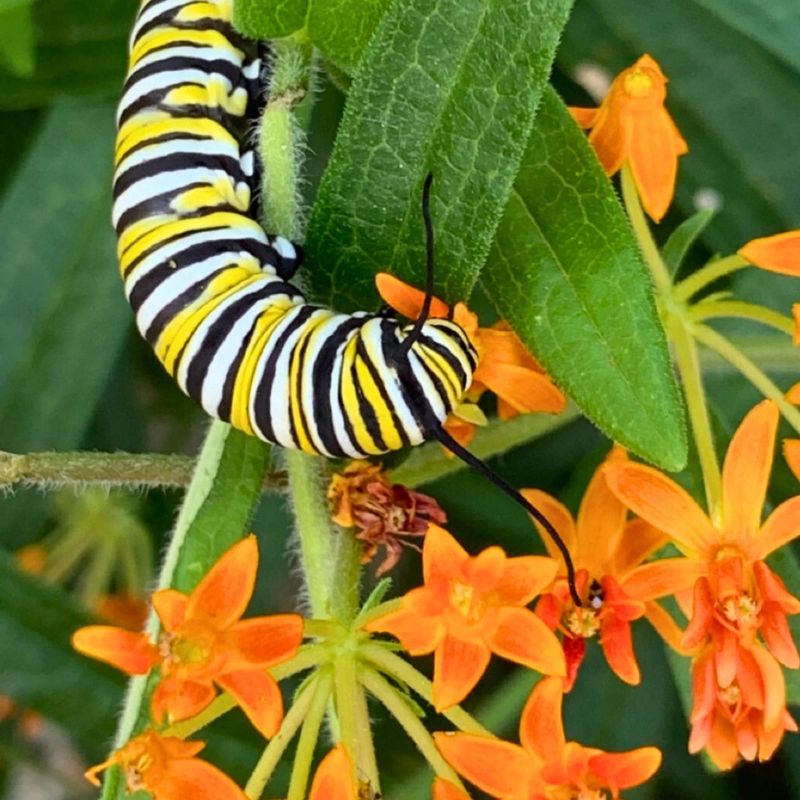
Most butterflies are far pickier than they look.
Adult females do not drop eggs just anywhere.
They search for specific plants, and caterpillars feed on those plants after hatching, often refusing anything else.
A yard full of nectar flowers but empty of host plants is like a diner with a beautiful sign and nothing on the menu a particular customer will eat.
Many species use only one or a few plant groups as larval hosts.
Butterflies and Moths of North America recommends identifying which butterflies are common in your area before choosing plants, because the answer changes significantly by state and region.
A plant that supports swallowtails in the Mid-Atlantic may have no value at all for the skippers or fritillaries that dominate your county.
Some well-documented regional associations give a useful starting point.
Monarch caterpillars require milkweed (Asclepias species), and USDA Forest Service materials on monarch habitat identify common milkweed (Asclepias syriaca), swamp milkweed (Asclepias incarnata), and butterfly weed (Asclepias tuberosa) as important hosts in the eastern United States, though local suitability varies.
Violets (Viola species) serve fritillaries in many parts of the country.
Asters support pearl crescents.
Spicebush (Lindera benzoin) and sassafras (Sassafras albidum) are larval hosts for spicebush swallowtails in eastern states.
Parsley, dill, and fennel feed black swallowtail caterpillars across much of the country.
Treat those as regional clues, not universal planting rules.
Penn State’s butterfly gardening and conservation fact sheet encourages readers to check with their state Extension service, a local native plant society, or a regional database before buying.
A monarch-focused planting with milkweed is a meaningful step, but it will not automatically bring in swallowtails, skippers, or woodland species that have completely different needs.
Sun, Warmth, and Shelter Make a Bed More Usable
Butterflies are cold-blooded, which means they borrow heat from their surroundings rather than generating it from within.
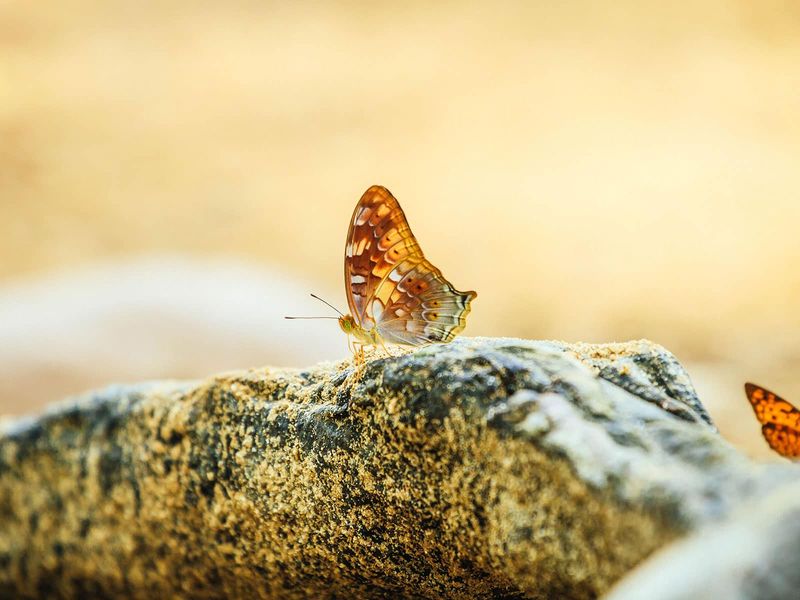
On a cool morning, a butterfly sitting on a flat rock in full sun is not resting.
It is refueling, warming its flight muscles so it can move at all.
Without that warmth, feeding and egg-laying slow down or stop.
Aiming for about 6 to 8 hours of direct sunlight on your planting area is a practical target when the site allows it.
Illinois Extension’s butterfly habitat guide recommends a sunny location as a foundational step, and USDA pollinator planting guidance supports adding a flat stone or a patch of bare soil as a basking surface.
Not every yard can offer 8 hours, and some species tolerate partial shade, but more sun is almost always better for butterfly activity.
Wind is the other problem most gardeners underestimate.
A stiff breeze makes it harder for butterflies to land, feed, or hold position on a flower long enough to be useful.
A fence, a low wall, a dense shrub, or a row of taller plants along the windward edge can create a calmer pocket without shading the entire bed.
Penn State Extension specifically recommends a windscreen where natural shelter is absent.
Grouping flowers matters for usability, too.
Butterflies spot clusters of one color or species more easily than single blooms scattered through a mixed bed.
Planting 3 to 5 of the same species together, rather than one each of 10 different plants, gives a butterfly a reason to slow down and investigate.
Quantity of flowers alone does not determine habitat quality, but visibility and accessibility do.
Plan Blooms for More Than One Moment
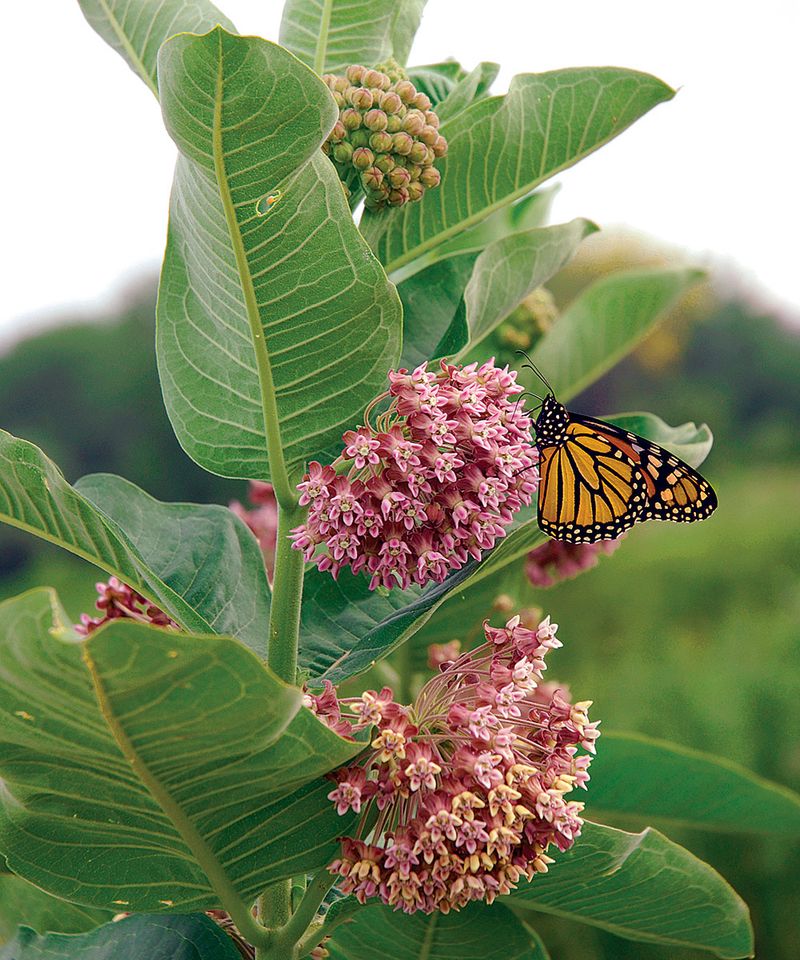
Many gardeners plant everything in May and enjoy a spectacular June, then watch the bed go quiet by August.
For butterflies, that late-summer silence is the worst possible timing.
A large number of species, including swallowtails, monarchs, and sulphurs, are most active from midsummer through early fall, right when a spring-heavy garden runs out of food.
University of Minnesota Extension’s butterfly garden guide recommends planning for a sequence of blooms from spring through fall rather than a single dramatic flush.
Early sources like native willows and early-flowering violets help species that emerge in April or May.
Midsummer plants like coneflowers (Echinacea purpurea), milkweeds, and mountain mint carry the garden through July.
Late-season asters and goldenrods keep nectar available into October across much of the country, which matters especially for monarchs building reserves before migration.
Oregon State University Extension advises planting in noticeable blocks of one species or color, because butterflies have limited vision and are more likely to detect a mass of flowers than a single stem.
Three to five plants of the same species, grouped together, is a more useful arrangement than one each of a dozen different cultivars spread across a wide bed.
When choosing among cultivars, open, simple flowers are generally a safer bet.
University of Georgia Extension’s butterfly gardening publication notes that some double-flowered cultivars are bred primarily for appearance and may make nectar harder to reach.
That does not mean every double flower is worthless, but when you have a choice, the simpler form usually works better for the butterfly.
Add Moisture Only If the Site Needs It
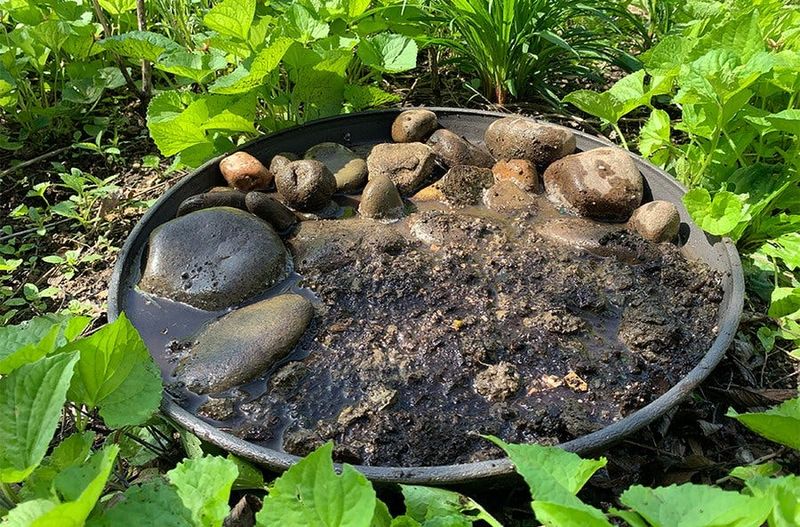
On hot afternoons, you might spot a group of butterflies clustered on a damp patch of soil near a puddle or a dripping faucet.
That behavior has a name: puddling.
Butterflies land on wet sand or mud to drink water and absorb dissolved minerals, particularly sodium, that nectar alone does not always supply.
USDA Forest Service pollinator resources and University of Georgia Extension both describe a simple setup: a shallow saucer or dish sunk near ground level and filled with wet sand or mud, placed where butterflies can land safely without drowning.
The key word is shallow.
A deep birdbath does not work for this purpose and can be a hazard.
Keep the dish clean, refresh the moisture every few days, and remove it promptly if it starts attracting stinging insects or creating a sanitation problem.
Before you build one, look around the yard.
Moist soil near a garden hose connection, a low spot after rain, a patch of mud near a downspout, or even sap on a tree trunk may already be serving this function.
Oregon State Extension treats a puddling station as a helpful optional addition, not a required feature.
If your yard already has natural moisture sources, the dish may not change much.
A quiet garden during what should be prime butterfly hours does not automatically mean the habitat has failed.
Temperature, cloud cover, wind, and the butterfly’s own life stage all affect when and whether adults are visible.
Eggs, caterpillars, and pupae are present in a functioning garden even when no adult lands on a flower all afternoon.
Protect the Leaves Caterpillars Need
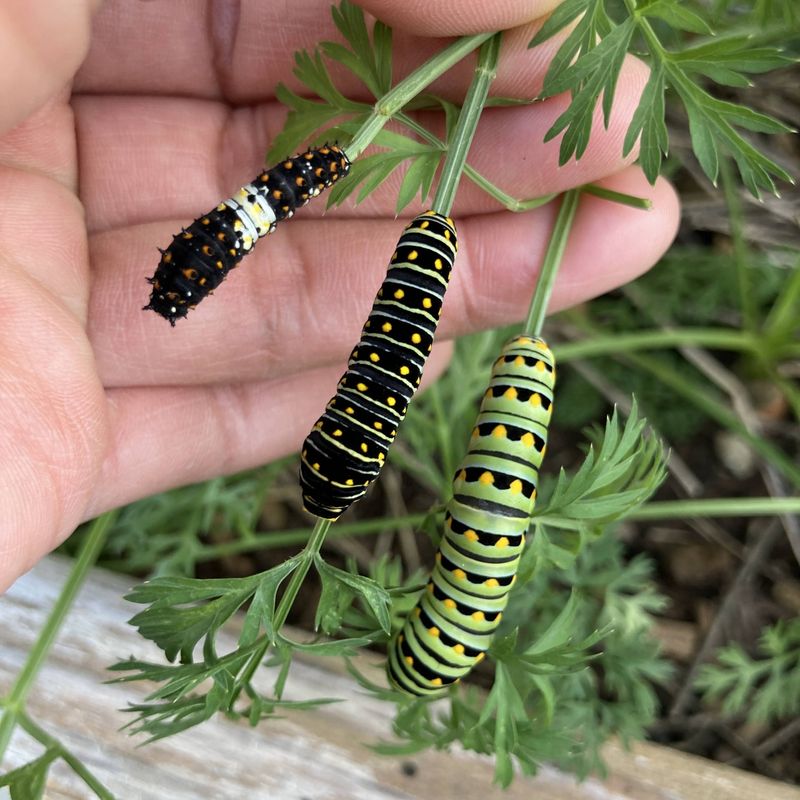
Chewed leaves on a host plant are not a failure.
They are evidence.
If the parsley in your herb bed has ragged edges and a fat green-and-black caterpillar clinging to a stem, the garden is doing exactly what it should.
The instinct to tidy up damaged foliage, or to reach for a spray bottle, is one of the most common ways a butterfly garden quietly undoes itself.
Contact insecticides can kill caterpillars directly when sprayed on or near them.
Systemic products are absorbed into plant tissue, which means they can move into leaves, nectar, and pollen long after the spray event.
EPA pollinator risk assessment guidance makes clear that exposure routes include treated foliage and contaminated nectar, not only direct contact with flying adults.
Eggs and pupae are vulnerable, too, because they have no way to avoid a treated plant.
If a pest problem genuinely threatens the health of a plant, the first step is identification.
Many chewing insects are harmless or beneficial, and a caterpillar on a host plant is exactly the outcome you planted for.
EPA pollinator protection tools and strategies recommend choosing the least harmful effective method when treatment cannot be avoided, skipping flowers and known host plants entirely, and following the product label precisely.
Nursery plants deserve a second look before they go in the ground.
A plant labeled pollinator-friendly is not automatically free of pesticide residues.
EPA HERO-referenced research on ornamental plant residues detected pesticides in a sample of plants sold for pollinators, and the Xerces Society has documented similar concerns in butterfly host plants.
That research covered a limited sample and does not mean every garden center plant is contaminated, but asking about treatment history before you buy is a reasonable habit.
University of Minnesota Extension recommends reducing pesticide use across the whole garden, not just on the plants you think of as butterfly-specific.
Build a Regional Plan and Set Realistic Expectations
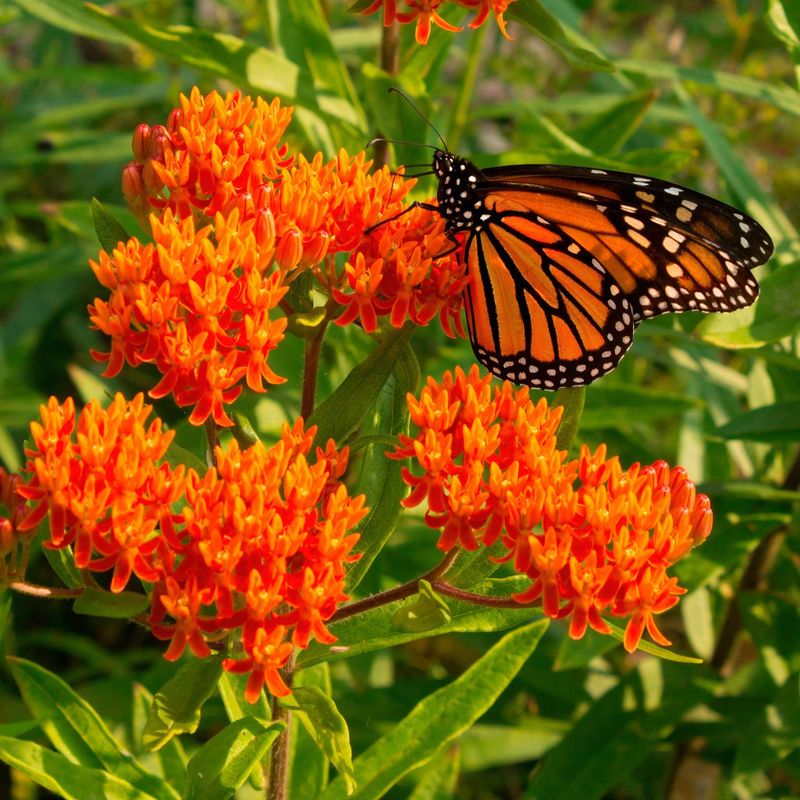
The most useful starting point is not a plant list.
It is a species list.
Pick one or two butterflies that actually live in your county, then work backward: find their host plants, find the nectar sources that support their adults during their local flight season, and build from there.
The Xerces Society’s butterfly conservation resources and your state’s Cooperative Extension service are both good places to start that search.
A monarch planting with milkweed is a meaningful contribution, but it is not a complete butterfly garden.
Monarchs also need varied nectar sources across their migration route, and the milkweed species that thrives in Georgia may not be the right choice in Minnesota or Arizona.
Penn State Extension and University of Minnesota Extension both emphasize matching plants to local species rather than following a single national template.
The word native carries more weight when it comes with a geography attached.
A plant native to the Carolinas is not automatically native to the Pacific Northwest or the Great Plains.
Regional native plant societies and state Extension databases can tell you which species belong where you actually garden.
Temperature thresholds are useful field observations, not hard rules.
Oregon State Extension notes that many butterflies are less active below about 60 degrees Fahrenheit, while USDA pollinator garden materials suggest many species become more active above 50 degrees Fahrenheit.
Cloud cover, wind, species, and body temperature all shift that range.
A cool morning does not mean the garden is failing.
Layer these improvements over time rather than expecting a single change to transform the yard overnight.
Host plants may need a full growing season to establish.
Habitat value builds as the planting matures and word gets around, in whatever way butterflies communicate that a place is worth visiting.
The goal is a yard that supports the whole life cycle, not just the moment when an adult pauses long enough for you to notice it from the porch.