
Why Passionflower Vine Is The One Fence Plant That Makes Texans Stop And Look Twice
Follow us on Google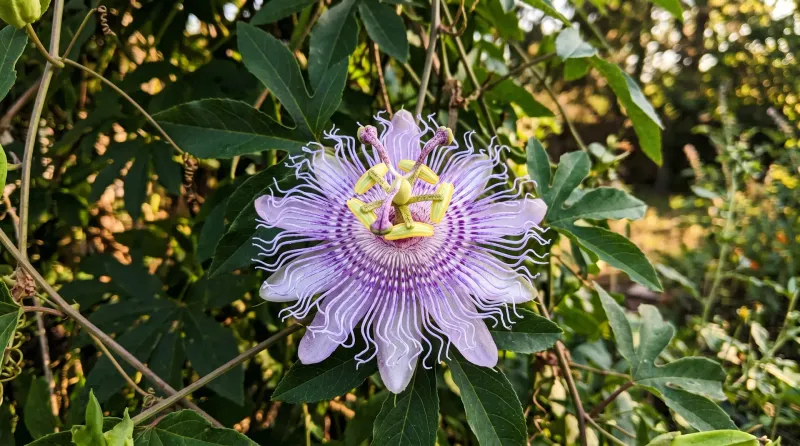
Plenty of vines will cover a fence in Texas, but few will make a neighbor slow their truck down to get a second look.
Purple passionflower, known botanically as Passiflora incarnata, carries blooms so intricate they look like something a special-effects team designed, and it grows right here in Texas soil.
The catch is that the headline’s promise is a subjective one, not a guarantee, and the plant that delivers that reaction depends heavily on which species you actually put in the ground.
Get the species right, give it proper support, and you have a fence that earns its own reputation in the neighborhood.
A Showy Vine, Not A Universal Winner
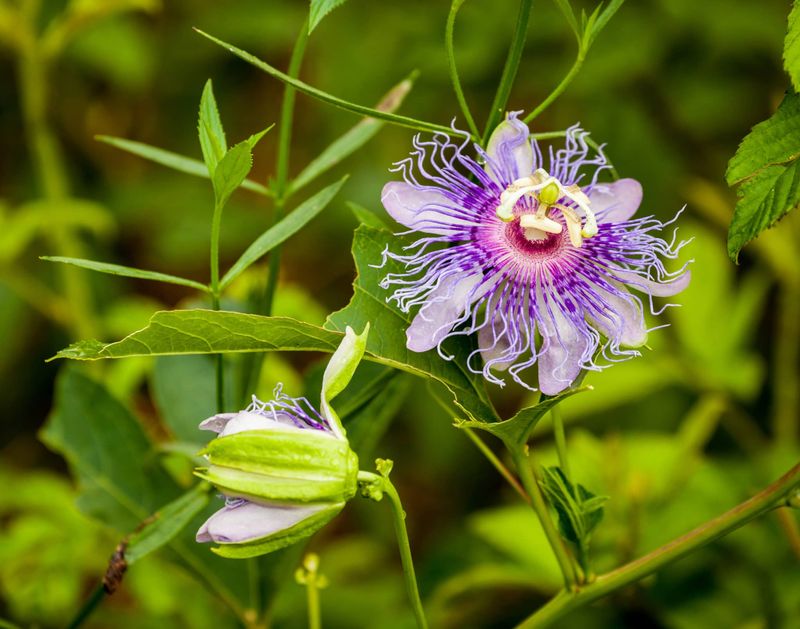
Walk past a fence draped in Passiflora incarnata on a July morning in Central Texas and you will understand what the headline is reaching for.
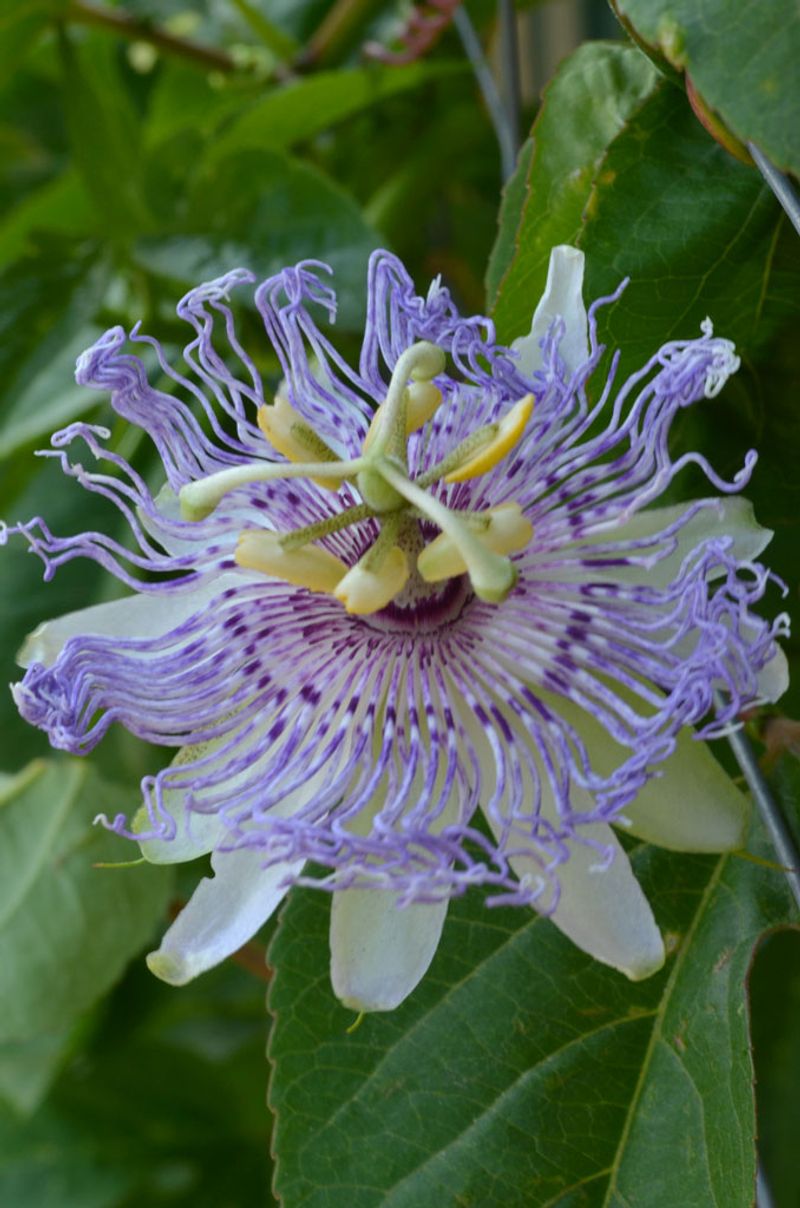
The blooms are genuinely unlike anything else growing on a residential fence in this state, a layered arrangement of purple and white petals topped by a fringe of threadlike corona filaments that looks more like an art project than a garden plant.
That reaction is real, and it is worth chasing, but it is also personal and not every passionflower delivers it equally.
The headline works as an editorial hook, not a measured horticultural fact.
Austin’s official plant guide describes passion vine as a showy, fast-growing native, which supports the visual premise, but the guide also flags its aggressive tendencies, which is the part that often gets left out of the sales pitch.
The plant can earn that attention-stopping reputation, but only if you choose the right species and manage it honestly.
Two species are the strongest Texas-relevant candidates.
Passiflora incarnata, sometimes called maypop, is the one most likely to match the headline’s drama.
Texas Parks and Wildlife specifically recognizes passionflower as a host plant for Gulf fritillary caterpillars, which adds an ecological reason to grow it beyond the flowers alone.
The second option, Passiflora lutea, is a smaller-flowered native documented across Texas that North Carolina Extension describes as suited to trellises, fences, and pollinator gardens with a more restrained growth habit.
Species identification matters because these two plants differ in flower size, spread, cold tolerance, and visual impact.
Always read the plant tag before you buy.
Why The Flowers Command Attention
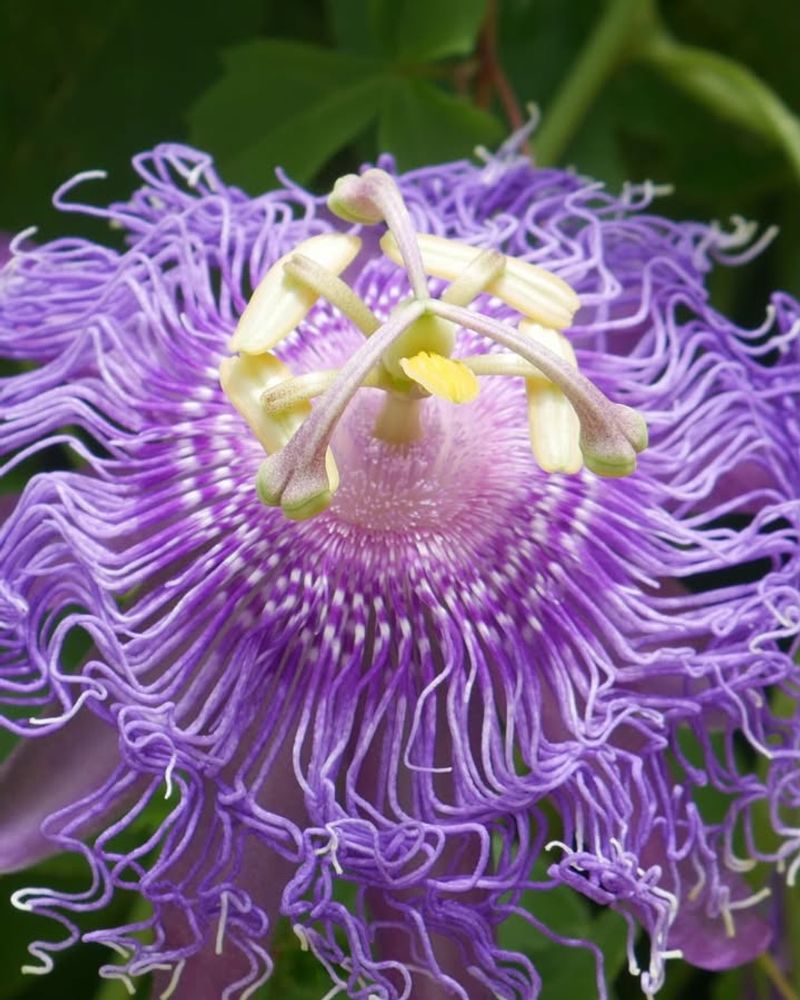
The flower of Passiflora incarnata is genuinely hard to ignore because it is built in layers.
Five white to pale lavender petals sit beneath five sepals that look nearly identical to the petals, and above them rises a corona of slender filaments banded in purple, blue, and white.
At the center, three stigmas curve outward over five stamens in an arrangement that stops people mid-stride.
The three-lobed leaves add their own texture, and the curling tendrils give the whole vine an active, reaching quality that solid-leaf plants simply do not have.
Missouri Botanical Garden lists Passiflora incarnata at roughly 6 to 8 feet tall and 3 to 6 feet wide under typical garden conditions, while Austin’s plant guide suggests a spread of 6 to 15 feet in favorable conditions.
That gap is not a contradiction.
It reflects how much growing conditions, soil, sun, and available support shape the final result.
Plan for the larger end when you are choosing a fence panel to cover.
Passiflora lutea tells a different story visually.
Its flowers are small, yellowish-green, and easy to overlook from a distance, and it produces dark berries rather than the golf-ball-sized maypop fruit that P. incarnata can develop in late summer.
North Carolina Extension’s profile notes that P. lutea tolerates full sun to partial shade and moist well-drained soil, making it a practical fit for spots where the big theatrical bloom is less important than reliable coverage and wildlife value.
If the “stop and look twice” goal is the priority, P. incarnata is the one to reach for.
The Wildlife Benefit Begins With The Leaves
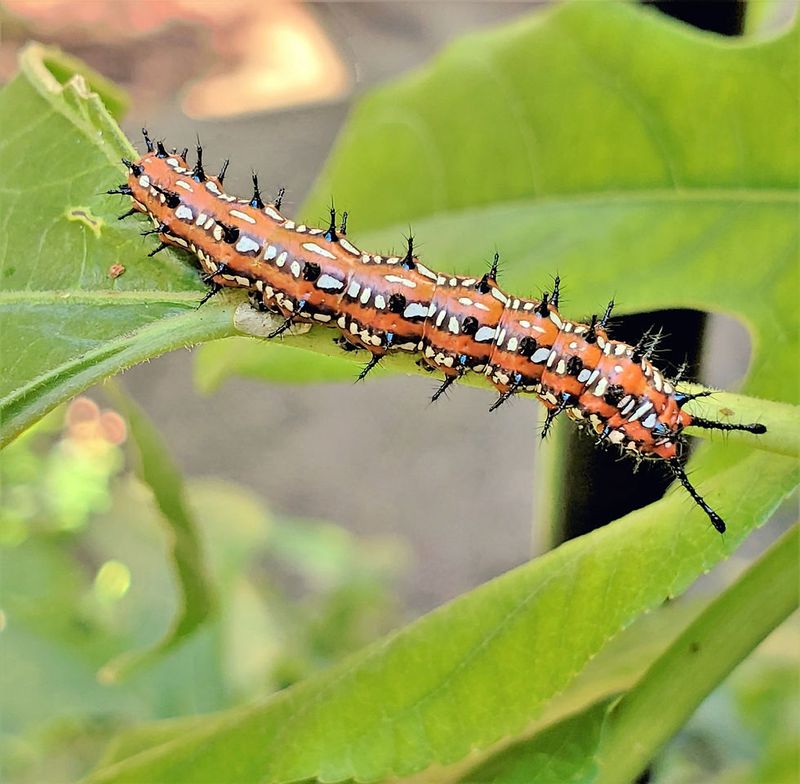
Most people who plant passionflower are thinking about the flowers, and then one morning they step outside and find the leaves riddled with holes and covered in orange caterpillars bristling with black spines.
That is the Gulf fritillary at work, and it is exactly what the plant is supposed to do.
Texas Parks and Wildlife identifies passionflower as the food plant for Gulf fritillary caterpillars seen across the state, which makes the chewed foliage a sign of success, not failure.
The larval-host role is the strongest wildlife claim you can make for this vine.
Records for Agraulis vanillae, the Gulf fritillary, show that the caterpillars depend on passionflower foliage to complete their development.
But the adult butterflies that emerge from those caterpillars need nectar sources to survive and reproduce, and passionflower alone does not supply that.
University of Georgia Extension’s butterfly gardening guidance explains that a complete habitat strategy pairs host plants with nectar plants, so the vine is one layer of a living yard rather than a complete butterfly garden by itself.
Texas-appropriate nectar plants such as lantana or Gregg’s mistflower planted nearby give the adults a reason to stay.
A healthy passionflower vine can tolerate significant caterpillar feeding and bounce back, so resist the urge to intervene with broad-spectrum sprays.
Extension guidance on caterpillars in ornamental plantings notes that healthy plants usually recover from defoliation and that treatment is often unnecessary when the plant is otherwise thriving.
Let the chewing happen, and watch what emerges.
Build The Support Before You Plant
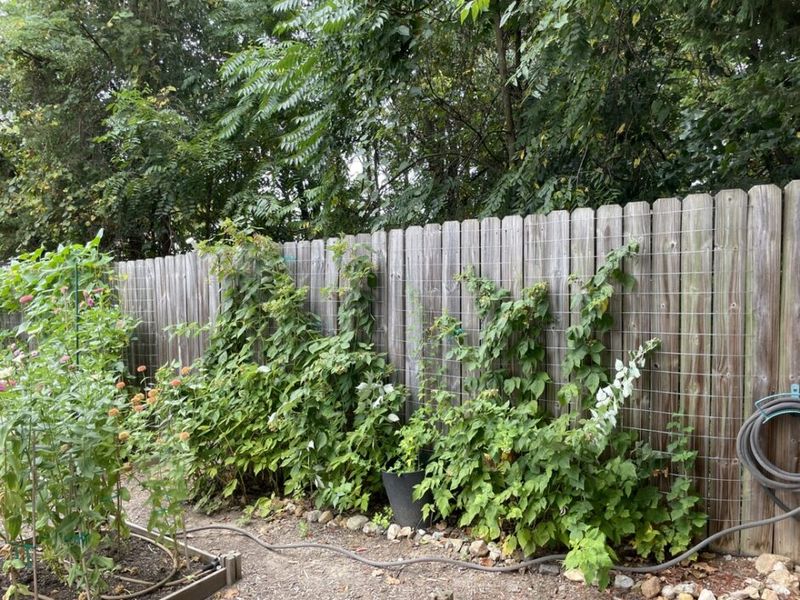
Here is where a lot of passionflower fence projects go sideways.
Passiflora climbs by tendrils, which are thin, coiling structures that need something to wrap around.
A flat, solid privacy fence board offers nothing to grip, so the vine either leans against the surface and falls or finds the nearest shrub and claims it instead.
The fix is straightforward, but it has to happen before the plant goes in the ground.
Install a separate trellis, wire grid, or open mesh in front of the fence and give the tendrils something they can actually catch.
Extension guidance on trellises and cages recommends choosing and installing vine support before planting so the structure is ready when the vine needs it.
A wire grid with openings of roughly 4 to 6 inches gives tendrils plenty of purchase and lets you train the vine in the direction you want from the start.
The support also needs to be anchored for your local wind exposure.
Trellising research from Utah State Extension emphasizes that posts and anchor points must handle the combined weight of the vine and the force of wind on its foliage.
In North Texas and along the Gulf Coast, where strong spring storms and occasional high winds arrive with little warning, a trellis that is not firmly set in the ground can bring the whole vine down in a single afternoon.
Use post anchors or set posts at least 18 inches into the ground, and check the connection between the trellis and any fence hardware at least once a season.
Getting this right before you plant saves you from starting over.
Choose Between Drama And Restraint
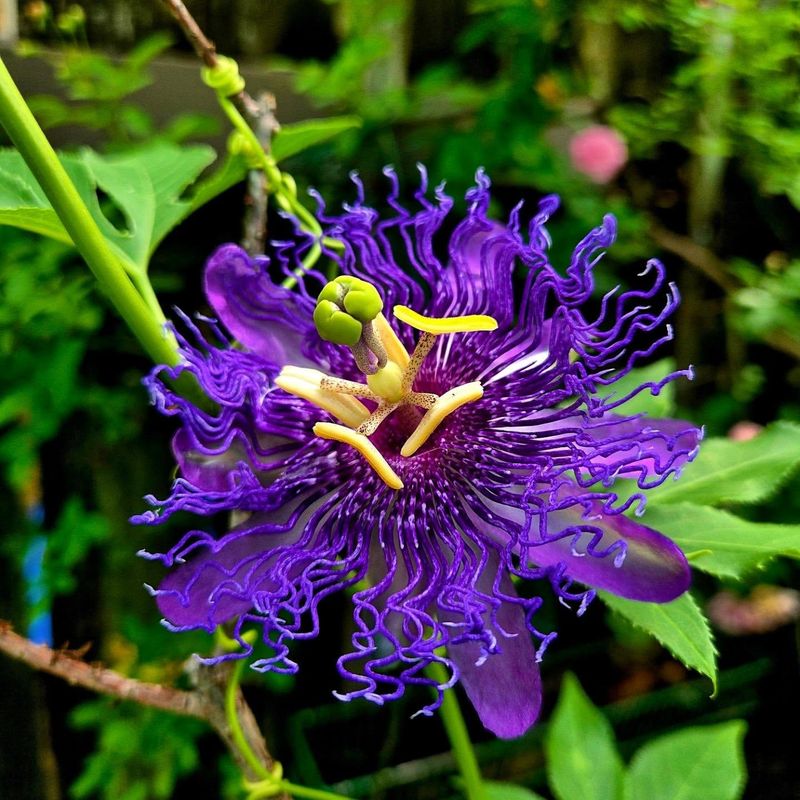
Choosing between these two species comes down to one honest question: do you want a fence that stops traffic, or a fence that supports wildlife without requiring much management?
Both are legitimate goals, and the plants genuinely behave differently enough that the choice matters before you put anything in the cart.
Passiflora incarnata is the one that earns the headline.
Missouri Botanical Garden’s profile describes it as a vigorous grower that spreads through underground rhizomes, which means new shoots can appear several feet away from the original planting.
That energy is part of what makes it so effective on a fence, but it also means you will be pulling up runners from nearby beds if you do not keep up with it.
In a small Hill Country courtyard, that spreading habit can become a real problem within a season or two.
Passiflora lutea is the more manageable option.
North Carolina Extension notes that it suits containers, fences, trellises, and pollinator gardens, and its generally restrained habit makes it easier to keep where you put it.
The flowers are small and understated compared to P. incarnata, so the visual payoff is quieter.
A USGS plant profile notes that in some conditions P. incarnata can spread aggressively enough that growing it in a container is worth considering where space is limited, a regional caution that applies especially to tighter East Texas and Gulf Coast planting areas.
Neither species should be called invasive in the legal or ecological sense, but vigorous spreading and true invasive status are different things, and it helps to know which one you are actually dealing with before the rhizomes reach your neighbor’s yard.
Give The Vine A Realistic Texas Site
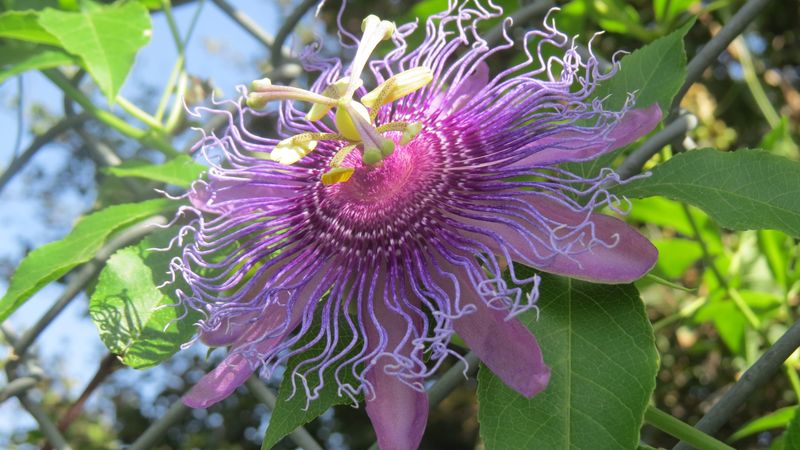
Sun is the most important site variable for getting a full, flowering display.
Both P. incarnata and P. lutea perform better with at least 6 hours of direct sun each day.
Less than that and you get more leaf than flower, which is fine for caterpillars but less satisfying if the whole point was the dramatic bloom.
A south-facing or west-facing fence in Central Texas or the Hill Country will generally give you the light the plant wants.
Drainage matters as much as sun.
North Carolina Extension’s cultural guidance specifies moist, well-drained soil, and Missouri Botanical Garden echoes that recommendation.
In North Texas blackland clay or along the Gulf Coast where heavy rains can pool for hours, a planting bed that stays saturated will stress the roots and invite rot.
Amend or raise the bed if needed, and pick a spot where water moves away after a downpour rather than sitting for half a day.
New plants need regular moisture, roughly an inch of water per week, while the roots establish over the first growing season.
After that, established vines can handle some dry stretches, though performance will vary by species and site.
Cold tolerance also varies by location.
The Native Plant Society of Texas notes that P. incarnata may die back to the ground after hard freezes and return from the roots in spring, which is the normal behavior for a perennial vine, not a sign that the plant died.
In warmer parts of South Texas, stems may persist through a mild winter, but do not count on that behavior in the Panhandle or North Texas, where a hard freeze can push the vine all the way to the ground by January.
Prune For A Focal Point, Not A Takeover
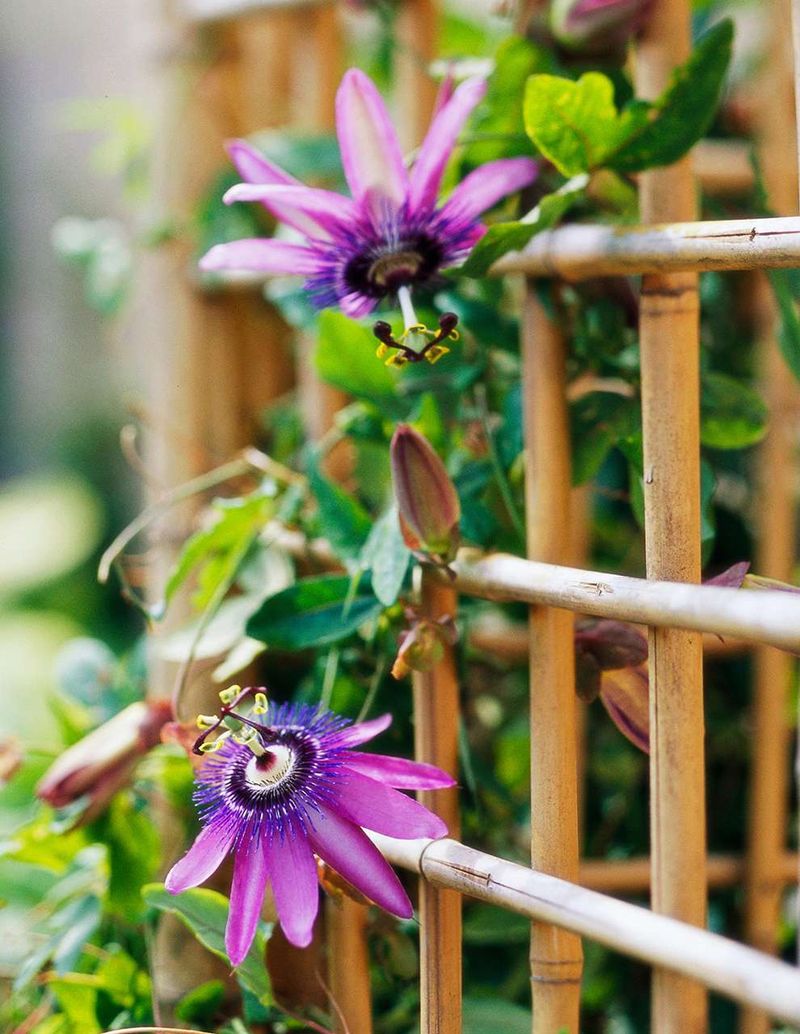
Passionflower left to its own devices will find the roofline, the gutter, the neighbor’s crape myrtle, and the rosebush you planted three feet away.
Austin’s plant guide describes passion vine as aggressive and specifically recommends pruning for control, which is the most honest piece of cultural advice you will find in any official Texas source on this plant.
Pruning is not optional maintenance; it is the condition that keeps the vine a feature instead of a problem.
Direct new growth onto the trellis as it extends, cutting back any stems heading toward rooflines, gutters, or adjacent planting beds.
Missouri Botanical Garden’s profile reinforces that the vine benefits from pruning to keep it in bounds.
Check for rhizome shoots at the soil surface every few weeks during the growing season, particularly with P. incarnata, and pull or cut them before they root more than a few inches from the base.
P. lutea is generally described as less aggressive, but it still benefits from directional training on a fence.
When Gulf fritillary caterpillars arrive and start working through the foliage, hold off on any spray response.
Texas A&M AgriLife Extension guidance on caterpillars notes that healthy plants typically tolerate defoliation and recover, and broad-spectrum insecticides would eliminate the wildlife benefit you planted the vine to create.
The chewed leaves are proof the plant is doing its job.
Keep the pruners busy on the runners, not the caterpillars, and the vine will reward you with both flowers and butterflies.
Make The Species-Specific Choice
Before anything else, read the plant tag.
A label that says only “passionflower” or “passion vine” without a species name tells you almost nothing about cold tolerance, flower size, spreading habit, or wildlife value.
Ask the nursery staff to confirm whether you are buying Passiflora incarnata or Passiflora lutea, both of which are documented Texas-relevant choices, rather than a tropical ornamental that may not survive a North Texas winter or support Gulf fritillary caterpillars the same way.
Choose P. incarnata when the priority is the large, theatrical purple-and-white flower that best supports the stop-and-look premise, and go in knowing it spreads through rhizomes and needs active management.
Missouri Botanical Garden notes that ripe maypop fruit from correctly identified P. incarnata is edible, but never eat fruit, leaves, or stems from an unidentified passionflower plant.
North Carolina Extension lists P. lutea as having medium-severity toxic characteristics in its leaves and stems, which is reason enough to keep a strict species-identification rule in place.
Choose P. lutea when you want a native vine with wildlife value that stays more cooperative in a smaller bed or container.
Install a secure, separate trellis or wire grid before the plant goes in the ground, place it in strong sun with well-drained soil, and water regularly through the first season.
Add lantana or Gregg’s mistflower nearby so adult Gulf fritillaries have nectar once the caterpillars they came from complete their cycle.
A complete habitat planting pairs host plants with nectar sources, and that combination gives your fence a story worth telling.
Done right, passionflower is not a maintenance-free shortcut, but it is one of the few fence plants that genuinely earns a second look.