
Burning Bush Is Now Illegal In Pennsylvania, And Here Are The Tougher Native Shrubs To Plant Instead
Follow us on Google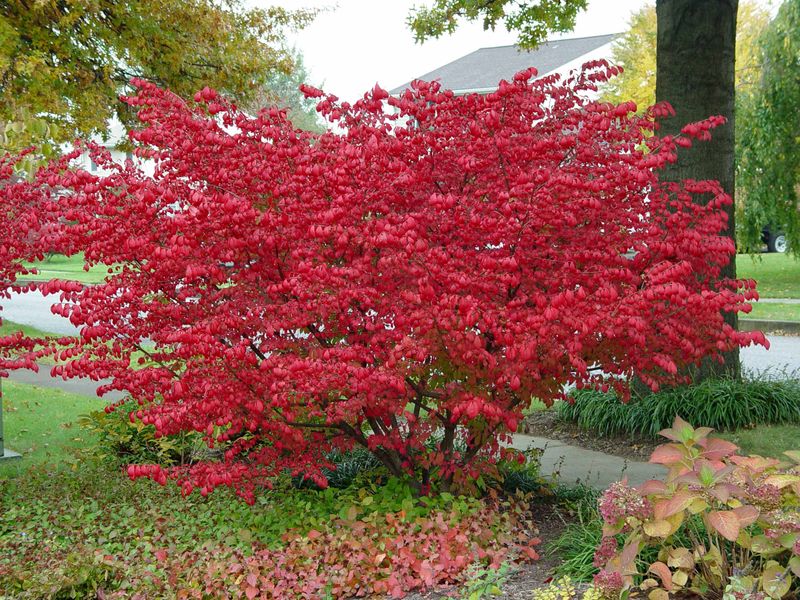
You step into your yard on an October morning and find the air crisp, with a hint of woodsmoke drifting from a neighbor’s chimney.
That fiery red bush you have admired for years, the one that practically glows in the autumn light, is now illegal in Pennsylvania.
It is true.
The plant many of us know as burning bush has been added to the state’s noxious weed list.
Since January 2025, it has been against the law to buy, plant, or propagate it anywhere in the Keystone State.
You do not have to rip out the ones you already own.
But swapping them for a native shrub gives your yard just as much fall fire, plus food for birds and butterflies.
Here are nine tough natives that thrive here.
1. American Elderberry Will Feed All The Birds
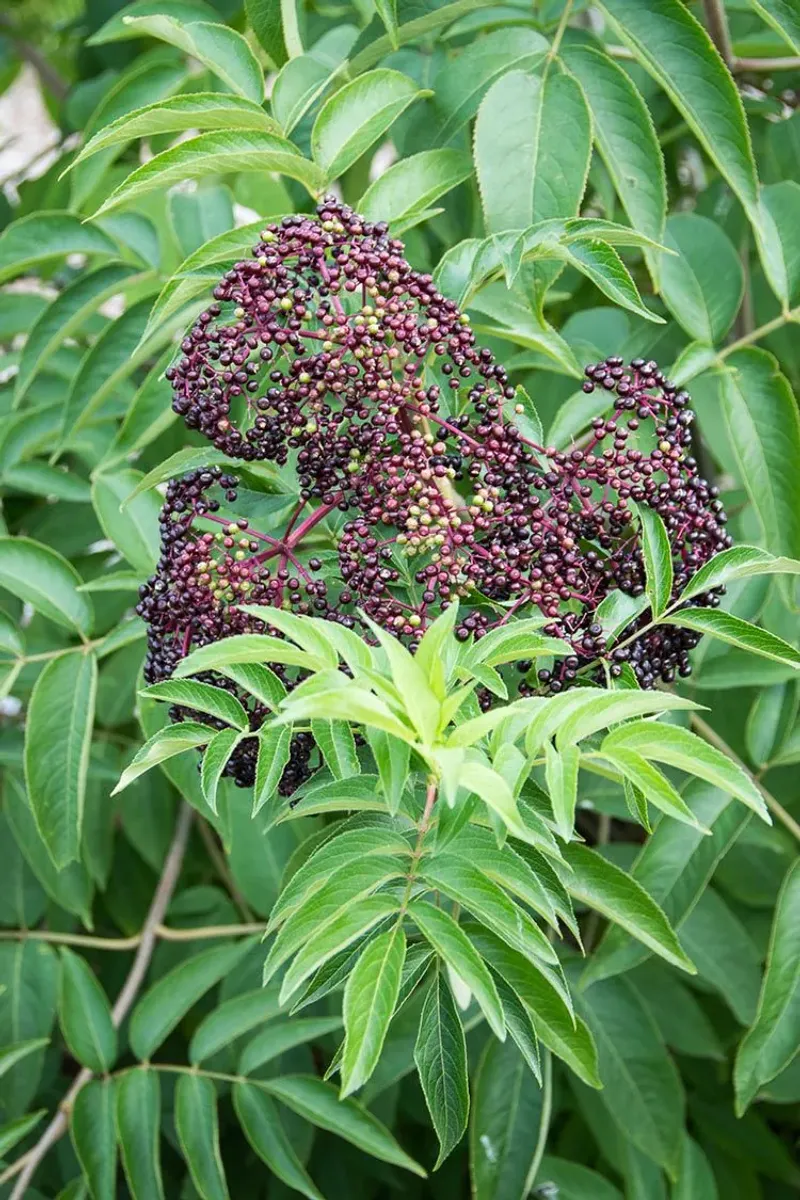
Picture warm July evenings on your porch, the air buzzing with pollinators drawn to creamy white flower clusters, followed by deep purple berries by late summer.
That is American elderberry, or Sambucus canadensis, doing what it does best.
Here is where it gets tricky.
Burning bush was loved for one fiery week in fall, but elderberry works all season long.
Its flowers, blooming late June into early July across much of the state, feed native bees and butterflies.
Then the ripe purple fruits arrive in August and early September, becoming a genuine feast for over 45 bird species, box turtles, and small mammals fattening up for winter.
The dense clumps also make excellent nesting cover, especially in the central valleys where open fields meet woodland edges.
This shrub grows fast, often reaching 5 to 15 feet tall and wide, and in rich, moist southeastern Pennsylvania soil it can stretch to 25 feet.
Give it full to part sun and average moisture.
It shrugs off clay and sandy loam alike.
Just remember the raw berries, leaves, and stems are toxic to people, so cook the ripe fruit down into jam before you taste it.
Your yard becomes a busy diner, and you did almost nothing to earn it.
2. Eastern Redbud Gives An Early Spring Celebration
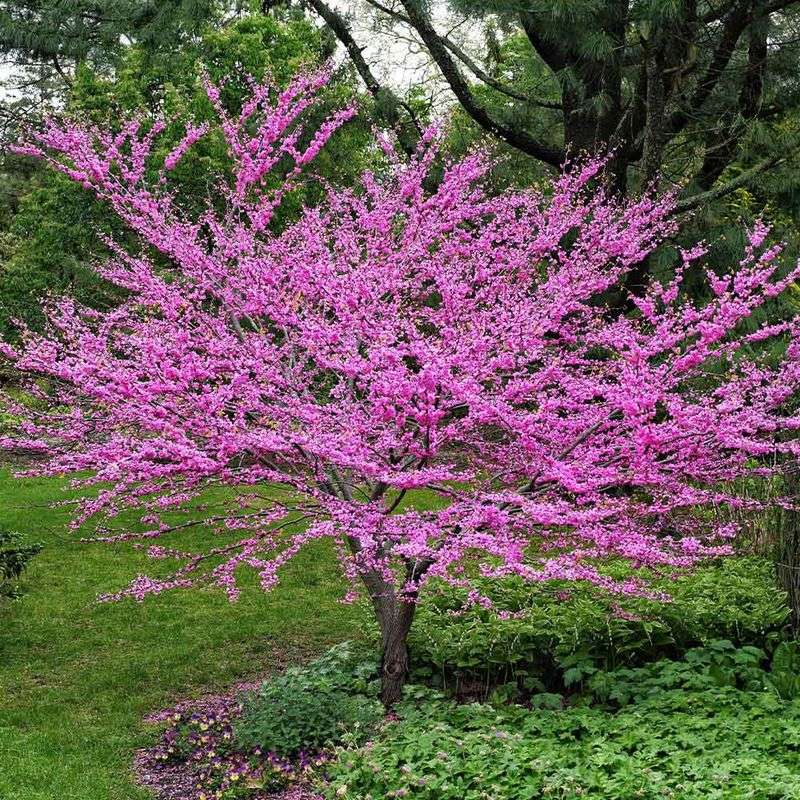
You step into the yard on an April morning and find frost still clinging to the new leaves of a nearby oak.
But your Eastern redbud, Cercis canadensis, is already putting on a show, its bare branches smothered in pink to purple pea-like blooms before most plants even wake up.
Many gardeners want that early pop but fear something fussy.
Redbud is genuinely easygoing.
It prefers moist, well-drained soil, yet it tolerates slightly acidic, alkaline, sandy, or clay ground as long as water drains.
Once settled in, it handles summer drought too.
Plant it in full sun for the heaviest flowering, though part shade works fine.
It shines in the limestone-rich Susquehanna Valley and in the warmer urban pockets of Philadelphia and Pittsburgh.
Expect a multi-trunked form 20 to 30 feet tall and 25 to 35 feet wide, perfect for a smaller yard or as an understory tree.
Here is the catch.
Deer treat young redbuds like a spring snack.
A simple chicken-wire cage, taller than the plant, protects it for the first few years until the trunk toughens up.
Those blooms are a lifeline.
Early-emerging bumblebees and mason bees find nectar and pollen when almost nothing else is open.
You get color, and they get breakfast.
3. Mountain Laurel Is Tough, Evergreen, And Pennsylvania Proud
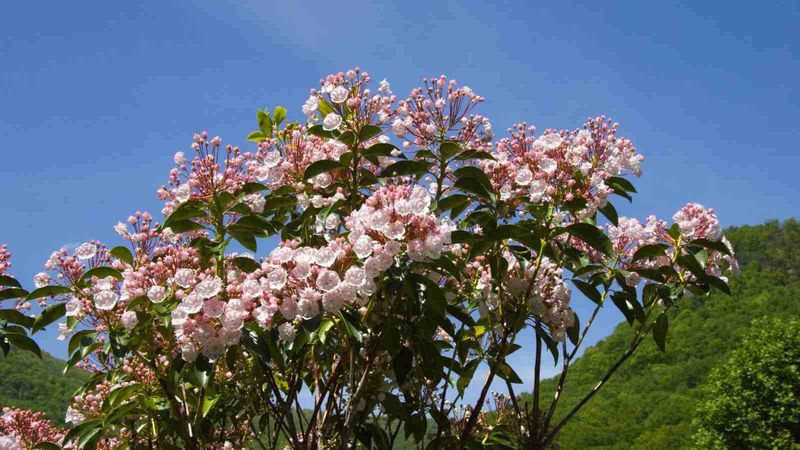
Our state flower carries a deep connection to the Laurel Highlands and the Poconos, and it earns that honor.
Mountain laurel, Kalmia latifolia, is a quiet hero for rocky, higher-elevation Pennsylvania yards.
Unlike most showy shrubs, it genuinely prefers partial shade or dappled light, which makes it a natural fit for woodland edges or spots beneath taller trees.
It keeps glossy, leathery green leaves all winter, a welcome contrast against bare branches and snow.
Then in late May through June, it explodes into bell-shaped flowers ranging from pure white to deep rose, often marked with fine detail.
It loves acidic, well-drained soil, echoing the nutrient-poor mountain ground where it grows wild.
Expect anywhere from 3 to 15 feet tall and wide depending on variety and site.
Its toxicity makes it mostly deer-resistant, though a starving deer in a hard winter might sample young plants.
Here is a small marvel.
When a bee lands on a bloom, the flower releases its pollen in a tiny spring-loaded burst, dusting the insect on contact.
Bees, butterflies, and hummingbirds all line up for it.
Give it acidic soil, some shade, and patience.
In return you get four-season structure and a plant that feels like Pennsylvania itself.
4. Red Chokeberry Brings Brilliant Fall Color And Winter Interest
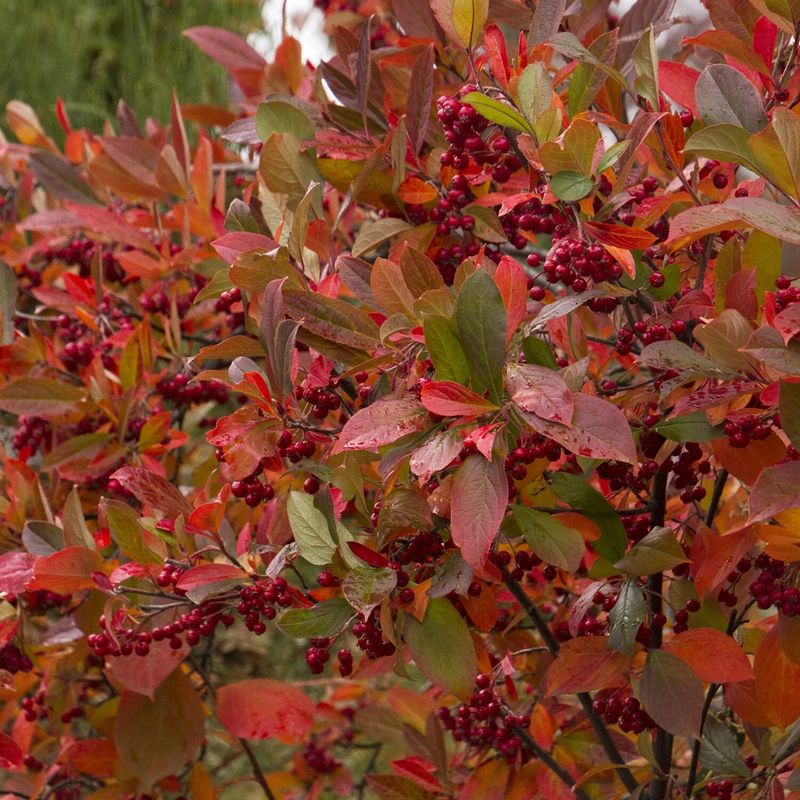
Plenty of gardeners mourn the loss of burning bush’s intense fall color.
Red chokeberry, Aronia arbutifolia, actually delivers a nearly identical show, which is exactly why it belongs on this list.
The turn from summer to fall used to mean bracing for one fiery week.
Now you get a plant that works harder.
In spring, delicate white flowers pull in pollinators.
As autumn deepens, the foliage burns orange-red to bright red, rivaling the color that made burning bush so popular in the first place.
Then the payoff keeps going.
After the leaves drop, red berries cling to the branches through winter, feeding overwintering songbirds and small mammals when other food runs out.
This shrub is genuinely tough, handling wet soil, drought once established, compacted ground, and even city conditions.
That toughness makes it fit almost anywhere, from the heavy clay of southeastern Pennsylvania to the rocky glacial soils of the northern tier.
It grows in a graceful, upright form about 6 to 10 feet tall.
Plant it in full sun for the best fruit and the boldest color, though part shade still performs.
It also hosts several moths and hairstreak butterflies.
You lose nothing in the fall drama, and you gain a whole winter’s worth of birds.
5. Spicebush Will Bring The Swallowtails Right To You
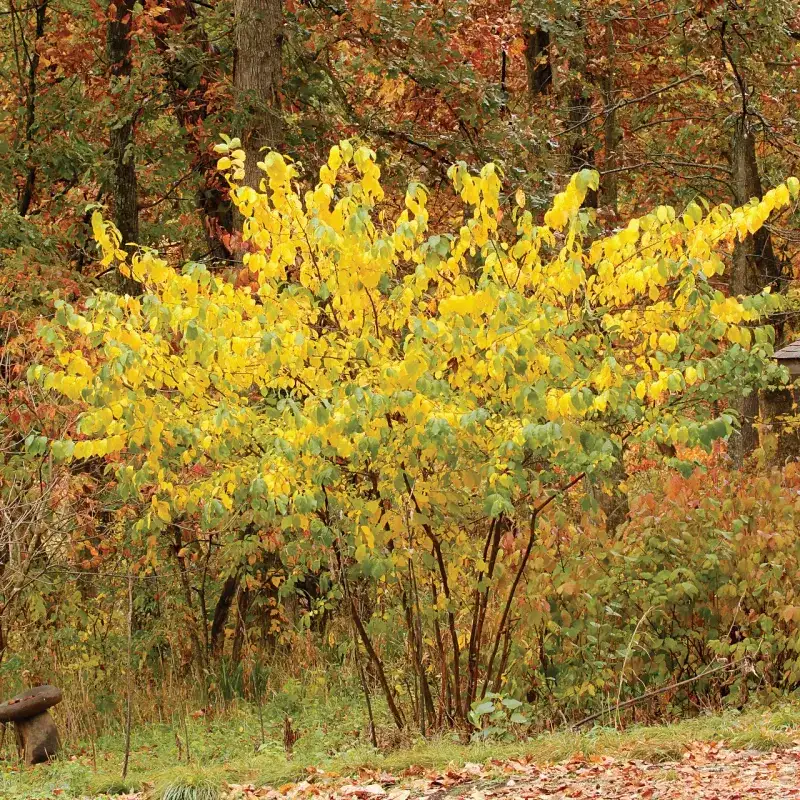
Step into your garden in early spring, before the world has fully woken, and you may be greeted by delicate clusters of tiny yellow flowers.
That is the quiet charm of spicebush, Lindera benzoin, a native shrub most people walk right past.
Here is the recognition beat worth tagging a friend over.
If you have ever wished for more large, colorful butterflies drifting through your yard, this is your secret weapon.
Spicebush is the actual larval host plant for the Spicebush Swallowtail and Eastern Tiger Swallowtail.
The females lay eggs on the leaves, and the caterpillars feed there, completing a stage they cannot finish anywhere else.
By late summer and fall, female plants with a male nearby produce glossy red berries packed with fat, fueling birds for migration and winter.
The name comes from the spicy scent the crushed twigs and leaves give off, a small gift on a cool morning.
It thrives in the woodland understory, preferring moist, well-drained soil and partial shade, though it tolerates full sun where the ground stays damp.
Expect a dense, rounded form 6 to 12 feet tall and wide.
It is a fine pick for the Allegheny Plateau and other forested corners of the state.
Plant it, and the swallowtails find you.
6. Shrubby Dogwoods Give Four Seasons Of Interest
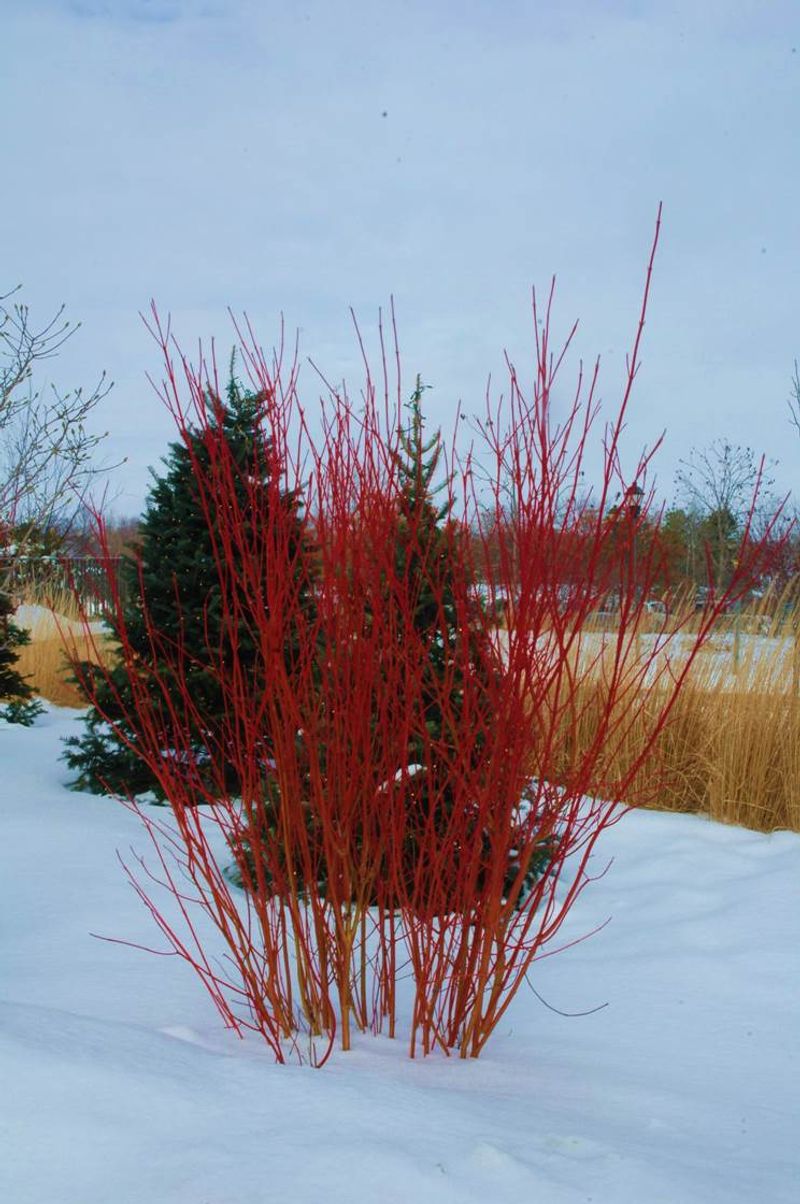
Burning bush offered one singular blast of crimson.
Several native shrubby dogwoods hand you an extended show instead, spread across every season.
Look at silky dogwood, Cornus amomum, gray dogwood, Cornus racemosa, and red osier dogwood, Cornus sericea.
Red osier is famous for bright red stems that glow against winter snow, especially striking after a fresh 6-inch snowfall in the Lake Erie region.
Its leaves turn red and purple in fall, echoing the color of the Poconos.
The tension is finding something as tough as burning bush was.
These dogwoods genuinely qualify, growing vigorously and forming thickets that give birds cover and nesting spots.
They typically reach 6 to 10 feet tall with a similar spread, carrying white spring flowers followed by white or bluish summer berries that songbirds strip in a hurry.
Gray dogwood handles drier sites and a range of soils, while silky and red osier prefer moisture, making them ideal for rain gardens or stream banks in the Susquehanna Valley.
According to Penn State Extension, native shrubs like these support far more wildlife than the invasives they replace.
They ask for little and give a living, changing landscape in return.
That is a much better trade than the ecological damage burning bush left behind, and your winter yard finally has something to look at.
7. Winterberry Holly Lights Up The December Yard
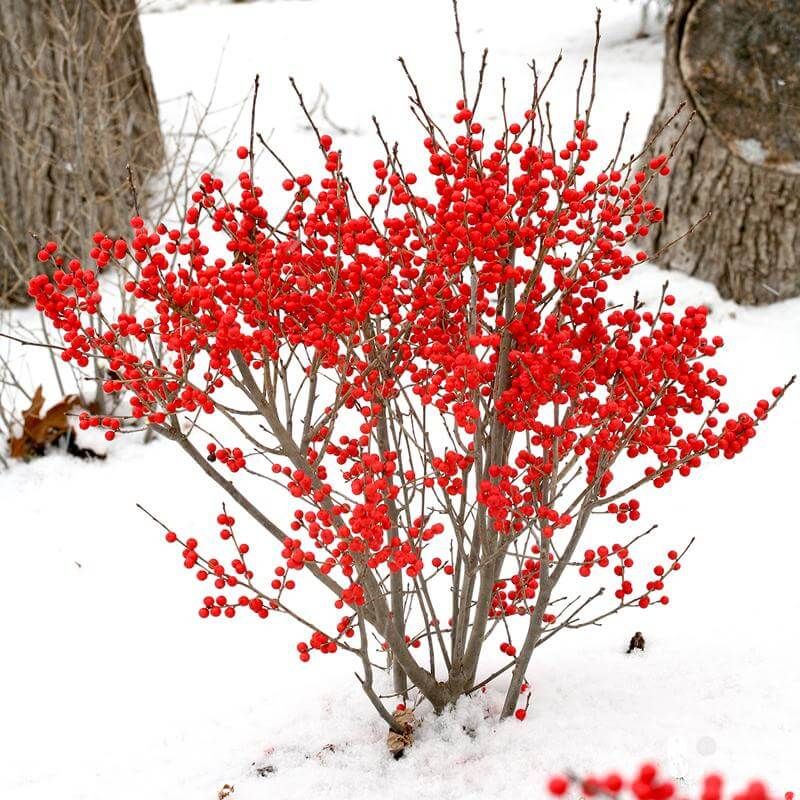
Come December, most yards go gray and quiet.
Winterberry holly, Ilex verticillata, refuses to.
This deciduous holly drops its leaves and reveals branches packed so thick with scarlet berries that they look strung with beads.
Here is the honest part.
You need both a male and a female plant for those berries to form, roughly one male for every three to five females planted within about 50 feet.
Skip the male, and you get a plain green shrub.
Plant the pair, and you get a wall of red that lasts until hungry robins and cedar waxwings clean it out in late winter.
It grows 3 to 12 feet tall depending on the cultivar, forming a rounded, multi-stemmed mound.
Unlike fussier hollies, winterberry actually loves wet feet, thriving in the boggy, acidic ground that stumps other shrubs.
That makes it a smart choice for low spots in the central valleys or the poorly drained clay of southeastern Pennsylvania.
Give it full sun to part shade for the heaviest fruit set.
It is hardy well into the colder zone 5b reaches of the northern tier and the Poconos.
Those berries feed over a dozen bird species during the leanest weeks of the year.
And the color you get, against fresh snow, genuinely rivals anything burning bush ever offered.
8. Ninebark Handles The Worst Soil You Have
Some corners of a yard defeat almost everything.
Rocky, dry, compacted, baked by afternoon sun.
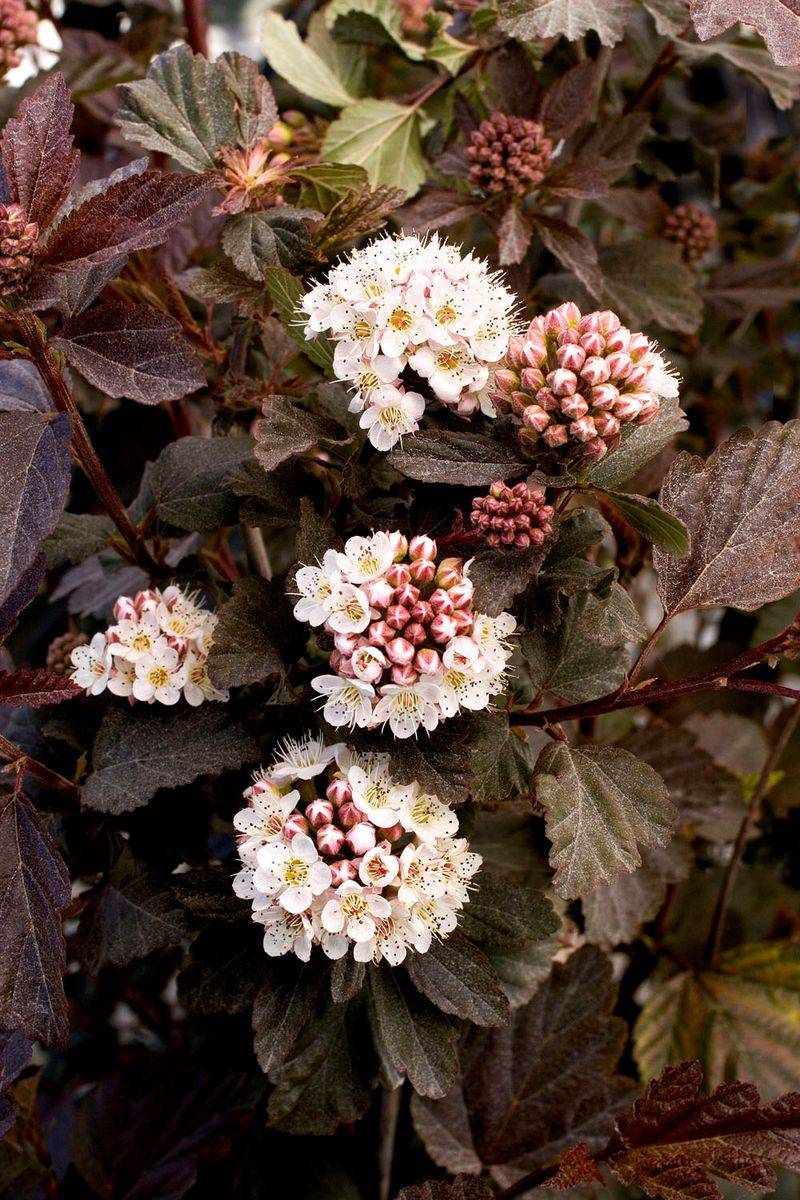
Ninebark, Physocarpus opulifolius, walks into that corner and settles right in.
Blunt truth first.
This is one of the toughest native shrubs you can plant in Pennsylvania.
It tolerates poor soil, drought once established, road salt, and the shale-heavy ground common across the western part of the state.
It even shrugs off the freeze-and-thaw cycles that heave lesser plants right out of the earth.
The looks are a bonus.
Modern selections carry deep burgundy or golden foliage, and in June clusters of pinkish-white flowers cover the branches, drawing bees and small butterflies.
The name comes from its peeling, layered bark, which strips back in thin sheets and gives real interest once winter strips the leaves.
It grows fast, reaching 5 to 8 feet tall and wide, so give it room or plan to prune right after it flowers.
Full sun keeps the leaf color richest, though it accepts part shade.
The seed capsules that follow the flowers persist into fall, feeding birds, and the dense form offers nesting cover.
If you have been fighting a stubborn slope or a hot strip along the driveway, this quiet workhorse may finally win it for you.
9. Oakleaf Hydrangea Closes The Season In Deep Red
If it is the sheer fall color you will miss most, end your search here.
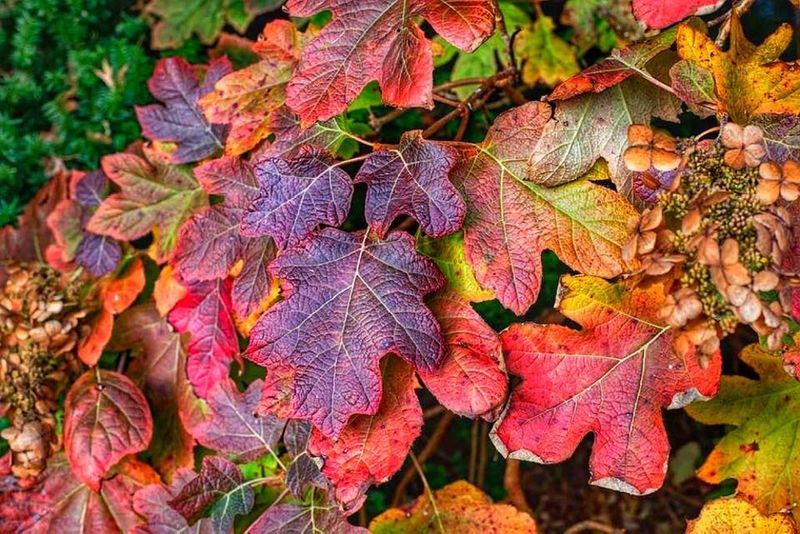
Oakleaf hydrangea, Hydrangea quercifolia, turns deep wine-red and burgundy in autumn, holding that color long after most shrubs have gone bare.
The leaves give it away, shaped like broad oak leaves, large and bold all summer.
In June and July it sends up cone-shaped clusters of white flowers that slowly age to soft pink, then dry to a papery tan you can leave standing through winter.
Even the bark earns its keep, peeling back to a warm cinnamon brown once the leaves drop.
It performs best with morning sun and afternoon shade, especially in the warmer southeastern pockets where full afternoon exposure can scorch it during a summer dry spell.
Give it moist, well-drained soil rich in organic matter, and water it about 1 inch per week the first season while the roots settle.
Expect a rounded, spreading shrub 4 to 8 feet tall and wide.
It is reliably hardy through most of the state, though in the coldest northern tier and higher Pocono elevations, flower buds can freeze back in a rough winter.
The blooms feed bees and small pollinators, and the winter seed heads shelter insects birds hunt later.
You get spring flowers, summer structure, and a fall finale that genuinely holds its own against the bush you just lost.